Peptide stacking—the practice of using multiple peptides simultaneously—has become increasingly popular among researchers and biohackers seeking to maximize therapeutic outcomes. By combining peptides with complementary mechanisms of action, it's theoretically possible to achieve synergistic effects greater than either compound alone.
But not all peptide combinations are created equal. Some stacks work together harmoniously, while others may interfere with each other or increase the risk of side effects. This comprehensive guide explores the science behind peptide stacking, the most popular combinations, and the critical considerations for safe experimentation.
🔑 Key Takeaways
- Peptide stacking combines compounds with complementary mechanisms for potentially enhanced effects
- The most effective stacks pair peptides that work through different pathways
- Timing, dosing, and proper reconstitution are critical for successful stacking
- Start with one peptide before adding others to identify individual responses
- Not all peptides are safe to combine—some may compete for receptors or increase side effects
What Is Peptide Stacking?
Peptide stacking refers to the simultaneous use of two or more peptides, typically to target multiple biological pathways or amplify a specific outcome. The concept borrows from pharmacology's understanding of drug synergy, where the combined effect of two compounds exceeds the sum of their individual effects.
The rationale behind stacking is straightforward: if Peptide A works through Mechanism X, and Peptide B works through Mechanism Y, combining them could produce benefits from both pathways simultaneously. In some cases, the peptides may even enhance each other's activity.
Why Researchers Stack Peptides
Multi-Pathway Targeting
Address multiple mechanisms simultaneously for comprehensive effects.
Synergistic Enhancement
Some combinations produce effects greater than individual peptides alone.
Optimized Timing
Different half-lives can provide around-the-clock activity.
Cost Efficiency
Lower doses of each peptide may achieve similar results to high-dose monotherapy.
The Most Effective Peptide Stacks by Goal
While individual responses vary, certain peptide combinations have become popular based on their complementary mechanisms. Below are the most commonly researched stacks, organized by primary goal.
Healing & Recovery Stacks
Tissue repair is one of the most popular applications for peptide stacking. The gold standard healing stack combines two peptides with different but complementary mechanisms.
⭐ BPC-157 + TB-500 Stack
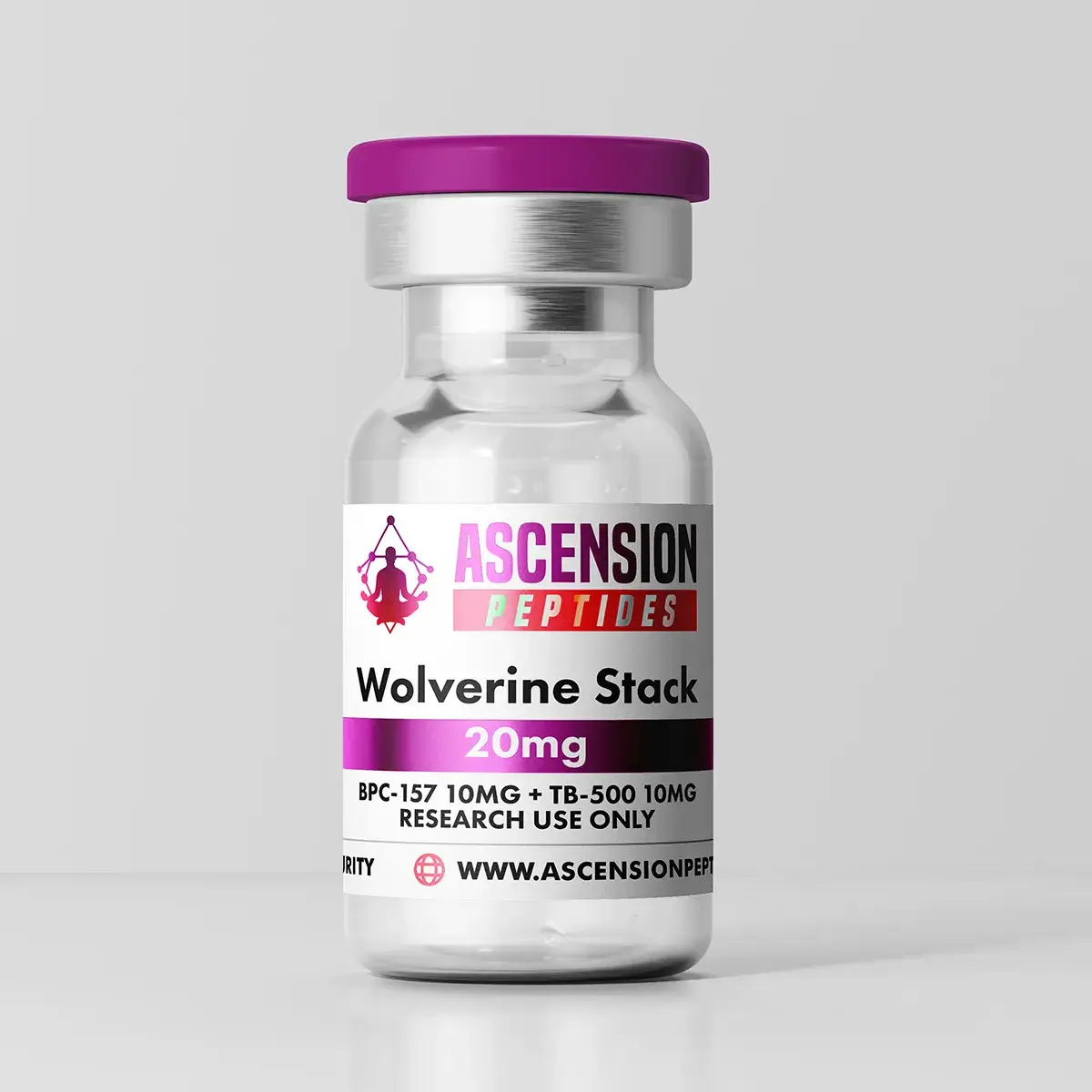
The classic healing stack. BPC-157 works through nitric oxide modulation and growth factor upregulation, while TB-500 promotes actin polymerization and cell migration. Together, they address tissue repair from multiple angles.
Research suggests BPC-157 excels at gut healing, tendon repair, and vascular protection, while TB-500 particularly benefits muscle tissue and promotes systemic healing through enhanced cell motility. Their mechanisms don't compete, making this a theoretically synergistic combination.
For detailed information on this combination, see our BPC-157 vs TB-500 comparison guide.
Growth Hormone Secretagogue Stacks
GH secretagogues are perhaps the most commonly stacked peptide category. The key principle: combine a GHRH (growth hormone releasing hormone) analog with a GHRP (growth hormone releasing peptide) for amplified GH pulses.
⭐ CJC-1295 + Ipamorelin Stack
The gold standard GH stack. CJC-1295 mimics GHRH to prime the pituitary, while Ipamorelin triggers the release. Together, they produce stronger, more sustained GH elevation than either alone.
CJC-1295 (especially the DAC version) provides prolonged GHRH signaling, creating an elevated baseline. Ipamorelin then triggers acute GH pulses from this primed state. Research shows this combination can increase GH output significantly more than either peptide alone.
These can be combined in the same injection for convenience. Learn more in our CJC-1295 vs Ipamorelin detailed comparison.
Alternative GH Stacks
Other popular GH secretagogue combinations include:
- CJC-1295 + GHRP-6: More potent but increases appetite significantly
- Sermorelin + Ipamorelin: Milder alternative with shorter half-life
- CJC-1295 + MK-677: Oral option for GHRP component
- Ipamorelin + Hexarelin: Double GHRP for maximum pulse (not recommended long-term)
Fat Loss Stacks
Peptides targeting fat metabolism can be combined for multi-pathway fat reduction.
⭐ AOD-9604 + CJC-1295 + Ipamorelin Stack
Comprehensive fat loss stack. AOD-9604 directly stimulates lipolysis, while the GH peptides provide metabolic support and muscle preservation during caloric restriction.
AOD-9604 is a modified fragment of growth hormone that specifically targets fat cells without affecting blood sugar or muscle tissue. When combined with GH secretagogues, the stack addresses fat loss through both direct lipolysis and metabolic enhancement.
For comprehensive fat loss protocols, see our best peptides for fat loss guide.
Muscle Growth Stacks
Building muscle requires protein synthesis, recovery, and adequate growth hormone signaling. The most effective stacks address all three.
⭐ Complete Muscle Growth Stack
IGF-1 LR3 + CJC-1295 + Ipamorelin + BPC-157 — Covers growth factors, GH elevation, and recovery for comprehensive anabolic support.
This stack combines:
- IGF-1 LR3: Direct anabolic signaling for protein synthesis
- CJC-1295 + Ipamorelin: Enhanced GH release for systemic anabolism
- BPC-157: Accelerated recovery between training sessions
Note: IGF-1 analogs require careful dosing and are among the more potent peptides. See our muscle growth peptides guide for detailed protocols.
Anti-Aging & Longevity Stacks
Anti-aging stacks typically target multiple hallmarks of aging simultaneously.
⭐ Longevity Stack
Epithalon + GHK-Cu + CJC-1295/Ipamorelin — Addresses telomere maintenance, cellular regeneration, and hormonal decline.
Epithalon works on telomerase activation, GHK-Cu provides systemic regenerative signaling, and GH peptides address the natural decline in growth hormone with age. This multi-pronged approach targets aging at several levels.
For more anti-aging protocols, see our comprehensive anti-aging peptides guide.
Cognitive Enhancement Stacks
Nootropic peptides can be combined for enhanced cognitive effects.
⭐ Cognitive Stack
Semax + Selank — Complementary nootropics addressing focus (Semax) and anxiety reduction (Selank).
Semax enhances BDNF and dopaminergic signaling for focus and cognitive performance, while Selank provides anxiolytic effects through GABA modulation. Together, they provide calm focus without the jitteriness of stimulants.
For detailed comparison, see our Semax vs Selank guide.
Essential Principles for Safe Peptide Stacking
Before combining any peptides, understanding these fundamental principles can help minimize risks and maximize potential benefits.
1. Start with Single Peptides First
Never begin with a stack. Always establish your response to each peptide individually before combining. This approach:
- Identifies individual side effects or sensitivities
- Establishes baseline effects for comparison
- Allows proper dose finding for each compound
- Creates a reference point if issues arise in the stack
2. Understand Mechanism Compatibility
The best stacks combine peptides that work through different pathways. Avoid stacking peptides that:
- Compete for the same receptors — This can reduce effectiveness
- Have opposing effects — Counterproductive combinations waste resources
- Both affect the same sensitive system — May amplify side effects
3. Consider Half-Lives and Timing
Peptide half-lives range from minutes to days. Effective stacking requires understanding when each compound peaks and clears:
Short-acting peptides often pair well with longer-acting ones, providing both acute and sustained activity.
4. Watch for Cumulative Side Effects
Some side effects are additive. If both peptides can cause water retention, for example, the stack will likely cause more retention than either alone. Common concerns include:
- Water retention (GH peptides especially)
- Blood pressure changes
- Blood sugar fluctuations
- Injection site reactions
Understand the side effect profile of each peptide before combining. See our peptide side effects guide for detailed information.
5. Keep Stacks Simple
The law of diminishing returns applies heavily to peptide stacking. A carefully selected pair often outperforms a complex cocktail of five or six compounds.

Practical Tips for Peptide Stacking
Can Peptides Be Mixed in the Same Syringe?
Many peptides can be combined in a single injection for convenience. However, some guidelines apply:
- Compatible: CJC-1295 + Ipamorelin (commonly pre-mixed)
- Compatible: Most GHRH + GHRP combinations
- Keep Separate: Peptides with very different pH requirements
- Keep Separate: When establishing individual responses
When in doubt, use separate injections at different sites.
Timing Your Stack
Optimal timing depends on the peptides involved:
Morning (Fasted)
Best for fat-loss peptides like AOD-9604, Fragment 176-191. GH peptides also work well fasted.
Pre-Workout
GH secretagogues 30-60 minutes before training can enhance workout quality and recovery.
Post-Workout
Healing peptides like BPC-157 and TB-500 may benefit from post-exercise timing.
Before Bed
GH peptides align with natural nocturnal GH pulses. Epithalon often dosed at night.
Duration and Cycling
Different stacks require different cycle lengths:
For guidance on proper cycling, see our beginner's guide to peptides.
Storage and Reconstitution
When running multiple peptides, proper storage becomes even more critical:
- Label all vials clearly with peptide name and reconstitution date
- Store reconstituted peptides at 2-8°C (refrigerator)
- Use each vial within 3-4 weeks of reconstitution
- Never freeze reconstituted peptides
- Keep lyophilized (powder) vials at -20°C for long-term storage
For complete reconstitution instructions, see our peptide reconstitution guide and storage guide.
Peptide Combinations to Avoid
Not all peptides work well together. Some combinations are inefficient; others may be problematic.
Redundant Stacks
Avoid stacking peptides with identical mechanisms:
- Multiple GHRPs at high doses: GHRP-6 + GHRP-2 + Hexarelin offers diminishing returns and amplified side effects
- Multiple GHRH analogs: CJC-1295 + Sermorelin + Tesamorelin is redundant
- Stacking similar nootropics: Semax + NA-Semax Amidate (just use the stronger version)
Potentially Problematic Combinations
- Multiple peptides affecting blood sugar: Combining GH peptides with insulin-mimetics requires careful monitoring
- High-dose GH stacks in those prone to fluid retention: Can exacerbate cardiovascular strain
- Mixing peptides with pharmaceutical drugs: Always consult a healthcare provider about interactions
Frequently Asked Questions
Conclusion
Peptide stacking, when approached thoughtfully, can offer advantages over single-peptide protocols by targeting multiple biological pathways simultaneously. The key principles are straightforward: combine peptides with complementary (not competing) mechanisms, start simple, establish individual responses before combining, and respect the potential for additive side effects.
The most validated stacks—like CJC-1295 with Ipamorelin for GH release, or BPC-157 with TB-500 for healing—have gained popularity precisely because their mechanisms complement rather than interfere with each other. These combinations represent good starting points for those interested in exploring peptide synergies.
However, it's worth remembering that peptide stacking remains an area where anecdotal reports far outpace clinical evidence. No stacks have been validated in controlled human trials, and individual responses can vary significantly. Careful documentation, gradual introduction of compounds, and attention to your body's signals remain the foundation of responsible experimentation.
🔑 Final Takeaways
- Match complementary mechanisms—GHRH + GHRP, local + systemic healing
- Start each peptide individually for 2-4 weeks before stacking
- Keep stacks simple: 2-3 peptides maximum for most goals
- Time injections based on each peptide's optimal window
- Cycle appropriately and take breaks to maintain sensitivity