Epithalon
Epithalon (Epitalon/Epithalone)
Get Epithalon
Sourced from Ascension Peptides. Verified ≥≥99% purity, third-party tested. COA included.
Off with code
PEPTIDEDECK
Table of Contents
What is Epithalon?
Epithalon is a synthetic tetrapeptide (four amino acids: Alanine-Glutamate-Aspartate-Glycine) developed from decades of research into the pineal gland and aging. It's based on a naturally occurring peptide called epithalamin, which the pineal gland produces and which declines with age.
The peptide was developed by Professor Vladimir Khavinson at the St. Petersburg Institute of Bioregulation and Gerontology in Russia. Khavinson has dedicated his career to 'bioregulating peptides'—small peptides that influence fundamental cellular processes. Epithalon is his most famous creation, primarily because of its effects on telomerase, the enzyme that maintains telomeres.
The Telomere Connection
Telomeres are protective sequences at the ends of chromosomes that shorten each time a cell divides. When they become critically short, cells lose the ability to divide properly and enter senescence—a state linked to aging and age-related diseases. This 'telomere shortening' is considered one of the fundamental mechanisms of aging.
Telomerase is an enzyme that can rebuild telomeres, but it's largely inactive in adult cells. Epithalon's key action is reactivating telomerase, potentially allowing cells to maintain their telomeres and extend their functional lifespan. This is why Epithalon is central to the longevity peptide discussion.
Beyond Telomeres
Epithalon also affects the pineal gland directly, increasing melatonin production. This has practical implications for sleep quality, circadian rhythm regulation, and possibly immune function—all of which decline with age. Users often notice sleep improvements before any theoretical anti-aging benefits would manifest.
Research Benefits
Activates telomerase enzyme
May help maintain telomere length
Increases natural melatonin production
Improves sleep quality and circadian rhythm
Antioxidant properties
Extended lifespan in animal studies
May improve immune function with age
Supports pineal gland function
How Epithalon Works
Epithalon's mechanisms touch on fundamental aspects of cellular aging and pineal gland function.
Telomerase Activation
The primary mechanism of interest is Epithalon's ability to activate telomerase, the enzyme that rebuilds telomeres. Research has demonstrated that Epithalon treatment increases telomerase activity in human somatic cells. In one study, human lung fibroblasts treated with Epithalon achieved 44 population doublings compared to 34 in controls—a 30% increase in replicative lifespan.
The activation appears to involve gene expression changes. Epithalon activates chromatin (making DNA more accessible for transcription) at early stages of cell division. This allows cells to express telomerase and other proteins needed for continued healthy division.
Pineal Gland Stimulation
Epithalon directly affects the pineal gland, increasing melatonin synthesis and secretion. The pineal gland's function declines significantly with age—elderly individuals produce far less melatonin than young adults. By stimulating this gland, Epithalon helps restore more youthful melatonin patterns.
This has cascading effects: melatonin regulates circadian rhythms, has antioxidant properties, influences immune function, and may have additional anti-aging effects independent of telomeres.
Antioxidant Effects
Research shows Epithalon increases the activity of antioxidant enzymes—superoxide dismutase (SOD) and catalase—in aging animals. This helps protect cells from oxidative damage, another contributor to aging. The mechanism likely involves both direct effects and indirect effects through melatonin (itself a potent antioxidant).
Gene Expression
Beyond telomerase, Epithalon influences expression of multiple genes involved in cell cycle regulation, stress response, and metabolism. Some researchers describe this as 'resetting' gene expression toward more youthful patterns, though this characterization is somewhat simplified.
Research Applications
Telomere biology and cellular aging
Active research area with published studies
Longevity and lifespan extension
Active research area with published studies
Pineal gland function
Active research area with published studies
Melatonin regulation
Active research area with published studies
Age-related immune decline
Active research area with published studies
Cancer and cell proliferation regulation
Active research area with published studies
Sleep disorders in elderly
Active research area with published studies
Bioregulation and peptide therapy
Active research area with published studies
Research Findings
Epithalon research spans cell culture studies, animal lifespan experiments, and limited human trials—primarily from Khavinson's institute.
Cellular Studies
Research published in Bulletin of Experimental Biology and Medicine demonstrated Epithalon extends the replicative capacity of human fibroblasts beyond the normal limit. Cells treated with Epithalon continued dividing when control cells had stopped—and the mechanism was confirmed to involve telomerase activation and telomere elongation.
Animal Lifespan Studies
Studies in fruit flies (Drosophila) showed Epithalon extended lifespan by 11-16% depending on the study. Mouse studies reported even more dramatic results—one found lifespan extension of up to 52% in a tumor-prone strain. The animals showed delayed age-related changes, maintained function longer, and had lower tumor incidence.
A key study in aging monkeys found that Epithalon increased evening melatonin secretion, which had declined with age. This demonstrates the pineal-stimulating effects translate to primates.
Human Studies
Limited human data exists, primarily from Russian clinical practice. Studies in elderly patients showed improved melatonin rhythms, better sleep, and improved immune markers. One report followed patients over several years and found lower mortality rates in those receiving Epithalon compared to controls—though this was observational, not a controlled trial.
Research Limitations
Important caveats: most research comes from one research group (Khavinson's institute), independent replication is limited, and no long-term controlled human trials exist. The animal results are impressive, but rodent lifespan studies don't always translate to humans. The cellular mechanisms are sound, but organism-level benefits remain less proven. This is promising research, not conclusive proof of human anti-aging effects.
Dosage & Administration
Epithalon is typically administered in cycles rather than continuously, based on research protocols.
Standard Protocol
Daily dose: 5-10mg per day
Cycle length: 10-20 consecutive days
Cycle frequency: 2-3 cycles per year, or every 4-6 months
This cycling approach mirrors clinical research protocols. The rationale is that telomerase activation triggers cellular changes that persist after the dosing period—continuous use isn't necessary or perhaps even desirable.
Administration
Epithalon is administered via subcutaneous injection. The small peptide is poorly absorbed orally, making injection the practical route. Some divide the daily dose (e.g., 5mg morning and 5mg evening); others inject once daily. No clear evidence favors either approach.
Timing
Some prefer evening administration given Epithalon's effects on melatonin, reasoning that it aligns with natural melatonin cycles. Others inject in the morning. Practical convenience often determines timing.
Reconstitution
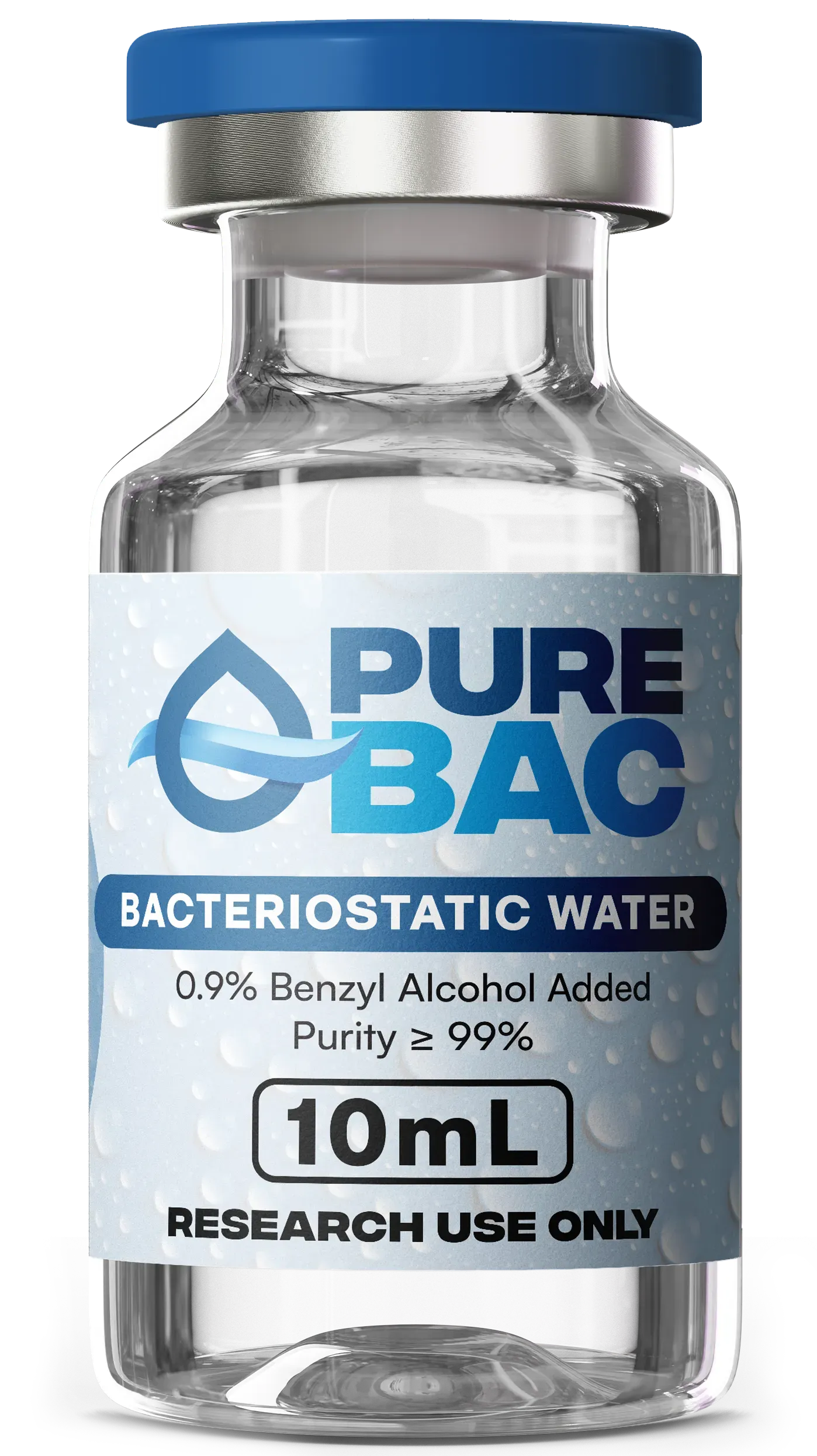
Epithalon comes as lyophilized powder requiring reconstitution with bacteriostatic water. Standard practice: add water slowly, swirl gently (don't shake), and store reconstituted peptide refrigerated. Use within 3-4 weeks of reconstitution.
Why Cycling?
Beyond the research precedent, cycling addresses the theoretical cancer concern. While evidence doesn't show Epithalon promotes cancer, limiting continuous telomerase activation seems prudent given the role of telomerase in cancer cell immortality. Cycling also makes economic sense given the peptide's cost.
Safety & Side Effects
Epithalon appears to have a favorable safety profile in the research conducted, though long-term human data is limited.
Reported Effects
Sleep changes: Many users report improved sleep, likely from melatonin effects. Occasionally, vivid dreams are reported—generally considered neutral or positive.
Injection site reactions: Mild redness or irritation possible, as with any injection.
Fatigue during initial use: Some report tiredness initially, possibly related to circadian adjustments.
The Cancer Question
The most important safety consideration is the theoretical relationship between telomerase and cancer. Cancer cells use telomerase to become immortal. Does activating telomerase risk promoting cancer?
Current evidence doesn't support this concern for Epithalon specifically: animal studies showed reduced tumor incidence, not increased; cell studies show regulation rather than uncontrolled activation; and no cancer signals emerged in human use reported to date. However, anyone with active cancer should avoid telomerase activators. And truly long-term safety data in large populations doesn't exist.
Contraindications
- Active cancer or cancer history
- Pregnancy/breastfeeding (no safety data)
- Autoimmune conditions (theoretical concern given immune effects)
Long-Term Safety
Russian clinical use provides some reassurance, but formal long-term trials haven't been conducted. The peptide's natural origin (based on an endogenous pineal peptide) and simple structure suggest relatively low risk, but uncertainty remains. Users should monitor health markers and use reasonable caution.