Zepbound Dosage Chart & Titration Schedule.
Zepbound (tirzepatide) is a dual GIP/GLP-1 receptor agonist approved for chronic weight management. It follows a gradual 6-step titration over 20 weeks to reach the 15 mg maximum dose and minimize gastrointestinal side effects.
2.5 mg once weekly for 4 weeks, then +2.5 mg no sooner than every 4 weeks. Maintenance is 5, 10 or 15 mg once weekly; 15 mg is the ceiling.
Dosage Protocols
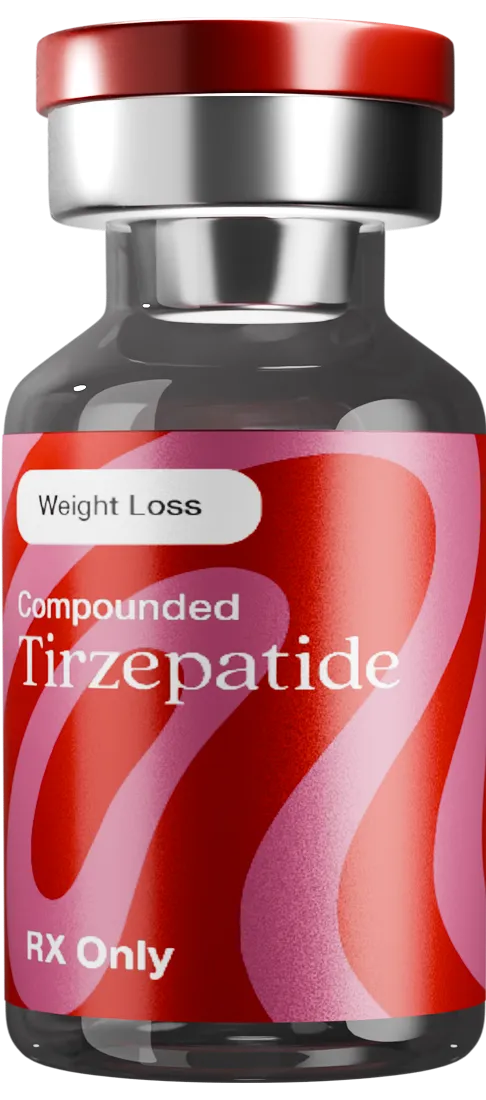
Every dose is a fixed 0.5 mL prefilled pen or vial, so the pen strength is the dose and there are no syringe units to work out. On compounded tirzepatide instead? Use the calculator.
A tolerance-building dose, not a treatment dose: expect little or no scale movement in month one.
Why this dose+
The label states plainly that 2.5 mg 'is for treatment initiation and is not approved as a maintenance dosage.' Skipping these four weeks to save time is the most common reason people abandon tirzepatide before they ever reach a dose that works.
After 4 weeks at 2.5 mg, move to 5 mg, then 2.5 mg at a time no sooner than every 4 weeks.
Why this dose+
Four weeks is not arbitrary: it is roughly how long tirzepatide takes to reach steady state, so escalating sooner means judging a dose you have not felt yet. Stop climbing at the first step that gives you good appetite control. On oral contraception, every step up restarts the 4-week backup window.
Label maintenance doses for weight are 5, 10 or 15 mg weekly, and 15 mg is the ceiling.
Why this dose+
For obstructive sleep apnea, only 10 mg and 15 mg are approved maintenance doses. There is no approved dose above 15 mg. If a maintenance dose is not tolerated, the label's instruction is to step down to a lower maintenance dose rather than hold.
- Zepbound is sold in six strengths: 2.5, 5, 7.5, 10, 12.5 and 15 mg.
- Only 5, 10 and 15 mg are label maintenance doses for weight management.
- For obstructive sleep apnea, only 10 mg and 15 mg are approved.
- 7.5 and 12.5 mg are 4-week stepping stones, so long-term scripts there get queried.
- SURMOUNT-1 at 72 weeks: 15.0% at 5 mg, 19.5% at 10 mg, 20.9% at 15 mg.
- That last 2.5 mg step bought roughly 1.4 percentage points.
- Steady state takes about 4 weeks, so a faster climb judges a dose you have not felt.
- The right ceiling is the lowest dose that holds your appetite and your weight.
Weekly Schedule
One injection a week, same day, any time of day, with or without food. The dose changes during titration; the rhythm never does.
Missed a dose? Take it within 4 days (96 hours) of the scheduled day, then resume your usual day. Past 4 days, skip it and take the next one on schedule rather than doubling up. Moving your injection day permanently is fine as long as 72 hours (3 days) separate the two injections, which is why days 4 – 7 above are optional landing spots.
Compounded Tirzepatide Reconstitution Calculator
Branded Zepbound needs no maths: the pen strength is the dose. This is for compounded tirzepatide vials: enter your vial size, how much bacteriostatic water you added, and the dose from the chart above to get the exact draw volume.
Double-click a preset to edit it
Double-click a preset to edit it
Double-click a preset to edit it
Standard insulin syringe
Concentration
2.50 mg/mL
1 unit = 25 mcg
Draw volume
1.000 mL
= 2.50 mg ÷ 2.50 mg/mL
Units to draw (1 mL syringe)
100.0 units
1 mL Syringe
100.0 IUWhat to Expect
Appetite changes arrive within days. Weight change runs over 72 weeks, with a long plateau built into the middle of it.
Most people notice reduced hunger, earlier fullness and less food noise within the first few doses. Tirzepatide peaks around 24 hours after injection and delays gastric emptying. Nausea, burping and constipation are also most likely in this window. The 2.5 mg starting dose is a tolerance ramp, so meaningful weight change this early is uncommon.
You step to 5 mg at week 4, the first dose the label counts as therapeutic. In a SURMOUNT-1 post hoc analysis, 82% of participants had already lost ≥5% of body weight by week 12; the 18% who had not were classed as late responders, and 90% of them still reached ≥5% by week 72. A slow start at week 12 is not a failure signal.
Trial titration completes around week 20 – 24, and this is generally the fastest-losing stretch. Each step up tends to bring a fresh few days of GI side effects that settle within a week or two. This is also when gallstone risk concentrates, because rapid weight loss itself promotes them (cholelithiasis 1.1% vs 1.0% on placebo; cholecystitis 0.7% vs 0.2%).
Median time to weight plateau in SURMOUNT-1 was 24.3 weeks for people with overweight and 26.0, 36.1 and 36.1 weeks for class I, II and III obesity respectively. Higher doses (10 and 15 mg), younger age and female sex all predicted a longer time to plateau, so a stall at month six is expected.
SURMOUNT-1 at 72 weeks: mean reductions of 15.0%, 19.5% and 20.9% at 5, 10 and 15 mg (22.5% at 15 mg among those who stayed on treatment), versus 3.1% on placebo. SURMOUNT-5 head-to-head at 72 weeks: tirzepatide −20.2% vs semaglutide 2.4 mg −13.7%. SURMOUNT-4: continuing past week 36 lost a further 5.5% over 52 weeks, finishing 25.3% below baseline at week 88.
If you stop: in SURMOUNT-4, participants switched to placebo after 36 weeks regained about 14% of body weight over the following year, and a post hoc analysis found blood pressure, lipids and glycaemia drifted back in step with the regain. Holding the lowest maintenance dose that works beats stopping outright, and coming off is best done as a planned taper with your prescriber.
Feeling Something? Check Here
- Nausea (25 – 29% vs 8% placebo).
- Diarrhoea (19 – 23%).
- Constipation (11 – 17%).
- Mild abdominal pain (9 – 10%).
- Dyspepsia (10%) and burping (5%).
- Injection-site redness or itch (8%).
- Fatigue (7%) and some hair shedding (5%).
- Worst in the 2 – 5 days after a dose and after each step-up, easing within a week or two.
- Vomiting you can't keep fluids down through.
- Constipation beyond a few days, or no bowel movement with bloating.
- Right-upper-abdominal pain after fatty meals (gallstones).
- Dizziness, dark urine or reduced urination.
- Shakiness or sweating if you also take insulin or a sulfonylurea; their dose usually needs reducing before you start.
- Losing weight much faster than ~1% of body weight per week.
- New or worsening low mood.
- Hold the dose escalation until you have spoken to your prescriber.
- Severe, persistent upper-abdominal pain radiating to the back, with or without vomiting (adjudicated acute pancreatitis in 0.2% of Zepbound-treated patients).
- Signs of bowel obstruction or ileus.
- Swelling of face, lips or throat, rash or trouble breathing (anaphylaxis/angioedema).
- A lump or swelling in the neck, hoarseness, trouble swallowing or persistent shortness of breath (thyroid C-cell tumour warning).
- Severe dehydration with little or no urine output.
- Sudden vision changes if you have type 2 diabetes.
Gastrointestinal side effects are also what drives people off treatment, and the rate climbs with dose: in SURMOUNT-1, discontinuation for GI reasons was 1.9% at 5 mg, 3.3% at 10 mg and 4.3% at 15 mg, versus 0.5% on placebo.
- Personal or family history of medullary thyroid carcinoma (MTC).
- Multiple Endocrine Neoplasia syndrome type 2 (MEN 2).
- Known serious hypersensitivity to tirzepatide or any excipient.
- Pregnant or actively trying to conceive: discontinue on recognition of pregnancy, as weight loss offers no benefit and may cause fetal harm.
- Breastfeeding: there is no human data.
- Any other tirzepatide product such as Mounjaro, or any GLP-1 receptor agonist (semaglutide, liraglutide, dulaglutide): coadministration is not recommended.
- Severe gastroparesis: not recommended.
- Under 18: safety and effectiveness not established.
Caution and specialist input are required with a history of pancreatitis, severe renal impairment, active diabetic retinopathy, or a personal history of suicidal thoughts.
If you use oral hormonal contraceptives, the label tells you to switch to a non-oral method or add a barrier method for 4 weeks after starting Zepbound and for 4 weeks after every dose escalation. Tirzepatide slows gastric emptying, which can reduce how much of the pill you absorb. The effect resets with each step up, so a titration schedule means several separate 4-week windows, not one.
Say that you take Zepbound before any surgery, endoscopy or procedure needing general anaesthesia or deep sedation. Delayed gastric emptying can leave food in the stomach despite normal pre-op fasting; rare postmarketing reports describe pulmonary aspiration in people on GLP-1 receptor agonists who had followed fasting instructions (label Warnings and Precautions 5.9). Your team may extend the fast, adjust the anaesthetic plan or ask you to hold a dose.
FAQ
Is Zepbound the same thing as Mounjaro?+
Chemically, yes: both are tirzepatide from Eli Lilly, in the identical strengths (2.5 to 15 mg per 0.5 mL) with the identical titration schedule. The difference is regulatory: Mounjaro is approved for type 2 diabetes, Zepbound for weight management and obstructive sleep apnea. That distinction drives insurance coverage, pricing and prior authorisation, not pharmacology. What you must not do is take both, or take Zepbound alongside a GLP-1 agonist like semaglutide; the label specifically says coadministration with other tirzepatide-containing products or any GLP-1 receptor agonist is not recommended.
Do I have to climb all the way to 15 mg?+
No, and most people shouldn't. The goal is the lowest dose that gives you good appetite control and holds your weight. In SURMOUNT-1, 5 mg still produced 15.0% mean weight reduction at 72 weeks against 20.9% at 15 mg; the top of the range buys a few extra percentage points at a meaningfully higher side-effect cost. The exception is obstructive sleep apnea, where only 10 mg and 15 mg are approved maintenance doses, so treatment for that indication does require reaching at least 10 mg.
Can I stay on 7.5 mg or 12.5 mg long term?+
Clinically, plenty of people do, and a prescriber can absolutely keep you there if it's your best-tolerated effective dose. Formally, though, the label lists only 5, 10 and 15 mg as maintenance dosages for weight management; 7.5 and 12.5 mg are titration steps. The practical consequence is administrative: refills and prior-authorisation renewals written for 7.5 or 12.5 mg are more likely to get queried, so it's worth having your prescriber document why that dose was chosen.
What do I do if I miss my weekly injection?+
Take it as soon as you can within 4 days (96 hours) of the missed day, then go back to your usual weekly day. If more than 4 days have passed, skip that dose completely and take the next one on schedule. Never take two doses close together to make up for it; with a ~5-day half-life you'd be stacking exposure, and the result is usually severe nausea and vomiting rather than faster progress.
Can I move my injection to a different day of the week?+
Yes. The label allows you to change your weekly dosing day as long as at least 72 hours (3 days) separate the two injections. So if you normally dose Sunday and want to switch to Wednesday, that's fine; switching to Monday is not. Time of day doesn't matter at all, and food doesn't either. You can inject morning or night, fed or fasted.
Why is Zepbound dosed in 15 mg when semaglutide tops out at 2.4 mg? Is it stronger?+
Milligrams aren't comparable across different molecules; they say nothing about potency, only about how much of that particular compound is needed. What is comparable is a head-to-head trial, and SURMOUNT-5 ran one: over 72 weeks, tirzepatide at its maximum tolerated dose produced 20.2% mean weight reduction versus 13.7% for semaglutide 2.4 mg, with greater waist reduction (−18.4 cm vs −13.0 cm). Notably, GI-related discontinuations were lower on tirzepatide (2.7% vs 5.6%).
What actually happens if I stop taking it?+
Weight comes back for most people. In SURMOUNT-4, participants randomised to placebo after 36 weeks of tirzepatide regained roughly 14% of body weight over the next 52 weeks, while those who continued lost a further 5.5%, a 19.4 percentage-point gap, ending at 25.3% below baseline on treatment versus 9.9% on placebo. Put another way, 89.5% of continuers held on to at least 80% of the weight they had lost during the lead-in, against 16.6% of those switched to placebo. A post hoc analysis showed cardiometabolic gains reversed in proportion to the regain. This mirrors what happens when treatment for any chronic condition is withdrawn, so if coming off is the plan, do it deliberately with your prescriber, keep resistance training and protein intake up, and consider stepping down to a lower maintenance dose rather than stopping outright.
How do I store and travel with it?+
Keep pens and vials refrigerated at 2 – 8 °C (36 – 46 °F). They can sit at room temperature up to 30 °C (86 °F) for a maximum of 21 days, cumulatively; once out, that clock doesn't reset. Never freeze it, and discard any pen that has frozen even if it looks normal. Keep it in the original carton to protect from light, don't use past the expiry date, and never share a pen with another person even with a new needle. Injecting straight from the fridge is safe but stings more, so many people let the pen sit out for 20 – 30 minutes first.
Sources
Dosing, storage and contraindications come from the FDA/DailyMed label; outcome figures come from the primary SURMOUNT trial publications.
- Zepbound (tirzepatide) prescribing information: DailyMed
- Zepbound US prescribing information (Eli Lilly)
- FDA approval label, Zepbound (2023)
- SURMOUNT-1 (PubMed 35658024)
- SURMOUNT-1 (NEJM full text)
- SURMOUNT-4 (PubMed 38078870)
- Cardiometabolic changes after tirzepatide withdrawal (JAMA Internal Medicine)
- SURMOUNT-5 summary (American College of Cardiology)
- SURMOUNT-OSA (NEJM full text)
- Time to weight plateau (Clinical Obesity)
- Late responders post hoc analysis (Diabetes, Obesity and Metabolism)
- SURMOUNT-1 results published in NEJM (Lilly investor release)
- Zepbound most-prescribed weight-management medicine (Lilly investor release)
Disclaimer: This content is for informational purposes only and is not medical advice. Zepbound (tirzepatide) is an FDA-approved prescription medicine; it must be prescribed and supervised by a licensed healthcare provider, and compounded tirzepatide is not FDA-approved. Always consult a qualified physician before starting, adjusting or stopping any treatment. PeptideDeck is not responsible for individual use.