Mounjaro Dosage Chart & Titration Schedule.
Mounjaro (tirzepatide) is a dual GIP/GLP-1 receptor agonist approved for Type 2 diabetes management. It follows the same gradual 6-step titration as Zepbound, escalating from 2.5 mg to a 15 mg maximum dose over 20 weeks to minimize gastrointestinal side effects.
2.5 mg once weekly for 4 weeks, then 5 mg. After that, 2.5 mg more, no sooner than every 4 weeks, only if you need it. Ceiling: 15 mg once weekly.
Dosage Protocols
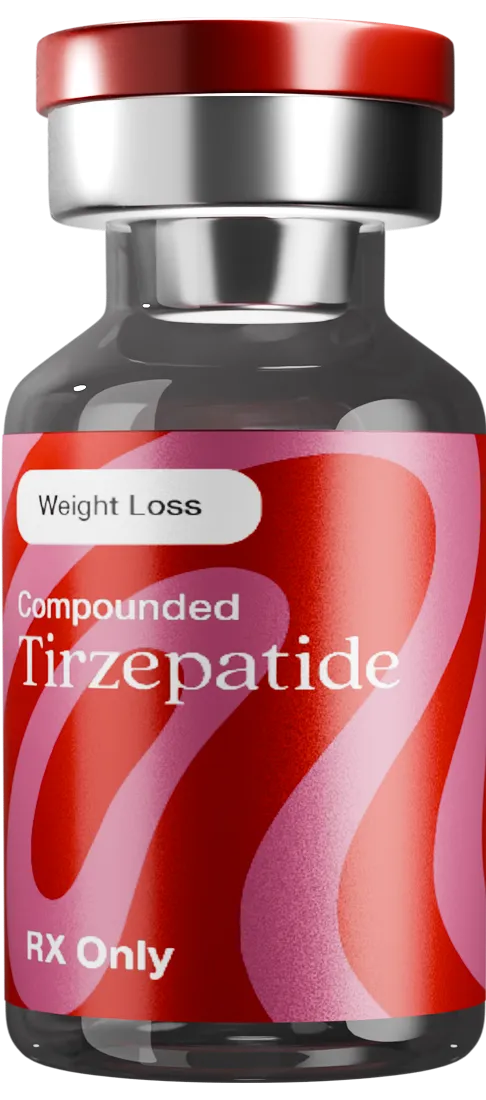
Fixed 0.5 mL doses in 2.5, 5, 7.5, 10, 12.5 and 15 mg strengths, so there is no reconstitution and no syringe units to work out. Using compounded tirzepatide from a vial instead? Use the calculator.
The label calls 2.5 mg an initiation dose only: it is not intended for glycemic control.
Why this dose+
Its job is to let your gut adapt to slowed gastric emptying before the therapeutic doses arrive. Expect appetite change but little movement on labs or the scale; a flat first month tells you nothing about how you will respond at 5 mg and above.
Step up to 5 mg after week 4, then 2.5 mg at a time, only if you need more.
Why this dose+
Each rung needs at least 4 weeks before the next one. Every dose from 5 mg up is a real maintenance dose: SURMOUNT-1 delivered 15.0% weight loss at 5 mg, so there is no requirement to keep climbing once a rung is working for you.
The adult ceiling, and it takes a minimum of 20 weeks of titration to get here.
Why this dose+
Pediatric patients aged 10 and over with type 2 diabetes cap at 10 mg instead. In SURMOUNT-1, 15 mg gave 20.9% weight loss against 19.5% at 10 mg: 1.4 points more. No dose above 15 mg is approved or studied.
- Both are Lilly tirzepatide in the same six strengths: 2.5, 5, 7.5, 10, 12.5 and 15 mg per 0.5 mL.
- Only the carton differs: in the US, Mounjaro is labelled for type 2 diabetes, Zepbound for weight management.
- Switching brands? Carry your current mg across unchanged and do not restart titration.
- Tirzepatide mg do not convert to semaglutide mg; 15 mg and 2.4 mg are different scales.
- With a ~5 day half-life, any dose needs roughly 4 weeks just to reach steady state.
- Step up sooner and you stack a rising dose on blood levels that have not settled.
- SURMOUNT-1 showed 19.5% weight loss at 10 mg and 20.9% at 15 mg: a small gap at the top.
- No approved dose exists above 15 mg, so the target is the lowest rung that works, held indefinitely.
Weekly Schedule
One injection per week, on the same day every week, at whatever time of day suits you. The third row is the rescue window: how far past your normal day a missed dose can still be taken.
Missed a week? Take it within 4 days (96 hours) of the scheduled day: that is the shaded rescue window. Past 4 days, skip it and resume on your normal day rather than doubling up. Moving your injection day permanently is fine as long as at least 3 days (72 hours) separate the two doses. After several weeks off, ask your prescriber about restarting from a lower rung.
Compounded Tirzepatide Reconstitution Calculator
Branded pens are pre-measured, so this is only for compounded vials. Enter the vial size, the water you added and your target dose, and check the mg-per-mL on the vial first.
Double-click a preset to edit it
Double-click a preset to edit it
Double-click a preset to edit it
Standard insulin syringe
Concentration
2.50 mg/mL
1 unit = 25 mcg
Draw volume
1.000 mL
= 2.50 mg ÷ 2.50 mg/mL
Units to draw (1 mL syringe)
100.0 units
1 mL Syringe
100.0 IUWhat to Expect
The first month is about tolerance, not results. The response signal shows up once you are on 5 mg and above, and most of the change lands between months 3 and 10.
Peak plasma concentration is reached anywhere from 8 to 72 hours after the injection, so the effect builds over days rather than hours. Most people describe earlier fullness, smaller portions and a quieter “food noise” within the first week. Nausea, if it comes, typically clusters in the 24–72 hours after the shot and fades before the next one. Blood glucose usually starts drifting down in this window too.
You reach steady state after about 4 weeks of weekly dosing, which is why the label withholds 2.5 mg from the therapeutic doses and calls it initiation only. Modest scale movement at 2.5 mg tells you nothing about how you will respond at 5 mg and above.
Each step up tends to bring a fresh two-to-three-day wave of GI symptoms that settles as you adapt. By week 12 a clear majority of tirzepatide-treated participants in SURMOUNT-1 had already lost at least 5% of body weight; roughly one in five were slower starters who still went on to meaningful loss by the end of the trial. HbA1c improvements are well underway by this point.
This is where most of the change lands. In SURPASS-2, 15 mg cut HbA1c by 2.30% at 40 weeks (versus 1.86% for semaglutide 1 mg). On the weight side, the SURMOUNT-4 lead-in produced a mean 20.9% reduction over 36 weeks on the maximum tolerated dose of 10 or 15 mg.
SURMOUNT-1 landed at 15.0% / 19.5% / 20.9% mean weight reduction at 72 weeks for 5, 10 and 15 mg. The curve flattens rather than stopping; participants who stayed on treatment through week 88 in SURMOUNT-4 reached 25.3% total.
This is a long-term medication, not a course. In SURMOUNT-4, people randomised off the drug regained 14.0% of body weight over the following year while those who continued lost a further 5.5%. Only 16.6% of the withdrawal group held onto most of their loss, versus 89.5% of those who stayed on.
Feeling Something? Check Here
- Nausea in the 1–3 days after your shot, easing before the next one (12–18% in diabetes trials, 24–33% in obesity trials).
- Reduced appetite and early fullness (5–11%).
- Mild diarrhoea (12–17%) or constipation (6–7%).
- Burping, reflux, sulphur burps.
- Transient fatigue in the first weeks.
- Redness or itching at the injection site (3.2% vs 0.4% placebo).
- A fresh 2–3 day symptom wave after each dose increase, which settles.
- Vomiting more than once or twice, or nausea lasting the whole week.
- Fluids not staying down, dark urine, dizziness on standing: volume depletion is the main route to acute kidney injury on this drug.
- Right-upper-abdominal pain after fatty meals, clay-coloured stools or yellowing skin (gallbladder events 0.6% vs 0% placebo).
- Shakiness, sweating or confusion on insulin or a sulfonylurea (severe hypoglycaemia up to ~0.6% with a sulfonylurea).
- New or worsening blurred vision with diabetic retinopathy.
- Resting heart rate noticeably up, or rapid unintended weight loss.
- Hold the next escalation and ask about staying at your current dose or stepping back down.
- Severe, persistent abdominal pain, especially radiating to the back (acute pancreatitis: 0.23 vs 0.11 per 100 patient-years).
- Swelling of the face, lips, tongue or throat, trouble breathing, widespread hives or fainting (anaphylaxis/angioedema).
- A neck lump or swelling, persistent hoarseness, trouble swallowing or shortness of breath (boxed warning for thyroid C-cell tumours).
- Severe hypoglycaemia with confusion, seizure or loss of consciousness.
- Signs of dehydration with little or no urine output.
- Personal or family history of medullary thyroid carcinoma (MTC).
- Multiple Endocrine Neoplasia syndrome type 2 (MEN 2).
- Known serious hypersensitivity to tirzepatide or any excipient.
- Pregnancy or actively trying to conceive: animal data show fetal risk, and the label says discontinue once pregnancy is recognised.
- Severe gastroparesis: the label states it is not recommended.
- Type 1 diabetes or diabetic ketoacidosis: neither indicated nor studied as a substitute for insulin.
- Children under 10 years.
- Any GLP-1 receptor agonist alongside it (semaglutide, dulaglutide, liraglutide) or a second tirzepatide product: the classes overlap and stacking is unstudied.
Specialist input only if you have a history of pancreatitis, active diabetic retinopathy, severe gastrointestinal disease, or are breastfeeding.
FAQ
Do I have to get to 15 mg?+
No, and most people should not assume they will. The label frames escalation conditionally (increase only “if additional glycemic control is needed”), and every rung from 5 mg upward is a legitimate maintenance dose. SURMOUNT-1 recorded 15.0% mean weight loss at 5 mg versus 20.9% at 15 mg, so the majority of the benefit arrives early on the ladder. The right dose is the lowest one that gets you to your goal with side effects you can live with, and you can hold it indefinitely. Climbing further because 15 mg exists is the wrong reason to climb.
What do I do if I miss my weekly shot?+
Take it as soon as you remember, provided you are within 4 days (96 hours) of your normal injection day. Past that, skip the dose completely and resume on your regular day; never take two doses close together to make up the gap, since a ~5 day half-life means they will stack. If you want to change which day you inject, that is allowed as long as at least 3 days (72 hours) separate the two injections. After a long unplanned break of several weeks, ask your prescriber whether to restart at a lower dose rather than jumping back to where you left off.
Is 2.5 mg really doing nothing?+
It is doing something important, just not the thing you are measuring. The FDA label states that 2.5 mg is for treatment initiation and is not intended for glycemic control; it exists to let your gut adapt to slowed gastric emptying so that the therapeutic doses are tolerable when you reach them. Many people do notice appetite change at 2.5 mg, but flat weight or HbA1c in the first month is expected and is not a sign the drug will not work for you. Do not use 2.5 mg as a long-term maintenance dose, and do not judge your response until you have had several weeks at 5 mg or above.
Can I split a pen or take a half dose to make it last longer?+
No. Both presentations deliver fixed amounts: the single-dose pen contains one 0.5 mL dose, and the KwikPen (a UK and EU presentation, discarded 30 days after first use) contains four fixed doses of the same strength. Neither has a dial for partial dosing, and there is no approved way to withdraw a fraction. Attempting to transfer pen contents to a syringe introduces sterility and measurement errors that the device was designed to prevent. If cost is the driver, discuss the KwikPen, manufacturer savings programmes or holding at a lower approved dose with your prescriber. Those are dose decisions, not dispensing workarounds.
Does Mounjaro interfere with birth control?+
Yes, and this one is easy to miss. Because tirzepatide slows gastric emptying, the label advises anyone using oral hormonal contraceptives to switch to a non-oral method or add a barrier method for 4 weeks after starting the drug and for 4 weeks after every single dose escalation. On a standard titration that is a repeated series of 4-week windows, not a one-off precaution at the start. Non-oral methods such as an IUD, implant, patch or injection are unaffected.
Does the time of day or eating matter?+
No. The label permits dosing at any time of day, with or without meals; the ~5 day half-life makes clock timing irrelevant. What matters is consistency of the day of the week, so blood levels stay even, and rotating injection sites between the abdomen, thigh and (if someone else is injecting) the back of the upper arm. Many people choose an evening shot so that any nausea peaks overnight, and pick a day that keeps the roughest 24–48 hours away from a big social meal, but neither is a clinical requirement.
What happens if I stop taking it?+
Appetite and weight tend to return, because the drug manages the condition rather than resolving it. SURMOUNT-4 is the clearest evidence: after a 36-week lead-in producing 20.9% weight loss, participants switched to placebo regained 14.0% of body weight over the next year while those who continued lost a further 5.5%, and a post hoc analysis found the cardiometabolic improvements largely tracked the weight back. This is biology, not failure of willpower. If you need to come off, do it as a planned conversation about the lowest maintenance dose that holds your result, and protect the habits (resistance training, protein intake, sleep) that make the new weight easier to defend.
Is compounded tirzepatide dosed the same way?+
The titration logic is the same drug, but the delivery is not, and that is where errors happen. Branded pens deliver a fixed, factory-measured dose; compounded vials require you to draw a volume with a syringe, so the same 5 mg can be a different number of units depending on the concentration of the vial. Dose errors in this setting are overwhelmingly unit-conversion errors, not pharmacology errors. Compounded products also fall outside FDA approval and are not reviewed for potency, purity or sterility, and salt forms such as tirzepatide acetate are not the same as the approved base. If you are using anything other than a branded pen, verify the mg-per-mL on the vial and have the dose maths checked by a clinician before injecting.
Sources
Dosing, storage, contraindications and adverse-event rates come from the FDA label, except the four-dose KwikPen, which exists only in the UK and EU and is sourced to the MHRA. Outcome figures come from the SURMOUNT and SURPASS trial programmes.
- Mounjaro (tirzepatide) full prescribing information, DailyMed
- FDA structured product label, accessdata.fda.gov
- SURMOUNT-1: tirzepatide once weekly for obesity (PubMed 35658024)
- SURMOUNT-4: continued treatment vs withdrawal (PubMed 38078870)
- JAMA Internal Medicine: tirzepatide outcomes analysis
- Lilly: SURMOUNT-1 results published in NEJM
- Lilly: SURPASS-2 results published in NEJM
- Lilly HCP: getting patients started on Mounjaro
- European Medicines Agency: Mounjaro EPAR
- MHRA: four-dose Mounjaro KwikPen approval
- Diabetes, Obesity and Metabolism: SURMOUNT-1 responder analysis
Disclaimer: This content is for informational purposes only and is not medical advice. Mounjaro (tirzepatide) is an FDA-approved prescription medicine for type 2 diabetes and must be prescribed and supervised by a licensed healthcare provider. Compounded tirzepatide is not FDA-approved and is not reviewed for potency, purity or sterility. Always consult a qualified physician before starting, adjusting or stopping any treatment. PeptideDeck is not responsible for individual use.