Semaglutide Dosage Chart & Schedule Guide.
Semaglutide is a GLP-1 receptor agonist used for weight management and blood sugar control. It follows a gradual titration schedule over 16+ weeks to minimize side effects and optimize results.
- Half-life ~1 week: it clears over about 5 weeks after Ozempic, 5 to 7 weeks after Wegovy 2.4 mg or 7.2 mg or the 25 mg tablet.
- Once-weekly subcutaneous prefilled pen; a daily oral tablet also exists.
- Any time of day, with or without food; the day is what matters.
- Fridge at 2 – 8 °C in the carton. Wegovy pens tolerate ≤ 30 °C for up to 28 days.
0.25 mg once weekly for 4 weeks, then a step up every 4 weeks: 0.5 → 1 → 1.7 → 2.4 mg for weight management, or 0.5 → 1 → 2 mg for type 2 diabetes. Each step is held a full 4 weeks. The oral route runs 1.5 → 4 → 9 → 25 mg daily.
Dosage Protocols
Prefilled pens deliver a fixed milligram dose, so there is no reconstitution and no syringe-unit conversion. Drawing from a compounded vial instead? Use the calculator. Each ladder below belongs to one product only.
The FDA-approved weight-management ladder: hold each rung a full 4 weeks, 2.4 mg from week 17.
Why this dose+
If a step is not tolerated, the label delays the next increase by 4 weeks rather than pushing on. If 2.4 mg stays intolerable, drop to 1.7 mg; if 1.7 mg is intolerable, discontinue. The same 2.4 mg dose is approved for cardiovascular risk reduction and for MASH.
Same molecule, lower ceiling: Ozempic stops at 2 mg weekly and has no 1.7 mg rung.
Why this dose+
Escalation here is driven by HbA1c rather than weight, so many people stay at 0.5 or 1 mg indefinitely because that is where their glucose target sits. Ozempic's missed-dose rule also differs from Wegovy's (see the schedule note).
7.2 mg is the highest approved dose; the 25 mg tablet matches 2.4 mg injected on exposure.
Why this dose+
7.2 mg comes only after ≥ 4 weeks tolerating 2.4 mg, with no intermediate rung. Tablets are swallowed whole on waking with no more than 4 oz of plain water, then nothing for 30 minutes; at ~1–2% bioavailability, breaking that rule wipes out the dose. Oral ladder: 30 days each at 1.5, 4 and 9 mg, then 25 mg from day 91.
- Ozempic tops out at 2 mg weekly; Wegovy at 2.4 mg, or 7.2 mg on the high-dose pen.
- Rybelsus runs 3 → 7 → 14 mg daily; the Wegovy tablet runs 1.5 → 4 → 9 → 25 mg daily.
- Injected semaglutide is ~89% bioavailable and the 25 mg tablet only ~1–2%, so 25 mg daily ≈ 2.4 mg weekly injected.
- Check which product a chart describes before borrowing its milligrams; the ladders are not interchangeable.
- 4 weeks per rung is the pace on the label, and a rough step delays the next increase by another 4 weeks.
- Past 2.4 mg the curve flattens: STEP UP moved adherent weight loss from 17.5% to 20.7% at 72 weeks on 7.2 mg.
- With a ~1-week half-life, a dose you regret keeps acting for over a month and cannot be dialled back quickly.
- Feeling nothing on 0.25 mg is expected: it is an initiation dose, not a therapeutic one.
Weekly Schedule
Both injectable products are once weekly on a day you choose and then keep. The oral tablet is the outlier; it is taken every single morning on an empty stomach.
- Ozempic: inject within 5 days of the missed dose, then resume your normal day.
- Wegovy: inject now if the next scheduled dose is more than 48 hours away, otherwise skip it.
- Leave at least 48 hours between any two injections.
- Oral tablets: skip it and take the next one tomorrow morning.
- Two or more consecutive weeks missed: ask your prescriber, as you may need to restart the ladder.
Semaglutide Reconstitution Calculator
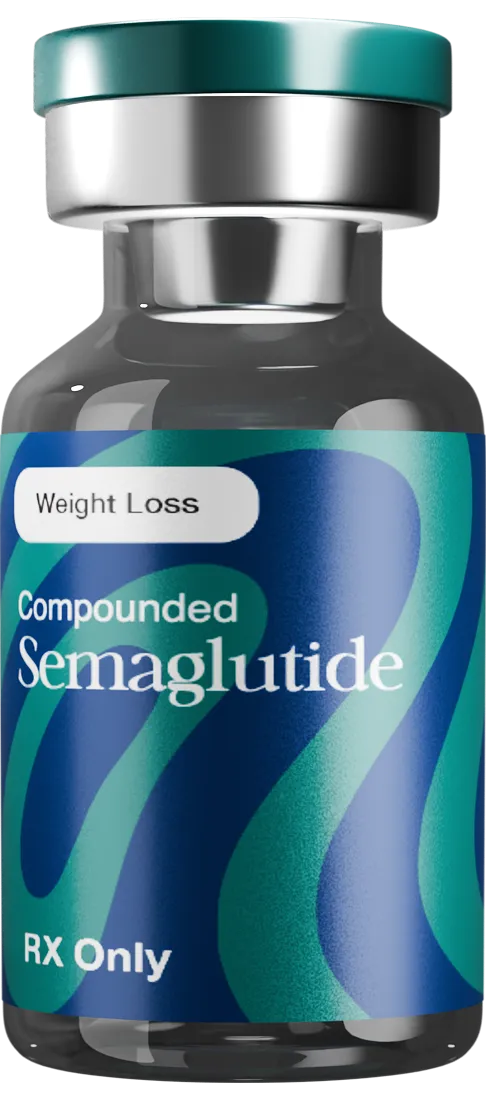
For compounded semaglutide in a lyophilised vial: enter the vial size, the bacteriostatic water you added, and the dose you want. Prefilled pens need none of this. Confusing milligrams with syringe units is the error behind the FDA's compounded-semaglutide overdose alerts, so check the draw volume twice.
Double-click a preset to edit it
Double-click a preset to edit it
Double-click a preset to edit it
Standard insulin syringe
Concentration
2.50 mg/mL
1 unit = 25 mcg
Draw volume
0.100 mL
= 0.25 mg ÷ 2.50 mg/mL
Units to draw (1 mL syringe)
10.0 units
1 mL Syringe
10.0 IUWhat to Expect
The first month is runway, not treatment. The headline numbers come from week 60 onward, and the regain data after stopping is part of the same picture.
Most people notice earlier fullness and less food preoccupation within the first week or two. Weight change is small; in STEP 1 the semaglutide curve separated from placebo at week 4. Nausea, if it appears, lands in the 2–3 days after each injection. Blood levels take 4–5 weeks of weekly dosing to reach steady state.
Each 4-week step deepens the appetite effect and re-triggers GI symptoms for a few days. Nausea (44% vs 16% on placebo), diarrhoea (30%), vomiting (24%) and constipation (24%) concentrate here, mostly mild-to-moderate and self-limiting. Weight comes off at a steady clip from 1 mg upward. In type 2 diabetes, HbA1c is already falling by this point.
Once you hold 1.7–2.4 mg the GI symptoms usually recede substantially. In the STEP 4 run-in, participants averaged 10.6% body weight loss after 20 weeks: 16 weeks of escalation plus 4 at 2.4 mg.
STEP 1: mean weight change −14.9% on semaglutide 2.4 mg versus −2.4% on placebo over 68 weeks, with 86.4% of the semaglutide group losing at least 5% of body weight. Loss reached its nadir around week 60. STEP 5 extended this to two years with the loss largely maintained. On 7.2 mg, STEP UP reported 20.7% at 72 weeks among adherent participants.
In the STEP 1 extension, participants who had lost 17.3% regained 11.6 percentage points (about two-thirds of the loss) within one year of withdrawal, and cardiometabolic improvements drifted back with it. STEP 4 showed the same prospectively: at week 20 everyone was down 10.6%, then those continuing lost a further 7.9% while those switched to placebo gained 6.9% back.
- The appetite signal returns as the drug clears.
- A maintenance dose holds the result better than stopping; the label allows stepping down to 1.7 mg.
- Taper under supervision rather than stopping outright.
- Protect lean mass with resistance training and adequate protein.
Feeling Something? Check Here
- Nausea in the 2–3 days after a dose or a step-up (44% vs 16% on placebo).
- Loose stools or diarrhoea (30%).
- Constipation (24%).
- Burping, reflux, early fullness.
- A marked drop in appetite and food noise.
- Mild fatigue in the first few weeks.
- Redness or itching at the injection site.
- Expected escalation symptoms: mild-to-moderate, and usually fading within days of holding a dose steady.
- Vomiting often enough that you cannot keep fluids down.
- Dizziness, dark urine or headache: dehydration is the main route to kidney injury here.
- Constipation lasting more than a few days.
- Shaky, sweaty or confused spells on insulin or a sulfonylurea: hypoglycaemia risk rises, and those doses may need lowering.
- New or worsening blurred vision, especially with existing diabetic retinopathy.
- Losing more than about 1 kg a week, or noticeable hair shedding.
- GI symptoms still there after 2 weeks at a dose: the label delays the next step by 4 weeks, or drops 2.4 mg back to 1.7 mg.
- Before surgery or sedation, tell the team: delayed gastric emptying raises aspiration risk. Not recommended in severe gastroparesis.
- Severe, persistent abdominal pain radiating to the back (pancreatitis: 0.2 cases per 100 patient-years vs <0.1 on placebo).
- Upper-right abdominal pain with fever, nausea or jaundice (gallstones 1.6% vs 0.7%; cholecystitis 0.6% vs 0.2%).
- Sudden painless loss of vision in one eye (NAION: the EMA and WHO added this as a very rare effect, up to 1 in 10,000, in 2025).
- A lump or swelling in the neck, hoarseness, trouble swallowing or persistent shortness of breath (the boxed thyroid C-cell tumour warning).
- Swelling of the face, lips or throat, hives or difficulty breathing (hypersensitivity).
- Vomiting that will not stop, or abdominal distension with no bowel movement (ileus or obstruction).
- A personal or family history of medullary thyroid carcinoma (MTC): a boxed contraindication.
- Multiple Endocrine Neoplasia syndrome type 2 (MEN 2).
- A previous serious hypersensitivity reaction to semaglutide or any excipient.
- Pregnancy: the label directs stopping as soon as pregnancy is recognised, and stopping at least 2 months before a planned pregnancy, because of the ~1-week half-life.
- Any other GLP-1 receptor agonist or a second semaglutide-containing product (tirzepatide, liraglutide, another semaglutide brand); coadministration is not recommended.
- Severe gastroparesis.
- Type 1 diabetes or diabetic ketoacidosis, where it is not a substitute for insulin.
- Under 12 years old, where safety is not established.
- Unapproved semaglutide sodium or semaglutide acetate research-chemical products: the FDA states these are different active ingredients from approved semaglutide and have not been shown to be safe or effective.
- A prior episode of pancreatitis is not a formal contraindication, but the label advises against restarting after a confirmed episode.
FAQ
Can I skip ahead in the titration if 0.25 mg isn't doing anything?+
No, and the fact that it is not doing much is the point. In current labelling 0.25 mg is an initiation dosage, not a therapeutic one: the Ozempic label instructs starting at 0.25 mg once weekly for 4 weeks and following the escalation "to reduce the risk of gastrointestinal adverse reactions." Its job is to let your gut adapt to slowed gastric emptying before a therapeutic dose arrives. GI side effects are dose-dependent and cluster during escalation, so compressing the ladder converts a manageable few days of nausea into vomiting and dehydration, which is the main way people end up in hospital on this drug. If anything, the label pushes in the opposite direction: if a dose is not tolerated, delay the next increase by 4 weeks rather than accelerate.
Ozempic, Wegovy and Rybelsus are all semaglutide. Can I just use the same numbers?+
No. Ozempic’s maximum is 2 mg weekly and its ladder has no 1.7 mg rung. Wegovy goes to 2.4 mg (or 7.2 mg on the newer high-dose pen) and does have a 1.7 mg rung. Rybelsus is 3, 7 or 14 mg daily by mouth. The Wegovy tablet is 1.5, 4, 9 then 25 mg daily. Even the missed-dose rules differ: 5 days for Ozempic, 48 hours for Wegovy. Treat each product as having its own chart, because it does.
Why is the oral dose 25 mg when the injection is 2.4 mg? That looks like a 10x error.+
It is not. Injected semaglutide is roughly 89% bioavailable; the swallowed 25 mg tablet is only about 1–2% (and the lower-dose Rybelsus 3–14 mg tablets only 0.4–1%), because peptides are largely destroyed in the stomach and gut. The oral tablets pair semaglutide with an absorption enhancer, but the fraction that reaches the bloodstream is still tiny, hence the much larger tablet number for a similar systemic exposure. The efficacy data line up: −13.6% mean weight loss at 64 weeks on 25 mg oral (OASIS 4) versus −14.9% at 68 weeks on 2.4 mg injected (STEP 1), comparing each trial's primary treatment-policy result. This is also why the tablet must be taken on waking with no more than 4 oz of plain water and nothing else for 30 minutes; food or other liquids in the stomach can significantly reduce absorption.
What happens if I miss a week?+
For Ozempic, inject within 5 days of the missed dose and resume your usual day. For Wegovy, inject now if your next scheduled dose is more than 48 hours away; if it is closer than that, skip the missed dose. Never take two injections within 48 hours. If you have missed two or more consecutive weeks, speak to your prescriber before resuming. Because tolerance to GI effects fades, you may need to restart the escalation ladder rather than jump back to your previous dose. Oral tablets: skip it and take tomorrow’s tablet, never two in one day.
Do I have to stay on it forever?+
For most people, stopping means regaining most of the weight. In the STEP 1 extension, participants regained about two-thirds of their loss within a year of stopping, and their blood pressure and lipid improvements drifted back too. STEP 4 showed the same thing in real time: continuing dropped a further 7.9% while switching to placebo added 6.9% back. Obesity guidelines increasingly treat this like blood pressure medication: the drug works while you take it. If cost or side effects are the issue, stepping down to 1.7 mg weekly is an option written into the label and is a much better outcome than stopping outright.
Will I lose muscle along with fat?+
Some, yes, as with any substantial weight loss. An exploratory DXA substudy of STEP 1 (140 participants, so a small and low-powered sample) found lean body mass fell alongside a much larger drop in fat mass, with lean mass rising as a proportion of total body weight. The practical response is not to avoid the drug but to lift weights 2–3 times a week and keep protein intake high through the loss phase; this is the standard advice for any rapid weight loss and it is the part of the outcome you actually control.
Is compounded or "research-grade" semaglutide the same thing?+
Not necessarily. The FDA has stated that products sold as semaglutide sodium or semaglutide acetate are different active ingredients from the base semaglutide in approved products, have not been shown to be safe or effective, and that it is unaware of a lawful basis for compounding with them. The FDA has also issued alerts about dosing errors with compounded injectable semaglutide, where people drawing from multi-dose vials confused milligrams with syringe units and took five- to twenty-fold overdoses requiring hospitalisation. With a one-week half-life, an overdose is not something you sleep off; it acts for weeks. Prefilled pens exist precisely to remove that arithmetic.
What day and time should I inject, and can I change it?+
Any time of day, with or without food, but pick the same day each week. Many people choose a day that leaves the following 48 hours relatively free, since nausea tends to peak in the 2–3 days after a dose. You can move your injection day, provided the last dose and the new one are at least 2 days (more than 48 hours) apart. Rotate sites between abdomen, thigh and upper arm; there is no evidence any site works better, but rotating reduces local irritation.
Disclaimer: This content is for informational and research purposes only and is not medical advice. Semaglutide is a prescription medicine (Ozempic, Wegovy, Rybelsus) that carries a boxed warning for thyroid C-cell tumours, and dosing differs between those products. Always consult a qualified healthcare professional before starting or adjusting any treatment. PeptideDeck is not responsible for individual use.