Wegovy Dosage Chart & Titration Schedule.
Wegovy (semaglutide 2.4 mg) is a GLP-1 receptor agonist approved for chronic weight management in adults. It follows a gradual 5-step titration over 16 weeks to reach the 2.4 mg maintenance dose and minimize gastrointestinal side effects.
0.25 mg once weekly for 4 weeks, then 0.5 mg, 1 mg and 1.7 mg for 4 weeks each. 2.4 mg maintenance from week 17.
Dosage Protocols
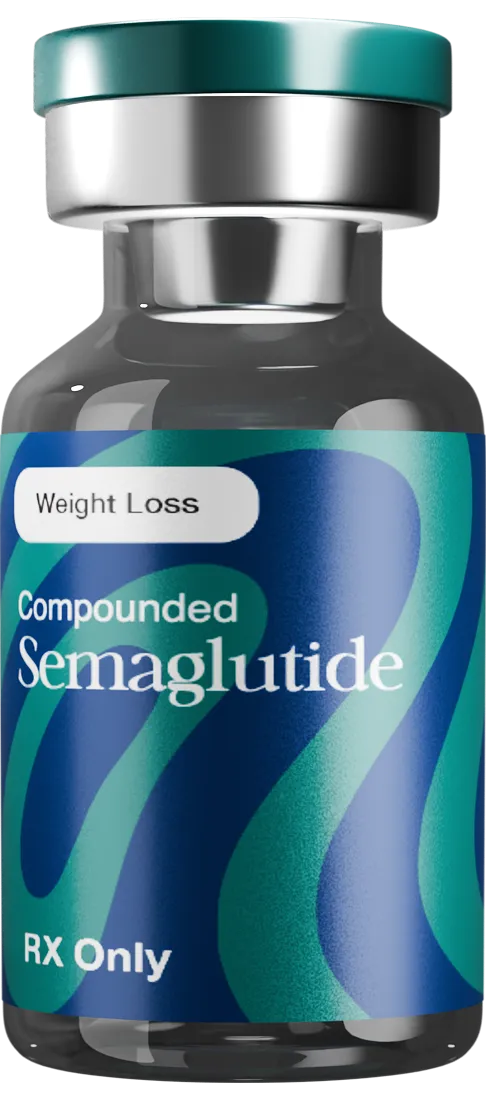
Doses are fixed at the factory: one pen, one labelled dose (0.25, 0.5, 1, 1.7, 2.4 or 7.2 mg), nothing to reconstitute. Working from a compounded vial? Use the calculator. Every figure below is off the FDA label.
Escalation only: 4 weeks on each rung, and a rough rung is held 4 extra weeks, never skipped.
Why this dose+
Nobody is meant to finish here. These four strengths exist so the gut can adapt before 2.4 mg, and none of them was ever studied as an endpoint. The label only moves in one direction when a step is rough: hold it, do not jump ahead.
The recommended maintenance dose for weight reduction, cardiovascular risk reduction, MASH, and adolescents aged 12+.
Why this dose+
1.7 mg is the label’s explicit alternative if 2.4 mg is not tolerable: a legitimate long-term dose, not a failed titration. A prefilled multi-dose FlexTouch pen (9.6 mg/3 mL) delivering four 2.4 mg doses is also available, single-patient-use, discarded 56 days after first use.
Optional: adults on the weight-reduction indication only, and only if further weight loss is clinically indicated.
Why this dose+
Not approved for cardiovascular risk reduction, MASH, or anyone under 18. In STEP UP it sat about 3.3 percentage points ahead of 2.4 mg at 72 weeks, −18.8% against −15.5%, which is the whole of what the higher dose buys.
- The label switches you from the 2.4 mg weekly injection straight to a 25 mg daily tablet.
- The 10× gap is absorption: injected semaglutide is 89% bioavailable, the SNAC tablet 1 – 2%.
- Exposure lands in the same place: ~75 nmol/L injected against ~77 nmol/L oral.
- An oral milligram number never carries across to anything injectable.
- STEP UP (n=1,407, 72 weeks): 2.4 mg reached −15.5%, 7.2 mg reached −18.8%.
- Tripling the dose buys about 3.3 extra percentage points of weight loss.
- Faster is not the same as higher: every rung still takes its 4 weeks.
- Semaglutide circulates 5 – 7 weeks, so a dose set too high is a five-week problem.
Weekly Schedule
Every injectable tier runs the same rhythm: one pen, one day a week. The 25 mg tablet is the exception, taken daily.
Missed a dose? Injection: more than 2 days until the next one, take it now; less than 2 days, skip it. Miss 2 or more consecutive weeks and the label says restart lower and re-escalate. Tablets: skip the day, never take two. Moving your injection day needs no dose change, as long as 2 days separate doses.
Compounded Semaglutide Reconstitution Calculator
A branded pen needs none of this. From a compounded vial, enter the vial size, the water you added and your target dose to get the exact draw volume.
Double-click a preset to edit it
Double-click a preset to edit it
Double-click a preset to edit it
Standard insulin syringe
Concentration
1.00 mg/mL
1 unit = 10 mcg
Draw volume
0.250 mL
= 0.25 mg ÷ 1.00 mg/mL
Units to draw (1 mL syringe)
25.0 units
1 mL Syringe
25.0 IUWhat to Expect
A ~1-week half-life means everything here moves slowly. Each dose change takes 4 – 5 weeks to fully register, which is why the ladder is built the way it is.
Semaglutide peaks 1 – 3 days after injection. Most people notice appetite drop inside the first week: smaller portions, less snacking. Mild nausea, burping and constipation usually show up in the same window. Expect almost nothing on the scale: 0.25 mg is sub-therapeutic and exists only to let the gut adapt.
With a ~1-week half-life, blood levels take about 4 – 5 weeks to plateau after any dose change, which is why each rung is 4 weeks long. Appetite suppression turns consistent here, and the first real weight loss registers. Every step-up restarts the cycle: gastrointestinal symptoms for roughly 3 – 10 days, then settling.
Week 17 is the earliest anyone reaches the recommended maintenance dose. The appetite effect is strongest here, and side effects are usually milder than during early titration because the gut has adapted over sixteen weeks. In the STEP trials the treated weight curve had pulled clearly away from placebo and was still falling.
Weight loss flattens around the 14-month mark in the trials. STEP 1 recorded −14.9% average at week 68 versus −2.4% on placebo. With type 2 diabetes the same dose delivers less: −9.6% in the label’s Study 3. In STEP UP at week 72, 7.2 mg reached −18.8% against −15.5% for 2.4 mg.
In the STEP 1 extension, participants who stopped semaglutide regained about two-thirds of their lost weight over the following year, still averaging 5.6% below where they started, with roughly 48% holding a 5%+ loss. Wegovy manages obesity rather than curing it, which is why the maintenance dose has no end date.
Feeling Something? Check Here
- Nausea (44% vs 16% on placebo).
- Diarrhea (30%), constipation (24%), abdominal pain (20%).
- Burping, bloating and reflux.
- Headache (14%), fatigue (11%), dyspepsia (9%).
- Early fullness and sharply reduced appetite.
- Resting heart rate up 1 – 4 bpm.
- A flare of gut symptoms for a few days after each step-up, then settling.
- Keep fluids up, eat smaller and slower.
- Vomiting frequent enough that you cannot hold fluids down.
- Constipation past 3 – 4 days despite fibre and water.
- Dizziness or lightheadedness on standing: dehydration is the main route to acute kidney injury here.
- New burning, tingling or painfully sensitive skin (dysesthesia: 6% at 2.4 mg, 22% at 7.2 mg, usually resolves on dose reduction).
- Hair shedding (3%).
- Resting heart rate up 20+ bpm.
- Vision changes if you have diabetic retinopathy.
- Losing weight faster than roughly 1% of body weight per week.
- Hold the current dose or step down rather than escalating.
- Tell any surgeon or anesthetist before sedation: semaglutide delays gastric emptying and raises aspiration risk.
- Severe persistent abdominal pain radiating to the back, with or without vomiting (acute pancreatitis).
- Right-upper-abdomen pain with fever, jaundice or clay-coloured stools (gallbladder disease).
- Swelling of the face, lips, tongue or throat, hives, or trouble breathing (anaphylaxis or angioedema).
- A lump in the neck, persistent hoarseness, or difficulty swallowing or breathing (thyroid).
- Severe dehydration or a sharp drop in urine output.
- Severe hypoglycemia if you also take insulin or a sulfonylurea.
- Personal or family history of medullary thyroid carcinoma (MTC).
- Multiple Endocrine Neoplasia syndrome type 2 (MEN 2).
- Any prior serious hypersensitivity reaction (anaphylaxis or angioedema) to semaglutide or a pen or tablet excipient.
- Pregnancy, or within 2 months of a planned pregnancy, because of the long half-life.
- Breastfeeding.
- Alongside any other GLP-1 receptor agonist or semaglutide-containing product, including Ozempic, Rybelsus, tirzepatide and compounded semaglutide.
- Severe gastroparesis (explicitly not recommended).
- Children under 12.
- Prior pancreatitis.
- Active gallbladder disease.
- Proliferative diabetic retinopathy.
- Type 1 diabetes or a history of diabetic ketoacidosis (not studied).
- Active eating disorder.
FAQ
What do I do if I miss my weekly injection?+
Check how far away your next scheduled dose is. More than 2 days away: inject the missed dose as soon as you remember, then carry on with your normal day. Less than 2 days away: skip it entirely and take your next dose on schedule; never double up to catch up. The one situation that changes the plan is missing 2 or more consecutive weeks: the label then says to restart at a lower dose and re-escalate, because gut tolerance fades quickly and jumping straight back to your previous dose is a reliable way to end up vomiting.
Can I start higher than 0.25 mg or move up faster than every 4 weeks?+
No, and the reason is worth understanding. The ladder is not a potency issue, it is a tolerability schedule; the low doses exist purely so your gut can adapt. Semaglutide’s ~1-week half-life means blood levels take roughly 4 – 5 weeks to plateau after any change, so a 4-week step is the minimum time needed to know whether you actually tolerate that level. Compressing the schedule does not speed up weight loss; it produces nausea, vomiting, dehydration and dropouts. The label only ever moves in the other direction: if a step is rough, hold it for 4 extra weeks.
Is Wegovy the same drug as Ozempic?+
Same molecule, different products. Both are semaglutide from the same manufacturer, but they are approved for different things at different doses in different devices. Ozempic is indicated for type 2 diabetes and tops out at 2 mg weekly in a multi-dose dial pen. Wegovy is indicated for weight reduction, cardiovascular risk reduction and MASH, and goes to 2.4 mg (or 7.2 mg on the high-dose pen), mostly in fixed single-dose pens you cannot dial. They are not interchangeable prescriptions, and taking both, or either alongside another GLP-1, is explicitly not recommended.
Should I go up to the new 7.2 mg dose?+
For most people, no. The FDA approved 7.2 mg (Wegovy HD) in 2026 for adults on the weight-reduction indication who have tolerated 2.4 mg for at least 4 weeks and still need more weight loss. The trade is unattractive for the average user: STEP UP showed about 3.3 extra percentage points of weight loss (−18.8% vs −15.5% at 72 weeks) in exchange for dysesthesia rising from 6% to 22%. Among people who developed dysesthesia at 7.2 mg and then re-escalated after recovering, 45% had it come back. It is not approved for cardiovascular risk reduction, MASH, or under-18s.
Do I have to reach 2.4 mg, or can I stay at 1.7 mg?+
1.7 mg is a fully labelled maintenance dose, not a consolation prize. The FDA label names either 1.7 mg or 2.4 mg as maintenance for weight reduction and cardiovascular risk reduction, with 2.4 mg recommended, and tells prescribers to choose based on both response and tolerability. If you are losing weight well at 1.7 mg with manageable side effects, there is no clinical requirement to climb further. What is not a maintenance option is parking at 0.25, 0.5 or 1 mg; those rungs are escalation-only and were never studied as endpoints.
Can I switch between the Wegovy pen and the Wegovy pill?+
Yes, and the label gives exact timing. Pen to pill: one week after your last 2.4 mg injection, start 25 mg tablets once daily. Pill to pen: the day after your last tablet, start 2.4 mg injection weekly, or 1.7 mg if you struggled with the 25 mg tablet. One caveat: oral semaglutide absorption is more variable, and in people with type 2 diabetes it runs lower than the injection, so the label warns some diabetic patients on tablets may sit at sub-therapeutic levels and should consider switching to the pen if response is poor.
Does the injection site or time of day matter?+
Not much, which is unusual for an injectable. The label confirms similar exposure whether you inject into the abdomen, thigh or upper arm, and allows any time of day, with or without meals. Rotate sites between doses. You can also change which day of the week you inject without any dose adjustment, provided at least 2 days separate consecutive doses, useful if your routine shifts. The one thing that does matter is consistency: pick a day you will genuinely remember.
How does compounded or ‘research’ semaglutide compare to a real Wegovy pen?+
A Wegovy pen is a fixed, factory-filled dose with a known concentration; there is nothing to reconstitute and no syringe units to calculate, which removes the single largest source of dosing error. Compounded or grey-market semaglutide sold in vials shifts all of that onto you: concentration, reconstitution volume, draw accuracy, sterility and actual peptide content are unverified, and dosing errors on this drug are not quickly reversible given the 5 – 7 week clearance window. Numbers quoted on vendor sites frequently do not trace back to the FDA label. If you are using anything other than a licensed pen, the titration schedule on this page is still the schedule, but verify every calculation against the label, not a vendor’s chart.
Sources
Dosing, contraindications, storage, pharmacokinetics and adverse-event rates on this page are taken from the official Wegovy prescribing information and the published trials behind it.
- Wegovy Prescribing Information (PDF): Novo Nordisk
- Wegovy label: DailyMed, US National Library of Medicine
- Semaglutide 2.4 mg trial data: PubMed
- Weight change after semaglutide withdrawal: PubMed Central
- FDA approves high-dose Wegovy 7.2 mg: Healio
- Novo Nordisk news release: oral semaglutide 25 mg
- FDA approved labeling 215256s033 (PDF): accessdata.fda.gov
Disclaimer: This content is for informational and research purposes only and is not medical advice. Wegovy (semaglutide) is an FDA-approved prescription medicine that must be prescribed and supervised by a licensed healthcare provider; compounded semaglutide is not FDA-approved. Always consult a qualified healthcare professional before starting, adjusting or stopping any treatment. PeptideDeck is not responsible for individual use.