Growth Hormone Secretagogues
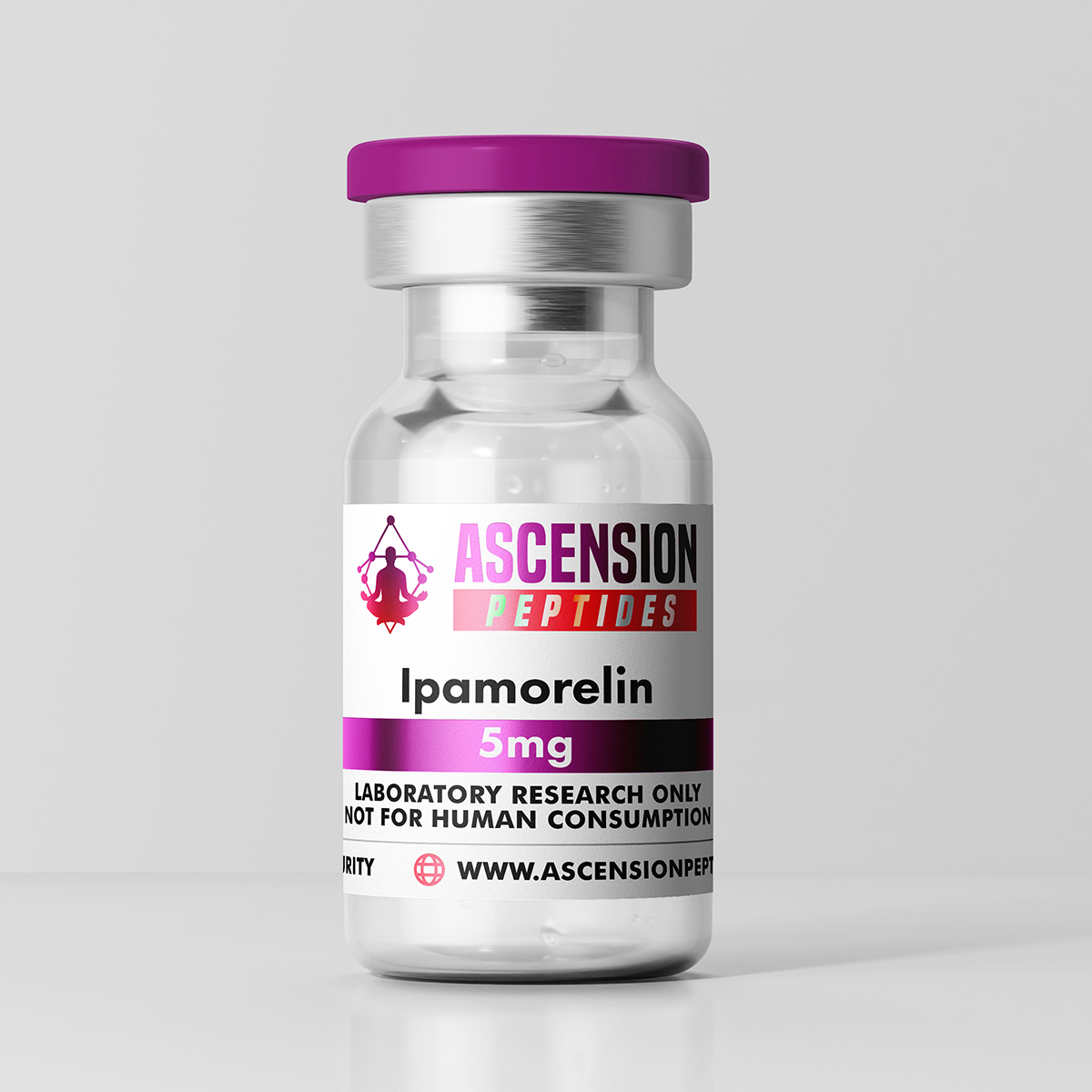
Ipamorelin
with codePEPTIDEDECKat checkout· list $64.99
- Purity
- 99%+
- Vial
- 5mg
- Form
- Lyophilized powder in sealed glass vial
- Half-life
- ~2 hours (in research models)
Buy Ipamorelin 5mg online at PeptideDeck. Highly selective ghrelin receptor agonist supplied as 99%+ HPLC-verified lyophilized powder, shipped same-day from a US warehouse with Certificate of Analysis on request.
About Ipamorelin
Looking to buy Ipamorelin for a growth hormone secretagogue study? PeptideDeck lists Ipamorelin 5mg vials for sale from a vetted US research supplier at 99%+ HPLC-verified purity, with same-day shipping from a US warehouse and a Certificate of Analysis available on request. The Ipamorelin price on this listing ($50.00 per 5mg vial against a $64.99 MSRP) reflects an active promotional rate through our partner supplier, not a markdown on purity. Ipamorelin for sale in 5mg format is the most common working concentration for in-vitro GHS-R1a binding assays and rodent pharmacokinetic models.
Ipamorelin is a synthetic pentapeptide developed by Novo Nordisk in the 1990s as a rationally designed growth hormone secretagogue with minimal off-target activity. Unlike earlier growth hormone releasing peptides (GHRP-1, GHRP-2, GHRP-6), Ipamorelin binds the ghrelin receptor GHS-R1a with a selectivity profile that leaves ACTH, cortisol, aldosterone, and prolactin axes essentially undisturbed at the doses that maximally release growth hormone. This clean pharmacology is what makes Ipamorelin the default ghrelin mimetic in modern preclinical GH research, and it is why labs studying pituitary physiology, bone mineral content, and GHRH/GHS synergy continue to purchase Ipamorelin 5mg vials as a workhorse research reagent.
Where to Buy Ipamorelin
Where to buy Ipamorelin with reliable identity, purity, and fulfillment speed is a recurring question in research procurement. PeptideDeck lists Ipamorelin 5mg for sale from a vetted US research supplier that manufactures in a cGMP-compliant facility, validates every batch with independent HPLC and mass-spec analysis, and ships from a US warehouse with tracked domestic delivery. The current Ipamorelin price of $50.00 per 5mg vial is below the $64.99 MSRP compare-at price, representing an active promotional rate through our partner vendor.
Orders placed before 2 PM Eastern ship same-day. Standard US delivery is 2 to 4 business days with full tracking. Discreet unmarked outer packaging, secure Stripe checkout, cryptocurrency payment options, and a responsive support channel through the partner vendor round out the commercial offer. For laboratories running multi-month GHS-R1a research programs, bulk research kits at per-vial discount pricing can be requested directly through the partner vendor by referencing your institution at checkout.
Purchase Ipamorelin 5mg through the buy button to lock in current stock and promotional pricing. If you are comparing Ipamorelin for sale across vendors, our published batch COA, US warehouse fulfillment, and cGMP manufacturing pedigree are the trust signals to prioritize over lower-priced offers from unverified sources.
Quality Assurance and COA
Every batch of Ipamorelin listed on PeptideDeck is manufactured in a US cGMP-compliant facility and verified by reverse-phase HPLC and ESI mass spectrometry. HPLC chromatograms confirm 99%+ main-peak purity with minimal impurity shoulders. Mass spectrometry confirms molecular weight at 711.85 g/mol consistent with the Aib-His-D-2-Nal-D-Phe-Lys-NH2 sequence, establishing both purity and molecular identity. Additional QC steps include appearance inspection, residual solvent analysis, and endotoxin screening.
A batch-specific Certificate of Analysis documenting HPLC purity, mass-spec identity, appearance, and lot number is available on request for every Ipamorelin 5mg vial sold. Email the partner vendor with your order number for the COA PDF matched to the lot you received. Independent third-party verification, layered on top of in-house QC, is the baseline trust standard PeptideDeck requires of every supplier we list.
Mechanism of Action
Ipamorelin is a receptor-selective agonist at the growth hormone secretagogue receptor type 1a (GHS-R1a), the Gq-coupled G-protein coupled receptor activated endogenously by the peptide hormone ghrelin. GHS-R1a is expressed on anterior pituitary somatotroph cells, on arcuate nucleus neurons of the hypothalamus, and on peripheral tissues including pancreatic islets. Ipamorelin binding activates phospholipase C beta, hydrolyzes PIP2 to IP3 and diacylglycerol, elevates intracellular calcium, and potentiates somatotroph GH release independently of the GHRH-GHRHR pathway.
The mechanistic distinction from a GHRH analogue such as CJC-1295 or sermorelin is significant. GHRH analogues work through Gs-cAMP-PKA signaling; Ipamorelin works through Gq-PLC-calcium signaling. Because the two signal transduction cascades converge on GH release through independent molecular machinery, a GHRH analogue co-administered with Ipamorelin produces synergistic GH amplitude beyond what either compound achieves alone. This is the pharmacological rationale behind the widely referenced CJC-1295 plus Ipamorelin combination in preclinical research.
The original Raun et al. 1998 characterization in the European Journal of Endocrinology established Ipamorelin as the first GH secretagogue to match GHRH in selectivity, showing that even at doses 200-fold above the ED50 for GH release, Ipamorelin did not significantly elevate ACTH or cortisol, a pharmacological quality that distinguishes it from the non-selective GHRPs that preceded it. Svensson et al. 2000 subsequently demonstrated that 12-week Ipamorelin administration in young adult female Sprague-Dawley rats increased total tibial and vertebral bone mineral content, linking the GHS-R1a signaling cascade to downstream IGF-1-mediated skeletal remodeling. Andersen and colleagues showed that Ipamorelin counteracts glucocorticoid-induced reductions in periosteal bone formation in adult rats, further supporting its role as a preclinical probe for bone anabolism research.
Additional reported pharmacology includes minimal effect on prolactin, FSH, LH, and TSH at secretagogue doses, a receptor desensitization profile milder than GHRP-6, and preserved pulsatile GH architecture when dosed intermittently rather than continuously.
Chemical Profile
Ipamorelin (CAS 170851-70-4) is a synthetic pentapeptide amide with molecular formula C38H49N9O5 and a molecular weight of 711.85 g/mol. The primary sequence is Aib-His-D-2-Nal-D-Phe-Lys-NH2, where Aib denotes 2-aminoisobutyric acid (a non-proteinogenic amino acid that imposes conformational rigidity and protease resistance) and D-2-Nal denotes D-3-(2-naphthyl)-alanine. The C-terminal amide and the D-amino-acid substitutions at positions 3 and 4 confer resistance to enzymatic degradation and contribute to the compound's high receptor affinity for GHS-R1a.
Ipamorelin is supplied as a lyophilized white powder in a sealed glass vial under sterile manufacturing conditions. The 5mg vial corresponds to approximately 7.02 micromoles of peptide. Appearance should be a uniform amorphous cake or fine powder with no yellowing or visible degradation. The lyophilized form is stable during shipment at ambient temperature for the 2 to 4 business day transit window, after which researchers should move the vial to minus 20 degrees Celsius for long-term storage.
Research Applications
Ipamorelin is one of the most extensively referenced selective growth hormone secretagogues in the preclinical literature. Documented research applications span GHS-R1a receptor pharmacology, GH pulsatility modeling, IGF-1 axis activation, bone remodeling research, and combination studies with GHRH analogues. In rodent models, Ipamorelin has been characterized for its dose-response effects on plasma GH, on tibial and vertebral bone mineral content, on longitudinal bone growth rate, and on body weight trajectory during chronic administration. In-vitro, Ipamorelin is routinely used in GHS-R1a-transfected HEK293 cell lines to measure receptor binding, calcium flux, and beta-arrestin recruitment.
Svensson et al. 2000 in the Journal of Endocrinology showed that continuous subcutaneous Ipamorelin at 0.5 mg/kg/day for 12 weeks increased total tibial bone mineral content in adult female rats. Johansen et al. 1999 characterized longitudinal bone growth effects in juvenile rats. Andersen et al. 2001 demonstrated Ipamorelin reversal of glucocorticoid-induced bone formation suppression. Combination studies pairing Ipamorelin with CJC-1295 No DAC, tesamorelin, or sermorelin explore synergistic GH amplitude, and combination protocols with GHRP-2 explore ghrelin-receptor desensitization kinetics.
In adipocyte biology, Ipamorelin has been used as a GH-releasing research tool in studies of lipolysis, fatty acid oxidation, and body composition. In neuroscience, the compound has been investigated for modulation of arcuate nucleus NPY/AgRP neurons given GHS-R1a expression in hypothalamic feeding circuits. All applications summarized here are documented in preclinical literature or in-vitro systems only, and PeptideDeck supplies Ipamorelin for laboratory research exclusively.
Reconstitution and Dosing Reference
For a 5mg Ipamorelin vial, a common reconstitution is 2mL of bacteriostatic water (0.9% benzyl alcohol preserved), yielding a final concentration of 2500 mcg/mL. Alternate dilutions: 1mL yields 5000 mcg/mL, 2.5mL yields 2000 mcg/mL, and 5mL yields 1000 mcg/mL. Introduce the diluent slowly down the inside wall of the vial, avoid direct impact on the lyophilized cake, and allow passive dissolution. Gentle swirling is acceptable; do not shake vigorously.
For research dosing math at 2.5 mg/mL: a 100-unit U100 insulin syringe drawn to the 4-unit mark (0.04 mL) delivers 100 mcg, to 8 units delivers 200 mcg, and to 12 units delivers 300 mcg. These figures are provided strictly as in-vitro and animal-model dilution reference. PeptideDeck does not publish human dosing guidance. Researchers should consult primary literature such as Raun 1998 and Svensson 2000 for species-appropriate dose ranges and should validate protocols under institutional review. The Ipamorelin 5mg vial typically supports between 25 and 50 research doses depending on dilution and study design.
Reconstituted Ipamorelin should be refrigerated at 2 to 8 degrees Celsius, protected from light, and used within 30 days of reconstitution for optimal peptide integrity.
Storage and Handling
Lyophilized Ipamorelin vials are shelf-stable at room temperature during the transit window and should be moved to minus 20 degrees Celsius promptly on arrival for long-term storage. Minus 80 degrees Celsius is acceptable for multi-year preservation. Avoid freeze-thaw cycling: maintain a consistent freezer environment and avoid auto-defrost freezers where cycling humidity can compromise the lyophilized cake. The sealed vial should remain unopened until reconstitution.
Reconstituted Ipamorelin stored at 2 to 8 degrees Celsius retains activity for approximately 30 days. Do not freeze reconstituted solution, as freeze-thaw damages peptide secondary structure. Keep the vial upright, sanitize the rubber stopper with isopropanol before each aliquot, and document the reconstitution date on the vial with a cryo-compatible marker. Light exposure over long storage can contribute to oxidative degradation; amber-wrapped or drawer storage is preferred.
Research Benefits
Highly selective GHS-R1a ghrelin receptor agonist
99%+ HPLC purity with ESI mass-spec identity confirmation
Synthetic pentapeptide Aib-His-D-2-Nal-D-Phe-Lys-NH2
Minimal ACTH, cortisol, or prolactin cross-activity
Lyophilized sterile powder, US cGMP manufactured
Commonly paired with GHRH analogues in research protocols
Ships same-day from US warehouse with tracked delivery
Certificate of Analysis available on request for every lot
Product Specifications
| Molecular Weight | 711.85 g/mol (C38H49N9O5) |
| CAS Number | 170851-70-4 |
| Sequence | Aib-His-D-2-Nal-D-Phe-Lys-NH2 (5 aa) |
| Half-Life | ~2 hours (in research models) |
| Purity | 99%+ |
| Form | Lyophilized powder in sealed glass vial |
| Storage | Store lyophilized at -20°C. Reconstituted: refrigerate at 2-8°C and use within 30 days. |
Frequently Asked Questions
Scientific References
Raun K, Hansen BS, Johansen NL, Thøgersen H, Madsen K, Ankersen M, Andersen PH · European Journal of Endocrinology · 1998
Svensson J, Lall S, Dickson SL, et al. · Journal of Endocrinology · 2000
Johansen PB, Nowak J, Skjaerbaek C, et al. · Growth Hormone and IGF Research · 1999
Svensson J, Lall S, Dickson SL, et al. · Growth Hormone and IGF Research · 2002
Ishida J, Saitoh M, Ebner N, et al. · JCSM Rapid Communications · 2020
References provided for informational research context only. PeptideDeck does not imply clinical application or endorse any human use.
You May Also Like
View all →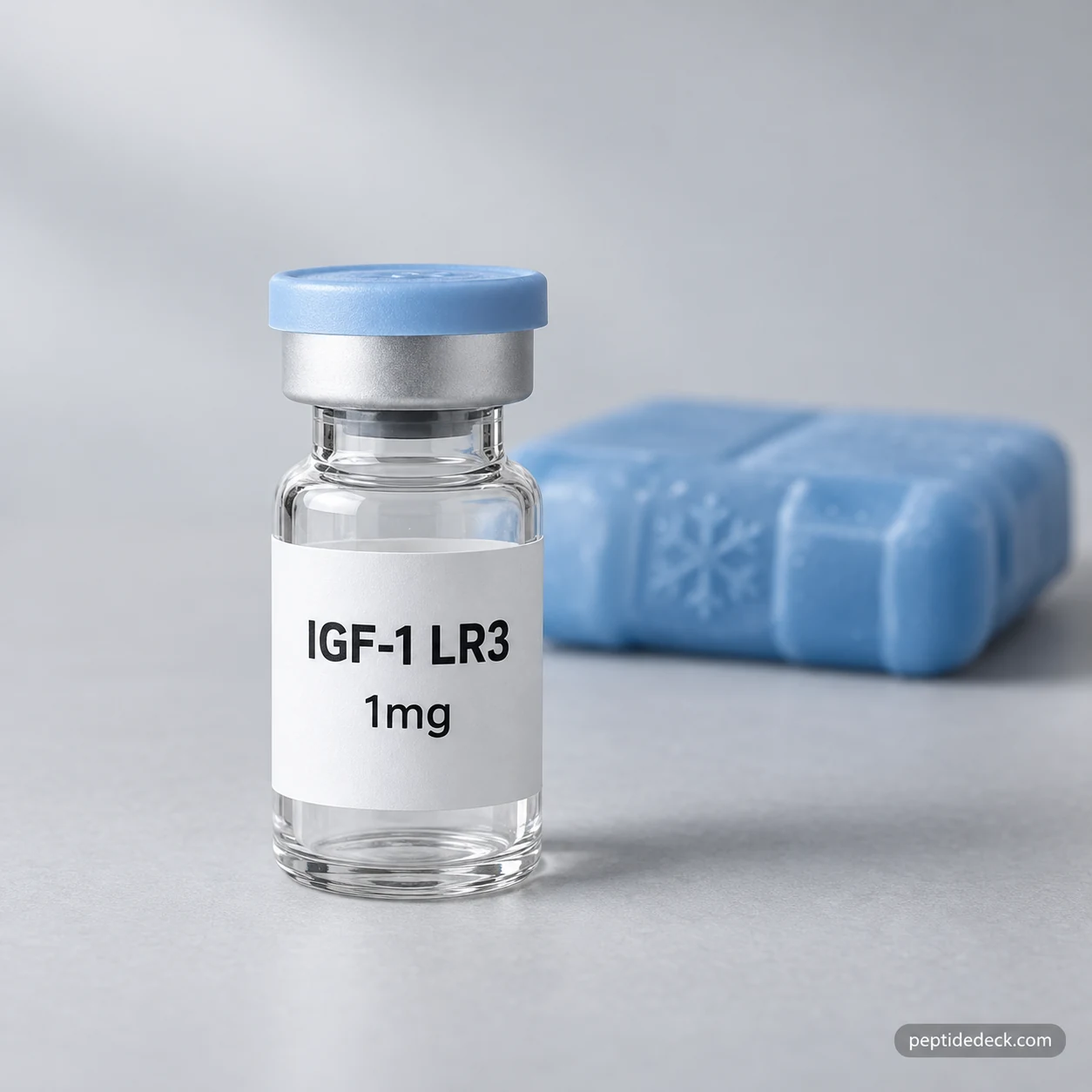
Growth Factor Peptides
IGF-1 LR3
Long R3 Insulin-like Growth Factor-1, 1mg vial
Growth Hormone Releasing Hormone (GHRH) Analogues
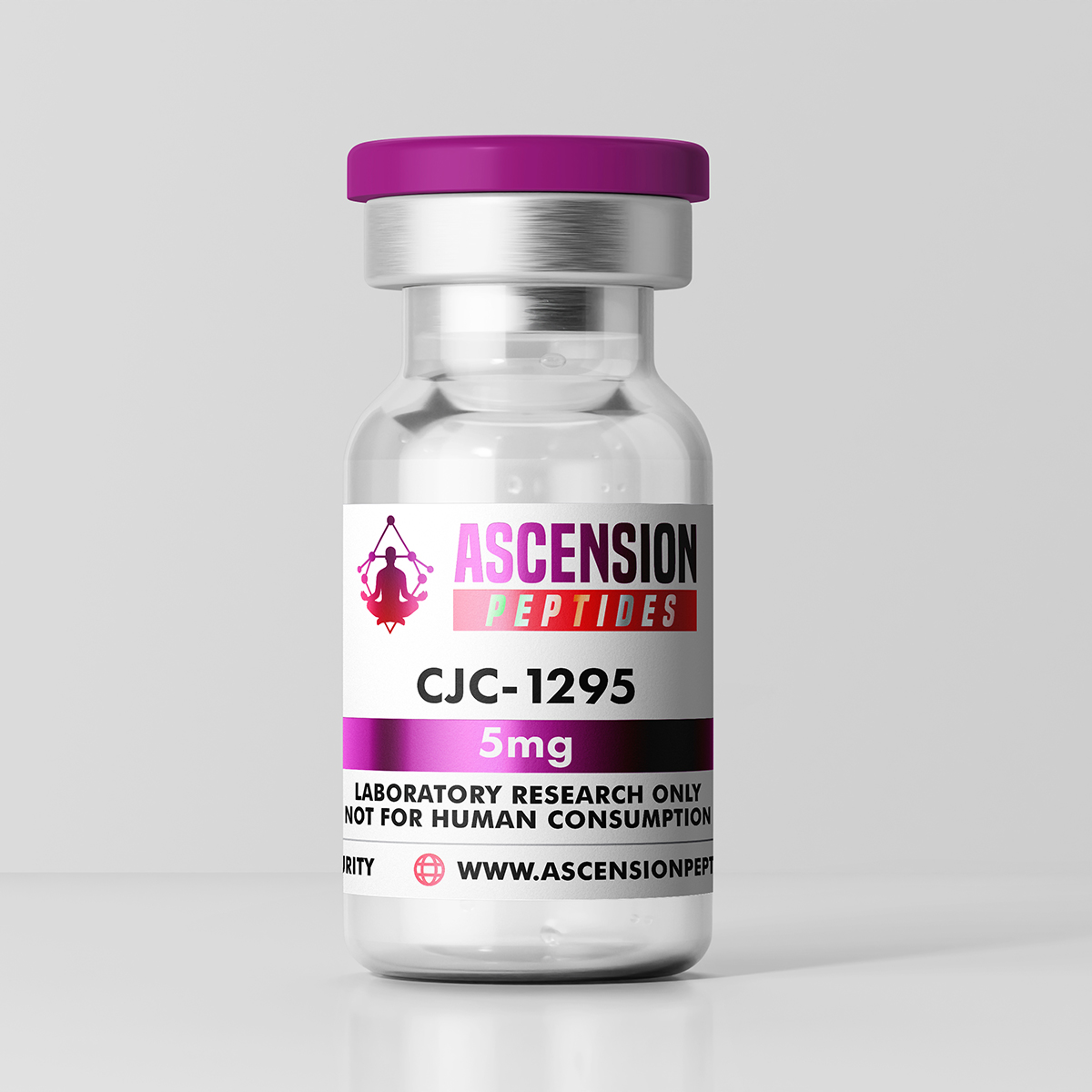
CJC-1295 (No DAC)
Modified GRF (1-29) GHRH Analogue, 5mg Lyophilized Vial
Copper Peptides
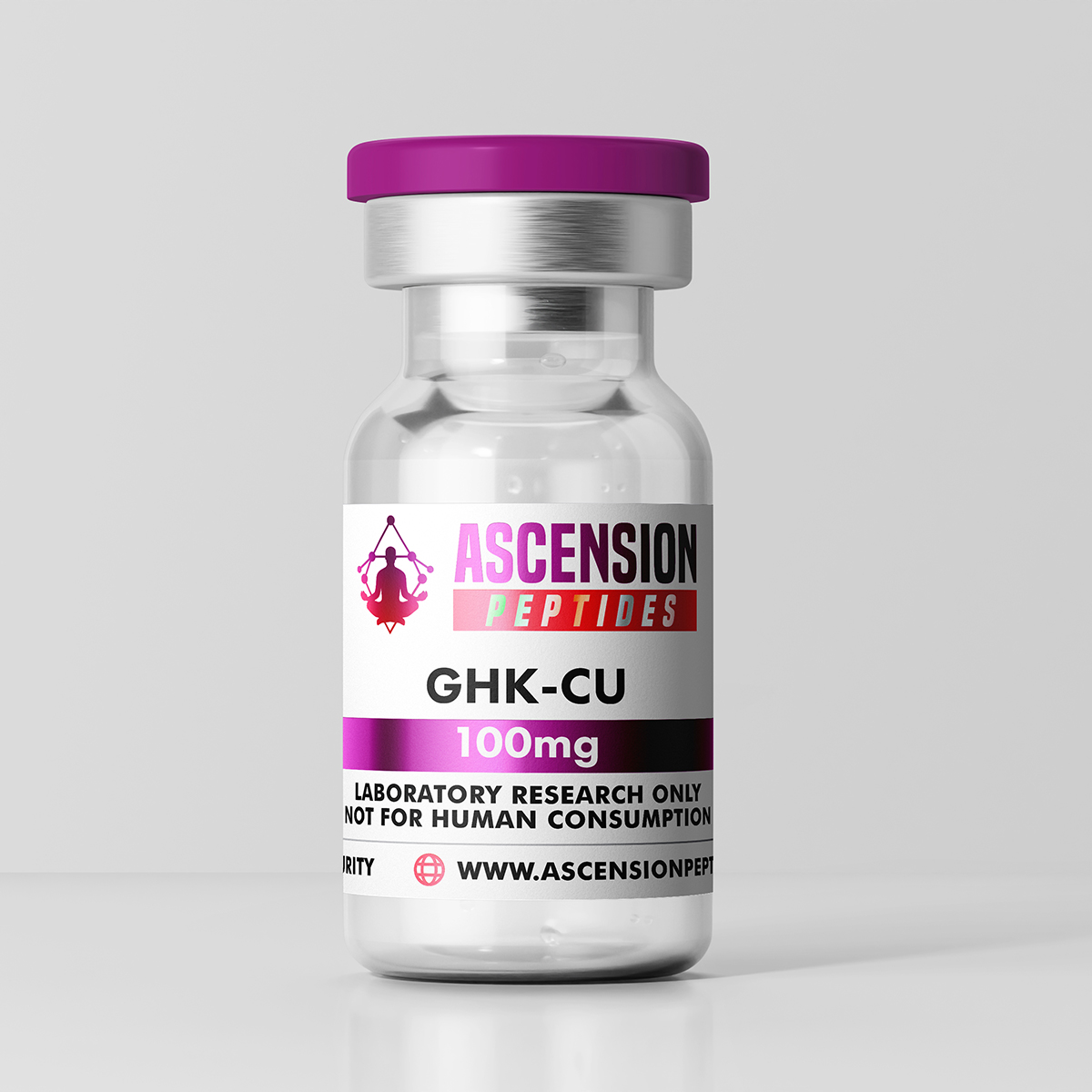
GHK-Cu
GHK-Cu For Sale: 50mg 99%+ Purity Copper Tripeptide

Healing & Recovery Peptides
BPC-157
Body Protection Compound 5mg: 99%+ Purity Research Vial
Research Use Only. All products sold by PeptideDeck are strictly for in-vitro laboratory research and are not intended for human or veterinary use, diagnosis, or treatment. Not for resale.