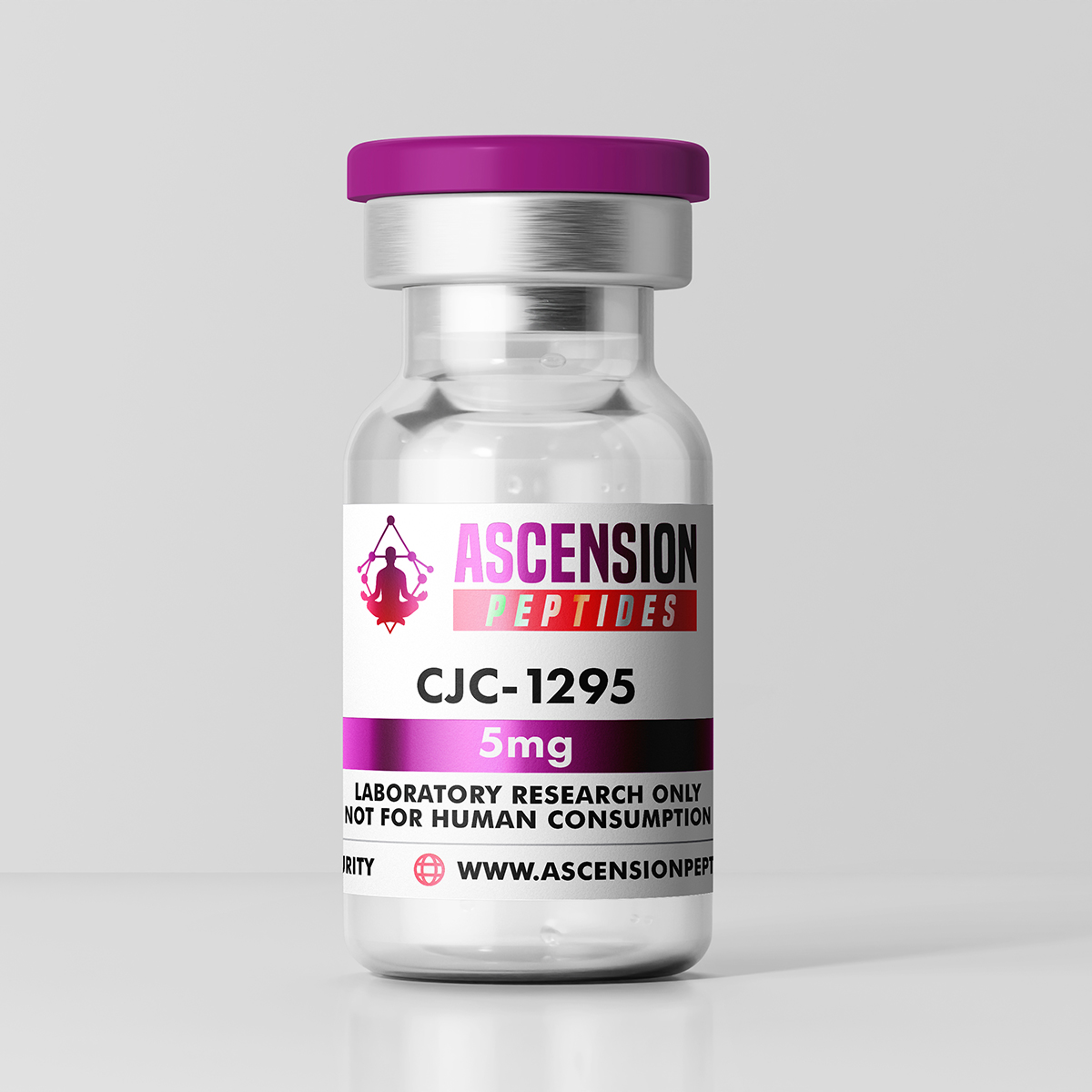
Growth Hormone Releasing Hormone (GHRH) Analogues
CJC-1295 (No DAC)
with codePEPTIDEDECKat checkout· list $64.99
- Purity
- 99%+
- Vial
- 5mg
- Form
- Lyophilized powder in sealed glass vial
- Half-life
- ~30 minutes (Modified GRF 1-29, No DAC)
Buy CJC-1295 (No DAC) 5mg online at PeptideDeck. Research-grade Modified GRF (1-29) lyophilized powder at 99%+ HPLC-verified purity, shipped same-day from a US warehouse with Certificate of Analysis on request.
About CJC-1295 (No DAC)
Looking to buy CJC-1295 (No DAC) for your research program? PeptideDeck lists CJC-1295 5mg vials for sale from a vetted US research supplier, independently tested at 99%+ purity by HPLC and mass spectrometry. Each sealed vial ships same-day from a climate-controlled US warehouse with tracked delivery, a Certificate of Analysis available on request, and discreet packaging on every order. This CJC-1295 price point (currently listed below the standard $64.99 MSRP) reflects an active promotional rate through our partner supplier, not a markdown on quality.
CJC-1295 (No DAC), also cataloged as Modified GRF (1-29) or tetrasubstituted GRF (1-29), is a 29-amino acid synthetic analogue of growth hormone releasing hormone (GHRH) engineered with four strategic amino acid substitutions for improved in-vitro and preclinical stability. It remains one of the most widely referenced GHRH analogues in growth hormone axis research, and the 5mg format is the standard working dose for multi-assay lab programs. Whether you are sourcing CJC-1295 for sale for a short pulsatile-release study or building out an endocrine research library, the CJC-1295 5mg vial below is the configuration most labs purchase.
Where to Buy CJC-1295 (No DAC)
Sourcing research CJC-1295 can be the hardest part of any protocol, because purity and vendor reliability vary widely across the online marketplace. PeptideDeck lists CJC-1295 for sale from a vetted US research supplier that manufactures in a cGMP facility, publishes batch-level third-party HPLC and mass-spectrometry reports, and ships same-day from a US warehouse with tracked delivery. Every CJC-1295 5mg vial we list carries 99%+ purity certification, and a Certificate of Analysis is available on request for the specific lot delivered.
When researchers ask us where to buy CJC-1295 (No DAC) online with confidence in identity, purity, and fulfillment speed, this is the listing we point them to. The current CJC-1295 price of $45.00 per 5mg vial is an active promotional rate below the $64.99 MSRP listed at the top of the product card. Orders placed before 2 PM Eastern ship the same business day via tracked US carrier, and standard domestic delivery runs 2 to 4 business days. Discreet unmarked packaging, secure Stripe checkout, and a responsive support channel through our partner vendor round out the commercial offer.
For laboratories running multi-month GHRH analogue research programs, bulk inquiries can be routed through the partner vendor for kit pricing on 10-vial research packs. Purchase a single CJC-1295 5mg vial today through the buy button, or contact the partner vendor for larger research quantities.
Quality Assurance and COA
Every batch of CJC-1295 (No DAC) listed on PeptideDeck is manufactured in a US cGMP-compliant facility and verified independently by reverse-phase high-performance liquid chromatography (HPLC) and electrospray ionization mass spectrometry (ESI-MS). HPLC confirms chromatographic purity at 99%+ with well-resolved main peaks and no significant impurity or deamidation signatures. Mass spectrometry confirms molecular weight consistent with the theoretical mass of Modified GRF (1-29) within instrument tolerance, establishing identity as well as purity.
A Certificate of Analysis (COA) documenting the batch HPLC chromatogram, mass-spec identity confirmation, appearance, and lot number is available on request for every CJC-1295 5mg vial sold. Researchers who require pre-shipment COA review for procurement documentation can contact the partner vendor directly, and PeptideDeck will forward any batch-specific requests. Independent third-party lab verification, published in addition to in-house QC, is a baseline trust signal we prioritize when selecting which CJC-1295 supplier to list.
Mechanism of Action
CJC-1295 (No DAC) is a receptor-selective agonist at the growth hormone releasing hormone receptor (GHRHR), a G-protein coupled receptor expressed on somatotroph cells of the anterior pituitary. Binding activates the Gs-adenylyl cyclase pathway, elevating intracellular cyclic AMP, activating protein kinase A, and phosphorylating CREB to drive transcription of the growth hormone gene. The net in-vitro signal is a pulsatile release of endogenous somatotroph GH that follows native secretion kinetics rather than the flat plateau produced by exogenous recombinant GH.
The "No DAC" qualifier differentiates this molecule from CJC-1295 DAC, the long-acting albumin-binding bioconjugate described by Jetté and colleagues in 2005. Modified GRF (1-29) retains the four stabilizing substitutions of the parent bioconjugate (D-Ala at position 2, Gln at position 8, Ala at position 15, and Leu at position 27) but omits the maleimidopropionamide Lys-C-terminus that covalently tethers CJC-1295 DAC to serum albumin Cys34. The D-Ala-2 substitution confers resistance to dipeptidyl peptidase IV (DPP-IV) cleavage, Gln-8 prevents asparagine rearrangement to aspartate, Ala-15 enhances bioactivity at the GHRH receptor, and Leu-27 eliminates the oxidation-sensitive methionine residue present in native GHRH.
These engineering choices give CJC-1295 No DAC a functional half-life of approximately 30 minutes in research models, producing a sharp peak-and-clearance profile that more closely mimics native GHRH pulses than the multi-day plateau seen with CJC-1295 DAC. This pulsatile character is why many laboratories purchase CJC-1295 No DAC for co-administration protocols with a growth hormone secretagogue such as ipamorelin, GHRP-2, or GHRP-6, where the synergy between a GHRH analogue and a ghrelin mimetic produces greater GH amplitude than either compound alone.
Investigators studying somatotroph physiology, IGF-1 axis pharmacology, or GH pulse architecture commonly select CJC-1295 No DAC precisely because its short duration allows for cleaner kinetic modeling. Purchase the 5mg CJC-1295 vial below if this pulsatile profile matches your experimental design.
Chemical Profile
CJC-1295 (No DAC), CAS 863288-34-0 for Modified GRF (1-29) (CAS 446036-97-1 is also reported in older literature for the parent tetrasubstituted analogue), is a 29-residue polypeptide with molecular formula C152H252N44O42 and a calculated monoisotopic mass of approximately 3367.2 Da, with an average molecular weight reported between 3367 and 3647 g/mol depending on salt form and reference. The primary sequence is: Tyr-D-Ala-Asp-Ala-Ile-Phe-Thr-Gln-Ser-Tyr-Arg-Lys-Val-Leu-Ala-Gln-Leu-Ser-Ala-Arg-Lys-Leu-Leu-Gln-Asp-Ile-Leu-Ser-Arg-NH2, with the C-terminal amide characteristic of active GHRH fragments.
The compound is supplied as a lyophilized white powder in a vacuum-sealed glass vial. The 5mg vial format corresponds to approximately 1.37 micromoles of peptide. Lyophilization under sterile conditions preserves peptide integrity during transit and during long-term frozen storage, and the sealed vial should not be opened until ready to reconstitute with bacteriostatic water. Appearance is a fine amorphous cake or powder with no visible discoloration. Any vial received with cloudy, yellow, or visibly degraded powder should be documented and reported to the supplier before reconstitution.
Research Applications
CJC-1295 (No DAC) has a well-documented footprint in preclinical growth hormone axis research. The foundational Jetté et al. 2005 Endocrinology paper characterized the albumin-binding parent molecule in Sprague-Dawley rat pituitary models, establishing GHRH receptor agonism and a 4-fold elevation in GH area-under-the-curve relative to native hGRF (1-29). Teichman and colleagues 2006, published in the Journal of Clinical Endocrinology and Metabolism, characterized dose-dependent GH and IGF-1 elevations with the long-acting bioconjugate and provided the pharmacokinetic backbone on which Modified GRF (1-29) research is interpreted. Ionescu and Frohman 2006 demonstrated that pulsatile GH secretion persists during continuous GHRH receptor stimulation, a finding that underpins the "pulsatile mimetic" framing of CJC-1295 No DAC dosing schedules.
In cell culture, CJC-1295 No DAC is used to probe GHRH receptor binding kinetics, cAMP signaling, and CREB phosphorylation in primary somatotroph cultures and in GHRHR-transfected HEK293 or CHO-K1 lines. In rodent models, it has been applied as a comparator compound alongside tesamorelin and sermorelin in studies of pulse amplitude, trough level, and IGF-1 response. Combination protocols that pair a GHRH analogue with a GHS-R1a ghrelin-receptor agonist such as ipamorelin are common in adipocyte biology, body composition, and recovery research, where the mechanistic rationale is synergistic amplification of endogenous GH release rather than exogenous replacement.
All applications described here are documented in preclinical literature or in-vitro systems. PeptideDeck supplies CJC-1295 (No DAC) strictly for laboratory research use and the product is not intended for human or veterinary administration, diagnosis, or treatment. Researchers should design studies under institutional review, adhere to local regulations for peptide handling, and reference primary literature for species-specific response characterization.
Reconstitution and Dosing Reference
For a 5mg CJC-1295 (No DAC) vial, typical reconstitution is 2mL of bacteriostatic water (0.9% benzyl alcohol preserved), yielding a final concentration of 2500 micrograms per milliliter (2.5 mg/mL). Alternative dilutions for assay design: 1mL bacteriostatic water yields 5000 mcg/mL and 3mL yields approximately 1667 mcg/mL. Draw the diluent into a sterile syringe, introduce it slowly down the inside wall of the vial to avoid direct impact on the lyophilized cake, and allow the powder to dissolve passively. Gentle swirling accelerates reconstitution. Do not shake vigorously, as mechanical agitation can fragment peptide bonds and introduce foam.
For research dosing math, a 100-unit U100 insulin syringe drawn to the 10-unit mark corresponds to 0.1 mL, which at 2.5 mg/mL delivers 250 mcg of CJC-1295 per graduation. A 4-unit aspiration (0.04 mL) delivers approximately 100 mcg. These figures are provided solely as research reference for in-vitro dilution planning and animal model protocol design. PeptideDeck does not provide human dosing guidance, and researchers should consult species-appropriate primary literature (Teichman 2006 and Ionescu 2006 are the most cited starting points) for pharmacokinetic parameters relevant to their experimental species.
Reconstituted CJC-1295 should be kept refrigerated at 2 to 8 degrees Celsius and used within 30 days of reconstitution for best peptide integrity.
Storage and Handling
Lyophilized CJC-1295 (No DAC) vials are stable at room temperature during the 2 to 4 business day transit window and should be transferred to long-term storage on arrival. Recommended long-term storage is minus 20 degrees Celsius in the original sealed vial, ideally in an auto-defrost-free freezer to avoid freeze-thaw humidity cycling. For programs running over months to years, minus 80 degrees Celsius extends shelf life further. Avoid repeated temperature cycling between ambient and frozen conditions, as condensation inside the vial can compromise the lyophilized cake.
After reconstitution with bacteriostatic water, CJC-1295 should be stored at 2 to 8 degrees Celsius (standard laboratory refrigerator) protected from light, and consumed within 30 days. Do not freeze reconstituted peptide, as freeze-thaw cycles damage the secondary structure and reduce bioactivity. Vials should remain upright and the rubber stopper sanitized with isopropanol before each aliquot draw. Document reconstitution date on the vial cap with a cryo-compatible marker.
Research Benefits
Modified GRF (1-29) tetrasubstituted GHRH analogue, 5mg per vial
99%+ HPLC-verified purity with mass-spec identity confirmation
D-Ala-2 substitution confers DPP-IV degradation resistance
Pulsatile ~30 minute half-life mimics native GHRH kinetics
Selective agonism at the pituitary GHRH receptor
Lyophilized sterile powder, US cGMP-manufactured
Ships same-day from US warehouse with tracked delivery
Certificate of Analysis available on request for every lot
Product Specifications
| Molecular Weight | 3367.20 g/mol (C152H252N44O42) |
| CAS Number | 863288-34-0 |
| Sequence | Tyr-D-Ala-Asp-Ala-Ile-Phe-Thr-Gln-Ser-Tyr-Arg-Lys-Val-Leu-Ala-Gln-Leu-Ser-Ala-Arg-Lys-Leu-Leu-Gln-Asp-Ile-Leu-Ser-Arg-NH2 (29 aa) |
| Half-Life | ~30 minutes (Modified GRF 1-29, No DAC) |
| Purity | 99%+ |
| Form | Lyophilized powder in sealed glass vial |
| Storage | Store lyophilized at -20°C. Reconstituted solution: refrigerate at 2-8°C and use within 30 days. |
Frequently Asked Questions
Scientific References
Jetté L, Léger R, Thibaudeau K, et al. · Endocrinology · 2005
Teichman SL, Neale A, Lawrence B, Gagnon C, Castaigne JP, Frohman LA · Journal of Clinical Endocrinology and Metabolism · 2006
Ionescu M, Frohman LA · Journal of Clinical Endocrinology and Metabolism · 2006
Alba M, Fintini D, Sagazio A, et al. · American Journal of Physiology: Endocrinology and Metabolism · 2006
Sackmann-Sala L, Ding J, Frohman LA, Kopchick JJ · Growth Hormone and IGF Research · 2009
References provided for informational research context only. PeptideDeck does not imply clinical application or endorse any human use.
You May Also Like
View all →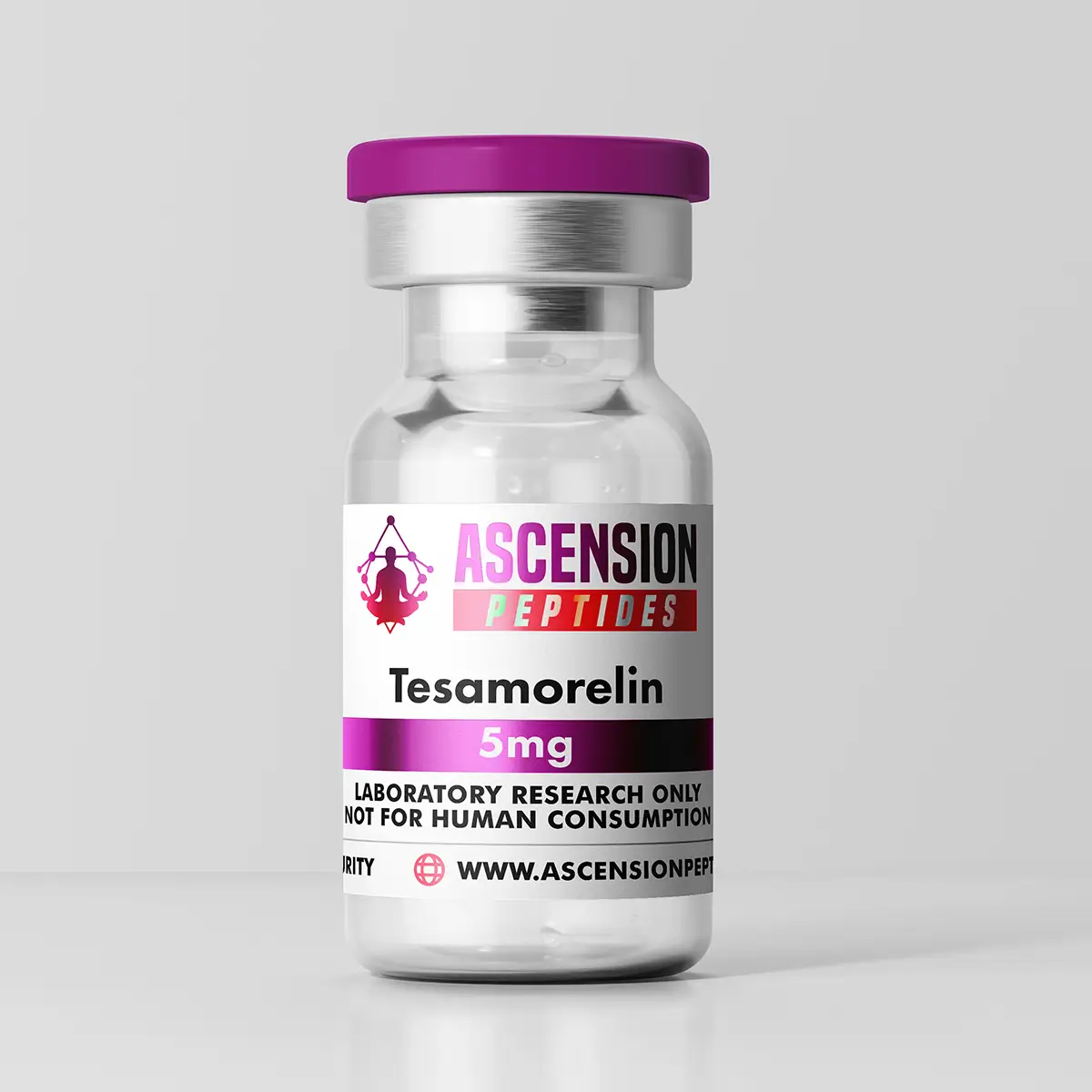
Growth Hormone Releasing Hormone (GHRH) Analogues
Tesamorelin
Stabilized GHRH Analogue (EGRIFTA Reference), 5mg Lyophilized Vial
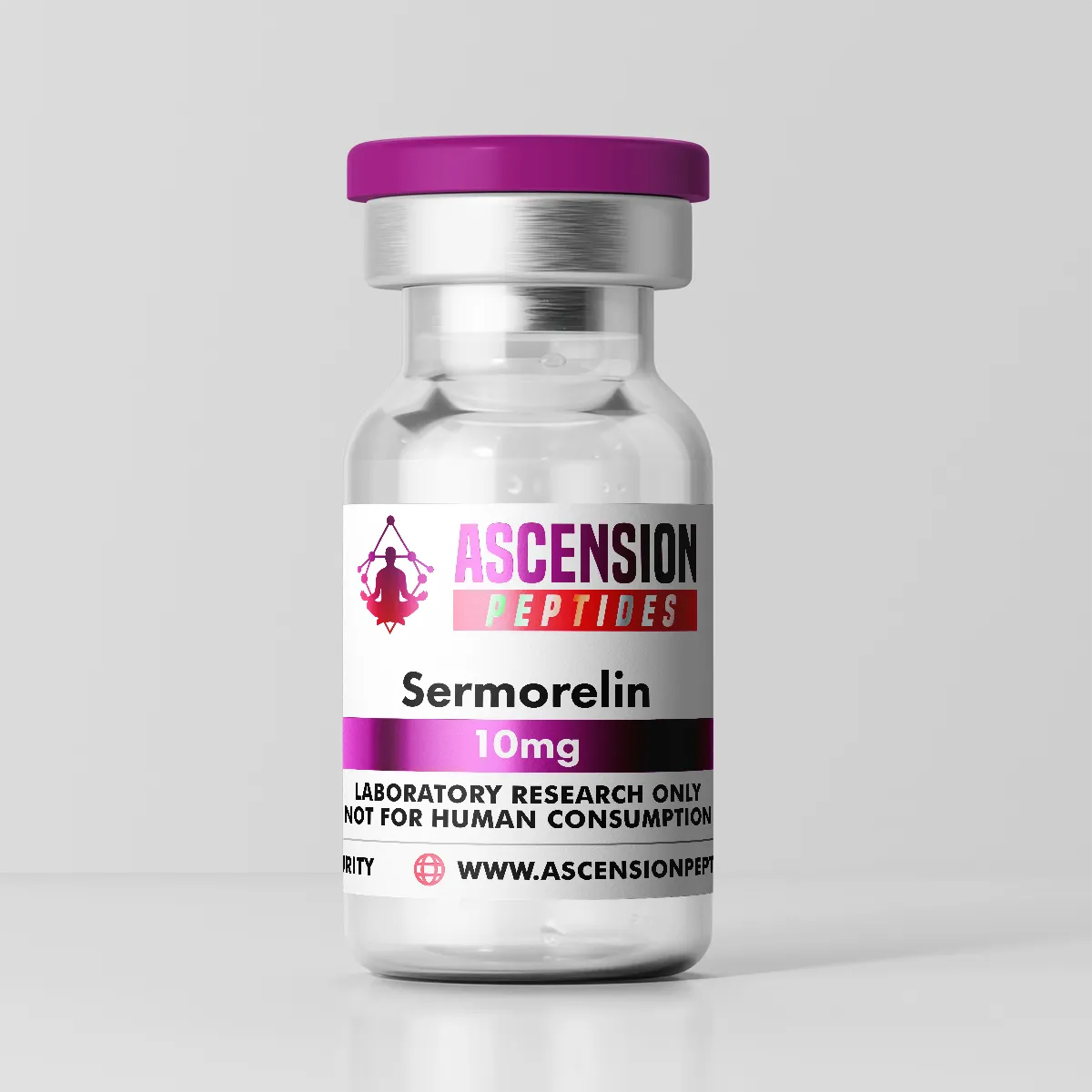
Growth Hormone Releasing Hormone (GHRH) Analogues
Sermorelin
GHRH (1-29) Synthetic Analogue, 10mg Lyophilized Vial
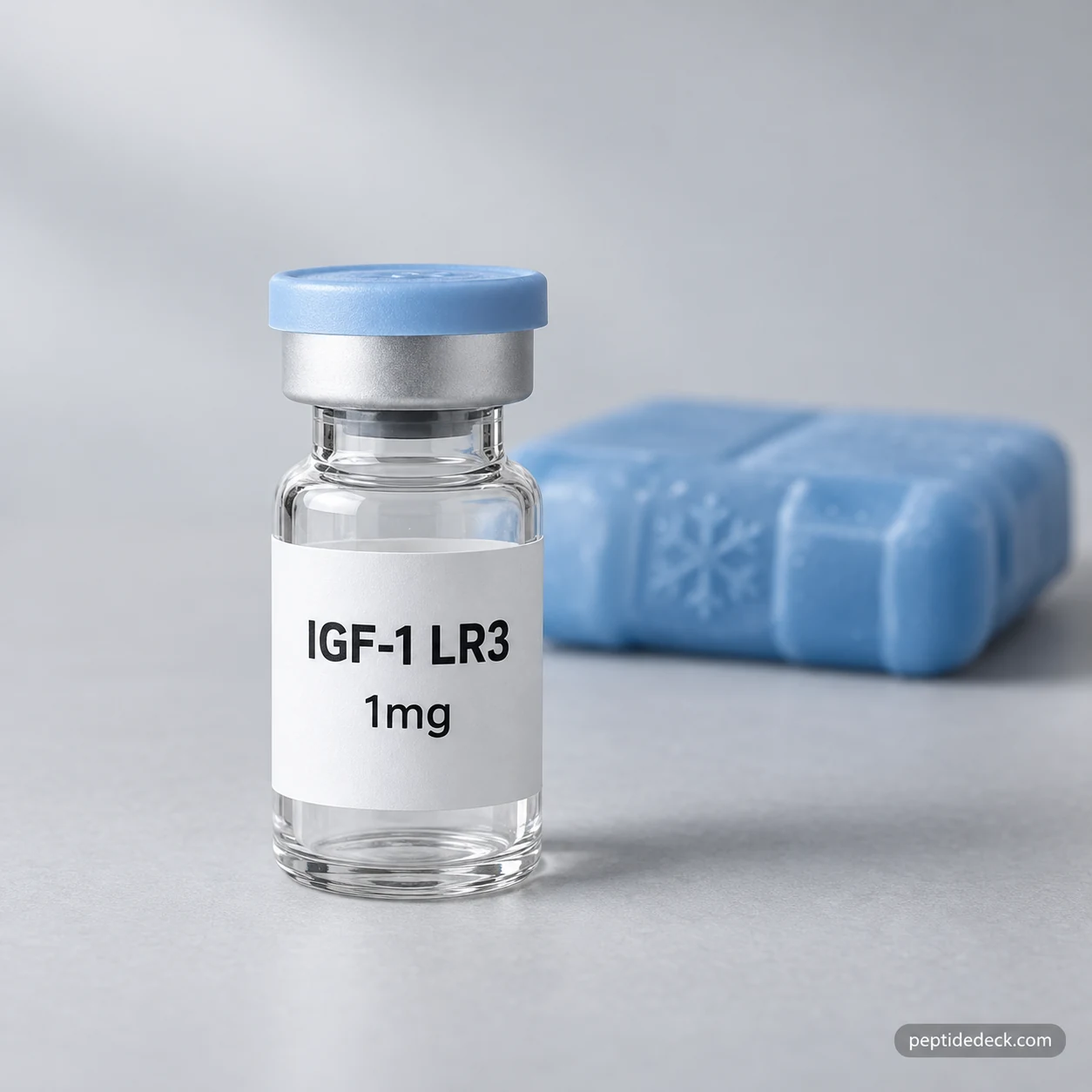
Growth Factor Peptides
IGF-1 LR3
Long R3 Insulin-like Growth Factor-1, 1mg vial
Copper Peptides
GHK-Cu
GHK-Cu For Sale: 50mg 99%+ Purity Copper Tripeptide
Research Use Only. All products sold by PeptideDeck are strictly for in-vitro laboratory research and are not intended for human or veterinary use, diagnosis, or treatment. Not for resale.