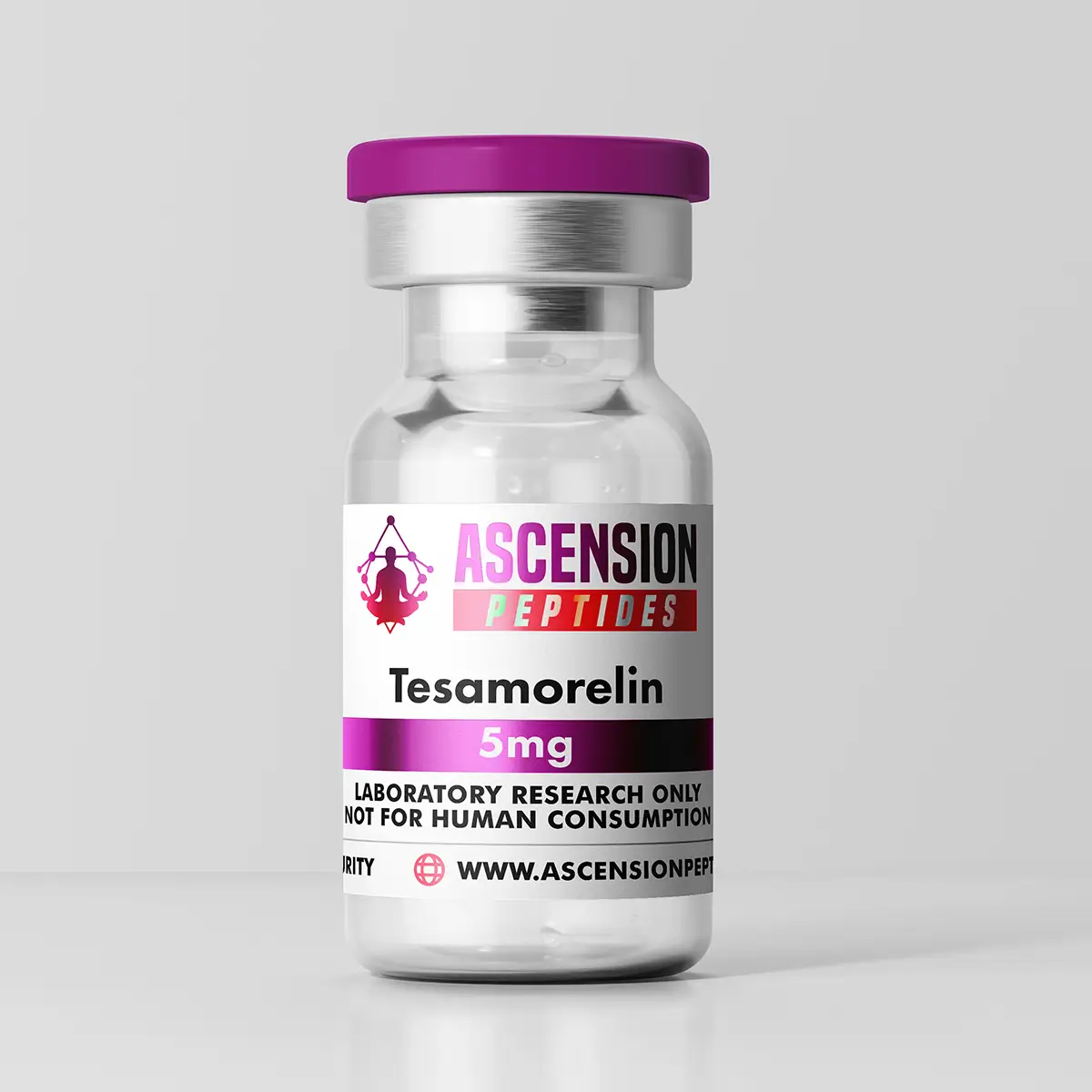
Growth Hormone Releasing Hormone (GHRH) Analogues
Tesamorelin
with codePEPTIDEDECKat checkout· list $89.99
- Purity
- 99%+
- Vial
- 5mg
- Form
- Lyophilized powder in sealed glass vial
- Half-life
- ~26 minutes (parent), prolonged functional activity via DPP-IV resistance
Buy Tesamorelin 5mg online at PeptideDeck. Stabilized 44-amino-acid GHRH analogue (the EGRIFTA reference molecule) supplied as 99%+ HPLC-verified lyophilized powder, shipped same-day from a US warehouse with COA on request.
About Tesamorelin
Looking to buy Tesamorelin for laboratory research on the GH-IGF-1 axis or visceral adipose metabolism? PeptideDeck lists Tesamorelin 5mg vials for sale from a vetted US research supplier at 99%+ HPLC-verified purity, with same-day US warehouse shipping and a Certificate of Analysis available on request. The current Tesamorelin price of $50.00 per 5mg vial reflects an active promotional rate against the $89.99 MSRP, not a markdown on purity. Tesamorelin for sale in 5mg lyophilized format is the working configuration most preclinical programs order.
Tesamorelin (the reference molecule for the branded product EGRIFTA) is a stabilized 44-amino-acid synthetic analogue of human growth hormone releasing hormone (GHRH) featuring an N-terminal trans-3-hexenoic acid modification. This fatty-acid cap blocks dipeptidyl peptidase IV (DPP-IV) cleavage at the N-terminus, dramatically extending the functional half-life of the molecule relative to native GHRH (1-44) and to short GHRH fragments such as sermorelin. Tesamorelin is one of the most extensively published GHRH analogues in preclinical and clinical literature, with multiple randomized trials documenting visceral adipose tissue reduction and GH-IGF-1 axis activation.
Where to Buy Tesamorelin
Where to buy Tesamorelin with batch-verified identity, documented purity, and dependable US fulfillment is a recurring procurement question for labs running GHRH-axis research. PeptideDeck lists Tesamorelin 5mg for sale from a vetted US research supplier that manufactures in a cGMP-compliant facility, validates each batch with independent HPLC and mass-spec analysis, and ships from a US warehouse with tracked domestic delivery. The current Tesamorelin price of $50.00 per 5mg vial is below the $89.99 MSRP compare-at price, an active promotional rate through our partner vendor.
Orders placed before 2 PM Eastern ship same-day. Standard domestic delivery is 2 to 4 business days with tracking. Discreet unmarked outer packaging, secure Stripe checkout, cryptocurrency payment options including Bitcoin and USDC, and a responsive partner-vendor support channel complete the commercial offer. For laboratories purchasing Tesamorelin across multi-month research programs, bulk research kits at per-vial discount pricing are available by contacting the partner vendor directly with institutional references at checkout.
Use the buy button to purchase Tesamorelin 5mg at current promotional pricing. If you are comparing Tesamorelin for sale across vendors, the trust signals worth prioritizing over raw price are published batch COA, US warehouse fulfillment from a cGMP-manufactured source, and transparent methionine-oxidation-aware handling documentation.
Quality Assurance and COA
Every batch of Tesamorelin listed on PeptideDeck is manufactured in a US cGMP-compliant facility and verified independently by reverse-phase HPLC and ESI mass spectrometry. HPLC chromatograms confirm 99%+ main-peak purity with minimal deamidation or oxidation shoulders. Mass spectrometry confirms molecular weight consistent with the theoretical 5195.9 g/mol for the hexenoyl-capped 44-residue sequence, establishing molecular identity alongside purity. Additional QC includes visual inspection, residual solvent analysis, and endotoxin screening where relevant.
A batch-specific Certificate of Analysis documenting HPLC purity, mass-spec identity confirmation, appearance, and lot number is available on request for every Tesamorelin 5mg vial sold. Request the COA by emailing the partner vendor with your order number after purchase. PeptideDeck requires independent third-party verification layered on top of in-house manufacturer QC as the baseline trust standard for every Tesamorelin listing, given the molecule's oxidation sensitivity and the cost-per-mg range at which Tesamorelin for sale is offered across the market.
Mechanism of Action
Tesamorelin is a receptor-selective agonist at the growth hormone releasing hormone receptor (GHRHR), a class B G-protein-coupled receptor expressed predominantly on anterior pituitary somatotroph cells. Receptor binding activates the Gs-adenylyl cyclase signaling cascade, elevates intracellular cyclic AMP, activates protein kinase A, and phosphorylates CREB to drive growth hormone gene transcription. Net output is a pulsatile release of endogenous GH that follows native secretion kinetics, preserving the physiological pulse architecture rather than imposing a flat exogenous-GH plateau.
What distinguishes Tesamorelin pharmacologically is the trans-3-hexenoic acid (hexenoyl trans-3) moiety covalently attached to the N-terminal tyrosine of the full 44-residue GHRH sequence. Native GHRH and sermorelin (GHRH 1-29) are rapidly cleaved by DPP-IV between residues 2 and 3, yielding biologically inactive fragments with plasma half-lives measured in minutes. The N-terminal hexenoyl cap on Tesamorelin sterically blocks DPP-IV access, extending functional duration while preserving receptor affinity. The result is a research-grade GHRH analogue that supports once-daily dosing schedules in preclinical models while retaining physiologic pulse-amplifying behavior.
Stanley and colleagues 2014 published in JAMA characterized Tesamorelin's effect on visceral and hepatic adipose tissue in HIV-infected subjects with abdominal fat accumulation, reporting significant reduction in visceral adipose tissue at the 26-week endpoint. Falutz et al. 2007, published in the New England Journal of Medicine, established the foundational efficacy data set with a 412-subject randomized placebo-controlled trial showing 15.2% visceral adipose tissue reduction, simultaneous triglyceride decrease, and improved total-to-HDL cholesterol ratio without deterioration in glycemic measures. Falutz et al. 2008 in AIDS documented sustained 52-week results in the safety extension. Together, these publications describe Tesamorelin as a GHRH analogue that reproducibly elevates endogenous GH and IGF-1 while preferentially mobilizing visceral fat in research populations.
Mechanistically, the visceral fat signal appears to be mediated by GH-driven hormone-sensitive lipase activation in visceral adipocytes, with IGF-1 serving as a permissive secondary signal. This GHRH-to-lipolysis research axis is the most extensively characterized therapeutic-research-area for Tesamorelin in the published literature.
Chemical Profile
Tesamorelin (CAS 218949-48-5) is a 44-amino-acid synthetic GHRH analogue with molecular formula C221H366N72O67S and a molecular weight of approximately 5195.9 g/mol. The sequence matches native human GHRH (1-44) with an N-terminal trans-3-hexenoic acid (hexenoyl) modification on the tyrosine-1 residue. The full sequence is (hexenoyl-trans-3)-Tyr-Ala-Asp-Ala-Ile-Phe-Thr-Asn-Ser-Tyr-Arg-Lys-Val-Leu-Gly-Gln-Leu-Ser-Ala-Arg-Lys-Leu-Leu-Gln-Asp-Ile-Met-Ser-Arg-Gln-Gln-Gly-Glu-Ser-Asn-Gln-Glu-Arg-Gly-Ala-Arg-Ala-Arg-Leu-NH2.
Tesamorelin is supplied as a lyophilized sterile white powder in a sealed glass vial. The 5mg vial corresponds to approximately 0.96 micromoles of peptide. Appearance is a uniform amorphous cake or fine powder with no discoloration. The lyophilized product is shelf-stable at ambient temperature during transit and should be transferred to minus 20 degrees Celsius for long-term storage promptly on receipt. Do not open the sealed vial until ready to reconstitute with bacteriostatic water.
Research Applications
Tesamorelin has a robust preclinical and clinical research footprint anchored by the Falutz NEJM 2007 trial, the Falutz AIDS 2008 extension, and the Stanley JAMA 2014 liver-fat study. In research settings, Tesamorelin is applied to probe GHRH receptor pharmacology, to characterize dose-response GH-IGF-1 axis activation, to model visceral-versus-subcutaneous adipose tissue responsiveness, and to investigate hepatic steatosis mechanisms in adipogenesis research. The Stanley 2014 data set linking Tesamorelin to hepatic fat reduction has driven substantial subsequent research on GHRH signaling in non-alcoholic fatty liver disease models.
In cell culture, Tesamorelin is used in GHRHR-transfected HEK293 and CHO-K1 lines to measure receptor binding, cAMP accumulation, and CREB phosphorylation kinetics alongside comparator compounds such as CJC-1295 No DAC and sermorelin. In rodent models, the compound has been characterized for GH pulse amplitude, IGF-1 elevation kinetics, visceral adiposity change, and insulin sensitivity. Combination protocols with ghrelin-receptor agonists such as ipamorelin are an active research area, following the established rationale of synergistic Gs-cAMP and Gq-calcium pathway activation.
In adipocyte and hepatocyte biology, Tesamorelin is applied in lipolysis and lipogenesis assays, in studies of hormone-sensitive lipase activation, and in research on intrahepatic triglyceride content. The broader GHRH-axis research domain also includes body-composition studies, bone-remodeling investigations, and cardiovascular-risk research tied to visceral fat reduction.
All research applications described here are documented in preclinical or published clinical literature. PeptideDeck supplies Tesamorelin for in-vitro laboratory research exclusively, and the product is not intended for human or veterinary use, diagnosis, or treatment.
Reconstitution and Dosing Reference
For a 5mg Tesamorelin vial, typical reconstitution is 2mL of bacteriostatic water (0.9% benzyl alcohol preserved), yielding 2500 mcg/mL. Alternate dilutions: 1mL yields 5000 mcg/mL, 2.5mL yields 2000 mcg/mL, and 5mL yields 1000 mcg/mL. Introduce the diluent slowly down the inside wall of the sealed vial, avoid direct impact on the lyophilized cake, and allow passive dissolution. Gentle swirling is acceptable; avoid shaking to prevent peptide shearing and foam.
For research dosing math at 2.5 mg/mL, a 100-unit U100 insulin syringe drawn to the 4-unit mark (0.04 mL) delivers 100 mcg, to the 8-unit mark delivers 200 mcg, to the 40-unit mark delivers 1mg, and to the 80-unit mark delivers 2mg, which corresponds to the dose level used in the Falutz NEJM 2007 trial. These figures are provided solely as in-vitro and animal-model dilution reference, not as human dosing guidance. Researchers should consult the primary Falutz 2007, Falutz 2008, and Stanley 2014 publications for published protocol parameters and should validate study design under institutional review.
Reconstituted Tesamorelin should be refrigerated at 2 to 8 degrees Celsius, protected from light, and consumed within 30 days of reconstitution. The 5mg vial typically supports between 2 and 50 research doses depending on the target concentration and study design.
Storage and Handling
Lyophilized Tesamorelin vials are shelf-stable at room temperature during the standard 2 to 4 business day domestic transit window. Transfer to minus 20 degrees Celsius promptly on arrival for long-term storage; minus 80 degrees Celsius extends shelf life to multi-year preservation. Use an auto-defrost-free freezer to avoid humidity cycling that can degrade the lyophilized cake. The sealed vial should remain unopened until reconstitution.
Reconstituted Tesamorelin stored at 2 to 8 degrees Celsius retains activity for approximately 30 days. Do not freeze reconstituted solution, as freeze-thaw cycling damages peptide secondary structure. Protect from direct light, keep the vial upright, sanitize the rubber stopper with isopropanol before each aliquot, and document the reconstitution date on the vial with a cryo-compatible marker. Given Tesamorelin's methionine residue at position 27 (which is oxidation-sensitive), minimizing air exposure during handling preserves peptide integrity over extended storage.
Research Benefits
Stabilized 44-amino-acid GHRH(1-44) synthetic analogue
N-terminal trans-3-hexenoic acid cap blocks DPP-IV cleavage
99%+ HPLC purity with ESI mass-spec identity confirmation
EGRIFTA reference molecule with extensive clinical literature
Studied in visceral and hepatic adipose research (Falutz, Stanley)
Lyophilized sterile powder, US cGMP manufactured
Ships same-day from US warehouse with tracked delivery
Certificate of Analysis available on request for every lot
Product Specifications
| Molecular Weight | 5195.9 g/mol (C221H366N72O67S) |
| CAS Number | 218949-48-5 |
| Sequence | (hexenoyl-trans-3)-Tyr1-Ala2-Asp3-Ala4-Ile5-Phe6-Thr7-Asn8-Ser9-Tyr10...Leu44-NH2 (44 aa, GHRH 1-44 analogue) |
| Half-Life | ~26 minutes (parent), prolonged functional activity via DPP-IV resistance |
| Purity | 99%+ |
| Form | Lyophilized powder in sealed glass vial |
| Storage | Store lyophilized at -20°C. Reconstituted: refrigerate at 2-8°C and use within 30 days. Protect from light. |
Frequently Asked Questions
Scientific References
Falutz J, Allas S, Blot K, et al. · New England Journal of Medicine · 2007
Falutz J, Potvin D, Mamputu JC, et al. · AIDS · 2008
Falutz J, Mamputu JC, Potvin D, et al. · Journal of Acquired Immune Deficiency Syndromes · 2010
Stanley TL, Feldpausch MN, Oh J, et al. · JAMA · 2014
Stanley TL, Falutz J, Mamputu JC, et al. · Clinical Infectious Diseases · 2012
References provided for informational research context only. PeptideDeck does not imply clinical application or endorse any human use.
You May Also Like
View all →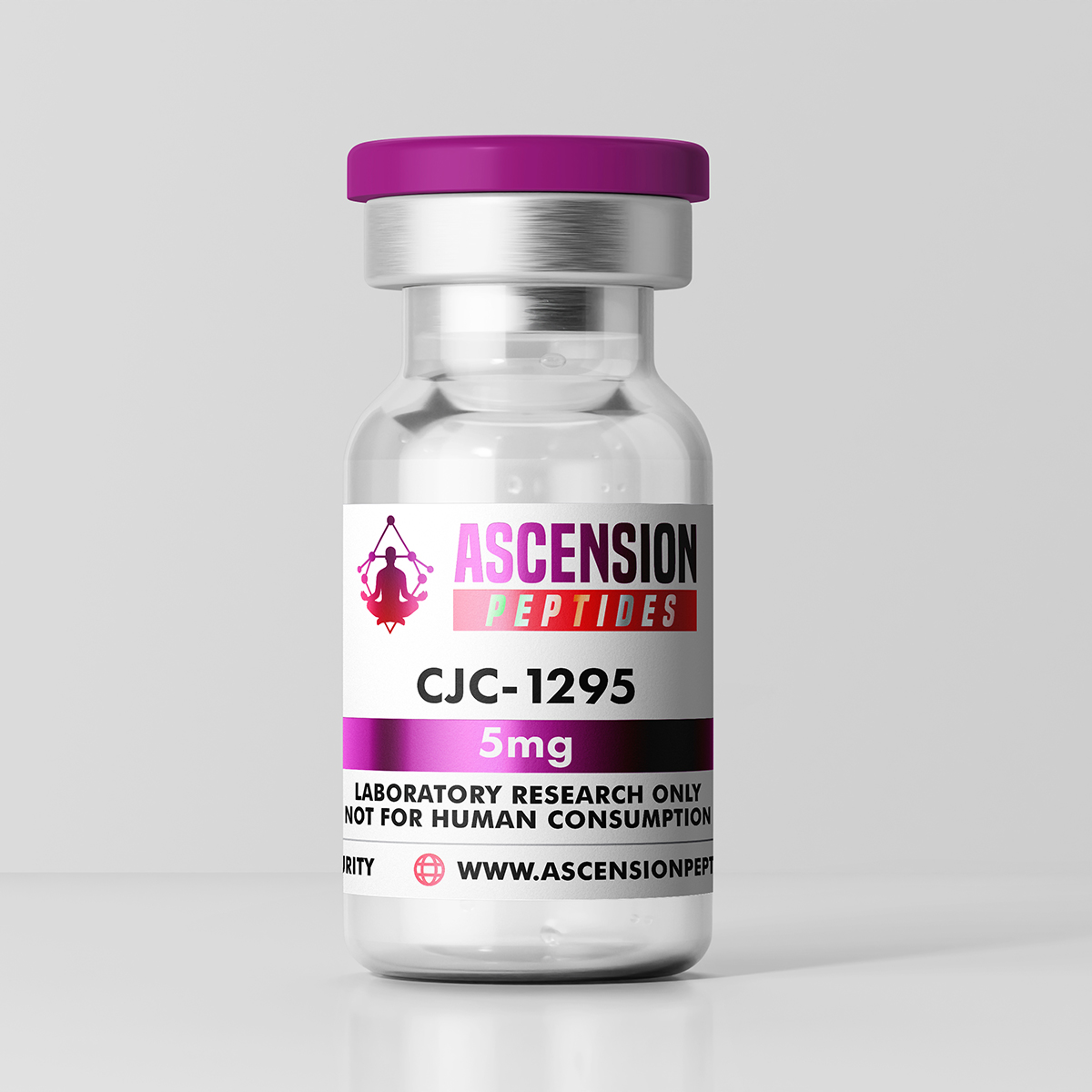
Growth Hormone Releasing Hormone (GHRH) Analogues
CJC-1295 (No DAC)
Modified GRF (1-29) GHRH Analogue, 5mg Lyophilized Vial
Growth Hormone Releasing Hormone (GHRH) Analogues
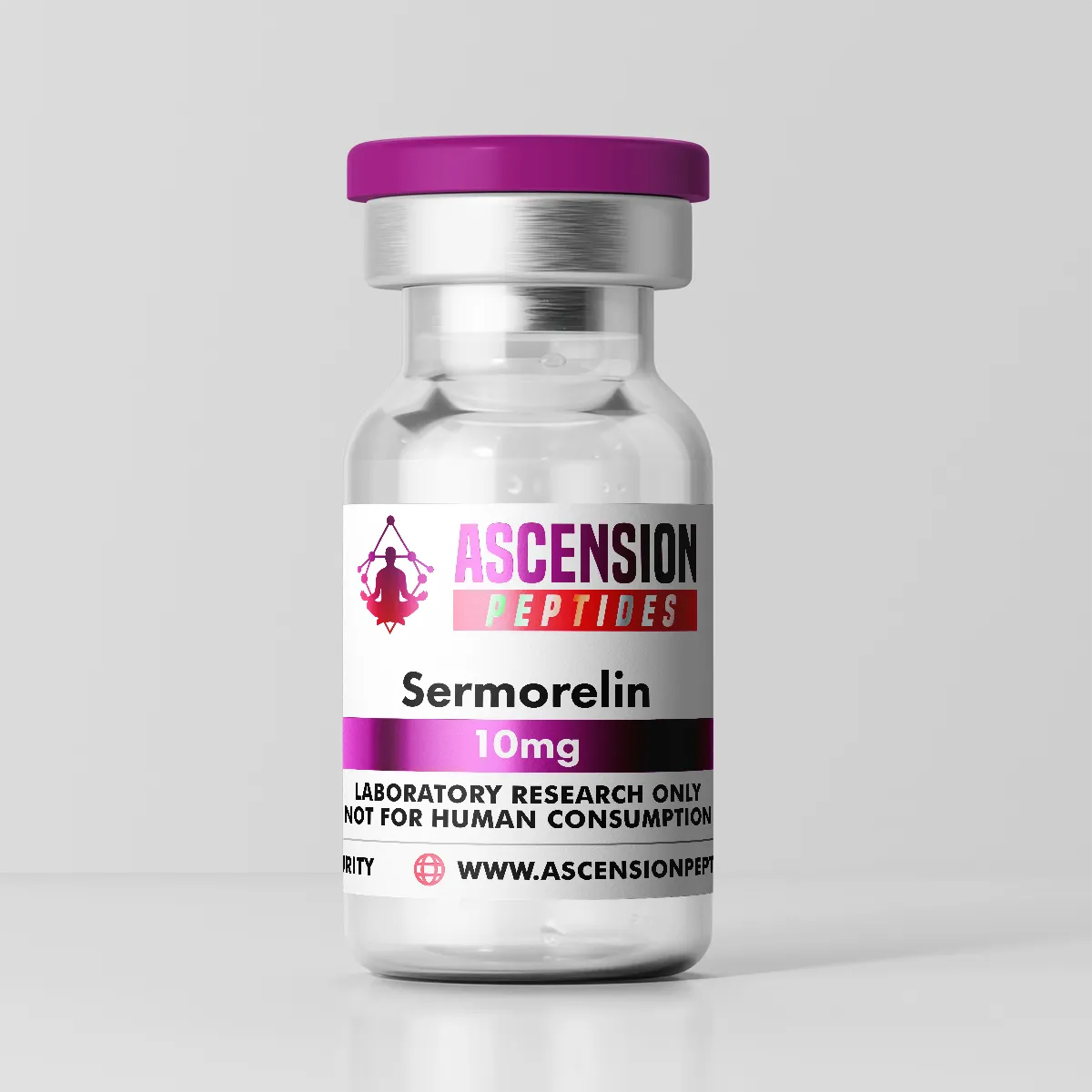
Sermorelin
GHRH (1-29) Synthetic Analogue, 10mg Lyophilized Vial
Growth Factor Peptides
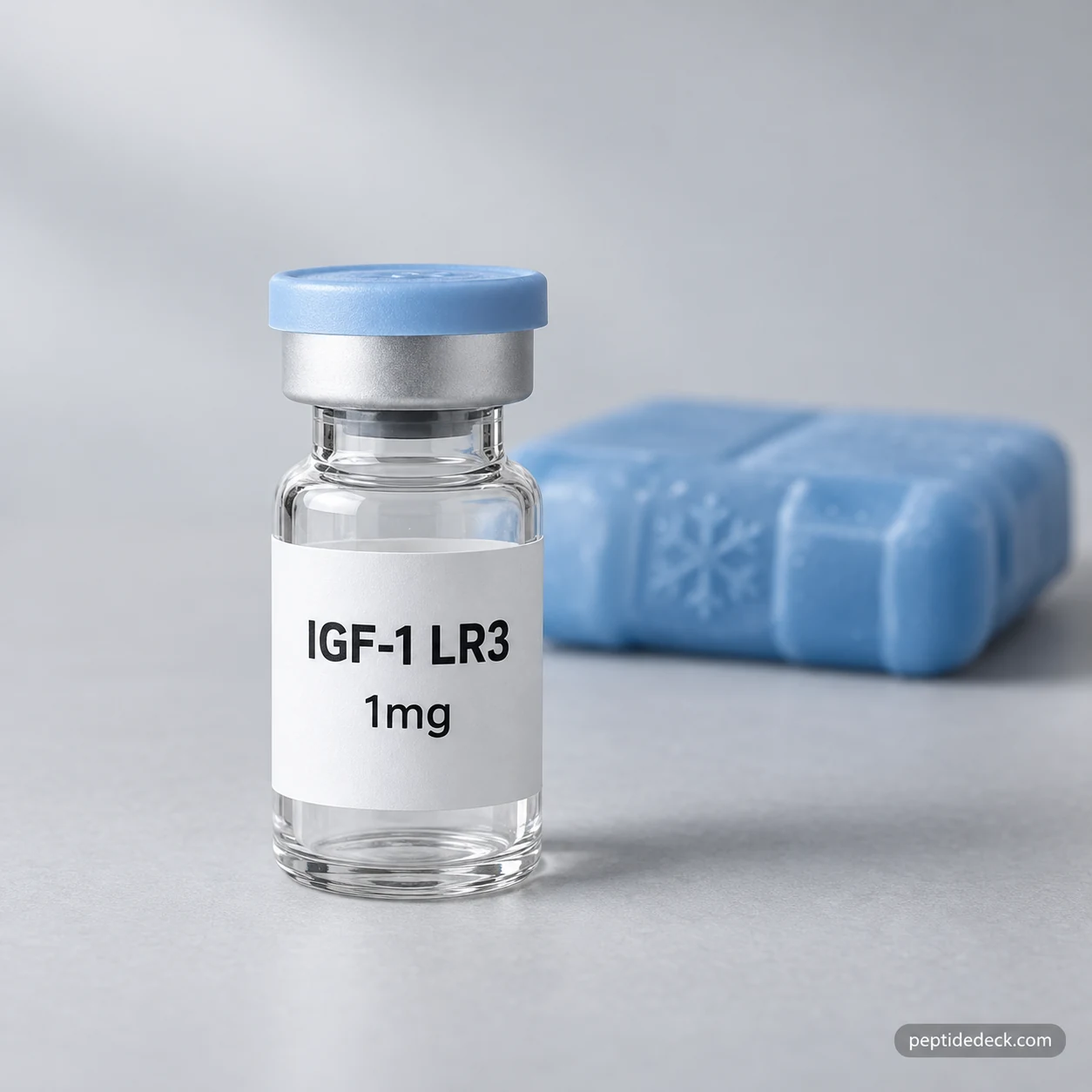
IGF-1 LR3
Long R3 Insulin-like Growth Factor-1, 1mg vial
Copper Peptides
GHK-Cu
GHK-Cu For Sale: 50mg 99%+ Purity Copper Tripeptide
Research Use Only. All products sold by PeptideDeck are strictly for in-vitro laboratory research and are not intended for human or veterinary use, diagnosis, or treatment. Not for resale.