Ipamorelin
Ipamorelin (Growth Hormone Secretagogue Pentapeptide)
Get Ipamorelin
Sourced from Ascension Peptides. Verified ≥≥99% purity, third-party tested. COA included.
Off with code
PEPTIDEDECK
Table of Contents
What is Ipamorelin?
Ipamorelin is a synthetic pentapeptide classified as a growth hormone secretagogue (GHS)—a compound that stimulates the pituitary gland to release growth hormone. First developed by Novo Nordisk in the late 1990s, Ipamorelin quickly distinguished itself from earlier GH-releasing peptides through its remarkable selectivity profile.
The peptide's amino acid sequence—Aib-His-D-2Nal-D-Phe-Lys-NH2—incorporates several non-natural amino acids that enhance its stability and receptor binding characteristics. The inclusion of aminoisobutyric acid (Aib) at the N-terminus and D-amino acids throughout the chain protects the peptide from rapid enzymatic degradation while optimizing its interaction with the ghrelin receptor (GHS-R1a).
What sets Ipamorelin apart from other growth hormone secretagogues like GHRP-2 and GHRP-6 is its exceptional selectivity. When Ipamorelin binds to the GHS-R1a receptor on pituitary somatotrophs, it triggers growth hormone release without significantly affecting other hormonal axes. This means:
- Minimal cortisol elevation — avoiding the stress hormone spikes seen with other GHRPs
- Negligible prolactin increase — reducing concerns about gynecomastia or libido effects
- No significant appetite stimulation — unlike GHRP-6's notorious hunger effects
- No acetylcholine or aldosterone changes — indicating high receptor selectivity
The pulsatile nature of GH release stimulated by Ipamorelin closely mimics the body's natural GH secretion patterns. Rather than creating a constant elevation of growth hormone (as seen with exogenous GH injection), Ipamorelin triggers discrete pulses of GH release. This pulsatile pattern is believed to be more physiologically appropriate and may reduce the risk of receptor desensitization that can occur with constant GH elevation.
Research Benefits
Selective growth hormone stimulation without cortisol spikes
Enhanced muscle protein synthesis in research models
Improved fat metabolism and body composition
Bone density support through GH-mediated pathways
Enhanced recovery and tissue repair
No significant appetite stimulation (unlike GHRP-6)
Minimal prolactin elevation compared to other GHRPs
Synergistic effects when combined with GHRH analogs
How Ipamorelin Works
Ipamorelin exerts its effects primarily through interaction with the growth hormone secretagogue receptor type 1a (GHS-R1a), commonly known as the ghrelin receptor. Understanding this mechanism requires appreciating the complex regulatory system that controls growth hormone release.
The GH Regulatory Axis
Growth hormone release from the pituitary is controlled by two opposing hypothalamic hormones:
- Growth Hormone Releasing Hormone (GHRH) — stimulates GH release
- Somatostatin (SST) — inhibits GH release
A third player, ghrelin (discovered in 1999), adds another layer of control. Ghrelin, produced primarily in the stomach, binds to GHS-R1a receptors on pituitary somatotrophs and amplifies GH release. Ipamorelin acts as a ghrelin mimetic—it binds to these same receptors but with modifications that produce a cleaner, more selective response.
Receptor Binding and Signal Transduction
When Ipamorelin binds to GHS-R1a, it initiates a cascade of intracellular events:
Receptor Activation
Ipamorelin binds to GHS-R1a on pituitary somatotrophs, triggering G-protein coupled receptor activation.
Calcium Influx
Activation triggers phospholipase C, leading to IP3-mediated calcium release from intracellular stores and calcium channel opening.
GH Vesicle Release
Elevated intracellular calcium triggers exocytosis of GH-containing vesicles into the bloodstream.
IGF-1 Production
Circulating GH stimulates the liver and other tissues to produce IGF-1, mediating many of GH's anabolic effects.
Selectivity Mechanism
The key question is: why does Ipamorelin avoid stimulating cortisol, prolactin, and appetite when other ghrelin-like peptides don't?
Research suggests this relates to the specific conformational changes Ipamorelin induces upon receptor binding. The modified amino acids in Ipamorelin's structure create a binding interaction that preferentially activates GH-releasing pathways while minimizing activation of other downstream signals. The D-amino acids and non-natural residues position the peptide in a way that triggers only a subset of the receptor's possible signaling cascades.
Somatostatin Sensitivity
An important aspect of Ipamorelin's action is its relationship with somatostatin. Unlike exogenous GH administration, which bypasses the natural regulatory system entirely, Ipamorelin-stimulated GH release remains subject to somatostatin's inhibitory effects. This means the pituitary can still regulate the magnitude and duration of GH pulses, providing a natural brake that prevents excessive GH elevation.
Research Applications
Growth hormone deficiency and aging
Active research area with published studies
Body composition and metabolism
Active research area with published studies
Bone health and osteoporosis prevention
Active research area with published studies
Post-surgical and injury recovery
Active research area with published studies
Sleep quality and recovery enhancement
Active research area with published studies
Muscle wasting conditions
Active research area with published studies
Cardiovascular function
Active research area with published studies
Combination therapy with CJC-1295
Active research area with published studies
Research Findings
Ipamorelin has been the subject of extensive preclinical research and several human clinical trials, providing a robust evidence base for its effects and safety profile. Here's what the research demonstrates across key areas:
Bone Health and Growth
Some of the earliest and most compelling Ipamorelin research focused on bone tissue. A landmark 1998 study published in Growth Hormone & IGF Research demonstrated that Ipamorelin induced longitudinal bone growth in rats comparable to growth hormone itself. The researchers observed increased epiphyseal plate width and enhanced bone length in treated animals.
A 2001 study examined whether Ipamorelin could counteract glucocorticoid-induced bone loss—a significant clinical problem. Rats receiving corticosteroids (which suppress bone formation) alongside Ipamorelin maintained bone formation rates significantly higher than corticosteroid-only controls. This suggests potential applications in protecting bone health during conditions requiring steroid therapy.
🔑 Key Bone Research Findings
- Increases bone mineral content in growing animals
- Counteracts glucocorticoid-induced bone loss
- Stimulates longitudinal bone growth via GH/IGF-1 axis
- Effects comparable to direct GH administration
Selectivity Studies
The selectivity that distinguishes Ipamorelin was rigorously characterized in comparative studies. A 1998 European Journal of Endocrinology study directly compared Ipamorelin's hormonal effects with GHRP-6 and GHRP-2. While all three peptides effectively stimulated GH release, only Ipamorelin did so without significant increases in cortisol, ACTH, or prolactin.
Importantly, this selectivity was maintained even at higher doses. When researchers increased Ipamorelin doses to supraphysiological levels, cortisol and prolactin remained essentially unchanged—a crucial finding demonstrating that the selectivity isn't merely a dose-related artifact but reflects fundamental differences in receptor interaction.
Post-Operative Ileus Clinical Trials
Ipamorelin has been tested in human clinical trials for post-operative ileus (POI)—the temporary paralysis of bowel function that commonly follows abdominal surgery. A 2008 phase II trial published in the Journal of Gastrointestinal Surgery examined Ipamorelin's safety and preliminary efficacy in patients following abdominal surgery.
The study found that Ipamorelin was well-tolerated with no serious adverse events attributed to the drug. GH and IGF-1 levels increased appropriately, confirming the peptide's activity in humans. While the trial's primary focus was on gastrointestinal motility, the safety data provided valuable human pharmacology information.
Body Composition and Metabolism
Research on Ipamorelin's metabolic effects derives largely from our understanding of growth hormone's established role in body composition. By reliably elevating GH and subsequently IGF-1, Ipamorelin is expected to:
- Enhance lipolysis — GH increases fat breakdown, particularly visceral fat
- Support protein synthesis — The GH/IGF-1 axis is fundamentally anabolic for muscle tissue
- Improve nitrogen balance — Lean tissue preservation during caloric deficit
- Enhance glucose metabolism — Though effects are complex and dose-dependent
While direct long-term body composition studies specifically with Ipamorelin are limited, research combining Ipamorelin with CJC-1295 has shown significant increases in lean mass and reductions in body fat percentage over 8-12 week protocols.
Sleep and Recovery
Growth hormone plays a critical role in sleep architecture—the majority of daily GH secretion occurs during deep sleep. Research subjects receiving Ipamorelin frequently report improved sleep quality and more vivid dreams. While this hasn't been the primary focus of formal studies, it aligns with GH's known role in sleep regulation and may contribute to enhanced recovery and tissue repair.
Dosage & Administration
Dosing protocols for Ipamorelin in research settings have been established through both animal studies and human clinical trials. The following represents documented research protocols—not therapeutic recommendations.
| Protocol | Dose | Frequency | Timing |
|---|---|---|---|
| Conservative | 100-150mcg | 2-3x daily | Pre-meals, pre-sleep |
| Standard | 200-300mcg | 2-3x daily | Pre-meals, pre-sleep |
| Combined w/ CJC-1295 | 100-200mcg each | 2-3x daily | Same injection |
Administration Timing
Timing of Ipamorelin administration significantly impacts its effectiveness. Key considerations include:
- Fasted state preferred — Elevated blood glucose and fatty acids blunt GH release; administer 30+ minutes before meals or 2+ hours after
- Pre-sleep dose — Amplifies natural nocturnal GH pulse; most important single dose of the day
- Morning dose — Supports daytime GH levels for metabolism and energy
- Post-workout optional — May enhance recovery, though must respect fasted state principle
Reconstitution Protocol
Ipamorelin is typically supplied as a lyophilized (freeze-dried) powder requiring reconstitution:
Prepare Materials
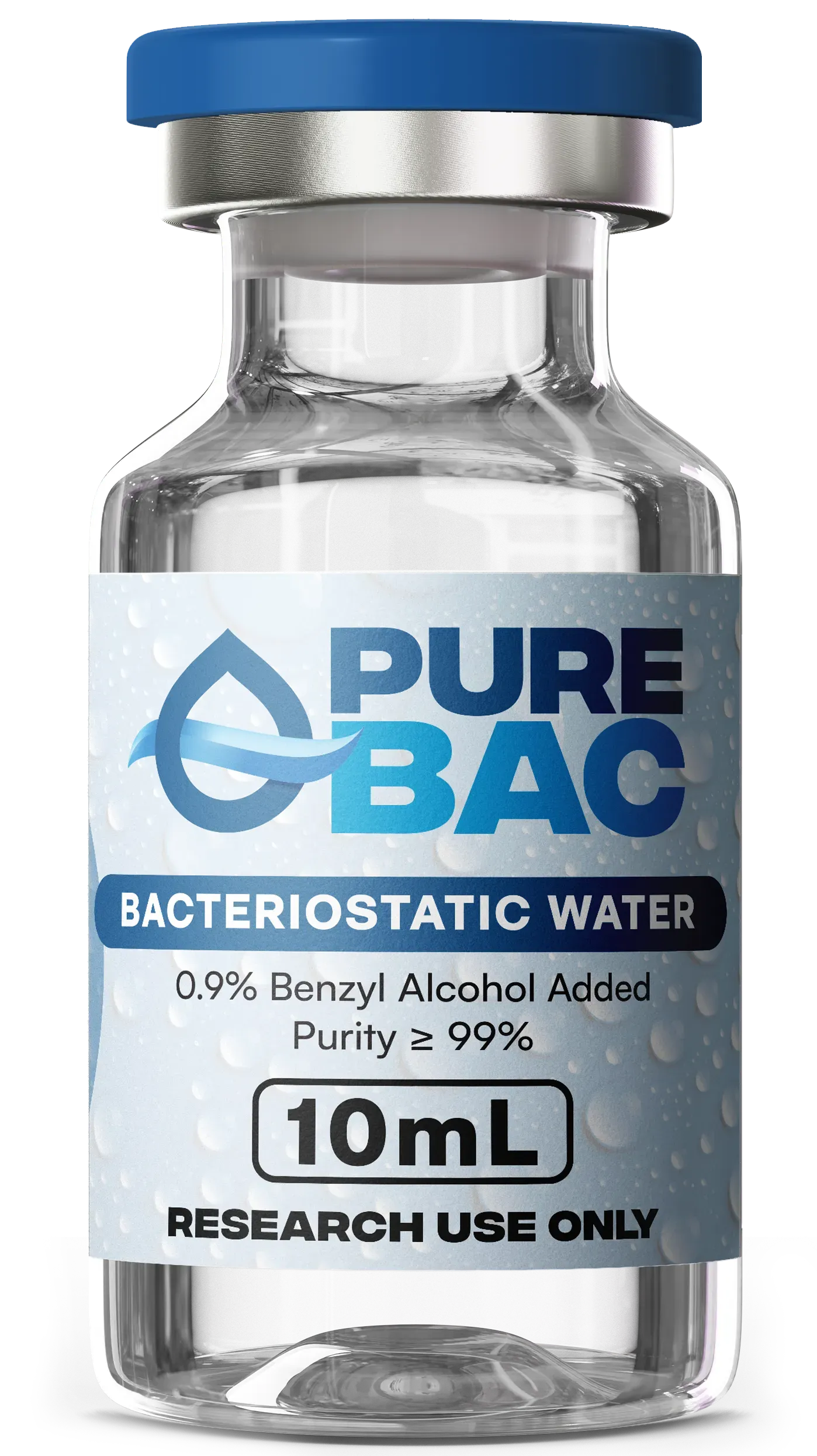
Gather the Ipamorelin vial, bacteriostatic water (BAC water), alcohol swabs, and insulin syringes.
Add Diluent
Inject 2mL of BAC water into a typical 5mg vial. Direct the stream along the vial wall—never directly onto the powder.
Allow Dissolution
Let the vial sit until powder fully dissolves. Gentle swirling is acceptable; never shake vigorously.
Calculate Concentration
5mg in 2mL = 2.5mg/mL = 2,500mcg/mL. For 200mcg dose: draw 0.08mL (8 units on insulin syringe).
Cycle Length and Frequency
Research protocols typically employ the following structure:
- Cycle length: 8-12 weeks continuous use
- Off-cycle: 4-8 weeks to allow receptor resensitization
- Long-term protocols: Some research uses 5 days on / 2 days off patterns for extended periods
Pro Tip
For maximum synergy, combine Ipamorelin with CJC-1295 (no DAC) in the same syringe. The combination produces significantly greater GH output than either peptide alone, and using CJC-1295 without DAC allows for pulsatile dosing that matches Ipamorelin's protocol.
Storage Requirements
Lyophilized powder: Store at -20°C for optimal long-term stability. Peptide remains stable for 1-2 years when properly stored.
Reconstituted solution: Refrigerate at 2-8°C immediately after reconstitution. Use within 21-28 days. Avoid repeated temperature fluctuations and protect from light.
Safety & Side Effects
Ipamorelin's safety profile has been characterized through both animal toxicology studies and human clinical trials. Overall, it demonstrates a favorable safety margin with predictable, generally mild adverse effects.
Clinical Trial Safety Data
Human clinical trials examining Ipamorelin for post-operative ileus provided important safety information. In these studies, Ipamorelin was well-tolerated with no serious adverse events attributed to the peptide. The studies confirmed that GH elevation occurred without significant cortisol or prolactin increases, validating preclinical selectivity data in humans.
No Cortisol Spikes
Unlike GHRP-2/6, Ipamorelin doesn't trigger stress hormone release.
Minimal Prolactin
Prolactin levels remain essentially unchanged at research doses.
No Appetite Surge
Avoids the intense hunger that GHRP-6 causes.
Commonly Observed Effects
The following effects are commonly reported in research settings and generally resolve spontaneously:
- Head rush/flushing — Transient warmth or flushing sensation immediately post-injection, typically lasting 2-5 minutes
- Injection site reactions — Mild redness or irritation at subcutaneous injection sites
- Water retention — Mild fluid retention similar to natural GH elevation, typically stabilizes within 2 weeks
- Tingling/numbness — Occasional paresthesias in extremities, usually temporary
- Vivid dreams — Enhanced dream activity, likely related to GH's role in sleep architecture
- Increased fatigue (initial) — Some subjects report tiredness in early use, resolving as body adjusts
Long-Term Considerations
Long-term safety data for Ipamorelin in healthy humans is limited, as clinical trials focused on short-term surgical applications. Theoretical concerns based on chronic GH elevation include:
- Insulin sensitivity changes — Chronic GH elevation can reduce insulin sensitivity
- Potential growth factor effects — Elevated IGF-1 requires consideration in individuals with cancer history
- Joint discomfort — Water retention and connective tissue changes possible with extended use
These concerns are shared with all GH-elevating interventions and are not unique to Ipamorelin. The pulsatile nature of Ipamorelin-induced GH release may mitigate some risks compared to continuous GH elevation.
Contraindications and Precautions
- Active malignancy — GH and IGF-1 can promote tumor growth; contraindicated in active cancer
- Pregnancy/lactation — No safety data; should be avoided
- Severe kidney or liver disease — Altered peptide metabolism may affect dosing
- Uncontrolled diabetes — GH effects on glucose metabolism require careful monitoring
- Active retinopathy — GH can potentially worsen certain retinal conditions