GHK-Cu
Copper Peptide GHK-Cu (Glycyl-L-Histidyl-L-Lysine:Copper)
Get GHK-Cu
Sourced from Ascension Peptides. Verified ≥≥99% purity, third-party tested. COA included.
Off with code
PEPTIDEDECK
Table of Contents
What is GHK-Cu?
GHK-Cu is a naturally occurring peptide-copper complex found in human blood plasma, saliva, and urine. It consists of three amino acids—glycine, histidine, and lysine—bound to a copper ion. This simple molecule has remarkably broad effects: it influences the expression of over 4,000 human genes, many of which are involved in tissue repair, collagen production, and cellular health.
Discovery came in the 1970s when Dr. Loren Pickart noticed that liver cells exposed to blood from young people grew better than those exposed to older blood. The active factor turned out to be GHK-Cu. Subsequent research revealed that GHK-Cu levels decline dramatically with age—dropping about 60% between ages 20 and 60—potentially contributing to slower healing and reduced skin quality as we age.
Why It Matters for Skin
In skin, GHK-Cu stimulates collagen and elastin synthesis, promotes blood vessel growth, supports antioxidant defenses, and activates genes associated with tissue remodeling. Unlike many 'anti-aging' ingredients with questionable evidence, GHK-Cu has decades of research behind it, including human studies demonstrating measurable improvements in skin thickness, firmness, and wrinkle reduction.
Beyond Cosmetics
While skin applications dominate consumer interest, GHK-Cu research extends to wound healing (it accelerates tissue repair), hair growth (supporting follicle health), and potentially broader anti-aging effects. The gene expression research particularly intrigues longevity researchers—GHK-Cu appears to reset gene activity patterns toward more youthful states, though what this means for actual aging is still being explored.
GHK-Cu is available in both topical skincare products and injectable research peptide forms, each with different applications and penetration characteristics.
Research Benefits
Stimulates collagen and elastin production
Accelerates wound healing and tissue repair
Reduces fine lines and wrinkles
Improves skin firmness and elasticity
Promotes hair follicle health and growth
Reduces inflammation and oxidative damage
Enhances skin barrier function
May improve scarring and skin texture
How GHK-Cu Works
GHK-Cu's mechanisms are unusually well-understood for a cosmetic compound, spanning from gene expression to specific tissue effects.
Gene Expression Modulation
The most striking finding about GHK-Cu is its effect on gene expression. Studies using gene arrays found that GHK-Cu influences over 4,000 human genes—roughly 6% of the genome. It suppresses genes associated with inflammation, tissue destruction, and aging, while activating genes associated with antioxidant responses, tissue repair, and stem cell activity.
This isn't targeted drug action on a single pathway—it's broad biological modulation that shifts cellular function toward regenerative states. The mechanisms likely involve GHK-Cu affecting transcription factors and signaling pathways that regulate large gene networks.
Collagen and Elastin Stimulation
GHK-Cu directly increases production of collagen types I, III, and V, plus elastin—the proteins responsible for skin structure, firmness, and elasticity. It does this by stimulating fibroblasts (the cells that produce these proteins) and by affecting growth factor expression including TGF-β.
Studies show collagen synthesis increases of 70% or more in skin exposed to GHK-Cu—comparable to or exceeding tretinoin (retin-A), the gold standard for collagen stimulation, but typically with less irritation.
Wound Healing Acceleration
The wound healing effects of GHK-Cu involve multiple mechanisms: increased blood vessel formation (angiogenesis), attraction of immune cells to clear damaged tissue, stimulation of fibroblast proliferation, and enhancement of tissue remodeling enzymes. Studies show wounds treated with GHK-Cu close faster and heal with better tissue quality.
Antioxidant and Anti-Inflammatory Effects
GHK-Cu enhances antioxidant enzyme expression (including superoxide dismutase) while suppressing inflammatory cytokines like IL-6 and TNF-α. This dual action protects tissues from oxidative damage while reducing the chronic low-grade inflammation associated with aging.
The Role of Copper
The copper ion isn't just a tag-along—it's essential. Copper is a cofactor for enzymes involved in collagen cross-linking, antioxidant function, and other processes. The GHK peptide serves partly as a delivery mechanism for copper to tissues. This is why GHK alone has minimal activity; the complex is the active form.
Research Applications
Skin aging and rejuvenation
Active research area with published studies
Wound healing
Active research area with published studies
Hair loss and follicle regeneration
Active research area with published studies
Tissue remodeling
Active research area with published studies
Anti-inflammatory mechanisms
Active research area with published studies
Gene expression modulation
Active research area with published studies
Scar reduction
Active research area with published studies
Post-procedure skin recovery
Active research area with published studies
Research Findings
GHK-Cu has more published research than most cosmetic peptides, including human clinical studies.
Skin Aging Studies
A controlled study published in Journal of Cosmetic Dermatology found that GHK-Cu applied twice daily for 12 weeks significantly improved: skin laxity and firmness, fine lines and wrinkles, skin clarity and brightness, and overall skin appearance. The improvements were measurable by both clinical grading and participant self-assessment.
Comparative studies have shown GHK-Cu performing similarly to tretinoin for collagen stimulation while causing less irritation—making it suitable for sensitive skin or those who can't tolerate retinoids.
Gene Expression Research
Groundbreaking studies examined how GHK-Cu affects human gene expression. Published in BioMed Research International, this research identified over 4,000 genes modulated by GHK-Cu. Notably, genes associated with aging and disease were suppressed, while genes associated with repair and regeneration were activated. The pattern resembled 'resetting' gene expression toward a younger state.
Wound Healing Evidence
Multiple studies have examined GHK-Cu in wound healing contexts. Research in Archives of Dermatological Research demonstrated accelerated wound closure and improved tissue quality in GHK-Cu-treated wounds. The peptide enhanced every phase of healing: inflammation, proliferation, and remodeling.
Hair Follicle Research
Studies on hair follicles show GHK-Cu can enlarge follicles, extend growth phase, and increase hair thickness. A study comparing GHK-Cu to minoxidil found comparable hair growth promotion. The mechanism involves increased follicle blood supply and direct stimulation of follicle cells.
Limitations of Evidence
Most GHK-Cu research involves topical application or cell/tissue studies. Injectable use is less studied, though mechanistically similar effects would be expected. Very long-term studies (years) are lacking, though the compound's natural presence in human blood provides some safety reassurance.
Dosage & Administration
GHK-Cu administration depends on whether you're using topical products or injectable peptide.
Topical Use
Product selection: Look for serums or creams with GHK-Cu at 0.1-1% concentration (some don't disclose exact amounts—reputable brands with GHK-Cu listed high in ingredients are generally effective).
Application: Apply to clean, dry skin once or twice daily. Can be used in place of or alongside other serums. The blue color of concentrated GHK-Cu products is normal (from copper).
Routine placement: After cleansing and toning, before heavier moisturizers or oils. Can be layered with other actives including vitamin C, niacinamide, and hyaluronic acid.
Timeline: Use consistently for at least 8-12 weeks before judging results—collagen production takes time.
Injectable Use
Injectable GHK-Cu is more experimental and primarily used by those seeking systemic effects or enhanced skin penetration.
Typical approach: Subcutaneous injection, often 1-2mg daily or every other day. Some protocols use 1-5mg.
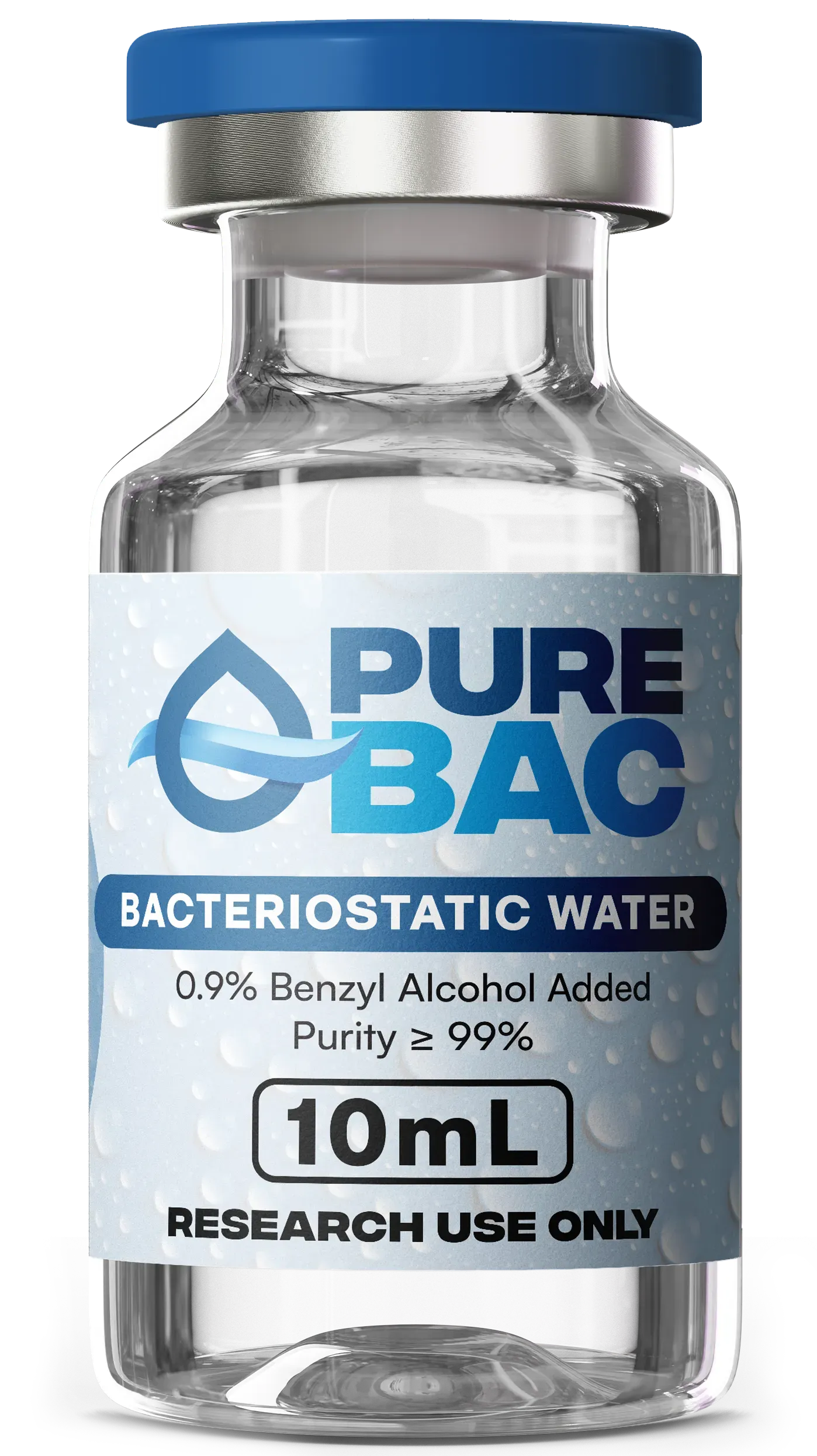
Reconstitution: Add bacteriostatic water to lyophilized powder. Solution will be blue.
Duration: Protocols typically run several weeks to months. No established cycling requirements.
Injectable use has less research support than topical, though the mechanism suggests effects on deeper tissues that topical application can't reach.
What to Expect
Early changes (weeks 2-4): improved skin texture and hydration. Medium-term (weeks 6-12): visible improvements in firmness, fine lines. Longer-term: continued improvements in skin quality, potential hair benefits if using for follicles.
Safety & Side Effects
GHK-Cu has an excellent safety profile, which makes sense given it's a naturally occurring compound in human blood.
Topical Safety
Topical GHK-Cu is very well tolerated. In clinical studies, adverse reactions were rare and typically limited to mild, transient irritation in sensitive individuals. There are no significant safety concerns with topical use at standard cosmetic concentrations.
Compared to other anti-aging actives (retinoids, AHAs), GHK-Cu is notably gentler. It doesn't cause the irritation, peeling, or sun sensitivity associated with many effective skin treatments.
Injectable Safety
Injectable use is less studied but generally reported as well-tolerated. The main concerns: injection site reactions (standard for any injection), theoretical copper accumulation with very high doses (unlikely at typical protocols), and lack of long-term injectable safety data.
The copper content of typical doses is very low—well below daily copper intake from food—so copper toxicity is not a realistic concern with normal use.
Contraindications
- Wilson's disease (copper metabolism disorder)—avoid GHK-Cu
- Known copper allergy—avoid
- Pregnancy/breastfeeding—insufficient safety data, cautious avoidance is prudent
Interactions
No significant drug interactions are known. GHK-Cu is compatible with most skincare actives. Extreme pH products might destabilize the copper complex if mixed directly, but normal skincare layering is fine.
Long-Term Use
The compound's natural presence in human blood suggests long-term topical use is safe. Some have used GHK-Cu products for years without issues. The same reassurance doesn't fully extend to injectable use, which maintains higher systemic levels than occur naturally.