Almost every question that starts "retatrutide 10mg…" or "retatrutide 15mg…" comes from the same confusion, and it is worth clearing up in the first paragraph because getting it wrong is genuinely dangerous.
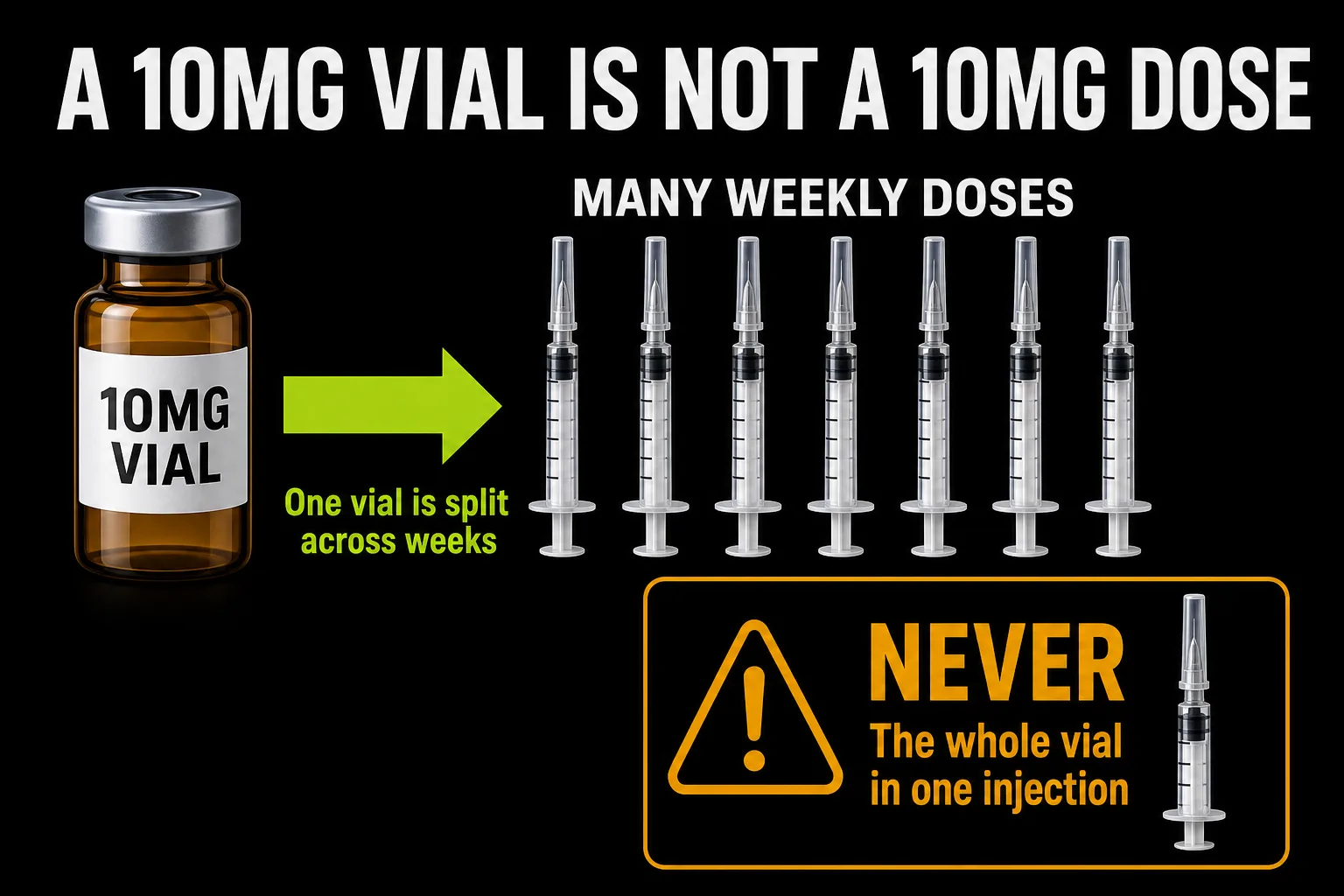
A 10mg vial is not a 10mg dose. Research retatrutide is sold by vial size — 5mg, 10mg, 20mg, 30mg — and those numbers describe how much peptide is in the glass, not how much goes into one injection. A typical weekly dose is a fraction of a vial. Someone who reconstitutes a 10mg vial and injects the whole thing has taken several times the highest dose ever given in a clinical trial.
🔑 The Short Version
- 5mg and 10mg are vial sizes — one vial covers multiple weeks, not one injection
- 6mg is a titration step, a rung on the way up rather than a product you buy
- Trials tested up to 12mg weekly. That is the ceiling of the human evidence
- 15mg and 16mg are above every tested dose. No trial has ever evaluated them, so nobody can tell you the risk
- Work out mg per injection before you draw anything — vial strength, water volume, and syringe units are three different numbers
Vial Size vs Weekly Dose
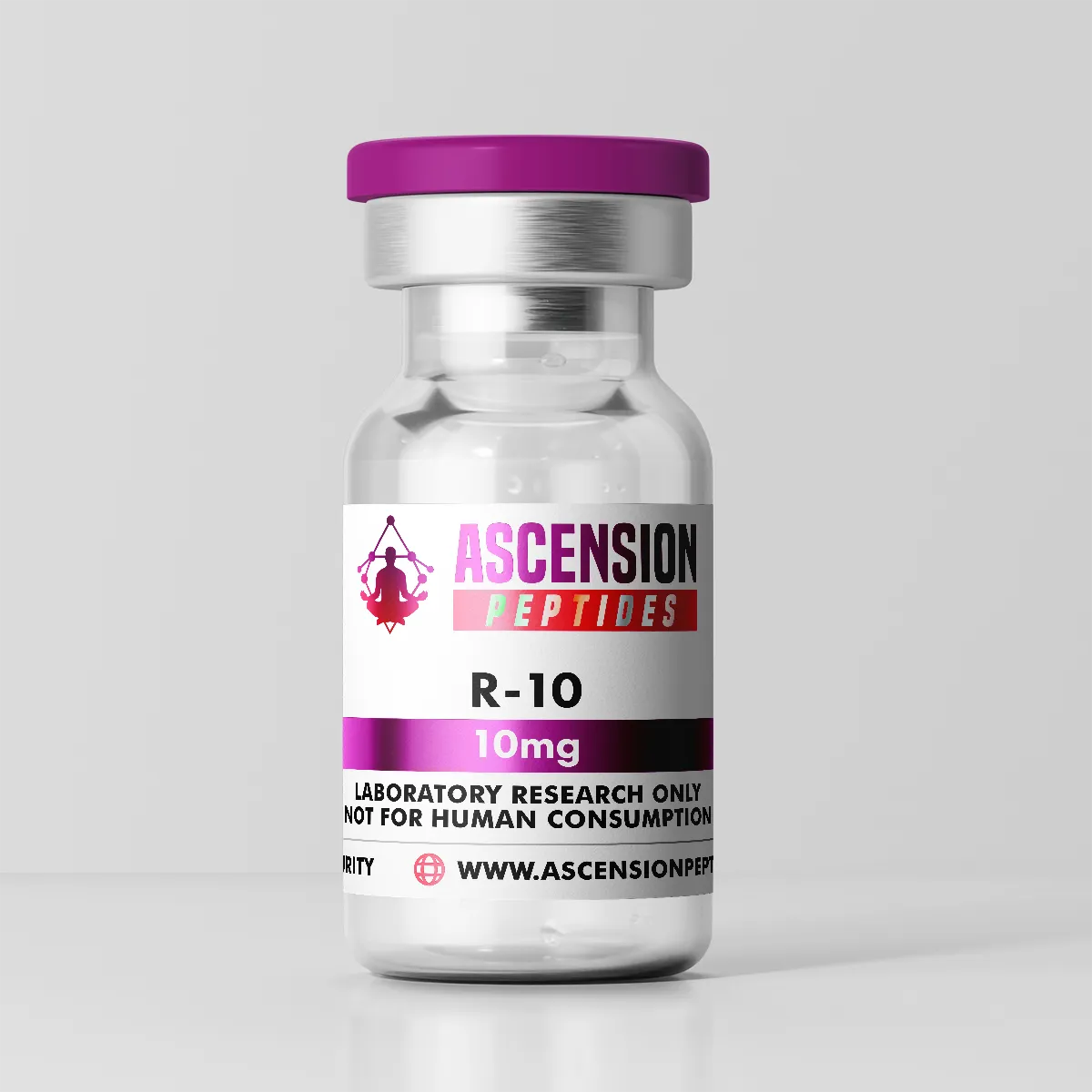
Those week counts are arithmetic, not a recommendation — they exist to show the scale of the gap between a vial number and a dose number. Ascension's R-10 is a 10mg vial at $80 and the R-30 is 30mg at $200, which is also why the larger vial is the cheaper option per milligram if you will actually get through it. Vendor pricing moves, so treat those as a snapshot rather than a quote. Current prices, the batch COA and a six-seller price check are on our retatrutide for sale page.
Before drawing anything, run the numbers through our reconstitution guide and calculator. The three numbers people mix up are vial strength in mg, bacteriostatic water volume in ml, and units on the syringe — and they are not interchangeable.
What the Trials Actually Tested
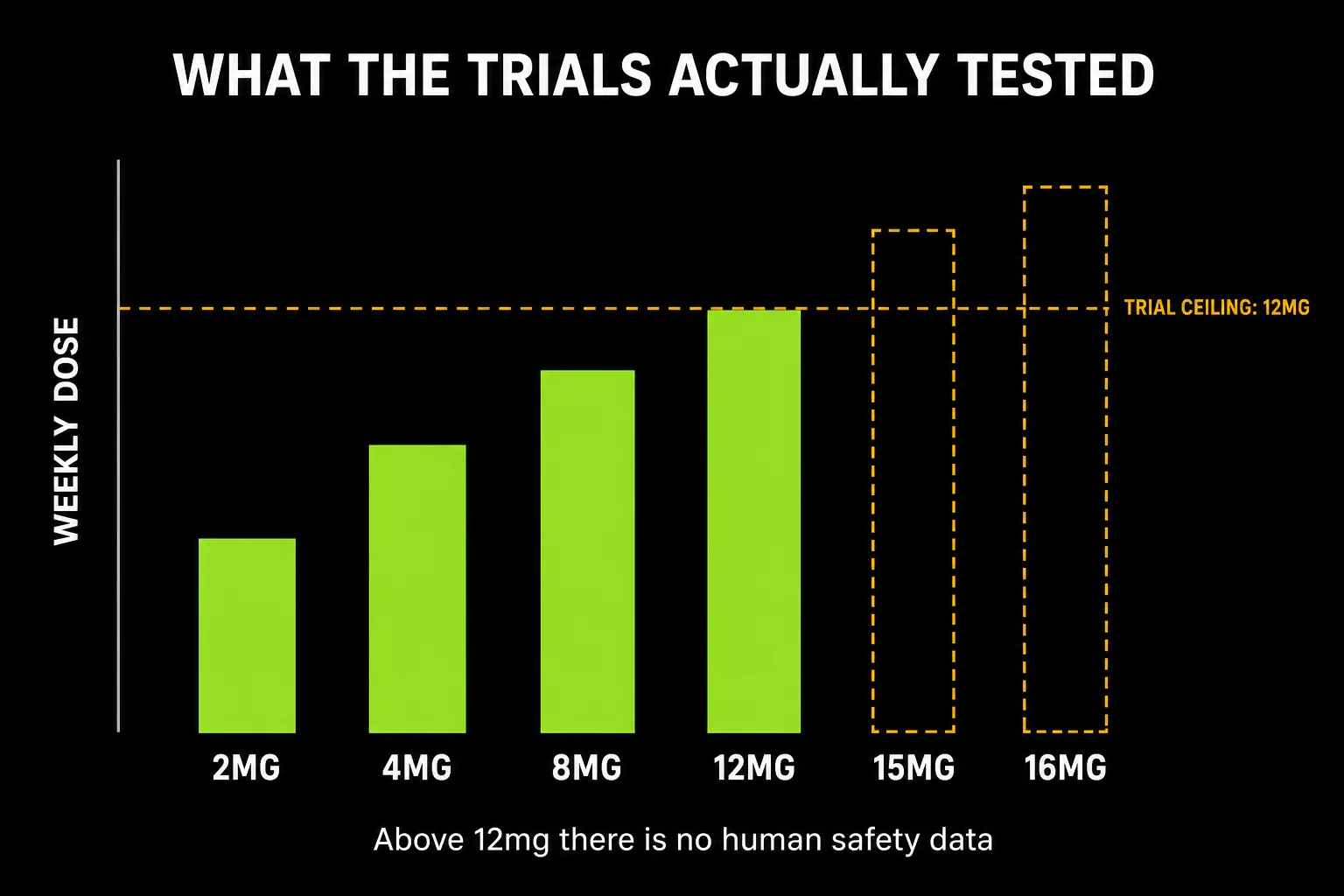
Retatrutide's clinical program worked up through a titration ladder and topped out at 12mg weekly. That is the highest dose with published human safety and efficacy data behind it — the 24% and 28% weight-loss figures people quote come from that range, not from anything higher.
This matters for the two searches at the top of this page. There is no trial of 15mg retatrutide. There is no trial of 16mg retatrutide. Anyone quoting expected results at those doses is extrapolating off the end of the curve, and dose-dependent side effects — nausea, heart rate, GI intolerance — do not politely stop scaling because the data ran out. Our Phase 3 results and TRIUMPH-1 coverage lay out what was actually measured.
Dose by Dose
Retatrutide 5mg
Almost always a vial, not a dose. A 5mg vial is the smallest size commonly sold and suits someone trialling a source before committing to a larger purchase. At typical weekly doses it does not last long, which makes it the most expensive option per milligram. Our retatrutide cost guide shows the per-milligram gap between sizes.
Retatrutide 6mg
This one is a genuine weekly dose rather than a product. 6mg sits between the 4mg and 8mg rungs of the trial ladder, and it comes up when someone is titrating and wants to move up gradually rather than doubling. Titration structure is covered in the dosing guide and week by week in the dosage chart.
Retatrutide 10mg
The ambiguous one, and the reason this article exists. A 10mg vial is the most common size sold. A 10mg weekly dose is also plausible, sitting just below the 12mg trial ceiling. If you are reading a protocol or a product listing, establish which is meant before you draw anything — the two differ by a factor of several.
Retatrutide 15mg and 16mg
Neither is a standard vial size and neither was tested in any trial. In practice these searches come from two places: people running above-label doses in bodybuilding contexts, and people misreading a vial label as a dose. If it is the first, understand that you are past the edge of the evidence and the side-effect profile has not been characterised there — see retatrutide and bodybuilding and the heart rate question. If it is the second, re-read the vial.
Worth adding: more is not reliably better with this compound. People who push the dose chasing a stalled result frequently find nausea and fatigue scale faster than weight loss does, and cutting back is often the fix — covered in losing too much weight.
How to Convert a Vial Into a Dose
The single most common error is step four. On a standard U-100 insulin syringe, 100 units equals 1ml — so units and millilitres are not the same number, and reading one as the other is how tenfold dosing errors happen. Our reconstitution calculator does the whole chain, and the reconstitution guide walks it manually.

Where This Sits Legally
Retatrutide is not FDA approved. It is an investigational drug still in clinical trials, with an approval decision expected no earlier than 2027, and everything sold as research material is exactly that — see is retatrutide FDA approved. There is no approved label, which is precisely why vial sizes and doses get conflated: no pharmacist is standing between the vial and the syringe.
Frequently Asked Questions
This article is for research and educational purposes and is not medical advice. Retatrutide is an investigational drug that is not FDA approved for any indication, and material sold as research peptide is not intended for human consumption. Doses above 12mg weekly have not been evaluated in any clinical trial.