Key Takeaways
- Retatrutide is a triple agonist (GLP-1/GIP/GCG) — the glucagon component gives it stronger fat-oxidation potential than tirzepatide alone
- Nausea is dose-dependent and manageable; eating small, low-fat meals on injection day makes a real difference
- Without resistance training, up to 40% of weight lost on GLP-1s can be lean mass — training and protein intake are your main defense
- Hair shedding at 2–4 months is telogen effluvium from caloric restriction, not the peptide — it's temporary
- Heart rate increases of 4–5 bpm on average were documented in TRIUMPH-4; worth monitoring if you have cardiac history
- Plateaus respond best to dose escalation, diet recalibration, or a 2-week diet break — not just waiting it out
Retatrutide has generated more excitement in the peptide space than anything since semaglutide first hit. The TRIUMPH-4 trial showed 24.2% average body weight reduction — numbers that would have seemed impossible five years ago. But trial data is one thing. Actually using it is another.
This guide is for people in the trenches. If you're running retatrutide for body recomposition, wondering what's causing your nausea, losing sleep over hair shedding, or watching the scale flatline after weeks of progress — you're in the right place.
Retatrutide for Bodybuilding: What It Actually Does to Body Composition
Let's be precise about what retatrutide is, because it matters for how you use it.
Retatrutide is a triple agonist — it activates GLP-1, GIP, and glucagon receptors simultaneously. Most people have heard about GLP-1 (that's what semaglutide hits) and GIP (added in tirzepatide). The glucagon component is what makes retatrutide different in a way that actually matters for body composition.
Glucagon receptor activation ramps up fat oxidation, increases thermogenesis, and signals the liver to burn through stored fat. GLP-1 handles appetite suppression and insulin regulation. GIP improves insulin sensitivity and may have its own fat-storage signaling effects. Together, these three mechanisms create a synergy that no single or dual agonist can fully replicate.
Why this matters for bodybuilders: The glucagon component means retatrutide doesn't just suppress appetite — it actively accelerates fat oxidation even at rest. That's the theoretical edge over tirzepatide for people focused on body recomposition rather than pure weight loss.
For anyone training seriously, the practical implications are:
- Appetite suppression is aggressive. Getting enough calories to fuel training becomes a real challenge, especially in the early weeks. Track your intake. Don't assume you're eating enough just because you're not hungry.
- Protein becomes non-negotiable. Aim for at least 1g per pound of bodyweight daily. Some coaches push 1.2–1.4g/lb on GLP-1s specifically because muscle preservation is harder in a large caloric deficit.
- Resistance training is the lever. The research is unambiguous here — lifting heavy is the single most effective intervention for preserving muscle mass while on GLP-1 class peptides. Cardio helps with general health but doesn't move the needle on lean mass retention the way resistance training does.
- Recovery may slow. In a significant caloric deficit, recovery between sessions takes longer. Prioritize sleep, keep training volume reasonable, and don't try to add PRs every week while running retatrutide.
For dosing specifics and escalation protocols, see our full retatrutide dosing guide.
Retatrutide Nausea: Why It Happens and How to Manage It
Nausea is the most common side effect across all GLP-1 class peptides, and retatrutide is no exception. In the TRIUMPH trials, nausea was reported by roughly 40–50% of participants at therapeutic doses. That sounds alarming until you understand what's actually happening — and what you can do about it.
GLP-1 receptors are distributed throughout the gut and brain. When you activate them with a pharmacological dose, gastric emptying slows dramatically. Food sits in your stomach longer. That fullness-turning-to-nausea sensation is basically your stomach saying it's been told to hold everything indefinitely.
The dose-response relationship is real. Higher doses produce more nausea, especially early in a cycle or after a dose increase. Most people find that nausea peaks in the first 24–48 hours after injection and then fades as the peptide clears. Weekly injection protocols give you roughly 5 days of relative comfort before the next dose.
Injection day rules: Avoid high-fat meals for 2–3 hours before and after injecting. Fat dramatically slows gastric emptying on its own — combine that with GLP-1 activity and you'll feel sick. Small, easily digestible meals (rice, lean protein, fruit) are your best friend on injection day.
Practical strategies that actually work:
- Inject at night. Sleep through the worst of the first-day nausea. Many users find they wake up fine on day two.
- Don't eat right before injecting. An empty or near-empty stomach handles the initial wave better.
- Ginger. Ginger tea, ginger chews, ginger capsules — it genuinely helps. The research on ginger for chemotherapy-induced nausea translates reasonably well here.
- Small portions. You'll want to eat less anyway. When nausea hits, the answer is smaller meals, not stopping eating entirely. Skipping meals when already nauseated often makes it worse.
- Don't escalate dose too fast. If nausea is severe, stay at the current dose for an extra week or two before going up. The standard escalation schedule is a guideline, not a mandate.
- Ondansetron (Zofran) as backup. If nausea is severe enough to affect your daily function or prevent eating, talk to your doctor about having ondansetron on hand. It's not something to lean on every week, but for bad injection days it's genuinely helpful.
One thing to understand: nausea typically improves over time. Most users report that by weeks 6–10, the injection-day nausea is much less pronounced. Your body adapts. If it hasn't improved at all after 8–10 weeks at a stable dose, that's worth discussing with whoever is supervising your protocol.
Retatrutide and Muscle Loss: How Much, Why, and How to Minimize It
This is probably the most important section for anyone using retatrutide for body recomposition rather than pure weight loss. The muscle loss question doesn't get talked about enough in GLP-1 circles, and the answer is sobering.
Studies on GLP-1 class peptides — including the STEP trials with semaglutide and SURMOUNT trials with tirzepatide — consistently show that without deliberate intervention, approximately 35–40% of weight lost comes from lean mass rather than fat. That's not a rounding error. If you lose 30 pounds and 12 of those pounds are muscle, you haven't recomposed your body — you've just made a smaller version of the same body.
The lean mass problem is real: A 2023 analysis of tirzepatide trial data found that lean mass constituted roughly 39% of total weight loss in participants who did not follow a structured exercise program. With progressive resistance training and adequate protein, that figure dropped to approximately 15–22%. The intervention works — but only if you actually do it.
The mechanism is straightforward. Your body is in a large caloric deficit. It's losing weight fast. When energy availability drops sharply, your body doesn't selectively burn fat — it pulls from whatever it can access. Muscle tissue, while metabolically expensive to maintain, gets cannibalized when overall energy balance is severely negative and there's no training signal telling the body to preserve it.
What to do:
- Lift heavy, 3–4x per week minimum. Compound movements — squats, deadlifts, rows, presses — send the strongest muscle-preservation signal. The training doesn't need to be complicated, but it needs to be progressive and challenging.
- Hit your protein target every single day. 1g/lb bodyweight is the floor. On days when appetite suppression makes eating difficult, lean protein shakes, Greek yogurt, and cottage cheese are useful tools. High-protein foods that go down easily when you're not hungry.
- Don't let the deficit get too aggressive. The faster you lose weight, the higher the proportion of lean mass in that loss. Running retatrutide at a very low calorie intake might produce impressive scale numbers short-term, but body composition suffers. A more moderate deficit (500–750 calories/day below maintenance) generally produces better body composition outcomes even if scale progress is slower.
- Consider creatine. It's one of the most studied supplements in existence, it's cheap, it works for most people, and it helps maintain performance during caloric restriction. 3–5g daily, no loading required.
If you're concerned you're losing too much weight too fast, we have a separate guide on what to do when retatrutide is causing excessive weight loss.
Retatrutide Hair Loss: Is It Real?
Yes, people lose hair on retatrutide. No, retatrutide is not directly causing it.
What's happening is telogen effluvium — a well-documented physiological response to significant physical stress, including rapid weight loss. Here's the mechanism: your hair follicles cycle through growth (anagen), transition (catagen), and resting (telogen) phases. A major metabolic disruption — like a large, sustained caloric deficit — can push an unusually high percentage of follicles into the telogen phase simultaneously. When those follicles shed a few months later, you notice.
The timing is the tell. Telogen effluvium typically shows up 2–4 months after the triggering event. So if you started retatrutide in October and noticed excessive shedding in January, that tracks perfectly. It's not the peptide — it's the caloric restriction the peptide enabled.
The good news: Telogen effluvium is almost always temporary. Once weight loss stabilizes or slows, the hair cycle normalizes and regrowth follows. Most people see improvement within 3–6 months of stabilization. It's alarming when it's happening, but it's not permanent hair loss.
Things that help:
- Protein intake. Hair is made of keratin, a protein. Inadequate protein intake accelerates hair loss in a caloric deficit. This is another reason to hit that protein target.
- Biotin. The evidence for biotin supplementation in non-deficient people is mixed, but deficiency does contribute to hair loss — and people in caloric restriction can become deficient. A biotin supplement (2,500–5,000 mcg/day) is low-risk and worth trying.
- Don't crash-diet. The more severe and rapid the caloric restriction, the worse the telogen effluvium. This connects back to keeping your deficit moderate.
- Zinc and iron levels. Get bloodwork. Deficiencies in both minerals are associated with increased hair shedding, and they're common in people eating less food overall.
The short version: if you're losing hair at month 3 or 4 of your retatrutide protocol, it's almost certainly telogen effluvium. It'll come back. Focus on protein and micronutrients in the meantime.
Retatrutide and Heart Rate: What the Data Shows

Increased heart rate is a real, documented effect — not something buried in fine print. TRIUMPH-4 trial data showed an average resting heart rate increase of approximately 4–5 beats per minute across participants on the highest doses. That's a consistent finding, not a fluke.
The mechanism isn't fully worked out, but glucagon receptor activation is likely the primary driver. Glucagon has direct chronotropic (heart rate increasing) effects. More glucagon receptor agonism means more heart rate stimulation.
Who should pay attention: For healthy adults with no cardiac history, a 4–5 bpm increase is unlikely to be clinically meaningful. But if you have existing arrhythmias, hypertension, or other cardiovascular conditions, discuss this with your doctor before starting. Also worth monitoring: if your heart rate is climbing more than 10–15 bpm above your baseline, that's worth flagging.
Practical notes:
- Track your resting heart rate before starting and periodically throughout your protocol. A smartwatch or fitness tracker works fine for this.
- The increase is generally more pronounced at higher doses. If you're seeing significant HR elevation, it may be a signal to slow dose escalation.
- Stimulants (caffeine, pre-workouts, certain fat burners) add to this effect. Worth being mindful of your total stimulant load while running retatrutide at higher doses.
- The effect appears to attenuate somewhat as weight loss occurs — some of the HR increase may be compensatory rather than purely drug-mediated.
For most people using retatrutide, the cardiovascular risk-benefit calculation still looks favorable. Obesity itself is a major cardiovascular risk factor, and the weight loss produced by retatrutide meaningfully reduces long-term CV risk. But the heart rate effect is real and worth tracking.
Retatrutide and Alcohol: Does It Interact?
This is an interesting one that doesn't get enough attention. There are two sides to the alcohol-GLP-1 interaction.
First, GLP-1 receptor agonists appear to reduce alcohol cravings in a meaningful subset of users. This isn't a coincidence — GLP-1 receptors are expressed in brain regions involved in reward processing, and activation of these receptors seems to blunt the dopamine response to alcohol. Multiple case reports and early clinical observations suggest that some people on GLP-1 class peptides simply lose interest in drinking. A few ongoing trials are actually studying GLP-1 agonists as treatments for alcohol use disorder.
That's the interesting side. The practical side is more cautionary.
Nausea risk is amplified. Alcohol irritates the gastric lining and, in higher quantities, slows gastric emptying — exactly what GLP-1 peptides are already doing. Combining alcohol with retatrutide, especially on or near injection day, significantly increases the risk of nausea and vomiting. Some users report that amounts of alcohol they'd previously tolerated easily make them sick on retatrutide.
Other things to know:
- Hypoglycemia risk. Alcohol inhibits gluconeogenesis (glucose production in the liver). Retatrutide improves insulin sensitivity and lowers blood glucose. Together, these effects can push blood sugar lower than either would alone, particularly in people who are fasted. Not typically dangerous for healthy adults, but worth knowing if you drink on an empty stomach.
- Caloric tradeoffs. Alcohol calories are real and they don't come with any nutritional value. On a peptide that's already suppressing your appetite, using your limited caloric bandwidth on alcohol means less room for protein and nutrients.
- The practical advice: If you drink, keep it moderate, avoid it on injection day, and don't drink on an empty stomach. Many users find they naturally drink less on retatrutide anyway — the reduced cravings are a genuine observed effect.
Retatrutide Injection Sites: Where to Inject
Retatrutide is administered subcutaneously — meaning under the skin, not into muscle. The injection goes into the fatty tissue just beneath the skin surface.
The three standard sites are:
Rotation matters. Injecting into the same spot repeatedly causes lipohypertrophy — a buildup of fatty, fibrous tissue under the skin that can affect absorption. A systematic rotation approach is the right habit: rotate within each site (use different spots within the abdomen, for example) and rotate between sites across weeks.
Technique basics:
- Inject at room temperature. Cold peptide straight from the fridge stings more.
- Pinch the skin gently before injecting if you're lean. This ensures you're going into subcutaneous fat rather than muscle.
- Insert the needle at 45–90 degrees depending on how much subcutaneous fat is present. Lean individuals: 45 degrees. Average fat distribution: 90 degrees works fine.
- Don't rub the injection site after injecting. It can disperse the peptide unevenly.
- Dispose of needles properly in a sharps container.
On absorption consistency: Abdominal injections tend to produce the most consistent absorption kinetics. If you're noticing variable effects week to week, check whether your injection site or technique has changed — that's often the culprit.
Hitting a Retatrutide Plateau: What to Do
Plateaus are inevitable. The body adapts to caloric restriction — metabolic rate decreases, hunger hormones increase, and weight loss slows. This happens on every weight loss intervention, and retatrutide is not exempt despite its potency.
The good news: you have more levers to pull than you might think.
1. Dose escalation
This is the most direct intervention. TRIUMPH trial participants were escalated up to 12mg weekly, and weight loss continued at higher doses for most participants. If you've plateaued at a lower dose and haven't reached the protocol ceiling, going up is usually the right move. See the dosing guide for escalation schedules.
2. Diet recalibration
Weight loss changes your maintenance calorie needs. If you've lost 20 pounds, your TDEE (total daily energy expenditure) is lower than when you started. Your current deficit may have effectively disappeared. Recalculate your maintenance calories based on your current weight and reset your deficit accordingly.
3. The diet break
Two weeks at maintenance calories — not a cheat period, just maintenance — can meaningfully reset leptin levels, thyroid hormones, and metabolic rate. This is sometimes called a "refeed" strategy and has decent research support. After two weeks at maintenance, returning to a deficit often restarts weight loss progress. It feels counterintuitive to stop trying to lose weight, but the metabolic benefit is real.
4. Add MOTS-C to the stack
MOTS-C is a mitochondrial-derived peptide with strong effects on metabolic flexibility — essentially how efficiently your body switches between fuel sources and how responsive mitochondria are to energy demands. Several users and coaches have reported that adding MOTS-C to a retatrutide protocol helps break through plateaus, particularly at higher body weights where metabolic adaptation is more pronounced. We cover this in detail in our retatrutide + MOTS-C stack guide.
5. Training adjustments
If you've been doing the same training for months, your body has adapted to it. Changing the stimulus — adding volume, changing rep ranges, introducing new movement patterns — can help. More muscle mass also increases resting metabolic rate, which helps with the underlying calorie math.
Plateau strategy in order: (1) Verify the deficit is still real by recalculating TDEE → (2) Consider a 2-week diet break if you've been in a deficit for 3+ months → (3) Escalate dose if not at ceiling → (4) Add MOTS-C if metabolic adaptation is suspected → (5) Reassess training stimulus
Retatrutide Phase 3: Where It Stands
The clinical program for retatrutide — branded internally as LY3437943 — is called TRIUMPH. Here's the current state of play:
TRIUMPH-1 and TRIUMPH-2 established early safety and dose-finding data. These Phase 2 results were published in 2023 and showed weight loss figures that drew immediate attention from both the medical community and the broader public.
TRIUMPH-3 targeted specific populations including people with type 2 diabetes, where the combination of GLP-1/GIP/GCG activity offers particular advantages for both glycemic control and weight management. TRIUMPH-3 has completed enrollment and data collection.
TRIUMPH-4 — the headline Phase 3 trial — published results showing 24.2% mean body weight reduction at 48 weeks in participants on the highest dose (12mg weekly). This figure represents the largest weight reduction ever recorded in a clinical trial of a pharmacological agent for obesity. The previous record was tirzepatide at roughly 21%.
What Phase 3 completion means for access: With TRIUMPH-4 data in hand, Eli Lilly is expected to submit a New Drug Application (NDA) to the FDA. The FDA review process typically takes 12–18 months from submission. Approval would open the door to prescription access, insurance coverage over time, and eventual compounding restrictions lifting (or tightening, depending on how the market evolves).
For anyone following the regulatory timeline, see our dedicated article on retatrutide FDA approval dates and what to expect.
The practical implication for current users: if you're accessing retatrutide through research peptide channels now, the window before potential regulatory changes is finite. This isn't meant as pressure — it's just context. The peptide that's available today as a research compound may look very different from an access standpoint once it clears FDA approval and becomes a branded pharmaceutical product.
If you're considering starting, the data is as good as it's been. 24.2% weight loss in 48 weeks is real. The side effect profile is manageable for most people. The mechanism is sound. Just go in with realistic expectations about what it requires from you — specifically around training and nutrition.
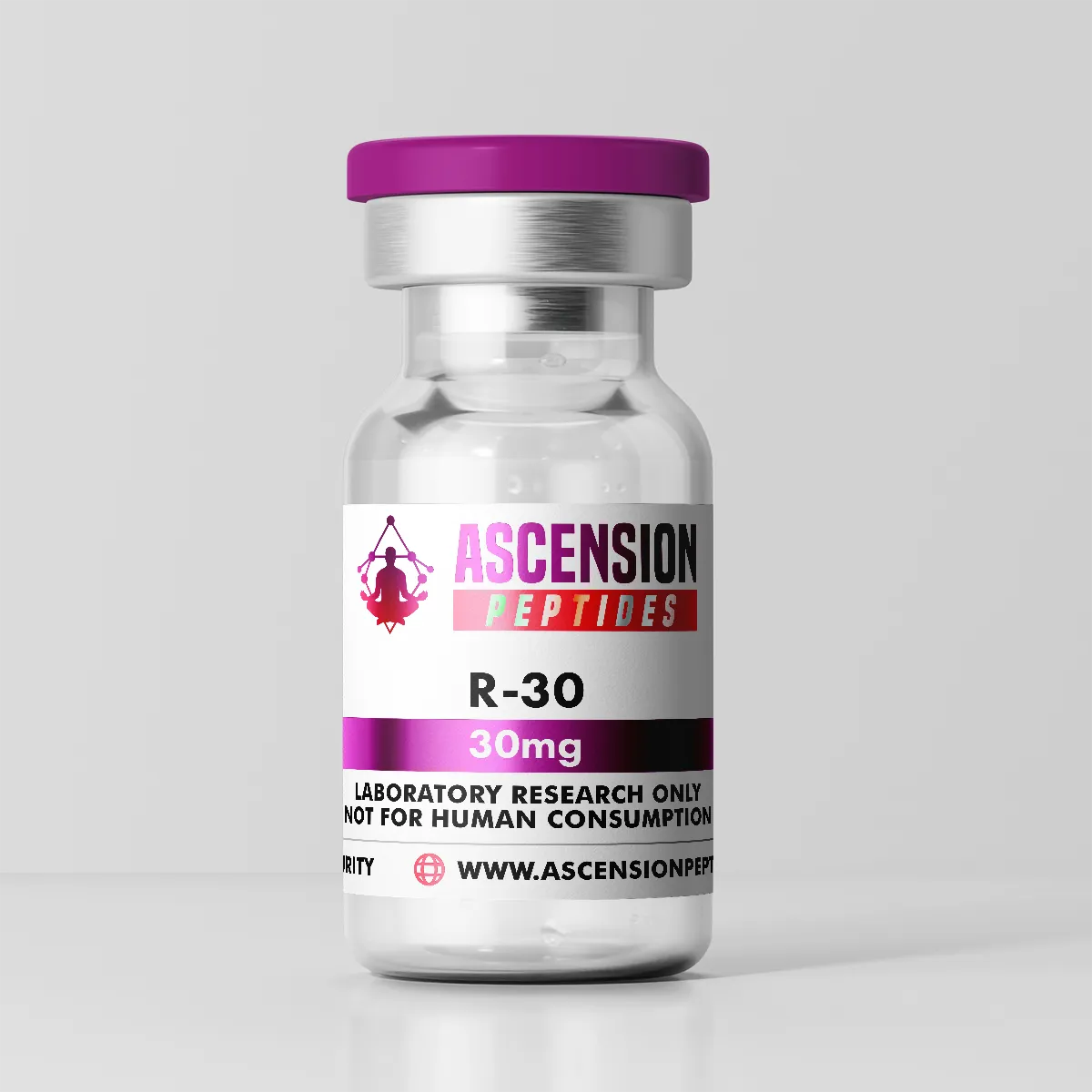
Ready to source retatrutide? Ascension Peptides carries R-30 (Retatrutide 30mg) — one of the few suppliers with consistent stock and verified purity. Shop Retatrutide on Ascension →
Frequently Asked Questions
Medical Disclaimer: This article is for informational purposes only and does not constitute medical advice. Retatrutide is an investigational compound and is not FDA-approved for human use. Always consult a qualified healthcare provider before starting any peptide or weight loss protocol. Individual results vary. The information presented here reflects available research data and should not be used as the sole basis for treatment decisions.