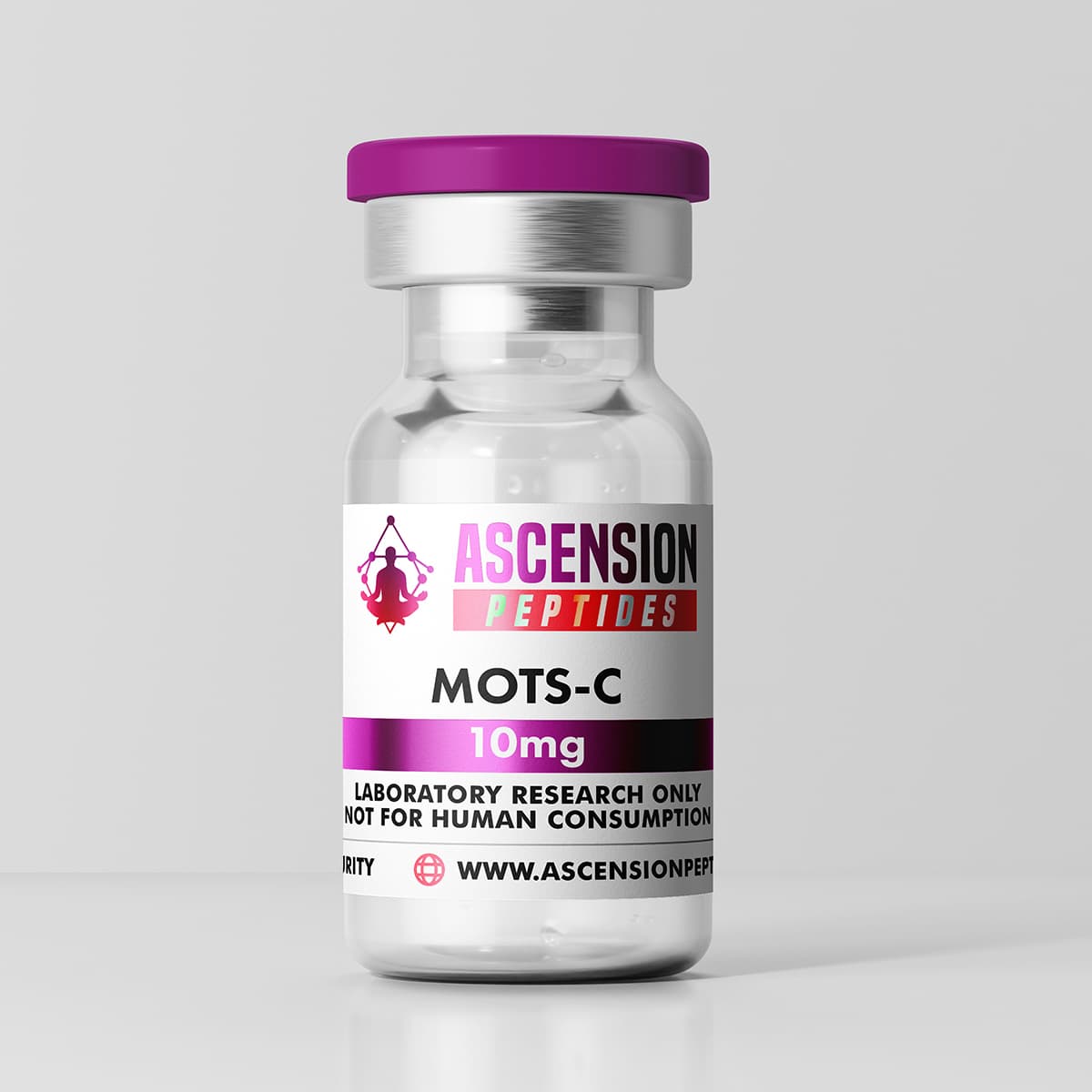
Two of the most talked-about metabolic peptides in current research circles are retatrutide and MOTS-c. On their own, each has demonstrated impressive data in early trials — but researchers are increasingly pairing them together as a stack designed to attack fat loss and metabolic dysfunction from multiple biological angles simultaneously.
This guide covers everything you need to understand about the retatrutide + MOTS-c stack: the mechanism behind the synergy, how each compound works, how researchers are structuring protocols, and what early anecdotal data from the research community suggests about results. Some people pair retatrutide with tesamorelin instead; that combination is covered in tesamorelin vs retatrutide.
What Is the Retatrutide + MOTS-c Stack?
Before diving into the protocol, it helps to understand what each peptide brings to the combination.
Retatrutide: The Triple-Agonist
Retatrutide (LY3437943) is a novel triple-receptor agonist developed by Eli Lilly that simultaneously targets GLP-1 (glucagon-like peptide-1), GIP (glucose-dependent insulinotropic polypeptide), and glucagon receptors. This three-pronged mechanism is what sets it apart from compounds like semaglutide, which only acts on GLP-1 receptors.
- GLP-1 agonism: Reduces appetite, slows gastric emptying, promotes satiety
- GIP agonism: Enhances insulin secretion, may reduce GLP-1-related nausea
- Glucagon agonism: Increases hepatic glucose output control, drives thermogenesis and energy expenditure
Phase 2 clinical trial data published in 2023 showed subjects on the top 12 mg dose lost an average of 24.2% of body weight over 48 weeks, and the phase 3 TRIUMPH-1 trial (New England Journal of Medicine, September 2026) reported 28.3% at 80 weeks on 12 mg (efficacy estimand; 25.0% counting everyone randomized) — making it arguably the most potent weight-loss compound currently known. Its weekly subcutaneous administration makes it relatively convenient for research protocols.
MOTS-c: The Mitochondrial Optimizer
MOTS-c (Mitochondrial Open Reading Frame of the 12S rRNA Type-c) is a mitochondria-derived peptide that functions as a metabolic regulator. It was first described in research as an exercise-mimetic — a compound that activates some of the same cellular pathways triggered by physical activity, even in sedentary states.
- AMPK activation: Stimulates AMP-activated protein kinase, the body's master energy sensor
- Insulin sensitivity: Research in models shows improved glucose uptake and insulin signaling
- Mitochondrial biogenesis: May support the creation of new mitochondria, improving cellular energy efficiency
- Muscle preservation: Evidence suggests it may help preserve lean mass during caloric restriction
- Anti-aging properties: MOTS-c levels naturally decline with age; supplementation may restore youthful metabolic function
Why Combine Retatrutide and MOTS-c? The Synergy Explained
The case for stacking these two compounds rests on the idea that they operate through largely complementary — rather than overlapping — mechanisms. This is the gold standard in stack design: two agents that each work differently but push the research subject toward the same ultimate outcomes.
One of the most important potential synergies is around lean mass preservation. A known concern with aggressive GLP-1-class weight loss research is that some of the mass lost is lean tissue, not just fat. MOTS-c's potential to preserve skeletal muscle through AMPK and mitochondrial pathways could be an important counterbalance when running a retatrutide protocol. This is one of the primary reasons researchers are drawn to this combination.
- Retatrutide drives caloric deficit via appetite and thermogenesis; MOTS-c improves how efficiently the body uses available energy
- MOTS-c may offset lean mass losses associated with aggressive GLP-1 protocols
- Both compounds improve insulin sensitivity via different pathways — potential additive effect
- MOTS-c's exercise-mimetic effects complement retatrutide's metabolic remodeling
Retatrutide + MOTS-c Stack: Research Protocol Guide
The following protocol outlines how researchers are currently structuring this stack based on available literature and community research reports. No clinical trial has tested the two together.
Establish Retatrutide Baseline (Weeks 1–4)
Begin retatrutide as a standalone compound to assess individual tolerance. Research protocols typically start at 0.5 mg subcutaneous once weekly, titrating slowly. The goal of the first four weeks is GI tolerance assessment, not maximum dosing. Many research protocols do not exceed 2 mg/week during this phase.
Introduce MOTS-c (Week 5 Onwards)
Once retatrutide tolerance is established, MOTS-c is added to the protocol. Common research dosing for MOTS-c ranges from 5 mg to 10 mg, administered subcutaneously 3–5 times per week, or daily at lower doses (5 mg/day). Some protocols use a frontloaded approach with higher frequency in early weeks, then maintain at 3x/week.
Continue Retatrutide Titration (Weeks 5–12)
With MOTS-c running, retatrutide titration continues based on tolerance. Clinical trial data used doses ranging from 1 mg to 12 mg/week, with most research subjects in community settings staying in the 2 mg to 4 mg/week range for a balance of efficacy and tolerability. The glucagon component of retatrutide can increase GI sensitivity more than pure GLP-1 compounds.
Maintenance Phase (Weeks 12–24)
After reaching target dosing, maintain the stack for the remainder of the research cycle. Retatrutide weekly injections continue; MOTS-c shifts to a maintenance frequency of 3x/week or every other day. Monitor research subject for lean mass retention, metabolic markers, and any adverse observations. Research cycles commonly run 16–24 weeks total.
Tapering and Off-Cycle
When concluding the research protocol, gradual tapering of retatrutide (reducing by 0.5 mg/week every 2 weeks) is preferred over abrupt cessation to avoid rebound appetite dysregulation. MOTS-c can be continued or discontinued simultaneously. An off-cycle period of 8–12 weeks is typically observed in research planning before considering a repeat protocol.

Individual Compound Deep-Dive
Retatrutide Research Profile
Retatrutide is the most potent investigational weight loss compound in active clinical development. Its triple-agonism creates a broader metabolic effect than dual agonists like tirzepatide. Key research findings include:
- Average 24.2% body weight reduction in Phase 2 at the highest dose cohort over 48 weeks; 28.3% at 80 weeks on 12 mg in phase 3 TRIUMPH-1 (efficacy estimand)
- Significant reductions in waist circumference, triglycerides, and fasting glucose
- Weekly subcutaneous injection (half-life approximately 6 days)
- Most common adverse events: nausea, vomiting, diarrhea (typical of GLP-1 class)
- Requires cold chain storage (2–8°C refrigerated); reconstituted solutions stable for ~28 days
MOTS-c Research Profile
MOTS-c is a 16-amino acid peptide encoded in mitochondrial DNA, relatively new to the peptide research space but accumulating a compelling body of available data:
- Improves insulin sensitivity and glucose tolerance in multiple models
- Activates AMPK — the same pathway activated by metformin and physical exercise
- Research in aged subjects showed restoration of youthful metabolic function
- Short half-life requires frequent dosing (daily to every-other-day) for consistent serum levels
- Generally well-tolerated with minimal reported adverse events in research literature
- Requires cold chain storage; lyophilized powder reconstituted with bacteriostatic water
Stack Variations: Who Should Use Which Approach
Not every research context calls for the full retatrutide + MOTS-c combination at maximum intensity. Here's how to think about scaling the stack based on research objectives:
Option A: Full Stack (Primary Recommendation)
Best for: Research focused on significant body composition remodeling, insulin resistance, or metabolic syndrome models. This is the complete protocol as described above — retatrutide at titrated doses plus MOTS-c at 5–10 mg, 3–5x/week. Offers the most comprehensive metabolic intervention and the best data for lean mass preservation alongside fat loss.
Option B: Retatrutide-Led Stack with Low-Dose MOTS-c
Best for: Researchers who want the primary fat-loss effects of retatrutide with MOTS-c as a supporting compound for insulin sensitivity. Use MOTS-c at 5 mg, 3x/week. Lower cost and injection burden while still capturing most of the synergy benefit around glucose metabolism.
Option C: MOTS-c-Led Stack with Low-Dose Retatrutide
Best for: Research contexts where GI tolerability is a primary concern, or where the focus is more on metabolic health and aging markers than aggressive fat loss. Retatrutide at 1–2 mg/week provides metabolic signaling without strong appetite-suppressive effects, while MOTS-c drives the primary intervention.
Option D: MOTS-c Standalone
Best for: Research subjects where GLP-1-class compounds are contraindicated, or in lean subjects where fat loss is not the primary endpoint. MOTS-c as a solo compound remains valuable for insulin sensitivity, mitochondrial health, and exercise-performance-adjacent research.
Where to Source Retatrutide and MOTS-c for Research
Both retatrutide and MOTS-c are research-grade peptides. Quality is non-negotiable — impure or incorrectly synthesized peptides can compromise research outcomes and introduce uncontrolled variables.
When evaluating vendors for this stack, prioritize:
- Third-party tested: Every batch should have a Certificate of Analysis (COA) from an independent laboratory, not just in-house testing
- Purity ≥98%: Both retatrutide and MOTS-c should meet this threshold; lower purity compounds introduce research confounds
- Correct lyophilization: Confirm both compounds are supplied as lyophilized powder, not pre-mixed solutions, for stability
- Cold chain shipping: Reputable vendors ship with ice packs and insulated packaging
- US-based fulfillment: Domestic vendors reduce customs risk and typically provide faster delivery
Ascension Peptides is a well-regarded vendor in the research community known for third-party tested peptide inventory, including both retatrutide and MOTS-c. Their COAs are batch-specific and publicly accessible, which is the standard researchers should require from any source.