Growth Hormone Peptides Ranked: Sermorelin vs Ipamorelin vs CJC-1295 vs Tesamorelin vs Hexarelin (2026)
If you're researching growth hormone secretagogue peptides, you've likely encountered a confusing mix of acronyms, mechanisms, and contradictory claims. Sermorelin, Ipamorelin, CJC-1295, Tesamorelin, Hexarelin — they all stimulate growth hormone release, but through different pathways, with different durations, and with meaningfully different side effect profiles.
This guide ranks all five head-to-head across every dimension that matters: potency, selectivity, half-life, side effect burden, and what each one is actually best suited for in research contexts.
The Two Types of GH Peptides: GHRH vs GHRP
Before ranking, you need to understand the two distinct classes. These peptides work through different receptors — and stacking one from each class is synergistic:
- GHRH analogs (Growth Hormone-Releasing Hormone): Sermorelin, Modified GRF 1-29, CJC-1295, Tesamorelin. These mimic the body's natural GHRH signal to the pituitary, instructing it to produce and release GH.
- GHRPs (Growth Hormone-Releasing Peptides): Ipamorelin, Hexarelin, GHRP-2, GHRP-6. These act on ghrelin receptors (GHS-R1a) to amplify GH release. They work through a different pathway — and dramatically amplify GHRH-class peptides when combined.
This is why the most commonly researched protocols pair one GHRH analog with one GHRP. The combination produces a GH pulse significantly larger than either compound alone.
At a Glance: The 5 Peptides Compared
#1 Ipamorelin — Best Overall for Research (Winner)
Ipamorelin consistently earns top marks among experienced researchers for one critical reason: exceptional selectivity. Unlike other GHRPs, Ipamorelin stimulates GH release with virtually no measurable increase in cortisol, prolactin, ACTH, or aldosterone. This makes it ideal for longer-term protocols without the hormonal interference that undermines other peptides in this class.
Key characteristics:
- Structure: 5 amino acid peptide (pentapeptide)
- Half-life: ~2 hours
- Dosing range: 200–300 mcg per injection, 2–3× daily
- Selectivity: GH release only — no cortisol/prolactin spike
- Common side effects: Mild flushing or headache at higher doses; generally very well tolerated
- Best protocol: Pair with Modified GRF 1-29 (CJC-1295 without DAC) for synergistic GH pulse
Where Ipamorelin truly shines is as the GHRP half of a stack. Combined with a GHRH analog, it produces GH pulses that closely mimic the body's own physiological pattern — pulsatile, clean, and measurable. Most research protocols in 2026 still default to Ipamorelin as the go-to GHRP due to its safety profile.
#2 Sermorelin — Best for Beginners & Anti-Aging
Sermorelin is the 29-amino-acid N-terminal fragment of endogenous GHRH. It was FDA-approved as Geref for testing GH deficiency in children before being discontinued (due to manufacturing, not safety concerns). This regulatory history makes it one of the most human-safety-studied peptides in this class.
Key characteristics:
- Structure: 29 amino acid GHRH fragment (N-terminal)
- Half-life: 10–20 minutes (short, pulsatile)
- Dosing range: 200–500 mcg, typically once daily before bed
- GH stimulation: Moderate — gentle and gradual
- Side effects: Minimal — injection site reactions, occasional flushing
- Requires a GHRP: Works significantly better when paired with Ipamorelin
Sermorelin's short half-life means it produces a natural, pulsatile GH release that closely mirrors the body's own nocturnal GH secretion pattern. For researchers focused on gradual optimization of GH axis function — rather than aggressive elevation — Sermorelin is the most physiological option available.
One important note: Sermorelin contains only 29 amino acids of the full 44-amino-acid GHRH sequence. This makes it somewhat less potent than Tesamorelin (which includes a stabilized full-length-equivalent sequence) but also less expensive and more accessible.
#3 Tesamorelin — Best for Visceral Fat Reduction
Tesamorelin (TH9507) is a stabilized GHRH analog that earned FDA approval under the brand name Egrifta for reducing visceral adipose tissue in HIV patients with lipodystrophy. This is the only GH-stimulating peptide with robust Phase III clinical trial data supporting visceral fat reduction in humans — a meaningful distinction.
Key characteristics:
- Structure: Stabilized full-length GHRH analog (trans-3-hexenoic acid modification at N-terminus)
- Half-life: 25–38 minutes
- Clinical dosing: 2 mg/day subcutaneous
- Proven outcomes: 15–20% reduction in visceral fat in clinical trials (vs. Sermorelin's more modest effects)
- Side effects: Injection site reactions, fluid retention, potential glucose tolerance effects at higher doses
- IGF-1 elevation: Stronger IGF-1 increase than Sermorelin
Tesamorelin is the most clinically validated option for researchers focused on the metabolic dimension of GH optimization, particularly abdominal/visceral fat. However, it comes at a higher price point than Sermorelin and carries slightly more side effect potential due to its stronger GH stimulation.
#4 CJC-1295 (with DAC) — Best for Convenience
CJC-1295 with Drug Affinity Complex (DAC) is a modified GHRH analog engineered with a reactive maleimide group that binds covalently to albumin in the bloodstream, dramatically extending its half-life from minutes to 7–8 days. This makes it the only once-weekly injectable GHRH option.
Key characteristics:
- Structure: Tetrasubstituted GHRH 1-29 with DAC modification
- Half-life: 7–8 days (dramatically extended by albumin binding)
- Dosing: 1–2 mg once weekly or biweekly
- GH effect: Sustained, tonic elevation (not pulsatile)
- Side effects: Water retention, potential insulin sensitivity effects from chronic GH elevation
The key debate around CJC-1295 (with DAC) concerns its non-pulsatile mechanism. Natural GH secretion is pulsatile — with large bursts during sleep and fasting. Chronic tonic GH elevation, while producing measurable IGF-1 increases, may not replicate the metabolic signaling of pulsatile release as effectively. Some researchers prefer Modified GRF 1-29 (CJC-1295 without DAC) precisely because its 30-minute half-life preserves the pulsatile pattern.
#5 Hexarelin — Most Potent, Least Forgiving
Hexarelin (Examorelin) holds the title of the most potent GH-releasing peptide discovered. Milligram for milligram, it produces greater GH release than any other compound in this class. It also has uniquely documented cardioprotective properties independent of its GH effects — binding to cardiac CD36 receptors and demonstrating protective effects in cardiac ischemia research.
Key characteristics:
- Structure: 6 amino acid GHRP (hexapeptide)
- Half-life: ~70 minutes
- Dosing range: 100–200 mcg per injection
- Potency: Highest GH release of any GHRP
- Side effects: Significant cortisol and prolactin elevation, hunger (ghrelin pathway), rapid tachyphylaxis (receptor desensitization)
- Desensitization: Noticeable tolerance develops faster than with Ipamorelin
The main limitation of Hexarelin is the unfavorable trade-off it demands. Its superior GH output comes paired with meaningful cortisol and prolactin elevation — hormonal effects that counter some of the benefits of elevated GH (particularly for body composition). Rapid desensitization also limits long-term protocol viability. Hexarelin is best suited for short-term research cycles or researchers specifically investigating its cardioprotective mechanisms.
Head-to-Head: Which Peptide Wins by Goal?
For Anti-Aging / Longevity:
Winner: Sermorelin — Gentle, physiological, well-studied, minimal side effects. Ideal for long-term protocols focused on GH axis preservation rather than aggressive elevation.
For Body Composition (Fat Loss + Muscle):
Winner: Ipamorelin + Mod-GRF 1-29 stack — The pulsatile GH pulses from this combination produce IGF-1 elevation and lipolysis without cortisol blunting muscle gains or suppressing immunity.
For Visceral / Abdominal Fat:
Winner: Tesamorelin — The only option with Phase III clinical evidence for visceral fat reduction. If metabolic fat loss is the primary research objective, Tesamorelin has the data.
For Maximum GH Output (Short-Term):
Winner: Hexarelin — Nothing produces more GH per injection. But plan for a cycle length of 4–8 weeks maximum before desensitization becomes limiting.
For Convenience (Minimal Injections):
Winner: CJC-1295 with DAC — One or two injections per week is hard to beat for compliance. Best paired with Ipamorelin 2–3× daily for a hybrid pulsatile + tonic protocol.
Dosing Protocols at a Glance
-
Protocol A: Beginner Anti-Aging
Sermorelin 200–300 mcg + Ipamorelin 200 mcg, subcutaneous, 30 minutes before bed. 5 days on, 2 days off or daily. Run 3–6 months. -
Protocol B: Body Composition Stack
Modified GRF 1-29 100–200 mcg + Ipamorelin 200–300 mcg, subcutaneous, injected together. 2× daily: morning fasted + 30 min before bed. Run 8–12 weeks. -
Protocol C: Visceral Fat Focus
Tesamorelin 2 mg daily subcutaneous, morning. May add Ipamorelin before bed for overnight GH pulse. Monitor IGF-1 levels every 6–8 weeks. -
Protocol D: Convenience Protocol
CJC-1295 with DAC 2 mg once weekly subcutaneous + Ipamorelin 200–300 mcg 2–3× daily. Provides sustained GH elevation with pulsatile augmentation. -
Protocol E: Short-Term Potency
Hexarelin 100–150 mcg 2–3× daily. Maximum 6–8 weeks. Expect cortisol/prolactin elevation. Not recommended for extended use.
Purity & Sourcing: What to Look For
Growth hormone secretagogue peptides are among the most commonly counterfeited research compounds online. GH and IGF-1 testing is also expensive, meaning many buyers have no easy way to verify efficacy. The single most important quality marker is a valid Certificate of Analysis (COA) from a third-party laboratory.
When evaluating any source, verify:
- ✅ >98% purity confirmed by HPLC (High-Performance Liquid Chromatography)
- ✅ Mass spectrometry (MS) confirmation of molecular identity
- ✅ Third-party lab — not the vendor's in-house testing
- ✅ US-based for domestic shipping speed and consistency
- ✅ Lyophilized powder format (not pre-mixed solutions, which degrade faster)
- ❌ Avoid vendors with no COA, pre-mixed peptides shipped in vials, or prices significantly below market
Where to Buy GH Peptides in 2026
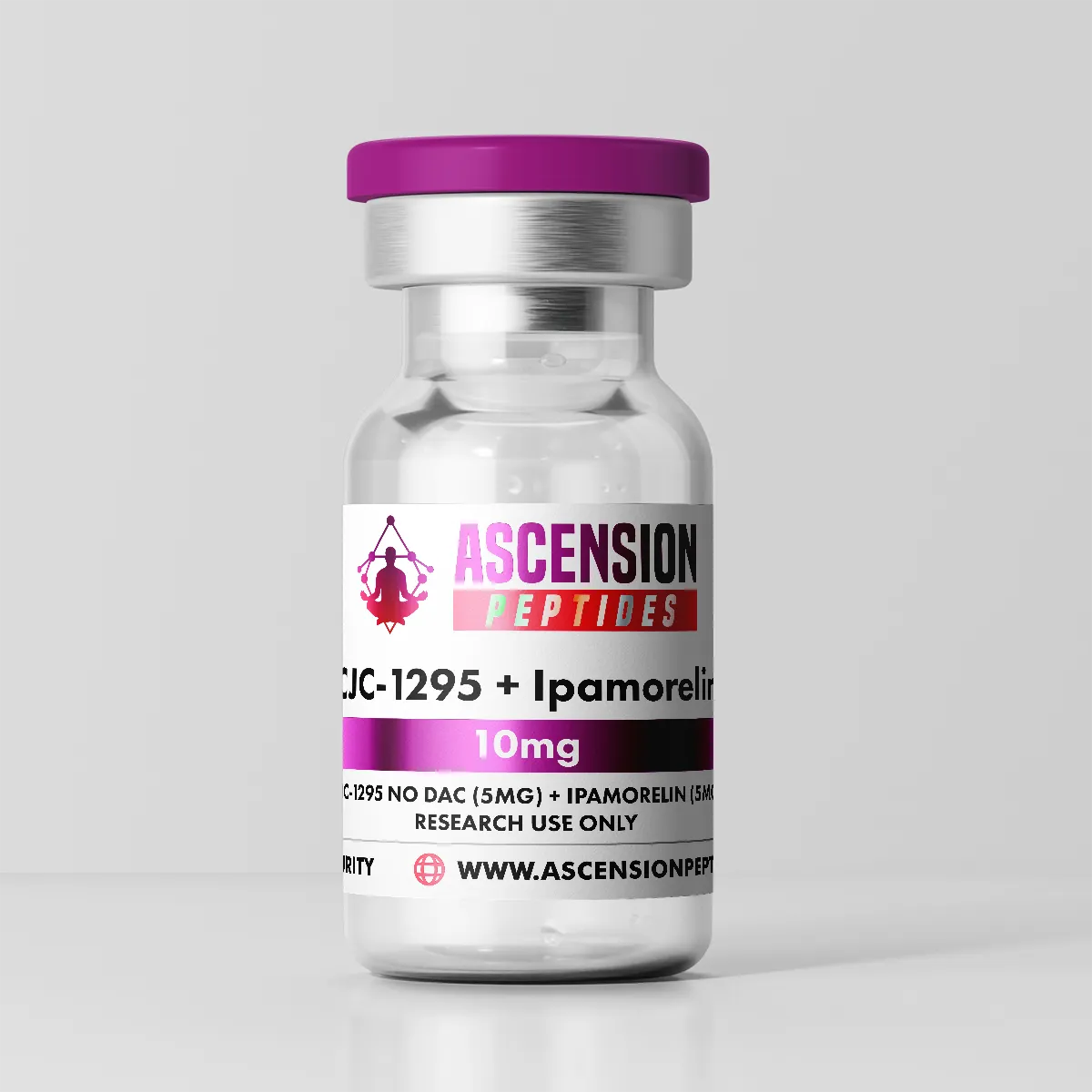
After evaluating purity documentation, shipping reliability, and catalog depth, our top-recommended source for all five peptides reviewed here is Ascension Peptides.
- Third-party COA-verified for every batch
- US-based manufacturing and domestic shipping
- Full catalog: Sermorelin, Ipamorelin, CJC-1295, Mod-GRF 1-29, Tesamorelin, Hexarelin all in stock
- Lyophilized powder format for maximum stability
- Transparent lab documentation — COAs available before purchase
Two of the peptides ranked above are the ones readers ask us to separate most often. We put them head to head in ipamorelin vs tesamorelin, which covers why only one of them has visceral fat trial data.
Frequently Asked Questions
Can you stack multiple GH peptides from this list?
Yes — the most effective approach is combining one GHRH analog (Sermorelin, Mod-GRF 1-29, Tesamorelin, or CJC-1295) with one GHRP (Ipamorelin or Hexarelin). Stacking two GHRH analogs or two GHRPs adds little synergy. The GHRH + GHRP combination is synergistic because it works through two distinct receptor systems simultaneously.
Which is safer long-term — Ipamorelin or Hexarelin?
Ipamorelin. Its exceptional hormonal selectivity means it avoids the cortisol and prolactin elevation that accompany Hexarelin. Hexarelin also desensitizes significantly faster, limiting long-term protocol viability. For extended research protocols, Ipamorelin is the standard GHRP choice.
Is CJC-1295 with DAC or without DAC better?
For physiological fidelity: without DAC (Modified GRF 1-29). For convenience: with DAC. The with-DAC version produces tonic GH elevation that doesn't replicate the body's natural pulsatile pattern, while the without-DAC version preserves the pulse. Most researchers favor Mod-GRF 1-29 for its more natural GH pattern when injecting 2× daily is practical.
What's the difference between Sermorelin and Tesamorelin?
Both are GHRH analogs, but Tesamorelin has a structural modification (trans-3-hexenoic acid conjugation at the N-terminus) that stabilizes it and makes it more potent. Tesamorelin has Phase III human clinical trial data for visceral fat reduction (FDA-approved for HIV lipodystrophy). Sermorelin has a longer safety history in research contexts but produces more modest GH stimulation.
Do these peptides show up on drug tests?
Standard employment drug panels (SAMHSA-5) don't test for peptides. Athletic drug testing (WADA) does include GH peptides on the prohibited list. Researchers should consult applicable testing protocols for their specific context.
How long before seeing results?
GH optimization is gradual. IGF-1 levels typically show measurable increases within 4–6 weeks. Body composition changes usually become observable at 8–12 weeks. Anti-aging and recovery improvements often reported at 6–8 weeks but vary significantly by individual baseline GH status and protocol.
This content is for informational and educational purposes only. Peptides discussed on this page are research compounds not approved by the FDA for human use (with the exception of Tesamorelin/Egrifta for HIV lipodystrophy and Sermorelin for specific clinical diagnoses). Always consult a licensed medical professional before using any peptide or supplement. PeptideDeck does not sell peptides and earns a commission when you purchase through affiliate links at no extra cost to you.
This content is for informational and educational purposes only. Peptides discussed on this page are research compounds not approved by the FDA for human use (except Tesamorelin and Sermorelin in specific clinical contexts). Always consult a licensed medical professional before using any peptide or supplement. PeptideDeck does not sell peptides and earns a commission when you purchase through affiliate links at no extra cost to you.