Hexarelin
Hexarelin (Examorelin, HEX)
Get Hexarelin
Sourced from Ascension Peptides. Verified ≥≥99% purity, third-party tested. COA included.
Off with code
PEPTIDEDECK
Table of Contents
What is Hexarelin?
Hexarelin is a synthetic hexapeptide that belongs to the growth hormone releasing peptide (GHRP) family. Developed in the early 1990s by researchers exploring synthetic alternatives to naturally occurring growth hormone-releasing compounds, Hexarelin quickly distinguished itself as the most potent GH secretagogue in its class, capable of stimulating GH release 2-3 times greater than its relatives GHRP-6 or GHRP-2.
The peptide's six amino acid sequence—His-D-2-Methyl-Trp-Ala-Trp-D-Phe-Lys-NH2—was designed to mimic the action of ghrelin, the body's natural "hunger hormone" that also powerfully stimulates growth hormone release from the pituitary. However, Hexarelin's modifications give it distinct properties: stronger GH release but without the significant appetite stimulation seen with GHRP-6, and unique cardiac effects not shared by other peptides in its class.
What makes Hexarelin particularly fascinating to researchers is its dual mechanism of action. While it stimulates growth hormone release through the ghrelin receptor (GHSR-1a) in the pituitary—like other GHRPs—it also binds to specific receptors in cardiac tissue that appear unrelated to GH signaling. This has led to extensive research into its potential applications for heart conditions, independent of its effects on growth hormone.
Despite promising clinical trial results in the 1990s and early 2000s, Hexarelin never achieved regulatory approval. The primary hurdle was significant desensitization with continued use—GH response diminishes substantially after 4-8 weeks of daily administration. This limitation, combined with competition from established GH therapies, led pharmaceutical companies to discontinue development. Today, Hexarelin remains an important research tool for studying GH physiology, cardiac protection mechanisms, and the broader ghrelin signaling system.
Research Benefits
Strongest growth hormone release among GHRP peptides
Cardioprotective effects independent of GH action
Enhanced muscle mass and strength in research models
Improved recovery and tissue repair
Increased collagen synthesis and bone density
Neuroprotective properties demonstrated in animal studies
Fat metabolism enhancement through GH-mediated lipolysis
No significant impact on appetite (unlike GHRP-6)
How Hexarelin Works
Hexarelin's mechanism of action involves multiple pathways that work synergistically to enhance growth hormone release while also providing effects independent of GH signaling.
Primary GH Release Mechanism
Hexarelin's primary action occurs through binding to the growth hormone secretagogue receptor type 1a (GHSR-1a), the same receptor that responds to the body's natural ghrelin. Located primarily in the hypothalamus and pituitary gland, GHSR-1a activation triggers a cascade of intracellular signaling that culminates in the release of stored growth hormone from somatotroph cells.
GHSR-1a Activation
Direct stimulation of pituitary somatotrophs triggers GH release within minutes of administration.
Somatostatin Suppression
Reduces the inhibitory tone on GH release, amplifying the secretory pulse.
GHRH Potentiation
Enhances the pituitary's responsiveness to natural GHRH signals.
When Hexarelin binds GHSR-1a, it activates phospholipase C, increasing intracellular calcium and triggering GH vesicle fusion with the cell membrane. Simultaneously, Hexarelin appears to suppress somatostatin release from the hypothalamus—somatostatin normally inhibits GH release, so reducing this "brake" allows for greater GH secretion. This dual action of stimulating release while removing inhibition explains Hexarelin's superior potency.
Synergy with GHRH
Research has established that combining Hexarelin with growth hormone-releasing hormone (GHRH) peptides produces synergistic effects far exceeding either compound alone. While GHRH directly stimulates GH synthesis and release through a different receptor (GHRH-R), Hexarelin amplifies the resulting pulse and extends its duration. Studies show combinations can achieve GH levels 2-3 times higher than maximal doses of either peptide individually.
Cardioprotective Mechanisms
Perhaps Hexarelin's most intriguing aspect is its cardioprotective activity, which operates independently of GH release. Researchers have identified specific binding sites for Hexarelin in cardiac tissue that are pharmacologically distinct from GHSR-1a. These cardiac effects involve multiple pathways:
- Anti-apoptotic signaling: Hexarelin activates pro-survival pathways (PI3K/Akt) that protect heart cells from programmed death during ischemia
- Mitochondrial protection: The peptide helps maintain mitochondrial membrane potential and reduces reactive oxygen species generation
- Calcium homeostasis: Hexarelin improves sarcoplasmic reticulum calcium handling, critical for cardiac contractility
- Anti-fibrotic effects: Research shows reduced cardiac fibrosis and remodeling with Hexarelin treatment
Receptor Desensitization
A critical aspect of Hexarelin's mechanism is receptor desensitization. With repeated administration, GHSR-1a undergoes internalization and downregulation, progressively reducing GH response. Studies show approximately 50% reduction in GH release after 4 weeks of daily dosing. This desensitization appears more pronounced with Hexarelin than with less potent GHRPs like Ipamorelin, likely due to stronger initial receptor activation triggering greater compensatory downregulation.
Research Applications
Growth hormone deficiency treatment
Active research area with published studies
Cardiac protection and heart failure
Active research area with published studies
Age-related muscle wasting (sarcopenia)
Active research area with published studies
Bone density and osteoporosis
Active research area with published studies
Post-surgical recovery
Active research area with published studies
Metabolic dysfunction
Active research area with published studies
Neuroprotection and brain injury
Active research area with published studies
Athletic performance and body composition
Active research area with published studies
Research Findings
Hexarelin has been extensively studied in both preclinical and clinical settings, with research spanning growth hormone physiology, cardiovascular protection, and metabolic effects.
Clinical Studies on GH Release
Multiple Phase I and II clinical trials have characterized Hexarelin's GH-releasing properties in humans. A landmark study in the Journal of Clinical Endocrinology & Metabolism examined healthy elderly subjects, finding that a single 1 μg/kg IV dose produced peak GH levels of approximately 45-60 ng/mL—substantially higher than achieved with equivalent GHRP-6 doses. However, the same study documented the desensitization phenomenon: after 16 weeks of twice-daily administration, GH response was reduced by roughly 50%.
🔑 Key Research Findings
- Peak GH release 2-3x higher than GHRP-6 at equivalent doses
- Significant cardiac protection independent of GH effects
- ~50% GH response reduction after 4-8 weeks continuous use
- Modest cortisol and prolactin elevation (dose-dependent)
- Well-tolerated safety profile in clinical trials
Research comparing different age groups found that while absolute GH release decreases with age, Hexarelin maintains its relative potency. Elderly subjects showed significant GH increases from very low baseline levels, suggesting potential applications in age-related GH decline. IGF-1 levels correspondingly increased with sustained Hexarelin administration.
Cardiovascular Research
The cardiac effects of Hexarelin have generated substantial research interest. Studies in animal models of myocardial infarction demonstrated that Hexarelin administration reduced infarct size by 30-50% when given around the time of ischemia-reperfusion. Critically, these effects persisted even when GH secretion was blocked with somatostatin, confirming a GH-independent mechanism.
Human cardiac research has been particularly illuminating. A clinical study published in Heart examined patients with chronic heart failure and found that Hexarelin administration improved left ventricular ejection fraction by 5-8%, increased cardiac output, and enhanced exercise tolerance. These effects occurred within a timeframe too rapid to be explained by GH-mediated tissue remodeling, supporting direct cardiac action.
Metabolic and Body Composition Studies
Studies examining body composition have shown expected GH-mediated effects: increased lean body mass, reduced fat mass, and improved nitrogen balance with sustained Hexarelin administration. A study in growth hormone-deficient adults found significant improvements in body composition over 12 weeks, though the effect size was limited by developing desensitization.
Research on bone metabolism demonstrated increased markers of bone formation with Hexarelin treatment, consistent with GH and IGF-1's known effects on osteoblasts. Long-term effects on bone density have not been established due to the duration limitations imposed by desensitization.
Comparative Studies
Head-to-head comparisons with other GH secretagogues have clarified Hexarelin's position in the GHRP family:
| Parameter | Hexarelin | GHRP-6 | GHRP-2 | Ipamorelin |
|---|---|---|---|---|
| GH Release Potency | Very High | Moderate | High | Moderate |
| Appetite Stimulation | Minimal | Strong | Moderate | None |
| Cortisol Increase | Moderate | Moderate | Moderate | Minimal |
| Prolactin Increase | Moderate | Moderate | Moderate | Minimal |
| Desensitization | Significant | Moderate | Moderate | Minimal |
| Cardiac Effects | Strong | Weak | Weak | Minimal |
Neuroprotective Research
Emerging research has explored Hexarelin's potential neuroprotective effects. Animal studies of cerebral ischemia showed reduced neurological damage and improved functional outcomes with Hexarelin treatment. Whether these effects are GH-mediated, direct, or both remains under investigation. The ghrelin receptor's presence in brain regions beyond the hypothalamus suggests potential for direct neuronal effects.
Dosage & Administration
Dosing information derives from clinical research studies and should be understood in that context. Hexarelin is not approved for therapeutic use, and all dosing represents research protocols rather than medical recommendations.
Research Dosing Ranges
Clinical studies have employed a range of Hexarelin doses:
| Application | Dose Range | Frequency | Notes |
|---|---|---|---|
| Acute GH Studies | 0.5-2.0 μg/kg | Single dose | IV or SC administration |
| Standard Research | 100-200 mcg | 1-2x daily | SC injection typical |
| Conservative Protocol | 50-100 mcg | 2-3x daily | Saturation dosing approach |
| Cardiac Studies | 100 mcg | 2x daily | Extended duration protocols |
Administration Timing
Research protocols typically time Hexarelin administration for optimal GH response:
- Fasted state: Blood glucose and insulin levels influence GH release; fasting enhances response
- Pre-sleep: Evening dosing may complement natural nocturnal GH pulsatility
- Post-exercise: Some protocols time administration after training for potential synergy
- Multiple daily doses: Spaced 4-6 hours apart when using saturation protocols
Combination Protocols
Research frequently combines Hexarelin with GHRH peptides for synergistic effects:
Common Research Combination
100 mcg Hexarelin + 100 mcg Mod GRF (1-29) administered simultaneously via separate subcutaneous injections or mixed in the same syringe. This combination typically produces GH levels 2-3x higher than either peptide alone.
Cycling Considerations
Due to documented desensitization, research protocols typically incorporate cycling strategies:
- Standard cycling: 8-12 weeks on, 4-8 weeks off
- Extended cycling: 16 weeks maximum before mandatory break
- Intermittent dosing: 5 days on, 2 days off to reduce desensitization
- Rotation: Alternating with Ipamorelin or GHRP-2 between cycles
Reconstitution
Gather Materials
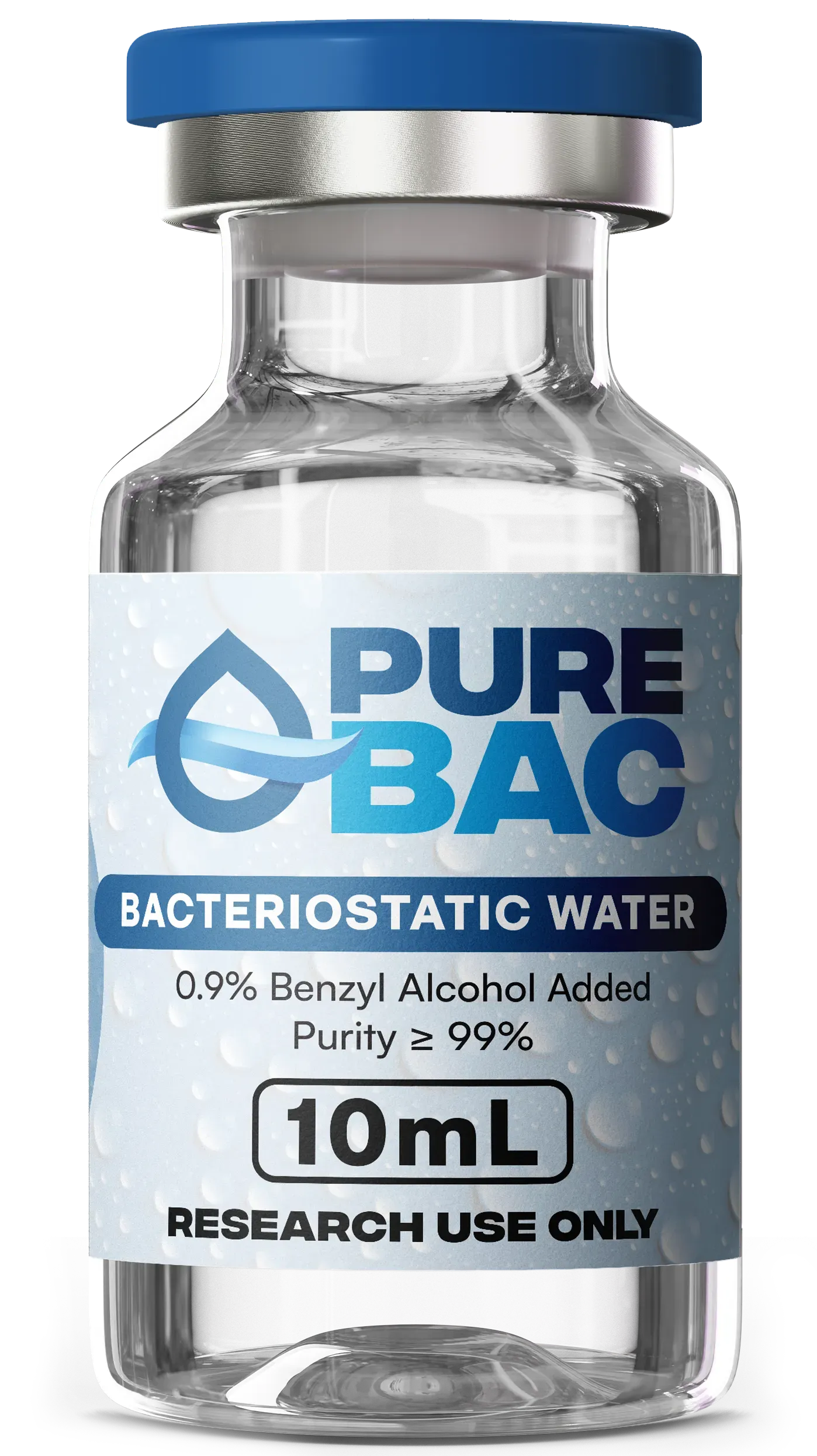
Hexarelin vial (typically 2mg or 5mg), bacteriostatic water, alcohol swabs, insulin syringe.
Calculate Volume
For easy dosing, add 2mL bacteriostatic water to a 2mg vial = 1mg/mL (100mcg per 0.1mL).
Reconstitute
Add bacteriostatic water slowly along vial wall. Gently swirl—never shake—until fully dissolved.
Storage
Store reconstituted Hexarelin refrigerated at 2-8°C. Use within 21 days for optimal stability.
Work out your Hexarelin draw in units
Enter the vial size, the bacteriostatic water you add and the dose you want, and the calculator gives the syringe units, how long the vial lasts and when to discard it.
Open the peptide calculatorSafety & Side Effects
Hexarelin has demonstrated a generally favorable safety profile in clinical trials, though several effects warrant consideration.
Common Effects
Injection Site Reactions
Mild redness, swelling, or irritation at injection site. Usually resolves within hours.
Water Retention
GH-mediated fluid retention may cause mild edema, especially initially.
Fatigue/Lethargy
Some subjects report tiredness, particularly with higher doses.
Hormonal Effects
Unlike the highly selective Ipamorelin, Hexarelin affects multiple hormonal axes:
- Cortisol: Transient elevation of 20-50% above baseline, returning to normal within 2-3 hours
- Prolactin: Moderate increase of 30-80%, also transient with single doses
- IGF-1: Sustained elevation with continued use (this is generally the desired effect)
- ACTH: Minor stimulation observed in some studies
Desensitization
While not a safety issue per se, desensitization represents Hexarelin's primary limitation. Studies consistently show:
- ~25-30% reduction in GH response after 2 weeks of daily use
- ~50% reduction after 4-8 weeks of daily use
- Recovery of sensitivity after 4-8 week washout period
- Less desensitization with intermittent dosing protocols
Contraindications and Precautions
Long-term Safety
Long-term safety data beyond clinical trial durations (typically 12-24 weeks) is limited. As Hexarelin was never approved for market, post-marketing surveillance data does not exist. The theoretical concerns with any GH-elevating compound apply:
- Potential for promoting growth of existing occult tumors (theoretical, not demonstrated)
- Insulin resistance with prolonged supraphysiological GH/IGF-1
- Carpal tunnel syndrome and joint effects with extended exposure
- Unknown effects on cancer risk with very long-term use
Clinical Trial Safety Data
Across published clinical trials, serious adverse events directly attributed to Hexarelin were rare. Most reported effects were mild and transient. The cardiac studies notably found the peptide to be well-tolerated even in patients with compromised cardiac function. No significant ECG abnormalities, arrhythmias, or hemodynamic instabilities were attributed to Hexarelin administration in controlled research settings.