GLP-1 Peptides
Retatrutide for Sale: R-30 & R-10 Vials, Price & COA
with codePEPTIDEDECKat checkout· list $149.99
- Purity
- 99.832%
- Vial
- R-30: 30mg
- Form
- Lyophilized powder, sealed vial
- Half-life
- About 6 days, which is why it is dosed once a week
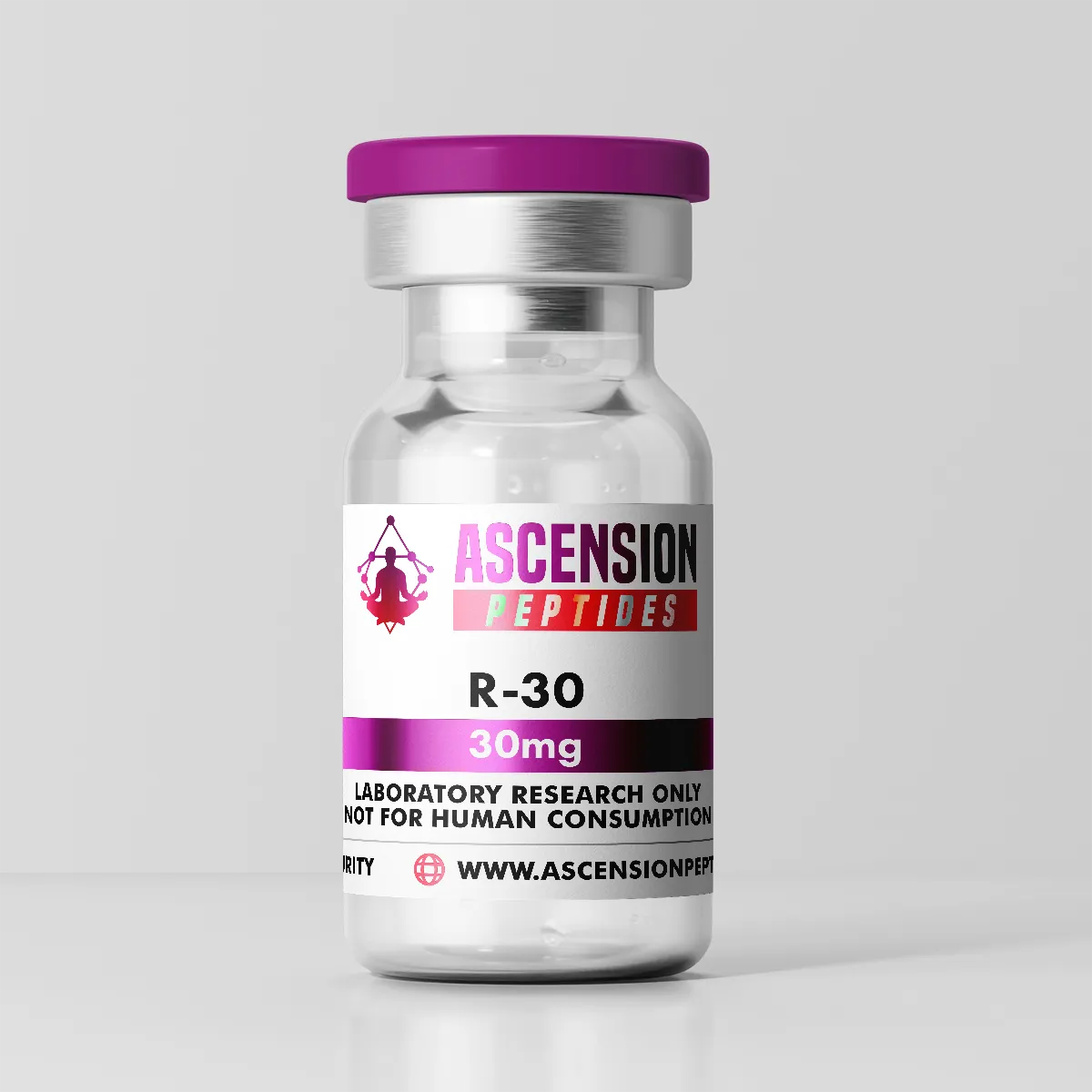
Retatrutide for sale in two sizes: the R-30 (30mg) and the R-10 (10mg) from Ascension Peptides. Each batch has a public Kovera Labs report (the current R-30 batch tested at 99.832% purity), vials ship from the US, and code PEPTIDEDECK takes 50% off at checkout.
Lab certificate for this batch
Kovera Labs report KVR-2026-426C8C, batch 43-05260628, certified 9 May 2026
- Purity
- 99.832%
- Net content
- 32.43 mg in a 30 mg vial
- Method
- RP-HPLC, C18 column, DAD at 214 nm; identity by LC-MS
- Endotoxin
- Pass, under 0.5 EU/mL
- Sterility
- No growth
- Heavy metals
- Arsenic, cadmium, lead and mercury all negative
What a 30mg vial costs elsewhere
Single-vial list prices at the vendors ranking for Retatrutide, 23 September 2026. Ours is the price after the code.
About Retatrutide
Most retatrutide listings look the same. The vials aren't.
This page lists retatrutide for sale in two sizes from Ascension Peptides: the R-30 (30mg) and the R-10 (10mg). Both ship from the US, both come with a batch-matched lab report from Kovera Labs, and code PEPTIDEDECK takes 50% off at checkout. The current R-30 batch tested at 99.832% purity, with 32.43 mg of retatrutide in a 30 mg vial.
Which Vial to Buy: R-30 or R-10
Buy the R-30 if you plan a full cycle.
At $250, or $125 with code PEPTIDEDECK, the R-30 works out to about $4.17 per milligram. The R-10 costs $100, or $50 with the code, which is $5.00 per milligram. Same compound, same lab, same shipping. The bigger vial is simply cheaper per dose.
That gap matters because retatrutide doses climb. A common schedule starts at 2 mg a week and steps up every four weeks, to 4 mg and then 8 mg. Those first 12 weeks use about 56 mg, so most people need two R-30 vials for a first cycle.
The R-10 earns its place in one situation: a first order, when you want to check your tolerance and the seller before spending more. After that, the R-30 is the better buy.
Retatrutide Price Check: Cost Per mg Across Six Sellers
Prices move every few weeks, so we date ours.
On September 23, 2026 we checked the price of a single 30mg retatrutide vial at six sellers, and we rechecked Ascension's on September 30 after it raised the R-30 from $200 to $250. The comparison table on this page lists each one per milligram.
Here's the honest part. RetaHQ lists a 30mg vial at $95, which is $30 under the $125 you pay at Ascension with our code. Kits4Less sits at $129, Royal Peptides at $180, PeptideLabs at $206.99 and Alpha Liquids at $230. Without the code, Ascension's $250 list price is the highest of the six, so the code is what makes it competitive.
So why do we still send you to Ascension? Its product page links the lab report for the exact batch it ships: batch number, purity, net content and an identity test. RetaHQ points to a general COA library instead of a report for the batch on the listing. That $30 is the cost of knowing what's inside the vial you actually receive.
How to Verify a Retatrutide COA Before You Buy
A COA only helps if it matches your vial.
Check five things on any retatrutide certificate of analysis before you order.
1. The batch number on the report matches the batch on the vial you receive. The current R-30 batch is 43-05260628.
2. Purity is measured by HPLC and sits above 98%. The R-30 batch reads 99.832%.
3. Identity is confirmed by mass spectrometry (LC-MS). Purity alone can't tell you the powder is retatrutide rather than a cheaper peptide.
4. Net content is within 10% of the label. The R-30 batch holds 32.43 mg in a 30 mg vial.
5. The lab can be checked independently. Kovera Labs reports carry a report number and an access code you can enter at koveralabs.com/verify.
One caveat on the smaller vial: the current R-10 batch (03-05260628) tested at 98.863% purity with 10.57 mg in a 10 mg vial. That is inside specification, but it's a notch below the R-30 batch.
Red Flags When You Buy Retatrutide Online
Cheap retatrutide is usually expensive retatrutide.
Walk away from any listing that shows a certificate with no batch number, or the same certificate for every size it sells. Walk away when the purity figure has no named lab behind it.
Be careful with "retatrutide pens". Eli Lilly has not released a retatrutide pen, so any pen sold online was filled by a third party. You have no way to check what went into it.
Treat 30mg prices that look like 10mg prices with suspicion, too. An underfilled or low-purity vial doesn't just waste money. It makes a dose that should work look like a dose that doesn't.
Buying Logistics: Shipping, Stock and Checkout
Both vial sizes were in stock when we checked on September 23, 2026.
Ascension ships from inside the US. Orders are dispatched within 24 hours and usually arrive in 2 to 5 business days. Enter code PEPTIDEDECK at checkout for 50% off the listed price; it applies to both vial sizes.
Is Retatrutide Legal to Buy?
Short answer: it's complicated, and it depends on where you live.
Retatrutide has no FDA approval yet. Eli Lilly's phase 3 program is still running; results from the TRANSCEND-T2D-1 trial in type 2 diabetes were published in The Lancet in June 2026. Until approval, no pharmacy can fill a prescription for it, and it is sold online as a freeze-dried peptide vial.
The rules on buying and holding it for personal use vary by country and are not settled. Talk to a licensed clinician before you use any GLP-1 medicine, and check your local rules before you order.
This page is for information only and is not medical advice.
Reconstitution and Storage
Mixing takes two minutes and one rule: go slowly.
Add 3 mL of bacteriostatic water to an R-30 and you get 10 mg per mL. On a U-100 insulin syringe, 20 units is then 2 mg and 40 units is 4 mg. Run the water down the side of the vial and swirl gently; never shake it.
Keep unmixed vials in the freezer. Once mixed, keep the vial in the fridge and use it within about 30 days. The PeptideDeck peptide calculator works out the units for any other water volume or dose.
Research Benefits
Current R-30 batch: 99.832% purity by HPLC (Kovera Labs)
32.43 mg of retatrutide in a 30 mg vial, identity confirmed by LC-MS
Two sizes: R-30 (30mg) for a full cycle, R-10 (10mg) for a first order
About $4.17 per mg on the R-30 with code PEPTIDEDECK
Batch-matched certificate of analysis you can verify with the lab
Ships from the US, dispatched within 24 hours
Product Specifications
| Molecular Weight | 4,731.4 g/mol (C221H342N46O68) |
| CAS Number | 2381089-83-2 |
| Sequence | Synthetic acylated peptide; triple agonist at the GLP-1, GIP and glucagon receptors |
| Half-Life | About 6 days, which is why it is dosed once a week |
| Purity | 99.832% (Kovera Labs, R-30 batch 43-05260628) |
| Form | Lyophilized powder, sealed vial |
| Storage | Freezer before mixing; fridge after mixing, use within about 30 days |
Frequently Asked Questions
Scientific References
The New England Journal of Medicine · 2023
The Lancet · 2023
The Lancet · 2026
References provided for informational research context only. PeptideDeck does not imply clinical application or endorse any human use.
You May Also Like
View all →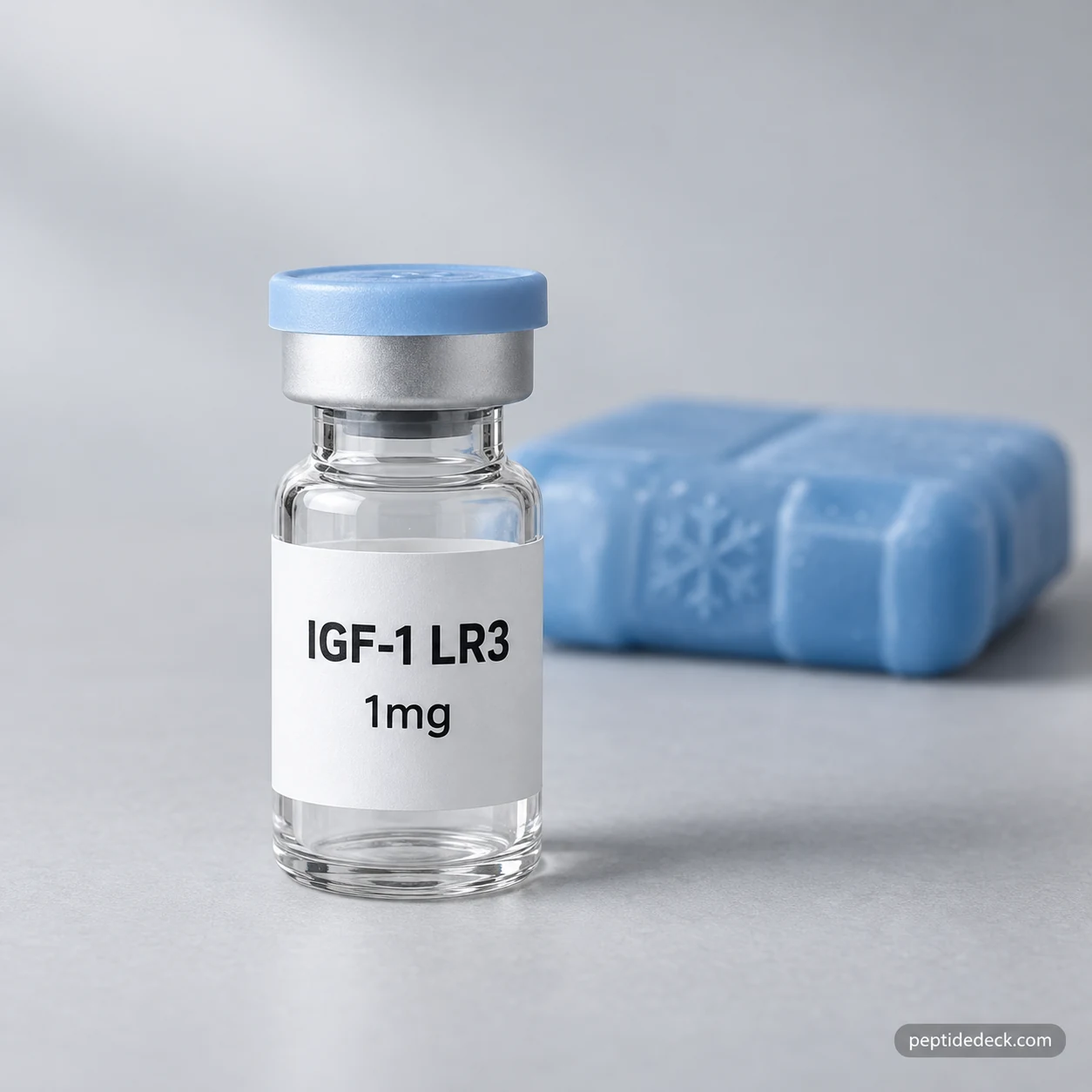
Growth Factor Peptides
IGF-1 LR3
Long R3 Insulin-like Growth Factor-1, 1mg vial
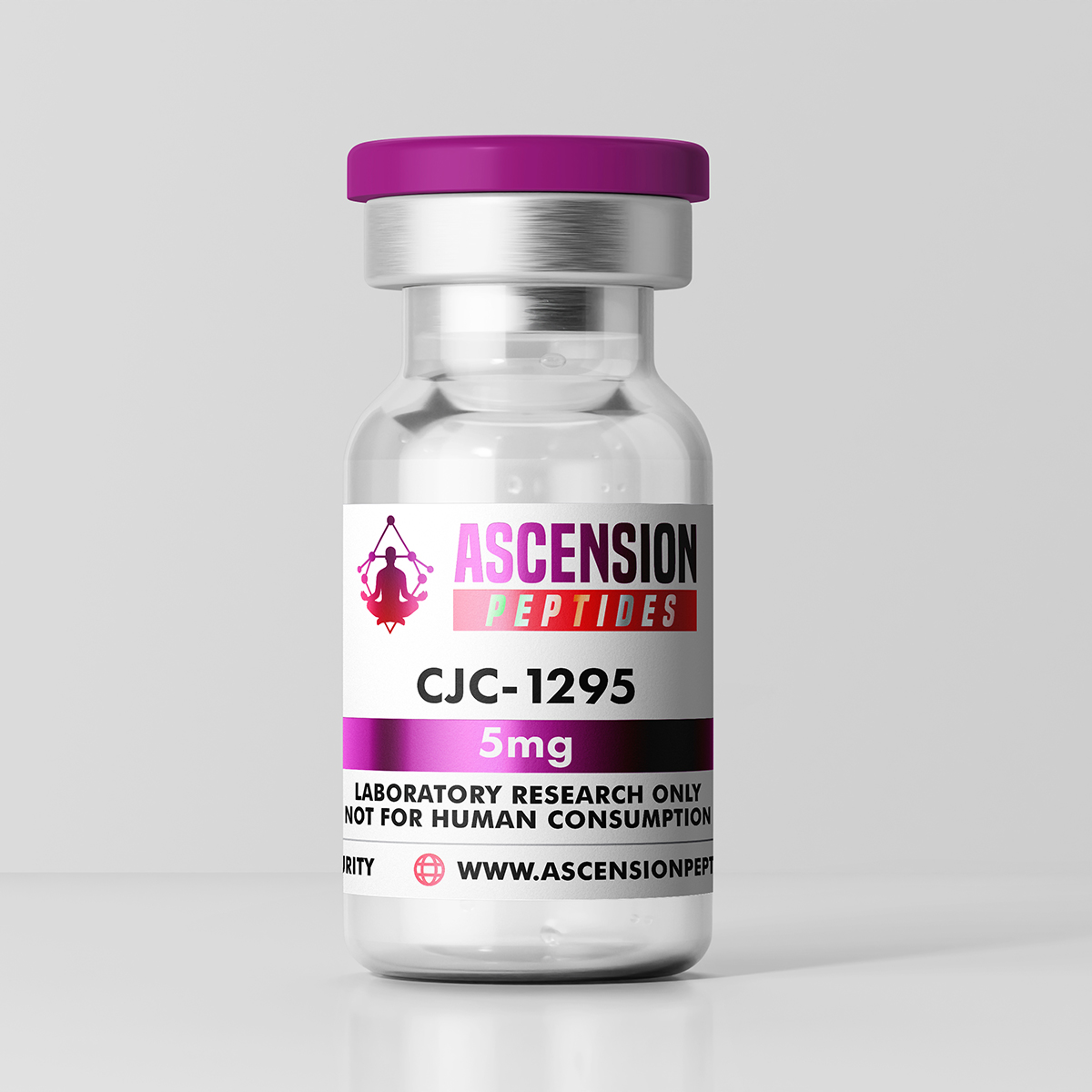
Growth Hormone Releasing Hormone (GHRH) Analogues
CJC-1295 (No DAC)
Modified GRF (1-29) GHRH Analogue, 5mg Lyophilized Vial
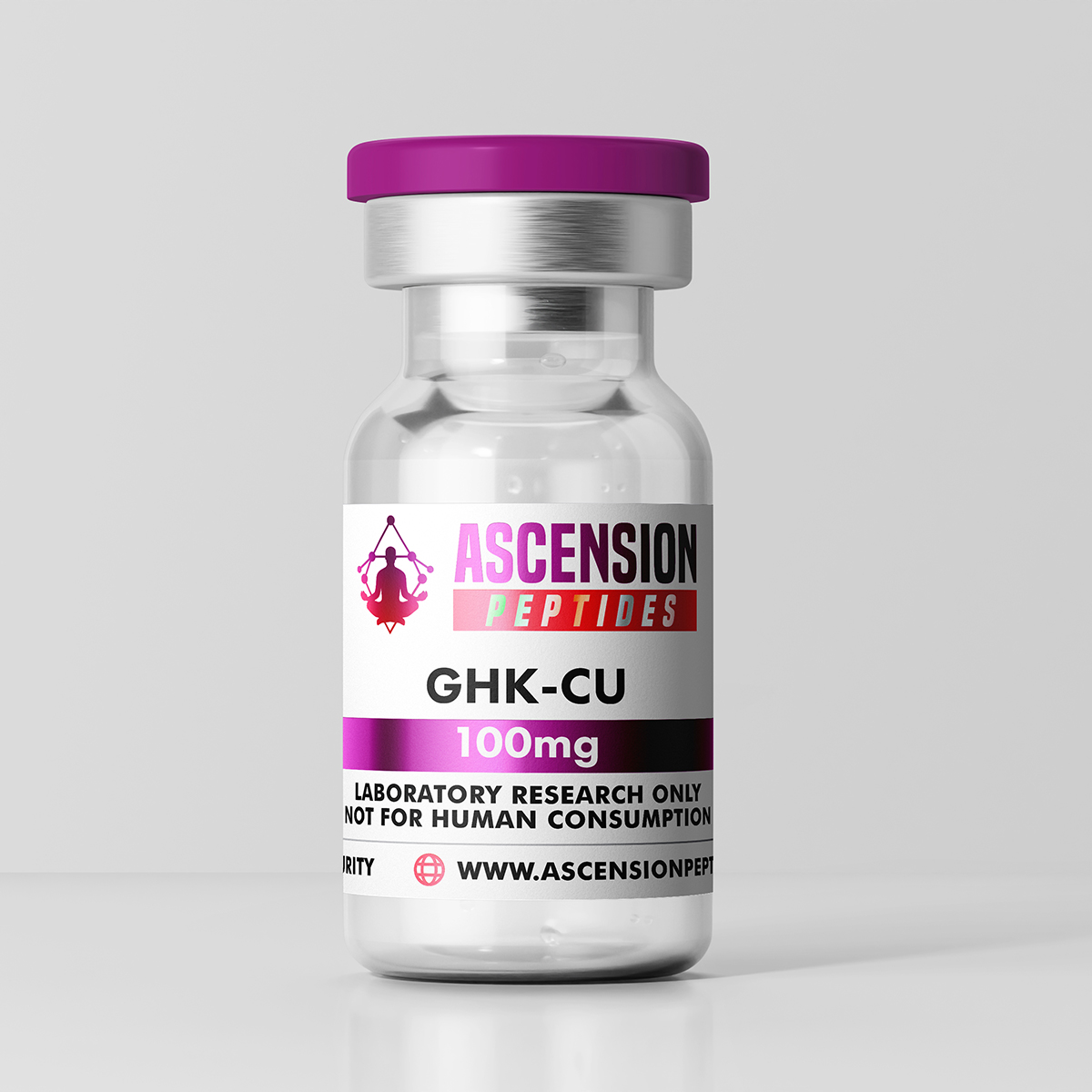
Copper Peptides
GHK-Cu
GHK-Cu For Sale: 50mg 99%+ Purity Copper Tripeptide

Healing & Recovery Peptides
BPC-157
Body Protection Compound 5mg: 99%+ Purity Research Vial
Research Use Only. All products sold by PeptideDeck are strictly for in-vitro laboratory research and are not intended for human or veterinary use, diagnosis, or treatment. Not for resale.