Yucca GLP-1Sema & Tirz from YuccaSemaglutide & Tirzepatide from Yucca·Wegovy$1,349$125/mo91% lessUS-licensed Rx2–4 day shipNo feesBuy now, pay later
Take the 1-min quizTake quiz
PDPeptideDeck
01· StoreShop Peptides↗02GLP-1 Suppliers03Calculator04Free TrialAI Coach
Shop
Home/Peptides/ComparisonsMOTS-c vs NAD+: Two Mitochondrial Tools That Do Different Jobs (2026)
Comparisons12 min read

MOTS-c vs NAD+: Two Mitochondrial Tools That Do Different Jobs (2026)

Published August 9, 2026Updated August 9, 2026
Quick Brief

MOTS-c is a mitochondrial-derived peptide that activates AMPK. NAD+ is a coenzyme that is not even absorbed intact. Compare mechanism, evidence, the July 2026 FDA panel vote, dosing and which one fits your goal.

MOTS-c vs NAD+: Two Mitochondrial Tools That Do Different Jobs (2026)

Procurement

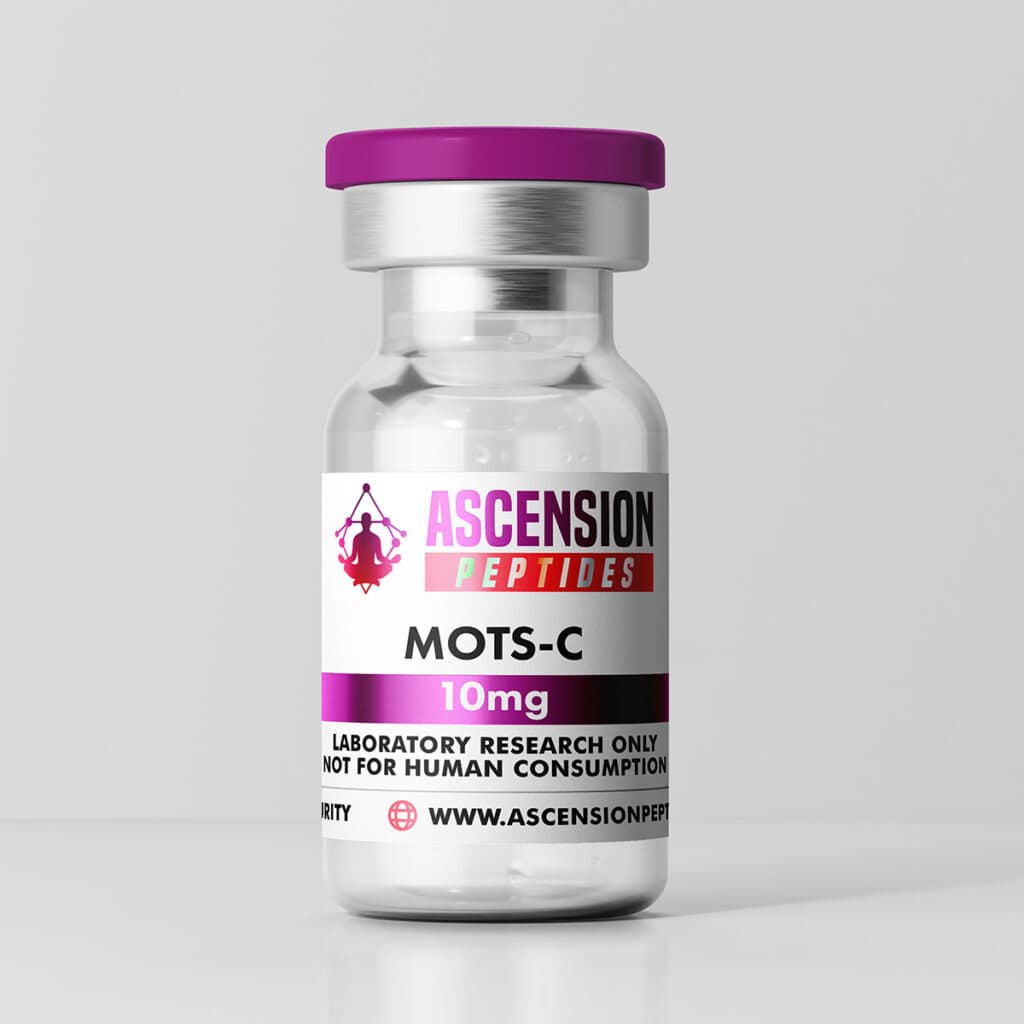
MOTS-C (10MG)
In StockShips from USA

MOTS-C (10MG)

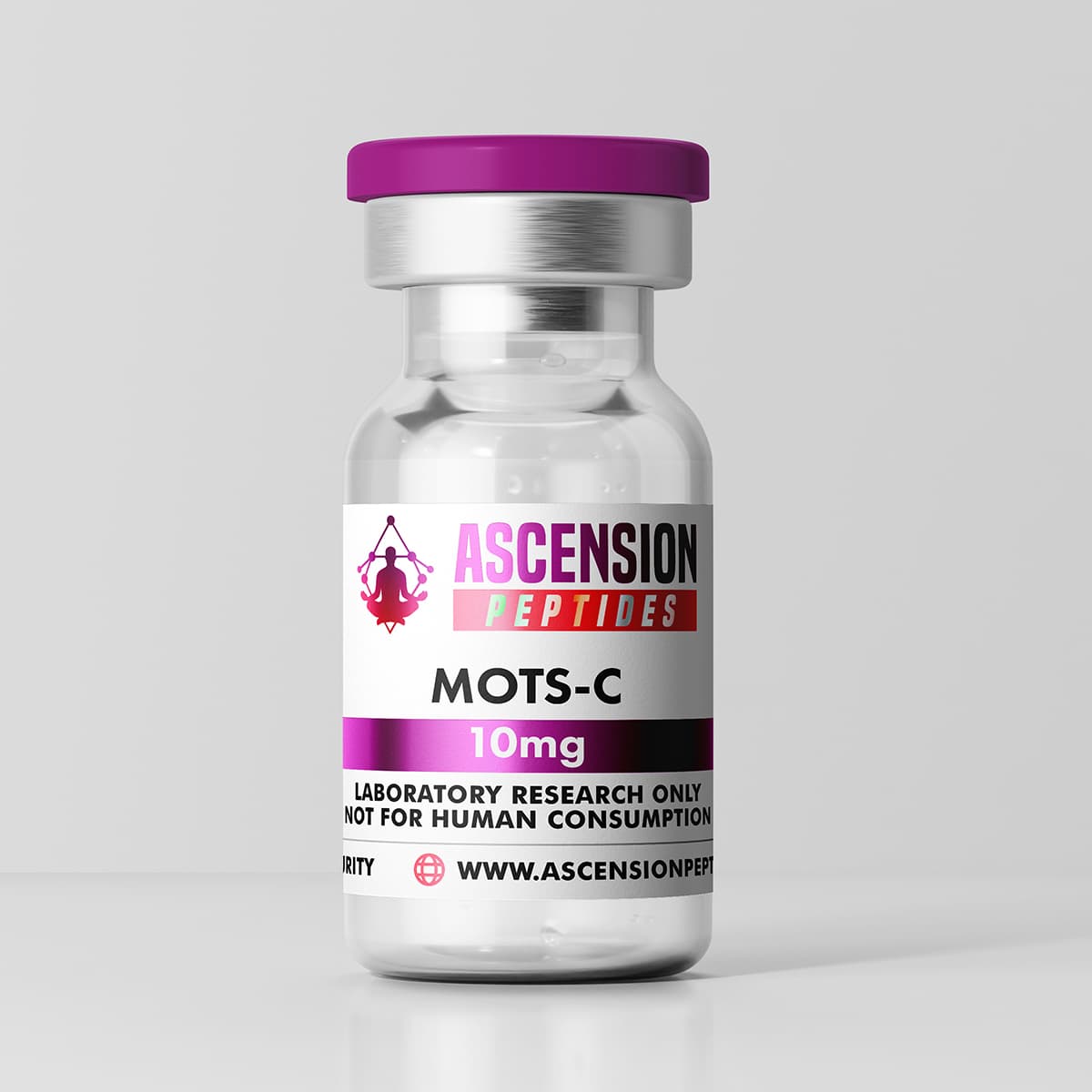
MOTS-C (10MG) from Ascension Peptides, third-party tested and shipped from the US. Use code PEPTIDEDECK for 50% off.

$37.50$75.00
Get MOTS-C (10MG) - 50% Off with PEPTIDEDECK
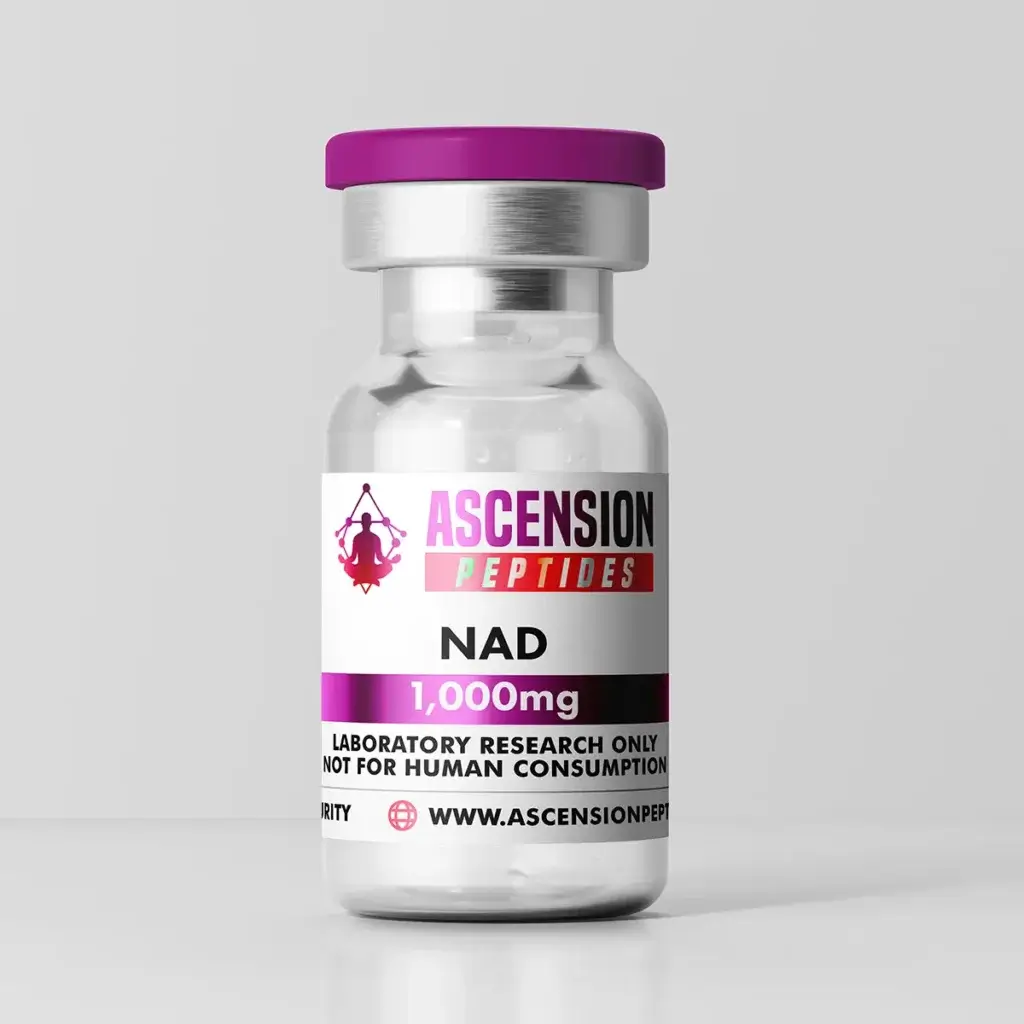
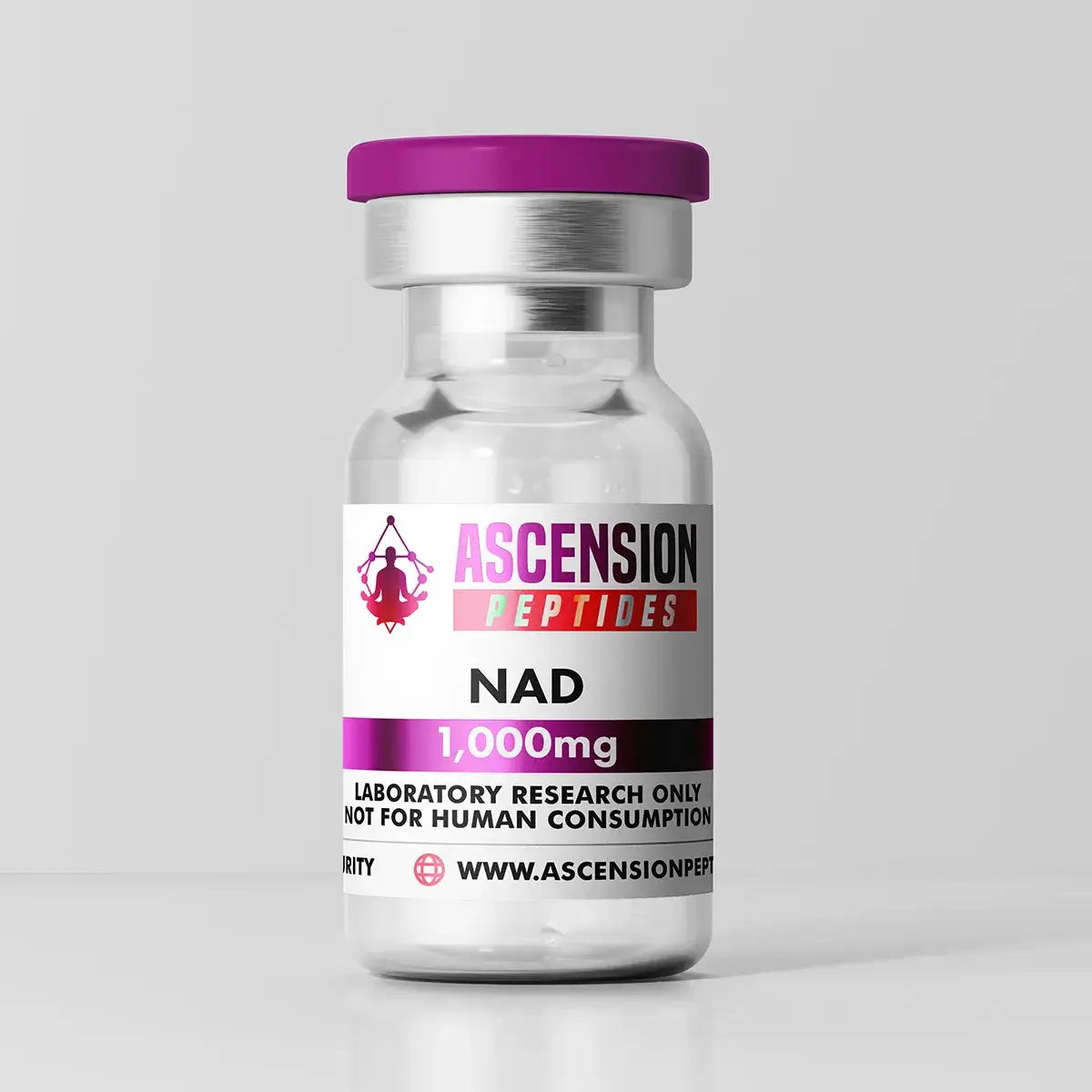
NAD+ 1000mg

The other side of this comparison

NAD+ 1000mg

$104.00

Shop NAD+
Contents0%
MOTS-c vs NAD+: At a GlanceSignal Versus SubstrateMOTS-c: A Message From the MitochondriaNAD+: The Substrate Everything Runs OnWhat the Evidence Actually SupportsMOTS-c: Preclinically Interesting, Clinically UnprovenNAD+: Evidence for the Precursors, Less for the MoleculeRegulatory Status: One Just Had Its HearingDosing and PracticalitiesCan You Use Both?Which Should You Choose?Where to BuyFrequently Asked Questions
MOTS-C (10MG)

Procurement

MOTS-C (10MG)

In StockShips from USA
$37.50$75.00
Get MOTS-C (10MG) - 50% Off with PEPTIDEDECK
NAD+ 1000mg
The other side of this comparison

NAD+ 1000mg

$104.00

Shop NAD+

MOTS-c and NAD+ end up on the same shortlist because both get sold under the word "mitochondrial." That is roughly where the resemblance stops. One is a 16-amino-acid signalling peptide your own mitochondrial DNA encodes. The other is a coenzyme that every cell in your body already uses billions of times a day.

Comparing them is less "which is better" and more "do you want to send a signal or supply a substrate." They answer different questions, and the honest version of this comparison says so up front.

🔑 Quick Decision

  • Choose MOTS-c if: you want a signalling molecule that activates AMPK and mimics part of the exercise response
  • Choose NAD+ if: you want to raise the raw substrate mitochondria run on, and you want the option of oral, injectable or IV
  • NAD+ is not a peptide. It is a coenzyme, and it is not absorbed intact — it gets broken down to NMN, then NR, before anything enters a cell
  • MOTS-c got a favourable 7-5 FDA advisory vote in July 2026 for the 503A Bulks List. Advisory, non-binding, and not an approval
  • Neither has a completed human efficacy trial in the way people assume. MOTS-c has none at all; NAD+ has evidence mostly for its oral precursors

MOTS-c vs NAD+: At a Glance

Feature
MOTS-c
NAD+
Note
What it is
16-amino-acid mitochondrial-derived peptide
Coenzyme, not a peptide
Different categories
Origin
Encoded in mitochondrial DNA (12S rRNA)
Synthesised from vitamin B3 precursors
Both endogenous
Mechanism
Activates AMPK via folate cycle inhibition
Electron carrier, sirtuin and PARP substrate
Signal vs substrate
Absorbed intact?
Yes, injected
No, hydrolysed to NMN then NR
Key NAD+ caveat
Routes
Subcutaneous injection
IV, subcutaneous, oral precursors
NAD+ is more flexible
Completed human efficacy trials
None
None for NAD+ itself; some for NR and NMN
Both thin
FDA advisory review
Reviewed July 2026, 7-5 favourable
Not reviewed
MOTS-c only
Rises with exercise
Yes, acutely, in humans and rodents
Declines with age
Different biology
Typical cost
About $75 per 10 mg
About $104 per 1000 mg
Not directly comparable per dose
What it is
MOTS-c
16-amino-acid mitochondrial-derived peptide
NAD+
Coenzyme, not a peptide
Note
Different categories
Origin
MOTS-c
Encoded in mitochondrial DNA (12S rRNA)
NAD+
Synthesised from vitamin B3 precursors
Note
Both endogenous
Mechanism
MOTS-c
Activates AMPK via folate cycle inhibition
NAD+
Electron carrier, sirtuin and PARP substrate
Note
Signal vs substrate
Absorbed intact?
MOTS-c
Yes, injected
NAD+
No, hydrolysed to NMN then NR
Note
Key NAD+ caveat
Routes
MOTS-c
Subcutaneous injection
NAD+
IV, subcutaneous, oral precursors
Note
NAD+ is more flexible
Completed human efficacy trials
MOTS-c
None
NAD+
None for NAD+ itself; some for NR and NMN
Note
Both thin
FDA advisory review
MOTS-c
Reviewed July 2026, 7-5 favourable
NAD+
Not reviewed
Note
MOTS-c only
Rises with exercise
MOTS-c
Yes, acutely, in humans and rodents
NAD+
Declines with age
Note
Different biology
Typical cost
MOTS-c
About $75 per 10 mg
NAD+
About $104 per 1000 mg
Note
Not directly comparable per dose

Signal Versus Substrate

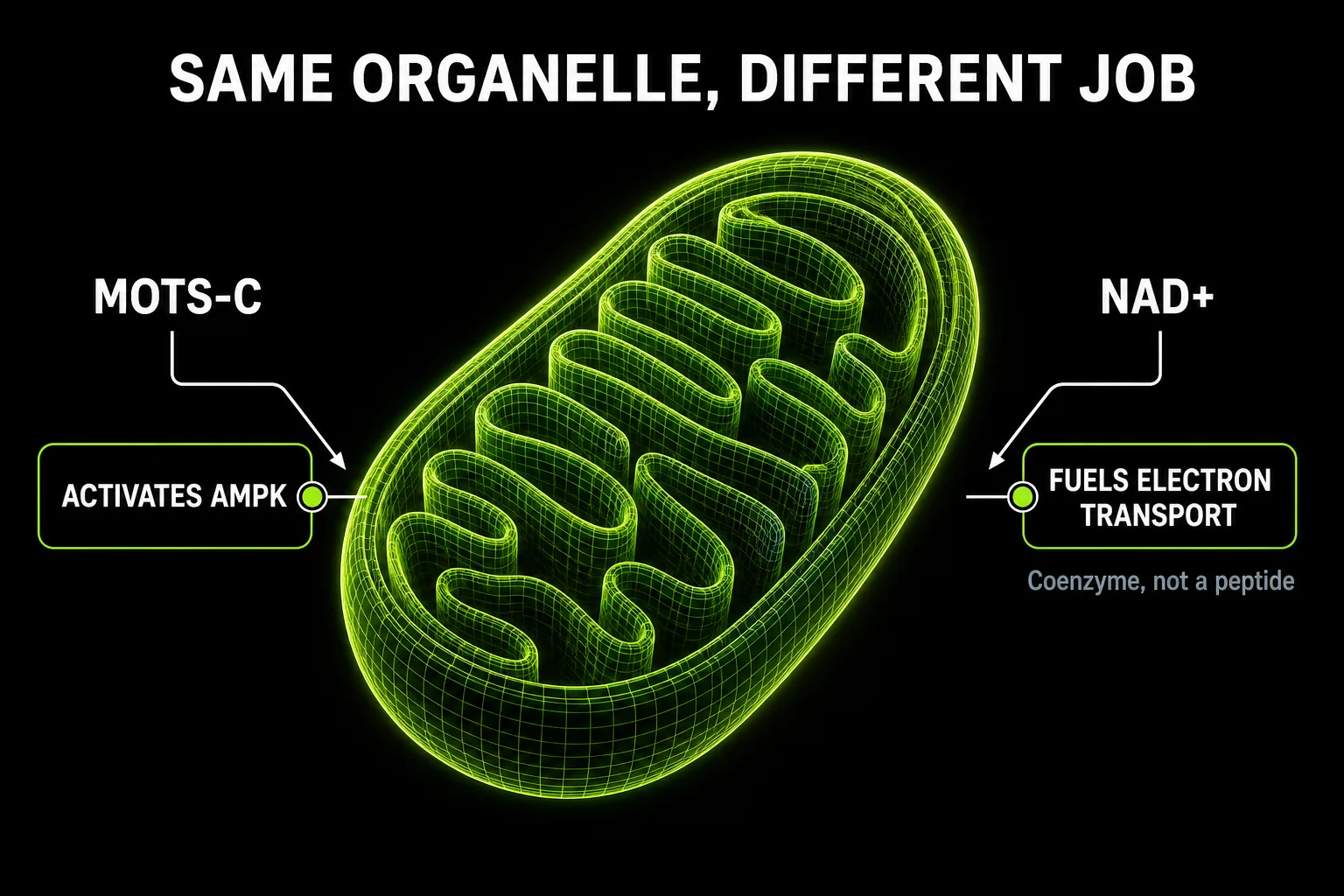
Diagram of a mitochondrion showing MOTS-c activating AMPK on one side and NAD+ fuelling electron transport on the other, labelled coenzyme not a peptide
Same organelle, different jobs. MOTS-c instructs; NAD+ supplies.

MOTS-c: A Message From the Mitochondria

MOTS-c belongs to a small class called mitochondrial-derived peptides — short peptides encoded within mitochondrial DNA rather than the nuclear genome. MOTS-c specifically comes from an open reading frame within the 12S rRNA region.

Its cellular action is more specific than "boosts mitochondria." MOTS-c inhibits the folate cycle and the de novo purine biosynthesis pathway tethered to it. The resulting shift in cellular energy state activates AMPK, the enzyme that acts as the cell's low-fuel sensor and switches metabolism toward glucose uptake and fat oxidation.

The most interesting finding about MOTS-c is behavioural rather than pharmacological: plasma MOTS-c rises acutely with exercise in both rodents and humans. That has led to it being described as a mediator linking mitochondrial stress to whole-body metabolic adaptation — part of the signal that tells your body it just did something hard. Our MOTS-c peptide guide covers the biology in more depth.

NAD+: The Substrate Everything Runs On

NAD+ is not a signalling molecule in the same sense. It is a coenzyme, the electron carrier that shuttles reducing equivalents through the electron transport chain, and it is the required substrate for sirtuins and PARP enzymes. Cellular NAD+ declines with age, which is the entire premise of the supplement category.

Here is the part that changes how you should think about NAD+ products: NAD+ cannot be taken up by cells intact. Administered exogenously, it is hydrolysed in the extracellular environment to nicotinamide mononucleotide, which is then cleaved to nicotinamide riboside. NR is what actually crosses the membrane, via equilibrative nucleoside transporters, and gets rebuilt into NAD+ inside the cell.

So every NAD+ product — IV, injection, oral — is ultimately delivering precursors. The routes differ in how much survives to become one. Injectable and IV bypass gut degradation and hepatic first-pass metabolism, which is the honest argument for their higher bioavailability. See what NAD+ is and NAD+ injections for the practical picture.

What the Evidence Actually Supports
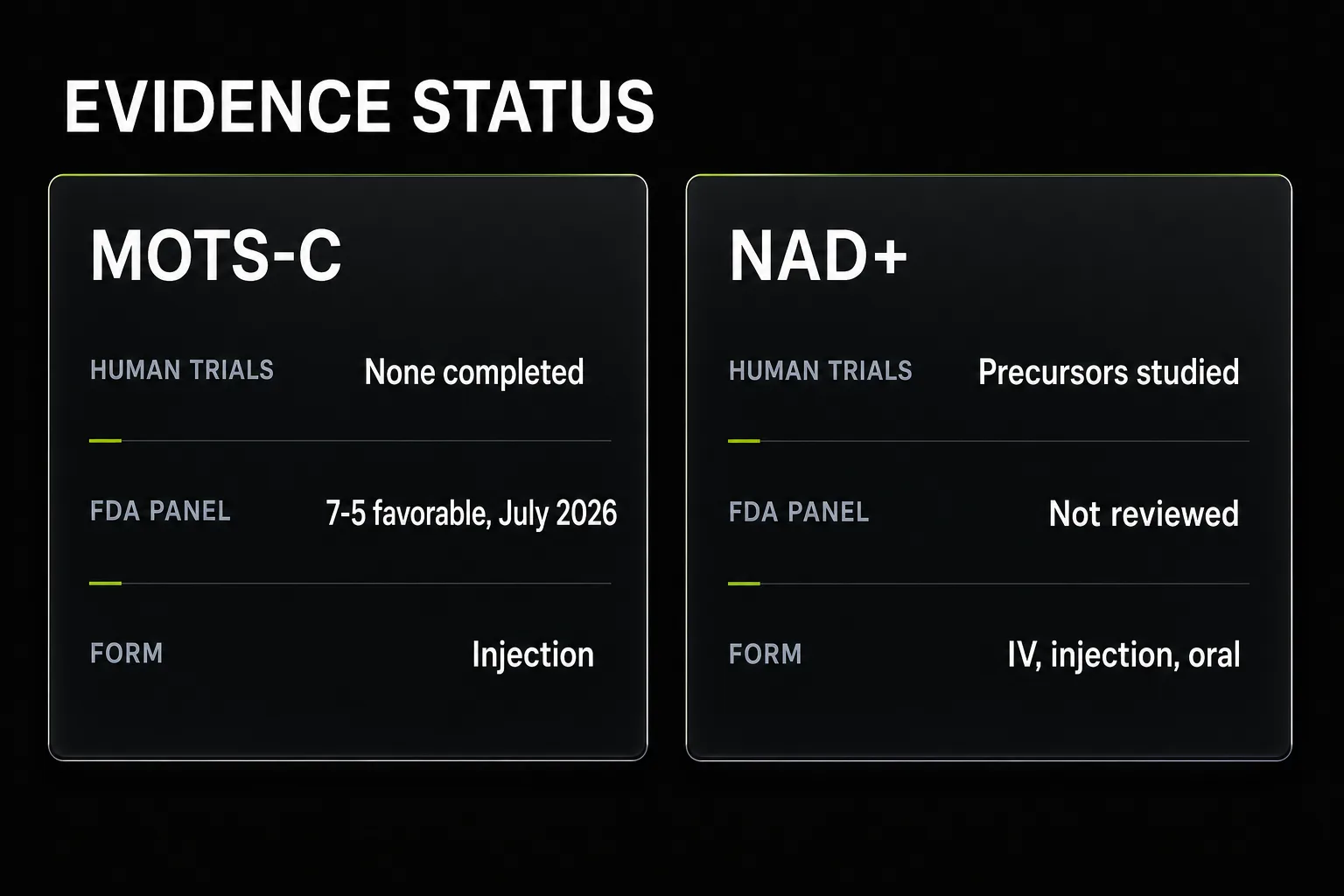
Evidence status comparison panel showing MOTS-c with no completed human trials and a 7-5 favourable July 2026 FDA panel vote, against NAD+ with precursor studies and no FDA panel review
Neither has the human efficacy evidence the marketing implies. They are thin in different ways.

MOTS-c: Preclinically Interesting, Clinically Unproven

The preclinical literature is genuinely promising. Work published through 2025 points to protective roles in pancreatic beta-cell senescence, diabetic cardiac mitochondrial function, and age-related insulin resistance.

The human column is close to empty. There are no completed human efficacy trials for MOTS-c. As of early 2026 there were no active IND applications or ongoing FDA-registered clinical trials for it. The closest human data is a Phase 1a/1b trial of the analog CB4211 and a seven-day intravenous study of native MOTS-c. That is a safety-and-feasibility evidence base, not an efficacy one.

NAD+: Evidence for the Precursors, Less for the Molecule

NAD+ has more human data than MOTS-c, but most of it is about NR and NMN rather than NAD+ itself. Oral NR at 1000 mg/day raised NAD+ in human peripheral blood mononuclear cells by roughly 60% over six weeks — a real, measured, biochemical effect.

Injectable NAD+ occupies an awkward position: the strongest theoretical rationale for bioavailability, and the least published clinical trial data of any route. Multiple Phase II trials of NMN and NR in aging populations are underway, and at least two parenteral NAD+ trials — in long COVID and early Alzheimer's disease — are recruiting. Ask again in two years and this section should look different. Our NAD+ vs NMN and NADH vs NAD+ comparisons cover the precursor question.

Regulatory Status: One Just Had Its Hearing

MOTS-c was one of seven peptides on the agenda at the FDA's Pharmacy Compounding Advisory Committee meeting on 23-24 July 2026. The committee recommended it for the 503A Bulks List by 7 yes to 5 no with 2 abstentions, with the same tally for both the free-base and acetate forms. The use FDA put to the committee was obesity and osteoporosis.

Three things that vote was not. It was not a drug approval. It was not binding — FDA must still decide whether and how to act, and had issued no final list addition at the time of writing. And it does not certify any product currently on the market. FDA staff had in fact opposed inclusion for all seven peptides, citing unresolved questions about identity, quality, effectiveness, safety and immunogenicity. Our full write-up of the 2026 FDA peptide vote has the complete tallies.

NAD+ was not on that agenda. It sits in a different regulatory lane — sold as an IV therapy through clinics, as an injectable research compound, and as oral precursors marketed as dietary supplements.

MOTS-C (10MG)
Top Pick MOTS-C (10MG) MOTS-C (10MG) from Ascension Peptides, third-party tested and shipped from the US. Use code PEPTIDEDECK for 50% off. Exclusive 50% off — use code PEPTIDEDECK
Get MOTS-C (10MG) - 50% Off with PEPTIDEDECK

Dosing and Practicalities

Parameter
MOTS-c
NAD+ injection
NAD+ IV
Typical amount
5-10 mg per dose
50-100 mg
250-1000 mg per session
Frequency
2-3 times weekly
2-5 times weekly
Weekly to monthly
Route
Subcutaneous
Subcutaneous
Intravenous infusion
Session time
Seconds
Seconds
1-4 hours
Main discomfort
Injection site
Injection site
Flushing, nausea if infused fast
Cycle
4-8 weeks then reassess
Ongoing or cycled
Course of 4-10 sessions
Typical amount
MOTS-c
5-10 mg per dose
NAD+ injection
50-100 mg
NAD+ IV
250-1000 mg per session
Frequency
MOTS-c
2-3 times weekly
NAD+ injection
2-5 times weekly
NAD+ IV
Weekly to monthly
Route
MOTS-c
Subcutaneous
NAD+ injection
Subcutaneous
NAD+ IV
Intravenous infusion
Session time
MOTS-c
Seconds
NAD+ injection
Seconds
NAD+ IV
1-4 hours
Main discomfort
MOTS-c
Injection site
NAD+ injection
Injection site
NAD+ IV
Flushing, nausea if infused fast
Cycle
MOTS-c
4-8 weeks then reassess
NAD+ injection
Ongoing or cycled
NAD+ IV
Course of 4-10 sessions

The infusion rate point on IV NAD+ is the one people underestimate. Pushed too fast it reliably produces chest tightness, flushing and nausea; slowing the drip resolves it. Detail is in our NAD+ dosage chart, MOTS-c dosage guide and NAD+ side effects.

Can You Use Both?

There is no mechanistic conflict. MOTS-c activates AMPK; NAD+ supplies substrate for the electron transport chain and for sirtuins. If anything the pairing is coherent — sirtuin activity depends on NAD+ availability, and AMPK activation and sirtuin signalling are known to reinforce each other.

What does not exist is a study testing the combination in humans. Anyone presenting the stack as evidence-backed synergy is reasoning from pathway diagrams. That is not nothing, but it is not data. MOTS-c also appears in metabolic stacks alongside other compounds — see the AOD-9604, tesamorelin and MOTS-c stack.
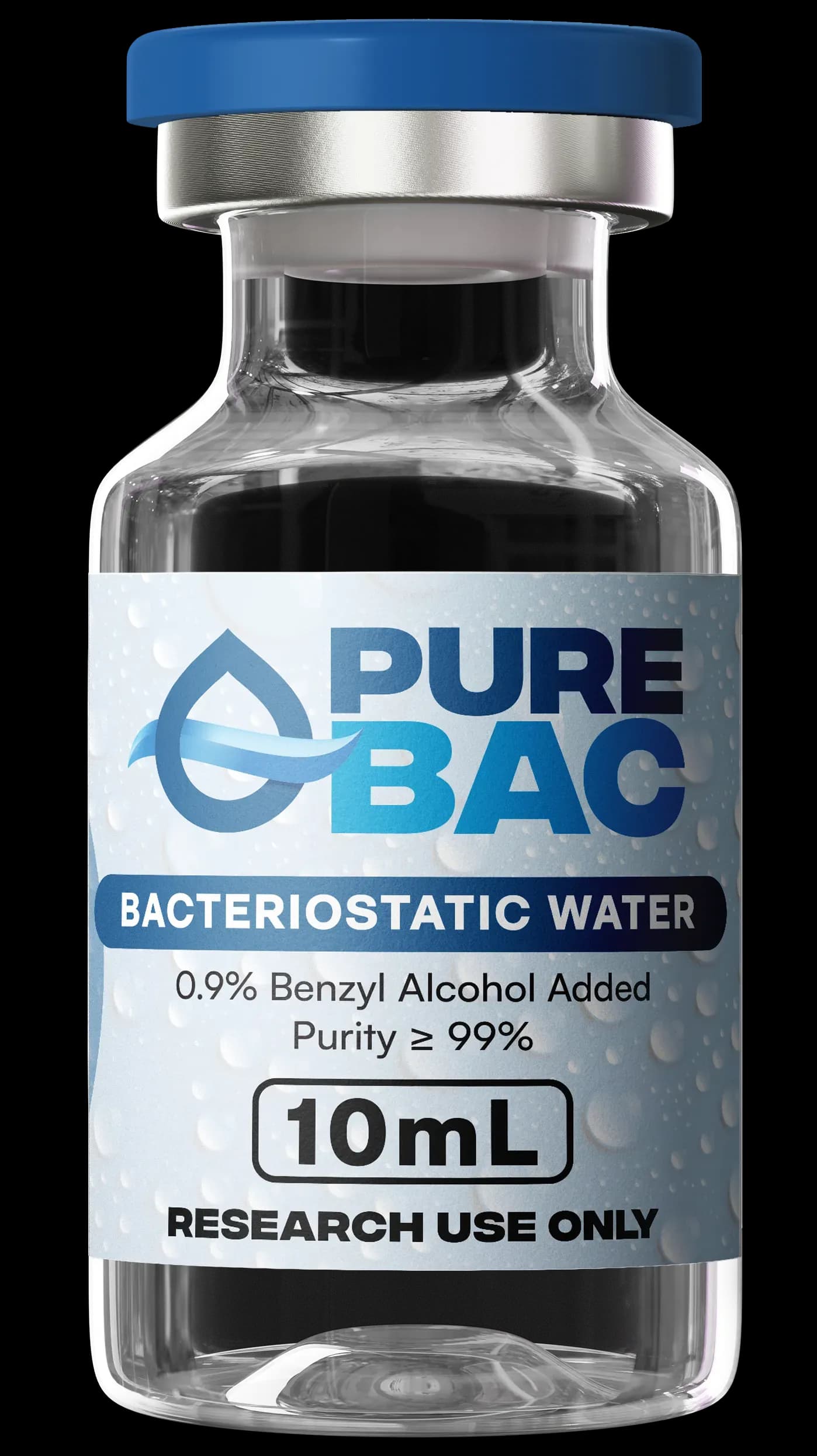
PureBac 7x tested bacteriostatic water 10mL vial
7x Quality Tested Bac Water

Don't ruin a $300 peptide on generic bac water.

Sterile, non-pyrogenic, exactly 0.9% benzyl alcohol, with a COA on every batch. Made for peptide reconstitution, not repackaged from generic stock.

0.9% benzyl alcohol 7x tested in USA COA every batch
Get PureBac bac water From $7.99 · Free shipping over $150

Which Should You Choose?

If your priority is
Pick
Why
Confidence
Exercise-mimetic metabolic signalling
MOTS-c
AMPK activation is its defining action
Moderate, preclinical
Raising cellular NAD+ levels
NAD+ or a precursor
Directly addresses the age-related decline
Moderate, mostly NR data
Avoiding injections entirely
NAD+ precursors
Oral NR and NMN are the only oral option here
Moderate
Most human data of any kind
NAD+
Precursor trials exist; MOTS-c has none
High
A compound with FDA panel support
MOTS-c
7-5 favourable PCAC vote, July 2026
High, but non-binding
Lowest cost to try
MOTS-c
A 10 mg vial covers several weeks
High
Exercise-mimetic metabolic signalling
Pick
MOTS-c
Why
AMPK activation is its defining action
Confidence
Moderate, preclinical
Raising cellular NAD+ levels
Pick
NAD+ or a precursor
Why
Directly addresses the age-related decline
Confidence
Moderate, mostly NR data
Avoiding injections entirely
Pick
NAD+ precursors
Why
Oral NR and NMN are the only oral option here
Confidence
Moderate
Most human data of any kind
Pick
NAD+
Why
Precursor trials exist; MOTS-c has none
Confidence
High
A compound with FDA panel support
Pick
MOTS-c
Why
7-5 favourable PCAC vote, July 2026
Confidence
High, but non-binding
Lowest cost to try
Pick
MOTS-c
Why
A 10 mg vial covers several weeks
Confidence
High

If you want the other common MOTS-c comparison, MOTS-c vs SS-31 pits it against the other mitochondrial peptide people ask about. For the wider NAD+ product landscape, NAD+ benefits and our MOTS-c review are the practical starting points.

Where to Buy

Both are sold by US research-peptide vendors with third-party testing. Vendor comparison and current pricing are in where to buy MOTS-c and where to buy NAD+. For NAD+ specifically, decide the route before the vendor — IV therapy through a clinic, self-administered subcutaneous, and oral precursors are three different purchases with three different price structures.

Frequently Asked Questions

Is MOTS-c better than NAD+?
They are not really substitutes. MOTS-c is a signalling peptide that activates AMPK; NAD+ is a coenzyme that supplies the substrate mitochondria and sirtuins run on. If you want to mimic part of the exercise signal, MOTS-c is the relevant tool. If you want to address the age-related decline in cellular NAD+, that is the other one.
Is NAD+ a peptide?
No. NAD+ is a coenzyme — a dinucleotide built from nicotinamide and adenine. It gets sold alongside peptides and discussed in the same breath, but it belongs to a different chemical class entirely, and it does not act on a receptor.
Why is injectable NAD+ said to be more bioavailable?
Because it bypasses gut enzymes, the microbiome and hepatic first-pass metabolism, all of which degrade oral precursors. The caveat is that NAD+ still is not taken up intact by cells — it is hydrolysed to NMN and then NR before entering. Injectable also has the least published trial data of any route.
What did the July 2026 FDA vote mean for MOTS-c?
The Pharmacy Compounding Advisory Committee recommended MOTS-c for the 503A Bulks List by 7 yes to 5 no with 2 abstentions, for the use FDA specified of obesity and osteoporosis. It was advisory and non-binding. It is not a drug approval, FDA had not issued a final decision, and it does not validate any product currently being sold.
Are there human trials on MOTS-c?
No completed human efficacy trials. The human data consists of a Phase 1a/1b trial of the analog CB4211 and a seven-day intravenous study of native MOTS-c. As of early 2026 there were no active INDs or FDA-registered ongoing trials. The promising findings are preclinical.
Can you take MOTS-c and NAD+ together?
There is no mechanistic conflict, and the pathways plausibly reinforce each other since sirtuin activity depends on NAD+ availability and interacts with AMPK signalling. No human study has tested the combination, so treat the synergy as a reasonable hypothesis rather than an established result.
Does MOTS-c help with weight loss?
Obesity was one of the uses FDA put to the advisory committee, and the preclinical work on insulin sensitivity and AMPK activation supports the rationale. But no completed human efficacy trial has measured weight or body composition outcomes, so there is no number to quote.

This article is for research and educational purposes and is not medical advice. Neither compound is FDA approved, and the July 2026 advisory vote on MOTS-c is non-binding and does not constitute approval. Consult a qualified clinician before use.
MOTS-C (10MG)

Recommended Supplier

In StockShips from USA

MOTS-C (10MG)

MOTS-C (10MG) from Ascension Peptides, third-party tested and shipped from the US. Use code PEPTIDEDECK for 50% off.

$37.50$75.00

Exclusive 50% off — use code PEPTIDEDECK

Get MOTS-C (10MG) - 50% Off with PEPTIDEDECK
NAD+ 1000mg

The other side of this comparison

NAD+ 1000mg

$104.00

Shop NAD+

Buy Related Peptides — 99%+ Purity

MOTS-c

MOTS-c

10mg Single Vial · 99%+ Purity

$75.00$89.99
From $75.00
NAD+

NAD+

1000mg Research Vial · 99%+ Purity

$104.00$179.99
From $104.00

Related Topics

mots-c vs nadnad vs mots-cmots-cnad+mitochondrial peptidesampklongevitynad precursors
Back to Peptides
Contents0%
MOTS-c vs NAD+: At a GlanceSignal Versus SubstrateMOTS-c: A Message From the MitochondriaNAD+: The Substrate Everything Runs OnWhat the Evidence Actually SupportsMOTS-c: Preclinically Interesting, Clinically UnprovenNAD+: Evidence for the Precursors, Less for the MoleculeRegulatory Status: One Just Had Its HearingDosing and PracticalitiesCan You Use Both?Which Should You Choose?Where to BuyFrequently Asked Questions
MOTS-C (10MG)

save 50% with code

Get 50% Off
PDPeptideDeck

Research-backed guides, dosing tools and reviews for peptides and GLP-1 medications.

01 · Explore

  • Peptide Guides
  • Oral Peptides
  • HRT Guide
  • TRT Guide
  • Blog
  • Calculators
  • AI Coach
  • Shop

02 · GLP-1

  • GLP-1 Guide
  • GLP-1 Programs
  • GLP-1 Reviews

03 · Company

  • About
  • Contact

04 · Dosing Charts

5-Amino-1MQAOD-9604BPC-157CagrilintideCJC-1295EnclomipheneEpithalonFOXO4-DRIGHK-CuGLOWGlutathioneIGF-1 LR3IpamorelinKisspeptinKLOWKPVMelanotanMK-677MOTS-cMounjaroNAD+PT-141RetatrutideSelankSemaglutideSemaxSermorelinSS-31TB-500TesamorelinThymosin Alpha-1WegovyWolverine StackZepbound
© 2026 PeptideDeck