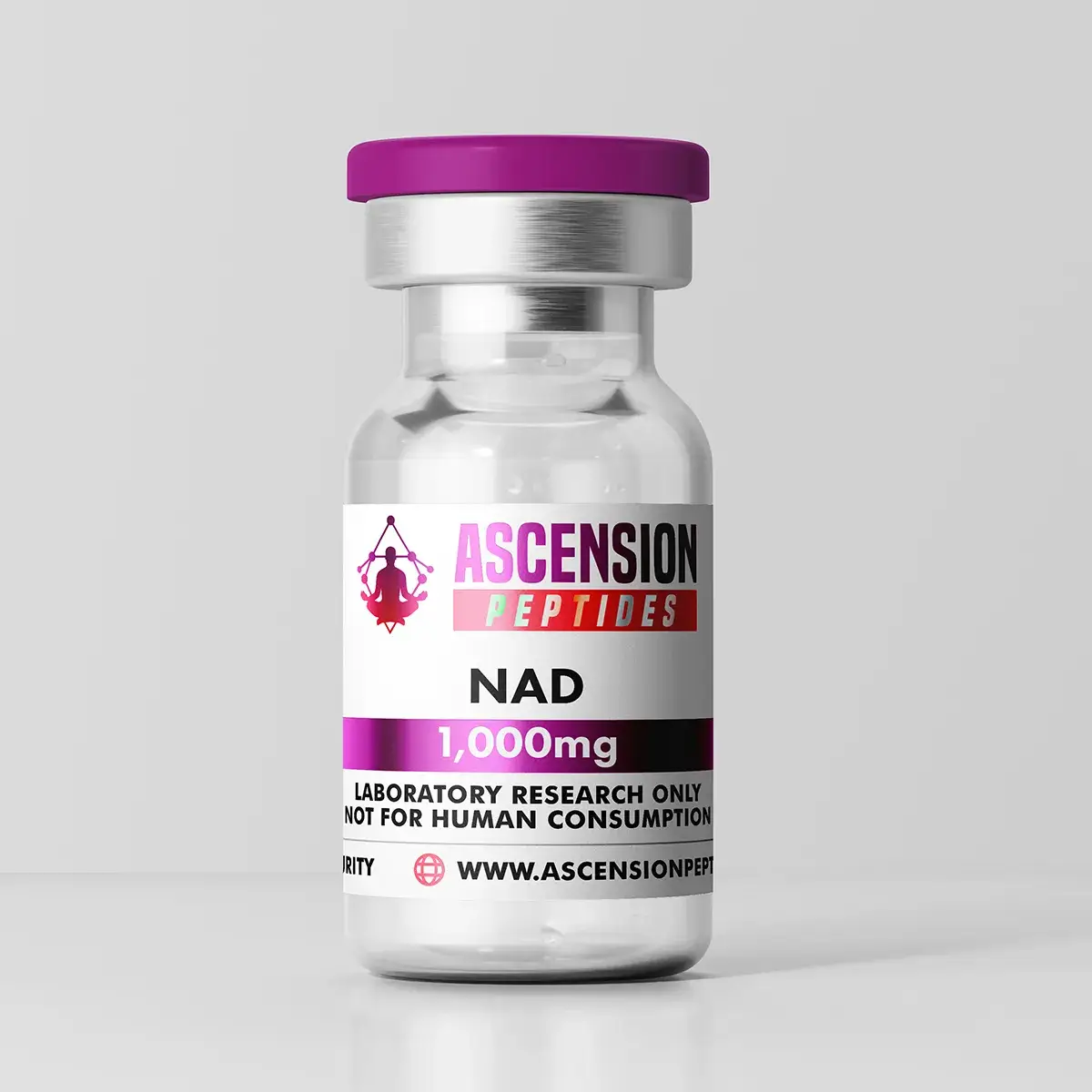
Longevity Molecules
NAD+
with codePEPTIDEDECKat checkout· list $179.99
- Purity
- 99%+
- Vial
- 1000mg Research Vial
- Form
- Lyophilized powder in vial
- Half-life
- Not applicable (depends on assay conditions and enzymatic consumption rate)
Buy NAD+ 1000mg at PeptideDeck -- nicotinamide adenine dinucleotide, the essential cellular redox coenzyme and substrate for sirtuins (SIRT1-7), PARPs, and CD38, supplied as 99%+ pure lyophilized powder in a bulk 1000mg research vial. Research-grade, HPLC-verified. Ships same-day from the USA with COA on request.
About NAD+
Looking to buy NAD+ for a metabolic biology, aging, or DNA repair study? PeptideDeck lists NAD+ 1000mg vials for sale from a vetted US research supplier at 99%+ HPLC-verified purity, with same-day US shipping and a Certificate of Analysis available on request. The NAD+ price on this listing -- $150.00 per 1000mg vial against an MSRP of $199.99 -- makes the 1000mg bulk format the most cost-efficient option for laboratories that need to purchase NAD+ in quantity for large-scale in-vitro assays, multi-arm dose-response studies, or extended rodent protocols. NAD+ for sale in 1000mg format eliminates the need to order multiple smaller vials across a research campaign; the bulk quantity also facilitates preparation of a master stock solution from which all experimental dilutions can be drawn from the same lot, reducing batch-to-batch variability.
NAD+ (nicotinamide adenine dinucleotide, the oxidized form) is a dinucleotide coenzyme composed of adenosine monophosphate coupled to nicotinamide mononucleotide via a pyrophosphate linkage. It is present in every living cell and is universally required for the redox chemistry that drives glycolysis, the tricarboxylic acid (TCA) cycle, and oxidative phosphorylation -- the three core pathways of cellular energy metabolism. In these pathways NAD+ accepts hydride equivalents (becoming NADH), and the regeneration of NAD+ from NADH by the electron transport chain is the thermodynamic basis for aerobic ATP synthesis. Beyond its canonical redox role, NAD+ is consumed as a substrate (not merely a cofactor) by three major enzyme families whose activities are central to cellular aging, stress response, and genome maintenance: the sirtuin deacylases (SIRT1 through SIRT7), the poly-ADP-ribose polymerases (PARP1 and related family members), and the cyclic ADP-ribose synthase CD38. Because cellular NAD+ levels decline progressively with aging in multiple mammalian tissues -- a phenomenon documented across yeast, worms, flies, rodents, and humans -- NAD+ and its biosynthetic precursors (NMN, NR) have become among the most actively researched longevity molecules in the field, and NAD+ itself remains the gold-standard reference compound for NAD+-consuming enzyme assays.
Where to Buy NAD+
PeptideDeck lists NAD+ for sale from a vetted US research supplier with batch-level HPLC quality verification. When research teams ask us where to buy NAD+ in 1000mg bulk format with verified purity and fast US delivery, this is the listing we point them to. The NAD+ price at $150.00 per 1000mg vial is cost-competitive for bulk research-grade material and is significantly more efficient on a per-gram basis than smaller-format NAD+ vials from premium biochemical suppliers. Shipping is same-day from a US warehouse with tracked delivery and discreet packaging. Checkout resolves directly through the partner vendor's live inventory; the cart confirms in-stock status at purchase. For bulk quantities above the listed 1000mg format, contact the supplier directly for custom pricing on large research procurement orders. Buy NAD+ for research use only.
Quality Assurance and COA
Every NAD+ vial at this listing undergoes batch-level analytical testing before release. Identity is confirmed by UV spectrophotometry (characteristic NAD+ absorption at 260 nm, extinction coefficient 18,000 M-1 cm-1) and by ESI-MS. Purity is quantified by HPLC. The Certificate of Analysis documents lot number, synthesis or extraction date, analytical method, purity result, and identity confirmation data. COA documents are available on request -- email the supplier with your order number after purchase. Vials are sealed under inert gas in appropriate packaging to minimize moisture exposure during storage and transit. The 99%+ HPLC purity standard, lot-level identity verification, and moisture-protective packaging are the quality controls that distinguish this NAD+ listing from commodity-grade material sold without analytical documentation.
Mechanism of Action
NAD+ participates in cellular biology through two functionally distinct modes: redox cycling and substrate consumption.
As a redox carrier, NAD+ accepts two electrons and a proton (hydride ion, H-) at the nicotinamide ring C4 position to form NADH. In Complex I of the mitochondrial respiratory chain, NADH donates its hydride to ubiquinone, regenerating NAD+ and sustaining the proton gradient that drives ATP synthase. In the cytoplasm, NAD+ is regenerated from NADH by lactate dehydrogenase under anaerobic conditions or by the malate-aspartate shuttle under aerobic conditions. The NAD+/NADH ratio is a direct readout of cellular redox status and is measured in research studies using enzymatic cycling assays, bioluminescence (NAD/NADH-Glo), or FLIM-based NADH autofluorescence imaging.
As a substrate for sirtuin deacylases, NAD+ is cleaved between the glycosidic bond and the nicotinamide ring, releasing nicotinamide (a feedback inhibitor) and producing O-acetyl-ADP-ribose or ADP-ribose as co-products. SIRT1 deacetylates histones H3K9 and H3K14, p53 K382, NF-kB, and PGC-1alpha, linking NAD+ availability directly to chromatin compaction, DNA damage response, inflammatory gene regulation, and mitochondrial biogenesis signaling. SIRT3, the major mitochondrial deacylase, deacetylates and activates acetyl-CoA synthetase 2, isocitrate dehydrogenase 2, manganese superoxide dismutase, and the OSCP subunit of ATP synthase -- connecting mitochondrial NAD+ to TCA flux, antioxidant defense, and ATP output. Because SIRT1 and SIRT3 activity scales proportionally with [NAD+] across the physiological concentration range, supplementing NAD+ in in-vitro research systems is a standard method for probing sirtuin-dependent biology.
For PARP1, NAD+ substrate cleavage produces poly-ADP-ribose chains that are attached to histones at DNA strand breaks as a DNA damage signaling mechanism. PARP1 is massively activated during genotoxic stress and can consume the entire cellular NAD+ pool within minutes in cells with extensive DNA damage -- a mechanism proposed to cause NAD+ depletion in metabolic stress and aging contexts. Research teams studying the NAD+-PARP-sirtuin competition axis -- in which PARP hyperactivation depletes NAD+ and thereby reduces sirtuin activity -- use exogenous NAD+ supplementation as a tool to rescue sirtuin function in cells with induced genotoxic stress.
CD38 is a glycohydrolase that converts NAD+ to cyclic ADP-ribose (cADPR) and ADPR, which serve as calcium second messengers. CD38 expression increases significantly with aging and is a major driver of age-related NAD+ decline in multiple tissues. Research into CD38 inhibition as a strategy to preserve NAD+ levels has made CD38 assay systems (and by extension NAD+ substrate supply) a growing area of longevity molecule research.
Chemical Profile
NAD+ is a dinucleotide with the molecular formula C₂₁H₂₇N₇O₁₄P₂ and a molecular weight of 663.43 g/mol (free acid form). The CAS registry number is 53-84-9. The structure consists of an adenine base linked to ribose (adenosine monophosphate moiety) connected via a pyrophosphate bridge to a ribosylated nicotinamide (nicotinamide mononucleotide moiety). The oxidized form (NAD+) carries a formal positive charge on the nicotinamide nitrogen. The reduced form (NADH) does not carry this charge and absorbs UV light at 340 nm while NAD+ does not -- the basis for the spectrophotometric NAD+/NADH assays used widely in metabolic research.
This research-grade NAD+ is supplied as a lyophilized white powder in a sealed 1000mg vial under sterile conditions. The high-bulk format means researchers can prepare a concentrated stock (e.g., 100mM in water or PBS), aliquot into single-use volumes, and freeze at minus 20 degrees Celsius for extended use across a research campaign. Purity is 99%+ by HPLC; identity confirmed by spectrophotometry (characteristic UV absorption at 260 nm) and mass spectrometry.
Research Applications
NAD+ is used as a primary research reagent in four major application domains:
Sirtuin assay systems: NAD+ is the required co-substrate in all in-vitro SIRT1, SIRT2, SIRT3, SIRT5, and SIRT6 deacylase activity assays. Researchers use defined [NAD+] to set sirtuin activity baselines, construct NAD+ concentration-response curves for sirtuin Km determination, and compare sirtuin activity in cell extracts from different tissue or aging states. NAD+ is also used in SIRT1 substrate competition assays where NMN, NR, or NAMPT inhibitors are evaluated for their ability to restore NAD+ and thus SIRT1 activity in a depleted system.
PARP and DNA damage response research: NAD+ is consumed by PARP1 during genotoxic stress response assays. Research teams studying DNA strand break signaling, PARP inhibitor activity, or the NAD+-depletion hypothesis of aging use exogenous NAD+ to define the relationship between NAD+ availability, PARP activity, and cell viability under controlled genotoxic conditions.
Metabolic flux and bioenergetics assays: NAD+ is added to permeabilized cell or isolated mitochondria preparations to support Complex I-dependent respiration in Oroboros or Seahorse XF assays. NAD+ supplementation is used to investigate NAD+ transport across the inner mitochondrial membrane, the contribution of Complex I to state 3 respiration under NADH limitation, and the metabolic consequences of altered NAD+/NADH ratios in isolated cell systems.
Aging and longevity pathway research: NAD+ or its biosynthetic precursors (NMN, NR) are used in aged rodent tissue studies, senescent cell models, and interventional in-vitro aging experiments to probe NAD+-dependent signaling. NAD+ itself is used as the positive control reference compound in studies where NMN or NR are evaluated as NAD+ precursors, and its direct effects on mitochondrial function, sirtuin activity, and cellular metabolism are characterized as the benchmark against which precursor supplementation outcomes are compared. All applications summarized here are in-vitro or preclinical only.
Lyophilized Powder Handling and Dosing Reference
NAD+ is a hygroscopic compound that absorbs atmospheric moisture rapidly on exposure. Keep vials sealed until use. When opening the 1000mg vial to prepare a master stock, work quickly in a dry environment and reseal immediately after drawing the required quantity.
To prepare a master stock solution: dissolve NAD+ powder in sterile water, PBS, or cell culture-appropriate buffer at a concentration of 10mM to 100mM. A 100mM stock requires 66.3mg of NAD+ (MW 663.43 g/mol) in 1mL water. The 1000mg vial contains approximately 1.508 mmoles of NAD+ at 100% purity, which is sufficient for approximately 15mL of 100mM stock or 150mL of 10mM stock. For in-vitro sirtuin assays, final NAD+ working concentrations in the reaction typically range from 100 micromolar to 1mM (below the SIRT1 Km of approximately 94 micromolar to above it) depending on whether the assay measures basal, Km, or saturating sirtuin conditions. These are research dilution reference figures only. PeptideDeck does not publish human dosing guidance.
Aliquot prepared NAD+ stock solutions into single-use volumes (e.g., 100 to 500 microliters per aliquot in sterile 0.5mL or 1.5mL microtubes). Freeze aliquots at minus 80 degrees Celsius for long-term stability; minus 20 degrees Celsius is acceptable for stocks used within 1 to 2 months. NAD+ in neutral aqueous solution is susceptible to hydrolysis of the nicotinamide-glycosidic bond -- use within 1 to 2 weeks once thawed and avoid repeated freeze-thaw cycles.
Storage and Handling
Store unopened NAD+ vials at minus 20 degrees Celsius in a desiccated environment. The lyophilized powder is hygroscopic; moisture uptake at ambient humidity will cause caking, color change, and progressive hydrolysis. Do not store at room temperature for extended periods. Prepared aqueous NAD+ solutions should be aliquoted, snap-frozen on dry ice, and stored at minus 80 degrees Celsius for multi-month research campaigns, or at minus 20 degrees Celsius for use within 4 to 6 weeks. Protect all NAD+ preparations from light; the nicotinamide ring is susceptible to photodegradation. Monitor stock solutions by UV absorbance at 260 nm periodically; a reduction in the 260 nm extinction coefficient relative to the expected value (18,000 M-1 cm-1 for NAD+) indicates degradation. Document lot number and receipt date for COA traceability.
Research Benefits
Essential cellular redox coenzyme present in all living cells
99%+ HPLC-verified purity, bulk 1000mg lyophilized vial
Required substrate for sirtuin deacylases SIRT1-SIRT7
Co-substrate for PARP1-mediated DNA damage signaling
CD38 substrate -- central to calcium signaling and NAD+ decline research
Standard reference compound in NAD+ precursor (NMN, NR) comparison studies
Used in mitochondrial respiration and TCA cycle enzyme assays
Characterized in cellular aging, senescence, and longevity pathway research
Product Specifications
| Molecular Weight | 663.43 g/mol (C₂₁H₂₇N₇O₁₄P₂, free acid) |
| Sequence | Not applicable (dinucleotide coenzyme, not a peptide) |
| Half-Life | Not applicable (depends on assay conditions and enzymatic consumption rate) |
| Purity | 99%+ |
| Form | Lyophilized powder in vial |
| Storage | Store lyophilized at -20°C in desiccated conditions. Prepare aliquots for working stock and freeze at -80°C for multi-month stability. |
Frequently Asked Questions
You May Also Like
View all →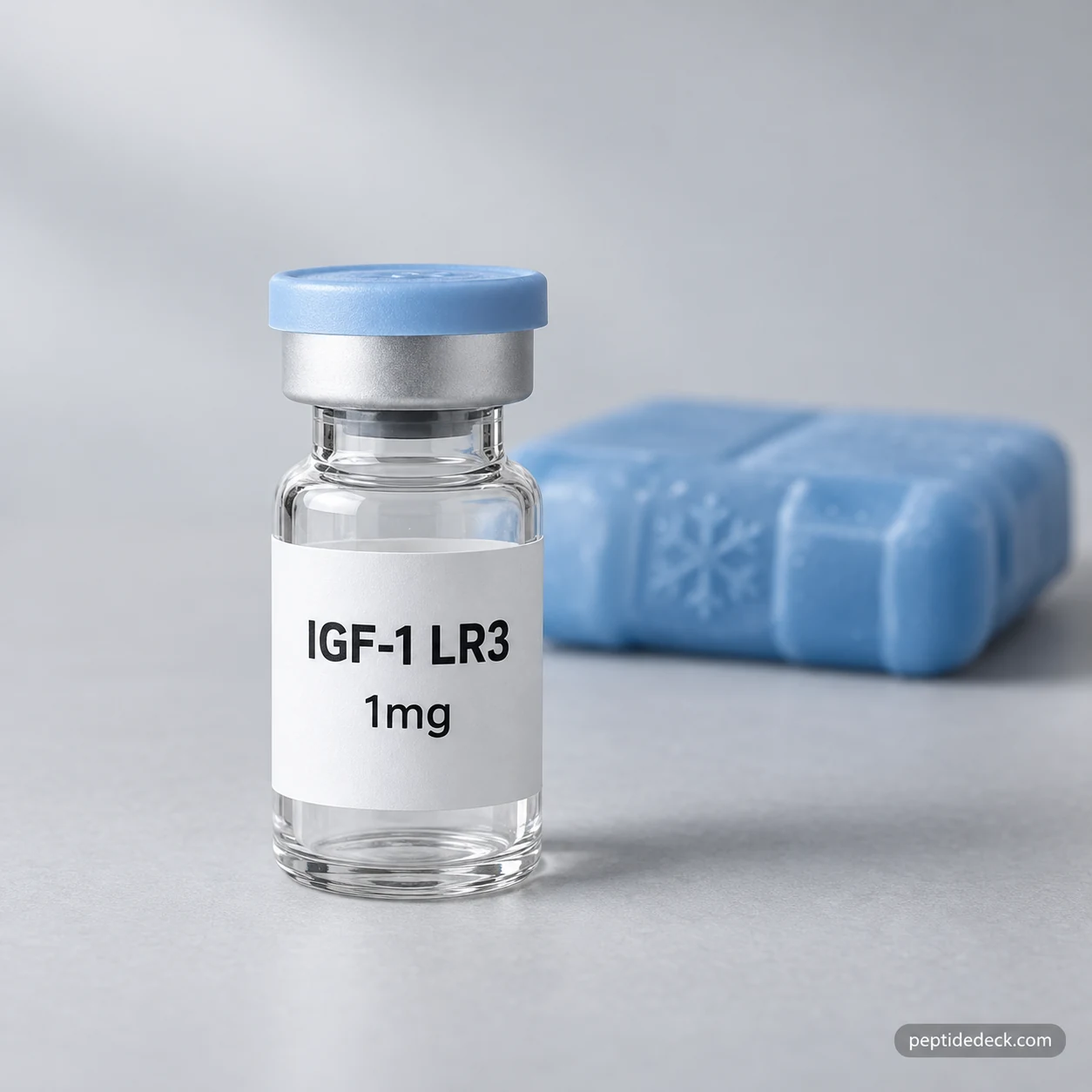
Growth Factor Peptides
IGF-1 LR3
Long R3 Insulin-like Growth Factor-1, 1mg vial
Growth Hormone Releasing Hormone (GHRH) Analogues
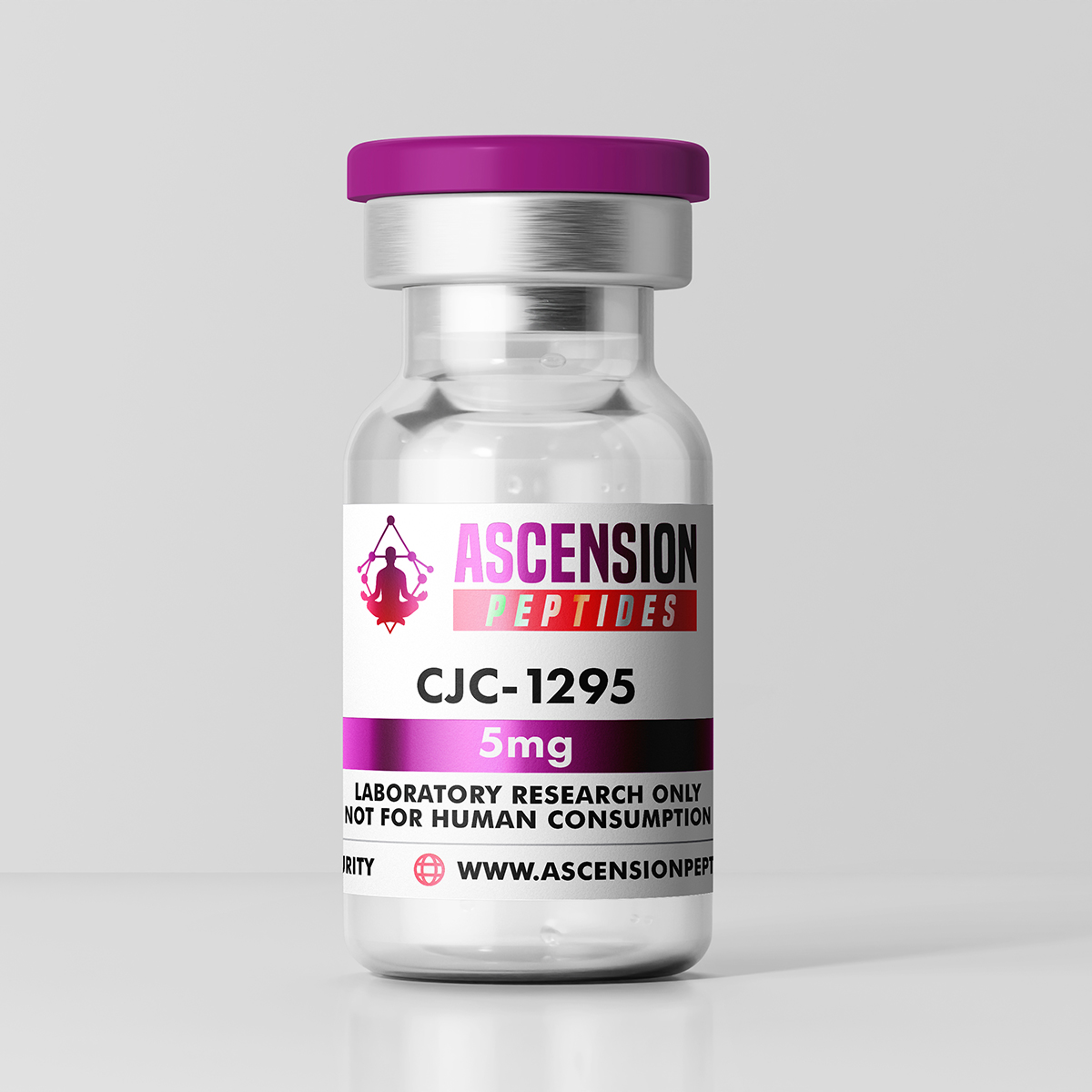
CJC-1295 (No DAC)
Modified GRF (1-29) GHRH Analogue, 5mg Lyophilized Vial
Copper Peptides
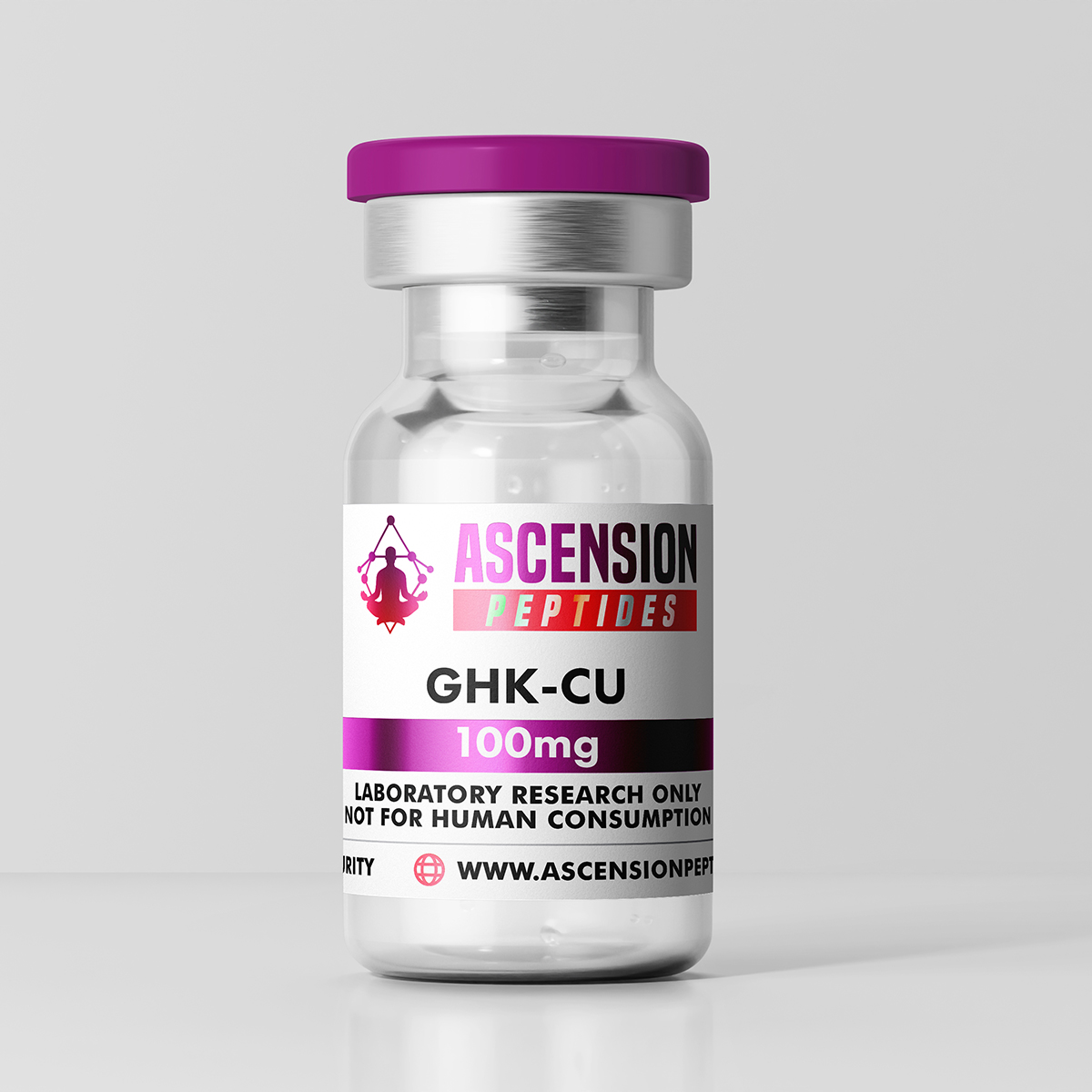
GHK-Cu
GHK-Cu For Sale: 50mg 99%+ Purity Copper Tripeptide

Healing & Recovery Peptides
BPC-157
Body Protection Compound 5mg: 99%+ Purity Research Vial
Research Use Only. All products sold by PeptideDeck are strictly for in-vitro laboratory research and are not intended for human or veterinary use, diagnosis, or treatment. Not for resale.