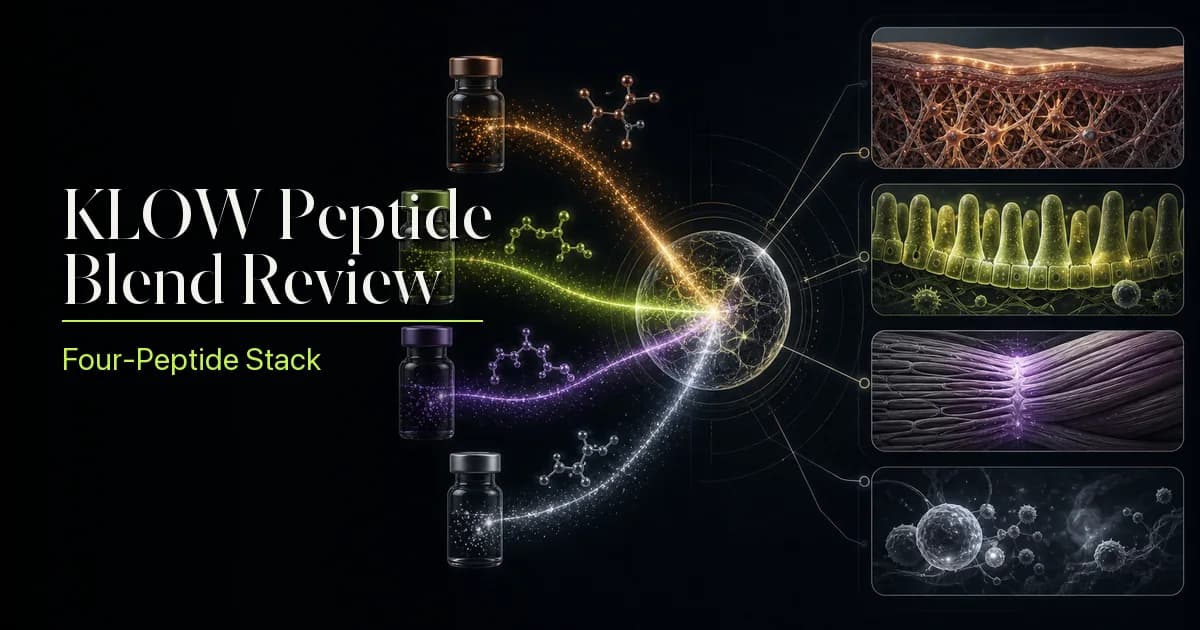
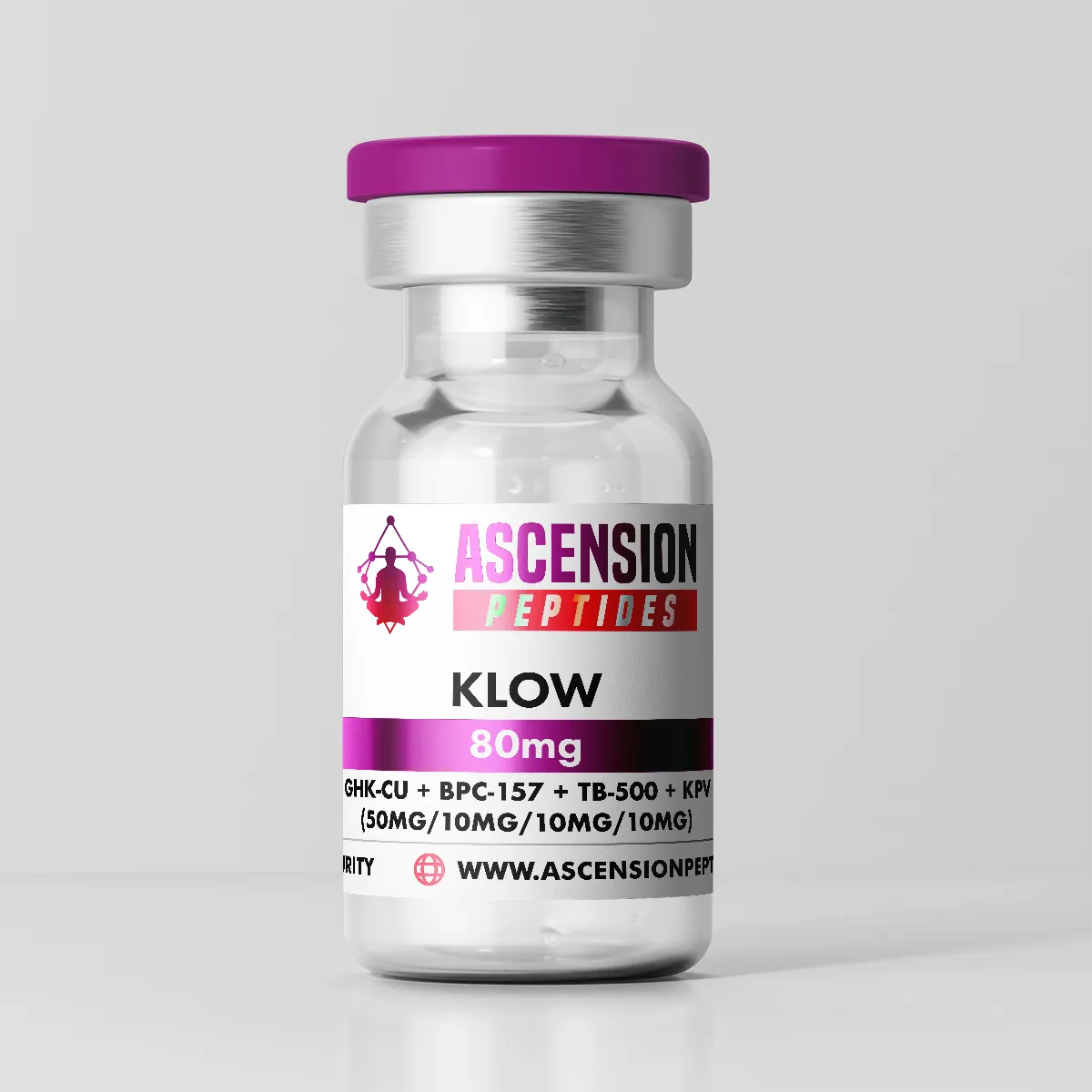
The KLOW blend from Ascension Peptides packages four of the most well-researched regenerative peptides into a single, coordinated stack. GHK-Cu, BPC-157, TB-500, and KPV each address healing from a distinct mechanistic angle , together, they cover essentially the full spectrum of tissue repair, inflammation control, skin remodeling, and gut protection that researchers studying regenerative biology need.
This review breaks down each component, explains why the combination is scientifically sound, and evaluates whether KLOW is worth $135.
What's in KLOW?
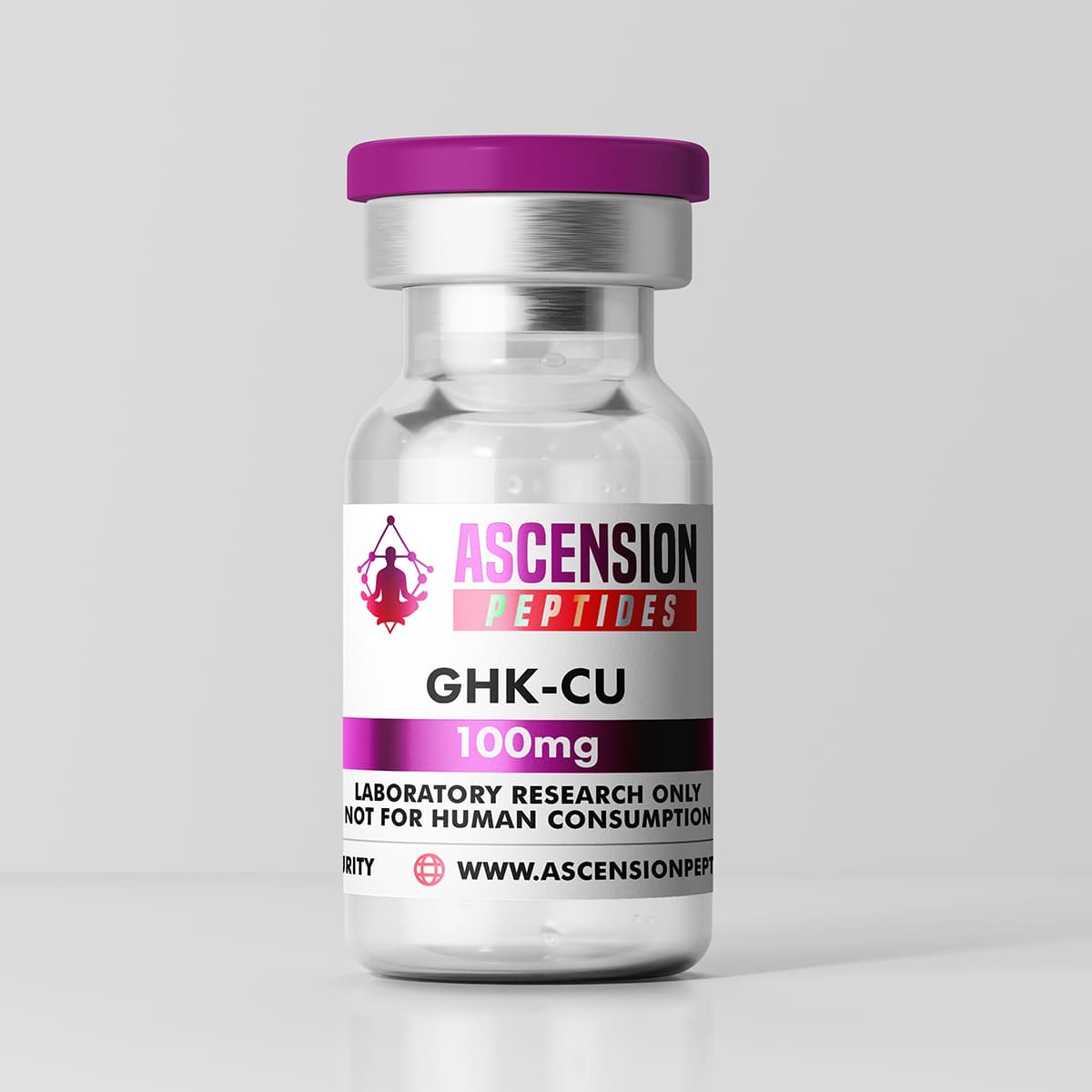
- GHK-Cu (Copper Peptide) , skin, extracellular matrix remodeling, collagen synthesis, anti-aging
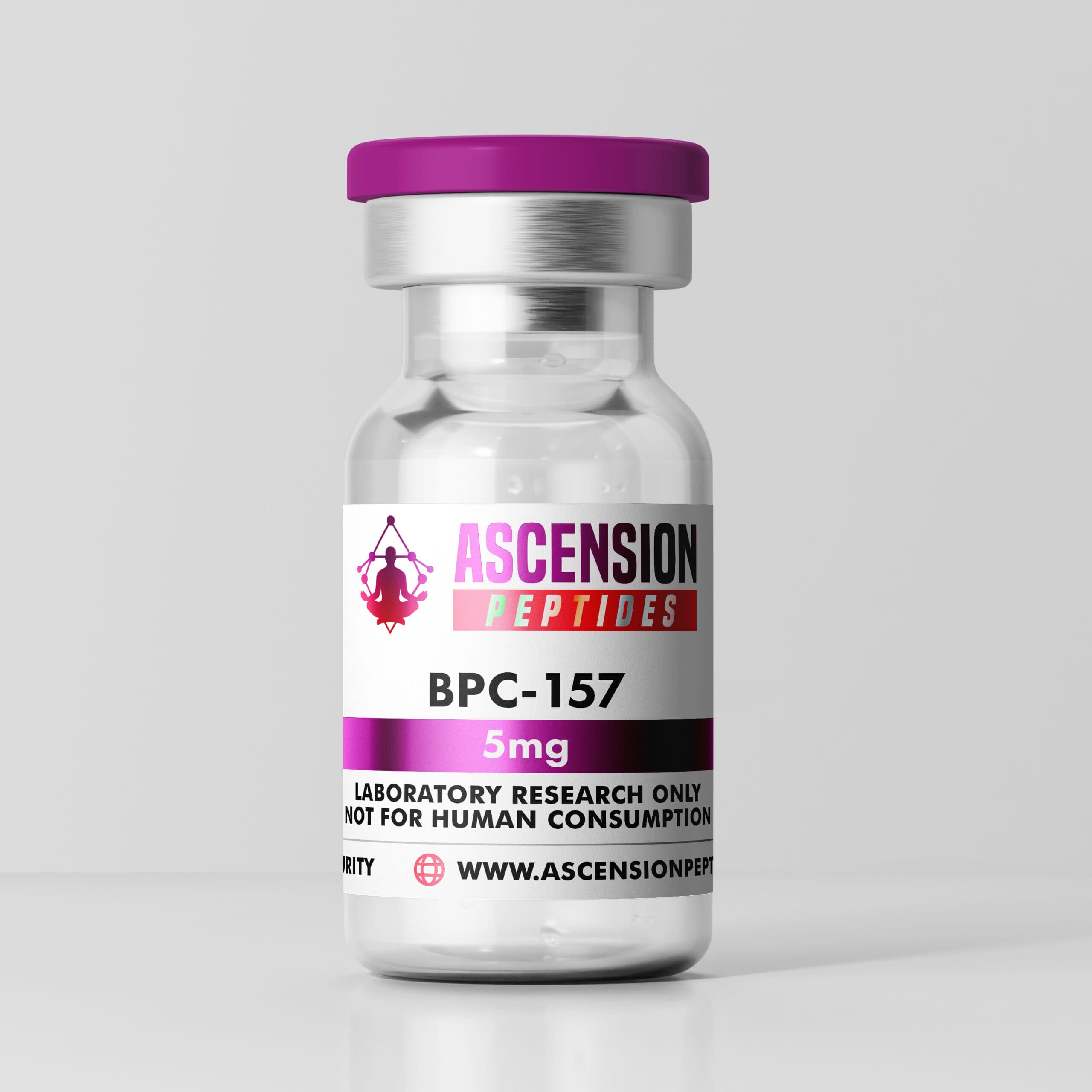
- BPC-157 , tendon/ligament/muscle repair, gut protection, angiogenesis
- TB-500 , systemic tissue repair, cell migration, anti-inflammatory
- KPV , potent anti-inflammatory tripeptide, gut mucosal healing, skin barrier repair
Component Deep Dive
GHK-Cu (Glycine-Histidine-Lysine Copper Complex)
GHK-Cu is one of the most studied bioactive copper peptides, with research spanning skin regeneration, wound healing, nerve growth, and gene expression modulation. It functions as a master regulator of tissue remodeling , activating over 4,000 genes involved in collagen synthesis, anti-inflammatory signaling, and cellular repair according to transcriptomic analyses.
Key research findings: GHK-Cu increases collagen and glycosaminoglycan production, promotes fibroblast proliferation, and has demonstrated wound contraction acceleration in multiple models. It also shows antioxidant properties and stimulates nerve growth factor (NGF) production , making it relevant to both dermatological and neurological repair research.
sells GHK-Cu separately at $50 for 100mg , an excellent price point that reflects in the KLOW bundle value calculation.
BPC-157
Body Protection Compound-157 is the most researched healing peptide in the early-stage literature. Its primary mechanisms , nitric oxide upregulation, VEGF-driven angiogenesis, fibroblast activation , make it the anchor compound in virtually every serious tissue repair protocol. It's uniquely effective for gut mucosal healing (the "body protection" in its name refers to gastric mucosal protection), which makes it particularly relevant in KLOW for researchers studying combined gut-systemic healing.
TB-500
Thymosin Beta-4 fragment provides the systemic complement to BPC-157's more localized activity. By upregulating actin , the fundamental protein of cellular structure and movement , TB-500 enables effective cell migration to injury sites throughout the body. Its cardiovascular research profile (cardiac tissue protection, angiogenesis) adds a dimension that neither BPC-157 nor GHK-Cu covers.
KPV (Lys-Pro-Val)
KPV is a tripeptide derived from alpha-melanocyte stimulating hormone (α-MSH). It operates primarily through inhibition of NF-κB , the master regulator of inflammatory signaling , producing powerful anti-inflammatory effects in gut tissue, skin, and systemically. Research shows KPV reduces inflammatory cytokine production (IL-6, IL-8, TNF-α) and promotes intestinal mucosal healing, making it a valuable addition to any healing protocol focused on inflammation control and gut barrier restoration.
KPV also has notable skin research data: it reduces UV-induced inflammation and supports keratinocyte function in dermatological models. In the KLOW stack, KPV provides the anti-inflammatory modulation that lets the repair work of BPC-157, TB-500, and GHK-Cu proceed without chronic inflammatory interference.
Klow Peptide Benefits
Most users start a Klow protocol for one of four reasons: a soft tissue injury that isn't resolving, visibly aging skin, an inflamed gut, or all three at once. The Klow peptide benefits below are what people consistently report across 8 to 12 week protocols, organized by what changes first.
- Faster soft tissue repair (weeks 2 to 4): BPC-157 and TB-500 together accelerate tendon, ligament, and muscle healing. This is the single most reported Klow peptide benefit, especially for nagging shoulder, knee, and Achilles issues.
- Visible skin glow and elasticity (weeks 3 to 6): GHK-Cu drives collagen synthesis and is where the "glow" in Klow comes from. Skin tone evens out, fine lines soften, and texture improves within the first 6 weeks.
- Calmer gut and lower systemic inflammation (weeks 1 to 3): KPV and BPC-157 both modulate gut inflammation and NF-kB signaling. Bloating and food sensitivity often improve before the structural healing benefits arrive.
- Joint comfort and mobility (weeks 3 to 8): The BPC-157 plus TB-500 pairing is the same one used in the Wolverine stack for joints, but with GHK-Cu and KPV layered on top for ECM rebuild and inflammation control.
- Hair density and scalp support (weeks 6 to 12): GHK-Cu is one of the few peptides with real data behind hair follicle activation and scalp recovery. Slow to show, but visible by week 8 for most.
- Wound and post-surgical recovery: All four compounds carry wound-healing data. Stacked, they cover faster cellular repair, vascular regrowth, and inflammation control in parallel.
- One protocol instead of four: Running these peptides separately means four reconstitutions, four injection schedules, and four vendor purchases. The Klow blend collapses that into one daily injection at a balanced dose ratio.
Honest framing: the individual benefits aren't unique to Klow versus running the four peptides separately. What you're paying for is the dose ratio, the convenience of one vial, and the parallel timing where inflammation control, scaffolding rebuild, and tissue repair happen at the same time rather than in sequence.
Why These Four Work Together
The KLOW combination is scientifically coherent because each compound operates on a distinct but complementary pathway:
The result is a stack where inflammation is controlled (KPV), tissue scaffolding is rebuilt (GHK-Cu), localized repair is accelerated (BPC-157), and systemic repair cells are mobilized (TB-500). This is mechanistically comprehensive in a way that no single compound can achieve.
Research Applications
KLOW is well-suited for research investigating:
- Skin wound healing and scar reduction
- Inflammatory bowel disease and gut mucosal repair
- Post-surgical recovery and tissue regeneration
- Anti-aging dermatological interventions
- Combined musculoskeletal and gut repair protocols
- Inflammatory cascade modulation in systemic tissue damage models
Typical Research Protocol
- BPC-157: 300-500 mcg subcutaneous daily
- TB-500: 2 mg subcutaneous twice weekly (loading phase), then once weekly
- GHK-Cu: 1-2 mg subcutaneous daily, or applied topically as reconstituted solution
- KPV: 300-500 mcg subcutaneous daily (can be combined with BPC-157 in same injection)
- Duration: 8-12 weeks typical for comprehensive tissue research protocols
Value Assessment: Is $135 Worth It?
Buying these four compounds separately from Ascension:
- GHK-Cu 100mg: $50
- BPC-157 5mg: $59.99
- TB-500 5mg: $45
- KPV 10mg: $79.99
- Total separately: ~$235
At $135 for the KLOW bundle, you're getting significant savings , though the exact quantities in the bundle matter. Check the product page for the specific amounts included in the KLOW stack to make a direct comparison. Regardless, the bundled pricing and consolidated documentation make KLOW a compelling option for researchers using all four compounds.
FAQ
What's the difference between KLOW and the Wolverine Stack?
The Wolverine Stack (BPC-157 + TB-500) is the foundational healing combination. KLOW expands on this with GHK-Cu (for skin/ECM/anti-aging effects) and KPV (for anti-inflammatory control and gut barrier support). KLOW is more comprehensive; the Wolverine Stack is more focused on acute injury repair.
Can KPV and BPC-157 be injected together?
They can be combined in the same syringe for co-injection. Both are water-soluble peptides compatible in bacteriostatic water solution. This simplifies the daily injection protocol in research settings.
Is KLOW suitable for skin research specifically?
Yes , GHK-Cu and KPV both have strong dermatological research profiles, and BPC-157 shows wound healing acceleration that is directly applicable to skin research. The stack covers wound healing, inflammation, collagen synthesis, and barrier function.
This content is for informational and educational purposes only. All peptides in the KLOW blend are compounds not yet FDA-approved for human use. Dosing information is derived from published current research. PeptideDeck may earn a commission from purchases through affiliate links at no additional cost to you.