Thymosin Beta-4
Thymosin Beta-4 (Tβ4)
Get Thymosin Beta-4
Sourced from Ascension Peptides. Verified ≥≥99% for research applications purity, third-party tested. COA included.
Off with code
PEPTIDEDECK
Table of Contents
What is Thymosin Beta-4?
Thymosin Beta-4 is a small, naturally occurring protein that plays an outsized role in how tissues heal. Despite its name pointing to the thymus, where it was first identified, Thymosin Beta-4 is expressed in nearly all cell types and is present in high concentrations in platelets, wound fluid, and many tissues. It is not a hormone in the conventional sense but an intracellular and secreted regulatory protein that coordinates the cellular events of repair.
Thymosin Beta-4's defining biochemical function is binding to monomeric actin, known as G-actin. Actin exists in two states within cells: the free building-block form (G-actin) and the assembled filament form (F-actin) that makes up the cytoskeleton. The balance between these forms determines whether a cell can reshape itself and move. Thymosin Beta-4 acts as a reservoir that holds G-actin in reserve and releases it in a controlled way, giving cells precise command over the assembly and disassembly of their internal scaffolding.
Because controlled cell migration is fundamental to nearly every repair process, from closing a skin wound to rebuilding damaged muscle or blood vessels, a regulator of that migration has broad regenerative relevance. Thymosin Beta-4 has therefore attracted research interest across wound healing, cardiovascular repair, eye injury, and other fields where the coordinated movement and survival of cells determines the quality of healing.
Research Benefits
Accelerates wound healing
Reduces inflammation
Promotes cell migration and tissue repair
Supports angiogenesis (new blood vessel formation)
Protects tissues from hypoxic damage
May improve cardiac function post-injury
Promotes hair follicle stem cell activity
Regulates extracellular matrix remodeling
How Thymosin Beta-4 Works
Thymosin Beta-4 works primarily by regulating the actin cytoskeleton, the dynamic protein network that lets cells crawl, contract, and remodel. This single mechanism sits at the heart of tissue repair, and from it flow the peptide's many downstream regenerative effects on migration, blood vessel formation, inflammation, and cell survival.
Actin Sequestration and Cell Migration
Thymosin Beta-4 binds monomeric G-actin and holds it in a reserve pool, which lets cells finely tune how much actin is available to build filaments at any moment. For a cell to migrate into a wound, it must repeatedly assemble actin filaments at its leading edge and disassemble them at the rear. By managing the supply of G-actin, Thymosin Beta-4 supports the rapid, directed remodeling of the cytoskeleton that migration requires, accelerating the movement of repair cells into damaged areas.
Actin Regulation
Sequesters G-actin to control cytoskeletal assembly, enabling directed cell migration.
Wound Closure
Speeds movement of repair cells into wounds, supporting faster tissue closure.
Angiogenesis
Promotes formation of new blood vessels to supply healing tissue.
Cell Protection
Reduces inflammation and protects cells from programmed death during injury.
Promoting Blood Vessel Formation
Thymosin Beta-4 encourages angiogenesis, the growth of new blood vessels, by supporting the migration and organization of the endothelial cells that line vessels. New blood supply is essential to healing, delivering oxygen and nutrients to regenerating tissue, and the peptide's promotion of vessel formation is one reason it is studied in wounds and in the heart after injury, where restoring blood flow is critical.
Reducing Inflammation and Supporting Stem Cells
Thymosin Beta-4 also modulates the inflammatory response, helping shift wounds from a destructive inflammatory phase toward constructive repair, and it protects cells from apoptosis under stress. In addition, research indicates it can recruit and activate tissue-resident progenitor cells, such as those involved in rebuilding heart or skin tissue. Together, these actions create an environment that favors regeneration: cells survive, migrate, build new vasculature, and rebuild the injured structure.
Research Applications
Wound healing and tissue repair
Active research area with published studies
Cardiac regeneration post-MI
Active research area with published studies
Corneal healing and dry eye
Active research area with published studies
Muscle injury recovery
Active research area with published studies
Dermal wound closure
Active research area with published studies
Neuroregeneration
Active research area with published studies
Hair growth stimulation
Active research area with published studies
Anti-fibrotic applications
Active research area with published studies
Research Findings
Thymosin Beta-4 has been investigated across a range of regenerative applications, reflecting the broad relevance of a molecule that controls cell migration, blood vessel formation, and cell survival. The research spans laboratory models and some clinical study, particularly in wound and corneal healing.
Wound Healing and Tissue Repair
Thymosin Beta-4 in wound healing research has shown the ability to accelerate the closure of dermal wounds by promoting the migration of skin cells and supporting new blood vessel growth. Because it acts on the fundamental machinery of cell movement, its effects are relevant to many wound types, and it has been examined in models of chronic and impaired healing where normal repair processes are compromised.
🔑 Key Research Areas
- Thymosin Beta-4 accelerates dermal wound closure by promoting cell migration
- It supports angiogenesis, aiding blood supply to healing tissue
- Corneal and ocular surface healing is a prominent area of study
- Cardiac research explores repair and progenitor cell activation after heart injury
- It is also studied for muscle recovery, neuroregeneration, and anti-fibrotic effects
Corneal and Ocular Healing
Thymosin Beta-4 has been studied as a treatment for injuries to the cornea and ocular surface, including in the context of dry eye and non-healing corneal wounds. Its capacity to promote the migration of corneal epithelial cells and to reduce inflammation makes it well suited to the eye's surface, and this application has been among the more clinically advanced areas of Thymosin Beta-4 research.
| Research Area | Rationale | Relevant Property |
|---|---|---|
| Dermal wounds | Speed closure of skin injuries | Cell migration, angiogenesis |
| Corneal healing | Repair ocular surface | Epithelial migration, anti-inflammation |
| Cardiac repair | Recover function after injury | Progenitor activation, vessel growth |
| Muscle and tendon | Support recovery from injury | Cell migration, reduced inflammation |
Cardiac and Regenerative Research
Thymosin Beta-4 has drawn particular attention in cardiac research, where studies in injury models have explored its ability to protect heart cells, promote new blood vessel formation, and activate progenitor cells within the heart. This work is part of the broader interest in whether the body's own regenerative signals can be harnessed to improve healing after events like a heart attack. Research also extends to neuroregeneration and to limiting fibrosis, the scarring that can impair organ function after injury.
Dosage & Administration
Thymosin Beta-4 dosing information below reflects how the peptide is handled in research settings and is provided for context only, not as guidance for personal use. Thymosin Beta-4 is a research compound, and any administration should occur strictly within a properly supervised research setting.
Formulation and Route
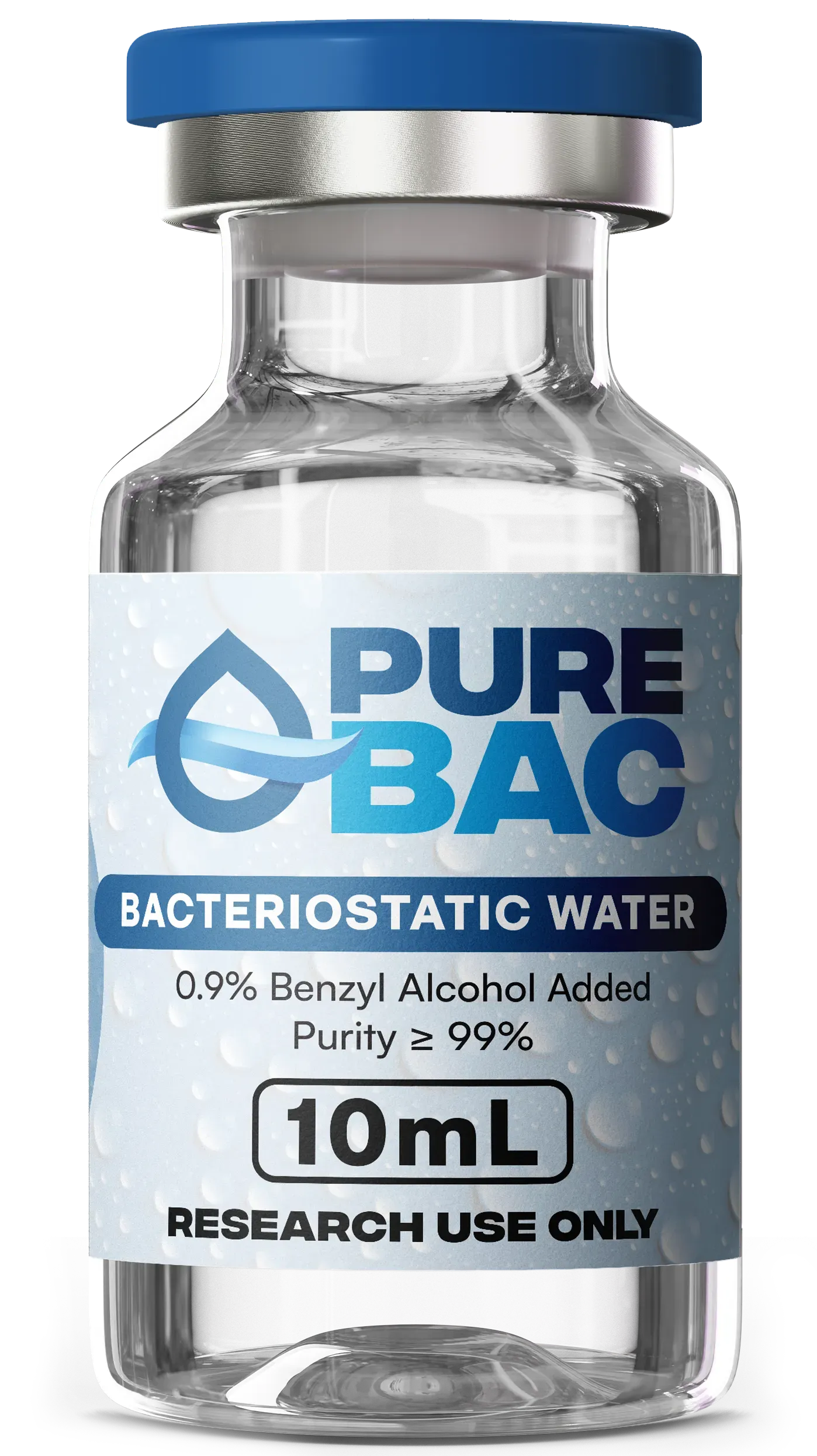
Thymosin Beta-4 is typically supplied as a lyophilized (freeze-dried) powder that must be reconstituted before use. In research, it is generally prepared with bacteriostatic water and administered by subcutaneous injection, while ocular applications use topical formulations suited to the eye. The full protein is larger than its TB-500 fragment, and the two are handled similarly in terms of reconstitution and storage.
Reconstitution
Gather Materials
Obtain the powder vial, bacteriostatic water, alcohol swabs, and appropriate syringes.
Add Diluent Gently
Direct the water slowly against the vial wall rather than onto the powder.
Dissolve Without Shaking
Swirl gently to dissolve the peptide; avoid vigorous shaking that can degrade it.
Store Refrigerated
Keep the reconstituted solution refrigerated at 2 to 8 degrees Celsius and protected from light.
Administration Considerations in Research
| Parameter | Research Practice | Rationale |
|---|---|---|
| Route | Subcutaneous injection | Common systemic research route |
| Site rotation | Alternate injection sites | Limit local irritation |
| Handling | Gentle, cold storage | Preserve peptide integrity |
Practical Insight
Careful reconstitution and cold storage matter for peptide integrity. Because Thymosin Beta-4 is a research compound, standardized human dosing protocols are not established the way they are for approved medicines, and reported regimens vary across studies.
Work out your Thymosin Beta-4 draw in units
Enter the vial size, the bacteriostatic water you add and the dose you want, and the calculator gives the syringe units, how long the vial lasts and when to discard it.
Open the peptide calculatorSafety & Side Effects
Thymosin Beta-4 has shown a generally favorable tolerability profile in the research conducted to date, but it remains an investigational compound whose long-term human safety is not fully established. Its considerations stem mainly from its potent effects on cell migration and blood vessel growth.
Reported and Expected Effects
Thymosin Beta-4 in research settings has most commonly been associated with mild, local effects rather than serious systemic problems.
Injection Site Reactions
Local redness, discomfort, or irritation at the injection site, typically mild.
Fatigue or Head Discomfort
Transient fatigue or mild headache reported by some users of the peptide class.
Flu-like Sensations
Occasional temporary flu-like feelings can accompany peptide administration.
Ocular Formulation Effects
Topical eye use may cause transient stinging or irritation on application.
Theoretical Considerations
Thymosin Beta-4's biological actions carry considerations that research approaches with caution:
- Proliferation and angiogenesis: Because the peptide promotes cell migration and new blood vessel growth, there is a theoretical concern in the setting of existing malignancy, where such effects could be undesirable
- Unestablished long-term safety: Comprehensive long-term human safety data are lacking, so cumulative effects are not fully characterized
- Product quality: As with any research peptide, purity and correct handling are important, since impurities can drive adverse reactions
- Sterility: Injectable use requires careful attention to sterile technique to avoid infection
Research Context
Thymosin Beta-4 studies incorporate monitoring appropriate to the model and application, with attention to local tolerability and to the theoretical proliferative considerations noted above. Because standardized clinical safety monitoring has not been defined for widespread human use, the peptide is appropriately confined to research and clinical trial settings under qualified oversight.