Every peptide comes with its own math. One is dosed in micrograms twice a day, the next in milligrams once a week, and a third only runs for ten days a year. This peptide dosage chart puts 31 of them side by side: the dose range, the dose most people start from, how often, how long, how to mix the vial and how many units that dose is on a standard insulin syringe.
🔑 Key Takeaways
- Doses span four orders of magnitude, from 20 mcg of IGF-1 LR3 to 200 mg of glutathione, so the unit on the label matters more than the number
- The same dose can be 5 units or 50 units depending on how much water went into the vial
- GLP-1 peptides are the one group where the starting dose is deliberately not the working dose
- Some peptides run all year, others for 10 days and then months off, and the chart shows which is which
- Each name links to that peptide's full dosage guide, with a calculator for its vial size
Use the chart to orient yourself, then open the full guide for any peptide you actually plan to use. Below the tables you'll find the formula for turning any dose into syringe units and the dosing rules that apply to every vial.
How to Read This Peptide Dosage Chart
Six columns, and each one matters.
- Dose range is the span most protocols use per dose. 1 mg = 1,000 mcg, and the chart switches to milligrams once a dose passes 1,000 mcg.
- Common dose is the dose the peptide's guide and our calculator start from. For GLP-1s it is the first titration step, not the target.
- U-100 draw is how many units that common dose fills on a standard 1 mL insulin syringe, assuming the vial and water amount in the last column.
- How often and Cycle tell you the rhythm: daily, a few times a week, weekly, or a short course followed by a long break.
- Vial + water is the most common vial size and the bacteriostatic water that gives clean unit numbers. Change the water and the units change with it.
Blends such as GLOW, KLOW and the Wolverine stack are dosed as the total mass of the blend, exactly as their own guides do.
The Peptide Dosage Chart
Grouped by what people use them for.
Healing and recovery peptides
BPC-157 is often split into two daily doses around an injury, while TB-500 front-loads twice-weekly doses for about six weeks. GHK-Cu and KPV sit here too, because most people run them for skin repair and inflammation rather than on their own.
Growth hormone peptides
Growth hormone peptides work best on an empty stomach, and sermorelin is usually taken at bedtime to match the body's natural night-time pulse. MK-677 is included because it is so often run alongside them, but it is not a peptide and is taken by mouth.
GLP-1 and weight-loss peptides
These are the only peptides where the first dose is deliberately small. Semaglutide steps from 0.25 mg through 0.5, 1 and 1.7 mg to 2.4 mg, holding each step for four weeks, and tirzepatide climbs 2.5 mg at a time. Jumping ahead is the fastest way to a week of nausea.
Peptide blends
Blend doses are the total milligrams of everything in the vial. If you are trying to match a single-peptide protocol, the blend's own guide shows how much of each ingredient one dose delivers.
Metabolic, mitochondrial and energy peptides
NAD+ and glutathione are dosed in milligrams, not micrograms, and SS-31 runs far higher than most peptides, up to 40 mg a day. 5-Amino-1MQ and NAD+ are not peptides, but they are dosed and mixed the same way, so they sit in the same chart.
Cognitive, sexual health and immune peptides
PT-141 is taken as needed, about 45 minutes before sex, and never more than once in 24 hours. Melanotan II starts at the low end because nausea and flushing climb quickly with dose. Thymosin alpha-1 is the long-haul peptide of the group, often run twice weekly for months.
Longevity peptides
These two break the usual pattern. Epithalon runs for 10 to 20 days, and FOXO4-DRI is given on days 1, 3 and 5. Both are then paused for three to six months before another course.
How to Turn Any Dose Into Syringe Units
Three steps, and they work for every vial.
- Find the concentration. Vial size in mg × 1,000 ÷ water in mL = micrograms per mL.
- Find the volume. Your dose in mcg ÷ that concentration = mL to draw.
- Convert to units. mL × 100 = units on a U-100 insulin syringe.
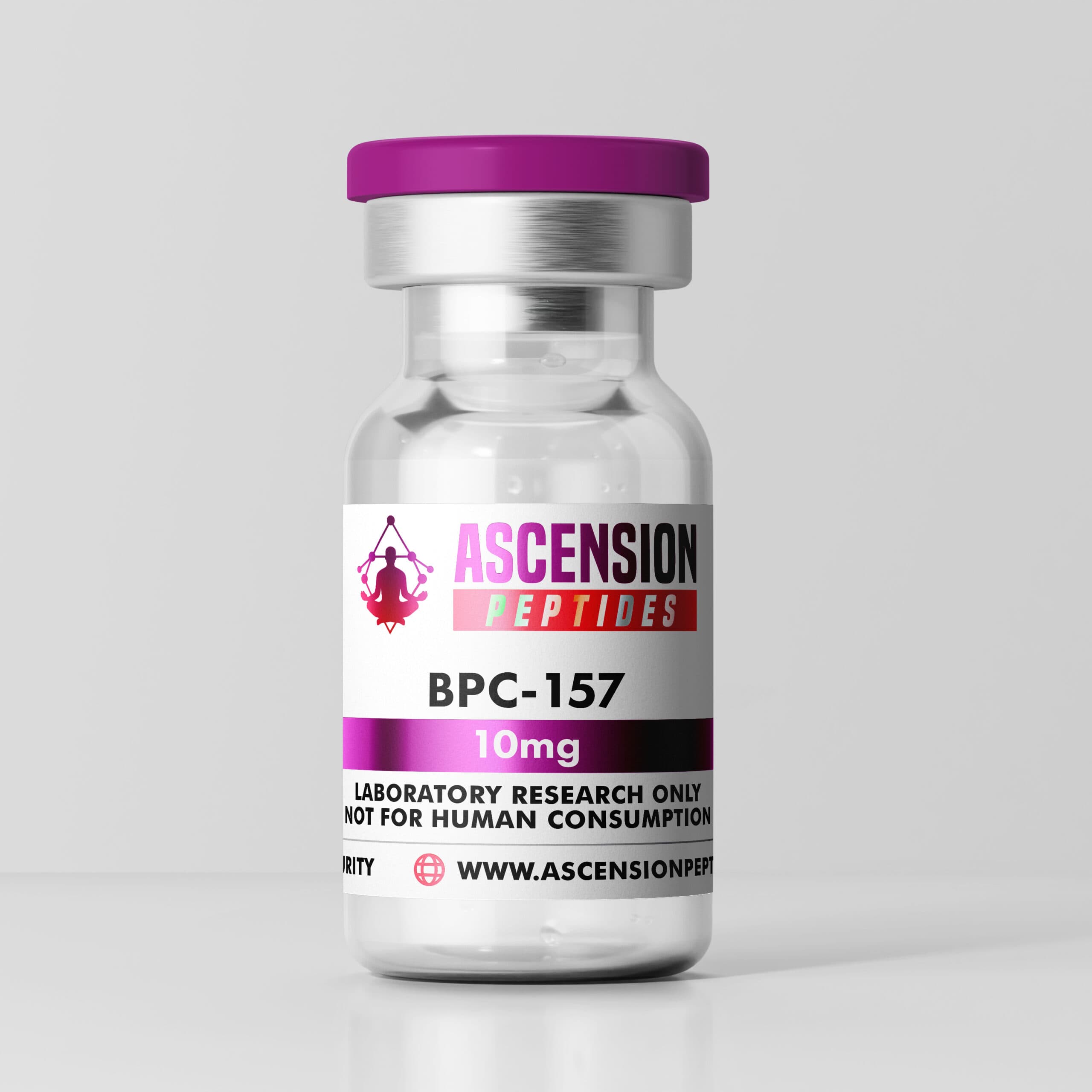
Worked example: BPC-157, 5 mg vial + 2 mL water
- 5 mg × 1,000 ÷ 2 mL = 2,500 mcg per mL
- 250 mcg ÷ 2,500 mcg/mL = 0.1 mL
- 0.1 mL × 100 = 10 units
Add only 1 mL of water to the same vial and 250 mcg becomes 5 units. Nothing about the dose changed, only the dilution. Our peptide calculator does this for any vial and dose, and the full walkthrough is in how to calculate peptide dosages.
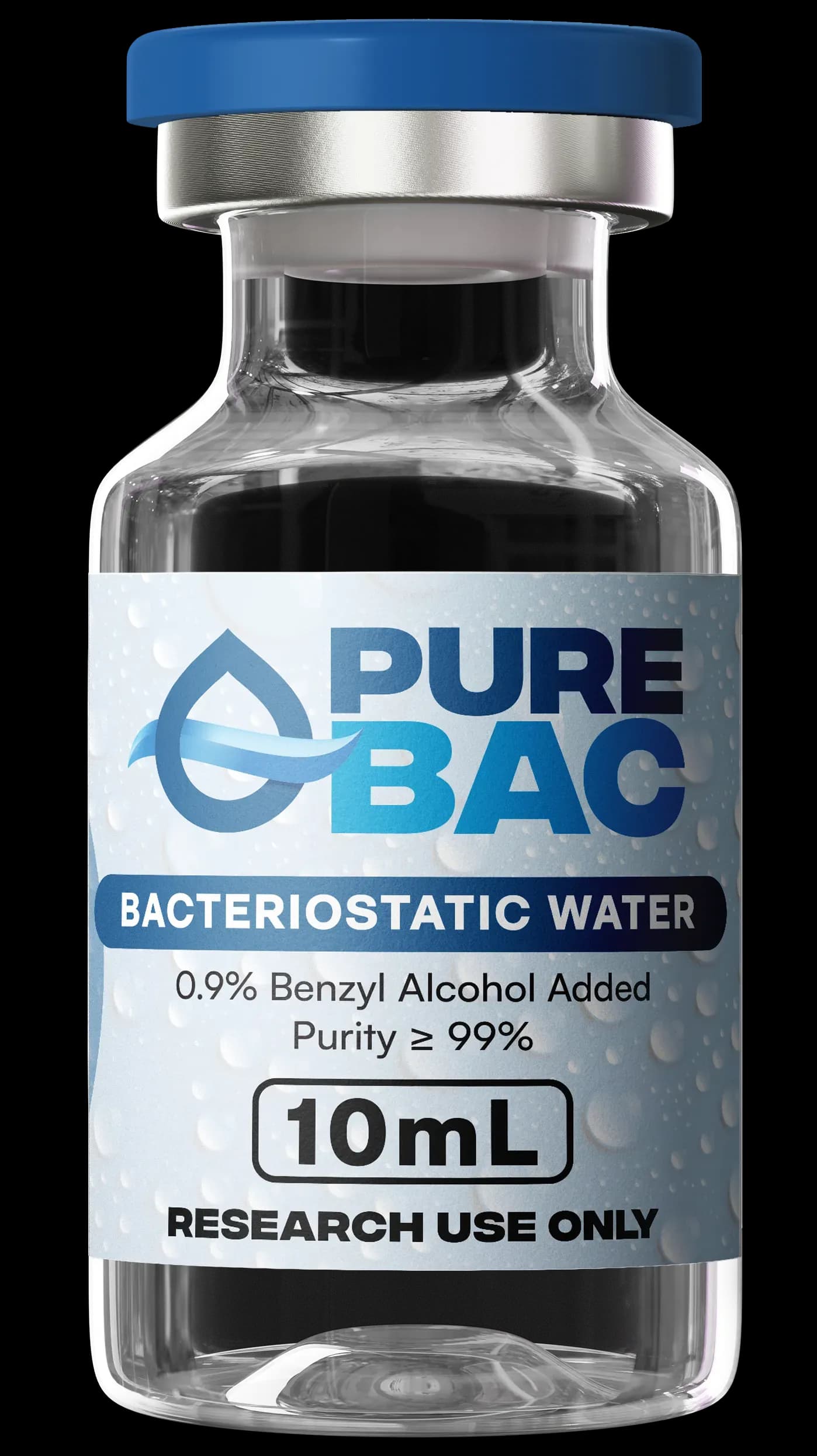
Mixing the vial correctly matters as much as the math. Use bacteriostatic water, let it run down the side of the vial and swirl rather than shake. Our guide to how to reconstitute peptides covers each step, and the bacteriostatic water guide explains why sterile water is not a substitute for multi-dose vials.
Timing, Frequency and Cycles
Frequency follows how long a peptide lasts.
Short-acting peptides like ipamorelin and CJC-1295 without DAC are dosed once or twice a day because they clear within hours. Long-acting GLP-1s are built to last a week, so they go in once weekly on the same day. The 5-days-on, 2-days-off pattern used for sermorelin, Semax and AOD-9604 gives the body a regular break from the signal.
Cycles exist for the same reason. Most peptides here run for 4 to 12 weeks and then pause, while GLP-1s continue for as long as the weight-loss plan does. If you plan to combine two peptides, check whether they can share a syringe before you draw them together.
Five Dosing Rules That Apply to Every Peptide
These matter more than any number.
- Start at the bottom of the range. The low end tells you how you respond before you add more.
- Change one thing at a time. Start a new peptide or change a dose, never both in the same week, so you know what caused what.
- Keep the same time of day. Consistent timing keeps levels steady and makes missed doses obvious.
- Log every dose. Write down the date, the units and anything you noticed. It is the only way to judge a cycle honestly.
- Trust the vial before the chart. Every number here assumes the vial holds what its label says. If you are comparing peptides for sale, check for a batch-matched certificate of analysis showing purity and mass before anything else.
Medical Disclaimer: This chart is for informational purposes only and does not constitute medical advice. Doses shown are the ranges commonly used and published in each peptide's guide, not prescriptions. Several of these compounds are prescription medicines, and others have limited human data. Talk to a licensed healthcare provider before starting any peptide, especially if you take other medication or have a medical condition.