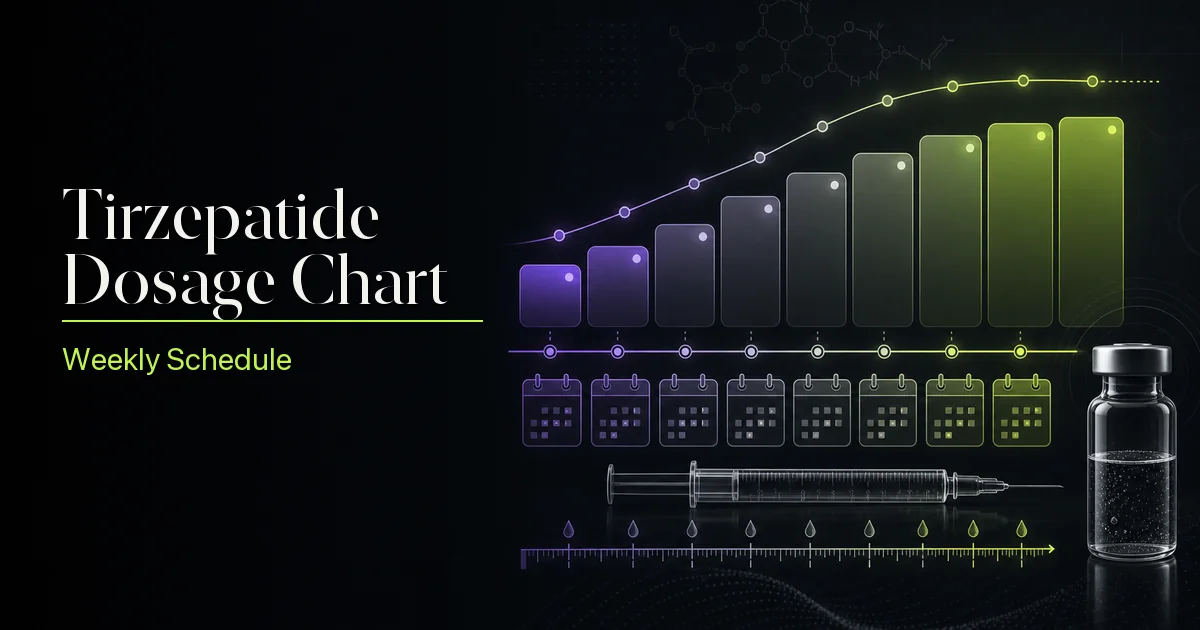

Tirzepatide Dosage Chart: Complete Week-by-Week Schedule with mL & Unit Conversions
If you're looking for a clear tirzepatide dosage chart, you've come to the right place. This guide covers the full titration schedule from the 2.5 mg starting dose up to the 15 mg maximum, mL volume calculations for reconstituted tirzepatide at 5 mg/mL, unit conversions for insulin syringes, and a side-effects breakdown by dose level. Whether you're working with a physician-prescribed pen or researching reconstituted tirzepatide, every number you need is below.
Quick Reference: Tirzepatide starts at 2.5 mg weekly for 4 weeks, then increases by 2.5 mg every 4 weeks up to a maximum of 15 mg/week. Use our Dose Calculator to get your exact volume based on your vial concentration.
What Is Tirzepatide and Why Does Dosing Matter?
Tirzepatide is a dual GIP/GLP-1 receptor agonist originally approved as Mounjaro for type 2 diabetes and later as Zepbound for weight loss. By mimicking two gut hormones simultaneously, it suppresses appetite more powerfully than single-agonist options like semaglutide. Clinical trials showed average weight loss of 15–21% depending on dose, with higher doses producing greater results.
The reason dosing is so critical: tirzepatide's side effects—primarily nausea, vomiting, and GI discomfort—are dose-dependent. Starting too high triggers side effects that cause people to quit. The slow escalation protocol exists specifically to build tolerance. Skipping steps or rushing escalation is the number-one reason people abandon the medication prematurely.
Tirzepatide's half-life is approximately 5 days, which is why weekly dosing maintains stable plasma levels. Each weekly injection builds on the last, with steady-state concentrations reached around week 4. This pharmacokinetic profile also means that missing a dose doesn't cause immediate loss of effect — but consistency over weeks and months is what drives meaningful outcomes.
How Tirzepatide Works: The Dual GLP-1/GIP Mechanism
Tirzepatide is a first-in-class dual GLP-1 and GIP receptor agonist — the only approved medication that activates both incretin pathways simultaneously. This distinguishes it from semaglutide and other agents that target GLP-1 alone.
GLP-1 Pathway (Glucagon-Like Peptide-1)
GLP-1 is a gut hormone released after meals. When tirzepatide activates GLP-1 receptors, it triggers three core effects:
- Appetite suppression via hypothalamic signaling — you feel less hungry overall
- Slowed gastric emptying — food stays in the stomach longer, extending satiety
- Glucose-dependent insulin secretion — the pancreas releases insulin when blood sugar is elevated, without causing hypoglycemia at normal glucose levels
GIP Pathway (Glucose-Dependent Insulinotropic Polypeptide)
GIP is the second incretin hormone, historically underutilized in drug development. Tirzepatide's GIP agonism adds a separate layer of metabolic benefit:
- Enhanced insulin secretion from pancreatic beta cells
- Adipose tissue remodeling — GIP receptors in fat cells may improve fat oxidation and energy expenditure
- Central appetite regulation — GIP receptors in the brain complement GLP-1's appetite-suppressing signals
Why the Combination Matters
Head-to-head data from the SURPASS-2 trial showed tirzepatide produced significantly greater HbA1c reduction and weight loss than semaglutide 1mg over 40 weeks. The synergistic GIP/GLP-1 effect appears to improve insulin sensitivity and fat oxidation through distinct molecular pathways — which is the mechanistic explanation for tirzepatide's superior clinical outcomes.
In plain terms: tirzepatide doesn't just suppress appetite (like GLP-1 alone) — it also changes how the body handles fat and blood sugar at a metabolic level.
Tirzepatide Pharmacokinetics: Half-Life, Steady State & Injection Timing
Understanding tirzepatide's pharmacokinetics helps you understand why the dosing protocol is structured the way it is.
- Half-life: Approximately 120 hours (5 days)
- Time to steady state: 4–5 weeks of consistent weekly dosing
- Peak plasma concentration (Tmax): 8–72 hours post-injection
- Elimination: Primarily proteolytic degradation; no hepatic or renal dose adjustment required
- Administration route: Subcutaneous injection only (abdomen, thigh, or upper arm)
The 5-day half-life means tirzepatide accumulates over the first 4–5 weeks of treatment before plateauing at steady-state concentrations. This is why titration intervals are set at a minimum of 4 weeks — your body hasn't reached steady state at a given dose until that window has passed. Jumping doses faster than every 4 weeks means you're escalating before you've stabilized, which significantly increases GI side effect risk.
The long half-life also provides dosing flexibility. While once-weekly administration is standard, missing a dose by 1–2 days has minimal impact on plasma levels given the slow elimination curve. If you miss your injection day, take it as soon as you remember — then resume your regular weekly schedule from that new day.
Tirzepatide Dosage for Weight Loss vs. Type 2 Diabetes
The titration schedule is the same whether you're taking tirzepatide for weight loss (Zepbound) or type 2 diabetes (Mounjaro). The primary difference lies in the maintenance dose target and how your provider determines when to stop escalating:
- Weight loss (Zepbound): Maintenance doses approved by FDA are 5 mg, 10 mg, or 15 mg. Your provider typically escalates until you achieve target weight loss velocity or reach your maximum tolerated dose.
- Type 2 diabetes (Mounjaro): The maintenance dose is whichever dose keeps your HbA1c within target range. Some patients are well-controlled at 5 mg; others need 10–15 mg for adequate glycemic control.
- Sleep apnea (Zepbound): The FDA-approved maintenance doses for obstructive sleep apnea are 10 mg and 15 mg — lower doses are not indicated for this specific condition.
For research peptide applications, the same escalation schedule serves as the standard reference protocol. Always consult a licensed medical professional before initiating any tirzepatide protocol.
The Official Tirzepatide Dosage Chart (Branded: Zepbound / Mounjaro)
The standard FDA-approved titration schedule for tirzepatide is identical for Zepbound and Mounjaro. The table below reflects the approved escalation protocol:
Important: You are not required to reach 15 mg. Many people find their optimal maintenance dose at 5 mg, 10 mg, or 12.5 mg. Your provider will determine the right stopping point based on your response and side-effect profile.
Research Tirzepatide Dosage Chart: mL Volumes at 20 mg/mL Concentration
Reconstituted (research peptide) tirzepatide is typically supplied as a lyophilized powder that you reconstitute with bacteriostatic water. This chart uses a working concentration of 20 mg/mL (for example, a 20 mg vial with 1 mL or a 60 mg vial with 3 mL), so every dose up to 15 mg fits in one 100-unit syringe. Use the table below to determine how many milliliters and insulin-syringe units to draw for each dose.
Need help with reconstitution math? Our peptide dosage calculator does the math automatically once you enter your vial size and how much BAC water to add.
(at 20 mg/mL)
(100u/mL syringe)
Note on higher doses: Volumes above 1.0 mL do not fit in a 100-unit insulin syringe. At 5 mg/mL that is every dose above 5 mg; at 10 mg/mL, the 12.5 and 15 mg doses. Use the Reconstitution Calculator to find the BAC water volume that keeps your dose under 1 mL.
Tirzepatide Dose Conversion Chart: mg to mL to Units
One of the most-searched questions is "how many units is tirzepatide" — because insulin syringes are marked in units, not milligrams. The conversion depends entirely on your vial concentration. Here is a full reference table:
mL | Units
mL | Units
mL | Units
Always confirm your exact concentration before drawing. One dose error at the wrong concentration can mean a 2–4x overdose or underdose. Use the Dose Calculator to eliminate manual math errors entirely.
SURMOUNT Trial Data: What the Clinical Evidence Actually Shows
Tirzepatide's efficacy claims aren't marketing — they come from some of the most rigorous randomized controlled trials ever conducted for an obesity drug.
SURMOUNT-1: The Primary Weight-Loss Trial
Published in the New England Journal of Medicine in 2022 (Jastreboff et al.), SURMOUNT-1 enrolled 2,539 adults with obesity (BMI ≥30, or ≥27 with at least one weight-related comorbidity) but without type 2 diabetes. Participants received once-weekly tirzepatide or placebo for 72 weeks.
The 20.9% average weight loss at 15mg is a landmark figure — no previously approved medication had crossed the 20% threshold in a large randomized trial. For context, surgical weight-loss interventions typically produce 25–30% loss, and tirzepatide at 15mg is now approaching that range pharmacologically.
SURMOUNT-2: Patients With Type 2 Diabetes
SURMOUNT-2 examined tirzepatide in adults with obesity and type 2 diabetes — a population that historically responds less dramatically to weight-loss interventions. Even in this harder-to-treat group, the 15mg dose produced 15.7% mean body weight reduction over 72 weeks. This is roughly 3–4x the weight loss seen with most existing diabetes medications.
SURPASS-2: Tirzepatide vs Semaglutide (Head-to-Head)
In SURPASS-2, 1,879 adults with type 2 diabetes received tirzepatide (5, 10, or 15mg) or semaglutide 1mg over 40 weeks. All three tirzepatide doses outperformed semaglutide on both HbA1c reduction and body weight loss, with the 15mg tirzepatide arm producing approximately 5.5kg more weight loss than the semaglutide arm. This head-to-head data is the basis for positioning tirzepatide as the superior option when comparing the two drug classes.
For a deeper comparison of next-generation GLP-1 agents, see our retatrutide vs Ozempic comparison.
Mounjaro vs Zepbound: What's Actually Different?
Both Mounjaro and Zepbound contain the exact same active molecule: tirzepatide. The difference is purely regulatory and commercial.
In clinical practice, some physicians prescribe Mounjaro off-label for weight loss when a patient doesn't have a diabetes diagnosis, and some prescribe Zepbound to patients with T2D who need metabolic weight management. The molecule is identical — the label difference exists for regulatory and insurance billing purposes.
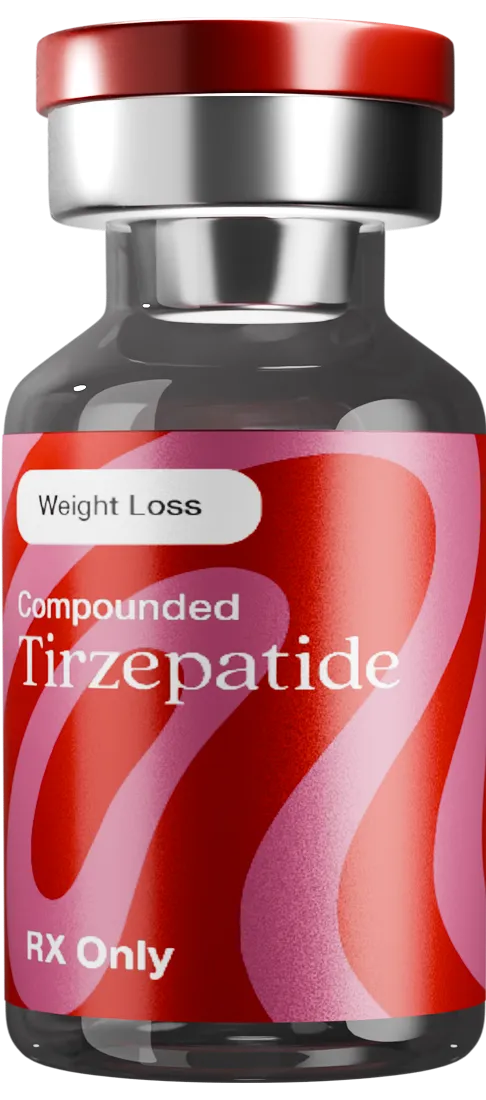
Compounded tirzepatide: As of 2026, the FDA has removed tirzepatide from its drug shortage list. This means FDA-registered compounding pharmacies can no longer legally produce compounded tirzepatide under the shortage exemption. Patients should verify they are receiving brand-name Mounjaro or Zepbound from a licensed pharmacy with a valid prescription.
Side Effects by Dose Level
Understanding which side effects are most common at which doses helps you manage your escalation intelligently. The table below is based on clinical trial data from the SURMOUNT-1 and SURPASS trials:
Serious side effects to watch for at any dose:
- Severe abdominal pain (possible pancreatitis — seek immediate care)
- Signs of hypoglycemia (especially if combined with insulin or sulfonylureas)
- Rapid heart rate or palpitations
- Severe allergic reaction (rash, swelling, difficulty breathing)
- Vision changes or worsening diabetic retinopathy
Managing common side effects: Eat smaller, slower meals. Avoid high-fat, greasy, or spicy foods on injection day. Stay well-hydrated. If nausea persists beyond 7–10 days at a new dose, consult your provider about extending that dose level before escalating further.
Managing Tirzepatide Side Effects: GI Tips and When to Call Your Doctor
The most common tirzepatide side effects are gastrointestinal and are directly related to the GLP-1 mechanism. They are most pronounced during dose escalation and typically improve after 1–3 weeks at any given dose level.
Common Side Effects (affecting ≥10% of patients)
- Nausea — Most common, especially during the 2.5mg → 5mg transition. Usually peaks around days 2–3 post-injection and fades by end of week.
- Diarrhea — More common in the early weeks; often resolves with dietary adjustments.
- Decreased appetite — Technically an intended effect but can be distressing when severe.
- Vomiting — Less common than nausea; if persistent, contact your prescribing physician.
- Constipation — Occurs due to slowed GI motility; increased fiber and hydration usually resolve this.
- Injection site reactions — Redness, bruising, or mild swelling at injection sites; rotate sites to minimize.
Less Common but Notable Side Effects
- Fatigue — Particularly common in the first 24–48 hours after injection
- GERD / heartburn — Related to slowed gastric emptying
- Hair thinning (telogen effluvium) — Related to rapid caloric deficit and weight loss, not a direct drug effect; usually temporary
- Muscle loss — A concern with rapid weight loss; mitigated by adequate protein intake (1.2–1.6g/kg bodyweight) and resistance training
Serious Side Effects (Rare — Requires Medical Attention)
- Pancreatitis — Discontinue and seek care if persistent severe abdominal pain develops
- Gallbladder disease — Rapid weight loss increases gallstone risk; report upper-right abdominal pain
- Hypoglycemia — Risk increases if tirzepatide is combined with insulin or sulfonylureas
- Thyroid C-cell tumors — Black box warning based on rodent studies; tirzepatide is contraindicated in patients with personal or family history of medullary thyroid carcinoma (MTC) or Multiple Endocrine Neoplasia type 2 (MEN2)
Practical GI Management Tips
- Eat smaller, more frequent meals — large meals amplify nausea
- Avoid high-fat, spicy, or heavily processed foods, especially in the 24 hours after injection
- Stay well hydrated — dehydration worsens nausea
- Take the injection at night so the worst nausea hits while you're sleeping
- If nausea is severe and persists beyond 3 weeks at a dose, ask your provider about holding the dose rather than escalating
- Ginger tea, anti-nausea bands, or ondansetron (if prescribed) can help manage acute nausea episodes
Contraindications and Drug Interactions
Tirzepatide is contraindicated in:
- Personal or family history of medullary thyroid carcinoma (MTC)
- Multiple Endocrine Neoplasia syndrome type 2 (MEN2)
- Known hypersensitivity to tirzepatide or any excipient
- Pregnancy (weight-loss therapy not appropriate during pregnancy)
Notable drug interactions:
- Oral medications with narrow therapeutic windows — Tirzepatide slows gastric emptying, which can delay absorption of oral drugs. Patients on oral contraceptives, levothyroxine, or warfarin should discuss timing adjustments with their physician.
- Insulin and insulin secretagogues — Combination increases hypoglycemia risk; insulin doses often need to be reduced when starting tirzepatide.
- Alcohol — Can worsen nausea and hypoglycemia risk; moderate intake is advisable.
What Is the Maximum Tirzepatide Dose?
The FDA-approved maximum tirzepatide dose is 15 mg once weekly. This ceiling applies to both Zepbound (weight loss indication) and Mounjaro (diabetes indication). Going beyond 15 mg has not been studied in humans and offers no additional benefit while significantly increasing risk of adverse events.
A common misconception: people assume higher must be better. Clinical data shows diminishing returns above 10–12.5 mg for most patients. In the SURMOUNT-1 trial, the difference in weight loss between 10 mg and 15 mg was approximately 2 percentage points (19% vs. 21%). For many people, the side effect burden of 15 mg isn't worth that marginal gain.
Your optimal dose is the lowest dose at which you are achieving your goals with acceptable tolerability — not necessarily the maximum.
Missed Dose Protocol
Missing a weekly injection happens. Here is the correct procedure:
- Missed dose within 4 days (96 hours): Inject as soon as you remember. Then resume your normal weekly injection day.
- Missed dose 5 or more days ago: Skip the missed dose entirely. Do not double-dose. Resume your regular injection schedule on your next scheduled day.
- Missed multiple doses in a row (2+ weeks): Contact your healthcare provider. You may need to step back down to a lower dose to re-establish tolerance before resuming your current dose level.
- Switching injection day: If you need to permanently move your injection day, allow at least 3 days between injections when making the switch — never less.
- Never inject two doses in one day to compensate for a missed dose.
For research peptide tirzepatide users following a similar protocol, the same rules apply. The half-life of tirzepatide is approximately 5 days, so missing one weekly injection does not immediately erase progress — but consistency maximizes results.
Optimizing Your Tirzepatide Protocol in 2026
Clinical experience from the 2022–2025 period has produced a set of practical refinements to the standard protocol that many prescribers now apply:
Protein and Resistance Training Are Non-Negotiable
Studies examining body composition changes during tirzepatide therapy consistently show that a significant fraction of weight lost can be lean mass, particularly at higher doses. In SURMOUNT-1, approximately 40% of the weight lost was lean tissue. Prioritizing dietary protein (1.2–1.6g per kg of target bodyweight) and maintaining or beginning a resistance training program significantly reduces this lean mass loss and improves long-term metabolic outcomes.
Injection Day Consistency Matters
Given tirzepatide's 5-day half-life, weekly dosing on the same day produces the most stable plasma levels. Minor deviations (±1 day) are clinically inconsequential, but drifting by 3–4 days repeatedly can create peaks and troughs that affect side effect patterns.
Dose Is Not a Trophy
The 15mg dose produces the best average outcomes in clinical trials, but averages can be misleading. Many patients achieve their weight-loss goals at 5mg or 10mg with significantly better tolerability. If you've stabilized at 10mg, are losing weight steadily, and have minimal side effects, there is no clinical requirement to escalate to 15mg.
Maintenance and Discontinuation
Weight regain after stopping tirzepatide is well-documented — the SURMOUNT-4 trial showed that patients who discontinued after 36 weeks regained approximately 14% of the weight lost within 52 weeks. Long-term or indefinite use should be discussed with your prescriber if you're using tirzepatide for chronic weight management. This is a metabolic disease, not a temporary condition.
How to Use the Tirzepatide Dose Calculator
Calculating mL and units manually is error-prone, especially as you change vial concentrations or move to multi-dose vials. Our Tirzepatide Dose Calculator handles everything automatically:
- Enter your target dose in milligrams (e.g., 5 mg)
- Enter your vial concentration (e.g., 5 mg/mL or 10 mg/mL)
- Select your syringe type (insulin syringe 100u/mL or TB syringe)
- The calculator outputs your exact mL volume and unit marking to draw to
This eliminates the most common source of dosing errors in research settings. Bookmark the Dose Calculator on your phone so it's available at injection time.
If you are starting from a raw lyophilized powder, use the Reconstitution Calculator first to determine how much bacteriostatic water to add for your desired concentration.
Tirzepatide for Research: Key Differences from Branded Pens
Branded Zepbound and Mounjaro come as pre-filled autoinjector pens with a fixed concentration — you simply dial and inject. Research tirzepatide requires you to:
- Reconstitute the lyophilized powder with bacteriostatic water
- Calculate your volume based on the resulting concentration
- Draw into a separate insulin or TB syringe
- Store correctly: refrigerated after reconstitution, typically stable 28–60 days
- Track dose escalation manually using a chart like this one
For a complete step-by-step protocol, see our Tirzepatide Dosing Guide, which covers reconstitution, injection technique, storage, and rotation sites in detail. If you are exploring lower experimental doses, see our guide on microdosing tirzepatide.
Tirzepatide Injection Sites and Technique
Tirzepatide is administered as a subcutaneous injection — meaning into the fatty tissue just beneath the skin, not into muscle. Approved injection sites are:
- Abdomen: At least 2 inches away from the navel. Most accessible site for self-injection.
- Upper thigh: Outer surface of either thigh. Slightly slower absorption than abdomen.
- Upper arm: Outer area only. Typically requires assistance for self-injection.
Rotate injection sites with each weekly dose. Never inject into the same spot two weeks in a row — rotation prevents lipohypertrophy (fatty lumps that reduce absorption). Keep a simple log of which site you used each week. For higher doses (over 1.0 mL), split the volume across two sites to reduce local discomfort and improve absorption consistency.
Tirzepatide vs. Semaglutide: Dosage Comparison
Many researchers transition from semaglutide to tirzepatide. The dosing schedules are similar (both weekly, both start-low-go-slow), but there is no direct mg-to-mg conversion. Tirzepatide generally produces stronger weight loss results at equivalent points in the titration schedule due to its dual-agonist mechanism. Do not attempt to equate doses between the two compounds.
A rough clinical comparison: 2.5 mg tirzepatide is considered roughly equivalent in appetite suppression to 0.25–0.5 mg semaglutide (Ozempic starting dose). At maximum doses (15 mg vs. 2.4 mg semaglutide), tirzepatide typically delivers 3–5 percentage points more weight loss on average. This is not a substitution guide — it is simply context for researchers familiar with semaglutide who are evaluating tirzepatide.
Frequently Asked Questions
How many units is 2.5 mg of tirzepatide?
It depends on your concentration. On a standard 100-unit insulin syringe (1 mL = 100 units):
- At 5 mg/mL: 2.5 mg = 0.50 mL = 50 units
- At 10 mg/mL: 2.5 mg = 0.25 mL = 25 units
- At 20 mg/mL: 2.5 mg = 0.13 mL = 13 units
Always verify your vial's concentration label before drawing. Use the Dose Calculator to eliminate guesswork.
How many units is 5 mg of tirzepatide?
At common concentrations:
- At 5 mg/mL: 5 mg = 1.00 mL = 100 units
- At 10 mg/mL: 5 mg = 0.50 mL = 50 units
- At 20 mg/mL: 5 mg = 0.25 mL = 25 units
What is the tirzepatide dosage in units on an insulin syringe?
"Units" on an insulin syringe correspond to microliters, not milligrams. 100 units = 1.0 mL. Your milligram dose divided by your concentration (mg/mL) gives you the volume in mL. Multiply by 100 to get insulin syringe units. Example: 7.5 mg ÷ 10 mg/mL = 0.75 mL × 100 = 75 units.
Can I stay at a lower dose instead of going up to 15 mg?
Absolutely. The maximum dose is a ceiling, not a target. Many people achieve excellent results and maintain their weight at 5 mg, 7.5 mg, or 10 mg. There is no clinical requirement to escalate to the highest tolerated dose if a lower dose is working. Your provider will help you identify your optimal maintenance dose.
How long does it take to see results on tirzepatide?
Most people notice appetite suppression within the first 1–2 weeks even at the 2.5 mg starter dose. Meaningful weight loss typically becomes visible by week 8–12 (once therapeutic doses are reached). Maximum results are generally seen at 52–72 weeks.
What happens if I miss two or more weeks of tirzepatide?
After two or more missed weeks, your GI tolerance resets. Returning to your previous dose can trigger the same severe nausea you experienced early on. Step back down one dose level and re-escalate over 4 weeks. Never return directly to your previous dose after a multi-week gap without medical guidance.
Is compounded tirzepatide the same as Zepbound or Mounjaro?
Compounded tirzepatide contains the same active peptide but is not FDA-approved and lacks the same quality controls as branded formulations. Purity, concentration accuracy, and sterility vary by source. Always purchase from suppliers that provide third-party certificates of analysis (COA) with >98% purity documentation. To compare verified low-cost sources, see our cheapest tirzepatide guide.
Can I inject tirzepatide daily instead of weekly?
No. Tirzepatide is designed and dosed for once-weekly subcutaneous injection. Daily dosing would dramatically increase systemic exposure and side effects. The molecule's 5-day half-life is what makes weekly dosing effective. Some researchers explore microdosing tirzepatide with smaller, more frequent injections — but this deviates significantly from standard protocol and lacks clinical validation.
Can I take tirzepatide without a diabetes diagnosis?
Yes. Zepbound is specifically FDA-approved for chronic weight management in adults with obesity (BMI ≥30) or overweight (BMI ≥27) with at least one weight-related condition such as hypertension, dyslipidemia, or obstructive sleep apnea. You do not need a diabetes diagnosis to use Zepbound.
What's the difference between tirzepatide and semaglutide (Ozempic/Wegovy)?
Semaglutide is a GLP-1 receptor agonist only. Tirzepatide is a dual GLP-1/GIP agonist. Head-to-head in SURPASS-2, tirzepatide produced greater weight loss and HbA1c reduction than semaglutide 1mg. In indirect comparisons, tirzepatide at 15mg (20.9% weight loss) outperforms semaglutide 2.4mg (Wegovy, approximately 15% weight loss in STEP trials). For a broader comparison of next-generation agents, see our retatrutide vs Ozempic analysis.
Can I skip doses if I feel sick?
If you miss a dose and your next scheduled dose is more than 4 days away, take the missed dose as soon as possible. If the next scheduled dose is within 4 days, skip the missed dose and resume your regular schedule. Do not take two doses to compensate for one missed dose. If you're experiencing significant GI illness, contact your prescriber about temporarily holding your dose.
How do I calculate my dose if I'm using vials instead of pens?
Tirzepatide in vial form (used in some research or compounding contexts) is typically reconstituted to a concentration of 5mg/mL or 10mg/mL. Use our dose calculator to convert dose in milligrams to injection volume in milliliters for your specific concentration. Always verify the concentration on your pharmacy label before drawing your dose.
Where to Source Research Tirzepatide
For those sourcing tirzepatide as a research peptide, quality matters enormously. Look for suppliers that provide third-party HPLC testing, a verifiable Certificate of Analysis, US-based fulfillment, and clear concentration labeling. Ascension Peptides is one supplier that meets these standards for researchers seeking tirzepatide peptides.
Remember: concentration labeling errors are the most common source of dosing mistakes. Verify every vial's documentation before use.
This content is for informational and educational purposes only. Peptides discussed on this page are research compounds not approved by the FDA for human use. Always consult a licensed medical professional before using any peptide or supplement.