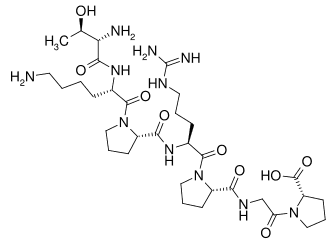
Selank is the rare anxiolytic that quiets the mind without dulling it. A Russian heptapeptide approved in 2009 for generalized anxiety disorder, it produces benzodiazepine-equivalent calm in 14-day head-to-head trials against medazepam, but without sedation, cognitive blunting, dependence, or withdrawal. Users feel it within 20 to 40 minutes of the first intranasal dose. Three to seven days of consistent use produces the full calm-but-alert profile that explains why nootropic communities have used it for the last decade.
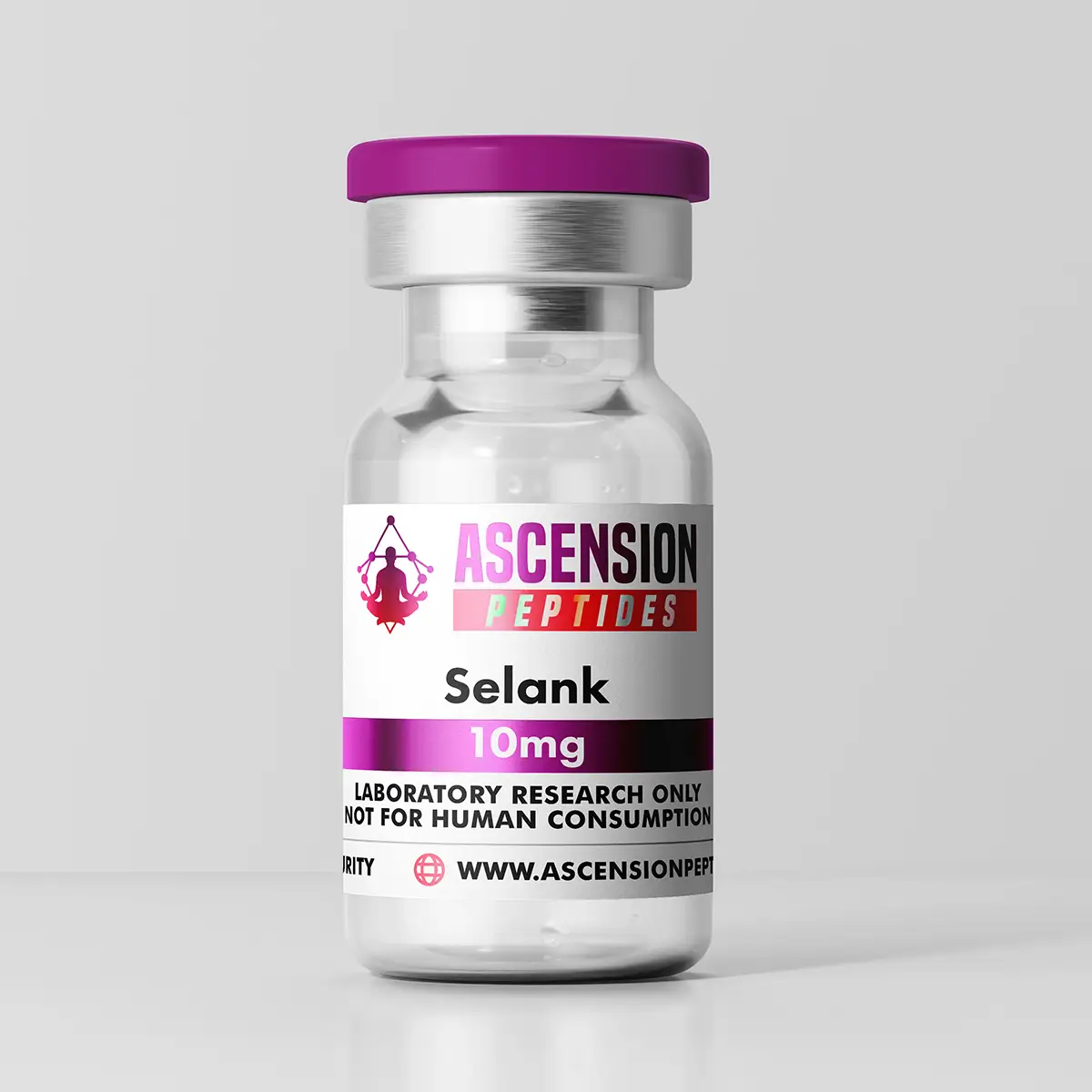
If you want to try Selank, Ascension Peptides sells the 10mg vial at $55 with third-party purity testing and US shipping. The benefits below cover what the Russian research actually showed, how it works at the receptor level, and the realistic week-by-week timeline.
🔑 Key Takeaways
- Equivalent to benzodiazepines in 14 days. Zozulya 2008 (62 patients) showed Selank matched medazepam on Hamilton Anxiety Rating Scale and Zung scores, while also producing mild psychostimulant and antiasthenic effects benzos do not.
- Works through 4 pathways simultaneously. Indirect GABA modulation, enkephalin preservation, BDNF upregulation, and monoamine balance. None of them are receptor agonism, which is why there is no tolerance buildup.
- Non-sedating by design. Selank does not bind GABA-A directly like benzos do. It alters gene expression of GABAergic proteins, so calming tone is amplified without forcing the receptor open.
- Typical protocol is 300 to 900 mcg intranasally, 2 to 3 times per day, for 14 days. Most users settle on 600 mcg per day in 2 doses. Cycle 2 to 4 weeks on, 1 to 2 weeks off.
- Common stack: Selank with Semax in the morning. Selank calms, Semax sharpens. Together they hit the "calm but focused" target most nootropic users want.
What Selank Actually Does (And How Fast)
Most peptides need a week or two before you notice anything. Selank is the opposite. The first dose, taken intranasally, produces a noticeable shift in about 20 to 40 minutes. Users describe it the same way every time, the internal monologue gets quieter, intrusive thoughts lose their grip, and stress that previously triggered a freeze response just becomes information you process and move past.
The full benefit profile takes three to seven days of consistent dosing to settle in. By the end of week one most users report:
- Reduced anticipatory anxiety (the kind you feel before a meeting or a difficult conversation)
- Quieter rumination at night
- Less reactivity to mild stressors
- Ability to focus through situations that previously triggered shutdown
- Normal energy levels, no benzo fog, no SSRI emotional blunting
By weeks two to four, the changes deepen. Users describe it as "the volume on the worry channel got turned down" rather than "I'm a different person." Selank does not eliminate anxiety. It changes your relationship to it.
The 8 Main Benefits of Selank
1. Anxiety reduction without sedation
This is the headline benefit and the most well-evidenced. In the landmark Zozulya 2008 trial published in Zhurnal Nevrologii i Psikhiatrii imeni S.S. Korsakova, 62 patients with generalized anxiety disorder and neurasthenia received either Selank 1,350 mcg per day intranasally or medazepam (a benzodiazepine) for 14 days. Both groups showed equivalent reductions on the Hamilton Anxiety Rating Scale and Zung self-rating scale. The Selank group additionally showed antiasthenic improvements (less fatigue) and mild psychostimulant effects that the benzodiazepine group did not.
That trial is the load-bearing citation. It is small, open-label, and Russian-published, but the result has been replicated in subsequent Russian work (Medvedev 2015 in 70 patients showed Selank potentiated benzodiazepine taper).
2. Improved focus under stress
Selank does not work like a stimulant. It works by removing the cognitive load anxiety imposes on attention. The Volkova 2017 work in Frontiers in Pharmacology showed Selank alters GABA receptor subunit gene expression in human IMR-32 cells, which translates to more efficient inhibitory tone without the broad neural suppression benzos cause. Users report being able to sit with difficult work for longer stretches without the impulse to escape.
3. Mood lift and mild antidepressant effect
Sarkisova 2008 demonstrated antidepressant-like effects in animal models. The mechanism appears to be increased serotonin turnover and modulated dopamine activity, both at non-stimulating levels. The lift is gentle, more like background mood stabilization than the kick of an SSRI or stimulant.
4. Memory and learning support via BDNF
Inozemtseva 2008 showed Selank rapidly upregulates brain-derived neurotrophic factor in rat hippocampus. BDNF is the master regulator of synaptic plasticity, memory consolidation, and stress resilience. A 2019 study (PMID 31625062) confirmed Selank protected against ethanol-induced memory deficits by regulating BDNF in the hippocampus and prefrontal cortex. This is the strongest cognitive-enhancement evidence in the Selank literature.
5. Better sleep quality (indirect)
Selank does not produce sedation, so it does not make you sleepy. But by reducing rumination and the cortisol spike that comes with anxious thinking, it indirectly produces better sleep onset and depth. Users typically report this within the first week.
6. Stress resilience and HPA-axis modulation
The enkephalin preservation mechanism is the relevant pathway here. Kost 2001 showed Selank inhibits enzymes that break down endogenous enkephalins (the body's own opioid-like calming peptides). Rather than adding a calming molecule, Selank lets the body's own anti-anxiety system function longer. This is also why it does not produce tolerance, you're not depleting receptors, you're protecting your own signaling.
7. Immune modulation
Uchakina 2008 demonstrated Selank altered IL-6 and Th1/Th2 cytokine balance in patients with anxiety-asthenic disorders. This is interesting but less actionable than the anxiolytic data, the clinical relevance is unclear and the sample sizes are small.
8. No dependence, no tolerance, no withdrawal
Across roughly 192 trial subjects in Russian studies, zero cases of dependence or withdrawal have been documented. Selank does not appear to cause receptor downregulation. Stopping after 14 days produces no rebound anxiety, no insomnia, no autonomic instability. This is the property that makes Selank fundamentally different from benzos, kava, phenibut, or alcohol as anxiety tools.
How Selank Works (Plain English)
Selank works through four overlapping pathways. None of them mimic benzodiazepines directly.
The reason Selank is non-sedating: benzodiazepines are GABA-A positive allosteric modulators. They directly potentiate inhibitory chloride currents, which knocks down consciousness. Selank works upstream at the gene-expression and peptide-metabolism level, so cognition, working memory, and alertness are preserved. It is not a GABA-A agonist. It is not an SSRI. It is not a stimulant. It is something different.
Selank vs Benzodiazepines: The Comparison That Made It Famous
Selank vs Semax: The Calm vs Focus Pair
Selank and Semax were both developed at the Institute of Molecular Genetics of the Russian Academy of Sciences, starting in the 1980s. They are sister peptides with different jobs.
For the full side-by-side, see Semax vs Selank: which cognitive peptide is right for you.
Realistic Timeline: What to Expect Week 1 to 4
Day 1, hours 0 to 2: 20 to 40 minutes after the first intranasal dose, most users report a subtle "edge taken off" feeling. Internal monologue softens. Some users describe it as similar to L-theanine but stronger and more durable.
Days 1 to 3: Effects compound across doses. Stress reactivity drops. Social anxiety eases. Sleep quality starts improving as cortisol spikes flatten out.
Days 4 to 7: The full benefit profile is in place. Anticipatory anxiety meaningfully reduced, focus during stressful work easier to maintain, mood feels more stable.
Weeks 2 to 4: If you continue dosing, the BDNF effects deepen. Stress resilience builds. Memory and learning support become more noticeable. Most Russian clinical protocols stop here, the 14-day course is the studied window.
Beyond 4 weeks: Less data. Most nootropic users cycle 2 to 4 weeks on, 1 to 2 weeks off. Continuous multi-month use is uncharted territory clinically. Some users report mild emotional blunting if used continuously beyond 4 to 6 weeks, which resolves on washout.
Dose, Administration, and Cycling
Russian clinical protocol (best-evidenced): 300 mcg per nostril, 2 to 3 times daily (total 600 to 2,700 mcg per day) for 14 days. The approved Russian formulation is Selank 0.15 percent, delivering roughly 150 mcg per actuation.
Common nootropic-community protocol: 250 to 500 mcg intranasally, 2 to 3 times daily, with morning and early afternoon dosing. Avoid late evening doses if you find it slightly activating.
Subcutaneous off-label: 250 to 500 mcg, 1 to 2 times daily. Some users prefer SubQ for predictable absorption, though intranasal is the studied route.
Reconstitution from lyophilized: A 10mg vial plus 2 ml bacteriostatic water gives 5 mg per ml. 0.06 ml equals 300 mcg.
Cycling: 2 to 4 weeks on, 1 to 2 weeks off is the community standard. The Russian registration is for 10 to 14 day courses. Continuous daily use beyond a few months has no safety data, so cycling is the conservative move.
For a complete dosing chart and reconstitution math, see Selank dosage guide.
Safety and Side Effects
Across roughly 192 clinical subjects in published Russian trials, no serious adverse events were reported. Mild transient nasal irritation was the most common complaint with intranasal use.
User-reported effects from the nootropic community:
- Mild headache (most common)
- Brief sleepiness in 5 to 10 percent of first-time users
- Nasal irritation or dryness from the spray
- Paradoxical mild irritability at high doses (above 2 mg/day)
- Emotional blunting if used continuously beyond 4 to 6 weeks
Dependence and withdrawal: No documented cases. Selank does not appear to cause receptor downregulation or rebound anxiety on discontinuation.
Drug interactions: No formal interaction studies exist. Theoretical caution with SSRIs (additive serotonergic effect, though no case reports), benzodiazepines (additive calming, no contraindication), and MAOIs. Selank has been combined successfully with benzodiazepines in Medvedev 2015 to facilitate taper.
For the complete safety breakdown, see Selank side effects guide.