Ipamorelin Dosage Guide: How Much to Take & Best Protocol (2026)
Ipamorelin is a fifth-generation growth hormone releasing peptide (GHRP) and selective ghrelin receptor agonist. Unlike earlier GHRPs (GHRP-2, GHRP-6), ipamorelin was engineered for selectivity — it stimulates pulsatile GH release without meaningfully elevating cortisol, prolactin, or ACTH. This selectivity makes it one of the most studied GH secretagogues in research contexts, valued for a cleaner hormonal profile and dose-dependent GH response. Understanding the correct ipamorelin dosage is critical because this peptide works through discrete GH pulses — too little produces a blunted response; too much adds cost without proportional benefit due to the ceiling effect at the pituitary level.
- Typical research dose: 200–300 mcg per injection
- Frequency: 2–3 injections per day
- Route: Subcutaneous (SubQ)
- Cycle length: 8–12 weeks
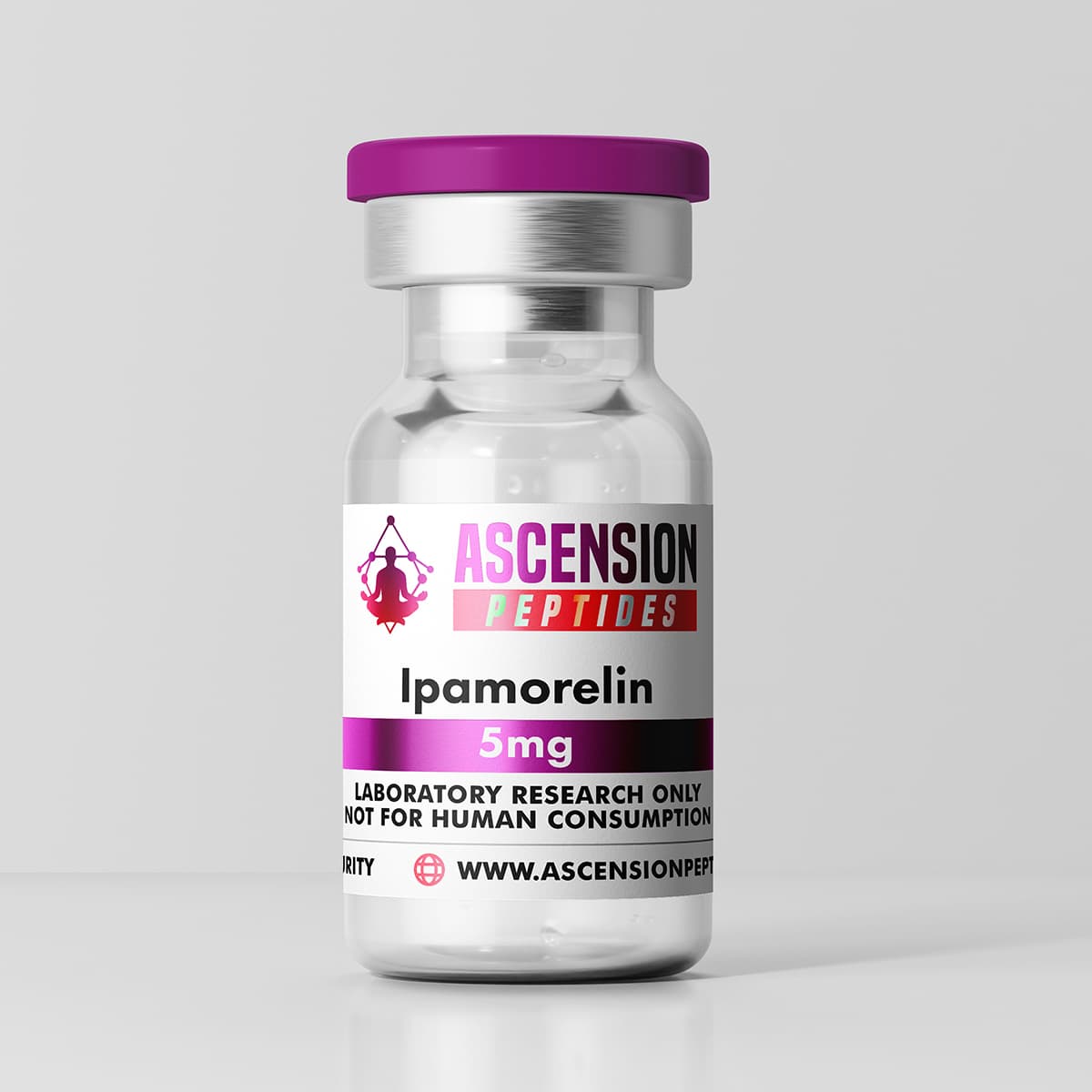
- Reconstitution: 2 mL BAC water per 5 mg vial = 2,500 mcg/mL
Ipamorelin is almost always run with a GHRH partner, which is why Ascension sells it pre-paired with CJC-1295 as the FIT Stack — one vial, both compounds.
Standard Ipamorelin Dosage Protocols
Ipamorelin's dose-response curve in GH release studies shows significant activity beginning around 100 mcg, with a plateau approaching at doses above 300–400 mcg per injection. The 200–300 mcg range represents the practical sweet spot used in most contemporary research frameworks:
Doses above 300 mcg per injection do not produce proportionally greater GH release in most models and are not standard in the literature. For research comparing ipamorelin to other GH secretagogues, see the Growth Hormone Peptides Ranked article.
Injection Frequency
Ipamorelin's half-life is approximately 2 hours, and each injection produces a discrete GH pulse lasting 2–3 hours. This pharmacokinetics makes multiple daily injections the standard approach for maximizing total daily GH output:
- Once daily (100–300 mcg): Used in simplified research designs. A single bedtime injection takes advantage of the natural nocturnal GH surge, potentially amplifying the pulse. Suitable for studies where total GH elevation is less important than entraining the sleep-associated release pattern.
- Twice daily (200–300 mcg × 2): Morning and bedtime injections. A common moderate-intensity protocol that produces two defined GH pulses per day. Morning dose is typically administered fasted; bedtime dose 2–3 hours after the last meal.
- Three times daily (200–300 mcg × 3): The most intensive standard protocol. Morning (fasted), early afternoon (2–3 hours after lunch), and bedtime injections. Maximizes the number of GH pulses and is used in GH optimization and anti-aging research models.
Key timing principle: Ipamorelin should be injected in a fasted state or at least 2–3 hours after a meal. Elevated blood glucose and insulin blunt GH release from the pituitary, directly diminishing the response to ipamorelin. Carbohydrate-containing meals are particularly suppressive.
Cycle Length
Unlike some GHRP-class peptides, ipamorelin does not cause significant receptor downregulation at standard doses over typical research cycle lengths. However, structured cycling is still employed to assess recovery of baseline GH axis function:
Standard research cycle: 8–12 weeks
The most common cycle length is 8–12 weeks followed by a 4-week washout. This provides a sufficient window to observe changes in GH pulse amplitude, IGF-1 levels, body composition markers, and recovery biomarkers while allowing for clean baseline re-establishment.
Extended cycle: 16–20 weeks
Longer cycles are used in anti-aging and longevity research models. Ipamorelin's low desensitization profile and absence of significant cortisol/prolactin elevation makes extended use more compatible than earlier GHRPs. Post-cycle IGF-1 monitoring is recommended in these protocols.
Rotation approach
Some researchers rotate between ipamorelin and CJC-1295 (or sermorelin) rather than cycling off completely, taking advantage of the complementary GHRP+GHRH mechanisms. See the Ipamorelin + CJC-1295 Dosage Guide for that combined protocol.
Reconstitution Guide
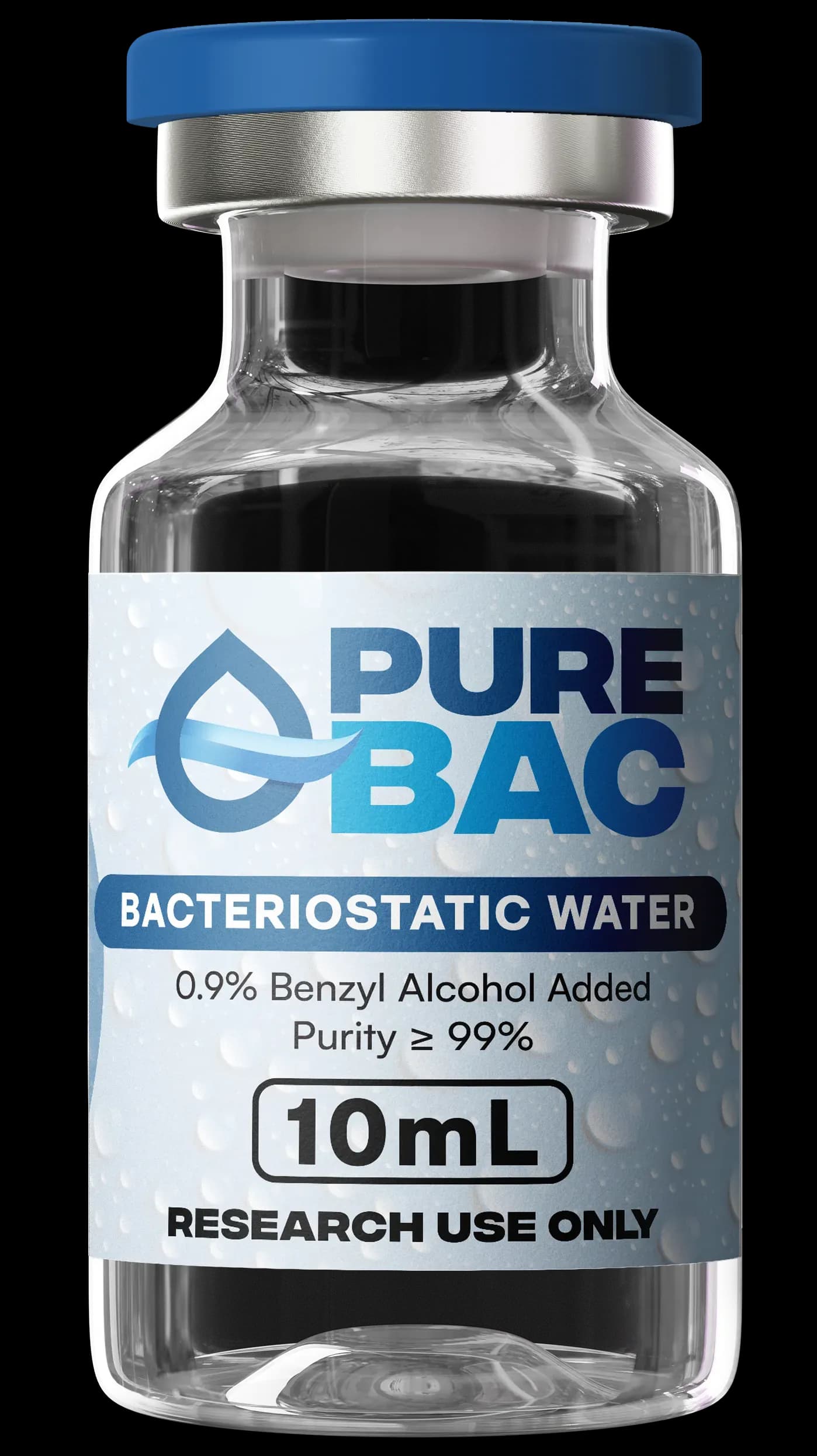
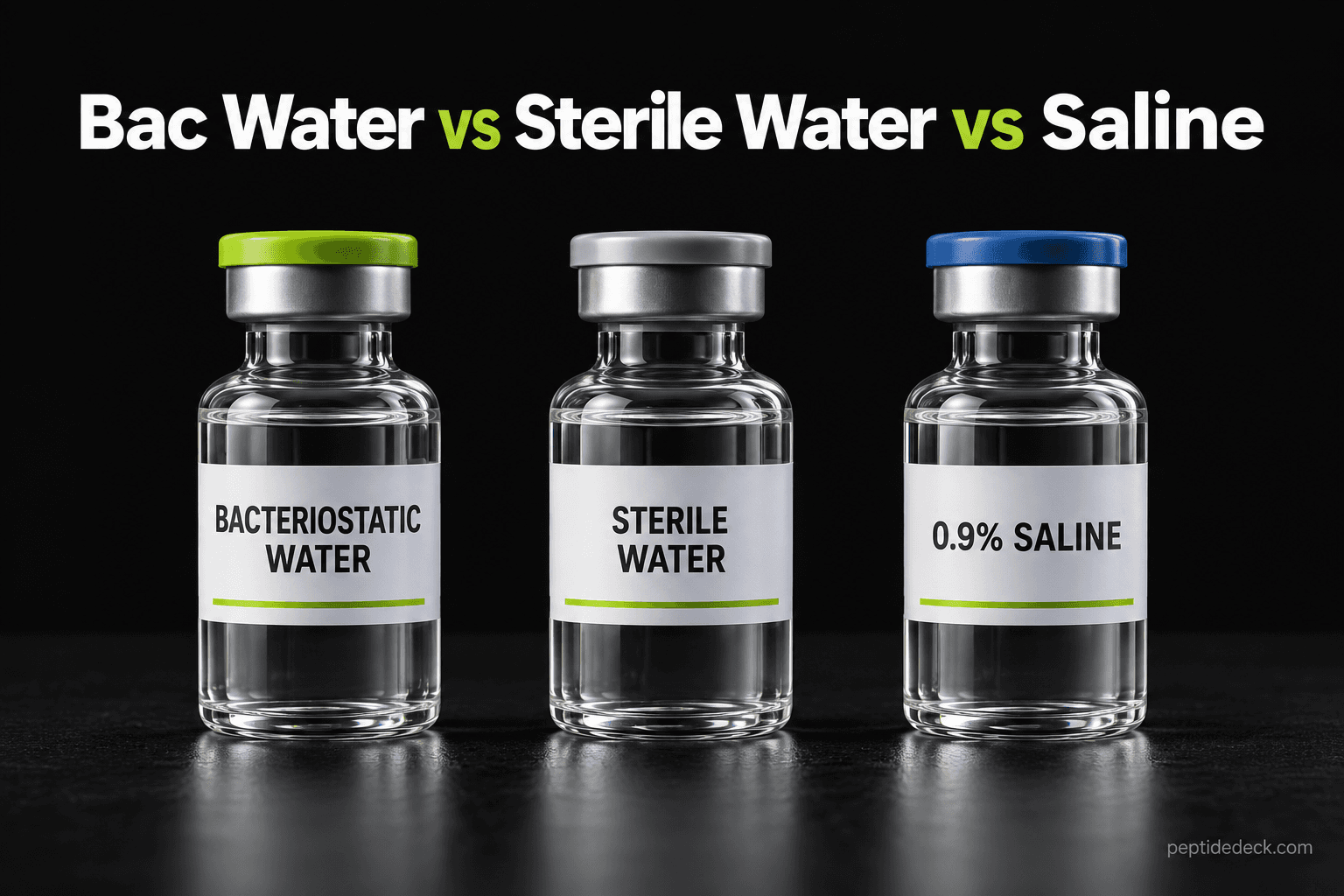
Ipamorelin is supplied as a lyophilized powder, typically in 5 mg vials. Reconstitute with bacteriostatic water (BAC water) for research use.
Step-by-step reconstitution
- Remove the vial from refrigeration and allow 5–10 minutes to reach room temperature.
- Wipe the rubber stopper with an isopropyl alcohol swab and allow it to air dry.
- Draw 2 mL of BAC water into a 3 mL syringe.
- Insert the needle at an angle and run the water gently down the inner wall of the vial. Do not jet the water directly into the powder.
- Gently swirl (do not shake) until all powder dissolves. The solution will be clear and colorless.
- Label the vial with the date and store at 2–8°C.
Resulting concentrations (5 mg vial)
- 1 mL BAC water → 5,000 mcg/mL (200 mcg dose = 0.04 mL — very small; use 1 mL syringe)
- 2 mL BAC water → 2,500 mcg/mL (200 mcg dose = 0.08 mL)
- 5 mL BAC water → 1,000 mcg/mL (200 mcg dose = 0.20 mL — easier to measure accurately)
The 5 mL dilution is often preferred for ipamorelin because the small per-injection doses (200–300 mcg) can be difficult to measure accurately at higher concentrations. A 0.2 mL injection is far easier to draw precisely than 0.04 mL. Reconstituted ipamorelin is stable in BAC water at 2–8°C for 28–30 days.
Injection Guide: SubQ Administration
Ipamorelin is almost universally administered via subcutaneous injection in research protocols. IM delivery is technically possible but offers no advantage and the small volumes make SubQ optimal.
SubQ technique
Use a 29–31 gauge, 0.5-inch insulin syringe. Common injection sites include:
- Abdomen: 1–2 inches from the navel; most common site due to easy access and consistent fat layer
- Outer thigh: Lateral quadricep area; good option for rotation
- Flank/love handle area: Well-tolerated, low nerve density
Pinch the skin between two fingers, insert the needle at a 45–90° angle, and inject slowly. Rotate injection sites to prevent lipodystrophy over extended cycles.
Timing relative to meals and training
Optimal injection timing for ipamorelin is:
- Morning dose: Upon waking, fasted. At least 30 minutes before eating. This captures the residual morning GH pulse window.
- Afternoon dose (if using 3× protocol): Midday, 2–3 hours after lunch and 1–2 hours before any training session.
- Bedtime dose: 2–3 hours after last meal. The most impactful single injection due to the nocturnal GH axis activity.
- Post-training dose: If used around exercise, injecting 30–60 minutes before training to allow the GH pulse to peak during exercise is one studied approach. Post-training dosing is also used to assess recovery augmentation.
Stacking Ipamorelin
Ipamorelin is most frequently stacked with a growth hormone releasing hormone (GHRH) analog to produce a synergistic GH pulse through complementary receptor pathways:
- Ipamorelin + CJC-1295 (no DAC): The most popular GH stack in research. CJC-1295 without DAC (a GHRH analog with a 30-minute half-life) is combined in the same injection for a synergistic GH pulse significantly larger than either peptide alone. Standard dosing: ipamorelin 200–300 mcg + CJC-1295 100–200 mcg per injection. Full protocol in the Ipamorelin + CJC-1295 Dosage Guide.
- Ipamorelin + Sermorelin: A GHRH analog with a different half-life profile. Sermorelin is often dosed once nightly; ipamorelin at the same time amplifies the GH pulse. See the Sermorelin Complete Guide.
- Ipamorelin + BPC-157: Used in recovery research models. BPC-157 handles local tissue repair while ipamorelin contributes the anabolic GH axis signal. These operate independently and can be dosed on their own schedules.
Side Effects & Safety Considerations
Ipamorelin's selectivity profile makes it among the better-tolerated GHRPs in research. Key findings from the preclinical literature:
- Minimal cortisol elevation: Unlike GHRP-2 and GHRP-6, ipamorelin does not significantly raise cortisol or ACTH at standard doses. This is a key distinction that makes longer-cycle research more viable.
- Minimal prolactin elevation: GHRP-6 notably raises prolactin; ipamorelin does not at standard doses. This makes it preferable in protocols where hormonal side effects are a concern.
- Water retention: Mild water retention is possible due to GH-mediated effects on aldosterone and fluid balance. Typically self-limiting within the first 1–2 weeks of a cycle.
- Hunger stimulation: Ipamorelin has far less ghrelin-mimetic hunger stimulation than GHRP-6, but some appetite increase is possible, particularly at higher doses or when combined with GHRH analogs.
- Injection site reactions: Mild redness or itching at the injection site. Consistent site rotation minimizes this.
- IGF-1 elevation: Repeated GH stimulation raises systemic IGF-1. Long-cycle protocols should include IGF-1 monitoring as elevated IGF-1 has complex downstream effects on growth and cellular proliferation.
- No impact on HPG axis: Ipamorelin does not affect testosterone, LH, FSH, or the reproductive axis. No PCT is required in research protocols.
Frequently Asked Questions
This article is intended for informational and research purposes only. Ipamorelin is a research peptide and is not approved by the FDA or any equivalent regulatory body for human use, diagnosis, treatment, or prevention of any medical condition. All information presented here is based on preclinical and available clinical research and should not be interpreted as medical advice. Consult a qualified healthcare professional before considering any peptide use.