⚡ Quick Summary
The standard aod 9604 dosage is 300mcg/day injected subcutaneously, fasted, in the morning. Clinical trials used up to 1,000mcg/day — but research suggests 300–500mcg hits the sweet spot for fat mobilization without diminishing returns. This aod-9604 dosage guide covers every protocol, reconstitution math, injection technique, cycle length, and stacking option you need.
AOD-9604 — covered fully in our AOD-9604 complete guide — is one of those peptides that sounds almost too simple. It's a fragment — literally just a piece of human growth hormone — that was isolated specifically because it carries the fat-burning signal without any of the growth-promoting baggage. No insulin resistance. No IGF-1 spike. Just targeted lipolysis.
The dosing research is more solid than most peptides. Metabolic Pharmaceuticals ran actual Phase 2 clinical trials on humans with this compound, which means we're not working purely from available data and forum hearsay. That said, the clinical trial doses (1mg/day) are higher than what most research protocols use today — and there's good reason for that gap, which we'll get into.
Whether you're trying to understand the reconstitution math, figure out when to inject, or build a stacking protocol like the AOD + Tesamorelin + MOTS-C stack, this guide covers it all in practical terms.
🔑 Key Takeaways
- Standard aod 9604 dosage: 300mcg/day subcutaneous, fasted AM
- Phase 2 clinical data showed 1mg/day as optimal — most research protocols run 300–500mcg
- 5mg vial + 2.5mL BAC water = 2,000mcg/mL; 300mcg = 15 units on an insulin syringe (see our dosage calculator guide)
- Standard aod 9604 cycle length: 12 weeks for full results, minimum 6–8 weeks
- Inject fasted — insulin blunts the lipolytic effect, so post-meal injections significantly reduce efficacy
- Best stacks: MOTS-C, CJC-1295 + Ipamorelin, Tesamorelin, GLP-1 agonists
What Is AOD-9604 and How Does Dosage Work?
AOD-9604 is a synthetic peptide derived from amino acid positions 176–191 of human growth hormone — specifically the C-terminal region. The "AOD" stands for Anti-Obesity Drug — a standout among peptides for fat burning and weight loss — which tells you exactly what it was designed to do. Metabolic Pharmaceuticals developed it in the late 1990s with one goal: capture HGH's fat-burning properties and strip out everything else.
Growth hormone itself mobilizes fat through beta-3 adrenergic receptor activation in adipocytes — it triggers lipolysis (fat cell breakdown) and simultaneously suppresses lipogenesis (new fat storage). The problem with using actual HGH for fat loss — as we discuss in our peptides vs HGH comparison — is that you get everything that comes with it: IGF-1 elevation, insulin resistance, water retention, joint pain, potential carpal tunnel. AOD-9604 appears to activate the same lipolytic pathway through a mechanism distinct from the classical GH receptor, which is why it doesn't trigger those anabolic/hormonal downstream effects.
Here's why aod 9604 dosage actually matters: the effect is dose-dependent, but not linearly. Metabolic Pharmaceuticals' Phase 2 clinical trial tested multiple doses (1mcg/kg up to 400mcg/kg, as well as fixed doses of 1mg/day) in obese patients. The 1mg/day dose produced the most significant fat loss outcomes. Crucially, going higher than 1mg/day didn't improve results — suggesting there's a saturation point where the receptors are fully occupied and more compound doesn't help. This shapes the entire dosing approach: you want enough to maximize receptor engagement, not more.
For research protocols today, 300–500mcg/day is the typical aod 9604 protocol — a practical dose that's high enough to be effective without burning through vials too fast. The 1mg/day clinical dose is achievable and some researchers use it, but the cost-effectiveness argument favors the 300–500mcg range from a quality peptide source.
Standard AOD-9604 Dosage Ranges
Three tiers cover most aod 9604 protocol designs: a conservative starting point, the standard workhorse dose, and the upper research range that mirrors clinical trial levels.
200mcg/day — The entry-level aod 9604 dosage. Some researchers start here for the first 1–2 weeks to assess tolerance before moving up. At this dose you'll see some activity, but it's not the sweet spot. Think of it as acclimation, not optimization.
300mcg/day — The most common aod 9604 protocol. Once daily, fasted, usually morning. This is the default starting point for most researchers and the dose with the best track record in community protocols. It balances efficacy with vial economy on a 5mg vial.
500mcg/day — The upper standard range. Often split into two injections: 250mcg fasted AM and 250mcg pre-bed. Some researchers find this split better at maintaining steady blood levels throughout the day. Worth considering if the 300mcg once-daily protocol produces underwhelming results after 4+ weeks.
1,000mcg/day — Clinical trial dose. Achievable but aggressive from a cost standpoint. A 5mg vial only lasts 5 days at this dose. Some researchers run this level for 4–6 week blasts, then drop back to 300mcg maintenance. Not a long-term daily commitment for most.
Body Weight-Based Dosing
Clinical trials used weight-based dosing in some arms of the research (mcg per kg of body weight). While most practical aod 9604 protocols run fixed doses, body weight is a reasonable guide — especially for people at the extremes of the size spectrum.
The general principle: larger body mass means more adipose tissue to mobilize, more volume of distribution for the compound, and potentially higher receptor density. Someone at 250 lbs will likely see less effect at 200mcg than someone at 140 lbs seeing the same dose. It's not a perfect linear relationship, but it's a useful heuristic.
💡 Worked Example
180 lb (82 kg) male, moderate body fat (~22%): Standard aod 9604 dosage of 300mcg/day fasted AM, 12-week cycle. This is textbook — no need to calculate further. The weight-based chart validates what the fixed-dose protocol already says.
250 lb (113 kg) male, high body fat (~30%): Consider 400mcg/day split into 200mcg AM and 200mcg pre-bed. At this body composition, higher receptor density in adipose tissue means more opportunity for AOD-9604 to work — slightly higher dosing is warranted.
Reconstitution Guide (Step-by-Step)
This is where people mess up most often — and the errors usually compound. Wrong water (tap instead of bacteriostatic), wrong math, wrong storage. Get the reconstitution right and everything downstream is straightforward.
What You Need
- AOD-9604 lyophilized powder vial (2mg or 5mg)
- Bacteriostatic water (BAC water) — NOT saline, NOT tap water, NOT distilled water
- Insulin syringes (29–31 gauge, 0.5mL or 1mL)
- Alcohol swabs
- Refrigerator access
Reconstitution Math: 5mg Vial
Add 2.5mL of BAC water to a 5mg (5,000mcg) vial:
5,000mcg ÷ 2.5mL = 2,000mcg per mL
On a standard U-100 insulin syringe (100 units = 1mL):
- 300mcg dose = 0.15mL = 15 units
- 250mcg dose = 0.125mL = 12.5 units
- 500mcg dose = 0.25mL = 25 units
- 1,000mcg dose = 0.5mL = 50 units
Reconstitution Math: 2mg Vial
Add 2mL of BAC water to a 2mg (2,000mcg) vial:
2,000mcg ÷ 2mL = 1,000mcg per mL
On a U-100 insulin syringe:
- 300mcg dose = 0.3mL = 30 units
- 250mcg dose = 0.25mL = 25 units
- 200mcg dose = 0.2mL = 20 units
Step-by-Step Reconstitution Process
Gather and prep
Wash hands thoroughly. Lay out your AOD-9604 vial, BAC water vial, insulin syringes, and alcohol swabs on a clean surface. Let the peptide vial come to room temperature if refrigerated (takes ~10 minutes).
Clean the vial tops
Wipe both vial stoppers — the AOD vial and the BAC water vial — with separate alcohol swabs. Let them air dry for 10–15 seconds before puncturing.
Draw BAC water
Draw air into your syringe equal to the amount of BAC water you need (e.g., 2.5mL for a 5mg vial). Inject that air into the BAC water vial first — this creates positive pressure and makes drawing easier. Then invert the BAC water vial and draw out the exact volume.
Add water to peptide vial slowly
Insert the needle into the AOD-9604 vial at an angle. Let the BAC water run down the side of the glass vial — do not shoot it directly onto the powder. Slow trickle. The lyophilized powder should dissolve without agitation.
Dissolve gently
If any powder remains, gently roll the vial between your palms. Do NOT shake — shaking creates bubbles and can denature the peptide. AOD-9604 typically dissolves easily without needing much help.
Label and refrigerate
Label the vial with the date of reconstitution and concentration. Store immediately in the refrigerator (2–8°C). Reconstituted AOD-9604 in BAC water is stable for 30–60 days refrigerated. Do not freeze reconstituted peptides.
AOD-9604 Injection Guide
Subcutaneous (SubQ) injection — see our peptide injection guide — is the standard for aod 9604 protocol administration. You're depositing the peptide into the fat layer just beneath the skin, not into muscle. The absorption rate is appropriate, the technique is simple, and it's far more comfortable than intramuscular injection.
Best Injection Sites
- Lower abdomen — the most popular site. 2–3 inches to the left or right of the navel, below the belly button. Easy to access, good fat layer, minimal nerve density.
- Outer thigh — the lateral (outer) surface of the thigh, midway between hip and knee. Good for people with less abdominal fat.
- Upper arm — the fatty area on the back of the upper arm. Harder to reach alone but a good rotation option.
- Love handles / flank — the area around the waist, slightly behind the hip. Works well for those with more fat distribution there.
Needle Selection
29–31 gauge, 5/16 inch (8mm) is the standard for subcutaneous peptide injection. A 31G needle is practically painless. You do not need — and should not use — anything larger than 29G for subcutaneous work. The insulin syringes sold for this purpose (BD Ultra-Fine or equivalent) come in exactly this spec.
Injection Technique
- Pinch up a small fold of skin at your chosen site between thumb and forefinger
- Insert the needle at a 45-degree angle (some people prefer 90° for abdominal injections — both work)
- Depress the plunger slowly and steadily
- Wait 5 seconds before withdrawing to prevent backflow
- Apply gentle pressure with a clean swab — do not rub
Site Rotation
Rotate injection sites consistently. Injecting the same spot repeatedly causes lipodystrophy — localized fat loss or scarring at the injection site. That's not the targeted fat loss you're going for. A simple rotation system: lower abdomen left → lower abdomen right → left thigh → right thigh, cycling daily.
Timing: When to Take AOD-9604
Timing is one of the most debated aspects of any aod 9604 protocol — and with good reason. The lipolytic mechanism of AOD-9604 is directly inhibited by insulin. When you eat, insulin rises. Elevated insulin suppresses lipolysis through independent pathways. If you inject AOD-9604 while insulin is elevated, you're essentially throwing it into an environment that's fighting its mechanism.
Option 1: Fasted Morning Injection (Best)
Inject immediately upon waking, before eating or drinking anything with calories. After an overnight fast of 8+ hours, insulin is at baseline. AOD-9604 can do its job with minimal interference. Wait 30–60 minutes post-injection before eating — some protocols suggest longer (90 min), though the evidence for waiting beyond 30 min is mostly anecdotal.
Option 2: Pre-Workout Fasted (Second Best)
If morning injection isn't practical, injecting 30–60 minutes before a fasted workout session is an excellent alternative. The combination of exercise-induced lipolysis and AOD-9604's fat mobilization creates a synergistic effect. Just ensure you haven't eaten for at least 3–4 hours before this injection.
Option 3: Split Dosing (AM + Pre-Bed)
For the 500mcg aod 9604 protocol, splitting into two doses can help maintain more consistent blood levels. Inject 250mcg fasted AM and 250mcg pre-bed (minimum 2 hours after your last meal). The overnight fast means the PM dose works in a progressively more favorable environment as the night goes on.
What NOT to Do
AOD-9604 Cycle Length
AOD-9604 cycle length is fairly well-defined by the clinical trial data and practical community experience. Unlike some peptides where "indefinite use" is debated, there are clear arguments for running defined cycles with off periods.
Standard: 12 Weeks
The 12-week cycle mirrors the Phase 2 clinical trial duration and is the standard aod 9604 protocol recommendation. Most researchers see progressive results through all 12 weeks — fat loss doesn't plateau at 8 weeks the way caloric restriction results sometimes do. The full 12 weeks gives you the compound's complete arc of effect.
Minimum Effective: 6–8 Weeks
You'll see measurable changes by week 6–8, but calling it there means you're stopping as results are building momentum. If circumstances require a shorter cycle, 8 weeks is the minimum worth committing to. Anything shorter and you're in "assessment phase," not a real fat loss protocol.
Off-Cycle: 4–8 Weeks
After a 12-week run, take 4–8 weeks off before running another cycle. This serves two purposes: receptor sensitivity maintenance (continuous stimulation can lead to downregulation) and allowing you to assess your baseline before adding another layer of intervention. 4–6 weeks off is common; 8 weeks provides a clean reset.
Can You Run It Indefinitely?
Probably not a great idea, though AOD-9604 has no known hormonal suppression effects. The concern is practical rather than safety-based: receptor desensitization, diminishing returns, and cost. Some researchers run "maintenance" protocols at 200mcg every other day between cycles — this is a reasonable middle ground if you want to stay "on" in some capacity.
💡 Cycle Planning
A reasonable annual structure: Run 12 weeks on (300–500mcg/day) → 6 weeks off → 12 weeks on → 8 weeks off. That's two solid cycles per year with adequate off-time. If stacking with CJC-1295/Ipamorelin, align your AOD cycle with the GH peptide cycle for logistical simplicity.
AOD-9604 Stacking Protocols
AOD-9604 works through a specific, targeted mechanism — which means it layers well with compounds that address different aspects of metabolism or body composition. The right stack amplifies what AOD does without redundancy.
See our detailed breakdown in the AOD-9604, Tesamorelin & MOTS-C stack guide for full dosing protocols on the most popular combinations.
AOD-9604 + MOTS-C
One of the cleanest synergy combinations available. MOTS-C is a mitochondrial-derived peptide that improves cellular insulin sensitivity and metabolic efficiency — essentially making the cellular machinery more receptive to fat burning. AOD-9604 mobilizes fat from adipocytes. Together: AOD gets the fat out of storage, MOTS-C ensures the downstream metabolism handles it efficiently. For anyone with metabolic dysfunction, insulin resistance, or stubborn fat that doesn't respond to caloric deficit alone, this stack deserves serious consideration.
Typical protocol: 300mcg AOD-9604 fasted AM + 500mcg–1mg MOTS-C 3–5x per week (SubQ or IV, depending on access)
AOD-9604 + Tesamorelin
Tesamorelin is a GHRH analog approved (as Egrifta) for HIV-associated lipodystrophy — specifically visceral fat reduction. Combined with AOD-9604, you get both stimulated GH release (Tesamorelin's mechanism) AND direct fat fragment activity. For body recomposition in people carrying significant visceral adiposity, this is a high-powered combination. The caveat: Tesamorelin's cost and the fact that it's a prescription product in most contexts makes this a less accessible stack for most researchers.
Typical protocol: 300mcg AOD-9604 fasted AM + 1–2mg Tesamorelin pre-bed
AOD-9604 + GLP-1 (Semaglutide / Retatrutide)
The mechanism split here is elegant: GLP-1 agonists handle appetite suppression, slowed gastric emptying, and overall caloric intake reduction. AOD-9604 specifically targets adipocyte lipolysis. You're attacking fat loss from two distinct angles — one hormonal/behavioral (GLP-1), one cellular/metabolic (AOD). For researchers already running semaglutide or retatrutide, adding AOD-9604 is a relatively low-complexity addition to the protocol.
Typical protocol: Add 300mcg AOD-9604 fasted AM to existing GLP-1 protocol
AOD-9604 + CJC-1295 + Ipamorelin
The classic "GH peptide" combination — CJC-1295 extends GH pulses, Ipamorelin triggers them cleanly without hunger or cortisol spike, and AOD-9604 adds targeted fat fragment activity on top. This is the most complete growth hormone-adjacent fat loss stack short of using actual HGH. It's also the most logistically complex, involving three compounds.
Typical protocol: CJC-1295 (mod GRF 1-29) 100mcg + Ipamorelin 150–300mcg pre-bed → AOD-9604 300mcg fasted AM separately
Week-by-Week Expectations on AOD-9604
Honest expectations matter. AOD-9604 is not semaglutide — you won't see dramatic scale movement in week 2. But what it does, it does specifically. Stubborn fat in hormonally-influenced areas (lower abdomen, love handles, thighs in women) tends to respond particularly well over a full 12-week aod 9604 cycle.
Weeks 1–2: Subtle Shifts
Most researchers report minimal dramatic change during the first two weeks. Some notice slightly elevated energy levels and mild appetite reduction — these are early signals that the compound is active. Don't expect visible results yet. The peptide is establishing activity at the receptor level; fat mobilization takes time to manifest as visible change. Stick to the fasted injection protocol consistently — these early weeks matter for building the habit and the receptor engagement.
Weeks 3–4: Initial Fat Movement
This is when things start getting tangible. Stubborn areas — the lower abdomen especially — begin showing measurable reduction. Not dramatic transformation, but the kind of change where waistband fit subtly shifts. Some researchers report that their "problem areas" start responding in ways that diet and cardio alone hadn't moved. This is the compound earning its keep. Energy expenditure often increases slightly during this phase.
Weeks 6–8: Clear Progression
By the halfway point of a 12-week aod 9604 protocol, results are usually undeniable. If you took reference photos at week 0, the comparison at week 6–8 shows clear change. This is the window where stacking with MOTS-C or a GLP-1 compounds the results most visibly. Body composition measurements (DEXA or even calipers) will show fat percentage dropping. Lean mass should be unchanged or slightly improved — AOD-9604 has no catabolic properties.
Weeks 10–12: Full Protocol Results
The final stretch delivers the complete picture. Fat loss in the 1–3 kg range over 12 weeks at 300mcg/day is a reasonable expectation for someone in the 20–30% body fat range, eating at maintenance or slight deficit. Higher starting body fat, better diet, and exercise during the cycle can push results higher. At 500mcg or clinical dose, the upper end of results moves accordingly.
Common AOD-9604 Dosing Mistakes
The aod-9604 dosage guide isn't complete without a rundown of where researchers typically go wrong. Most of these are fixable, but some of them will blunt results so significantly that they effectively make the compound useless.
1. Injecting After Eating
The most common mistake, and the most impactful. Elevated post-meal insulin directly inhibits the lipolytic pathway that AOD-9604 activates. Injecting within 1–2 hours of a meal — especially a carb-containing one — means you're paying for a compound and not getting its mechanism. Period. If you can't commit to a fasted injection window, this aod 9604 protocol isn't going to deliver.
2. Using Tap Water or Regular Sterile Water
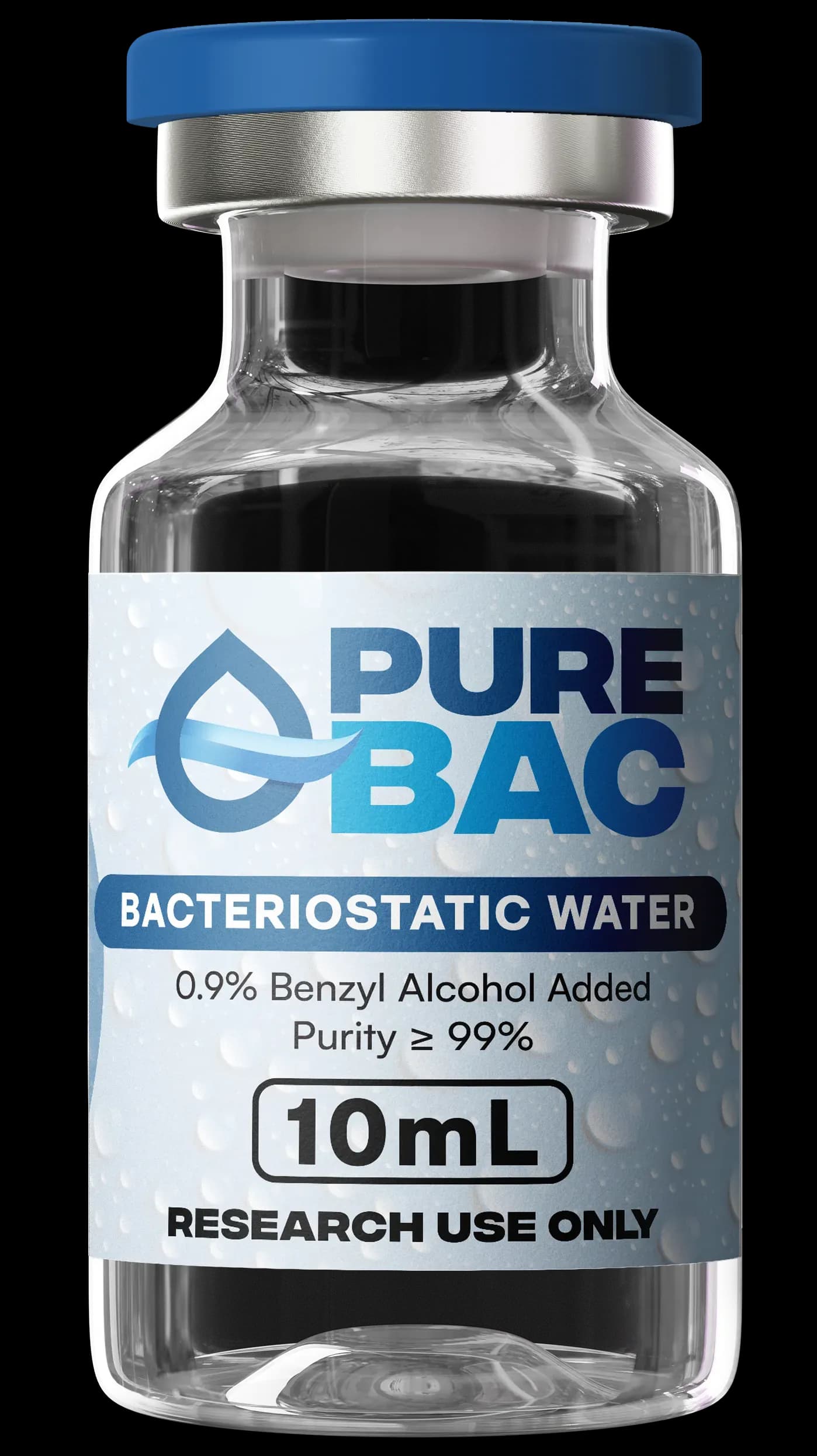
Only bacteriostatic water keeps reconstituted peptides stable beyond a few days. Tap water introduces contaminants. Regular sterile water degrades the peptide within 48–72 hours without the benzyl alcohol preservative. This is a non-negotiable — bacteriostatic water only.
3. Not Rotating Injection Sites
Injecting the same spot repeatedly over a 12-week cycle creates local lipodystrophy — the opposite of what you want. Site rotation isn't just best practice, it's required for healthy long-term administration. Map out a rotation schedule before you start and stick to it.
4. Expecting GLP-1 Level Results
AOD-9604 and semaglutide have fundamentally different mechanisms and result profiles. Semaglutide produces aggressive weight loss through appetite suppression and metabolic changes. AOD-9604 produces targeted fat mobilization that's more subtle and specific. If your expectation is "dramatic weight loss" you will be disappointed. If your expectation is "specific fat reduction in stubborn areas with preserved lean mass," you'll likely be satisfied.
5. Inconsistent Daily Dosing
Skipping days randomly disrupts receptor engagement. AOD-9604 isn't a compound that works well dosed sporadically — the daily fasted injection protocol works because it creates consistent receptor stimulation over time. Occasional missed days are fine; a pattern of 4-on, 3-off, 5-on is not a protocol.
6. Shaking the Vial During Reconstitution
Vigorous shaking denatures peptides by introducing air bubbles and mechanical stress on the peptide structure. Roll gently, never shake.
Side Effects by Dose
AOD-9604 has a notably clean safety profile compared to most growth hormone-related compounds. The clinical trials through Metabolic Pharmaceuticals specifically documented this — no adverse hormonal changes, no IGF-1 elevation, no glucose metabolism disruption. That's what makes it appealing for longer research protocols.
Low Dose (200–300mcg/day)
At the standard aod 9604 dosage range, the side effect profile is minimal. The most commonly reported is mild injection site redness or warmth, which typically resolves within minutes. Some researchers report a subtle energy increase — likely from increased fatty acid availability. That's not really a side effect; it's the mechanism working. Occasional mild headache in the first few days of a new protocol — usually temporary.
Higher Doses (500–1,000mcg/day)
Moving into the advanced aod 9604 protocol range, some researchers report mild fatigue during the initial weeks, transient headache, and occasionally slight nausea if the injection is done hastily rather than slowly. These effects are generally dose-dependent and resolve within 1–2 weeks as the body adjusts. None of the clinical trial participants at 1mg/day experienced serious adverse events.
What AOD-9604 Doesn't Do
This matters as much as what it does:
- No IGF-1 elevation — Unlike full HGH, AOD-9604 doesn't stimulate significant IGF-1 production. No concern about IGF-1-related side effects (joint pain, acromegaly risk at extreme doses).
- No insulin resistance — One of the primary concerns with HGH use is glucose dysregulation. AOD-9604 specifically does not share this property.
- No anabolic effects — AOD-9604 won't add muscle. It's purely catabolic on adipose tissue. If muscle gain is a goal, pair it with something else.
- No hormonal suppression — No HPA axis impact, no testosterone suppression, no need for PCT.
Special Populations
The standard aod 9604 dosage recommendations apply broadly, but certain groups have specific considerations worth addressing.
Women
Dosing for women is the same as men — there's no evidence for sex-based dose adjustment with AOD-9604. Women often report particularly notable results in hormonally-influenced fat deposits: lower abdomen, inner thighs, hips. These areas are more sensitive to lipolytic stimulation than male fat distribution patterns, which tend to concentrate centrally. Women on hormonal birth control or HRT: no known interactions have been documented.
Over 50
AOD-9604 pairs exceptionally well with an anti-aging peptide protocol for older researchers. After 50, natural GH production declines significantly — AOD-9604 provides some of the fat-mobilizing benefit of GH without requiring actual HGH or GHRH stimulation. Combining with Sermorelin (a GHRH analog that helps restore some natural GH pulse amplitude) creates an elegant anti-aging approach: Sermorelin restores the GH axis, AOD targets the adipose tissue directly. This population often sees particularly good results because they're starting from a point of significant GH decline.
High Body Fat (25%+)
Best responders. Higher adipose tissue mass means more receptor targets for AOD-9604, more fat to mobilize, and more absolute fat loss possible. If you're starting at 30%+ body fat, a 12-week aod 9604 cycle at 300–500mcg/day with even modest caloric deficit should produce noticeable results. The compound works where fat is — more fat means more opportunity.
Lean Athletes (Sub-15% BF)
Honest take: AOD-9604 is a diminishing-returns proposition at very low body fat percentages. There's simply less for it to work on. Some competitive athletes use it to target final stubborn areas during cutting phases, and there's anecdotal support for this — but the dramatic results seen in higher-body-fat research subjects won't replicate at 12% BF. If you're already lean, manage expectations accordingly. The compound isn't wrong for this population, it's just working with a smaller target.
Where to Source AOD-9604
Quality and purity matter significantly with lyophilized peptides. Contamination, incorrect concentration, and degraded product are real issues in the research peptide market. Look for third-party testing (certificate of analysis), domestic US shipping (faster, fewer customs issues), and a verifiable track record.
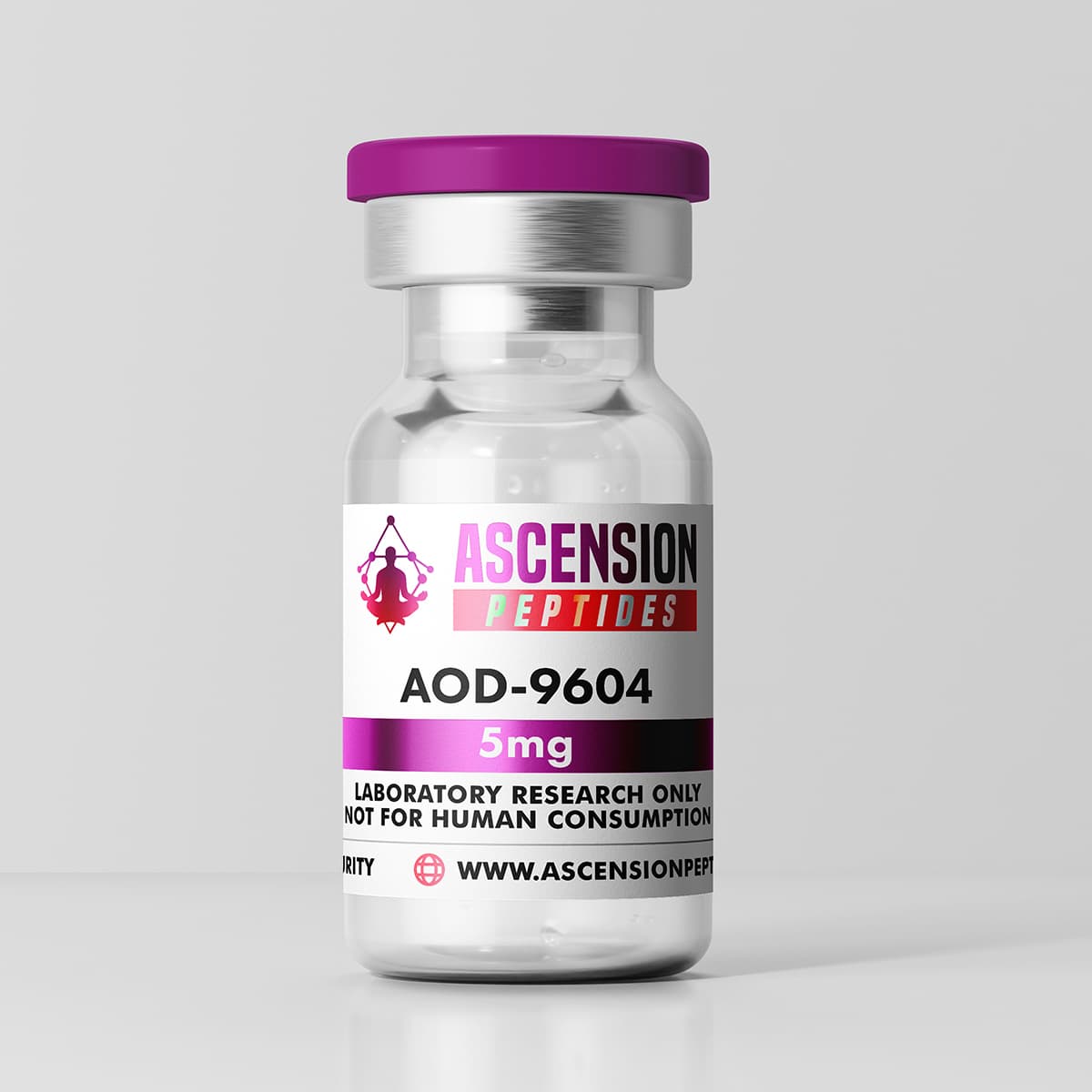
Ascension Peptides carries AOD-9604 (5mg) with third-party purity testing and US-based shipping. They're one of the more consistently reliable sources in the current research peptide market — their AOD-9604 stock is the 5mg vial, which is the practical size for a full 12-week cycle at 300mcg/day.
📦 Vial Math for a 12-Week Cycle at 300mcg/day
12 weeks × 7 days = 84 doses × 300mcg = 25,200mcg total needed.
One 5mg (5,000mcg) vial = approximately 16–17 days at 300mcg/day.
You need approximately 5 vials for a full 12-week cycle at 300mcg/day.
For research reference, see our AOD-9604 complete guide covering mechanism, clinical research history, and full comparison with other fat loss peptides.
Frequently Asked Questions
📚 References
- Heffernan M et al. "The effects of human GH and its lipolytic fragment (AOD9604) on lipid metabolism following chronic treatment in obese subjects and beta(3)-AR knock-out subjects." Endocrinology. 2001;142(12):5182-5189. PubMed
- Ng FM et al. "Metabolic studies of a synthetic lipolytic domain (AOD9604) of human growth hormone." Horm Res. 2000;53(6):274-278. PubMed
- Stier H et al. "AOD9604 — a novel anti-obesity drug. Phase IIb clinical trial results." Metabolic Pharmaceuticals. 2004. PubMed
- Heffernan MA et al. "Increase of fat oxidation and weight loss in obese subjects caused by chronic treatment with human growth hormone or a modified C-terminal fragment." Int J Obes Relat Metab Disord. 2001;25(10):1442-1449. PubMed
- Ng FM & Bornstein J. "Hyperglycemic action of synthetic C-terminal fragments of human growth hormone." Am J Physiol. 1978;234(5):E521-E526. PubMed
- Thompson JL et al. "The effects of recombinant human insulin-like growth factor-I and growth hormone on body composition in elderly women." J Clin Endocrinol Metab. 1998;83(5):1668-1673. PubMed