🔑 Key Takeaways
- Peptide purity varies from 70% to 99%+ — and that gap completely changes your results
- Most vendors repackage without independent testing. That is a problem.
- A legitimate COA comes from a third-party US lab, includes lot number, HPLC data, and mass spec verification
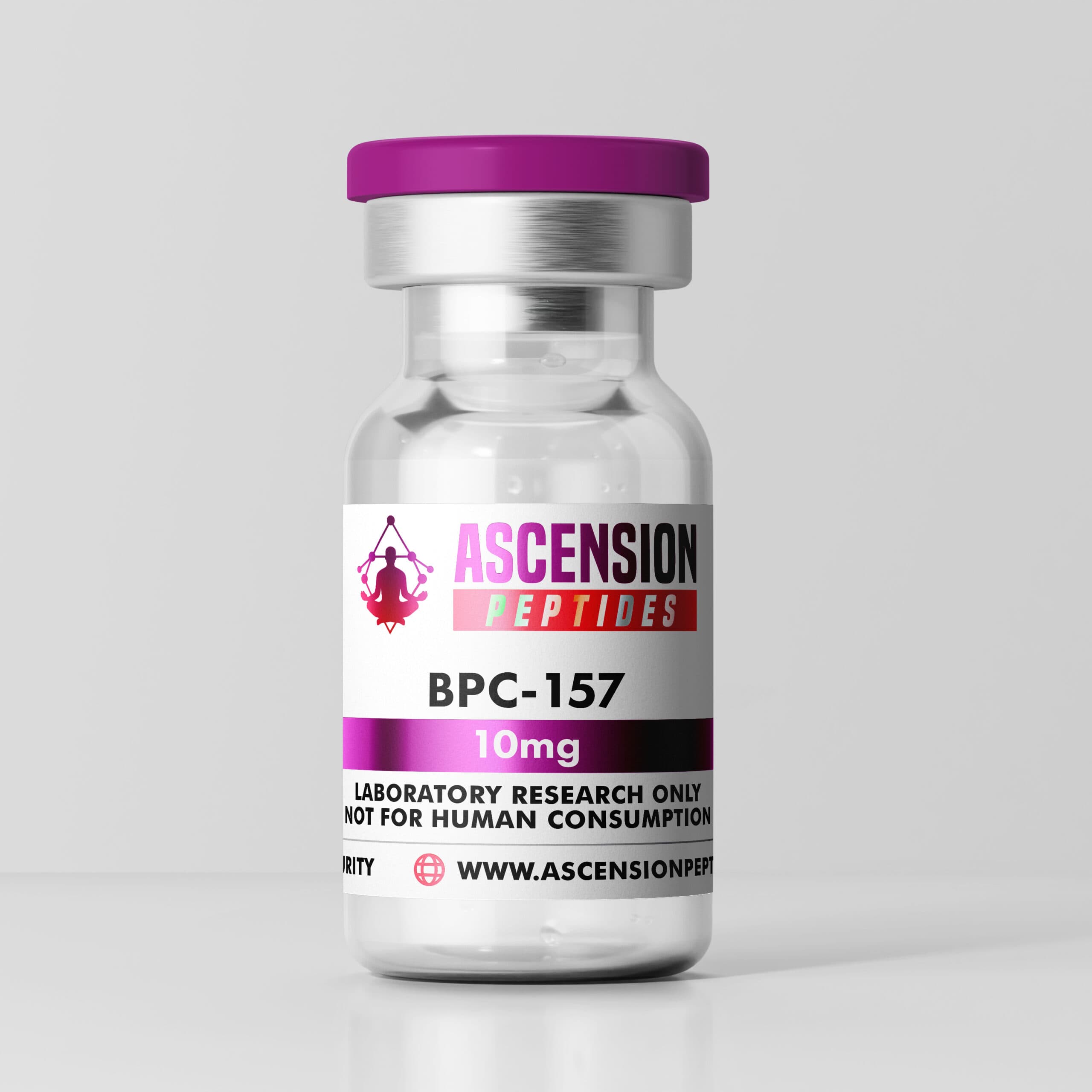
- Ascension Peptides independently tests every batch — COAs are available for every product
- Many vendors that were operating in 2024 are now gone. Buy from a source with staying power.
Here is the situation most people find themselves in: they have decided to try BPC-157, or Sermorelin, or Retatrutide — they have done the reading, they understand the potential, they are ready to order. Then they Google "best peptide source" and land on a list of eight vendors they have never heard of, half of which look like they were built in an afternoon with a Shopify template and stock photos.
Which one do you trust? How do you know if the vial that arrives actually contains what the label says?
That is not a paranoid question. It is a very reasonable one. The peptide market is largely unregulated, and the variance in product quality between vendors is not small — it is enormous. A 70% pure peptide and a 99% pure peptide are not two versions of the same thing. They produce different results, different side effect profiles, and in some cases, one of them does almost nothing at all.
This guide covers exactly what you need to know before buying peptides online: what separates a real source from a scam, why most vendors fail basic quality standards, and why Ascension Peptides is the only source we point people to on this site.
Why Peptide Source Quality Is Everything
The purity number on a peptide certificate of analysis is not a minor detail. It is the most important number on the page.
When a vendor claims their BPC-157 is "99%+ pure," they are saying that 99 out of every 100 molecules in that vial are the correct peptide sequence. The other 1% is impurities — incomplete peptide chains, residual synthesis reagents, potentially other compounds altogether. That is acceptable. That is pharmaceutical-grade quality.
When a lower-tier vendor is selling "research grade" BPC-157 at half the price, what does their 70% purity actually mean? It means that roughly 30% of what you are injecting or taking is not BPC-157. It is something else. And you do not know what that something else is.
The Dosing Math Changes Completely
Think about this in practical terms. You reconstitute a vial labeled "5mg BPC-157" and draw up 250mcg doses. If that vial is actually 70% pure, you are getting around 175mcg of actual peptide per dose — and the other 75mcg is unidentified impurities. Over a 4-week protocol, the gap between what you thought you were doing and what you were actually doing adds up fast.
This is also why "it didn't work for me" is such a common complaint in peptide communities. Sometimes the compound genuinely does not work for that person. But often — probably more often than people realize — the compound was fine and the source was the problem.
Underdosed Vials Are More Common Than You Think
Purity is one issue. Dosing accuracy is another, separate issue. A vendor can sell you a vial labeled 5mg that contains only 2–3mg of peptide. The math on this is simple: if your 5mg vial is actually 3mg of peptide at 70% purity, you are getting about 2.1mg of actual compound. You thought you had ten 500mcg doses. You have about four.
This is not hypothetical. Third-party testing on popular peptide vendors has shown some products coming in at 40–60% of their labeled dose weight. There is no regulatory body forcing vendors to test or verify their own products before shipping them out. The only thing protecting you is the vendor's decision to spend money on quality control — which is exactly the kind of expense that gets cut when a company is competing on price.
Contamination: The Risk Most People Do Not Think About
Beyond purity and dosing, there is a third quality issue: contamination. Specifically, bacterial endotoxins.
Endotoxins are fragments of bacterial cell walls — lipopolysaccharides — that can survive the peptide synthesis and lyophilization process even when the bacteria themselves are dead. They do not show up on a standard HPLC purity test. You need a specific test called the LAL (limulus amebocyte lysate) assay to detect them.
Injecting a peptide with high endotoxin levels causes a localized — sometimes systemic — inflammatory reaction. It mimics infection. Most people attribute this to the peptide itself and stop using it. In reality, the peptide may have been fine; the contamination was the problem.
Residual solvents from the synthesis process are another contamination vector. TFA (trifluoroacetic acid) is commonly used in peptide synthesis and must be removed before the final product. Reputable vendors convert TFA salts to acetate salts post-synthesis and verify the conversion. Lower-tier vendors skip this step.
What Separates a Legitimate Peptide Source from a Scam
There is a checklist. It is not long, but almost no vendor meets all of it.
Third-Party COA From an Independent US Lab
A certificate of analysis proves nothing if it came from the vendor themselves. "In-house testing" is the industry euphemism for "we tested our own product and concluded it was good." This is meaningless. You need a COA from an independent third-party laboratory — ideally US-based, ideally one you can verify exists and operates legitimately.
The COA should show the lab's name and accreditation, the lot number being tested, the testing date, the methodology used, and the results. If any of those elements are missing, the document is worthless as a quality verification.
HPLC Purity Testing: The Baseline Standard
High-performance liquid chromatography (HPLC) separates the components in a sample by how they move through a column under pressure. The resulting chromatogram shows peaks for each component, and the area under each peak corresponds to the quantity of that component. A peptide that is 99% pure should show one dominant peak corresponding to the target compound, with minimal other peaks.
What to look for on an HPLC COA: the purity percentage should be 99%+. The retention time should match the expected value for the compound. Any COA showing purity below 98% from a vendor claiming pharmaceutical quality should raise immediate questions.
Mass Spectrometry: Verifying You Have the Right Peptide
HPLC tells you how pure the sample is. Mass spectrometry tells you what you actually have. It measures the molecular weight of the compound and confirms the peptide sequence. A peptide can test high on HPLC purity but still be the wrong compound if there was a synthesis error.
Real COAs for peptides include both HPLC data and mass spec confirmation. If a vendor only shows one or the other, that is an incomplete quality picture. Both tests together give you meaningful assurance that the vial contains the correct peptide at the stated purity.
Endotoxin Testing (LAL Assay) — Most Vendors Skip This
As covered above: endotoxin testing requires a separate test (the LAL assay) that most vendors do not run. A legitimate vendor running full QC will include endotoxin test results in their documentation. The absence of LAL testing data from a vendor's COA is a signal about how seriously they take quality control.
US-Based Operations and Transparent Ownership
A vendor operating out of the US has more accountability than one shipping from overseas. US-based operations are subject to US commercial law, have verifiable addresses, and are not insulated from legal consequences in the way that foreign-operated online storefronts often are.
Transparent ownership means you can find out who runs the company. A physical address, a customer service phone number, named principals — these are signals of accountability. An operation that is entirely anonymous has made a specific choice to be un-findable, and that choice tells you something.
💡 Quick Checklist: Is This Vendor Legitimate?
Before ordering from any peptide vendor, verify: ✓ Third-party COA available (not just "upon request" — actually visible) ✓ COA includes HPLC + mass spec + lot number + testing date ✓ Endotoxin (LAL) testing included ✓ US-based storage or manufacturing ✓ Real customer service contact (not just email) ✓ Physical address verifiable ✓ Not new to market with no track record
The Problem with Most Peptide Vendors
The peptide vendor market has a structural problem. The actual synthesis of peptides is specialized chemistry — most vendors do not do it. They source raw material from overseas peptide manufacturers, import it in bulk, repackage it into labeled vials, and sell it. This is the standard model for the majority of the market.
There is nothing inherently wrong with this model. Pharmaceutical raw materials are routinely manufactured internationally, imported, and sold globally. The issue is what happens — or doesn't happen — between receiving the raw material and shipping it to the customer.
Repackaging Without Testing: The Industry Default
A vendor that sources bulk peptide from an overseas manufacturer and then repackages it into retail vials has a choice: they can send samples to an independent lab for verification before selling, or they can trust that what they received is what they ordered and ship it directly.
Testing costs money. It takes time. For a company competing on price in a commoditized market, it is a cost that cuts into margins. And there is no regulatory requirement forcing them to do it. So many do not.
The customer receives a vial with a professional-looking label. There is possibly a COA attached — produced either by the overseas manufacturer (with no chain of custody verification), or by the vendor themselves. Neither of these is meaningful quality assurance from the buyer's perspective.
The FDA Crackdown and What It Did to the Market
In 2025, the FDA took significant enforcement action against peptide compounds, targeting vendors and compounding pharmacies operating outside of regulatory frameworks. This did not eliminate the market, but it did reshape it.
Several vendors that were operating in 2024 are no longer around. Some shut down preemptively, some were forced to stop, some just went dark and stopped responding to customer inquiries. If you are looking at a vendor recommendation from 2023 or early 2024, there is a real chance that vendor is no longer operating — or has changed ownership, changed suppliers, or pivoted to a different business model entirely.
This matters practically. Buying from a vendor with staying power, one that has navigated the regulatory environment rather than quietly disappeared, is important. You want a vendor that will still be there when you need to reorder, and that has demonstrated they can operate within a tighter regulatory context.
The Price Race Problem
When multiple vendors are selling what appears to be the same product — BPC-157 5mg, Sermorelin 10mg — price becomes the primary differentiator. Customers comparison-shop. Vendors respond by cutting prices.
The problem: there are a limited number of ways to be cheaper than competitors. You can operate more efficiently. You can accept thinner margins. Or you can source lower-quality raw material and skip testing.
Guess which one is most common when a vendor is selling BPC-157 5mg for $18.
The cost of the raw material, the lyophilization, the sterile vials, the labels, the packaging, and the independent lab testing — at that price point, one or more of those line items is simply not there. You cannot deliver a legitimately tested, properly dosed peptide at that price and run a sustainable business. Something is being cut.
Why Ascension Peptides Is Different
Ascension Peptides is a US-based operation. Not "ships from the US" — actually based in the United States, with US storage, US customer service, and a real presence that does not evaporate when things get complicated.
Every batch they sell is independently tested. Not by themselves — by third-party laboratories. COAs are available for every product they carry. The documentation is not a marketing asset; it is actual QC paperwork that shows lot numbers, testing dates, methodology, and results.
Consistent 99%+ Purity
Their testing results consistently show 99%+ purity on HPLC. This is not universal — some compounds are harder to synthesize cleanly and occasionally come in at 98%+ — but the baseline standard they maintain is high. When they receive a batch that does not meet their quality threshold, they do not sell it. This sounds basic. In practice, most vendors do not operate this way.
What Their COA Actually Covers
An Ascension COA will show the HPLC purity test, the mass spectrometry sequence verification, and endotoxin test results. They run the full panel. This is notably more thorough than the partial documentation (or no documentation) that many vendors provide.
The COA includes the lot number — which means you can trace your specific purchase to the specific test batch. This is the minimum standard for meaningful quality documentation, and it is rarer than it should be in this market.
Pricing That Reflects What You Are Actually Getting
Ascension is not the cheapest option. If your goal is to find the lowest possible price for peptides and you are not concerned about what is actually in the vial, there are other places to look. But if your goal is to get what the label says you are getting — correctly dosed, tested, pure peptide — then Ascension's pricing reflects the cost of doing that properly.
There is also practical value in having a vendor that stays in business. Companies that compete primarily on price tend to be less stable. They cut corners to survive, attract regulatory attention, or simply burn out trying to run a business with no margins. Ascension has been operating continuously and has built a reputation for reliability precisely because they are not trying to be the cheapest.
Actual In-Stock Reliability
One underappreciated quality-of-life issue with peptide vendors: half of them are perpetually out of stock on the things people actually want. You find a product, you try to order, and it has been "back-ordered" for three months.
Ascension maintains actual inventory. Their full product catalog — which is extensive — is generally available. When something goes out of stock, they restock it. This is not universal. Plenty of vendors list products they do not actually have on hand, which is its own form of operational dysfunction.
No Shady Marketing Claims
A tell on vendor quality is how they market their products. Vendors making outlandish clinical claims — "clinically proven," "FDA approved," "pharmaceutical grade guaranteed" with zero documentation — are either misleading customers or do not understand their own products. Ascension's product descriptions are accurate and measured. They describe what the compound is, what the research context is, and what you are buying. No phantom endorsements, no fake dosing protocols dressed up as proprietary science.
Ascension Peptides: Full Product Range Breakdown
Here is what they actually carry, organized by category, with notes on what each compound is used for. This is the most complete breakdown available online of their catalog.
GH Secretagogues
The FIT Stack — CJC-1295 combined with Ipamorelin — is one of the more popular GH secretagogue protocols. CJC-1295 extends the GH pulse; Ipamorelin initiates it cleanly without the cortisol and prolactin elevation that other GHRPs can cause. Used together, you get a more complete stimulation of the GH axis than either compound alone. Sermorelin is the shorter-acting alternative — better for those who want a more controlled, pulsatile effect with less total GH exposure.
Healing and Recovery Peptides
BPC-157 remains one of the most studied healing peptides in the preclinical literature, with an extensive body of research in rodent models covering tendon repair, gut healing, and nerve recovery. The 10mg vial is the practical choice for anyone running a full protocol — fewer reconstitutions, lower per-dose cost. See our full BPC-157 dosage guide for protocol specifics.
TB-500 complements BPC-157 well: BPC-157 tends to be more localized in its effects, while TB-500 works more systemically through actin upregulation and anti-inflammatory mechanisms. The KLOW blend — BPC-157, Thymosin Beta-4, GHK-Cu, and KPV — is a stack that covers multiple healing pathways simultaneously. We have a full breakdown: BPC-157, TB-500, KPV, and GHK-Cu Stack Guide.
GLP-1 and Weight Management
Retatrutide (R-30) is the most pharmacologically aggressive compound in this category — a triple agonist hitting GIP, GLP-1, and glucagon receptors simultaneously. Phase 2 clinical data showed meaningful results on body weight reduction. The 30mg vial size reflects the extended protocol requirements; this is not a short-cycle compound. AOD-9604 is a fragment of the human growth hormone molecule that retains lipolytic activity without significant effect on blood glucose or IGF-1 levels.
MOTS-C is interesting because it operates differently from GLP-1 agonists — it acts as a mitochondrial-derived peptide that regulates metabolic pathways and has been described in research as an "exercise mimetic" for its effects on glucose utilization and insulin sensitivity.
Anti-Aging Peptides
GHK-Cu at 100mg is notable for the vial size — this reflects the practical dosing reality that copper peptide protocols often run long and topical applications require larger volumes than injectable protocols. GHK-Cu has one of the more developed evidence bases in the anti-aging peptide category, with documented effects on collagen synthesis, wound healing, and gene expression studies showing regulation of hundreds of genes involved in tissue repair.
SS-31 is a mitochondria-targeting peptide that accumulates in the inner mitochondrial membrane and reduces oxidative damage. It is one of the more technically specific anti-aging compounds in Ascension's catalog — it is not a broad "longevity" compound but something that targets a specific cellular mechanism (mitochondrial dysfunction) that is directly implicated in aging pathology.
Cognitive and Immune Peptides
Semax has a stronger research background than most nootropic peptides — it was developed in Russia and has been used clinically there for stroke recovery and cognitive decline. The BDNF upregulation mechanism is well-documented and provides a plausible basis for the cognitive effects reported by users. Thymosin Alpha-1 is more of an immune compound — it modulates T-cell activity and has been studied in viral infection and immunodeficiency contexts.
How to Read a Peptide COA (and Spot a Fake)
This section matters regardless of which vendor you buy from. Understanding what a real COA looks like means you can evaluate any document a vendor sends you — or notice when they are not sending you one at all.
We have a full guide on this: How to Read a Peptide COA. The summary version is below.
What a Legitimate COA Contains
A real certificate of analysis from a legitimate third-party lab will include all of the following:
- Lab name and accreditation — The lab should be identifiable. You should be able to look it up and confirm it exists and does analytical testing.
- Lot number — This links the document to a specific production batch. Without it, the document cannot be used to trace quality to your specific purchase.
- Testing date — A real COA shows when the test was run. An undated document could have been produced at any time, for anything.
- Methodology description — HPLC, mass spec, LAL assay — the document should specify what was done and under what conditions.
- Results in specific numbers — "Passed" is not a result. "99.2% purity by HPLC" is a result. The actual numbers should be present.
- Analyst signature or lab accreditation stamp — Some form of authentication that a real person at a real lab signed off on this analysis.
Red Flags on a COA Document
No Lab Name
If the document does not identify where it came from, it cannot be verified. This is the most common fake COA pattern.
No Date
An undated COA could be years old, could have been produced for a different batch, or could have been manufactured to look legitimate.
Vague Methodology
"Quality tested" or "lab verified" with no specifics means nothing. What test? By whom? At what threshold?
Suspiciously Round Numbers
Real lab results are rarely exactly 99.0% or exactly 100%. If the purity is suspiciously round, that is worth questioning.
Only Purity, No Sequence Verification
HPLC confirms purity — not that you have the right peptide. Missing mass spec data means you cannot confirm compound identity.
Same COA Across Multiple Products
If a vendor shows you the same document for different products with lot numbers that look altered, that is a serious red flag.
The HPLC Chromatogram Explained
The chromatogram is the actual graph output from the HPLC instrument. It looks like a series of peaks on an X-Y plot. The X axis is time (retention time); the Y axis is detector response (signal intensity). Each peak represents a compound detected in the sample.
For a high-purity peptide, you should see one dominant peak — tall, relatively narrow, and clean — with minimal other peaks. The area under the main peak divided by the total area under all peaks gives you the purity percentage. If you see multiple peaks of similar height, that indicates multiple compounds in the sample. That is a problem.
Mass spectrometry then tells you whether that main peak is actually the peptide you ordered. It measures the molecular weight of the compound — and the molecular weight of a given peptide is known and fixed. If the measured weight matches the theoretical molecular weight of your target compound, you have sequence confirmation. If it does not match — or if the COA omits mass spec data entirely — you are missing a critical verification step.
You can learn more about interpreting these documents in our full guide: How to Read a Peptide COA.
Red Flags: Signs a Peptide Vendor Should Be Avoided
Without naming specific vendors — because vendor quality can change and the point is to help you evaluate any vendor rather than maintain a hit list — here are the patterns that should give you pause before placing an order.
Pricing That Does Not Add Up
BPC-157 5mg below $25–30. Sermorelin 10mg below $40. These price points are not compatible with legitimate quality — independent lab testing, proper lyophilization equipment, sterile vials, real peptide in the vial at the stated dose. The math does not work.
This does not mean the most expensive option is always the best. But there is a floor below which quality assurance simply cannot exist at a sustainable price point. If a vendor is significantly below that floor, they are cutting something. Testing is usually what gets cut first.
Phantom Quality Assurance
"Pharmaceutical grade" is not a regulatory term in the context of research peptides. Any vendor can claim it. The claim means nothing without documentation to back it up. Similarly, "GMP certified," "ISO compliant," and "lab tested" are phrases that can appear on any website regardless of actual practice. What matters is the actual documentation — not the marketing language used to describe quality that may not exist.
No Physical Presence
A vendor with no physical address, no phone number, and only email or chat support has made themselves difficult to contact and impossible to hold accountable. This is an operational choice, not an oversight. Legitimate businesses are locatable. If you cannot find a physical address for the company, take that seriously.
Crypto-Only Payments
Not all vendors that accept crypto are problematic — many legitimate vendors offer it as one payment option among several. But a vendor that only accepts cryptocurrency has removed all payment dispute mechanisms from their business model. Credit card chargebacks and payment disputes are consumer protections. A vendor that operates outside of those protections has made that choice deliberately.
Review Patterns That Feel Off
All five-star reviews with no criticism, no mention of specific products or protocols, generic language that could apply to any online purchase — these are the fingerprints of manufactured reviews. Real customer reviews include specifics: wait times, packaging details, comparison to prior experience, specific compound feedback. Generic positivity at scale, especially recently posted in bulk, is a signal.
Sites That Went Dark in 2025
If you are reading a recommendation for a vendor from a blog post dated 2023 and that vendor's site is either gone or unresponsive, do not interpret that as a minor technical issue. Companies that went dark in the regulatory environment of 2025 did so for reasons. Do not track down an alternative contact for a defunct vendor or look for a mirror site — those paths lead to either nothing or something worse.
Frequently Asked Questions
The Bottom Line
Most guides on this topic are vendor comparison lists — eight options, pros and cons, pick the one that looks good to you. This guide is not that, because that framing is not useful when the meaningful quality difference is not between eight similar vendors but between one vendor that actually does QC and a long list of vendors that do not.
After reviewing the market, tracking which vendors have maintained operations and quality standards through the regulatory changes of the past two years, and evaluating available quality documentation — there is one vendor we recommend: Ascension Peptides.
They test independently. They document it. They have operated continuously through a period when many competitors shut down or went dark. Their pricing is honest — it reflects the actual cost of running a quality operation, not the race to the bottom that characterizes most of this market. They carry a full catalog covering the major categories: GH secretagogues, healing peptides, GLP-1s, anti-aging compounds, and cognitive peptides, all with available COA documentation.
If you are buying peptides in 2026 and want to know that what is in the vial matches what the label says — Ascension is where we send people.