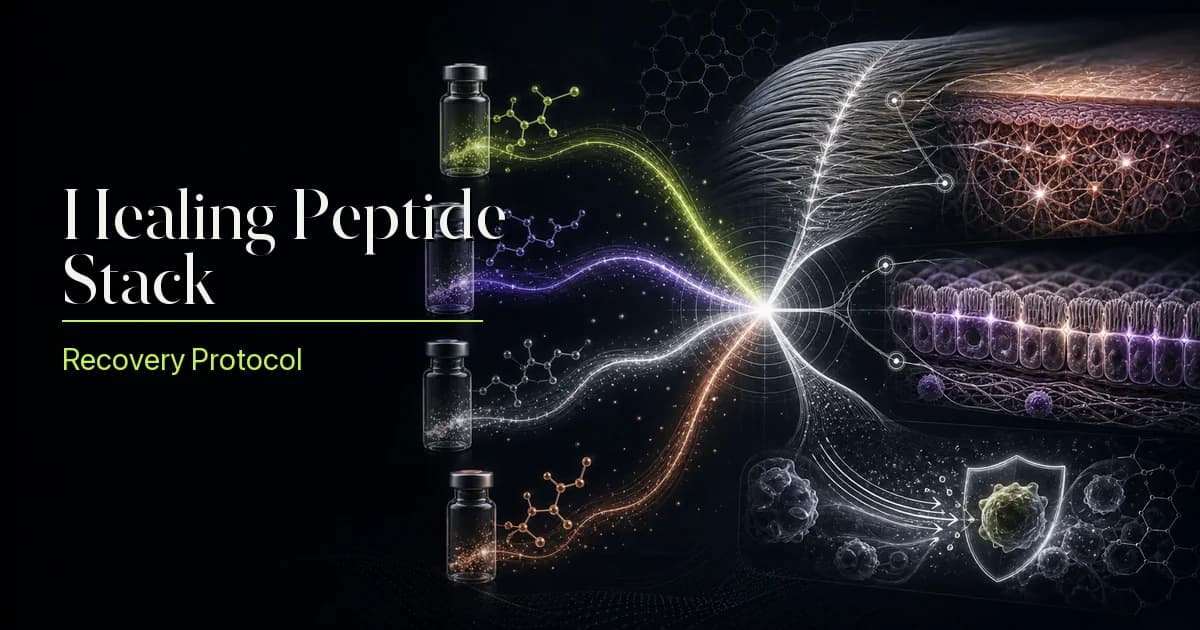
If you're researching the most comprehensive peptide stack for tissue repair and recovery, you've likely come across four names together: BPC-157, TB-500, KPV, and GHK-Cu. This four-peptide combination — sometimes called the "Klow Blend" in research circles — targets virtually every phase of the healing cascade, from the initial inflammatory response right through to structural collagen remodeling.
Each peptide in this stack has a distinct mechanism of action and a specific role. That's precisely why combining them has become so popular in the peptide research community: they don't just overlap, they build on each other. This guide breaks down exactly what each peptide does, how they work together, and what research-based dosing protocols look like for this combination.
The Four-Peptide Healing Stack at a Glance
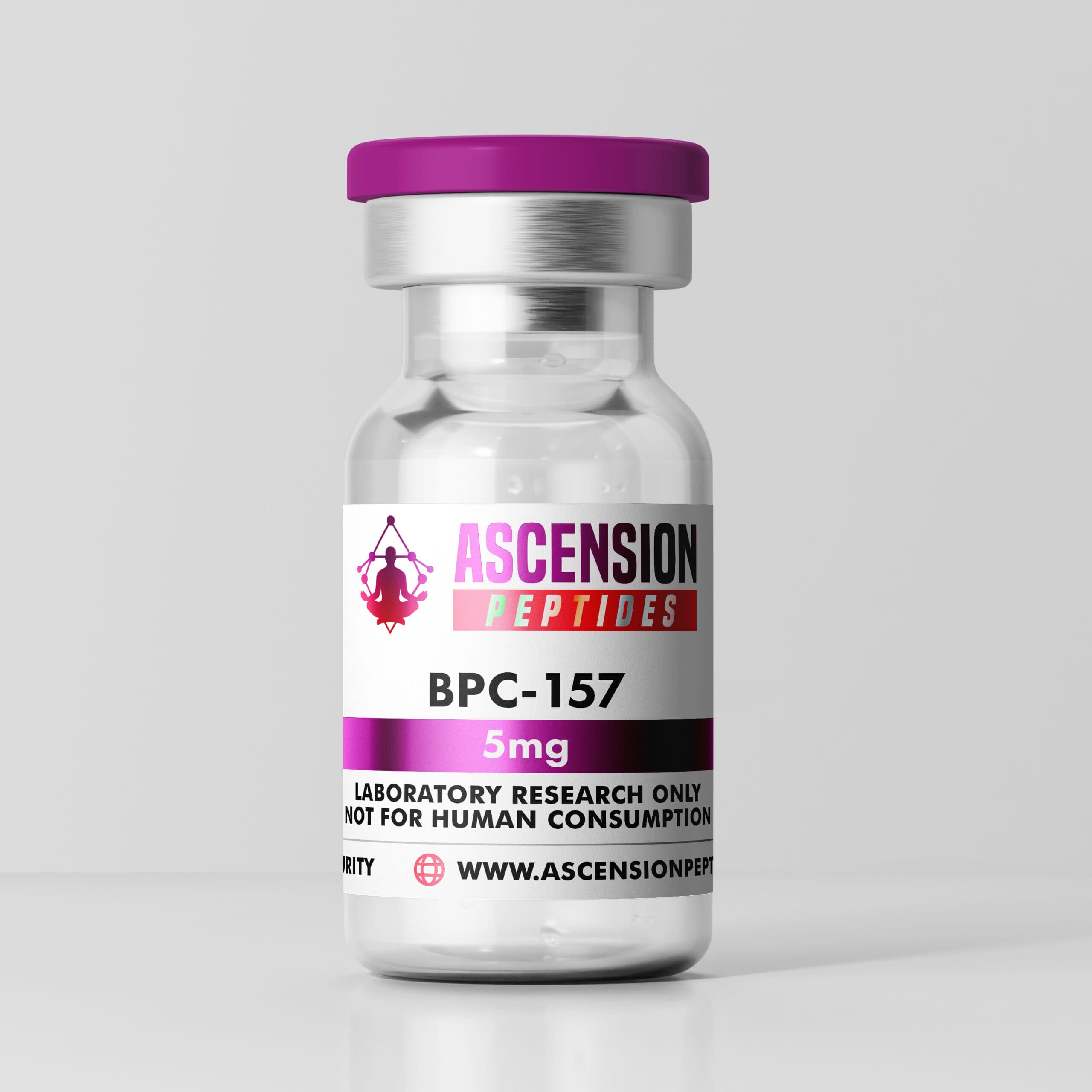
BPC-157: Local tissue repair + angiogenesis signaling
TB-500: Systemic cell migration + broad regeneration
KPV: Anti-inflammatory control (NF-κB inhibition)
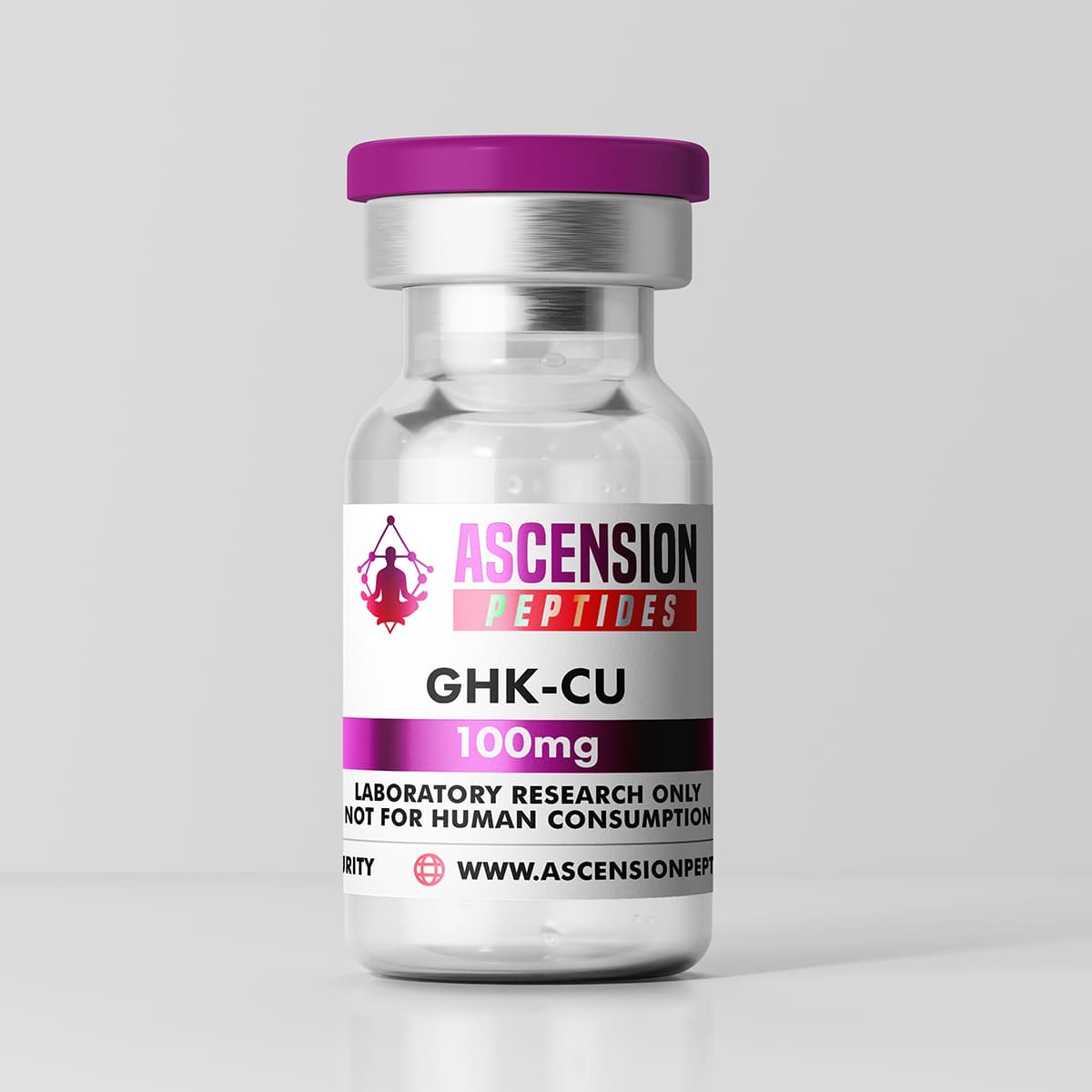
GHK-Cu: Collagen synthesis + structural tissue remodeling
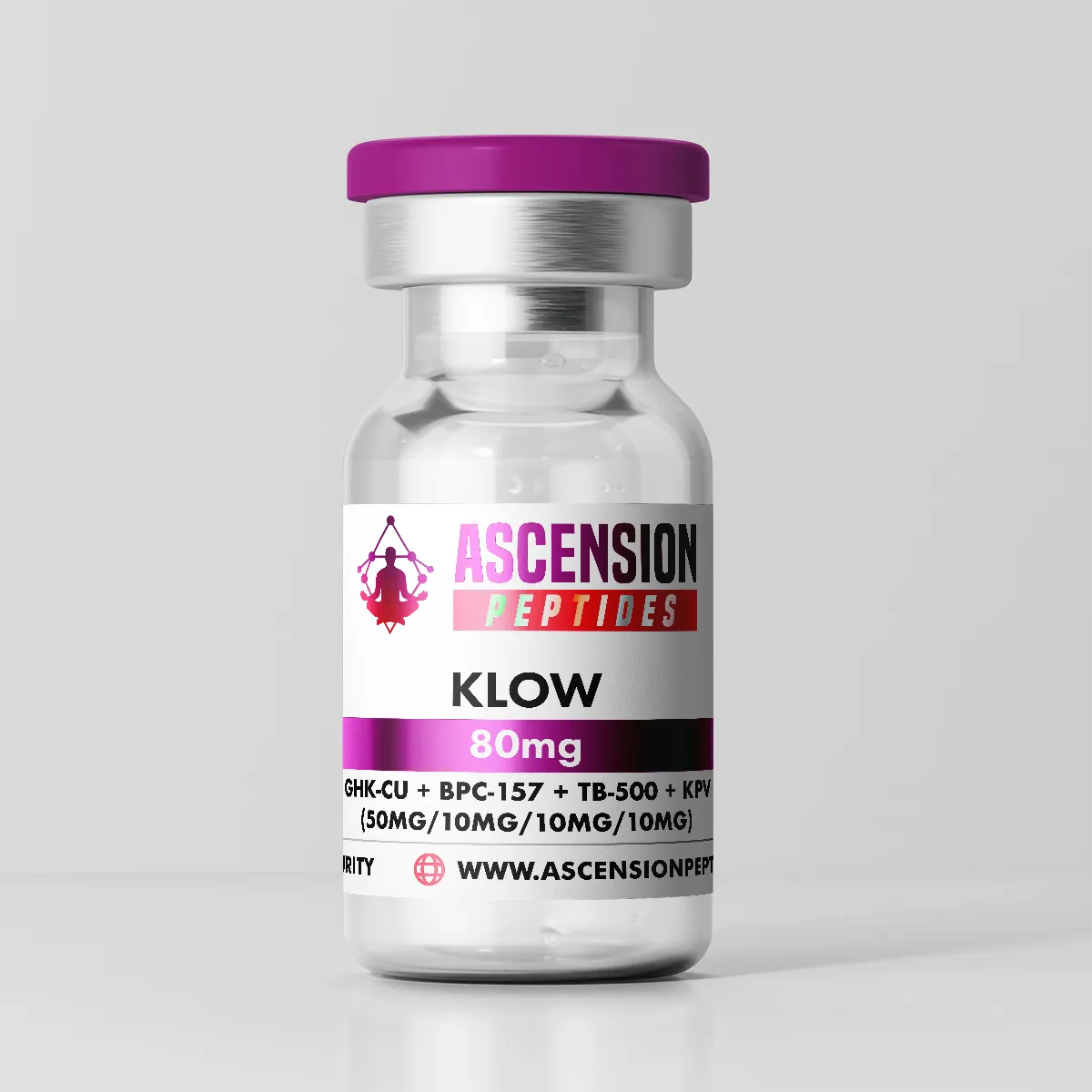
Running all four separately means four reconstitutions — Ascension's KLOW vial pre-blends them at the ratios this protocol uses.
Why Four Peptides? Understanding the Healing Cascade
Tissue healing isn't a single event — it's a multi-stage biological process that unfolds over days, weeks, and sometimes months. The problem with most single-peptide approaches is that they only influence one or two stages of this cascade. The BPC-157 + TB-500 + KPV + GHK-Cu stack is specifically designed to address all four major phases:
- Phase 1 — Hemostasis: Immediately post-injury, clotting occurs. Most peptides don't act here.
- Phase 2 — Inflammation: Immune cells flood the area. This phase is essential but must be controlled — chronic inflammation blocks healing. KPV targets this phase directly.
- Phase 3 — Proliferation: New cells, blood vessels, and temporary collagen fill the wound. BPC-157 and TB-500 are most active here.
- Phase 4 — Remodeling: The temporary scaffold is replaced with organized collagen. GHK-Cu and BPC-157 drive this phase.
Using all four peptides means you're supporting every stage of the process rather than just one. Let's look at each peptide's specific contribution.
BPC-157: The Local Repair Powerhouse
BPC-157 (Body Protection Compound-157) is a 15-amino-acid synthetic peptide derived from a protective protein naturally found in human gastric juice. It's arguably the most extensively researched healing peptide in the stack, with dozens of animal studies documenting its effects on tendon, muscle, ligament, and gastrointestinal tissue.
How BPC-157 Works
BPC-157 operates through several mechanisms simultaneously. Its best-documented action is upregulation of growth hormone receptor expression, which amplifies the body's natural healing signals. It also stimulates the formation of new blood vessels (angiogenesis) by increasing vascular endothelial growth factor (VEGF) expression — a critical step for delivering nutrients and repair cells to damaged tissue.
BPC-157 also modulates the nitric oxide (NO) system, which regulates blood flow and has direct anti-inflammatory effects. In tendon research, it has been shown to promote tenocyte proliferation and collagen synthesis, accelerating the rate at which tendons recover from partial tears.
What BPC-157 Brings to the Stack
- Direct tendon-to-bone healing acceleration
- Angiogenesis at the injury site — critical for nutrient delivery
- Gastrointestinal protection and healing (especially relevant if other peptides cause GI stress)
- Upregulation of growth hormone receptors for broader anabolic signaling
- Localized repair when injected near the site of injury
One of BPC-157's unique advantages is its route flexibility: for gut healing, oral administration is effective. For musculoskeletal injuries, subcutaneous or intramuscular injection near the injury site produces the most targeted results.
TB-500: The Systemic Regeneration Signal
TB-500 is the bioactive peptide fragment of Thymosin Beta-4 (Tβ4), corresponding to the Ac-SDKP sequence (amino acids 17-23 of the full protein). While the full Thymosin Beta-4 molecule has numerous effects, the TB-500 fragment is responsible for the tissue repair and anti-inflammatory properties that make this class of peptides so compelling for recovery research.
How TB-500 Works
TB-500's primary mechanism is actin regulation. It binds to G-actin (globular actin monomers) with high affinity, which regulates the actin:thymosin ratio in cells. This affects cell shape, motility, and differentiation — all critical for wound healing. By promoting cell migration toward injury sites, TB-500 speeds up the recruitment of repair cells.
Unlike BPC-157, which has its strongest effects locally near the injection site, TB-500 distributes systemically throughout the body. This makes it particularly valuable for large or diffuse injuries, cardiovascular tissue, and situations where local injection isn't practical.
What TB-500 Brings to the Stack
- Systemic repair signaling — reaches injuries regardless of injection site
- Promotes stem cell migration and activation at injury sites
- Supports formation of new blood vessels (complements BPC-157's angiogenesis effects)
- Anti-inflammatory properties that work alongside KPV
- Particularly effective for muscle tears, cardiovascular tissue, and large-area injuries
The BPC-157 + TB-500 combination is sometimes called the "Wolverine stack" — BPC-157 provides the targeted local signal while TB-500 handles the systemic dimension. Adding KPV and GHK-Cu to this foundation addresses the two elements this duo alone doesn't fully cover: inflammation control and structural collagen remodeling.
KPV: The Anti-Inflammatory Key to Healing
KPV is a tripeptide consisting of the amino acids Lysine-Proline-Valine. It's the C-terminal fragment of alpha-melanocyte stimulating hormone (α-MSH), and it's responsible for α-MSH's powerful anti-inflammatory activity. What makes KPV particularly notable is that it retains this anti-inflammatory potency without alpha-MSH's pigmentation or other melanocortin effects.
How KPV Works
KPV's anti-inflammatory mechanism is unusually direct: it inhibits the NF-κB signaling pathway, which is the master regulatory switch for inflammatory gene expression in the body. When NF-κB is activated (by injury, infection, or chronic stress), it turns on the production of pro-inflammatory cytokines including TNF-α, IL-1β, IL-6, and IL-8. KPV blocks this cascade at its source.
KPV also inhibits the MAP kinase (MAPK) pathway, another inflammatory signaling route. Crucially, KPV can penetrate cell membranes and act intracellularly — an unusual property for a peptide — which means it works even inside already-inflamed cells, not just at their surface receptors.
Why Inflammation Control Matters for Healing
Chronic inflammation is one of the most common reasons tissue repair stalls. While an initial inflammatory response is necessary (it signals repair cells to the area), persistent inflammation actively degrades healing tissue through matrix metalloproteinase (MMP) overactivation. KPV resolves this: it modulates inflammation without completely suppressing the necessary acute response.
- Reduces TNF-α, IL-1β, and IL-6 production at injury sites
- Particularly effective for gut inflammation (IBD, colitis) — small peptide survives partial oral digestion
- Skin anti-inflammatory effects make it relevant for wound healing
- Does not suppress the entire immune response — targeted cytokine modulation
- Can work orally or via SC injection
GHK-Cu: The Structural Rebuilder
GHK-Cu (Copper Peptide) is a naturally occurring copper-binding tripeptide — Glycyl-L-Histidyl-L-Lysine complexed with copper (Cu²⁺). Unlike synthetic research peptides, GHK-Cu is found naturally in human plasma (200 ng/mL in young adults, declining with age), wound fluid, and cerebrospinal fluid. Its role in the body is to stimulate tissue repair and regeneration — essentially to turn on reconstruction after damage occurs.
How GHK-Cu Works
GHK-Cu exerts its effects through a remarkably broad genetic mechanism. Research has shown it can modulate the expression of over 4,000 human genes — upregulating genes involved in collagen synthesis, wound repair, and anti-oxidant defense while downregulating genes involved in inflammation and cancer progression. Key specific effects include:
- Stimulates collagen Types I, III, and IV synthesis — the structural proteins that hold repaired tissue together
- Increases TGF-β (transforming growth factor beta) production, promoting tissue remodeling
- Activates matrix metalloproteinases (MMPs) for controlled breakdown of damaged tissue — allowing fresh tissue to replace it
- Promotes angiogenesis through VEGF and FGF pathways
- Strong antioxidant effects via superoxide dismutase (SOD) upregulation
- Activates tissue stem cells and nerve fiber regrowth
What GHK-Cu Brings to the Stack
GHK-Cu completes the healing stack by addressing the remodeling phase that BPC-157 and TB-500 initiate but don't fully drive. Once new blood vessels have formed and repair cells have migrated to the site, GHK-Cu ensures those cells are producing the right structural proteins in the right configuration. This is why it's particularly valued in wound healing, skin regeneration, and post-surgical recovery — situations where scar tissue quality matters as much as healing speed.
Stack Synergy: Why These Four Work Better Together
Understanding why this specific combination is synergistic requires mapping each peptide to its phase of the healing cascade:
Healing Phase Coverage by Peptide
Inflammation phase: KPV (primary) + TB-500 (secondary anti-inflammatory support)
Proliferation phase: BPC-157 (local angiogenesis, tissue signaling) + TB-500 (systemic cell migration)
Remodeling phase: GHK-Cu (collagen synthesis, structural rebuilding) + BPC-157 (ongoing repair signaling)
Throughout all phases: GHK-Cu's antioxidant effects protect healing tissue from oxidative damage
There's also complementarity in terms of reach: BPC-157 works best locally, TB-500 works systemically, KPV can work in the gut and skin with oral or topical administration, and GHK-Cu works both systemically (SC injection) and topically. This means the stack can be adapted for virtually any injury type or healing goal.
Research-Based Dosing Protocol
The following protocol represents typical dosing parameters reported in research contexts. These are not medical recommendations — appropriate dosing for any individual should be discussed with a qualified healthcare provider.
BPC-157 Dosing
Typical research dose: 250–500 mcg per day. For musculoskeletal injuries, subcutaneous injection near the injury site is most commonly reported. For gut healing, oral doses of 250–1,000 mcg/day are used. Reconstitute with bacteriostatic water. Most protocols run 8–12 weeks continuously.
TB-500 Dosing
Typical research protocol: 2–2.5 mg twice per week (loading phase, 4–6 weeks), followed by 2–2.5 mg once per week (maintenance). Because TB-500 distributes systemically, injection site is flexible — typically abdominal subcutaneous tissue. Total weekly dose: 4–5 mg loading, 2–2.5 mg maintenance.
KPV Dosing
Research doses range from 500 mcg to 5 mg/day. For systemic anti-inflammatory effects, subcutaneous injection of 500 mcg–1 mg/day is most common. For gut-specific inflammation, oral KPV at 1–5 mg/day is reported. KPV's small size (tripeptide) provides reasonable oral bioavailability compared to larger peptides.
GHK-Cu Dosing
Systemic dosing: 2–5 mg subcutaneously, 3–5 times per week. For skin-specific goals, topical application (GHK-Cu in cream or serum at 2–20%) can complement or replace injectable dosing. Reconstitute the powder form with bacteriostatic water for injection.
Cycling the Stack
A common research protocol cycles the full stack for 8–12 weeks on, followed by a 4–6 week off-cycle. Some researchers taper TB-500 first (reducing to maintenance dose) while continuing BPC-157 and GHK-Cu through the end of the cycle. There is currently no evidence of tolerance development for any of these peptides at typical doses.
Who Uses This Stack? Primary Research Applications
The BPC-157 + TB-500 + KPV + GHK-Cu combination is most relevant in the following research contexts:
Musculoskeletal Injury Recovery
This is the most common use case. Athletes and researchers exploring tendon tears, ligament sprains (including ACL), muscle strains, and joint damage report using this stack as the broadest-coverage approach. BPC-157 and TB-500 address the structural damage; KPV controls the inflammatory environment that often prolongs recovery; GHK-Cu drives collagen synthesis to rebuild denser, better-organized scar tissue.
Post-Surgical Recovery
Post-surgical tissue healing involves all four phases of repair simultaneously in different layers of tissue. The complete stack provides coverage across connective tissue, vascular repair, inflammation management, and collagen organization — all relevant after orthopedic or soft-tissue surgery.
Gastrointestinal Conditions
BPC-157 has the strongest evidence base for GI healing (gastric ulcers, inflammatory bowel disease, leaky gut), while KPV's oral bioavailability and NF-κB inhibition make it particularly valuable for gut inflammation. This combination can be taken orally for GI-specific applications.
Skin and Wound Healing
GHK-Cu has extensive cosmetic and wound-healing research behind it, and KPV's skin anti-inflammatory effects complement it well. BPC-157 has also shown wound-healing acceleration in animal models. For topical applications, GHK-Cu creams combined with systemic BPC-157 represent a frequently reported approach.
Anti-Aging and Longevity Protocols
At lower maintenance doses, some researchers use this stack for general tissue maintenance. GHK-Cu levels decline significantly with age (from ~200 ng/mL in young adults to much lower levels in older individuals), and supplementing it may restore some of the repair capacity that diminishes with age. Combined with BPC-157 and TB-500's regenerative signals, this is an increasingly discussed longevity application.
Safety Profile and Considerations
Each peptide in this stack has a generally favorable safety profile in research contexts, though formal human clinical data remains limited for all four.
- BPC-157: No significant toxicity found in animal studies even at high doses. Mild injection site reactions (redness, soreness) are the most commonly reported side effects in human use. No organ toxicity has been reported in the literature.
- TB-500: Generally well-tolerated. Fatigue and mild headache are occasionally reported, typically transient. There is theoretical concern (not demonstrated in research) that its pro-angiogenic effects could be relevant in the context of existing cancer — this is a standard precautionary note for angiogenic compounds.
- KPV: Derived from an endogenous body peptide (alpha-MSH). Has an excellent safety profile in both animal research and the limited human data available. No significant adverse effects have been documented at research doses.
- GHK-Cu: Decades of cosmetic use in topical formulations with a very strong safety record. Injectable use has similarly low reported side effect rates. The copper component is a naturally occurring trace mineral — GHK-Cu doses are well within safe copper exposure ranges.
The main practical consideration when running all four peptides simultaneously is injection burden. Four separate compounds requiring reconstitution and daily or near-daily injections is a significant commitment. Some researchers source pre-blended versions (where all four are combined in one vial), though this reduces individual dose flexibility.
Key Takeaways
Summary: The Four-Peptide Healing Stack
• BPC-157 drives local tissue repair and angiogenesis — strongest for tendons, gut, and muscle
• TB-500 provides systemic healing signals and cell migration — works body-wide from any injection site
• KPV controls inflammation via NF-κB inhibition — prevents chronic inflammation from blocking repair
• GHK-Cu stimulates collagen production and structural remodeling — completes the healing cycle
• Together, these four peptides cover all phases of the healing cascade: inflammation → proliferation → remodeling
• Typical full-stack cycle: 8–12 weeks, with TB-500 at 2–2.5 mg 2x/week loading, BPC-157 at 250–500 mcg/day, KPV at 500 mcg–1 mg/day, GHK-Cu at 2–5 mg 3–5x/week
Frequently Asked Questions
Can you take all four peptides at the same time or do they need to be separated?
They can be taken on the same day. Some researchers inject BPC-157 in the morning and TB-500 / GHK-Cu at different times, but there's no mechanistic reason they can't be administered close together. If pre-blended, they can be drawn into the same syringe. The exception would be oral KPV versus injectable peptides — these are just different routes rather than a timing issue.
Which peptide should I prioritize if I can only afford one or two?
For musculoskeletal injuries, BPC-157 + TB-500 (the "Wolverine stack") is the most widely researched combination and a logical starting point. For gut-specific issues, BPC-157 alone (oral) has the strongest evidence base. GHK-Cu and KPV are excellent additions but less foundational to the core repair mechanism.
How long before you notice results from this stack?
Research and anecdotal reports suggest some users notice reduced inflammation and pain within 1–2 weeks, particularly with BPC-157 and KPV. Structural tissue healing — the kind you'd see in tendon or ligament injury — typically takes 4–8 weeks of consistent use before meaningful functional improvement is reported. GHK-Cu's collagen remodeling effects often become most apparent toward the end of an 8–12 week cycle.
Is this stack appropriate for gut healing, or is it mainly for musculoskeletal injuries?
It's appropriate for both, but the dosing routes shift. For gut healing, BPC-157 (oral) and KPV (oral) are the primary drivers — both have good oral bioavailability for gastrointestinal applications. GHK-Cu can add collagen support for intestinal lining repair. TB-500 is less central in gut healing protocols, though its systemic anti-inflammatory effects aren't irrelevant.
What does "Klow Blend" refer to?
"Klow Blend" is a trade name used by at least one peptide research supplier for a pre-blended formulation combining BPC-157, TB-500, KPV, and GHK-Cu in a single vial. The name became associated with this specific four-peptide combination in research community discussions. The underlying compounds and rationale for combining them exist independently of any commercial product name.
Are these peptides legal for research purposes?
In the United States, BPC-157, TB-500, KPV, and GHK-Cu are not FDA-approved for therapeutic human use, but they may be legally obtained and used for research purposes (in vitro research, animal studies). The regulatory status varies by country. None are scheduled controlled substances in the US. As of 2026, ongoing FDA discussions around peptide reclassification may affect the status of some compounds — always check current regulations in your jurisdiction.