AOD-9604 is one of the most researched peptides in the fat-loss and metabolic health space — and for good reason. Derived directly from human growth hormone, it was engineered to capture the fat-burning properties of HGH without the unwanted side effects that come with full-length growth hormone therapy. If you're researching AOD-9604 for the first time, or trying to separate the facts from the hype, this guide covers everything: what it is, how it works, what the research says, how it's dosed, and what to look for in a quality research source.
- Also known as: GH Fragment 176-191, AOD9604
- Mechanism: Stimulates lipolysis and inhibits lipogenesis via hypothalamic receptors
- Primary research application: Fat loss, metabolic regulation, cartilage repair
- Typical research dose: 300–500 mcg/day subcutaneous injection
- Half-life: Approximately 30 minutes (short-acting)
- Status: Research compound; not FDA-approved for human therapeutic use
What Is AOD-9604?
AOD-9604 — short for Anti-Obesity Drug 9604 — is a synthetic peptide fragment derived from the C-terminal region of human growth hormone (HGH), specifically amino acids 176 through 191. This 16-amino-acid sequence is the portion of the HGH molecule believed to be responsible for its lipolytic (fat-breakdown) activity.
Developed originally by Monash University in Australia, AOD-9604 was designed as a targeted intervention for obesity. The core idea was elegant: rather than administering full-length HGH — which raises IGF-1 levels, promotes muscle growth, affects insulin sensitivity, and carries long-term risks — researchers isolated just the metabolic fragment. The goal was a compound that could regulate fat tissue directly, without disrupting the broader hormonal cascade associated with growth hormone.
What makes AOD-9604 particularly interesting from a research standpoint is its receptor-independent mechanism. Unlike full HGH, AOD-9604 does not bind to the GH receptor and does not stimulate IGF-1 production. Instead, it appears to act through a separate pathway involving beta-adrenergic receptors in adipose tissue, mimicking some of the natural fat-regulation actions seen in the hypothalamus.
How AOD-9604 Works: The Science of the GH Fragment
Understanding AOD-9604's mechanism requires a brief look at how the body handles fat metabolism. The two key processes are:
- Lipolysis: The breakdown of stored triglycerides (fat) into free fatty acids that can be used for energy
- Lipogenesis: The conversion of carbohydrates and other substrates into new fat stores
AOD-9604 has been shown in preclinical research to stimulate lipolysis and simultaneously inhibit lipogenesis — the ideal combination for reducing adipose tissue over time. Studies in obese rodent models demonstrated significant reductions in body weight and fat mass compared to controls, without corresponding increases in IGF-1 or changes in blood glucose levels.
This last point is critical. Full HGH therapy can impair insulin sensitivity and raise fasting glucose — a significant concern for metabolic health. AOD-9604 appears to avoid this. Multiple studies have shown it does not negatively affect insulin or blood glucose, and some researchers have suggested it may even have a neutral-to-positive effect on metabolic markers.
Additionally, emerging preclinical research has explored AOD-9604's potential role in cartilage repair and regeneration. Several studies have examined whether the peptide can support chondrocyte activity and articular cartilage healing, expanding its research application beyond pure metabolic interest.
- ✅ Stimulates lipolysis in adipose tissue
- ✅ Inhibits new fat cell formation (lipogenesis)
- ✅ Does not raise IGF-1 levels
- ✅ No significant impact on blood glucose or insulin
- ✅ May support cartilage and joint tissue research applications
- ✅ Demonstrated safety profile in human Phase I/II trials
AOD-9604 Research History and Clinical Trial Overview
AOD-9604 has a longer and more credible clinical research history than most peptides currently in circulation. Here's a condensed timeline:
- 1990s–Early 2000s: Preclinical studies at Monash University establish the fat-loss mechanism of GH fragment 176-191 in rodent models
- 2001–2004: Australian biotech company Metabolic Pharmaceuticals conducts Phase I and Phase II clinical trials in humans, testing safety and preliminary efficacy for obesity treatment
- Phase IIb trials: Enrolled over 900 obese adults across multiple countries; AOD-9604 was found to be safe and well tolerated at doses up to 1 mg/day
- 2007: Metabolic Pharmaceuticals discontinued development after Phase IIb results showed no significant weight loss versus placebo; commercial viability was questioned
- Post-2010: Interest in AOD-9604 resurges in the peptide research community, with new investigations into its cartilage repair, anti-inflammatory, and metabolic enhancement applications
The fact that AOD-9604 progressed through formal Phase I and Phase II clinical trials — an extremely rare distinction in the peptide world — provides a substantially more robust safety data set than most comparable compounds. The peptide was found to produce no serious adverse events and no hormonal disruption across hundreds of human research participants.
It is worth noting that AOD-9604 also holds GRAS (Generally Recognized as Safe) status from the U.S. FDA as a food ingredient, a designation granted based on its safety profile — though this does not imply approval for therapeutic or pharmaceutical use.

AOD-9604 Dosage: Research Protocols and Administration
The following dosage information is drawn from published clinical research and is presented strictly for educational purposes. AOD-9604 is a research compound and these protocols reflect investigational, not therapeutic, use.
- Dose range studied: 0.25–30 mg per day as oral tablets
- Most commonly cited research dose: 300–500 mcg/day
- Administration route: Subcutaneous injection (never tested in trials, which used oral tablets and IV infusion)
- Timing: Typically administered in a fasted state, upon waking or 30 minutes before exercise
- Cycle length studied: 12–24 weeks in Phase II trials
- Reconstitution: Lyophilized powder reconstituted with bacteriostatic water
The Phase II clinical trials gave AOD-9604 as oral tablets: 1–30 mg/day for 12 weeks, then 0.25, 0.5 or 1 mg/day for 24 weeks. No trial tested a subcutaneous dose, and the 24-week trial did not beat placebo on weight loss.
Some researchers have explored nasal spray and oral formulations of AOD-9604. While oral delivery is more convenient, bioavailability is substantially lower than subcutaneous injection due to first-pass metabolism and peptide degradation in the GI tract. Nasal delivery represents a middle ground — better absorption than oral, but still significantly below subcutaneous.
AOD-9604 is frequently studied alongside other metabolic and recovery-focused peptides. Common pairings in research contexts include BPC-157 for joint and tissue support, CJC-1295 or Ipamorelin for broader GH axis support, and Sermorelin in anti-aging protocols. Each combination carries its own research profile and should be evaluated independently.
AOD-9604 Side Effects and Safety Profile
AOD-9604 has one of the more favorable safety profiles among research peptides, supported by actual human clinical trial data. That said, no compound is entirely without risk, and the following considerations are drawn from published research:
- Injection site reactions: The most commonly reported adverse event — mild redness, swelling, or discomfort at the injection site — resolved spontaneously in nearly all cases
- Headache: Reported by a small percentage of trial participants, typically mild and transient
- Flushing: Occasional reports of mild facial warmth or flushing, particularly at higher doses
- Nausea: Rare; more commonly associated with oral formulations than subcutaneous use
- No hormonal disruption: Repeated across multiple studies — AOD-9604 does not measurably alter testosterone, estrogen, cortisol, IGF-1, or thyroid hormones
- No glucose impairment: Unlike HGH, AOD-9604 has not been observed to raise fasting blood glucose or impair insulin sensitivity
The compound's short half-life (approximately 30 minutes) means it clears the system quickly, which limits accumulation and reduces the risk of prolonged adverse effects. This also means the timing of administration relative to meals and exercise becomes more relevant for optimizing research outcomes.
Sourcing AOD-9604: Quality Standards for Research Use
Because AOD-9604 is a research compound rather than a pharmaceutical product, quality varies dramatically between suppliers. When evaluating any source for research-grade AOD-9604, the following criteria are non-negotiable:
- Third-party Certificate of Analysis (COA): An independent lab — not the vendor's in-house testing — should confirm peptide purity, typically ≥98% by HPLC
- Mass spectrometry confirmation: Confirms the peptide's molecular identity, not just purity percentage
- Sterility testing: Particularly important for injectable-grade peptides; endotoxin testing should be available
- Lyophilized powder format: More stable than pre-dissolved solutions; longer shelf life and better preservation of bioactivity
- US-based manufacturing: Domestic suppliers are subject to higher quality oversight and have faster, more reliable shipping timelines
- Transparent labeling: Clearly stated peptide name, amino acid sequence, batch number, and storage instructions
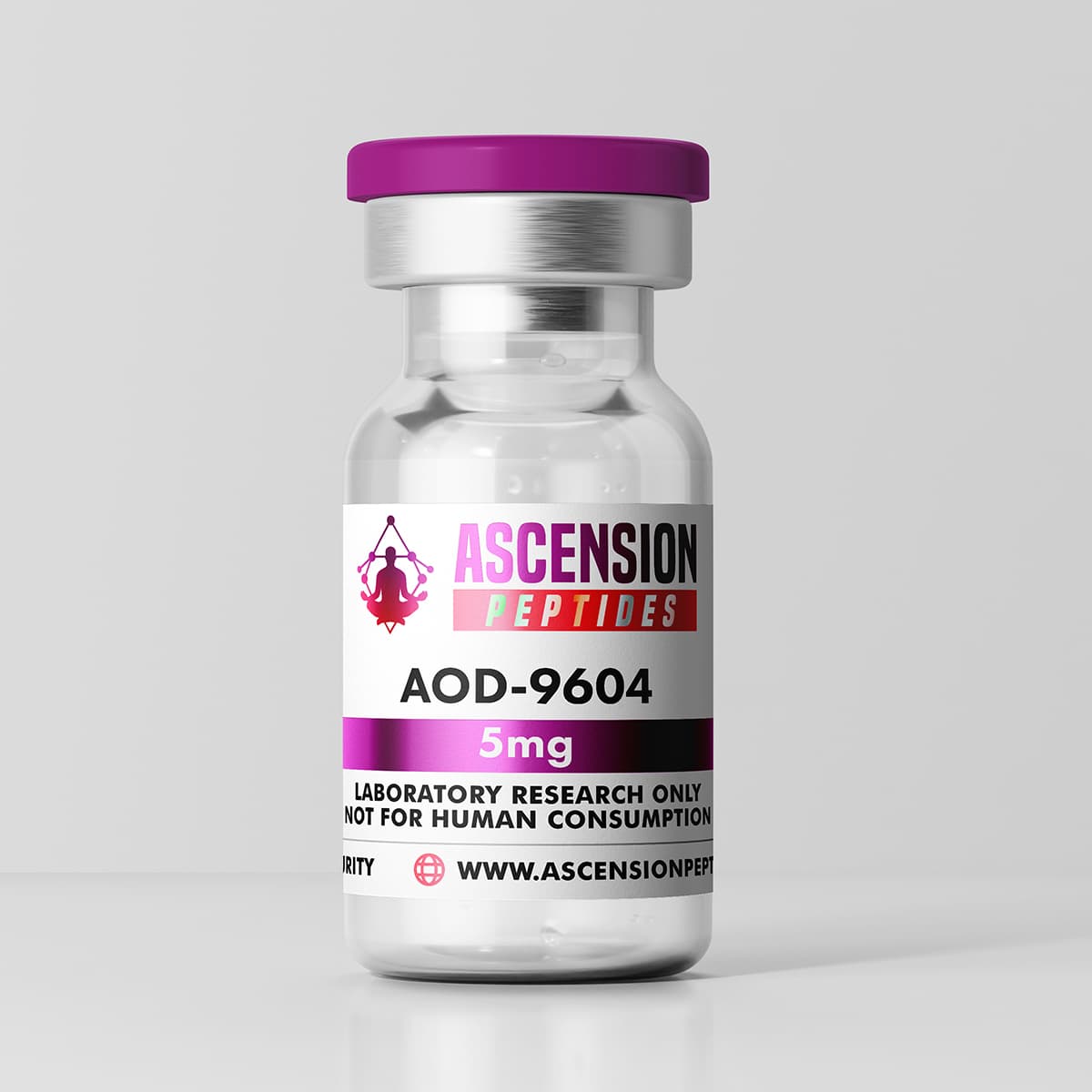
A reputable vendor like Ascension Peptides provides independently verified COAs and HPLC-tested compounds, making it a strong candidate for researchers sourcing AOD-9604. Always verify that the specific batch you're purchasing has current third-party documentation before proceeding.