HGH Fragment 176-191
Human Growth Hormone Fragment 176-191 (HGH Frag)
Get HGH Fragment 176-191
Sourced from Ascension Peptides. Verified ≥≥99% purity, third-party tested. COA included.
Off with code
PEPTIDEDECK
Table of Contents
What is HGH Fragment 176-191?
HGH Fragment 176-191 is a 16-amino acid peptide derived from the C-terminal region of human growth hormone (hGH). It corresponds specifically to amino acids 176 through 191 of the full 191-residue growth hormone protein — the portion researchers identified as responsible for GH's fat-metabolizing activity.
The story of this fragment begins in the 1980s and 1990s, when researchers at Monash University in Melbourne, Australia, set out to understand which structural domains of growth hormone were responsible for its diverse biological effects. While GH exerts anabolic, growth-promoting, and metabolic effects through its interaction with the GH receptor, the Monash group — led by researchers including Frank Ng and Gary Wittert — discovered that the C-terminal region could independently stimulate lipolysis (the breakdown of stored fat) in adipose tissue without activating the GH receptor's growth or diabetogenic pathways.
This discovery had profound implications. Growth hormone therapy had long been known to reduce body fat, but its use was limited by serious side effects: insulin resistance, hyperglycemia, edema, carpal tunnel syndrome, joint pain, and concerns about cellular proliferation. A fragment that retained only the fat-burning activity — discarding the problematic effects — represented a potentially much safer approach to metabolic intervention.
The fragment spawned the development of AOD-9604 (Anti-Obesity Drug 9604), a stabilized derivative with an additional tyrosine residue at the N-terminus that improved its pharmacological profile. AOD-9604 progressed through Phase 2 clinical trials for obesity and received FDA GRAS (Generally Recognized as Safe) status in 2014 for oral use as a food ingredient — a notable milestone for any growth hormone-derived peptide.
Research Benefits
Stimulates lipolysis (fat breakdown) in preclinical models
Does not promote hyperglycemia or insulin resistance
No proliferative or growth-promoting effects unlike full-length GH
Enhances oxidation of fatty acids in adipose tissue
Does not stimulate IGF-1 production at fragment-level activity
Mimics the fat-reducing action of growth hormone selectively
Inhibits de novo lipogenesis (new fat formation) in animal studies
Does not affect appetite or feeding behavior in animal models
How HGH Fragment 176-191 Works
Understanding how HGH Fragment 176-191 promotes fat loss without growth hormone's other effects requires examining both what it does do and what it cannot do at the molecular level.
Lipolytic Mechanism
The fragment stimulates lipolysis — the enzymatic breakdown of triglycerides stored in adipocytes (fat cells) into free fatty acids and glycerol — through a mechanism that partially mimics full-length GH's metabolic activity but through a distinct pathway:
- Hormone-Sensitive Lipase (HSL) activation: The fragment upregulates the activity of HSL, the rate-limiting enzyme responsible for mobilizing stored fat. This is the same enzyme activated by catecholamines (adrenaline, noradrenaline), but the fragment appears to act through a complementary signaling route.
- Beta-3 adrenergic receptor interaction: Research suggests the fragment enhances signaling through β3-adrenergic receptors, which are predominantly expressed in adipose tissue and are key regulators of thermogenesis and fat oxidation.
- Lipogenesis inhibition: Beyond breaking down existing fat, the fragment also inhibits de novo lipogenesis — the process by which the body converts excess carbohydrates and other substrates into new fat for storage. This dual action (breaking down stored fat while preventing new fat formation) contributes to its net fat-reducing effect.
Lipolysis Activation
Stimulates hormone-sensitive lipase to break down stored triglycerides into free fatty acids.
Lipogenesis Block
Inhibits de novo fat synthesis, preventing conversion of excess calories to new adipose tissue.
Glucose Neutral
Does not affect blood glucose, insulin sensitivity, or IGF-1 levels in research models.
Selective Action
Targets fat metabolism specifically without the growth-promoting effects of full-length HGH.
Why It Doesn't Cause GH Side Effects
Full-length growth hormone (191 amino acids) exerts its effects by binding to two GH receptor molecules simultaneously, creating a 1:2 hormone-receptor complex that activates the JAK2-STAT5 intracellular signaling cascade. This cascade drives IGF-1 production in the liver, promotes cellular proliferation, and triggers insulin-counterregulatory effects that raise blood glucose.
HGH Fragment 176-191, comprising only the terminal 16 amino acids, lacks the structural domains required for productive GH receptor binding. Specifically:
- It lacks Site 1 (the high-affinity GH receptor binding site in the middle of the GH molecule) needed to recruit the first receptor
- It lacks Site 2 (located in the N-terminal region) needed to recruit the second receptor for dimerization
- Without receptor dimerization, the JAK2-STAT5 pathway cannot be activated
- No JAK2-STAT5 activation means no IGF-1 production, no insulin resistance, no growth stimulation
The Role of the Disulfide Bond
HGH Fragment 176-191 contains two cysteine residues (positions 182 and 189 in the original GH numbering) that form an intramolecular disulfide bond, creating a small loop structure within the peptide. This loop is believed to be critical for the fragment's biological activity, as reducing (breaking) the disulfide bond in laboratory studies significantly diminishes its lipolytic effect. This structural feature helps the fragment maintain a conformation that allows it to interact with adipocyte cell membranes and activate the downstream lipolytic signaling cascade.
Research Applications
Obesity and body composition
Active research area with published studies
Lipolysis and fat metabolism
Active research area with published studies
Adipose tissue biology
Active research area with published studies
Metabolic syndrome
Active research area with published studies
Growth hormone structure-function studies
Active research area with published studies
Lipogenesis inhibition
Active research area with published studies
Insulin sensitivity and glucose homeostasis
Active research area with published studies
Anti-obesity peptide therapeutics
Active research area with published studies
Research Findings
The research on HGH Fragment 176-191 and its derivative AOD-9604 spans from initial structure-function studies through preclinical animal work to human clinical trials — a more complete research trajectory than most peptides in this space.
Foundational Discovery Studies
The identification of the 176-191 region as the lipolytic domain of growth hormone emerged from systematic fragmentation studies conducted at Monash University. Researchers synthesized various peptide fragments corresponding to different regions of the GH molecule and tested each for biological activity. The C-terminal fragment (176-191) consistently demonstrated lipolytic activity in adipose tissue bioassays while showing no activity in GH-dependent proliferation assays.
A landmark 2000 study by Ng and colleagues published in Obesity Research demonstrated that the recombinant fragment, when administered to obese (ob/ob) mice over 14 days:
- Reduced body weight gain by approximately 50% compared to controls
- Reduced epididymal fat pad weight significantly
- Did not affect food intake, lean body mass, or blood glucose
- Did not alter circulating IGF-1 levels
AOD-9604 Development and Clinical Trials
Building on the fragment research, Metabolic Pharmaceuticals developed AOD-9604 by adding a tyrosine residue to enhance stability and activity. AOD-9604 progressed through multiple clinical development stages:
- Phase 1: Safety and tolerability established in healthy volunteers
- Phase 2a: Proof of concept in overweight/obese adults, showing dose-dependent fat reduction
- Phase 2b (2007): 300 obese patients, randomized, placebo-controlled, 12-week trial. The 1mg/day oral dose produced statistically significant weight loss vs. placebo (~2.8 kg vs 0.8 kg)
- 2014: FDA GRAS designation for oral use as a food ingredient
The Phase 2b trial, published in Obesity (2009), was notable for several reasons. While the absolute weight loss was modest compared to modern GLP-1 agonists, the study confirmed the peptide's favorable safety profile — no treatment-related serious adverse events, no changes in glucose metabolism, and no antibody formation against the peptide. The modest efficacy may reflect the limitations of oral peptide delivery rather than the intrinsic potency of the mechanism.
Mechanism Studies
Detailed mechanistic research has revealed that the fragment's lipolytic activity operates through several converging pathways:
- In vitro adipose tissue studies: The fragment stimulated glycerol release (a marker of lipolysis) from both human and animal adipose tissue explants in a dose-dependent manner (Ng et al., 2001)
- Lipogenesis studies: Treatment with the fragment reduced incorporation of radiolabeled acetate into lipids in liver and adipose tissue, confirming inhibition of de novo fat synthesis (Heffernan et al., 2001)
- Glucose metabolism studies: In GH-deficient adults receiving the fragment intravenously, no changes in glucose disposal, insulin sensitivity, or glucose tolerance were observed, directly confirming the dissociation of lipolytic from diabetogenic effects (Wu et al., 2001)
🔑 Key Takeaways from Research
- The 176-191 fragment is the confirmed lipolytic domain of human growth hormone
- Fat loss effects are driven by both increased fat breakdown AND inhibited fat synthesis
- No effect on blood glucose, insulin, or IGF-1 — confirmed in both animal and human studies
- AOD-9604 (the stabilized derivative) completed Phase 2b trials with statistically significant results
- The safety profile is distinctly cleaner than full-length growth hormone
Comparison with Full-Length Growth Hormone
Multiple head-to-head studies have compared the fragment against full-length GH in animal models. In obese mice, both compounds reduced body fat, but only full-length GH simultaneously increased blood glucose and IGF-1 levels. The fragment produced fat loss of comparable magnitude to GH in some studies while maintaining metabolic neutrality — supporting the hypothesis that the C-terminal region drives lipolysis through a GH receptor-independent mechanism.
Comparison with GLP-1 Receptor Agonists
It is worth contextualizing the fragment's efficacy against modern obesity therapeutics. GLP-1 receptor agonists like semaglutide and tirzepatide produce dramatically greater weight loss (15-25% body weight) through appetite suppression, delayed gastric emptying, and central satiety signaling. HGH Fragment 176-191 works through an entirely different pathway — direct peripheral lipolysis — without any appetite-suppressing effects. This mechanistic difference means the fragment and GLP-1 agonists are not directly comparable, and some researchers have speculated about potential synergistic combinations that target both appetite and fat metabolism simultaneously, though no such studies have been published.
Dosage & Administration
All dosage information for HGH Fragment 176-191 derives from animal research and extrapolation from AOD-9604 clinical trials. No regulatory authority has approved the peptide for human therapeutic use, and the following information is presented for research reference purposes only.
| Context | Dosage | Route | Frequency |
|---|---|---|---|
| Animal Studies (mice) | 250-500 mcg/kg | Subcutaneous | Once daily |
| AOD-9604 Clinical Trial | 0.25-1.0 mg | Oral | Once daily |
| Human-Equivalent (Allometric) | 200-600 mcg | Subcutaneous | 1-3 times daily |
Administration Considerations from Research
- Fasting state: Research protocols typically administer the fragment in a fasted state, as elevated insulin levels (from food intake) suppress hormone-sensitive lipase and may blunt lipolytic activity
- Short half-life: The fragment's estimated half-life of 15-30 minutes means it is rapidly cleared, which is why some research protocols employ divided dosing (2-3 administrations per day)
- Timing: The most common research protocols administer doses 30-60 minutes before meals or exercise, capitalizing on the fasted lipolytic window
- Duration: Animal studies typically run 14-30 days; the AOD-9604 clinical trial ran 12 weeks. Most body composition changes become measurable after 4-8 weeks
Reconstitution
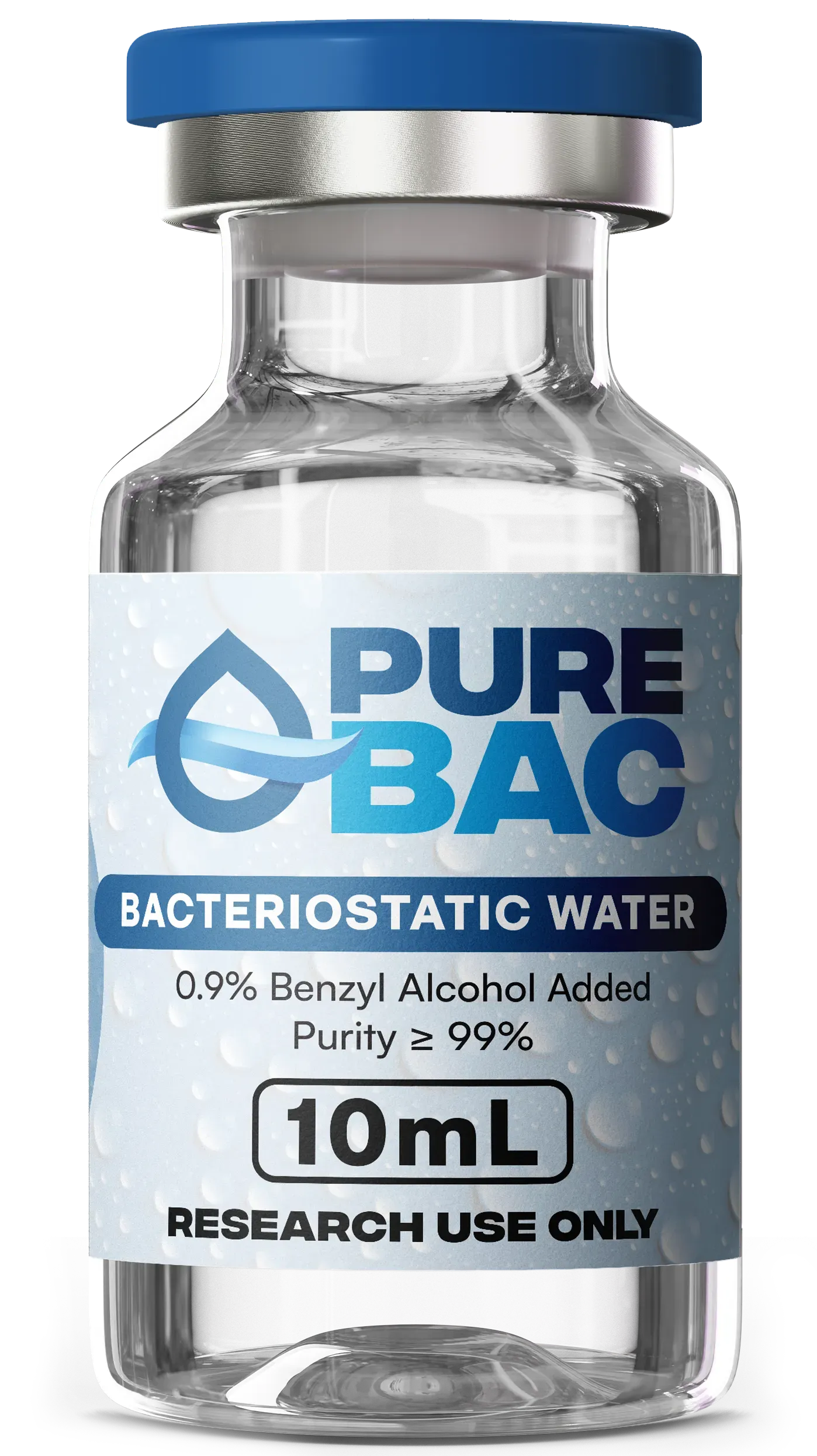
The peptide is typically supplied as a lyophilized (freeze-dried) powder that requires reconstitution with bacteriostatic water before use in research. Standard reconstitution practices for peptides apply: add the solvent slowly along the vial wall, swirl gently (do not shake), and store the reconstituted solution at 2-8°C for no more than 14 days. The fragment's disulfide bond structure makes it reasonably stable in solution, but prolonged storage or exposure to heat will degrade biological activity.
Work out your HGH Fragment 176-191 draw in units
Enter the vial size, the bacteriostatic water you add and the dose you want, and the calculator gives the syringe units, how long the vial lasts and when to discard it.
Open the peptide calculatorSafety & Side Effects
One of the most notable aspects of HGH Fragment 176-191 research is its consistent safety profile across both animal and human studies — a direct consequence of its inability to activate the growth hormone receptor.
What the Research Shows
- No hyperglycemia: Unlike full-length GH, the fragment does not increase blood glucose in any published study. This was confirmed in both animal models and a human intravenous infusion study in GH-deficient adults (Wu et al., 2001)
- No IGF-1 elevation: The fragment does not stimulate IGF-1 production, eliminating concerns about proliferative or acromegalic effects
- No insulin resistance: Glucose tolerance tests remained unchanged in the AOD-9604 Phase 2b trial
- No antibody formation: AOD-9604 did not elicit anti-peptide antibodies in clinical trial participants
- No serious adverse events: The Phase 2b trial reported no treatment-related serious adverse events across all dose groups
- No effect on appetite or lean mass: The fragment did not alter food intake or lean body mass in animal models, suggesting it is not catabolic
Potential Side Effects Reported in Research
While the overall safety profile is favorable, some observations from clinical and anecdotal settings include:
- Injection site reactions: Mild redness, swelling, or itching at subcutaneous injection sites — common to virtually all injectable peptides
- Mild headaches: Reported infrequently in clinical trial participants, not significantly above placebo rates
- Drowsiness: Occasionally reported, though not a consistent finding in controlled studies
Contraindications and Precautions
While no formal contraindications have been established (the peptide is not an approved drug), researchers should exercise caution in contexts involving:
- Active cancer — any peptide that modulates cell metabolism warrants caution in oncology contexts, even without evidence of proliferative effects
- Pregnancy and breastfeeding — no safety data exists
- Pediatric populations — not studied
- Hypersensitivity to peptide components