
The benefits of HRT after 65 include stronger bones, relief from hot flashes and night sweats, better vaginal and urinary comfort, and for some women improved sleep and quality of life. For about two decades, women were told to stop hormone therapy at 65 no matter how they felt. That blanket rule has quietly fallen apart. A 2024 study of nearly 10 million Medicare women and the 2022 position statement of The Menopause Society both conclude that age alone is not a reason to start or stop hormone therapy. What actually matters is the type of hormone, the route, the dose, and your personal health history. [1][3][4] This guide translates the new data into plain language and answers the real questions women ask at 60, 65, and 70.
| Number | What it means |
|---|---|
| Nearly 10 million | Senior Medicare women in the 2024 study of hormone therapy used past age 65 [1][3] |
| 19% lower | Overall mortality associated with estrogen alone after 65 in that study (relative, observational) [2][3] |
| 11.4% to 5.5% | Drop in hormone therapy use among senior women between 2007 and 2020 [2] |
| 4.7% | Share of postmenopausal US women using hormone therapy in 2020, down from 26.9% in 1999 [10] |
🔑 Key Takeaways
- Age alone is not a stop rule. Major guidelines no longer set a hard cutoff at 65; the decision is individualized around your symptoms and risks. [4]
- Type and route change the risk math. Estrogen alone (for women without a uterus) looks safer in older women than combined estrogen plus progestogen, and transdermal or vaginal delivery carries less clot risk than oral pills. [3][8]
- The clearest benefits are bone protection, hot flash relief, and genitourinary comfort. [4][5]
- Continuing is an easier decision than starting fresh. Starting systemic hormone therapy for the first time at 70 is possible for some women but needs a stricter evaluation. [4]
- Risk framing should be absolute, not scary. For most healthy women, the extra breast cancer risk is small in absolute terms. [7]
What the New Research Says About HRT After 65
The most important recent evidence is the 2024 study by Baik and colleagues, published in the journal Menopause. Researchers analyzed Medicare records from 2007 to 2020, covering nearly 10 million senior women, and asked how outcomes differed by hormone type, route, and dose in women who used therapy beyond age 65. [1][3]
The headline finding is that estrogen alone, used by women who have had a hysterectomy, was associated with lower overall mortality and lower rates of several cancers and heart attack. Combined estrogen plus progestogen, used by women who still have a uterus, was associated with a higher breast cancer risk, but that increase was smaller when women used low doses and transdermal or vaginal delivery rather than oral pills. Progestogen also appeared protective against endometrial and ovarian cancer. [1][2][3]
Table 1: What the 2024 Medicare study found for hormone therapy used beyond age 65
| Health outcome | Estrogen alone | Estrogen plus progestogen |
|---|---|---|
| Overall mortality | About 19% lower | No comparable mortality reduction reported |
| Breast cancer | About 16% lower | About 10 to 19% higher, mitigated by low-dose transdermal or vaginal delivery |
| Lung cancer | About 13% lower | Not reported |
| Colorectal cancer | About 12% lower | Not reported |
| Heart attack | About 11% lower | Not reported |
| Dementia | About 2% lower | Not reported |
| Endometrial cancer | Not applicable | About 45% lower with progestin |
| Ovarian cancer | Not applicable | About 21% lower with progestin |
| Blood clots | About 5% lower | About 5% lower with progestin |
*These are relative changes from an observational study of Medicare claims (Baik et al., Menopause, 2024). They describe associations, not guarantees, and cannot prove cause and effect. Sources: [1], [2], [3].*
A caution is essential here. This was claims data, not a randomized trial. Women who take hormone therapy into their late 60s and 70s tend to be healthier to begin with, a pattern called healthy-user bias, which can make a treatment look more protective than it is. Read the numbers above as directional signals about type and route, not as proof that hormones lower your risk of dying. Randomized evidence from the Women's Health Initiative found no increase in all-cause mortality over long-term follow-up for either regimen, but did not show the survival benefit these observational numbers hint at. [3][9]
The regulatory backdrop is also shifting. In November 2025, federal health officials announced plans to remove the boxed warning from menopause hormone therapy labels, citing decades of newer evidence, while keeping the endometrial cancer warning on estrogen-alone products. [10] Label wording can change between announcement and implementation, so confirm the current status of any product with your pharmacist or clinician.
Benefits of HRT for Women Over 60
For women over 60 with ongoing menopause symptoms, the benefits fall into a few well-supported categories. For the broader picture beyond age, see our overview of HRT for women: benefits, risks, and who it is right for.
Bone density and fracture prevention
Estrogen slows the bone loss that accelerates after menopause, and that protection matters more with each decade because fracture risk climbs with age. Hormone therapy is recognized as effective for preventing osteoporotic fractures in appropriate candidates. [4][5] Bone protection is one reason some women and clinicians choose to continue therapy rather than stop at an arbitrary age. For the full picture, see HRT and osteoporosis.
Hot flashes and night sweats that persist
Vasomotor symptoms do not always end in a woman's 50s. A meaningful share of women still have hot flashes and night sweats into their 60s, and some flare again when they stop treatment. Hormone therapy remains the most effective option for these symptoms, which is why persistent, disruptive hot flashes are a common reason to continue past 65. [4]
Vaginal, urinary, and sexual health
Genitourinary symptoms of menopause, including vaginal dryness, painful sex, and recurrent urinary tract infections, tend to worsen with age rather than improve. Local vaginal estrogen treats these directly, with very little absorbed into the bloodstream, and is widely considered safe for long-term use in older women, including many who cannot use systemic hormones. [4][6] This is often the single most useful option after 65.
Sleep, mood, and quality of life
Many women report better sleep and steadier mood on hormone therapy, often because night sweats stop interrupting their nights. These benefits are real for some women but vary a great deal from person to person, and they are harder to promise than the bone and genitourinary effects. Hormone therapy is not an antidepressant and is not a treatment for age-related cognitive decline. Some women also explore non-hormonal supports for menopause quality of life, such as peptides for menopause, which are a separate topic from hormone therapy.
HRT Over 60: Who Benefits Most
The clearest candidates for HRT over 60 are women with persistent, bothersome symptoms, no major contraindications, and a preference for treatment after an informed conversation about risks. The best outcomes come from matching the lowest effective dose and the safest route to the specific symptoms being treated, then monitoring over time. [4][5]
Risks of HRT After 60: What Actually Changes
The risks of HRT after 60 are real but often overstated. The important shift with age is not that hormones suddenly become dangerous, but that background cardiovascular and clot risk rises, so route and dose matter more. For a balanced summary, see the pros and cons of HRT.
Breast cancer, in absolute terms
Combined estrogen plus progestogen, used long term, is the main driver of added breast cancer risk. In the Women's Health Initiative, estrogen alone in women without a uterus did not raise breast cancer risk, and the 2024 Medicare data associated it with lower risk. [3] To keep this in perspective, the Lancet 2019 meta-analysis estimated that five years of combined therapy starting around age 50 is linked to roughly one extra breast cancer diagnosis for every 50 women over the following 20 years, compared with about one extra case per 200 women using estrogen alone. Longer use adds more. [7] That is an increase worth discussing, not a reason for panic. Our deep dive covers this in detail: HRT and breast cancer risk.
Blood clots and stroke: oral vs transdermal
Oral estrogen raises the risk of venous blood clots, and this matters more as women age. Observational data suggest transdermal estrogen (patches and gels) is not associated with the same increase, because it bypasses the liver. [8] For many women over 60, switching from a pill to a patch is a simple way to lower clot risk while keeping symptom relief. See HRT patches for how transdermal delivery works.
Dementia and the late-start question
Dementia is where framing must stay careful. The 2024 Medicare data associated estrogen alone with a very small reduction in dementia risk, but other research suggests that starting some systemic hormones late may raise risk. [3] No one should take hormone therapy to prevent dementia. This tension is another reason route, dose, and timing matter. Read more in HRT and dementia.
Who should not use HRT
Systemic hormone therapy is generally not appropriate for women with a history of breast or endometrial cancer, a prior blood clot or stroke, active liver disease, undiagnosed vaginal bleeding, or uncontrolled high blood pressure. [4][5] Some of these women can still use local vaginal estrogen for genitourinary symptoms, which is a separate conversation with your clinician.
The Timing Hypothesis Explained
The timing hypothesis is the idea that when you start hormone therapy matters as much as whether you start it. Women who begin therapy within about 10 years of menopause, or before age 60, tend to show a more favorable cardiovascular profile. Women who started oral systemic hormones many years after menopause, as in the original Women's Health Initiative, showed more harm. This reconciles the 2002 WHI scare with modern practice and explains why the after-65 conversation is really about route, dose, and formulation, not a yes or no on hormones. [4][9]
The timing hypothesis is why the same therapy can look risky in one group and reasonable in another. It also explains why continuing a regimen you started earlier is a different question from starting one for the first time in your late 60s or 70s.
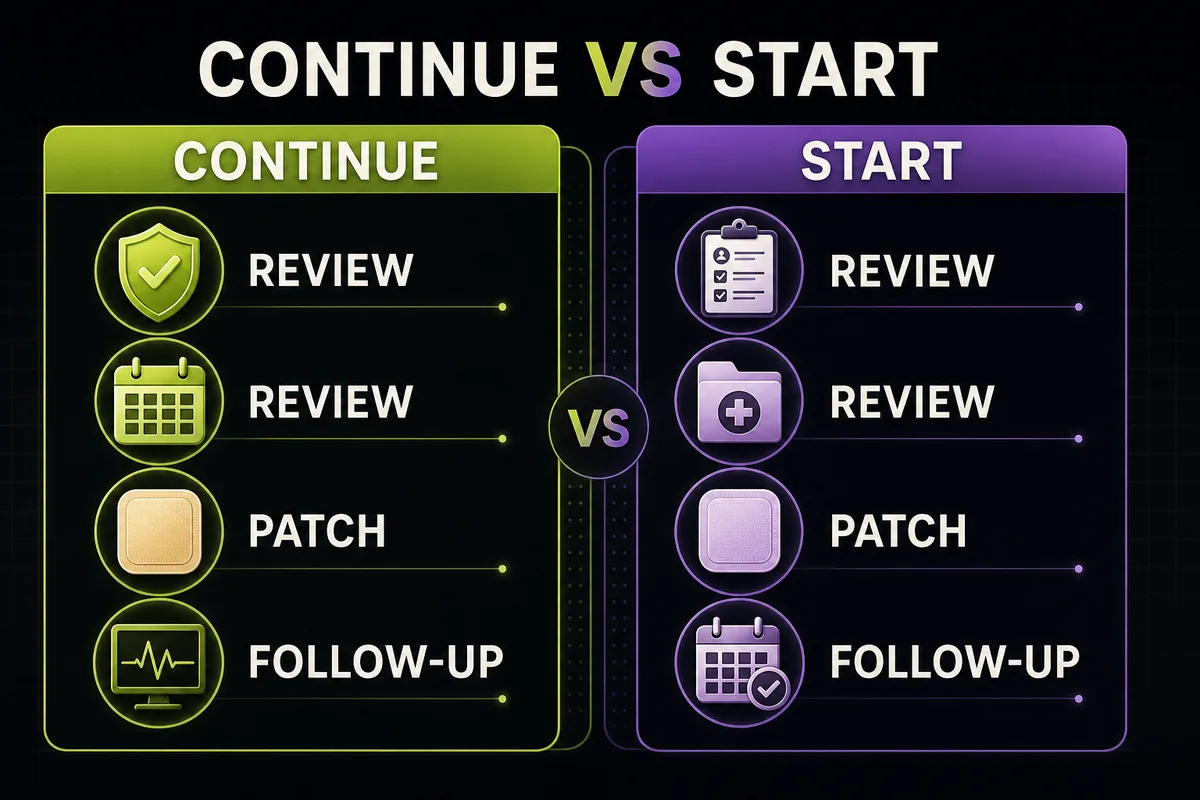
HRT After 60: Continuing vs Starting Late
The 2022 position statement of The Menopause Society is the anchor for HRT after 60. Its stance, in plain terms, is that there is no general rule for stopping hormone therapy based on age alone. For healthy women with persistent symptoms, continuing beyond 65 is reasonable with counseling and regular reassessment, and risk mitigation through low doses and non-oral routes becomes more important as women age. [1][4]
Starting late is a different calculation than continuing. Someone already doing well on a stable, low dose is in a very different position from someone considering hormones for the first time at 68. Starting fresh calls for a clear symptom justification, a cardiovascular assessment, a preference for transdermal or vaginal delivery, a low starting dose, and closer follow-up. The types of HRT available all factor into this choice.
Table 2: Continuing HRT past 65 vs starting HRT after 65
| Question | Continuing past 65 | Starting after 65 |
|---|---|---|
| Guideline stance | Reasonable with counseling and annual reassessment | Individualized, needs clear justification |
| Typical reason | Persistent symptoms already well controlled | New or returning symptoms, bone protection |
| Preferred route and dose | Keep lowest effective dose, consider switching oral to transdermal | Start low, transdermal or vaginal preferred |
| Key risk focus | Breast cancer with long-term combined therapy | Cardiovascular and clot risk of a late systemic start |
| Monitoring | Annual review and mammograms | Closer follow-up during the first year |
Risks of Starting HRT After 60 vs Continuing
The risks of starting HRT after 60 center on the fact that a first-time systemic start later in life begins from a higher baseline of cardiovascular and clot risk, which is exactly the pattern the timing hypothesis describes. That is why clinicians lean toward transdermal or vaginal routes and low doses when starting late, and why the first year of follow-up is more attentive. [4][9]
Continuing carries a different profile. If you have used hormone therapy for years without problems, your main ongoing focus is the breast cancer risk that accumulates with long-term combined therapy, managed through annual review, mammograms, and periodic conversations about whether to continue, lower the dose, or switch routes. [1][7]
Can I Start HRT at 70?
Yes, starting HRT at 70 is possible for some women, and age by itself does not automatically disqualify you. That said, systemic hormone therapy started this late carries greater cardiovascular and clot considerations, so the evaluation is stricter and clinicians often try lower-risk options first. [4] The answer is rarely a flat no, but it is rarely a casual yes either.
Taking HRT at 70: What Clinicians Consider
When weighing taking HRT at 70, clinicians look at how severe your symptoms are, how many years it has been since menopause, your cardiovascular and cancer history, and which route and dose would keep risk lowest. A woman with disruptive symptoms, a clean cardiovascular and cancer history, and a willingness to use a low-dose patch is a very different candidate from someone with hypertension or a clot history. [4][5]
The lower-risk first step: vaginal estrogen
For the symptoms that most often trouble women at 70 and beyond, meaning vaginal dryness, painful sex, and recurrent urinary tract infections, local vaginal estrogen is frequently the right first step. It works where it is applied, with minimal absorption into the bloodstream, and is often appropriate even for women who should not use systemic hormones. [4][6] Many women get the relief they need from this alone.
Tapering HRT in Your 70s
There is no single correct age to stop, and tapering HRT in your 70s is a shared decision, not a mandate in either direction. Many clinicians prefer a gradual dose reduction over an abrupt stop, sometimes as a trial discontinuation, to see whether symptoms return and how strongly. When hot flashes or sleep problems come back, they often return within weeks to a few months, and bone loss resumes once estrogen is withdrawn. [5][6]
If symptoms return and remain disruptive, restarting at a low dose or switching to local vaginal estrogen for genitourinary symptoms are both reasonable paths. There is no pressure to prove you can live without treatment, and no pressure to stay on it. For a full walkthrough, see how to stop HRT safely.
Talking to Your Clinician About HRT After 65
The most useful thing you can do is come to the conversation prepared. A short checklist:
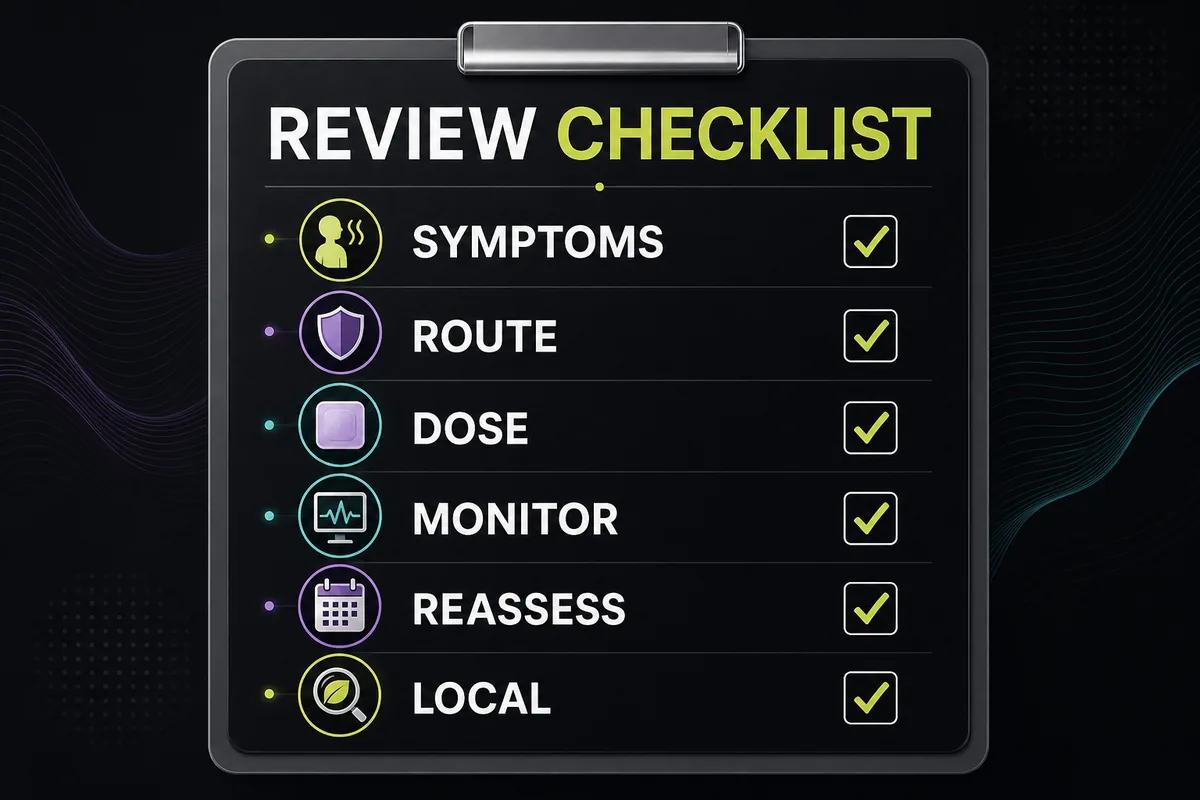
- What specific symptoms are we treating, and how much are they affecting my life? - What is the safest type and route of hormone therapy for me given my history? - What is the lowest effective dose that would help? - How will we monitor for benefits and risks over time? - How often will we reassess whether to continue, adjust, or stop? - Would local vaginal estrogen alone address my main symptoms?
If you do not have a clinician who is comfortable with menopause care, that is a common and fixable problem. You can find an HRT doctor near you or review the best online HRT providers we have compared. If cost is your concern, our guide to what HRT costs with and without insurance breaks down the real numbers before you book.
Frequently Asked Questions
References
- The Menopause Society. Women aged older than 65 years may be able to safely continue taking hormone therapy. Press release, 2024. https://menopause.org/press-releases/women-aged-older-than-65-years-may-be-able-to-safely-continue-taking-hormone-therapy
- MDedge ObGyn. Hormone therapy after 65 a good option for most women. 2024. https://www.mdedge.com/obgyn/article/268686/menopause/hormone-therapy-after-65-good-option-most-women
- Baik SH, Baye F, McDonald CJ. Use of menopausal hormone therapy beyond age 65 years and its effects on women's health outcomes by types, routes, and doses. Menopause, 2024. https://pubmed.ncbi.nlm.nih.gov/38595196/
- The 2022 hormone therapy position statement of The North American Menopause Society. Menopause, 2022;29(7):767-794. https://pubmed.ncbi.nlm.nih.gov/35797481/
- Mayo Clinic. Hormone therapy: Is it right for you? https://www.mayoclinic.org/diseases-conditions/menopause/in-depth/hormone-therapy/art-20046372
- NHS. Hormone replacement therapy (HRT). https://www.nhs.uk/medicines/hormone-replacement-therapy-hrt/
- Collaborative Group on Hormonal Factors in Breast Cancer. Type and timing of menopausal hormone therapy and breast cancer risk. Lancet, 2019;394:1159-1168. https://pubmed.ncbi.nlm.nih.gov/31474332/
- Vinogradova Y, Coupland C, Hippisley-Cox J. Use of hormone replacement therapy and risk of venous thromboembolism. BMJ, 2019;364:k4810. https://www.bmj.com/content/364/bmj.k4810
- Manson JE, et al. Menopausal hormone therapy and long-term all-cause and cause-specific mortality: the Women's Health Initiative randomized trials. JAMA, 2017;318(10):927-938. https://pubmed.ncbi.nlm.nih.gov/28898378/
- AARP. What women 50-plus need to know about menopausal hormone therapy. 2025. https://www.aarp.org/health/drugs-supplements/hormone-replacement-therapy-for-menopause/
Disclosure: this article contains affiliate links to Gala Health. If you start care through them, we may earn a commission at no extra cost to you.