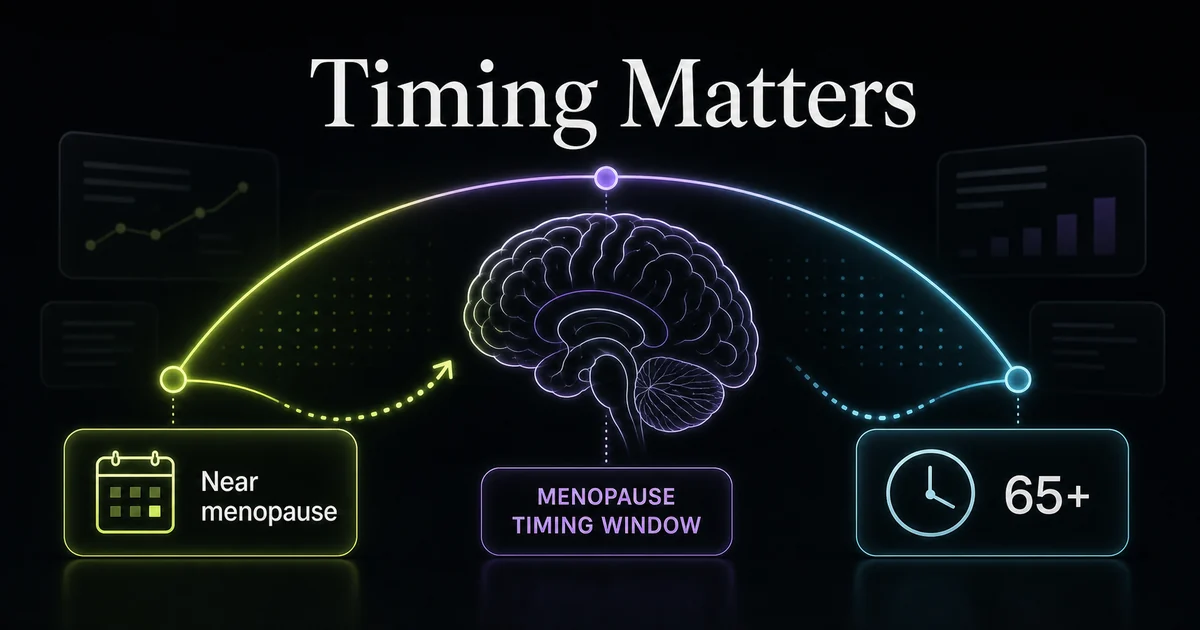

HRT and dementia is one of the most confusing questions in menopause medicine, and the honest answer is that the evidence genuinely conflicts: whether hormone therapy looks harmful, protective, or neutral depends heavily on when treatment is started and which type is used. No major guideline recommends HRT to prevent dementia, yet no good-quality trial shows that starting it around menopause for symptom relief raises dementia risk either. The relationship between dementia and HRT is not one headline, it is a whole body of evidence pulling in different directions. This page reads that entire evidence base, observational studies and randomized trials together, and splits estrogen-only from combined therapy so you can see what is actually known.
🔑 Key Takeaways
- Started around menopause and used short-term, HRT has not been shown to raise dementia risk in randomized trials [3][4].
- Started at age 65 or older, combined HRT was linked to higher dementia risk in the WHIMS trial, the source of the "HRT doubles dementia risk" headline [5].
- Estrogen-only and combined HRT behave differently in the data; the dementia signal in older women tracked the combined (estrogen plus progestogen) regimens, not estrogen alone [3][5].
- Observational studies and randomized trials measure different things, which is much of why they disagree; observational data can only show associations and are confounded [1][6].
- The largest pooled analyses find no clear overall increase or decrease in dementia or mild cognitive impairment risk across HRT types, timing, and duration [4].
- No medical body endorses HRT for dementia prevention; it is prescribed to treat moderate-to-severe menopausal symptoms, not to protect the brain [9][10].
Quick Stats
| Stat | What it means |
|---|---|
| Women make up roughly two-thirds of people living with Alzheimer's and dementia | Sex differences, including estrogen loss at menopause, are an active research question, not a settled explanation [1][10] |
| WHIMS, the trial behind the "HRT doubles dementia risk" headline, only enrolled women aged 65 and older | Its finding may not apply to women who start HRT near menopause [3][5] |
| The "critical window" is generally defined as before age 60 or within about 10 years of menopause | This is the period when estrogen may still interact with brain estrogen receptors [3][10] |
| The largest pooled analysis to date reviewed 10 studies of more than 1 million women | It found no clear overall increase or decrease in dementia or mild cognitive impairment risk [2][4] |
HRT and dementia: does hormone therapy raise or lower risk?
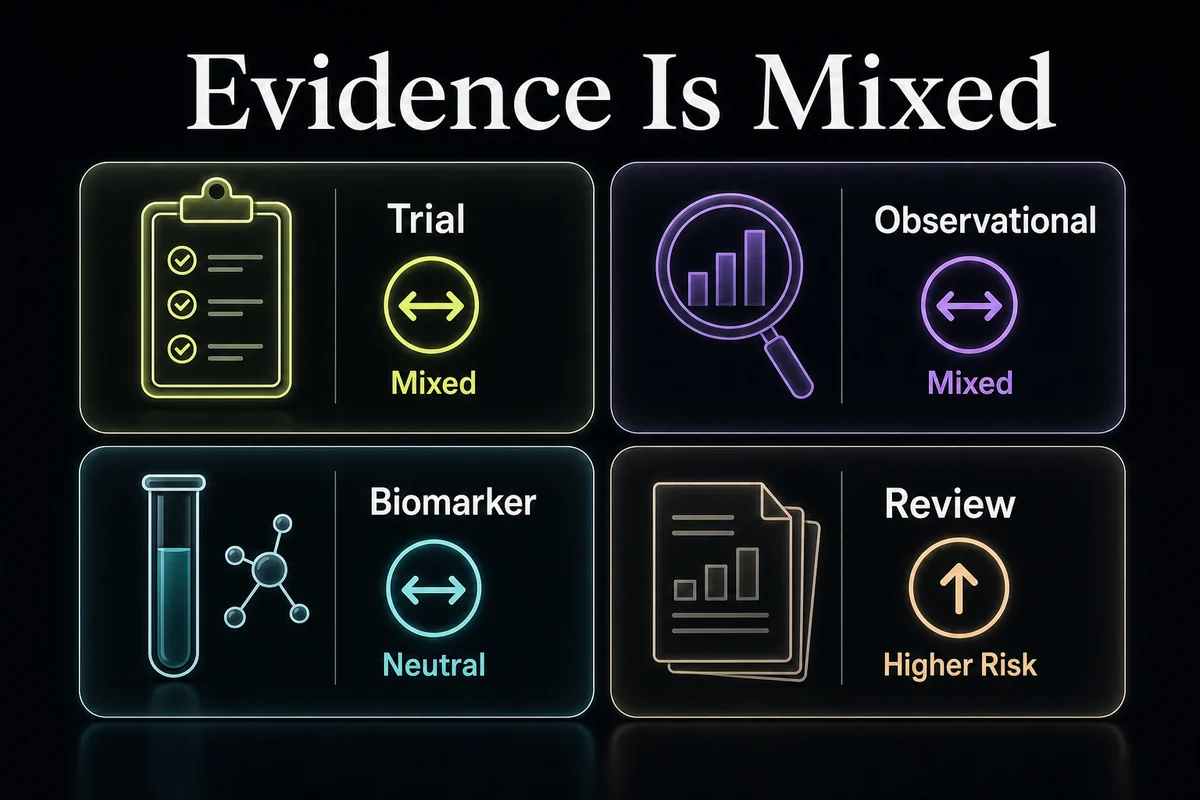
The direction of the association between HRT and dementia flips depending on three things: the age at which treatment starts, the type of HRT, and how the study was designed. That is why you can find a credible-looking study for almost any headline. Two forces explain most of the contradiction, and the rest of this article walks through both: the timing hypothesis (estrogen started near menopause may behave very differently from estrogen started in a woman's late 60s or 70s) and the gap between observational studies and randomized trials, which measure HRT dementia risk in different ways and frequently disagree.
When researchers pool everything together, the overall signal is quiet. A 2025 systematic review in Lancet Healthy Longevity combining 10 studies of more than a million women found no clear evidence that HRT increases or decreases dementia or mild cognitive impairment risk, regardless of type, timing, or duration [4]. The Alzheimer's Society reaches a similar bottom line: the research is conflicting, with no strong evidence that HRT meaningfully raises or lowers dementia risk for most women [1]. So the honest starting point on HRT and dementia risk is uncertainty, not alarm.
The evidence at a glance: every major HRT and dementia study compared
No competitor page lays the studies side by side, so here is the whole evidence base in one view. Notice how each finding lines up with the study's design, the age of the women, and the type of HRT used.
| Study / Year | Design | Population | HRT type | Direction on dementia | Key caveat | |
|---|---|---|---|---|---|---|
| WHIMS | 2003 | Randomized controlled trial | ~4,500 women aged 65+ | Combined (estrogen plus progestin) | Higher dementia risk [5] | Only enrolled women 65+, on average well past menopause |
| Vinogradova (BMJ) | 2021 | Observational (nested case-control) | ~400,000 women | Most HRT types | No overall increase; small nuances by type and duration [6] | Association only, subject to confounding |
| Coughlan (JAMA Neurology) | 2023 | Observational (tau-PET imaging) | ~193 women | Estrogen plus progestogen | Higher brain tau only if HRT started 5+ years late and amyloid was already high [8] | A biomarker signal, not diagnosed dementia |
| Pourhadi (BMJ) | 2023 | Observational (nationwide) | 55,000+ Danish women | Combined | Higher dementia rates [7] | Authors themselves flagged confounding |
| Mosconi analysis (Frontiers) | 2023 | Meta-analysis (50+ studies) | Pooled | Mixed | Lower risk if started midlife, higher if combined and started at 65+ [10] | Heterogeneous studies pooled together |
| Lancet Healthy Longevity | 2025 | Systematic review (10 studies) | More than 1 million women | All types | No clear increase or decrease [4] | Consistent across type, timing, and duration |
Why women face higher dementia risk in the first place
Women make up roughly two-thirds of people with Alzheimer's disease, and that gap does not fully disappear once you account for women living longer [1][10]. One leading hypothesis for the remainder is the loss of estrogen at menopause, the same decline that drives hot flushes and the other symptoms treated with hormone replacement therapy for menopause, which is why researchers have looked so hard at whether replacing it protects the brain.
The biological rationale is real but proposed, not proven. Estrogen receptors are dense in the hippocampus, the memory region hit early in Alzheimer's. In preclinical models, estrogen influences how the brain processes amyloid and tau (the two proteins that accumulate in Alzheimer's), dampens inflammation, supports blood flow, and helps the brain use glucose for energy [1][10]. The catch is that mechanisms in a dish or a rodent do not always translate into fewer dementia diagnoses in women, and the human evidence has been far messier than the biology predicted.
What the observational studies show (and their limits)
Most of what you read about HRT and dementia comes from observational studies, so it helps to know what they can and cannot do. These studies track large groups of women who did or did not take HRT and look for statistical associations with later dementia. They cannot prove cause and effect, and they are vulnerable to confounding: hidden differences between the women who take HRT and those who do not.
One confounder matters enormously here. Brain fog and memory complaints are early symptoms of dementia, and they can also prompt a woman (or her doctor) to start HRT. So a woman in the earliest, undiagnosed stage of dementia may be more likely to be prescribed hormones, making it look as though HRT preceded and "caused" the dementia when the sequence was actually reversed. This is why the question does HRT cause dementia cannot be answered by association studies alone, no matter how large.
The two biggest observational studies show how the answer can swing. Vinogradova and colleagues studied nearly 400,000 women in UK databases (BMJ, 2021) and found that most types of menopausal hormone therapy were not associated with an increased risk of dementia overall, with only small nuances by type and duration [6]. Two years later, Pourhadi and colleagues published a Danish nationwide study of more than 55,000 women (BMJ, 2023) that did find combined HRT associated with higher dementia rates, though the authors stressed that confounding could explain the link and that their design could not establish cause [7]. The Alzheimer's Society summarizes it the same way: the observational findings genuinely conflict [1].
What the randomized trials show: WHIMS and after
Randomized controlled trials clear a higher evidentiary bar because they assign women to treatment or placebo by chance, which removes the confounding that plagues observational data. On HRT and dementia there is really one landmark trial, and it is the source of nearly every scary headline.
The Women's Health Initiative Memory Study (WHIMS), published in 2003, randomized women to combined estrogen plus progestin or placebo and found the hormone group roughly doubled the risk of probable dementia (a hazard ratio of about 2), and the therapy did not prevent mild cognitive impairment [5]. In absolute terms that worked out to roughly 23 additional cases of dementia per 10,000 women per year, a real increase but a small absolute number for any one woman.
The critical caveat is who WHIMS studied: only women aged 65 and older, on average more than 15 years past menopause, which is exactly the group the timing hypothesis predicts would do worst. Later analyses of women who started earlier, around ages 50 to 54, found no measurable effect on cognition years afterward [3]. A more recent plasma p-tau217 biomarker re-analysis of WHI participants suggested blood biomarkers may help flag which women are vulnerable when treatment starts late in life, rather than showing blanket harm for everyone [3]. In short, the WHIMS result is best read as a warning about starting HRT after 65, not a verdict on hormone therapy started at the usual age.
HRT and Alzheimer's: the timing hypothesis explained
The timing hypothesis is the framework that reconciles the conflicting data on HRT and Alzheimer's. Also called the "critical window" or "healthy cell" hypothesis, it proposes that estrogen may protect the brain while receptors are still present and responsive (around menopause) but may do nothing helpful, or even harm, once those receptors have downregulated years later. It is a leading hypothesis, not settled fact.
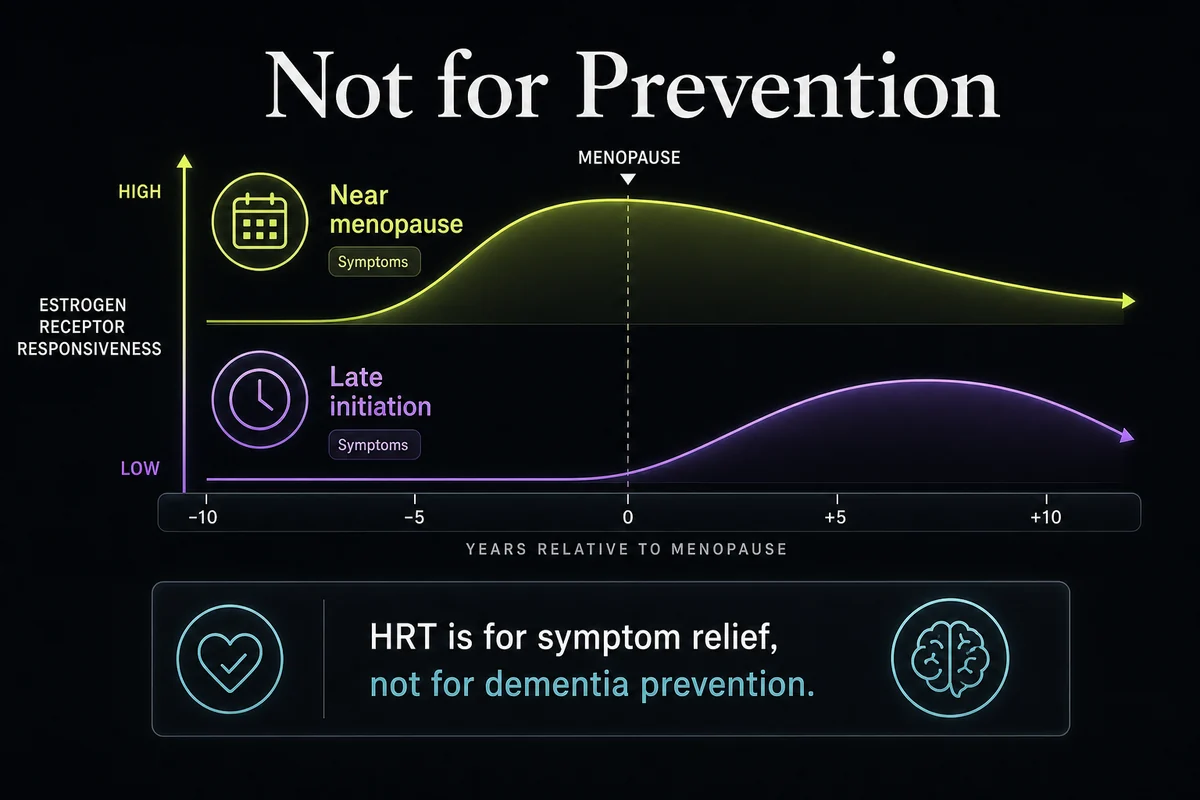
The supporting evidence is suggestive, not definitive. A 2023 analysis by Lisa Mosconi and colleagues pooling more than 50 studies reported that HRT started in midlife or within about 10 years of menopause was associated with lower dementia risk, while combined HRT started after 65 was associated with higher risk [10]. The Coughlan tau-PET study in JAMA Neurology (2023) found early or premature menopause, or HRT started 5 or more years after menopause, linked to higher brain tau, but only in women who already had elevated amyloid, hinting that timing interacts with a woman's underlying brain state [8]. An analysis presented at a neurology meeting and covered in the press reported roughly a 32% lower Alzheimer's risk when HRT started within 5 years of menopause and about 38% higher risk when started at 65 or later, especially with progestin, though that work was not yet peer-reviewed and should be treated as preliminary [12].
So the pattern on HRT and Alzheimer's disease is consistent enough to take seriously and uncertain enough that no one should treat hormones as brain insurance. Much of the older literature that looks so bad, WHIMS included (and some HRT Alzheimers scare stories built on it), studied late starters. The same intervention at a different age may simply be a different intervention as far as the brain is concerned.
Estrogen-only vs combined HRT and dementia
The type of HRT is the second axis that keeps getting flattened in headlines. In WHI and WHIMS, and again in the p-tau217 re-analysis, the dementia signal in older women tracked combined therapy (estrogen plus a progestogen), while estrogen-only therapy did not show the same pattern [3][5]. That does not make estrogen-only a proven brain protector; it means the observed risk in the late-starter trials has not been an estrogen-alone effect.
There is an important prescribing detail behind this split. Estrogen-only HRT is generally reserved for women who have had a hysterectomy, because estrogen without a progestogen raises the risk of endometrial (womb-lining) cancer in women who still have a uterus. So the estrogen-only and combined groups are not interchangeable populations, one more reason not to read too much into the difference. The estrogen-only versus combined distinction also shapes HRT and breast cancer risk, a separate consideration from dementia that is best weighed alongside the other risks and side effects of HRT rather than in isolation.
Does HRT prevent dementia? What guidelines actually say
Here is the direct answer to does HRT prevent dementia: no major medical body recommends hormone therapy to prevent dementia or Alzheimer's disease. The Menopause Society (formerly NAMS), in its 2022 Hormone Therapy Position Statement, is explicit that HRT should be prescribed to treat moderate-to-severe menopausal symptoms and, where appropriate, to protect bone, not to prevent cognitive decline [9]. Experts quoted in recent coverage, including researchers studying estrogen and the brain, say the same: the science is not strong enough to prescribe hormones for prevention [10].
That answers does HRT help against dementia too. Some observational and midlife-initiation data hint at a lower risk, and the biology is plausible, but the largest pooled analyses are null and the strongest trial evidence in late starters points the other way [4][5]. A hint in confounded data is not a green light to treat healthy brains.
One piece of 2025-2026 context is worth knowing without over-reading it. The US Food and Drug Administration moved to remove the decades-old boxed warning from menopausal hormone therapy products, which may broaden prescribing and spur more research into estrogen and the brain [10]. That shift does not change the "not for prevention" stance; it rebalances how the known symptom benefits and risks are communicated. If you are weighing hormones for symptom relief, it still helps to weigh the pros and cons of HRT as a whole, the same way you would consider HRT and bone health, one area where the guidelines do support hormone therapy.
What this means if you are deciding about HRT
None of this is medical advice, and the right decision is individual, but the evidence sorts women into two broad situations. For women near menopause (before 60 or within about 10 years of their last period) taking HRT short-term for bothersome symptoms, current evidence does not show an increase in dementia risk, and fear of dementia should not by itself keep a symptomatic woman from treatment [3][4]. For women aged 65 and older, or those starting more than 10 years after menopause, the overall benefit-to-risk balance is less favorable, and dementia is one consideration a clinician weighs alongside heart and clot risk [5][9][11].
The most useful move is to have this conversation with a clinician who knows your history: your age, how long since menopause, whether you still have a uterus, and your personal and family risk factors. To read more about who benefits and who should be cautious, our overview of who HRT is right for is a good next step. For readers who, after that conversation, decide with their clinician to start treatment for symptoms, finding a menopause-literate HRT provider is the practical next step, though nothing on this page is a reason to start hormones for the brain.
Frequently Asked Questions
References
- Alzheimer's Society. Hormones and dementia risk. Accessed 2026. https://www.alzheimers.org.uk/about-dementia/managing-the-risk-of-dementia/additional-treatments-for-dementia-risk/hormones
- Alzheimer's Research UK. Menopause and Dementia Risk: What We Know So Far. Updated March 2026. https://www.alzheimersresearchuk.org/news/menopause-and-dementia-risk-what-we-know-so-far/
- The Conversation. Hormone therapy and dementia risk: what a new study says about menopause treatment. 2025. https://theconversation.com/hormone-therapy-and-dementia-risk-what-a-new-study-says-about-menopause-treatment-277987
- Lancet Healthy Longevity. Systematic review and meta-analysis of menopausal hormone therapy and dementia risk (10 studies, more than 1 million women), 2025. https://www.thelancet.com/journals/lanhl/article/PIIS2666-7568(25)00122-9/fulltext
- Shumaker SA, Legault C, Rapp SR, et al. Estrogen plus progestin and the incidence of dementia and mild cognitive impairment in postmenopausal women: the Women's Health Initiative Memory Study (WHIMS). JAMA. 2003;289(20):2651-2662. https://pubmed.ncbi.nlm.nih.gov/12771112/
- Vinogradova Y, Dening T, Hippisley-Cox J, et al. Use of menopausal hormone therapy and risk of dementia: nested case-control studies using QResearch and CPRD databases. BMJ. 2021;374:n2182. https://www.bmj.com/content/374/bmj.n2182
- Pourhadi N, Morch LS, Holm EA, et al. Menopausal hormone therapy and dementia: nationwide, nested case-control study. BMJ. 2023;381:e072770. https://www.bmj.com/content/381/bmj-2022-072770
- Coughlan GT, et al. Menopause status, hormone therapy timing, and brain tau deposition (tau-PET study). JAMA Neurology, 2023. https://jamanetwork.com/journals/jamaneurology/fullarticle/2802204
- The Menopause Society (formerly NAMS). The 2022 Hormone Therapy Position Statement. Menopause, 2022. https://menopause.org/professional-resources/position-statements
- NBC News. Estrogen and dementia prevention: what the science on hormone therapy really shows. 2025. https://www.nbcnews.com/health/womens-health/estrogen-dementia-prevention-hormone-replacement-women-perimenopause-rcna245664
- CNN Health. Alzheimer's and hormone therapy: a study suggests a timing sweet spot. April 2023. https://www.cnn.com/2023/04/03/health/alzheimers-hormone-replacement-therapy-wellness/
- Women's Health. Hormone therapy and Alzheimer's risk. 2025. https://www.womenshealthmag.com/health/a66128294/hormone-therapy-alzheimers-risk/
Disclosure: this article contains affiliate links to Gala Health. If you start care through them, we may earn a commission at no extra cost to you.