Getting peptides prescribed in 2026 is easier than most people realize — but only if you know where to look and what to say. Most primary care physicians won't prescribe them. The right specialists, and a growing number of telehealth platforms, will.
This guide covers the complete process: how to find a doctor who prescribes peptides, what to ask during your appointment, which telehealth services offer fast online prescriptions, what the typical costs look like, and — for those who can't or don't want to go the prescription route — where research peptide vendors fit in.
Can Your Regular Doctor Prescribe Peptides?
Technically, yes — any licensed MD or DO in the US can prescribe off-label compounded peptides. Practically, most won't. Here's why:
- Lack of familiarity. Most primary care physicians have little to no training in peptide therapy. It's not part of standard medical school curricula, and the evidence base — while growing — isn't well represented in mainstream clinical guidelines yet.
- Regulatory gray zone. Many peptides sit in a complicated space between research chemical and compounded pharmaceutical. Doctors without a specialty in integrative or functional medicine tend to steer clear.
- Liability concerns. Without established clinical protocols, some physicians are cautious about prescribing off-label compounds they're unfamiliar with.
That said, the landscape is shifting. With the RFK Jr.-era FDA reforms in 2026 opening the door for compounding pharmacies to carry a wider range of peptides, more physicians are getting comfortable with peptide prescriptions. But for now, you'll have the best luck with specific types of providers.
Which Doctors Prescribe Peptides?
The following specialties are your best bet for a peptide prescription:
- Functional medicine physicians — These MDs take a root-cause, systems-based approach and are most likely to be up-to-date on peptide therapy research. Sermorelin, CJC-1295/Ipamorelin stacks, BPC-157, and AOD-9604 are commonly prescribed.
- Anti-aging and longevity clinics — Clinics focused on hormone optimization, biohacking, and longevity regularly prescribe growth hormone secretagogues and peptides for body composition and recovery.
- Sports medicine doctors — For injury-related peptides like BPC-157 and TB-500, sports medicine physicians who work with high-performance athletes are increasingly knowledgeable.
- Men's health and TRT clinics — Many testosterone replacement therapy (TRT) clinics now offer peptides as add-ons. PT-141 for sexual function and GH secretagogues for body composition are common.
- Weight loss / metabolic medicine clinics — For GLP-1 class compounds like Semaglutide and AOD-9604, metabolic medicine specialists or bariatric physicians are your best route.
If you don't have a functional medicine doctor nearby, telehealth is the most practical solution — covered in detail below.
What to Say to Your Doctor: The Conversation Script
Walking into a doctor's office and asking for peptides cold rarely works. Coming in informed, with specific language and a clear goal, dramatically improves your odds. Here's how to approach it:
Step 1: Lead with your health goal, not the compound
Don't open with "I want BPC-157." Open with:
- "I've been struggling with slow recovery from a recurring shoulder injury. I've read about peptide therapy for tendon repair and would like to discuss whether I'd be a good candidate."
- "I'm concerned about my low IGF-1 levels and declining muscle mass. I've been researching growth hormone secretagogues and would like your thoughts on whether Sermorelin or CJC-1295/Ipamorelin might be appropriate for me."
- "I'm interested in metabolic optimization and have read clinical literature on AOD-9604 for fat metabolism. Can we discuss whether this fits my profile?"
Step 2: Bring a lab request
For GH secretagogues, doctors want baseline data before prescribing. Ask for:
- IGF-1 (Insulin-Like Growth Factor 1)
- Total and free testosterone
- Thyroid panel (TSH, free T3, free T4)
- Comprehensive metabolic panel (CMP)
- Complete blood count (CBC)
Coming in with recent labs (or requesting them at the same visit) signals you're serious and makes prescribing easier for the physician.
Step 3: Reference the compounding pharmacy option
Let the doctor know you understand how this works. Saying "I know these would be compounded by a licensed 503A or 503B pharmacy" shows familiarity with the regulatory framework and reassures a cautious physician.
Step 4: Ask about monitoring
Offer to do follow-up labs. Physicians are more comfortable prescribing when there's a monitoring plan. Saying "I'd like to track IGF-1 at 6 weeks to assess response" makes the prescription feel like a supervised protocol rather than a shot in the dark.
Telehealth Options: Get a Peptide Prescription Online in 2026
Telehealth has become the fastest, most accessible route to a legitimate peptide prescription. Multiple platforms now operate nationwide, using board-certified physicians to evaluate patients and issue prescriptions that are filled by licensed compounding pharmacies and shipped directly to your door.
Here's how the typical telehealth peptide process works:
- Complete an intake questionnaire online — Most platforms start with a health history form covering your goals, medications, allergies, and relevant symptoms. This takes 10–20 minutes and is usually free.
- Schedule a virtual consultation — A board-certified MD, DO, or NP will review your intake and conduct a video or asynchronous consultation. Expect this to cost $100–$300 for the initial visit.
- Submit baseline labs — Some platforms require bloodwork before prescribing; others will order labs through their own channels. For GH secretagogues, expect an IGF-1 panel at minimum.
- Receive your prescription — If approved, the prescription is sent directly to a licensed compounding pharmacy partnered with the platform. Compounds are shipped in 2–7 business days.
- Follow-up and monitoring — Quality platforms include ongoing check-ins, typically at 4–8 weeks, to assess response and adjust dosing.
What telehealth peptide clinics commonly prescribe:
- Growth hormone secretagogues: Sermorelin, CJC-1295 with and without DAC, Ipamorelin, Tesamorelin
- Healing peptides: BPC-157 (oral and injectable), TB-500
- Weight loss: AOD-9604, Semaglutide, compounded GLP-1 formulations
- Sexual health: PT-141 (Bremelanotide) — FDA-approved for HSDD in women; prescribed off-label for men
- Cognitive support: Selank and Semax are available through some functional medicine telehealth platforms
How Much Does Prescription Peptide Therapy Cost?
Prescription peptide therapy is not covered by health insurance (with exceptions for FDA-approved compounds like Tesamorelin). Here's what to expect in 2026:
- Initial telehealth consultation: $100–$300
- Lab panel (IGF-1 + metabolic): $100–$250 (or included in some platform packages)
- Sermorelin (monthly supply, compounded): $150–$300/month
- CJC-1295/Ipamorelin stack (monthly): $200–$400/month
- BPC-157 (oral, monthly): $80–$150/month; injectable: $100–$200/month
- PT-141 (per vial): $100–$200
- Semaglutide (compounded, monthly): $150–$350/month
All-in, a first month of prescription peptide therapy with an initial consult typically runs $400–$700. Ongoing monthly costs (once established as a patient) typically drop to $150–$400 depending on the compound and platform.
If You Can't Get a Prescription: Research Peptide Vendors
Not everyone can access or afford prescription peptide therapy. For those who can't — or who want to research compounds not available through most clinics — research-grade peptide vendors fill the gap.
Research peptides are sold legally for laboratory and research use, not for human consumption. They are not FDA-regulated for that purpose. This is an important distinction. That said, many researchers and biohackers do source peptides this way, and the quality variance between vendors is enormous.
When evaluating a research peptide vendor, look for:
- Third-party Certificates of Analysis (COAs) — Every batch should have independent HPLC testing confirming identity and purity. COAs should be current (dated within 12 months) and accessible on the product page.
- Purity ≥98% — Below 95% is unacceptable for serious research. Most reputable vendors hit 98%+.
- US-based manufacturing — Domestic production generally means better quality control and faster shipping. Avoid vendors sourcing from unverified overseas labs without documentation.
- Mass spectrometry verification — HPLC confirms purity; mass spec confirms the compound is actually what it claims to be. The best vendors offer both.
- Transparent pricing with no hidden fees — Sketchy pricing, fake MSRP markdowns, and pressure tactics are signs of a low-quality vendor.
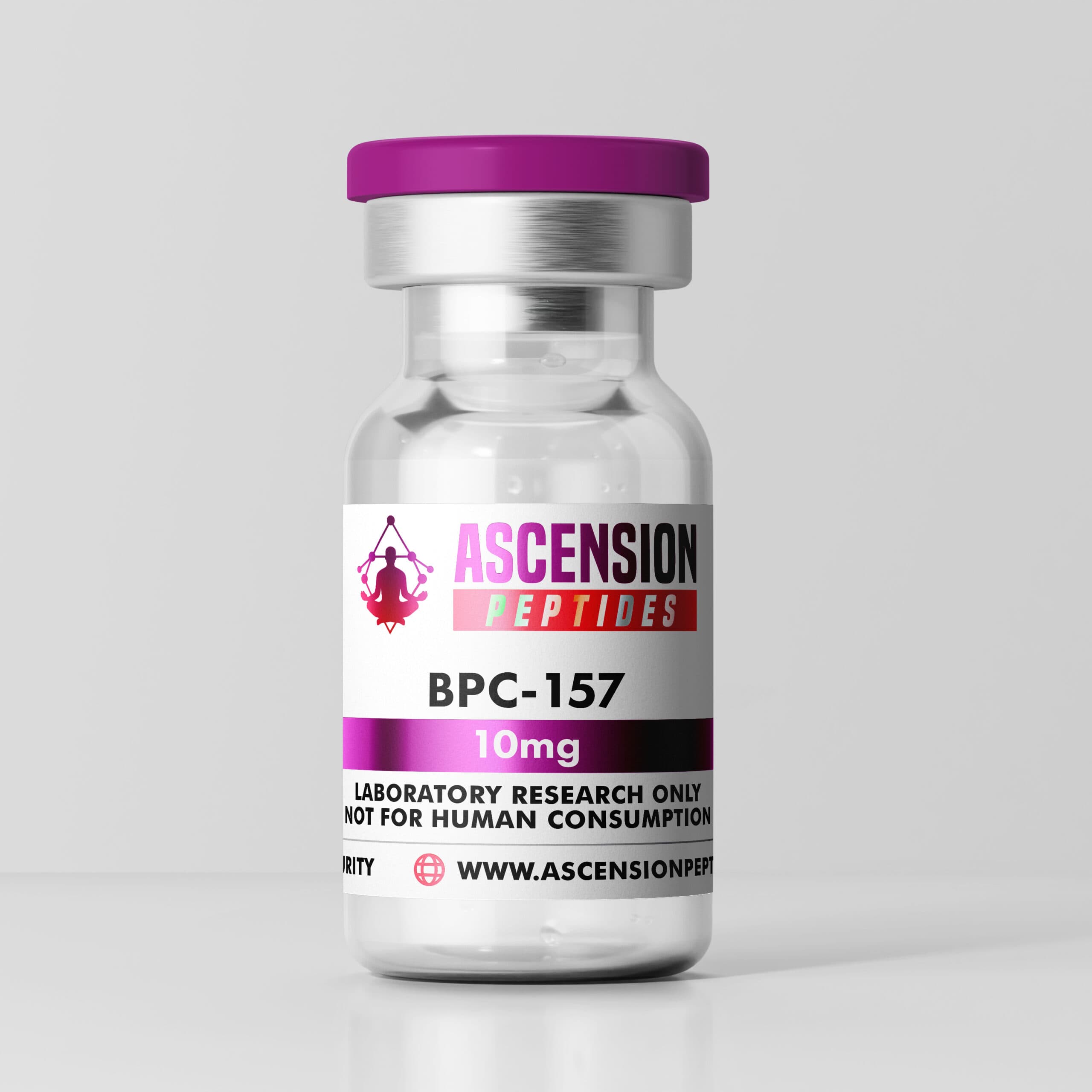
Reputable vendors in this space that researchers frequently reference include Ascension Peptides, Limitless Life Nootropics, and Science Bio. Do your own due diligence: always request COAs before purchasing and verify them with the testing lab if possible.
Prescription vs Research Peptide: Which Is Right for You?
- Go the prescription route if: You want physician oversight and monitoring, you're targeting GH secretagogues or GLP-1s, you want insurance-adjacent documentation, or you're risk-averse and want compounding pharmacy quality guarantees.
- Consider research vendors if: You can't access or afford a clinic, you're targeting compounds not commonly prescribed (Epithalon, Selank, Semax, GHK-Cu), you're an experienced researcher who understands quality vetting, or you're comparing vendors before committing to a protocol.
Frequently Asked Questions
Is it legal to get peptides prescribed?
Yes. Licensed physicians in the US can legally prescribe compounded peptides off-label. The compounding pharmacy must be a licensed 503A (patient-specific) or 503B (outsourcing facility) operation. Compounds previously restricted under FDA's Category 2 bulk drug substances list are being re-evaluated in 2026 under new FDA leadership, with several — including BPC-157 — potentially returning to easier access.
What's the difference between a prescription peptide and a research peptide?
A prescription peptide is compounded by a licensed pharmacy to a physician's specification and is intended for a specific patient under medical supervision. A research peptide is sold for in vitro or laboratory research use and is not subject to the same oversight. Prescription peptides are generally subject to more rigorous quality controls via USP standards that licensed compounding pharmacies must meet.
Can I get peptides prescribed without bloodwork?
Some telehealth platforms will prescribe certain peptides (like BPC-157 oral or PT-141) without upfront bloodwork. For growth hormone secretagogues, most reputable providers will require at minimum an IGF-1 panel. Providers who prescribe GH-stimulating compounds without any lab work are a quality and safety concern.
How long until I get my prescription filled?
After your consultation is approved, most compounding pharmacies ship within 3–7 business days. Some platforms offer expedited fulfillment. Plan for 1–2 weeks from initial consultation to receiving your compounds if you're starting fresh.
Will my insurance cover peptide therapy?
Generally no. FDA-approved peptide drugs (Sermorelin for pediatric GH deficiency, Tesamorelin for HIV lipodystrophy, PT-141 for HSDD in women) may be covered in specific diagnosed indications, but off-label use typically is not. Most peptide therapy is paid out of pocket. Some HSA/FSA accounts can be used if there's a documented medical necessity from a licensed provider.
Which peptides can a doctor prescribe in 2026?
The most commonly prescribed peptides in 2026 include: Sermorelin, CJC-1295 (with and without DAC), Ipamorelin, Tesamorelin, BPC-157 (oral and injectable), TB-500, AOD-9604, PT-141, Semaglutide (compounded), and Tirzepatide (compounded). Access to specific compounds varies by state and by how individual compounding pharmacies interpret current FDA guidance.
This content is for informational and educational purposes only. Peptides discussed on this page are research compounds and some are not approved by the FDA for all uses. Always consult a licensed medical professional before using any peptide or supplement.