PT-141
PT-141 (Bremelanotide)
Get PT-141
Sourced from Ascension Peptides. Verified ≥≥99% purity, third-party tested. COA included.
Off with code
PEPTIDEDECK
Table of Contents
What is PT-141?
PT-141, known by its pharmaceutical name bremelanotide and marketed as Vyleesi, is a synthetic cyclic heptapeptide that represents a paradigm shift in the treatment of sexual dysfunction. Unlike conventional treatments that focus on blood flow and mechanical function, PT-141 works directly in the brain to stimulate sexual desire and arousal—making it the first centrally-acting medication approved for sexual dysfunction.
The peptide's journey from laboratory curiosity to FDA-approved medication is one of serendipity in drug development. In the 1990s, researchers at the University of Arizona were developing Melanotan II, a peptide designed to induce tanning by activating melanocortin receptors in skin cells. During clinical trials, they noticed an unexpected side effect: participants were experiencing spontaneous erections and increased sexual arousal. This observation led to a focused effort to develop a derivative optimized for sexual function.
PT-141 emerged from this research as a cyclic 7-amino acid peptide with the sequence Ac-Nle-cyclo[Asp-His-D-Phe-Arg-Trp-Lys]-OH. The cyclic structure enhances stability and receptor selectivity compared to its parent compound. While Melanotan II activates all five melanocortin receptor subtypes, PT-141 was designed to preferentially target MC3R and MC4R—the receptors most involved in sexual response—while minimizing activation of MC1R (responsible for tanning) and MC5R.
What makes PT-141 significant in sexual medicine is its mechanism of action. Traditional erectile dysfunction treatments like sildenafil (Viagra) work peripherally by enhancing blood flow to genital tissues. These medications are effective for the physical mechanics of arousal but don't address desire. PT-141, by contrast, acts on neural pathways in the hypothalamus and limbic system that govern sexual motivation and arousal. This makes it particularly valuable for individuals whose sexual dysfunction has psychological or neurological components.
Research Benefits
FDA-approved treatment for hypoactive sexual desire disorder (HSDD)
Acts on central nervous system to enhance sexual desire
Effective in both men and women in clinical studies
Works through a different mechanism than PDE5 inhibitors
On-demand dosing (as-needed before sexual activity)
May benefit those who don't respond to traditional ED medications
Clinically proven efficacy in randomized controlled trials
Convenient self-administered subcutaneous injection
How PT-141 Works
PT-141 exerts its effects through a sophisticated interaction with the melanocortin system, a network of peptides and receptors that regulate diverse functions including skin pigmentation, energy balance, inflammation, and sexual behavior. Understanding this mechanism reveals why PT-141 offers something fundamentally different from other sexual dysfunction treatments.
Melanocortin Receptor Activation
The melanocortin system comprises five receptor subtypes (MC1R through MC5R), each with distinct tissue distributions and functions. PT-141 primarily acts as an agonist at MC3R and MC4R receptors, which are abundantly expressed in the hypothalamus and limbic system—brain regions critical for sexual behavior, motivation, and reward.
When PT-141 binds to MC4R in the hypothalamus, it triggers a cascade of intracellular signaling that ultimately modulates the release of neurotransmitters involved in sexual response. This includes effects on dopamine pathways, which are central to motivation, desire, and reward. The peptide's action on these central pathways explains why it can enhance desire itself, not just the physical response to arousal.
Central Action
Works in hypothalamus and limbic system to enhance desire at the source.
Rapid Onset
Effects begin within 1-2 hours after subcutaneous administration.
Novel Mechanism
Acts on melanocortin receptors—completely different from PDE5 inhibitors.
The Neural Pathway
Sexual response involves complex coordination between the brain, spinal cord, and peripheral tissues. PT-141 acts at the top of this hierarchy—in the brain—where desire and arousal originate. Activation of hypothalamic MC4R receptors is thought to disinhibit sexual behavior by modulating downstream neural circuits that control genital reflexes and sexual motivation.
Research has shown that MC4R activation in specific hypothalamic nuclei, particularly the paraventricular nucleus (PVN), leads to the release of oxytocin and other neuropeptides that facilitate both the psychological experience of desire and the physiological responses of arousal. This dual action on both mind and body distinguishes PT-141 from purely mechanical interventions.
Why It Differs from PDE5 Inhibitors
Phosphodiesterase type 5 inhibitors (Viagra, Cialis, Levitra) work by blocking the enzyme that breaks down cyclic GMP in penile tissue, thereby prolonging the smooth muscle relaxation necessary for erection. They require sexual stimulation to work and primarily enhance the physical response to arousal that's already occurring.
PT-141, by contrast, works upstream of this process. By enhancing desire and arousal at the neural level, it can initiate the cascade that leads to physical response. This makes it potentially effective for individuals whose primary issue is lack of desire rather than inability to respond physically—a common pattern in conditions like hypoactive sexual desire disorder (HSDD).
Research Applications
Female hypoactive sexual desire disorder (HSDD)
Active research area with published studies
Male erectile dysfunction
Active research area with published studies
Sexual arousal disorders
Active research area with published studies
Melanocortin receptor signaling
Active research area with published studies
Central nervous system sexual function
Active research area with published studies
Genital arousal response
Active research area with published studies
Combination therapy with PDE5 inhibitors
Active research area with published studies
Post-menopausal sexual dysfunction
Active research area with published studies
Research Findings
PT-141 has undergone extensive clinical investigation, culminating in FDA approval based on robust Phase 3 trial data. The research base spans studies in both women and men, though regulatory approval has been limited to specific indications.
RECONNECT Trials: The Pivotal Studies
The FDA approval of PT-141 for HSDD in premenopausal women was based primarily on two Phase 3 randomized, placebo-controlled trials known as RECONNECT (Study 301 and Study 302). These trials enrolled over 1,200 premenopausal women with generalized, acquired HSDD—meaning they had once experienced normal desire but had developed persistent lack of interest in sexual activity that caused personal distress.
In these trials, participants self-administered PT-141 (1.75 mg subcutaneously) as needed before anticipated sexual activity for 24 weeks. The co-primary endpoints were change in desire (measured by the Female Sexual Function Index desire domain) and change in distress (measured by the Female Sexual Distress Scale-Desire/Arousal/Orgasm).
🔑 Key Clinical Findings
- Statistically significant improvement in sexual desire versus placebo
- Significant reduction in distress related to low desire
- Effects maintained throughout 24-week study period
- Approximately 25% of patients reported meaningful improvement in satisfying sexual events
- Nausea was the most common side effect (40%) but typically decreased over time
Research in Male Sexual Dysfunction
Before development focused on female HSDD, PT-141 was extensively studied in men with erectile dysfunction. Phase 2 trials demonstrated efficacy in men with both psychogenic and organic ED, including those who had failed to respond to sildenafil.
A notable 2003 study examined PT-141 in men with psychogenic ED—erectile dysfunction without identifiable physical cause. Participants received PT-141 or placebo via nasal spray, and erectile response was measured using RigiScan monitoring. PT-141 produced significant improvement in rigidity and duration of erections compared to placebo. Importantly, many responders had previously tried and failed sildenafil, suggesting PT-141 may work through complementary mechanisms.
Another study examined men with organic ED (physical causes like vascular disease) and found similar improvements. The researchers concluded that PT-141's central mechanism could overcome some of the limitations of peripherally-acting medications, particularly when psychological factors contribute to ED.
Mechanism Studies
Basic science research has elucidated the neural pathways through which PT-141 exerts its effects. Studies in animal models demonstrated that MC4R activation in the hypothalamic paraventricular nucleus triggers pro-erectile pathways through oxytocinergic neurons projecting to the spinal cord. This pathway operates independently of the peripheral mechanisms targeted by PDE5 inhibitors.
Functional neuroimaging studies in humans have shown that PT-141 alters brain activity patterns in regions associated with sexual arousal and motivation. These findings support the hypothesis that the peptide's effects are truly central rather than peripheral, explaining its ability to enhance desire itself.
Safety Profile from Clinical Trials
Across all clinical trials, PT-141 demonstrated a consistent safety profile. The most common adverse event was nausea (approximately 40%), which was typically mild to moderate and decreased with repeated use. Transient blood pressure increases were observed, leading to contraindication in patients with uncontrolled hypertension.
| Study Population | Dose | Primary Findings | Key Limitations |
|---|---|---|---|
| Premenopausal women (HSDD) | 1.75 mg SC | Significant improvement in desire and reduced distress | Nausea in 40% of participants |
| Men (psychogenic ED) | 4-6 mg intranasal | Improved rigidity in sildenafil non-responders | Phase 2 only; development not continued |
| Men (organic ED) | 4-6 mg intranasal | Improved erectile response | Blood pressure concerns |
Dosage & Administration
PT-141 dosing has been established through clinical trials, with the FDA-approved formulation providing standardized guidance. For research purposes, various doses and routes have been studied, though subcutaneous injection has emerged as the preferred method.
FDA-Approved Dosing (Vyleesi)
The FDA-approved product, Vyleesi, is a pre-filled autoinjector containing 1.75 mg of bremelanotide. The standardized dosing is straightforward:
Timing
Administer at least 45 minutes before anticipated sexual activity. Effects typically begin within 1-2 hours.
Injection Site
Inject subcutaneously in the abdomen or thigh. Rotate injection sites to prevent local reactions.
Frequency Limits
Use no more than once per 24-hour period and no more than 8 doses per month.
The frequency limitations are based on safety considerations, particularly the cumulative effects on blood pressure and the risk of hyperpigmentation with repeated dosing. The 8-doses-per-month maximum was established in clinical trials as a balance between efficacy and tolerability.
Research Doses
Clinical research has explored various doses and routes:
| Route | Dose Range | Notes |
|---|---|---|
| Subcutaneous | 1.0-2.0 mg | Most studied; 1.75 mg is FDA-approved dose |
| Intranasal | 4-20 mg | Higher doses needed; studied in early trials |
| Intravenous | 0.5-1.0 mg | Research only; faster onset but impractical |
Early male ED trials used intranasal administration at higher doses, but bioavailability concerns and the development of convenient autoinjector technology led to subcutaneous injection becoming the standard route.
Reconstitution (Research Peptide)
Research-grade PT-141 is typically supplied as a lyophilized powder. For reconstitution:
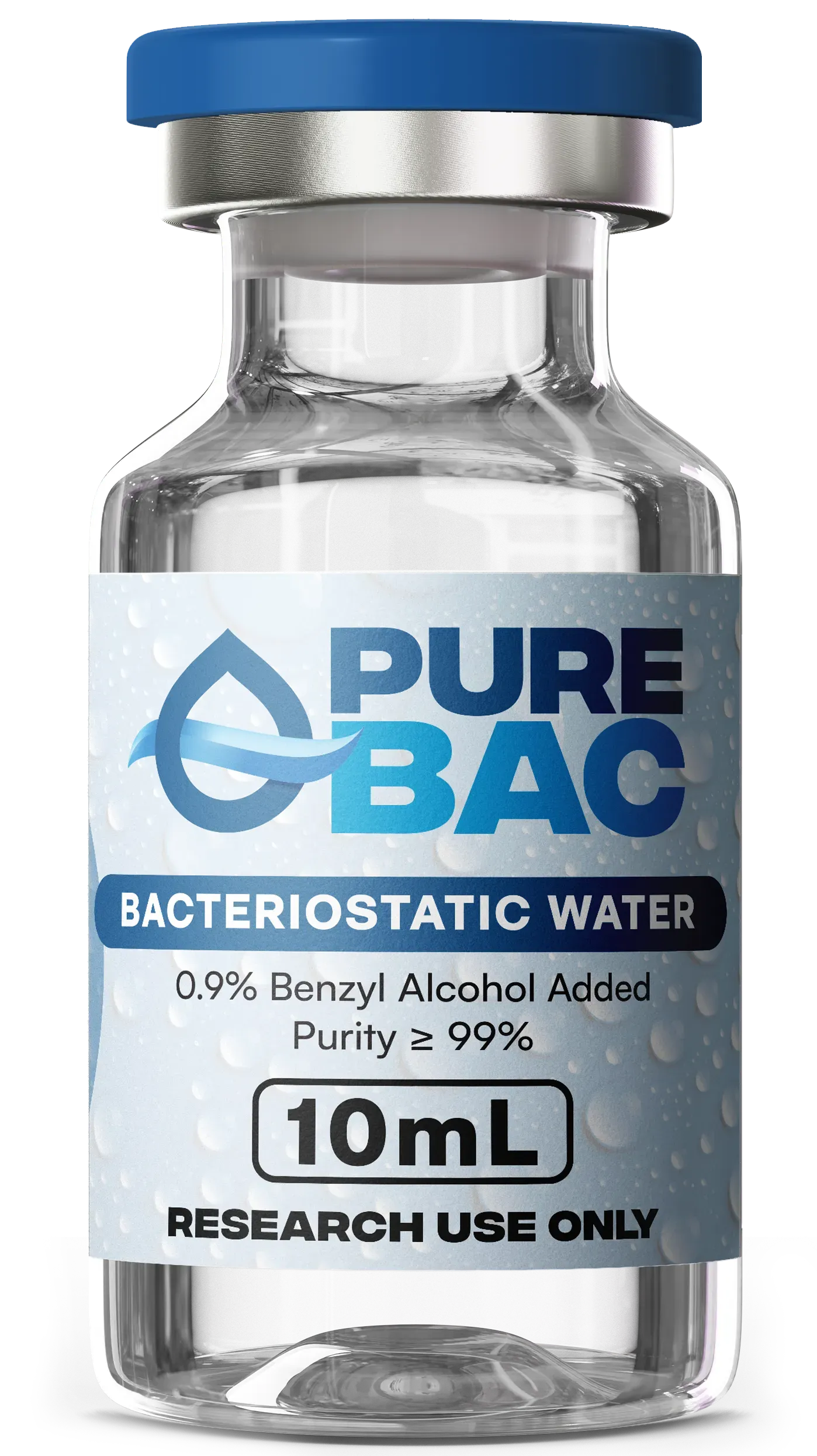
- Use bacteriostatic water for reconstitution
- Add water slowly along the vial wall—do not shake
- Typical reconstitution creates a 2-5 mg/mL solution
- Store reconstituted solution at 2-8°C
- Use within 30 days of reconstitution
Managing Nausea
Nausea is the most common side effect, affecting approximately 40% of users. Strategies to minimize it include:
- Start with the standard 1.75 mg dose rather than higher research doses
- Avoid taking on a completely empty stomach
- Remain still for 30-60 minutes after injection if prone to motion sensitivity
- Nausea typically decreases with repeated use
Safety & Side Effects
PT-141's safety profile has been characterized through extensive clinical trial data involving over 3,000 participants. While generally well-tolerated, several effects require attention.
Common Side Effects
Clinical trials established the following adverse event frequencies:
Nausea (40%)
Most common effect. Usually mild-moderate and decreases with repeated use.
Flushing (20%)
Warmth and redness, typically transient. Related to vascular effects.
Headache (11%)
Usually mild and self-limiting. May be related to blood pressure changes.
Cardiovascular Considerations
PT-141 can cause transient increases in blood pressure, typically peaking 2-3 hours after injection and resolving within 12 hours. In clinical trials, mean increases were approximately 2-3 mmHg systolic. However, individual responses vary, and some participants experienced more significant elevations.
Hyperpigmentation
Despite PT-141's reduced affinity for MC1R compared to Melanotan II, some skin darkening can occur with repeated use. Clinical trials noted:
- Focal hyperpigmentation of face, gingiva (gums), and breasts reported
- More common with frequent or prolonged use
- May not fully resolve after discontinuation
- This effect reflects residual activity at melanocortin receptors involved in pigmentation
The 8-doses-per-month limitation partially addresses this concern by limiting cumulative melanocortin receptor exposure.
Naltrexone Interaction
PT-141 is specifically contraindicated in patients taking naltrexone or other opioid antagonists. This interaction relates to the complex interplay between opioid and melanocortin systems in the brain. While the exact mechanism isn't fully characterized, clinical observations suggest reduced efficacy and potentially altered side effect profiles.
Other Safety Considerations
Pregnancy: PT-141 is not recommended during pregnancy. While no adequate studies exist in pregnant women, animal studies have not shown teratogenic effects at typical doses.
Nursing: It is unknown whether PT-141 is excreted in breast milk. Caution is advised.
Hepatic/Renal Impairment: No specific dose adjustments are recommended, but PT-141 has not been extensively studied in patients with significant organ impairment.
🔑 Safety Summary
- Most common side effects are nausea (40%), flushing (20%), and headache (11%)
- Blood pressure monitoring recommended before first use
- Avoid in uncontrolled hypertension or cardiovascular disease
- Limit use to ≤8 doses per month to minimize hyperpigmentation risk
- Do not combine with naltrexone