Oxytocin
Oxytocin (The Bonding Hormone)
Get Oxytocin
Sourced from Ascension Peptides. Verified ≥≥99% purity, third-party tested. COA included.
Off with code
PEPTIDEDECK
Table of Contents
What is Oxytocin?
Oxytocin is a nine-amino acid peptide hormone that has earned its reputation as the 'love hormone' or 'bonding hormone' through decades of research into human connection, trust, and social behavior. Produced naturally in the hypothalamus and released by the posterior pituitary gland, oxytocin is one of the most ancient and conserved signaling molecules in mammalian biology—present in virtually identical forms across species from mice to humans.
The peptide's structure—Cys-Tyr-Ile-Gln-Asn-Cys-Pro-Leu-Gly with a disulfide bridge between the two cysteine residues—creates a ring structure that gives oxytocin its characteristic stability and biological activity. This same structure is remarkably similar to vasopressin (antidiuretic hormone), differing by only two amino acids, yet the two peptides have evolved distinct and specialized functions.
Oxytocin was first discovered in 1906 by Sir Henry Dale when he observed that extracts from the posterior pituitary could induce uterine contractions—hence the name, derived from Greek words meaning 'swift birth.' For decades, oxytocin was studied primarily in the context of labor and lactation. The revolutionary shift came in the 1990s and 2000s when researchers began exploring its effects on social behavior, trust, and emotional regulation, transforming our understanding of this ancient molecule.
Today, oxytocin stands at the intersection of endocrinology, neuroscience, and psychology. Research has expanded to examine its potential in autism spectrum disorders, social anxiety, PTSD, addiction, and even wound healing. While popular media has sometimes oversimplified oxytocin as a 'trust drug' or 'cuddle hormone,' the scientific picture is far more nuanced and fascinating—revealing a peptide that fundamentally shapes how we connect with others and navigate our social world.
Research Benefits
Promotes social bonding and attachment
Reduces social anxiety and stress responses
Enhances trust and empathy in social interactions
Supports maternal bonding and lactation
May improve social cognition in autism spectrum research
Potential wound healing acceleration
Modulates pain perception
Supports cardiovascular function and blood pressure regulation
How Oxytocin Works
Oxytocin exerts its diverse effects through binding to the oxytocin receptor (OXTR), a G-protein coupled receptor expressed throughout the body and brain. The distribution of these receptors explains much of oxytocin's wide-ranging influence—they're found in brain regions governing emotion and social behavior, as well as in peripheral tissues including the uterus, heart, and even skin.
Central Nervous System Effects
In the brain, oxytocin receptors are concentrated in areas critical for social cognition and emotional processing. The amygdala—the brain's threat detection center—contains high densities of oxytocin receptors. When oxytocin binds here, it reduces amygdala reactivity to fearful and threatening stimuli, essentially dampening the fear response. This mechanism underlies much of oxytocin's anxiolytic effect.
Amygdala Modulation
Reduces fear responses and anxiety by dampening threat-related neural activity.
HPA Axis Regulation
Buffers stress hormone release, reducing cortisol responses to social threats.
Social Salience
Enhances attention to social cues and emotional facial expressions.
Reward Enhancement
Increases dopamine activity in reward circuits during social interactions.
The hypothalamus, where oxytocin is produced, also contains receptor sites that enable feedback regulation. The prefrontal cortex, hippocampus, and nucleus accumbens (reward center) all express oxytocin receptors, creating a network that links social perception with memory, decision-making, and reward.
Stress System Interaction
Oxytocin directly interacts with the hypothalamic-pituitary-adrenal (HPA) axis—the body's central stress response system. By inhibiting HPA axis activation, oxytocin reduces cortisol release during stressful situations. This 'stress-buffering' effect appears particularly pronounced in social contexts, helping explain why positive social support reduces stress responses.
Peripheral Actions
Outside the brain, oxytocin has well-established functions:
- Uterine contraction: Stimulates smooth muscle contractions during labor
- Milk ejection: Triggers the 'let-down' reflex in breastfeeding
- Cardiovascular effects: Promotes vasodilation and has cardioprotective properties
- Wound healing: Accelerates tissue repair through anti-inflammatory mechanisms
Intranasal Administration Pathway
When administered intranasally, oxytocin reaches the brain through multiple routes. Some crosses directly through the nasal epithelium into cerebrospinal fluid, while some enters systemic circulation and crosses the blood-brain barrier. The nasal route appears to achieve meaningful central nervous system concentrations within 30-45 minutes, with effects lasting 1-2 hours—though the precise pharmacokinetics remain an active research area.
Research Applications
Autism spectrum disorder interventions
Active research area with published studies
Social anxiety and phobia treatment
Active research area with published studies
Post-traumatic stress disorder (PTSD)
Active research area with published studies
Depression and emotional disorders
Active research area with published studies
Addiction recovery and craving reduction
Active research area with published studies
Wound healing and tissue repair
Active research area with published studies
Cardiovascular protection
Active research area with published studies
Sexual dysfunction and intimacy enhancement
Active research area with published studies
Research Findings
Oxytocin research has exploded over the past two decades, generating thousands of studies across behavioral science, psychiatry, and medicine. Here we summarize key findings across major research domains.
Social Trust and Cooperation
The seminal 2005 study by Kosfeld et al. in Nature demonstrated that intranasal oxytocin increased participants' willingness to trust strangers in an economic game involving real money. Participants who received oxytocin transferred significantly more money to anonymous trustees, indicating increased trust. This finding has been replicated multiple times, though with important nuances—the trust-enhancing effect appears most pronounced in safe, positive contexts and may not generalize to threatening situations.
🔑 Key Trust Research Findings
- 24 IU intranasal oxytocin increased monetary trust by ~17% in the original study
- Effects are context-dependent—trust increases primarily toward perceived in-group members
- Oxytocin enhances cooperation in group settings and social dilemmas
- The peptide increases eye contact and attention to facial emotions
Autism Spectrum Disorder
Given oxytocin's role in social cognition, researchers have extensively examined its potential in autism spectrum disorder (ASD). Multiple studies have shown that intranasal oxytocin can temporarily improve aspects of social functioning:
- Improved recognition of emotions in faces
- Increased eye contact and social engagement
- Enhanced theory of mind (understanding others' mental states)
- Reduced repetitive behaviors in some individuals
A 2021 meta-analysis in Molecular Autism found modest but significant improvements in social cognition following oxytocin administration. However, results have been heterogeneous, with some studies showing no benefit. Current research focuses on identifying responder characteristics and optimal treatment protocols. Long-term efficacy of repeated dosing remains unclear.
Anxiety and Stress
Oxytocin's anxiolytic properties have been documented across numerous studies. Research shows the peptide:
Reduces Cortisol
Dampens stress hormone responses to social stressors and public speaking.
Decreases Amygdala Activity
Neuroimaging shows reduced fear-related brain activation.
Improves Social Confidence
Reduces anticipatory anxiety about social interactions.
A 2020 systematic review in Neuroscience & Biobehavioral Reviews found consistent evidence for oxytocin's anti-anxiety effects, particularly in social contexts. However, effects on generalized anxiety have been less consistent.
Wound Healing
Intriguingly, oxytocin has been shown to accelerate wound healing. A 2010 study in Psychoneuroendocrinology demonstrated that couples with more positive interactions (and presumably higher oxytocin levels) showed faster wound healing. Subsequent research confirmed direct effects—oxytocin reduces inflammation and promotes tissue repair through effects on immune cells and fibroblasts. This connects the peptide's social functions to physical health outcomes.
Cardiovascular Protection
Research has revealed oxytocin's cardioprotective effects, including:
- Promotion of vasodilation and reduced blood pressure
- Protection against ischemia-reperfusion injury
- Anti-inflammatory effects on cardiac tissue
- Reduction of cardiac fibrosis in animal models
These findings suggest oxytocin may contribute to the well-documented health benefits of positive social relationships.
Pain Modulation
Oxytocin has demonstrated analgesic properties in both human and animal studies. Research published in Pain showed that intranasal oxytocin modulates early pain-evoked neural responses. The mechanism appears to involve both central effects on pain processing and peripheral anti-inflammatory actions. This area is gaining attention for potential applications in chronic pain management.
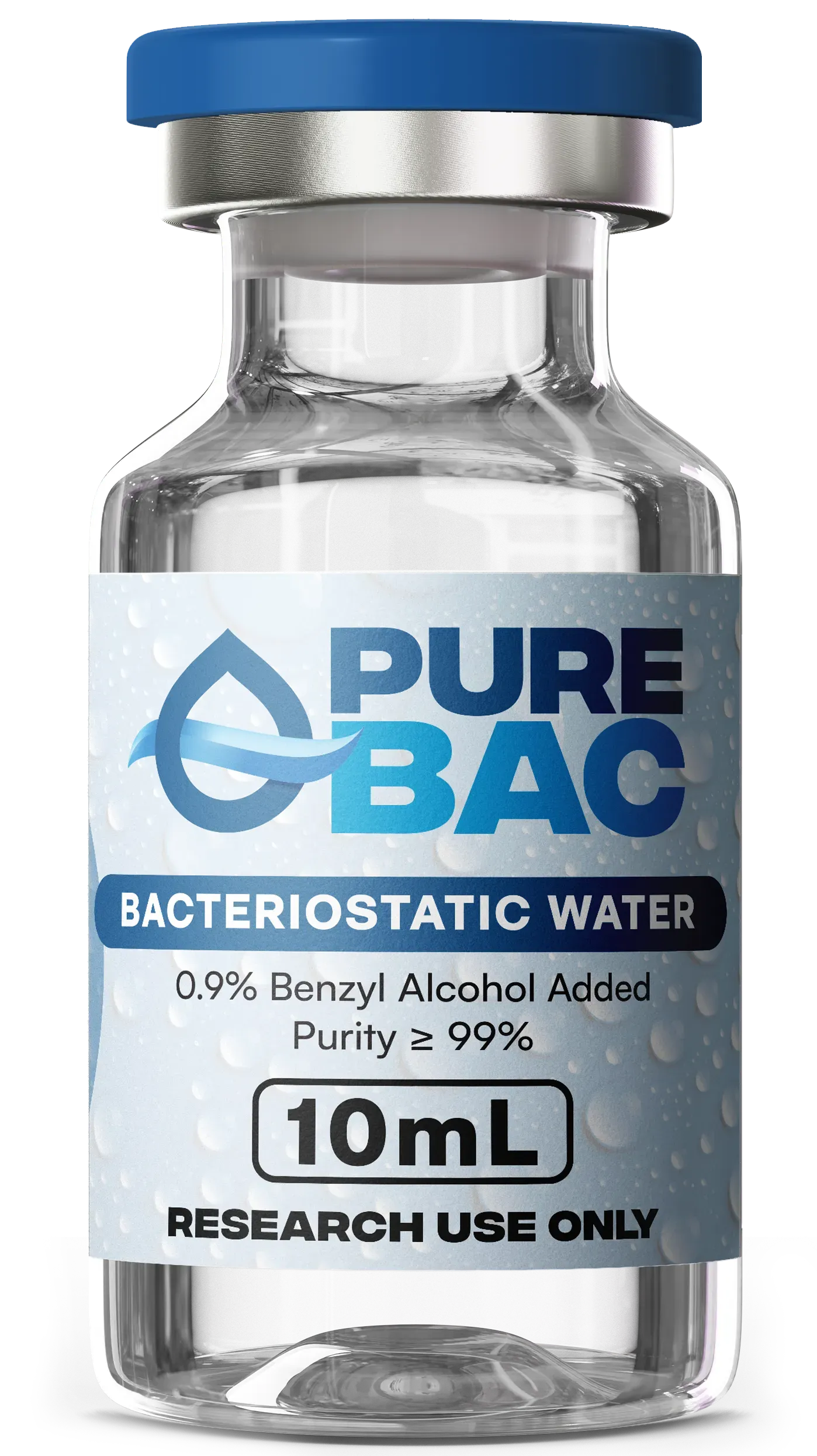
Dosage & Administration
Oxytocin is available in multiple forms, with intranasal spray being the most common for behavioral research applications. Understanding proper administration is essential for anyone reviewing the research literature or considering clinical applications.
Intranasal Administration
The majority of behavioral research uses intranasal oxytocin due to its ability to reach the central nervous system and its non-invasive nature. Standard research protocols typically include:
| Parameter | Standard Research Protocol | Notes |
|---|---|---|
| Dose | 24 IU (range: 20-40 IU) | Most commonly studied dose |
| Administration | 3 sprays per nostril | 4 IU per spray typical |
| Timing | 30-45 min before testing | Peak effects around 45-75 min |
| Duration | Effects last 1-2 hours | Half-life in brain is longer than plasma |
| Frequency | Single dose (research) or twice daily | Long-term protocols less studied |
Administration Technique
Prepare the Spray
Shake gently if required. Prime new bottles by spraying into the air until a fine mist appears.
Clear Nasal Passages
Gently blow nose to clear any obstruction. Do not use immediately after nasal decongestants.
Administer to One Nostril
Tilt head slightly forward. Insert nozzle and spray while inhaling gently. Do not sniff forcefully.
Repeat for Other Nostril
Alternate between nostrils for each spray. Standard protocol: 3 sprays per nostril.
Wait for Absorption
Remain upright. Avoid blowing nose for 15-20 minutes after administration.
Dose Considerations
Research has not established clear dose-response relationships for many oxytocin effects. Some evidence suggests that higher doses are not necessarily more effective—and may even produce paradoxical effects. The commonly used 24 IU dose was largely adopted from early research and has become the standard, but optimal dosing likely varies by:
- Target outcome (social cognition vs. anxiety reduction)
- Individual factors (sex, baseline oxytocin levels, genetics)
- Context of administration
Pro Tip
Timing matters significantly for oxytocin research. Most behavioral effects require 30-45 minutes to develop after intranasal administration. Studies testing outcomes immediately after dosing may miss the peak effect window.
Storage Requirements
Oxytocin stability requires proper storage:
- Lyophilized powder: Store at -20°C for long-term stability
- Reconstituted solution: Refrigerate at 2-8°C, use within 14 days
- Nasal spray: Follow manufacturer guidelines; typically refrigerate after opening
- Light sensitivity: Protect from direct light exposure
Work out your Oxytocin draw in units
Enter the vial size, the bacteriostatic water you add and the dose you want, and the calculator gives the syringe units, how long the vial lasts and when to discard it.
Open the peptide calculatorSafety & Side Effects
Oxytocin is generally considered safe when used appropriately, with a well-established safety profile from both medical applications and research studies. However, understanding potential side effects and contraindications is essential.
Common Side Effects (Intranasal)
Side effects from intranasal oxytocin in research settings are typically mild:
Nasal Irritation
Mild discomfort, runny nose, or congestion at the administration site.
Headache
Mild headaches reported in some studies, usually transient.
Drowsiness
Some users report mild sedation or relaxation effects.
Emotional Effects
Heightened emotional sensitivity or mood fluctuations.
The 'Dark Side' of Oxytocin
Research has revealed that oxytocin's effects aren't universally positive. Important considerations include:
- In-group favoritism: Enhanced trust and cooperation toward familiar individuals may come with increased wariness of strangers
- Negative memory enhancement: Some research suggests oxytocin can strengthen negative social memories, not just positive ones
- Individual variability: Effects vary significantly based on personality, attachment style, and psychiatric history
Contraindications and Precautions
Certain populations should exercise caution or avoid oxytocin:
- Pregnancy: Oxytocin can induce uterine contractions—avoid except under medical supervision for labor
- Cardiovascular conditions: While oxytocin has cardioprotective properties, its effects on blood pressure warrant caution
- Psychiatric conditions: Effects in borderline personality disorder, psychosis, or severe anxiety may be unpredictable
- Hyponatremia risk: Oxytocin has antidiuretic properties similar to vasopressin; monitor fluid balance with high doses
Drug Interactions
Oxytocin may interact with:
- Prostaglandins and other uterotonic agents (enhanced uterine effects)
- Vasopressors (potential blood pressure effects)
- SSRIs and other psychiatric medications (altered behavioral effects possible)
- Alcohol (may enhance oxytocin release but also impair judgment)
Long-term Safety
Long-term effects of repeated intranasal oxytocin administration are not well established. Most research involves single doses or short treatment periods. Concerns about receptor downregulation, tolerance, or long-term behavioral changes remain largely theoretical but warrant consideration in ongoing research.