Kisspeptin
Kisspeptin (Metastin, KISS1 Gene Product)
Get Kisspeptin
Sourced from Ascension Peptides. Verified ≥≥99% purity, third-party tested. COA included.
Off with code
PEPTIDEDECK
Table of Contents
What is Kisspeptin?
Kisspeptin is a neuropeptide encoded by the KISS1 gene that serves as the master regulator of reproductive function in mammals, including humans. First discovered in 1996 as a tumor metastasis suppressor (hence its original name "metastin"), its crucial role in reproduction was only recognized in 2003 when researchers found that mutations in the kisspeptin receptor (GPR54/KISS1R) caused a complete failure of puberty and fertility.
This discovery revolutionized reproductive neuroendocrinology. Kisspeptin acts at the apex of the hypothalamic-pituitary-gonadal (HPG) axis, stimulating specialized neurons in the hypothalamus to release gonadotropin-releasing hormone (GnRH). GnRH then triggers the pituitary to secrete luteinizing hormone (LH) and follicle-stimulating hormone (FSH), which control testosterone production in males and ovulation in females.
The KISS1 gene produces a 145-amino acid precursor protein that's processed into several bioactive fragments. Kisspeptin-54 (KP-54) is the full-length active peptide, but shorter fragments—KP-14, KP-13, and KP-10—all retain biological activity. These fragments share a critical C-terminal RF-amide motif that binds the KISS1R receptor. In research and clinical trials, both KP-54 and KP-10 are commonly used, depending on the specific application.
Kisspeptin neurons are concentrated in specific hypothalamic regions: the arcuate nucleus (ARC) and the anteroventral periventricular nucleus (AVPV) in rodents, or the infundibular nucleus in humans. These neurons integrate signals from sex steroids, metabolic status, stress hormones, and circadian rhythms to coordinate reproductive function. This integration explains why factors like body weight, stress, and sleep affect fertility—they all influence kisspeptin signaling.
Research Benefits
Master regulator of GnRH pulsatile release
Triggers LH and FSH secretion for reproductive function
Stimulates natural testosterone production in males
Promotes ovulation and follicular development in females
Potential IVF trigger with reduced OHSS risk
May restore hypothalamic function in functional hypothalamic amenorrhea
Research applications in puberty and pubertal disorders
Possible role in metabolic regulation and energy balance
How Kisspeptin Works
Kisspeptin's mechanism centers on its role as the gatekeeper of GnRH release. The peptide binds to KISS1R (GPR54), a G-protein coupled receptor expressed on GnRH neurons in the hypothalamus. This binding triggers a cascade that stimulates GnRH secretion, ultimately controlling the entire reproductive hormone axis.
GnRH Gate Control
Directly stimulates GnRH neurons to release gonadotropin-releasing hormone in pulsatile patterns.
LH/FSH Surge
Triggers pituitary release of luteinizing hormone and follicle-stimulating hormone.
Steroid Feedback
Mediates sex steroid feedback—estrogen and testosterone regulate kisspeptin neurons.
Pulse Generation
Works with neurokinin B and dynorphin (KNDy neurons) to generate GnRH pulses.
The KISS1R Signaling Cascade
When kisspeptin binds KISS1R, it activates Gq/11 proteins, leading to phospholipase C activation and increased intracellular calcium. This calcium surge in GnRH neurons triggers GnRH secretion. The signaling also activates MAP kinase pathways, which may contribute to longer-term effects on GnRH neuron function and gene expression.
KNDy Neurons: The Pulse Generator
Kisspeptin neurons in the arcuate nucleus co-express two other neuropeptides: neurokinin B (NKB) and dynorphin. These "KNDy neurons" function as the GnRH pulse generator. Neurokinin B stimulates kisspeptin release, which triggers GnRH secretion, while dynorphin inhibits the process, creating the pulsatile pattern essential for reproductive function. Disruption of this pulse generator underlies various reproductive disorders.
Sex Steroid Feedback
Kisspeptin neurons express estrogen and androgen receptors, making them the primary target for sex steroid feedback on the reproductive axis. In females, low estrogen levels suppress kisspeptin and GnRH, while the preovulatory estrogen surge paradoxically stimulates kisspeptin neurons (the "positive feedback" that triggers ovulation). In males, testosterone provides negative feedback through kisspeptin neurons to maintain stable hormone levels. This feedback mechanism explains why kisspeptin dysfunction causes both hypogonadism and precocious puberty.
Research Applications
Female infertility and IVF protocols
Active research area with published studies
Male hypogonadism and testosterone deficiency
Active research area with published studies
Functional hypothalamic amenorrhea
Active research area with published studies
Polycystic ovary syndrome (PCOS)
Active research area with published studies
Puberty disorders and precocious puberty
Active research area with published studies
Metabolic syndrome and obesity
Active research area with published studies
Reproductive neuroendocrinology
Active research area with published studies
GnRH neuron physiology
Active research area with published studies
Research Findings
Research on kisspeptin has expanded dramatically since its reproductive role was discovered in 2003. Clinical trials have explored applications from infertility treatment to understanding puberty disorders, with particularly promising results in IVF protocols.
IVF and Oocyte Maturation Trigger
One of the most clinically advanced applications is using kisspeptin to trigger final oocyte maturation in IVF. Traditional triggers (hCG or GnRH agonists) can cause ovarian hyperstimulation syndrome (OHSS), especially in high-responding patients. Research from Imperial College London demonstrated that kisspeptin-54 (1.6-12.8 nmol/kg) successfully triggered oocyte maturation while producing significantly lower estradiol peaks than standard protocols.
A 2022 meta-analysis in Human Reproduction Update found kisspeptin triggers showed promise for OHSS risk reduction while maintaining acceptable pregnancy rates. The physiological, self-limiting LH surge produced by kisspeptin—rather than the prolonged stimulation from hCG—appears to underlie this safety advantage.
🔑 Key Findings: IVF Research
- Kisspeptin-54 successfully triggers oocyte maturation in human IVF
- Lower peak estradiol and reduced OHSS markers compared to standard triggers
- Self-limiting LH surge mimics natural physiology
- Pregnancy rates appear comparable in controlled studies
Male Hypogonadism and Testosterone
Studies in men with various forms of hypogonadism have demonstrated that kisspeptin can stimulate testosterone production. Intravenous kisspeptin infusion produces robust LH pulses and subsequent testosterone elevation in hypogonadal men. Research published in the Journal of Clinical Endocrinology & Metabolism showed kisspeptin can restore pulsatile LH secretion even in patients with neurokinin B signaling deficiencies.
The challenge for therapeutic development is kisspeptin's very short half-life. Continuous infusion is effective but impractical. Current research explores longer-acting analogs and optimal intermittent dosing strategies.
Functional Hypothalamic Amenorrhea
Women with functional hypothalamic amenorrhea (FHA)—where stress, low body weight, or excessive exercise suppresses menstruation—have shown restored LH pulsatility with kisspeptin administration. This suggests kisspeptin could bypass the suppressed hypothalamic function in these patients. Studies show that even brief kisspeptin exposure can reinitiate the pulsatile hormone patterns absent in FHA.
| Research Context | Kisspeptin Form | Dose Range | Route |
|---|---|---|---|
| IVF Trigger | KP-54 | 1.6-12.8 nmol/kg | SC |
| LH Stimulation | KP-10 or KP-54 | 0.1-1.0 μg/kg | IV Bolus |
| Pulsatile Infusion | KP-10 | 0.1-0.3 μg/kg/pulse | IV Infusion |
Puberty and Development
Kisspeptin signaling is essential for puberty onset. Activating mutations in KISS1R cause precocious puberty, while inactivating mutations prevent puberty entirely. This has led to research on kisspeptin system manipulation for pubertal disorders. In animal models, kisspeptin administration to prepubertal subjects advances pubertal timing, while kisspeptin antagonists can delay it.
Metabolic Integration
Kisspeptin neurons respond to metabolic signals including leptin, insulin, and ghrelin. This integration explains the link between nutritional status and fertility. Research shows that metabolic disorders like obesity and diabetes alter kisspeptin expression. Conversely, kisspeptin may influence glucose metabolism—studies suggest effects on insulin secretion and glucose homeostasis, opening potential metabolic applications beyond reproduction.
Dosage & Administration
Kisspeptin dosing in research settings varies significantly based on the specific application, the form of kisspeptin used, and the route of administration. Human clinical trials have established some dosing parameters, though standardized therapeutic protocols do not yet exist as kisspeptin remains investigational.
Forms and Equivalence
Multiple kisspeptin fragments are used in research:
- Kisspeptin-54 (KP-54): Full-length active peptide; MW ~5,847 Da
- Kisspeptin-10 (KP-10): Minimal active fragment; MW ~1,302 Da; equimolar receptor activity
- Kisspeptin-13/14: Intermediate fragments with full receptor activity
Since all fragments share the receptor-binding C-terminus, they have similar potency at KISS1R. Dosing is typically expressed in molar terms (nmol/kg) rather than mass to account for molecular weight differences.
Research Protocols by Application
IVF Oocyte Trigger Studies
Clinical trials at Imperial College London used subcutaneous kisspeptin-54 at doses ranging from 1.6 to 12.8 nmol/kg as a trigger for final oocyte maturation. Higher doses (9.6-12.8 nmol/kg) produced more consistent responses. Administration timing followed standard IVF trigger protocols (typically 36 hours before oocyte retrieval).
Gonadotropin Stimulation Studies
Studies examining acute LH/FSH responses typically use intravenous bolus administration of kisspeptin-10 at 0.1-1.0 μg/kg. This produces a rapid but short-lived gonadotropin surge, peaking within 30-60 minutes.
Pulsatile Infusion Protocols
To overcome the short half-life, some research protocols use pulsatile IV infusion, administering kisspeptin every 60-90 minutes to mimic natural GnRH pulsatility. Doses of 0.1-0.3 μg/kg/pulse have restored LH pulsatility in patients with functional hypothalamic amenorrhea.
Half-Life Considerations
Kisspeptin's extremely short half-life presents significant challenges:
- Intravenous half-life: approximately 4 minutes
- Subcutaneous half-life: approximately 27 minutes
This rapid clearance means sustained effects require either repeated dosing or continuous infusion. Research is ongoing into longer-acting kisspeptin analogs that maintain receptor activity while extending duration of action.
Reconstitution and Handling
Kisspeptin peptides are supplied lyophilized and require reconstitution before use:
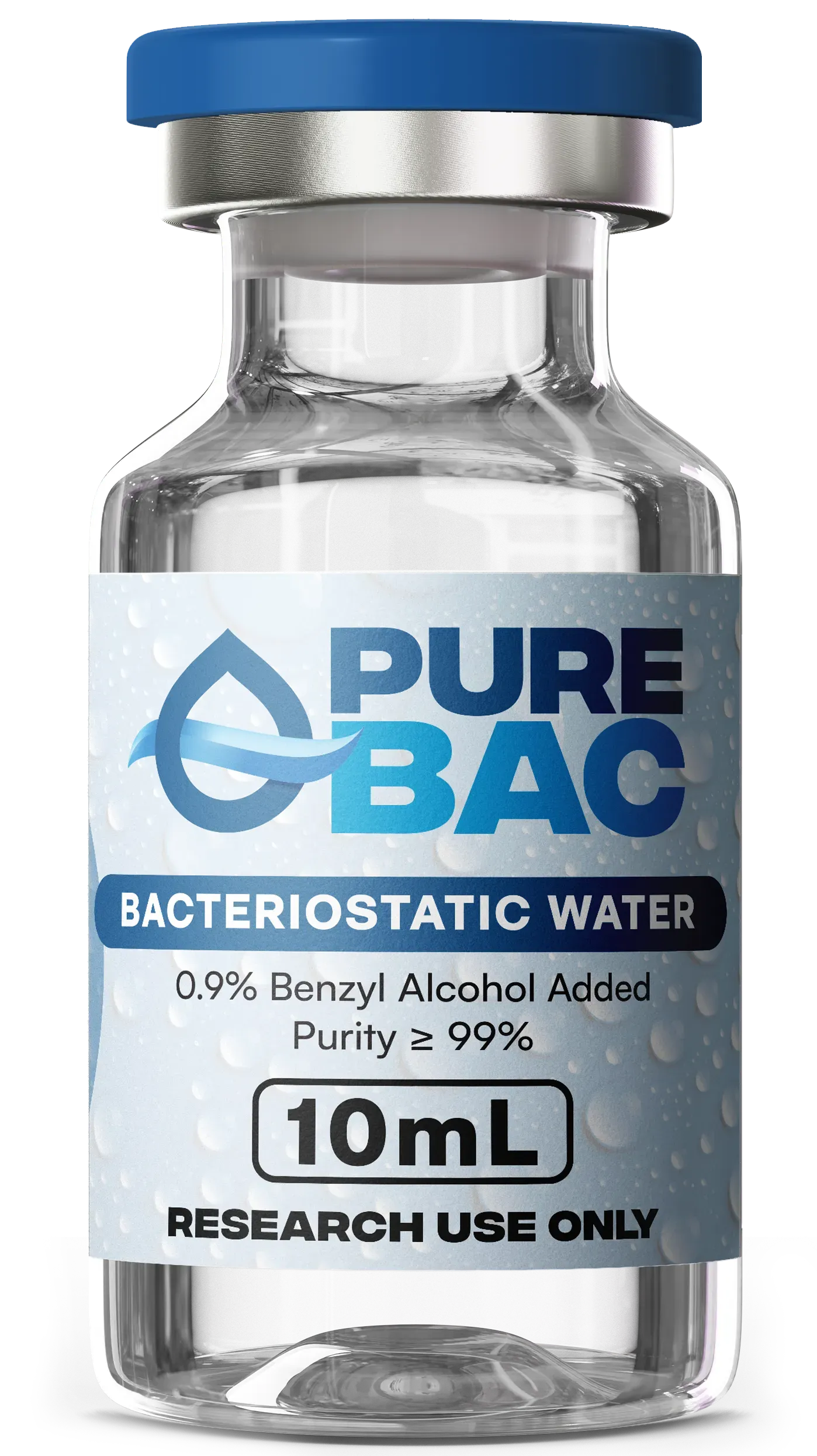
- Reconstitute with bacteriostatic water or sterile saline
- Store reconstituted solution at 2-8°C
- Use within 7-14 days of reconstitution
- Lyophilized powder stable at -20°C for extended periods
- Avoid repeated freeze-thaw cycles
Work out your Kisspeptin draw in units
Enter the vial size, the bacteriostatic water you add and the dose you want, and the calculator gives the syringe units, how long the vial lasts and when to discard it.
Open the peptide calculatorSafety & Side Effects
Kisspeptin has demonstrated a favorable safety profile in clinical research, which is perhaps expected given its role as a natural regulatory peptide in the body. Most adverse effects reported in trials are mild and transient.
Reported Side Effects in Clinical Trials
- Facial flushing: The most commonly reported effect, typically mild and transient
- Injection site reactions: Minor local effects with subcutaneous administration
- Nausea: Occasionally reported, generally mild
- Abdominal discomfort: Rare, typically resolves quickly
- Headache: Infrequently reported
Safety Advantages in IVF
Kisspeptin's most notable safety feature in IVF research is the reduced risk of ovarian hyperstimulation syndrome (OHSS) compared to traditional triggers. OHSS can be a serious, potentially life-threatening complication of IVF. Kisspeptin produces a physiological, self-limiting LH surge rather than the prolonged stimulation from hCG, resulting in:
- Lower peak estradiol levels
- Reduced ovarian enlargement
- Decreased OHSS markers
- Shorter duration of ovarian stimulation
No Receptor Desensitization (Short-Term)
Unlike continuous GnRH agonist administration, which causes receptor desensitization and eventual hormone suppression, short-term kisspeptin administration maintains receptor sensitivity. The pulsatile nature of kisspeptin-induced GnRH release preserves the normal physiological response pattern.
Considerations and Unknowns
- Long-term safety: Most studies involve short-term administration; long-term safety data is limited
- Repeated dosing: Effects of repeated kisspeptin administration over extended periods are not fully characterized
- Drug interactions: Potential interactions with hormonal medications or other drugs affecting the reproductive axis are not well studied
- Contraindications: Theoretical concerns in hormone-sensitive cancers, though direct evidence is lacking