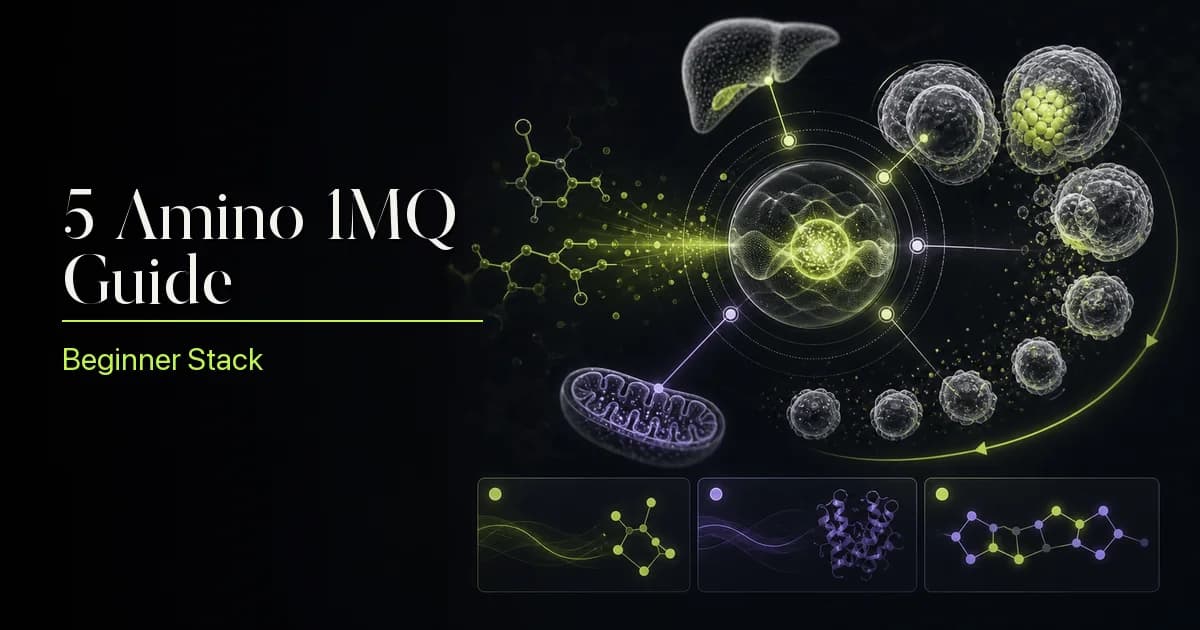
5-Amino-1MQ for Beginners: Dosage, Benefits & Peptide Stacks Explained
5-Amino-1MQ is one of the most talked-about compounds in the metabolic health space — and for good reason. As a small-molecule NNMT inhibitor, it targets a key enzyme linked to fat storage, declining NAD+ levels, and metabolic slowdown. For researchers and biohackers alike, it represents a novel approach to body recomposition that operates at the cellular level.
This guide breaks down everything a beginner needs to know: how 5-Amino-1MQ works, what dosage protocols look like, what benefits are reported in research settings, and which peptide stacks are most commonly studied alongside it.
- Type: Small-molecule NNMT inhibitor
- Primary mechanism: Blocks NNMT enzyme → elevates NAD+ → activates fat cell metabolism
- Beginner dosage: 50–100 mg/day (oral capsule) or 150 mcg/day (subcutaneous injection)
- Common cycle length: 8–12 weeks
- Best paired with: BPC-157, TB-500, Ipamorelin, CJC-1295
- Key benefits: Fat loss, improved insulin sensitivity, cellular energy support
What Is 5-Amino-1MQ and How Does It Work?
5-Amino-1-methylquinolinium (5-Amino-1MQ) is a membrane-permeable small molecule that selectively inhibits the enzyme nicotinamide N-methyltransferase (NNMT). NNMT is found in high concentrations in adipose (fat) tissue, where it plays a significant role in regulating how efficiently cells burn energy.
Here is the core mechanism in plain language:
- NNMT consumes SAM (S-adenosylmethionine) and converts it to a byproduct that effectively drains NAD+ precursors from cells.
- When NNMT is overactive — as it tends to be in obesity and metabolic disease — fat cells become metabolically dormant. They store energy efficiently but burn very little.
- 5-Amino-1MQ blocks NNMT, which frees up SAM and restores the methyl pool. This raises intracellular NAD+ levels, which in turn activates SIRT1 — a longevity-linked enzyme that promotes fat oxidation and mitochondrial function.
In current research, this chain of events has been associated with measurable reductions in adipocyte size, improved glucose metabolism, and enhanced overall metabolic rate — all without changes to diet alone. The compound essentially wakes up fat cells that have gone dormant, making them active participants in energy expenditure again.
Importantly, 5-Amino-1MQ is not a stimulant and does not act on the central nervous system in the same way as traditional weight-loss compounds. Its action is metabolic and cellular, which is part of why it has attracted interest among researchers studying obesity and metabolic syndrome.
5-Amino-1MQ Dosage: Beginner Protocol and Administration
Research dosage protocols for 5-Amino-1MQ vary depending on the route of administration. Two primary formats exist in the research community: oral capsules and subcutaneous injection. Each has a distinct dosage range.
For beginners, the conservative approach is always recommended: start at the lowest effective dose and assess tolerance over 2–4 weeks before making any upward adjustments. There is no research-validated benefit to starting high — and the goal is to identify the minimum effective dose for the individual subject.
Oral capsules are by far the most common format for new researchers, primarily because of their accessibility and ease of administration. Subcutaneous injection, while potentially more bioavailable, requires sterile technique and is typically reserved for more experienced protocols.
Cycle length: Most research protocols run 8–12 weeks, followed by a rest period of equal length. Continuous use beyond 12 weeks is not well-characterized in the current literature and is generally not recommended in beginner research contexts.
Timing: Morning administration with food appears to be the most common approach, as it aligns metabolic activation with the body's natural peak metabolic window and minimizes any potential GI sensitivity.
Reported Benefits of 5-Amino-1MQ in Research Settings
While human clinical trials remain limited, available data and anecdotal research reports have identified several consistent areas of benefit. Here is what the current research landscape suggests:
1. Targeted Fat Cell Activation
The most well-documented effect is the reduction in adipocyte hypertrophy (fat cell enlargement). By inhibiting NNMT, 5-Amino-1MQ appears to shift fat cells from a storage-dominant state to a more metabolically active one. studies have demonstrated significant reductions in fat mass without muscle wasting — a finding that distinguishes it from many traditional caloric restriction approaches.
2. NAD+ Elevation and Mitochondrial Support
NAD+ is essential for mitochondrial function, DNA repair, and energy production. As we age, NAD+ levels decline naturally — a process accelerated by poor metabolic health. By sparing NAD+ precursors from NNMT consumption, 5-Amino-1MQ helps maintain higher intracellular NAD+ levels, which is associated with improved cellular energy output and potentially anti-aging effects at the cellular level.
3. Improved Insulin Sensitivity
Elevated NNMT activity has been correlated with insulin resistance in metabolic disease models. Research suggests that NNMT inhibition may improve insulin sensitivity by restoring normal methyl metabolism and reducing inflammatory signaling in adipose tissue — a meaningful finding for those researching metabolic syndrome.
4. Body Recomposition Without Muscle Loss
Unlike stimulant-based approaches to fat loss, 5-Amino-1MQ's mechanism does not appear to cause muscle catabolism. In fact, because it supports mitochondrial efficiency and energy metabolism broadly, it may assist in maintaining lean mass during periods of caloric deficit — making it of particular interest in body recomposition research contexts.
5. Potential Longevity and Cellular Health Applications
The SIRT1 activation pathway triggered by elevated NAD+ has well-established links to longevity research, autophagy regulation, and inflammation modulation. While these are longer-term areas of interest that require more human data, they represent compelling secondary research directions for 5-Amino-1MQ.
Best Peptide Stacks for 5-Amino-1MQ Beginners
5-Amino-1MQ is often studied in combination with other research peptides to amplify specific outcomes. When building a research stack, the goal is synergy — pairing compounds whose mechanisms complement rather than overlap each other.
Here are the most commonly explored stacks in the research community:
Stack 1: Metabolic Recomposition Stack
Rationale: Ipamorelin and CJC-1295 stimulate growth hormone release, which supports fat metabolism and lean muscle preservation. Combined with 5-Amino-1MQ's direct metabolic activation at the cellular level, this stack targets fat loss from two different angles simultaneously — hormonal signaling and intracellular enzyme activity.
Best for: Body recomposition research, lean mass retention during cutting phases
Stack 2: Recovery and Recomposition Stack
Rationale: BPC-157 and TB-500 are among the most well-researched recovery peptides available. This combination pairs 5-Amino-1MQ's metabolic benefits with systemic tissue repair and anti-inflammatory effects — relevant for research subjects under physical stress or recovering from injury alongside body composition protocols.
Best for: Recovery-focused recomposition, inflammation reduction alongside fat loss research
Stack 3: Anti-Aging and Cellular Health Stack
Rationale: Epithalon is studied for its telomere-related and anti-aging properties, while GHK-Cu supports cellular regeneration and collagen synthesis. Pairing these with 5-Amino-1MQ's NAD+ elevation creates a research framework targeting multiple hallmarks of cellular aging simultaneously.
Best for: Longevity research, cellular health optimization protocols
Important note for beginners: When introducing any new stack, the standard research practice is to start with one compound, establish a baseline, and add additional compounds sequentially. Running multiple new compounds simultaneously makes it impossible to identify which compound is responsible for observed effects — or side effects.
Sourcing 5-Amino-1MQ: What Beginners Should Know
The quality of 5-Amino-1MQ varies significantly across vendors in the compound market. Before acquiring this compound for research purposes, there are several non-negotiable quality markers to verify:
- Third-party Certificate of Analysis (COA): Any reputable vendor will provide a COA from an independent lab confirming compound identity and purity. Do not purchase from vendors who cannot produce one.
- Purity threshold: Look for ≥98% purity. Anything below this introduces meaningful uncertainty into your research data.
- US-based manufacturing: Domestically sourced compounds are generally subject to higher quality control standards and faster shipping timelines.
- Transparent labeling: The compound name, batch number, concentration, and storage instructions should all be clearly stated.
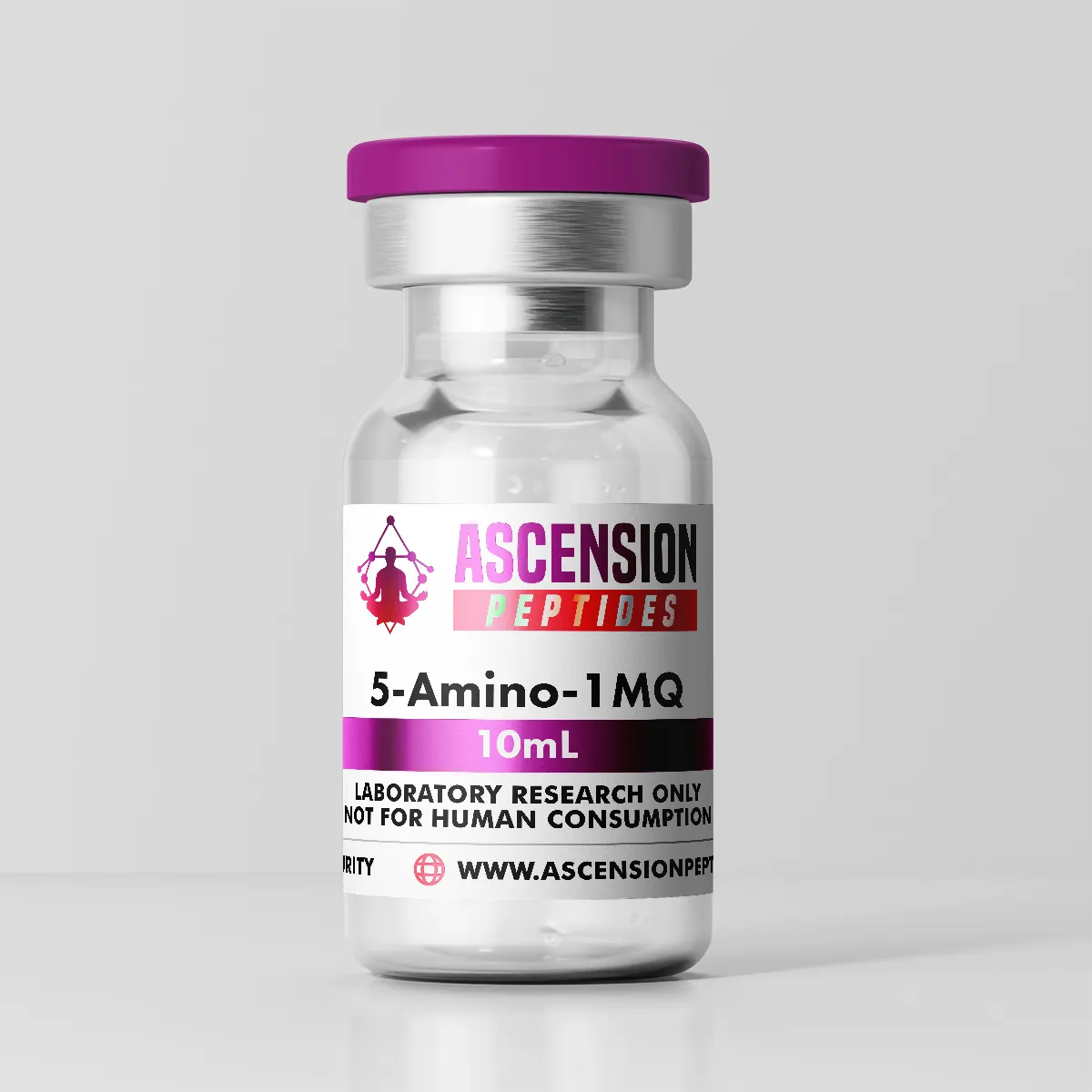
Ascension Peptides is one vendor that meets these standards for 5-Amino-1MQ, offering third-party tested compounds with publicly available COAs.