Zolucatetide goes after a cancer target nobody could hit. For decades, β-catenin has been one of the best-known drivers of tumor growth, and one of the hardest to drug. Zolucatetide (code name FOG-001) is a lab-built, ring-braced peptide from Parabilis Medicines that slips inside cells and breaks the handshake between β-catenin and its partner on DNA, a protein called TCF. On October 14, 2026, Parabilis opened a dose-finding cohort for people with familial adenomatous polyposis (FAP), after polyps in the duodenum shrank sharply in two patients on the drug (Parabilis, Oct 14 2026). Its strongest numbers so far come from desmoid tumors, where 14 of 19 patients saw their tumors shrink by at least 30%.
🔑 Key Takeaways
- Zolucatetide hits the last step of a signal that is stuck "on" in almost every desmoid tumor. Why earlier drugs aimed at the same pathway broke people's bones is the first thing to understand.
- Its desmoid response rate is higher than either gamma-secretase pill on paper. Most of its patients had already stopped one of those pills, which cuts both ways.
- The FAP news rests on two people, and one of them has an important detail about when the "before" picture was taken.
- Side effects are mostly mild at the doses that worked, then jump at the top dose. Two of them are predictable enough that the trial plans for them in advance.
- It has shrunk tumors in craniopharyngioma, a rare jaw tumor and liver cancer. In colon cancer, the most common Wnt-driven cancer, it has produced no responses.
- You cannot buy it, and the vials of "zolucatetide" listed online are not what patients get.
If you or someone you love lives with a desmoid tumor or FAP, you already know the choices. Surgery, which desmoids often grow back after. Pills that work but bring diarrhea and, for many women, early menopause. Or for FAP, a lifetime of scopes and the next operation. Zolucatetide is designed to block β-catenin's contact with TCF, the step both conditions depend on; the company calls it the first drug to do so. This page covers what is public about it: how it works, the published human results, the side effects by dose, who can join the trial, and what the company has not shown yet.
What is zolucatetide?
It is a new kind of peptide drug. Zolucatetide is the international nonproprietary name (INN) the World Health Organization gave FOG-001 in 2025, on Proposed INN List 133 (WHO Drug Information 39(2)). The WHO list describes it only as "antineoplastic", meaning an anticancer drug. The US National Cancer Institute's drug dictionary says more: zolucatetide "penetrates into the cell where it targets and binds to beta-catenin, thereby preventing the interaction of beta-catenin with the transcriptional factor T-cell factor (TCF)" (NCI Thesaurus via PubChem).
The formula and weight come from PubChem and the FDA's substance registry, which agree to the decimal. The structure is our reading of the WHO chemical name: one hydrocarbon "staple" plus two more bridges that lock the peptide into a helix, and several building blocks that do not occur in nature.
How zolucatetide works: breaking the β-catenin handshake
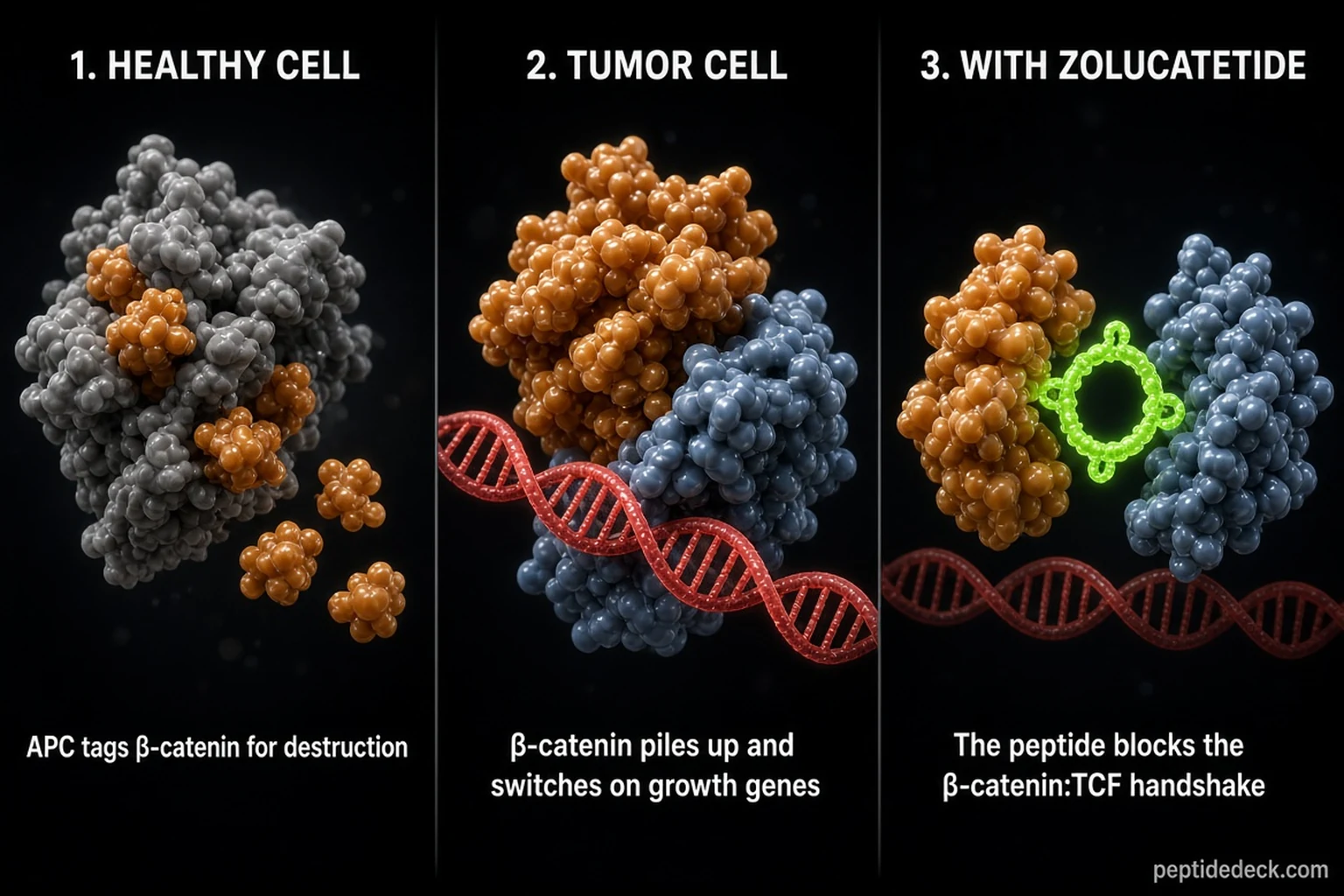
Every cell has a growth switch called Wnt. When Wnt is off, a cleanup crew led by a protein called APC grabs β-catenin and destroys it. When Wnt is on, β-catenin survives, moves into the nucleus and teams up with TCF to switch on growth genes (Grossmann, PNAS 2012).
In many tumors, the switch is jammed. Either APC is broken, so the cleanup never happens, or β-catenin itself is mutated (the gene is called CTNNB1) so the crew cannot tag it. Either way, β-catenin piles up and the growth genes stay on.
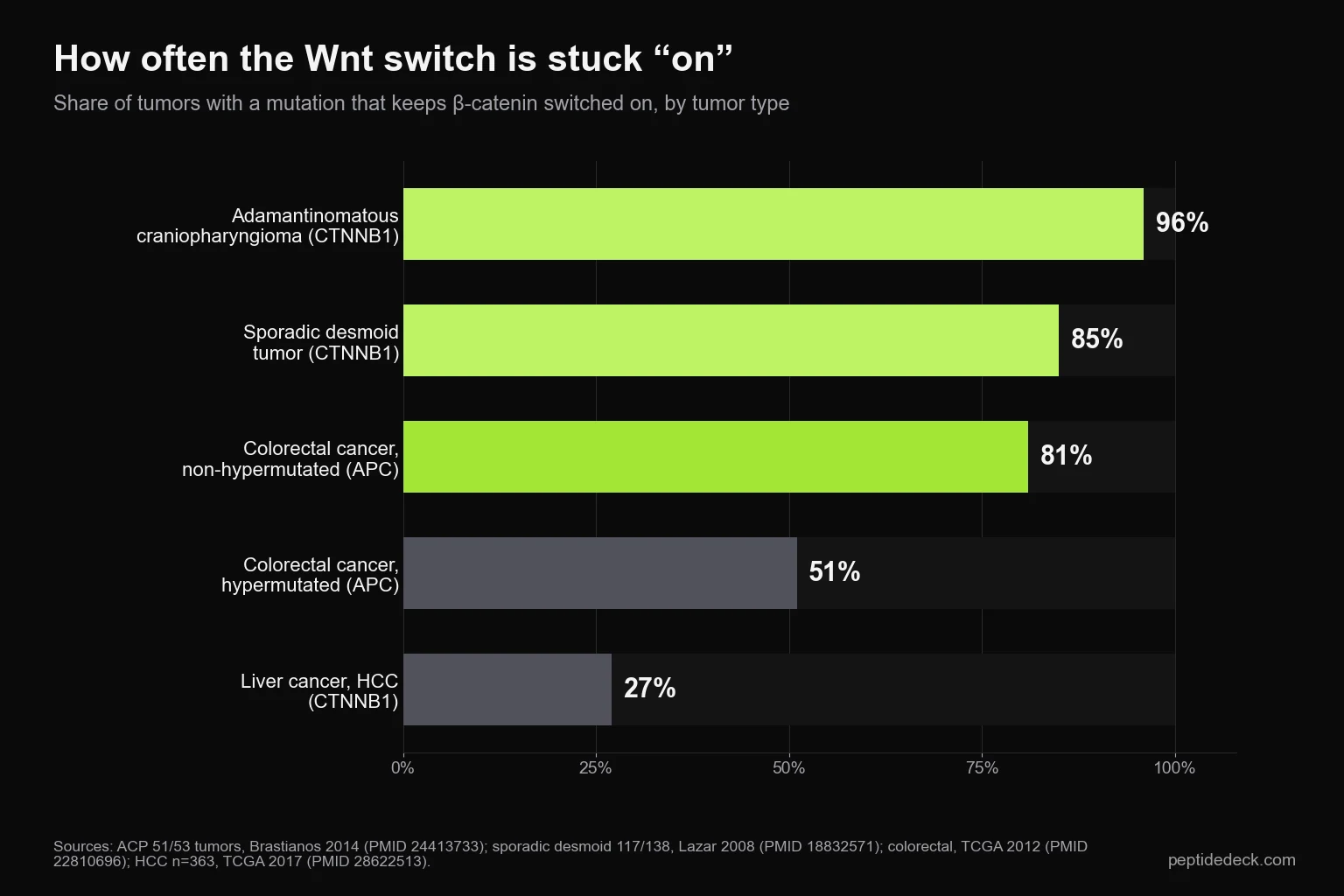
How often is the switch jammed? In some tumors, almost always.
Why it took so long
Most pills work by plugging a small pocket on a protein. β-catenin has no good pocket. Its contact with TCF is a long, flat stretch "some 60 Å in length" and "devoid of pronounced hydrophobic pockets conducive to the binding of small molecules", as the Harvard team behind the idea put it in 2012 (Grossmann, PNAS 2012). A typical protein-protein contact covers 1,500 to 3,000 Ų, while a small molecule covers 300 to 1,000 Ų (Wang, 2022). A pill is simply too small to block it.
That is why earlier Wnt drugs aimed higher up the chain, at the Wnt signal itself or its receptor. Two problems followed.
- They miss these tumors. If APC or β-catenin is already broken, the tumor no longer needs the upstream signal. A Phase 1 paper on the porcupine blocker WNT974 says such tumors "are predicted to be insensitive to drugs targeting upstream components of the pathway" (Rodon, 2021). WNT974 produced no responses in 94 patients.
- They broke bones. Vantictumab's breast cancer trial saw fractures in 6 patients, which "limits future clinical development" (PMID 32803633); its pancreatic trial was "terminated due to concerns around bone-related safety" (PMID 31338636). Ipafricept's program ended over bone toxicity and commercial concerns (PMID 32694153).
Zolucatetide acts at the very last step, below the broken part. In theory it should work whichever gene is broken, APC or CTNNB1. Whether it escapes the bone problem is still being watched, and the trial gives every patient bone-protecting medicine as a precaution (more on that below).
Is zolucatetide a peptide?
Yes, but not like the ones you know. Semaglutide, tirzepatide and octreotide all work from outside the cell, by docking onto a receptor on its surface. Zolucatetide has to cross the cell membrane and reach the nucleus. Fewer than 1 in 10 peptides in clinical development go after targets inside the cell (Wang, 2022), because most peptides cannot get in. It is also unlike RYZ101, the other cancer peptide in the news this month, which uses its peptide only as a homing device for a radioactive atom. In zolucatetide, the peptide is the drug.
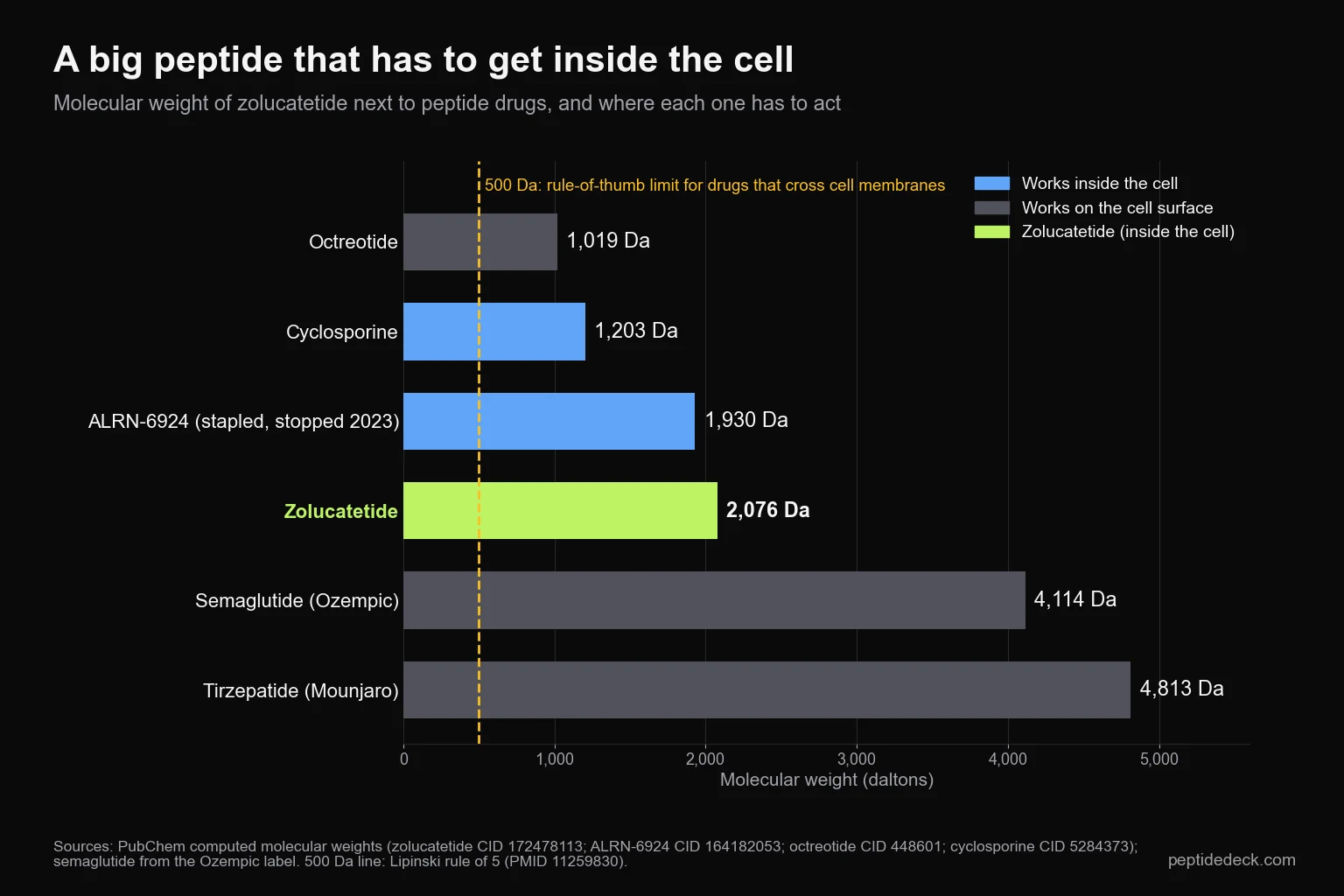
The trick is the staple. Chemical braces hold the peptide in a rigid helix, which hides its water-loving backbone and helps it slip through membranes. The same idea gave us ALRN-6924, an earlier stapled peptide built on the same Harvard technology, which showed in people that it could reach its target inside cells (Saleh, 2021). Aileron Therapeutics stopped developing it in February 2023, after a breast cancer trial in which it failed to prevent severe (grade 4) chemotherapy-induced drops in white blood cells and hair loss (Aileron 8-K). Zolucatetide is the next attempt from the same line of work: Parabilis was founded in 2015 on technology licensed from Greg Verdine's lab at Harvard, where the 2012 β-catenin peptide was made (IPO prospectus).
One more contrast for regular readers. PTD-DBM, sold online for hair growth, is a cell-penetrating peptide meant to turn this same Wnt pathway up. Zolucatetide turns it down, and hair loss is one of its most common side effects (37% in desmoid patients). That fits what you would expect from a pathway that hair follicles depend on.
Zolucatetide in desmoid tumors: the results so far
Desmoids are rare, stubborn and not cancer in the usual sense. They do not spread to other organs, but they grow into muscle, nerves and organs, and come back after surgery. About 1,000 people a year are diagnosed in the US, 70% of them women (MedlinePlus). Around 85% of sporadic desmoids carry a CTNNB1 mutation (Lazar, 2008), which makes them the cleanest test of zolucatetide's idea.
Every one of the 25 evaluable patients saw some tumor shrinkage. The median time to a response was 3.8 months (prospectus), and patients had been on the drug for a median of 36 weeks at the cut (August 2026 investor deck). The company says it has seen "meaningful responses" at 150 mg to 450 mg a week, the lower half of the doses tested.
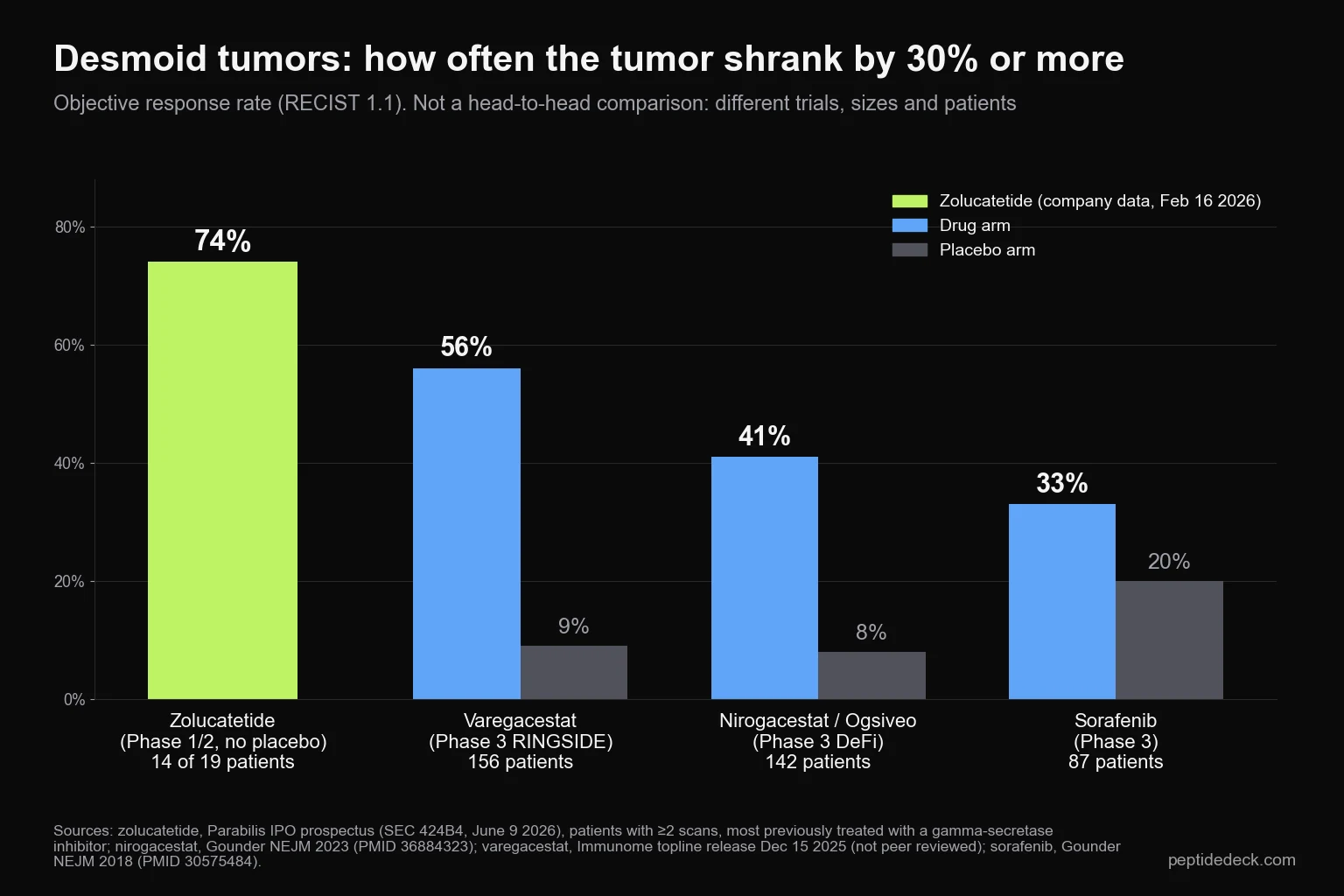
Read the 74% carefully
- It is 19 people. One or two results going the other way would move the number by 5 to 10 points.
- There is no placebo group. Desmoids sometimes shrink by themselves: 20% of people on placebo in the sorafenib trial had a response (PMID 30575484).
- Most had already been on a pill. The company's slides list 20 patients who had stopped a gamma-secretase pill: 11 because the tumor kept growing, 8 because of side effects, 1 because it did nothing (deck). A response after a pill stopped working is a meaningful signal; the 8 who stopped for side effects were not resistant tumors.
- All of it is company-reported. The ESMO 2025 abstract is published in a congress supplement, but no full peer-reviewed desmoid paper exists yet. The prospectus itself warns that open-label trials "may exaggerate any therapeutic effect" (prospectus).
Zolucatetide vs Ogsiveo and varegacestat
Here is what it has to beat. Two gamma-secretase inhibitors already have Phase 3 wins in desmoid tumors. They block Notch, a side pathway that talks to Wnt, rather than the β-catenin driver itself (Federman, 2022).
The case for zolucatetide is not only the bigger number. It is the side effect list. In the DeFi trial, 27 of 36 women of childbearing age on nirogacestat had signs of ovarian dysfunction, though most recovered (PMID 36884323), and 20% stopped the drug because of side effects (Ogsiveo label). Most desmoid patients are women (70%). Zolucatetide's prospectus reports no grade 3 or worse gut, skin or ovarian side effects in desmoid patients so far (prospectus).
The case against: it is an infusion, not a pill, and its evidence is a fraction of theirs. Parabilis says it does not plan any head-to-head trial against either drug.
Zolucatetide for FAP: the October 2026 news
FAP is inherited, and it is relentless. A broken copy of the APC gene causes hundreds to thousands of polyps in the colon, usually from the teens. FAP affects about 1 in 8,500 people (MedlinePlus), and without surgery the risk of colon cancer is close to 100% (Steinbach, NEJM 2000).
Removing the colon solves the colon. It does not solve the duodenum, the first part of the small intestine, where polyps keep coming. In a five-country study of 368 patients, 90% had duodenal polyps by age 70 (Bülow, Gut 2004). Doctors grade them with the Spigelman score, from stage 0 to stage IV; stage IV carries the highest cancer risk.
There is no FDA-approved drug for FAP. Past attempts did not stick:
The two FAP patients
- Patient 1 had FAP, a removed colon and a large desmoid in the belly, and was treated for the desmoid. At 60 weeks, an endoscopy showed fewer and smaller duodenal polyps, Spigelman stage II down to stage I. His desmoid shrank 52.2% (Parabilis, March 2026).
- Patient 2 started 450 mg weekly on January 22, 2026. At about 10 weeks, their duodenum had gone from Spigelman stage IV to "findings consistent with an almost normal duodenum" (prospectus).
Here is the detail that matters. Patient 1's "before" endoscopy was taken on July 24, 2023, about two years before the "after" one in October 2025 (deck). Neither scope was planned by the trial; both were routine care. Two people, no fixed schedule, no comparison group. The company itself says it "does not have a pre-planned schedule for these endoscopies" in the main trial (prospectus).
That is what the new cohort is for. Announced on October 14, 2026, it tests different doses in adults with FAP, a documented APC mutation, a past colectomy and measurable duodenal polyps (Parabilis). The trial registry adds that the colectomy must be more than six months old, and the prospectus says the cohort will have pre-planned endoscopies. The release gives no number of patients and no doses. The next FAP data, promised for the first quarter of 2027, will come from patients with both FAP and desmoid tumors, not necessarily from this new cohort. The trial registry entry still lists no polyp-specific endpoint (NCT05919264).
FAP and desmoid are linked. Desmoids develop in 10% to 30% of people with FAP (MedlinePlus), and a Dutch registry found desmoids about 800 times more common in FAP than in the general population (PMID 20830713).
Other tumors: craniopharyngioma, liver cancer, ameloblastoma, colon cancer
The pattern so far is "simple" tumors. Parabilis groups tumors with few mutations besides the Wnt one as "low genomic complexity". In 39 evaluable patients with such tumors at 150 mg or more, it reports 20 responses (51%) across six tumor types (prospectus).
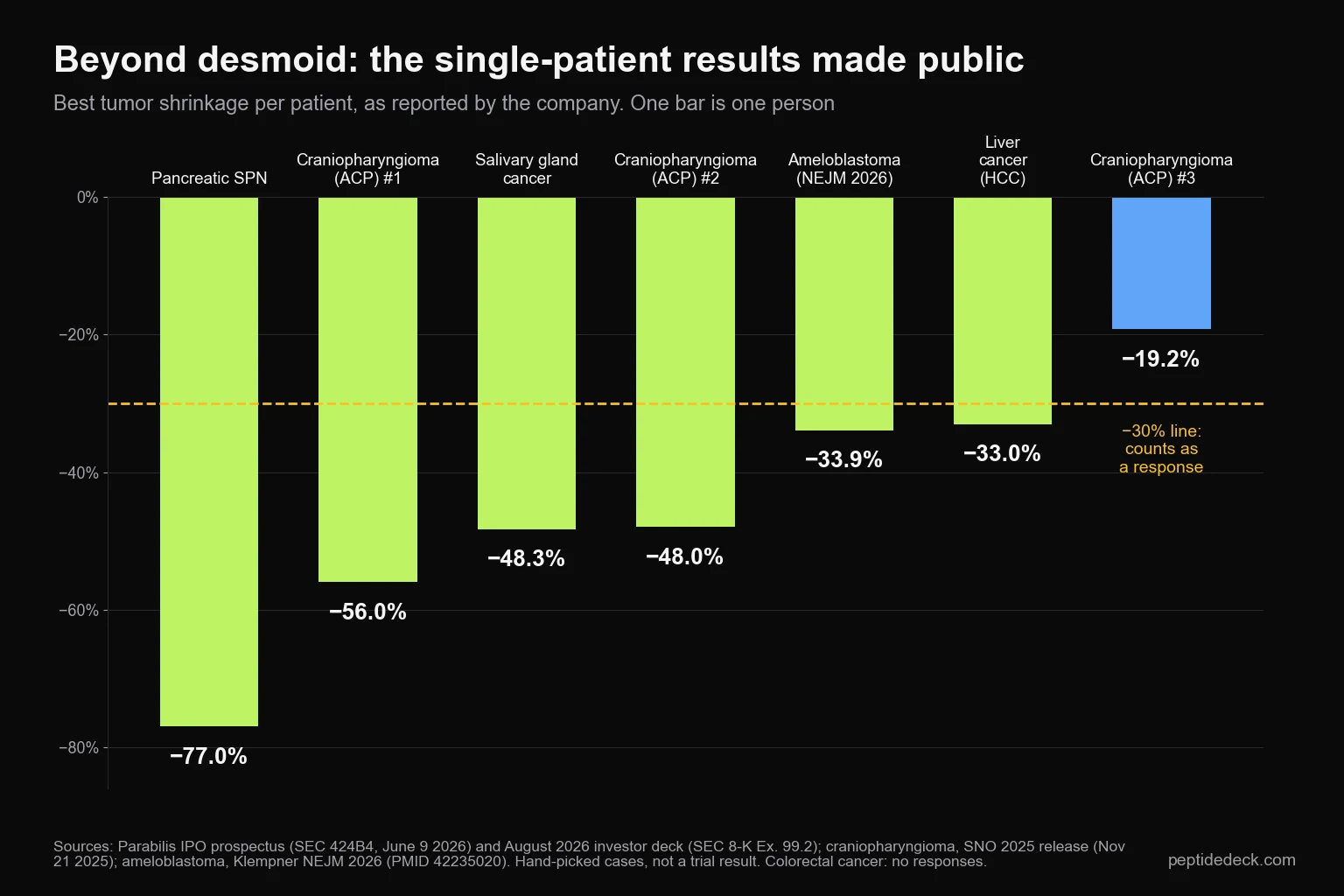
- Adamantinomatous craniopharyngioma (ACP). A brain tumor near the pituitary, most common in children aged 5 to 15 and adults aged 45 to 60 (PMID 31699993), with a CTNNB1 mutation in about 96% of cases (PMID 24413733). Treatment is surgery and radiation, with no approved targeted drug. All 3 treated patients' tumors shrank: by 56%, 48% and 19.2% (Parabilis, Nov 2025).
- Ameloblastoma. A jaw tumor. A 29-year-old with an APC mutation had a confirmed 33.9% shrinkage still holding at 40 weeks. It is the only zolucatetide case published in a medical journal so far, as a letter in the New England Journal of Medicine (Klempner, NEJM 2026).
- Liver cancer (HCC). One heavily treated patient with cirrhosis and a β-catenin mutation shrank 33% at week 8, confirmed at week 16. About 27% of liver cancers carry a CTNNB1 mutation (PMID 28622513), and those tumors respond poorly to immunotherapy: 0% vs 53% disease control in one small study (PMID 30373752).
- Colon cancer: no responses. This is the big one, since 81% of common colon cancers carry APC mutations (PMID 22810696). The prospectus says: "we have not observed any objective responses. As such, we do not currently plan to advance zolucatetide as a monotherapy for CRC patients." It is still being tried in combinations with chemotherapy and nivolumab.
The colon cancer result is the most useful reality check on this page. Our reading: a broken Wnt switch may be needed for zolucatetide to work, but in tumors carrying dozens of other mutations it is not enough.
Zolucatetide side effects
At the doses that worked, mostly mild. In the 38 desmoid patients (February 2026 data), 13.2% had a grade 3 or worse treatment-related side effect, one had a serious one, and nobody stopped the drug because of side effects (prospectus).
*The prospectus footnotes that one of the three grade 3 bilirubin cases was a data error later corrected to grade 2.
The other grade 3 events were lab results: platelets, liver enzymes, and one grade 4 rise in a muscle enzyme (CPK) that resolved in a week. The company describes all of them as "reversible asymptomatic lab abnormalities without clinical sequelae."
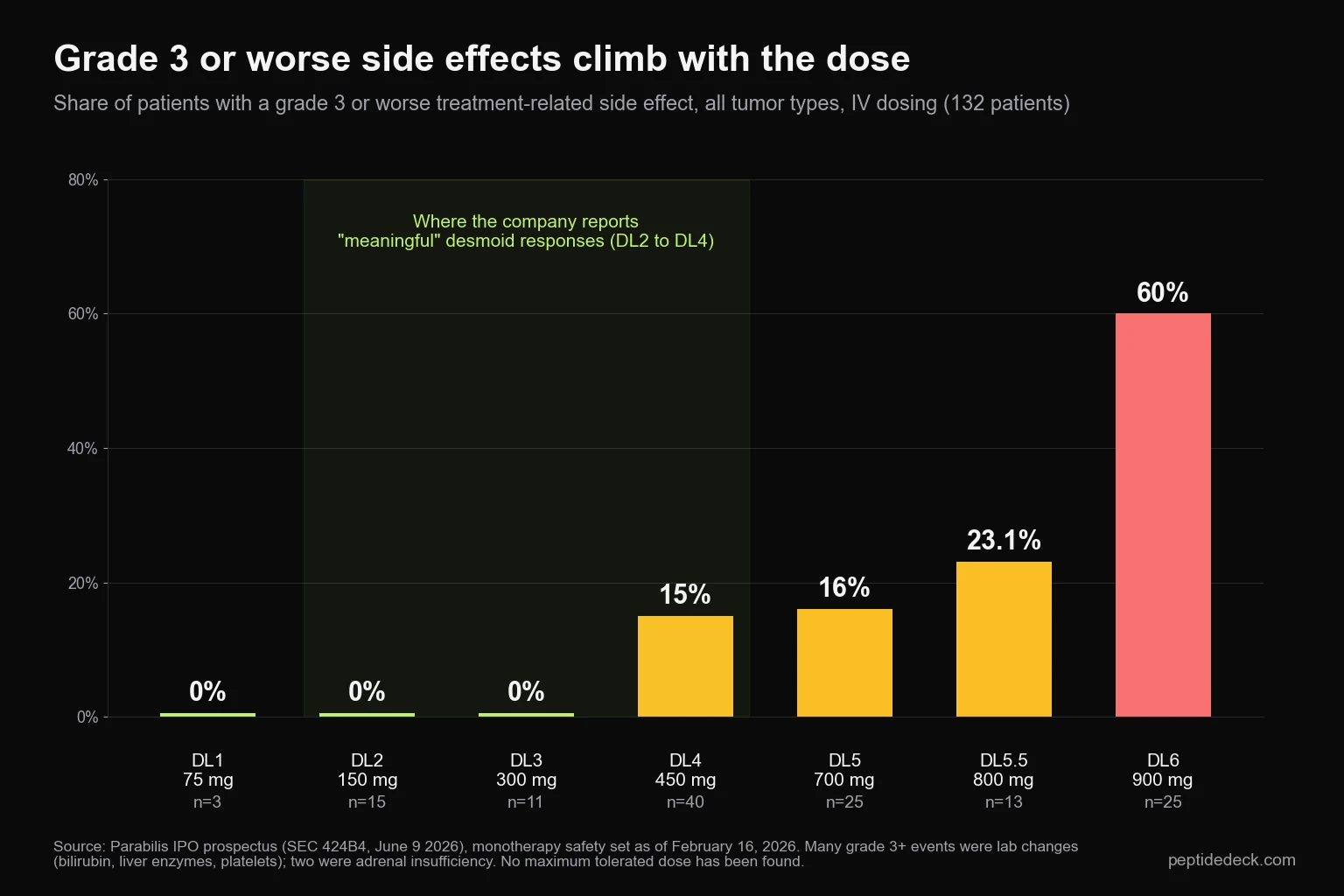
Four side effects worth understanding
- Bone. Earlier drugs that block the Wnt signal higher up raised fracture risk. The trial excludes people with osteoporosis and gives everyone bone-protecting (antiresorptive) treatment every three to six months. The company says no high-grade bone side effects have been reported.
- Aldosterone. Blocking β-catenin can lower aldosterone, the adrenal hormone that holds on to salt. That may explain why low sodium shows up in 24% of patients. Patients can take fludrocortisone, a salt-retaining hormone pill. Two serious adrenal insufficiency events happened at the two highest doses.
- Bilirubin. Zolucatetide blocks the liver pumps (OATP1B1 and OATP1B3) that take up bilirubin, so bilirubin rises without liver damage, much like the harmless Rotor syndrome. At 900 mg, 76% of patients had raised bilirubin.
- Hair. 37% hair loss in desmoid patients, likely an on-target effect, since hair follicles depend on Wnt signaling.
What the investor slides leave out. Parabilis's August 2026 slide deck says that at 150 to 450 mg there was "No GI or skin toxicity such as diarrhea or rash" (deck). The prospectus tables show low-grade rash in 3 of 16 patients and nausea in 10 of 16 at the 450 mg level. Only the prospectus qualifies the claim as grade 3 or worse. Both documents are filed with the SEC; the prospectus is the more complete one.
Zolucatetide dose and how it is given
Every patient so far gets it by IV infusion (10-Q). Doses are set by body surface area; the fixed-dose equivalents are below (prospectus).
In desmoid tumors, Parabilis expects to start at around 450 mg weekly and then step down to around 150 mg, weekly or every two weeks. Scans happen every 8 weeks in the first year.
The plan is to launch, if approved, as a self-injected shot. In March 2026, a healthy-volunteer study of the first injectable version caused injection-site reactions (grade 1 and 2). Because Phase 3 will use the IV form, the company warns it may need a separate trial to prove the two are equivalent, which "could delay marketing approval" (prospectus). No infusion time or human half-life has been published.
The zolucatetide trial: who can join
There is one registered study. NCT05919264 (FOG-001-101) is an open-label Phase 1/2 trial, recruiting since May 2023, aiming for 619 adults at 33 sites (31 in the US, 2 in Australia). The estimated primary completion date is April 2027.
Notable exclusions: osteoporosis (T-score of −2.5 or lower) and a non-traumatic fracture in the past 12 months without bone treatment. If you think you qualify, print the registry page and take it to your oncologist or gastroenterologist; the sites and contacts are listed there.
When could zolucatetide be approved?
Our estimate: not before 2028 at the earliest, and probably later. The steps the company has laid out are below.
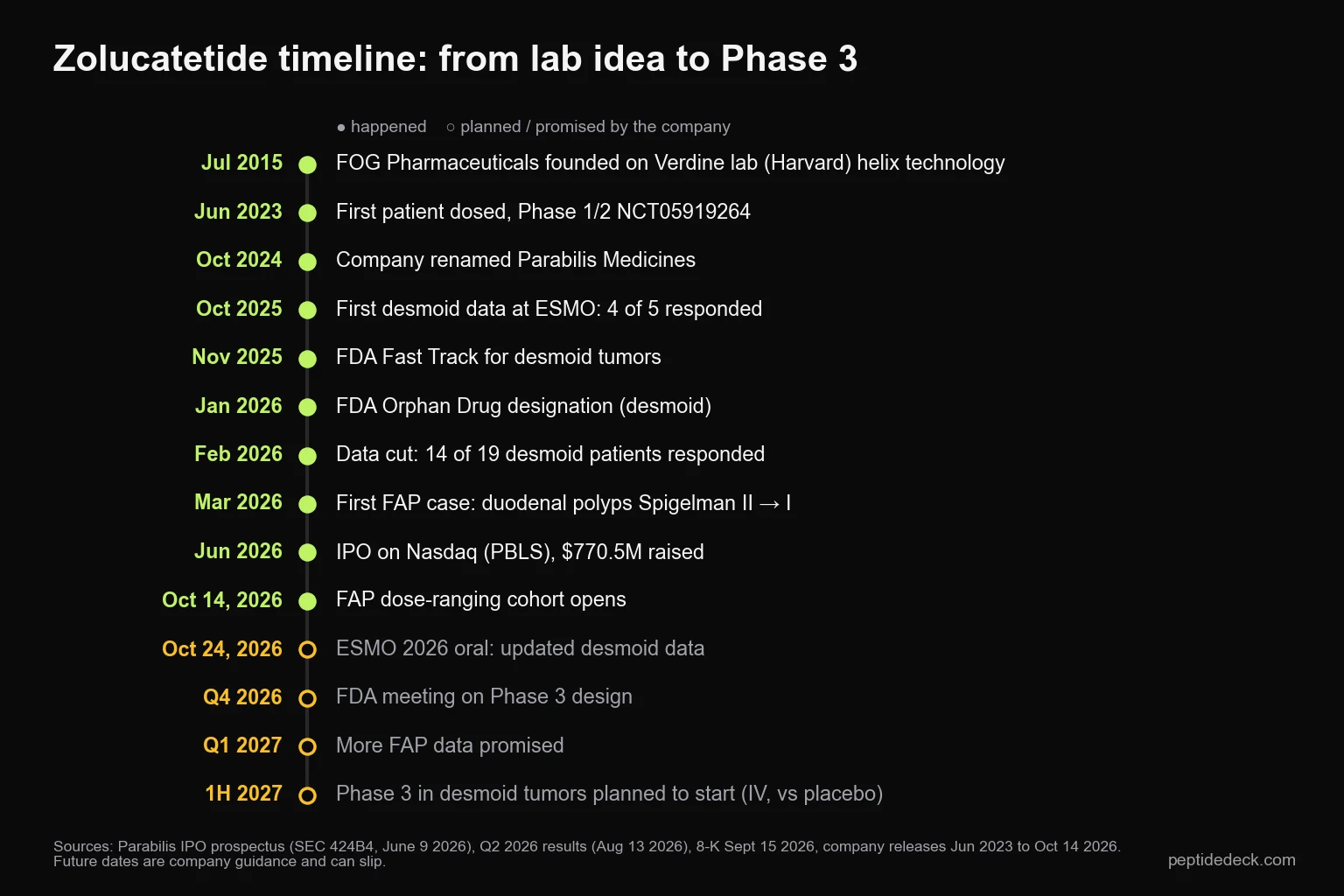
- October 24, 2026: updated desmoid data at the ESMO congress in Madrid (8-K). An August release said it would come "from the February data cut", so it may not add many new patients.
- Q4 2026: an end-of-Phase 2 meeting with the FDA. The company wants response rate accepted as a primary endpoint next to progression-free survival. That is not agreed yet.
- 1H 2027: a global Phase 3 in desmoid tumors starts: 1:1 against placebo, open to untreated, recurrent and refractory patients, stratified by prior gamma-secretase use. It will use the IV form.
- After that: the trial has to run, read out, and go through FDA review. Fast Track allows rolling review, and orphan status can bring seven years of US market exclusivity for desmoid tumors if approved.
An FAP approval would need its own pivotal trial and an agreed endpoint; no FAP drug has ever cleared that bar for long.
Can you buy zolucatetide?
No. Zolucatetide is not approved anywhere, is not sold in pharmacies and is not available through compounding. The only way to receive it is in the trial.
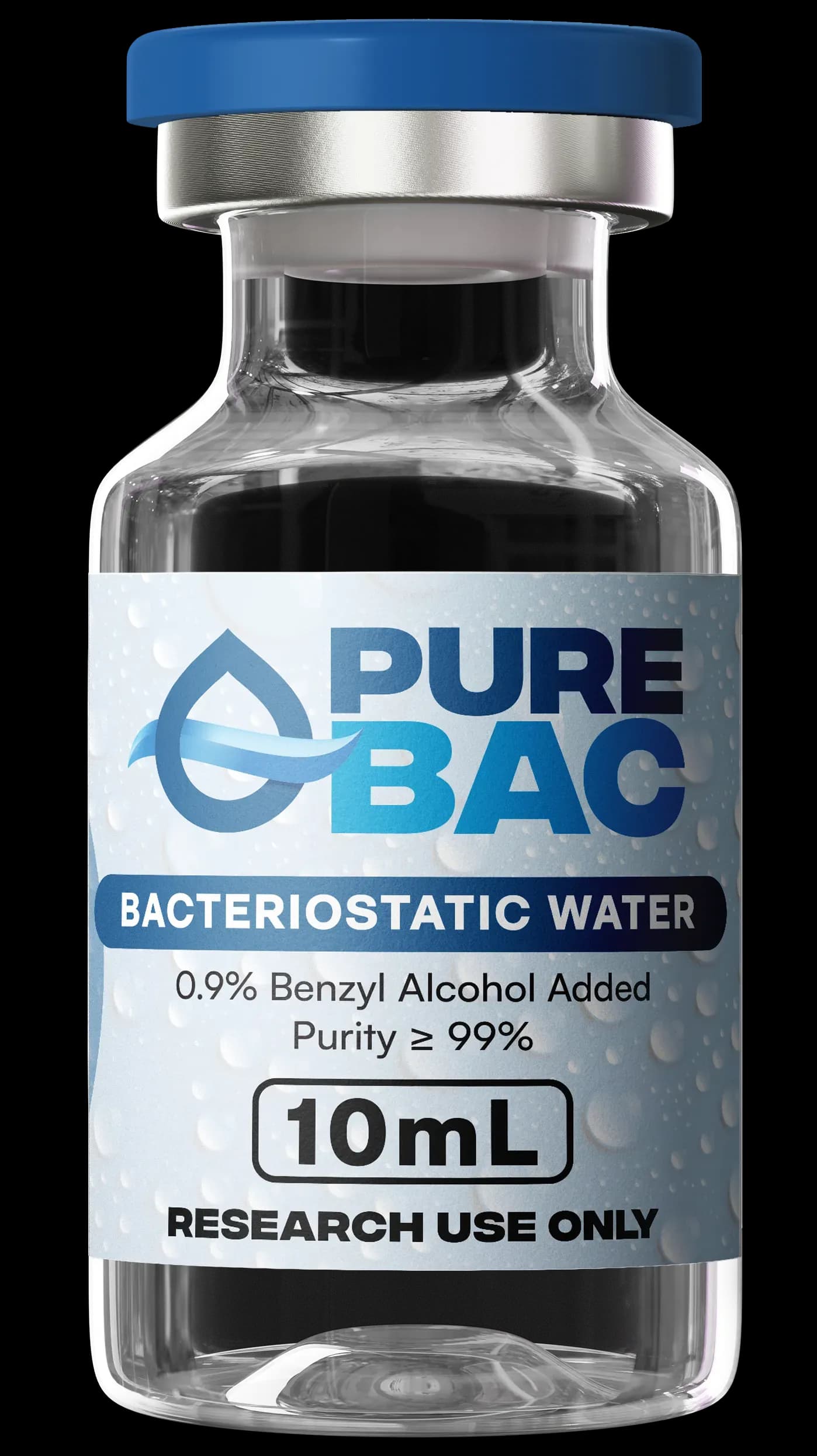
A few lab-chemical suppliers list it online. InvivoChem, for example, lists "(Z)-Zolucatetide" in 1, 5 and 10 mg sizes with no price and a statement that it is "not for human use" and that they "do not sell to patients." Three reasons to take that seriously:
- It is not the same product. Patients get a sterile IV formulation at 150 to 900 mg a week. A 5 mg vial of powder is a different thing entirely.
- Identity is unverified. We could not confirm that the listed "(Z)" compound matches the trial drug's exact structure.
- The real risks need monitoring. Bone protection, adrenal and sodium checks and liver labs are built into the trial for a reason.
If you are comparing peptides for sale online, zolucatetide is not one of them, and anything sold under its name is a lab chemical of unknown origin. Our guide to grey-market peptides explains how to check a vendor's testing.
Who makes zolucatetide? Parabilis Medicines
A well-funded company with one drug in the clinic. Here are the basics from its SEC filings:
That cash matters for patients. It means the Phase 3 is funded and unlikely to stall for money, which is how promising rare-disease drugs often die.
What to ask your doctor
If you have a desmoid tumor, FAP or a Wnt-driven tumor, bring these questions to your next appointment:
- Does my tumor carry a CTNNB1 or APC mutation, and has it been tested?
- Am I eligible for NCT05919264, and which site is closest?
- For desmoid: how does active surveillance, Ogsiveo or a trial compare for my tumor's size, location and growth?
- For FAP: what is my current Spigelman stage, and when is my next endoscopy due?
- What is my bone density, and would that rule me out of a Wnt-pathway trial?
Do not stop or change any prescribed medication to try to get into a trial without talking to your care team.
Zolucatetide FAQ
Medical disclaimer: This article is for education only and is not medical advice. Zolucatetide is an investigational drug available only in clinical trials. Clinical data here are mostly company-reported and may change. Talk to your oncologist or gastroenterologist about treatment options and trial eligibility. Information checked October 15, 2026.
Sources
- Parabilis Medicines, FAP dose-ranging cohort release, Oct 14 2026
- Parabilis Medicines, IPO prospectus (SEC Form 424B4), June 9 2026
- Parabilis Medicines, Form 10-Q, quarter ended June 30 2026
- Parabilis Medicines, corporate presentation, August 2026 (8-K Ex. 99.2)
- Parabilis Medicines, 8-K on the ESMO 2026 oral, Sept 15 2026
- Parabilis Medicines, Q2 2026 results, Aug 13 2026
- Parabilis Medicines, FAP case release, Mar 5 2026; Orphan Drug release, Mar 11 2026
- Parabilis Medicines, Fast Track release, Nov 12 2025; craniopharyngioma (SNO 2025) release, Nov 21 2025
- Parabilis Medicines, ESMO 2025 desmoid data, Oct 17 2025; AACR-NCI-EORTC 2025 release, Oct 30 2025
- ClinicalTrials.gov, NCT05919264 (FOG-001-101)
- WHO Drug Information 39(2), Proposed INN List 133; PubChem CID 172478113
- Klempner SJ et al. Targeting of Wnt-β-catenin pathway in recurrent ameloblastoma. N Engl J Med 2026;394:2168-70. PMID 42235020
- Grossmann TN et al. PNAS 2012. PMID 23071338; Wang L et al. 2022. PMID 35165272
- Rodon J et al. WNT974 phase 1. Br J Cancer 2021. PMID 33941878; vantictumab PMID 32803633, PMID 31338636; ipafricept PMID 32694153
- Brastianos PK et al. Nat Genet 2014. PMID 24413733; Lazar AJ et al. Am J Pathol 2008. PMID 18832571
- TCGA. Nature 2012. PMID 22810696; TCGA. Cell 2017. PMID 28622513; Harding JJ et al. Clin Cancer Res 2019. PMID 30373752
- Lipinski CA et al. 2001. PMID 11259830; Saleh MN et al. ALRN-6924. Clin Cancer Res 2021. PMID 34301750; Aileron 8-K, Feb 2023
- Gounder M et al. Nirogacestat (DeFi). N Engl J Med 2023. PMID 36884323; Ogsiveo label (DailyMed); SpringWorks 8-K, Nov 2023
- Immunome, RINGSIDE topline, Dec 15 2025; Q2 2026 results; Federman N. 2022. PMID 36068332
- Gounder MM et al. Sorafenib for desmoid tumors. N Engl J Med 2018. PMID 30575484; Nieuwenhuis MH et al. 2011. PMID 20830713
- MedlinePlus Genetics: familial adenomatous polyposis; desmoid tumor
- Steinbach G et al. Celecoxib in FAP. N Engl J Med 2000. PMID 10874062; Federal Register 77 FR 34052, June 8 2012
- Burke CA et al. Eflornithine-sulindac (FAP-310). N Engl J Med 2020. PMID 32905675; Samadder NJ et al. JAMA 2016. PMID 27002448; Bülow S et al. Gut 2004. PMID 14960520