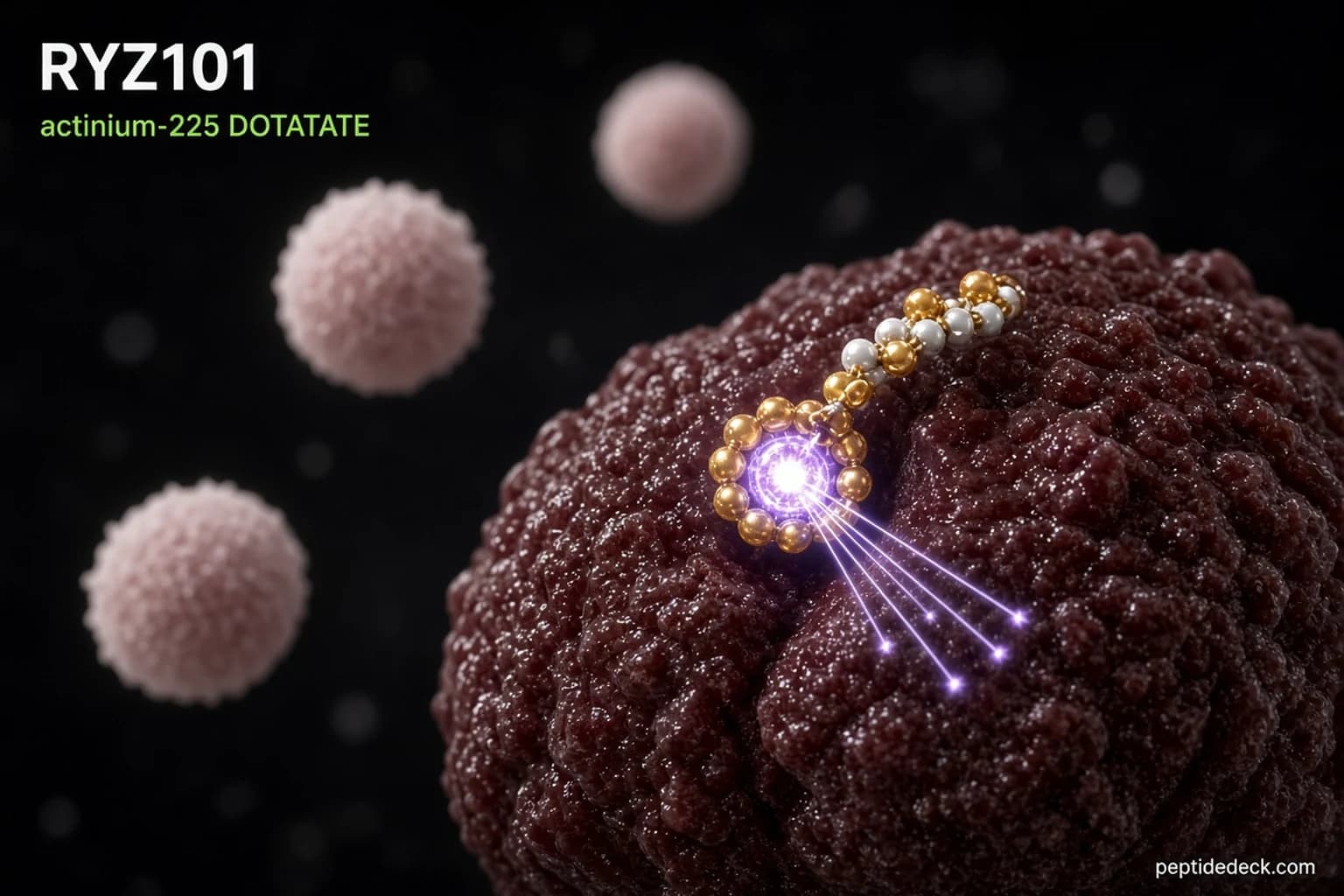
RYZ101 is a peptide that carries radiation. Its full name is actinium-225 DOTATATE: a small ring-shaped peptide that homes in on a receptor found on most neuroendocrine tumors, with one radioactive actinium atom locked to it. Once it docks, the atom releases four alpha particles that tear through the tumor cell's DNA and stop within a few cells. On October 12, 2026, Bristol Myers Squibb announced that this radioactive peptide beat standard drugs in its Phase 3 trial, ACTION-1 (BMS, Oct 12 2026). BMS says these are the first Phase 3 results for any actinium-225 drug. That makes RYZ101 one of the clearest examples of what people searching for a "cancer-killing peptide" hope exists: a peptide that carries a lethal payload straight into the tumor.
🔑 Key Takeaways
- The October 2026 Phase 3 result is real, but four key numbers are still missing. We list each one and the bar the trial had to clear.
- RYZ101 uses the same peptide as Lutathera. The only change is the radioactive atom, and that one swap shrinks how far the radiation travels on average roughly tenfold.
- In 17 people whose tumors had already beaten Lutathera, 14 saw their cancer shrink or hold still. What happened to their kidneys is the part to watch.
- It is being tested in lung cancer, breast cancer and meningioma too. One of those trials has gone quiet.
- You cannot buy RYZ101, and the company that makes it does not own a patent on the molecule. Both facts matter if you see it "for sale".
- Most peptides sold online as "anticancer" have no human cancer data at all. We graded them.
If you or someone close to you lives with a neuroendocrine tumor, you already know the pattern. The first treatments work for a while. Lutathera often buys a good stretch of time. Then scans start to creep again, and the list of next options gets short. RYZ101 was built for exactly that moment, and this page walks through everything known about it: what it is, how it kills cells, every human study, the side effects, the trials you might qualify for, and the parts the company has not released yet.
What is RYZ101?
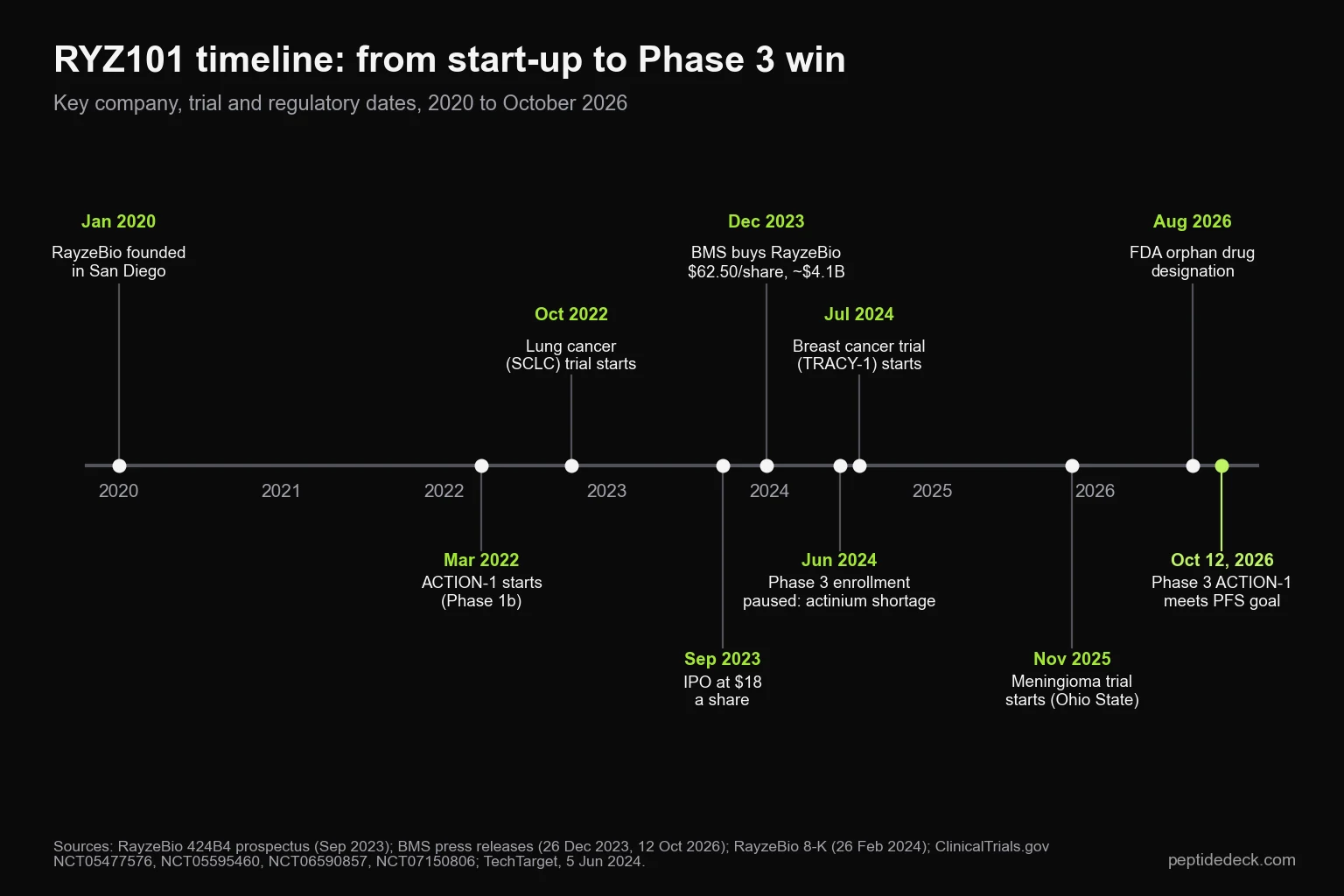
RYZ101 is a drug code, not a brand name. It belongs to RayzeBio, a San Diego company founded in January 2020 and bought by Bristol Myers Squibb (BMS) for about $4.1 billion ($62.50 a share) in a deal announced on December 26, 2023 and closed on February 26, 2024 (BMS release; RayzeBio 8-K). When it reaches the market it will get a generic name and a brand name. Until then, you will see it written several ways:
RYZ101 is being tested first in gastroenteropancreatic neuroendocrine tumors (GEP-NETs): slow-growing cancers of the gut and pancreas that RayzeBio says affect about 18,000 new people a year in the US. Its target, somatostatin receptor 2 (SSTR2), sits on 80 to 90% of these tumors (RayzeBio).
Is RYZ101 a peptide?
Yes, and the peptide is what makes it work. (If peptides are new to you, our what are peptides explainer covers the basics.) RYZ101 has three parts: the alpha-emitting isotope actinium-225, a ring-shaped chemical cage called DOTA that holds the atom, and octreotate (TATE), a shortened, lab-made version of the hormone somatostatin (Han et al., Mol Cancer Ther 2023).
The peptide is eight amino acids long, closed into a ring by a sulfur bridge: D-Phe-Cys-Tyr-D-Trp-Lys-Thr-Cys-Thr. That exact sequence is printed on the label of NETSPOT, the scan agent that uses the same peptide (NETSPOT label). In RayzeBio's binding tests, the non-radioactive version bound human SSTR2 tightly (Ki 0.057 nmol/L) and over 600 times more selectively than other somatostatin receptors.
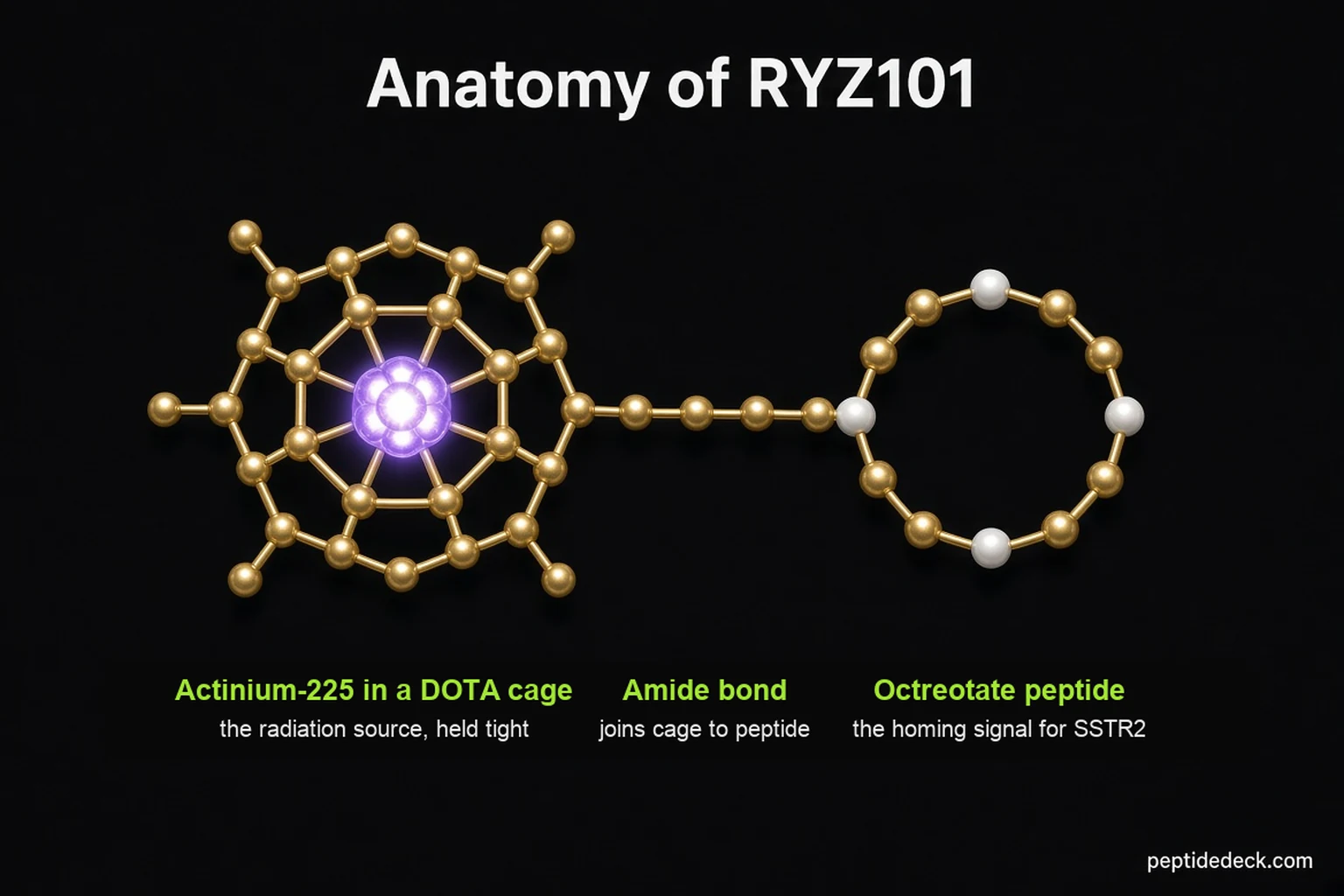
Think of the peptide as the address and the actinium as the package. The peptide alone does very little to cancer: octreotide and lanreotide, close cousins, mostly slow tumor growth and calm hormone symptoms. Swap a different atom into the same cage and you get a different tool. Gallium-68 or copper-64 turns DOTATATE into a PET scan. Lutetium-177 turns it into Lutathera. Actinium-225 turns it into RYZ101.
Why this matters to you: the scan decides the treatment. Only people whose tumors light up on a somatostatin-receptor PET scan (such as Ga-68 DOTATATE or Cu-64 DOTATATE) qualify. If your tumor does not show up on that scan, the peptide has nothing to hold on to.
How a radioactive peptide kills cancer cells
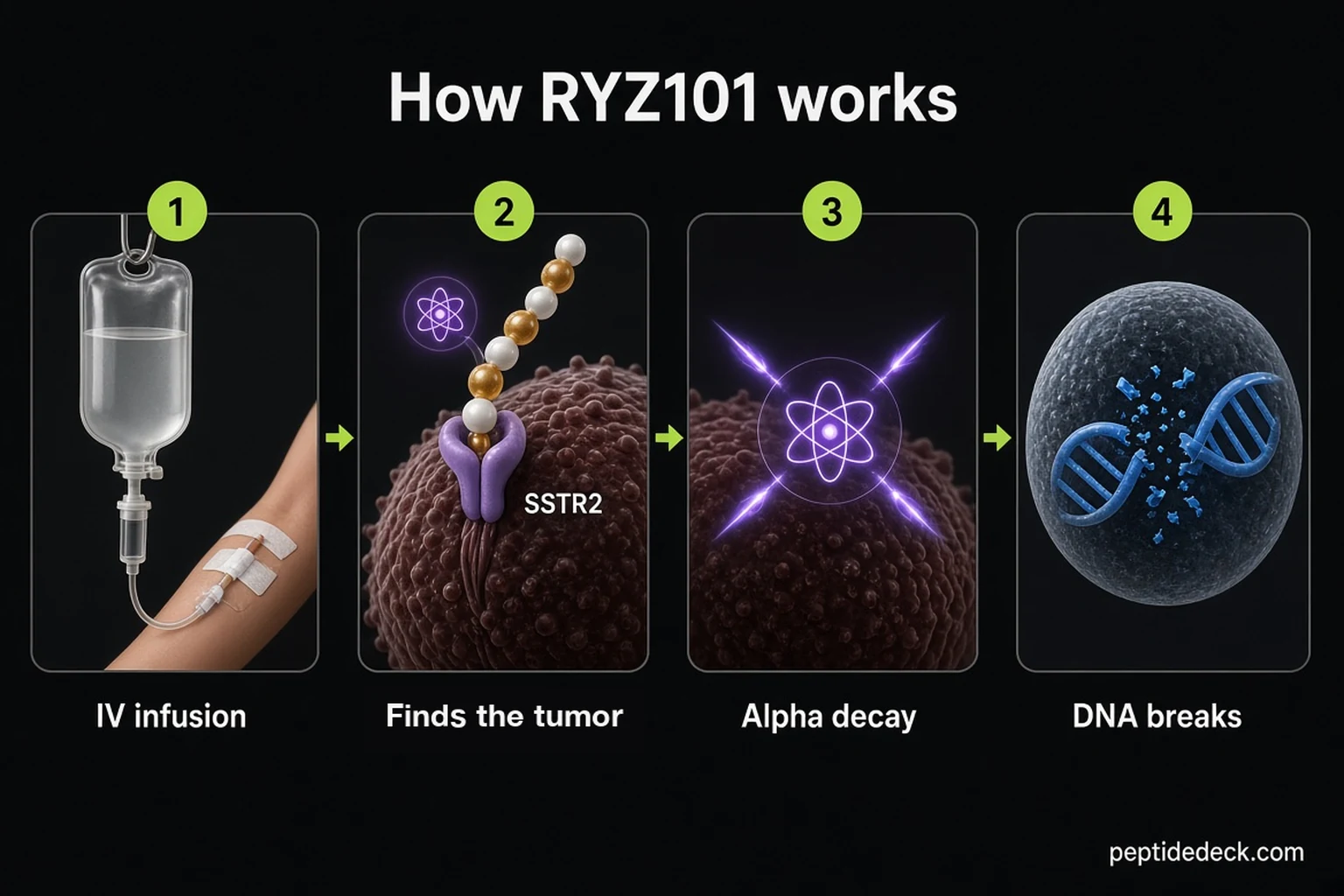
It happens in four steps, as described in RayzeBio's trial presentations (ASCO 2024; WCLC 2025):
- Infusion. RYZ101 goes into a vein, together with an amino acid drip (lysine and arginine) that protects the kidneys.
- Binding. The peptide latches onto SSTR2 on the tumor cell surface.
- Uptake. The cell swallows the receptor and the drug together (endocytosis), pulling the actinium inside.
- Alpha decay. Actinium-225 decays through a chain of short-lived daughter atoms, releasing alpha particles that cause double-strand DNA breaks and cell death.
Why alpha particles hit so hard
Alpha particles are heavy and slow. They dump their energy into a very short track, about 80 to 100 keV per micrometer, compared with roughly 0.2 keV per micrometer for the beta particles from lutetium-177 (Leupe et al. 2025). That dense track snaps both strands of DNA in one place, which is much harder for a cell to repair than the scattered single-strand nicks beta radiation leaves.
Each actinium-225 atom decays through francium-221, astatine-217, bismuth-213, polonium-213 and lead-209 to near-stable bismuth-209. Along the way it releases four alpha particles of 5.8 to 8.4 MeV, which travel only 47 to 85 µm in tissue (Morgenstern et al. 2018). The parent half-life is about 10 days (NNDC nuclear data), which is long enough to ship the drug and short enough to clear.
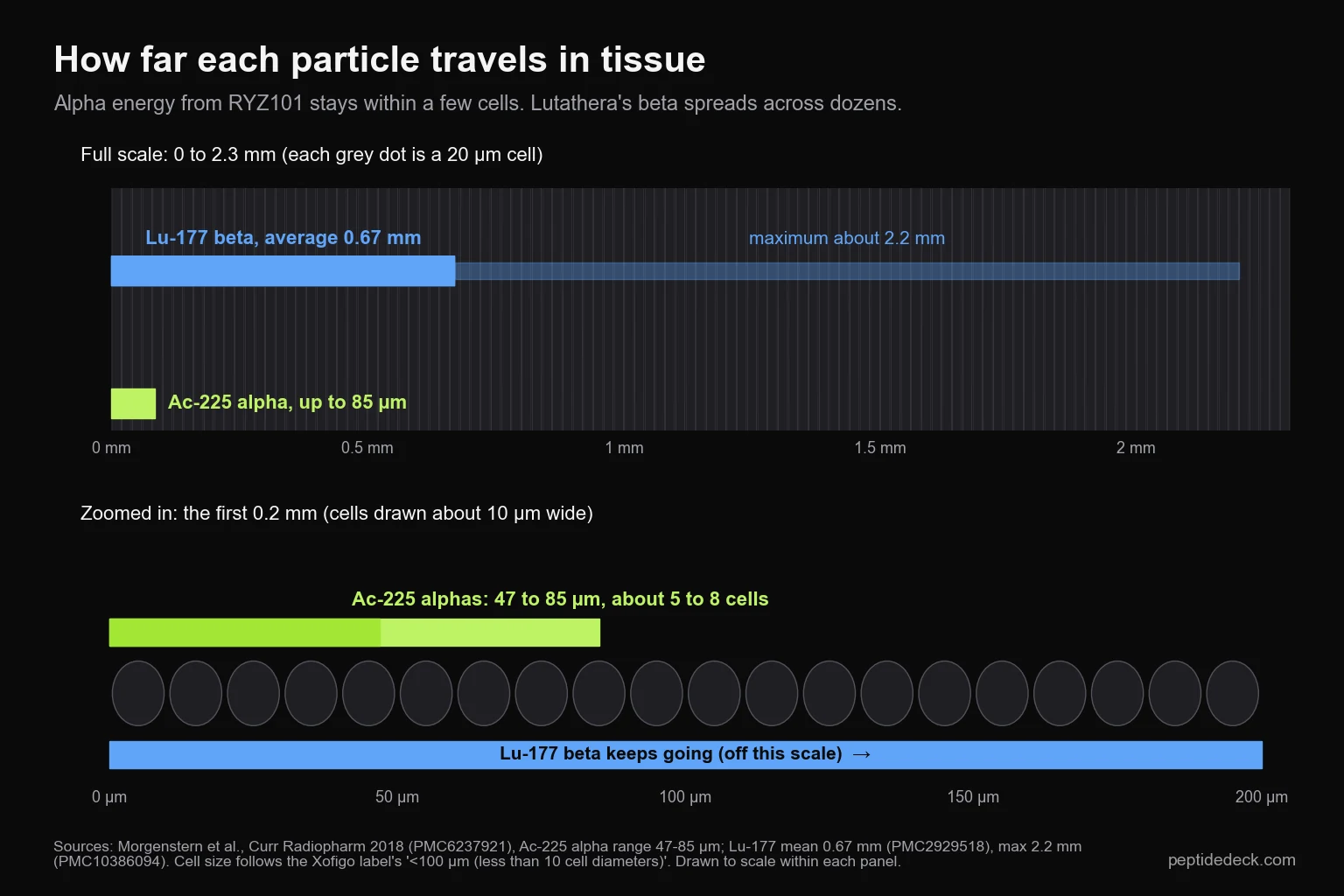
The short range cuts both ways. It spares healthy tissue around small tumor deposits. But it also means the drug has to reach nearly every cell, because the radiation will not spill over to neighbors the peptide missed.
The recoil problem nobody puts in the headline
When an atom fires an alpha particle, the leftover daughter atom recoils with, in most cases, at least 100 keV of energy, more than 1,000 times the strength of any chemical bond. It always breaks free of the DOTA cage (de Kruijff et al. 2015). Some daughters, especially bismuth-213, live long enough to drift. A 2025 model built on Ac-225 DOTATATE patient data found that ignoring this drift underestimates the kidney dose by about 10% and overestimates the tumor dose by about 23% (Tronchin et al. 2025). The ACTION-1 dosimetry study offers some reassurance: bismuth-213 "mostly remained with DOTATATE in the tumors", with a minor fraction reaching the kidneys (Sgouros et al. 2026).
RYZ101 vs Lutathera: same peptide, different atom
Lutathera is the drug RYZ101 has to beat. The FDA approved it on January 26, 2018 for SSTR-positive GEP-NETs, now for adults and children 12 and over, at 7.4 GBq every 8 weeks for 4 doses (Lutathera label). In the NETTER-1 trial of 229 people, it cut the risk of progression by 79% compared with high-dose octreotide (hazard ratio 0.21; median PFS not reached vs 8.5 months, per the label) (Strosberg et al., NEJM 2017). In NETTER-2, given first-line to 226 people with faster-growing grade 2 and 3 tumors, median PFS was 22.8 months vs 8.5 months (Singh et al., Lancet 2024). Since September 14, 2026 there is also a second lutetium-177 dotatate on the US market: Curium's Bexlutry, approved for adults through the 505(b)(2) pathway that relies partly on Lutathera's data (Drugs@FDA, NDA 218525).
Here is the detail few articles mention. NETTER-1's final overall survival result was not statistically significant: 48.0 vs 36.3 months, hazard ratio 0.84, p = 0.30 (Strosberg et al., Lancet Oncol 2021). The authors argued the 11.7-month gap "might be considered clinically relevant", and that is fair. It is still a useful reminder that a PFS win, which is what RYZ101 has announced, is not yet a survival win.
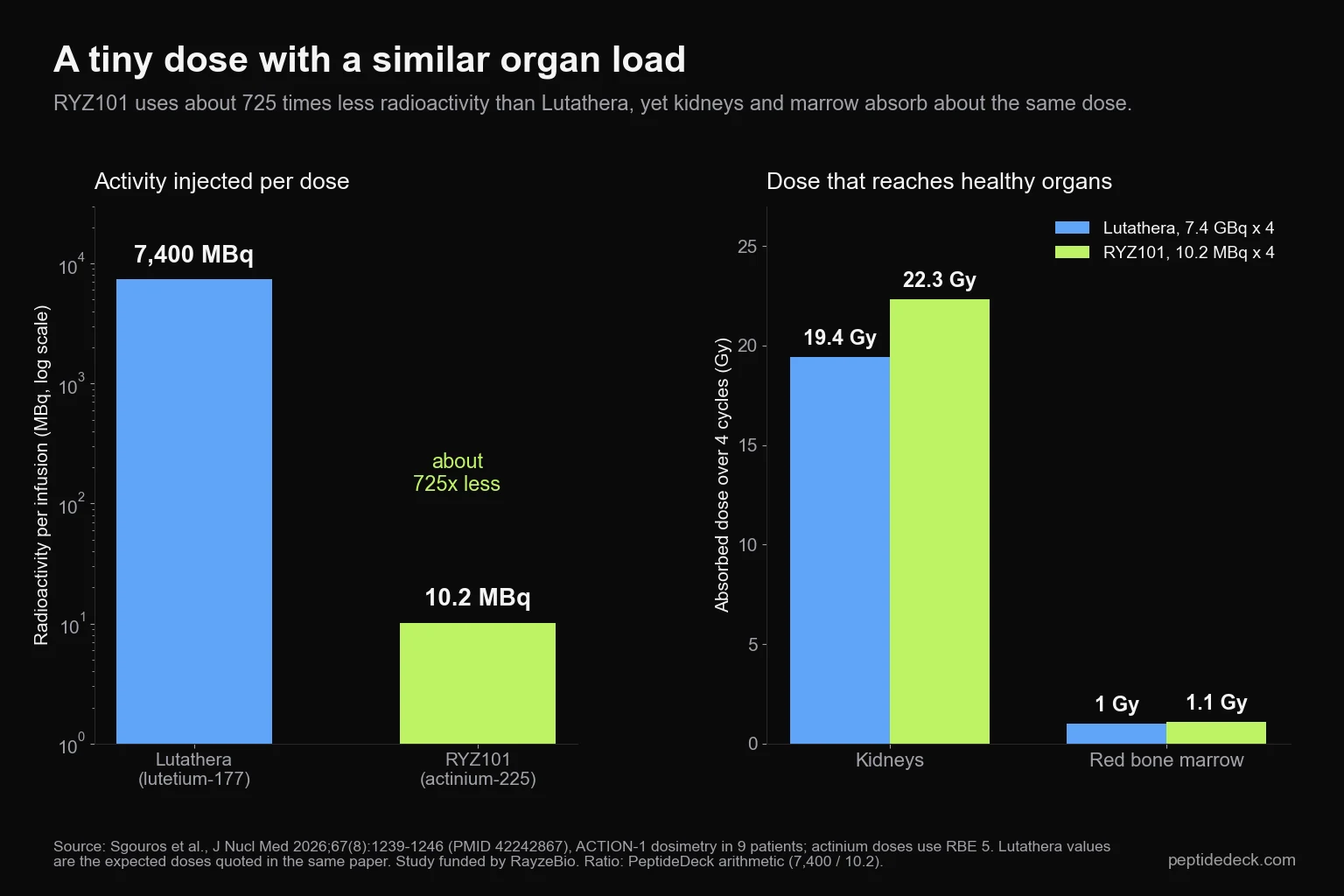
That dosimetry study is the first peer-reviewed paper with RYZ101 patient data. In 9 Phase 1b patients who completed 4 cycles, the kidneys absorbed an estimated 22.3 Gy and the red bone marrow 1.1 Gy, close to the 19.4 Gy and 1.0 Gy expected for Lutathera (Sgouros et al., J Nucl Med 2026). The authors note that actinium doses depend on an assumed biological weighting (RBE of 5), and RayzeBio funded the study.
ACTION-1 Phase 3 results: what was announced in October 2026
The news came as a short press release. On October 12, 2026, BMS said the planned interim analysis of ACTION-1 showed "a statistically significant and clinically meaningful improvement in progression-free survival" for RYZ101 over standard care, with "safety results consistent with the known RYZ101 safety profile" (BMS; CancerNetwork). BMS called it the first Phase 3 result for an actinium-225 radiopharmaceutical in any cancer. The FDA had already granted RYZ101 orphan drug designation for GEP-NETs in August 2026. Patients will keep being followed for overall survival.
What BMS has not released yet
The headline is strong. The numbers behind it are still private. BMS says detailed results will come "at a future medical meeting". Until then, this is what we know and do not know:
Two caveats are worth holding onto. The result came at a planned early look, when about 75% of the expected events had happened, and early looks can overstate the size of a benefit. And the comparison is against everolimus, sunitinib or high-dose somatostatin analogs, not against a second round of Lutathera, which some doctors also use after a relapse.
RYZ101 Phase 1b results: the first 17 patients
Before Phase 3, 17 people got RYZ101. Every one of them had already received 4 cycles of Lutathera, and their tumors had grown again (ASCO 2024 poster; J Clin Oncol 2025 abstract 661). Their median age was 63. Twelve had tumors starting in the gut and five in the pancreas.
- Dose: 120 kBq per kg (median 8.3 MBq). No dose-limiting toxicity appeared, so the trial never stepped down. Because body weight did not change exposure, Phase 3 switched to a flat 10.2 MBq.
- Doses completed: 15 of 17 got all 4 infusions.
- Response: 1 complete response and 4 confirmed partial responses at the December 2023 cutoff (29.4%). A sixth response was confirmed shortly after (35.3%).
- Disease control: 14 of 17 (82.4%) had tumors that shrank or held steady. Median response duration and median PFS had not been reached; the lower bound for PFS was 12.2 months.
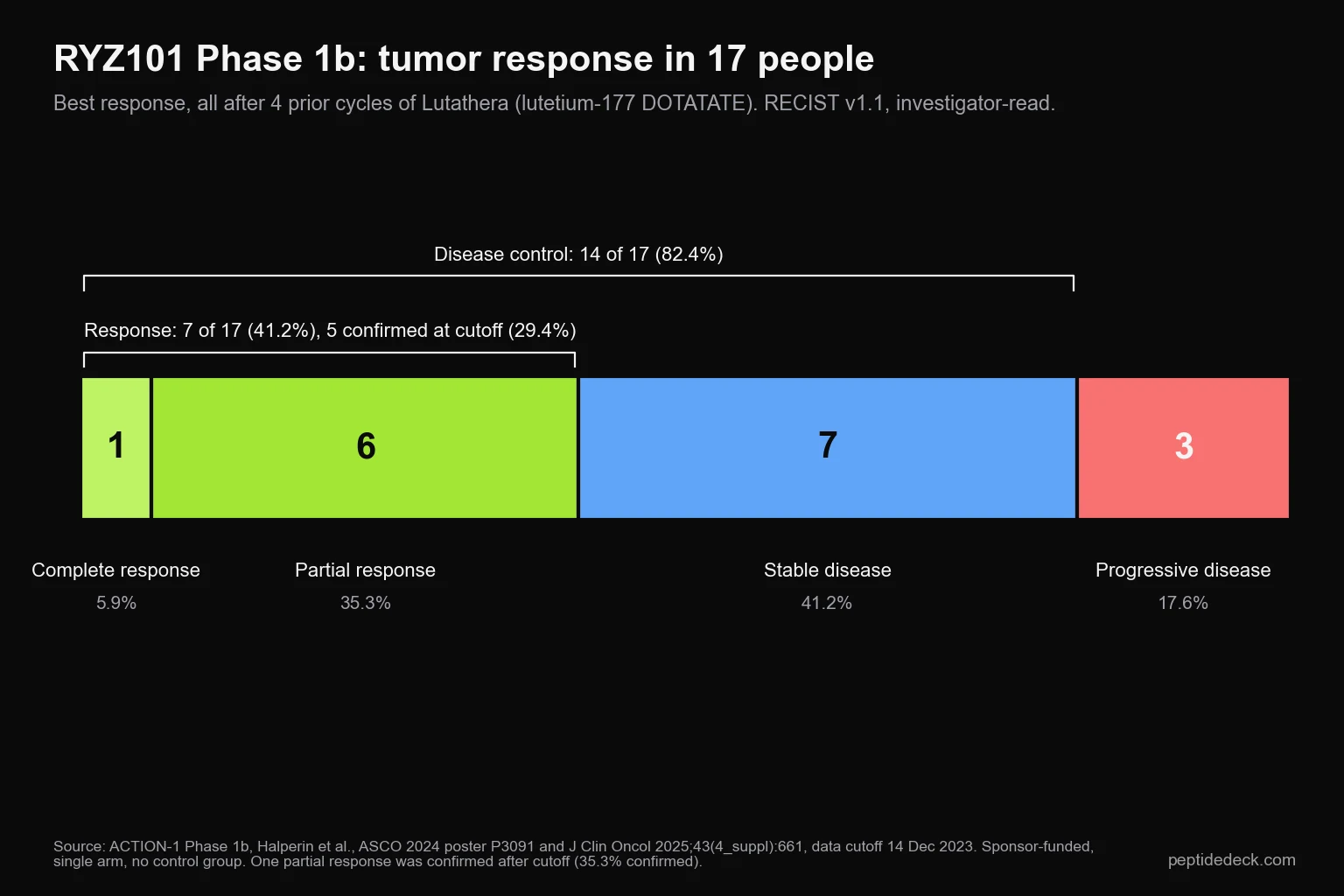
For context, Lutathera itself produced a 13% response rate in NETTER-1 by independent review, in people who had never had it before. RYZ101 got responses in a third of people whose tumors had already outlasted Lutathera. These were among the data BMS had when it agreed to pay $4.1 billion. It is also 17 people, in a single-arm study with no control group, presented only as sponsor-funded conference posters.
RYZ101 side effects
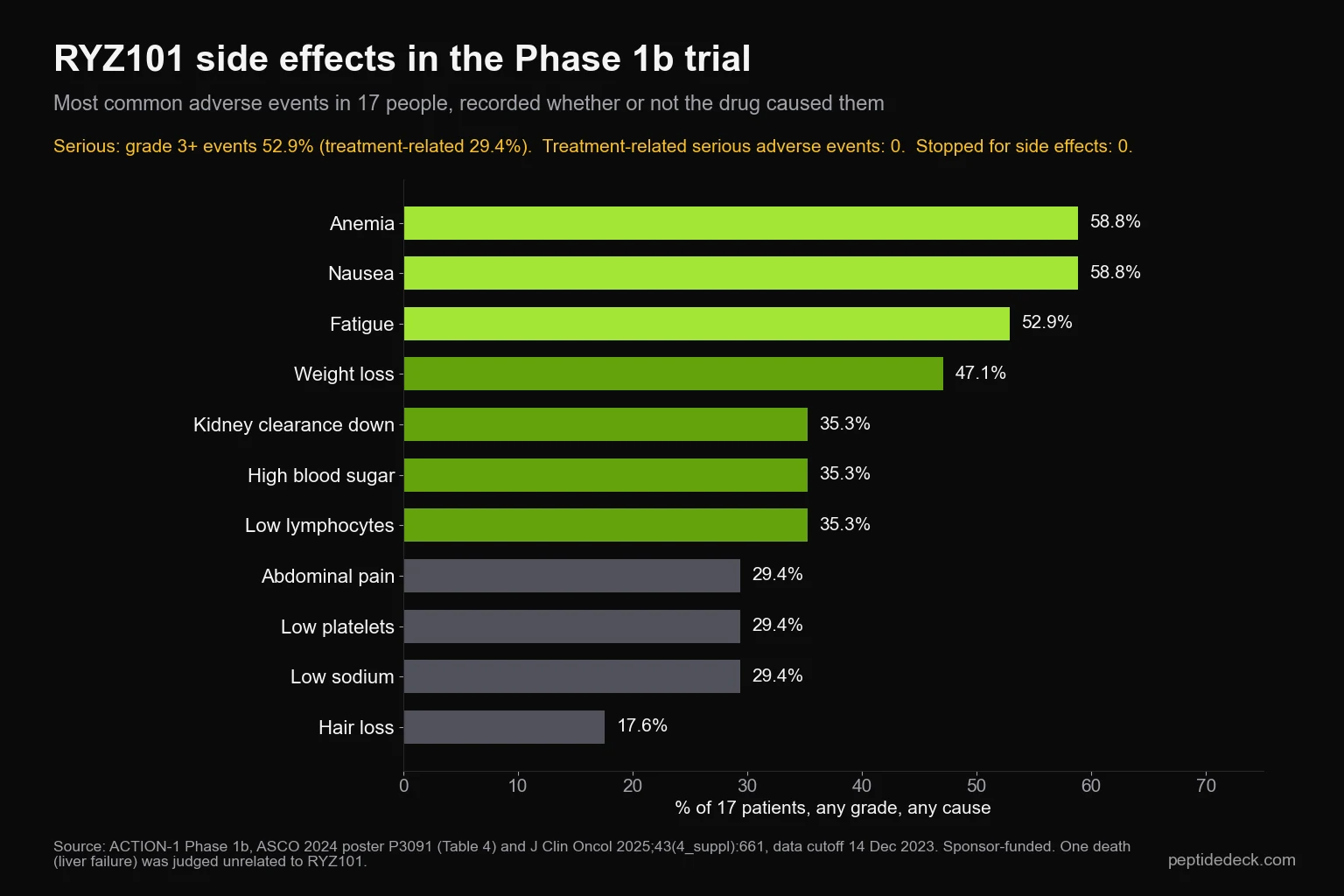
Expect the usual radiation-drug pattern: tired blood counts, nausea and fatigue. In the Phase 1b, the most common events of any grade were anemia (58.8%), nausea (58.8%) and fatigue (52.9%). Grade 3 or worse events hit 9 of 17 people (52.9%), and 5 of those (29.4%) were judged treatment-related: mainly anemia, low lymphocyte counts and reduced kidney clearance. No serious event was blamed on the drug, and nobody stopped for side effects. One person died of liver failure, which investigators attributed to pre-existing cirrhosis rather than RYZ101 (ASCO 2024 poster).
The kidneys are the organ to watch
Peptides like DOTATATE are cleared through the kidneys, and some of the radiation lingers there. Two Phase 1b patients who started with weaker kidneys developed grade 3 and grade 4 drops in creatinine clearance. Four needed dose cuts, three for low platelets and one for anemia.
RayzeBio says it plainly in its own 2026 poster: DOTATATE's "kidney reuptake and prolonged retention" can raise the risk of radiation kidney damage, and the long amino acid drip used to prevent it causes "nausea and electrolyte abnormalities" (RYZ401 poster, ASCO GI 2026). That is why the company is already testing a successor, RYZ401, built to clear the kidneys faster without the drip (NCT07165132).
Late effects are the open question. With Heidelberg's related drug, Ac-225 DOTATOC, 2 of 39 patients developed kidney failure more than 4 years after treatment (Kratochwil et al. 2021). With Lutathera, myelodysplastic syndrome and leukemia appeared years later in about 2% of people (label). RYZ101's follow-up is not long enough yet to say either way.
Side effects in the lung cancer trial
Combined with chemotherapy and immunotherapy for small cell lung cancer, every one of 15 patients had a grade 3 or 4 event, and 80% had a serious event, which is common with that chemo backbone. Two patients (13.3%) had serious events linked to RYZ101 itself, and one had a grade 4 platelet drop. No dose-limiting toxicities occurred (WCLC 2025).
Earlier human data on actinium-225 DOTATATE
RYZ101 was not the first. Doctors at AIIMS in New Delhi made their own actinium-225 DOTATATE, and their first published series (April 2018 to March 2019) included 32 patients given 100 kBq per kg every 8 weeks. Of 24 who could be assessed, 15 had partial responses and 9 had stable disease, with no progression or deaths at a median 8 months (Ballal et al., EJNMMI 2020).
Their larger follow-up treated 91 people, adding the chemotherapy pill capecitabine as a radiation sensitizer. At 24 months, 70.8% were alive and 67.5% had not progressed; about half of assessable patients responded. In the 33 people whose tumors had already resisted Lutathera, 24-month survival was lower, 55.6% (Ballal et al., J Nucl Med 2023).
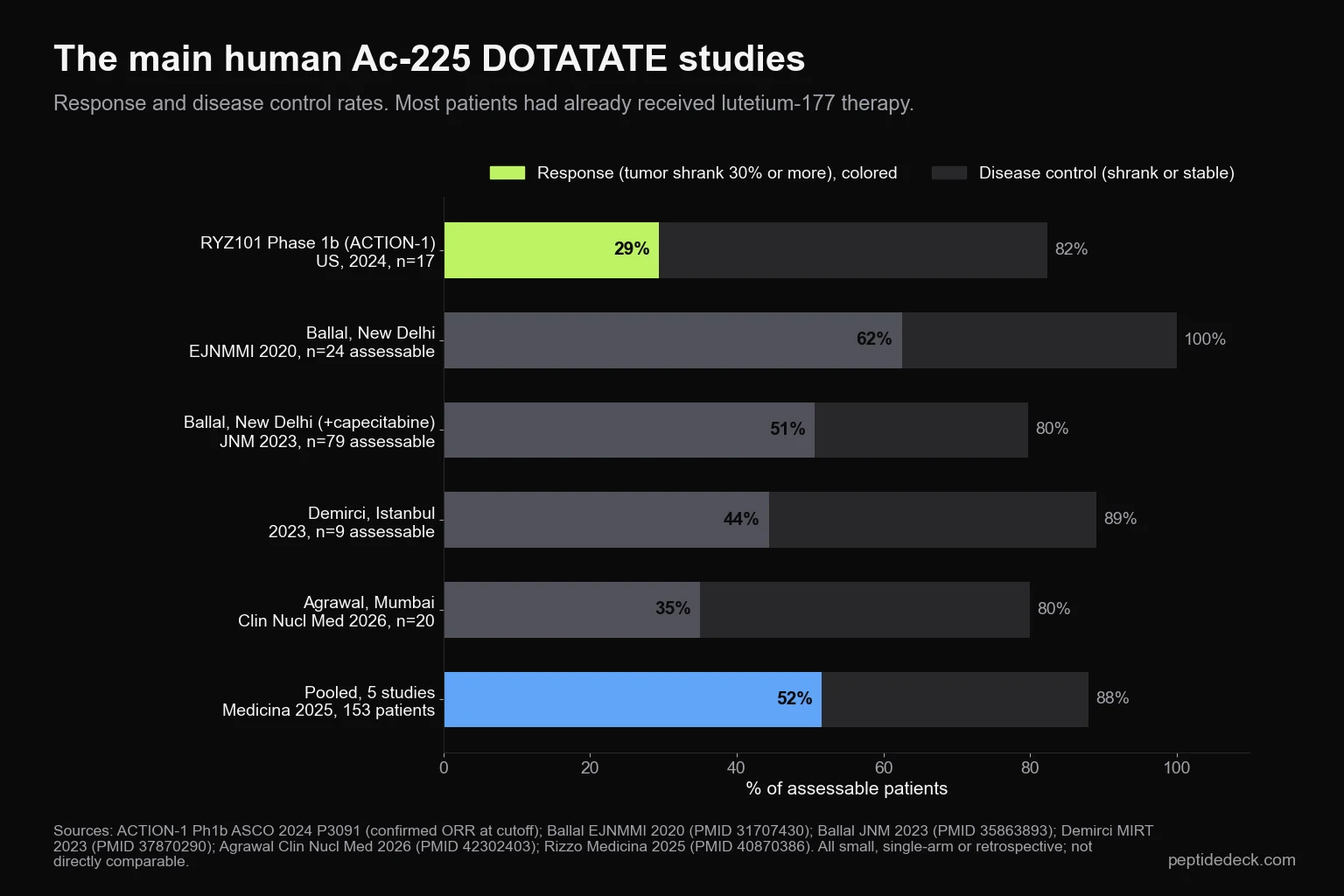
Those numbers look better than RYZ101's. They come with heavy caveats, and the most pointed critique came from the journal itself. An editorial printed alongside the 2023 paper, co-written by NETTER-1's lead investigator, called the work "best described as a retrospective study of real-world experience". It noted that 31% of patients were in poor general health (ECOG 3 to 4), many responses were read from PET scans alone, and the capecitabine had not appeared in earlier reports on the same patients (Strosberg, Herrmann, Bodei, J Nucl Med 2023).
Other series are smaller. In Istanbul, 11 patients (most already resistant to Lutathera) had a 44% response rate and a median PFS of 12 months, with no grade 3 to 4 toxicity (Demirci et al. 2023). The only head-to-head comparison, a retrospective, non-randomized one from Mumbai, gave 20 people actinium-225 DOTATATE and 20 a second round of lutetium-177 DOTATATE: actinium shrank more tumors (35% vs 10%) but did not lengthen PFS (10 vs 12 months) or survival, and neither difference was statistically significant (Agrawal et al., Clin Nucl Med 2026). A 2025 pooled analysis of 5 studies and 153 patients put the response rate at 51.6% and disease control at 88%, while rating the studies only of moderate quality (Rizzo et al. 2025).
That is why ACTION-1 matters so much. Before it, every actinium-225 DOTATATE result in people came from small, non-randomized studies.
Beyond neuroendocrine tumors: lung, breast and brain trials
Any tumor that carries SSTR2 is a possible target. RayzeBio and outside groups have registered five RYZ101 studies:
Small cell lung cancer. About half of these tumors carry SSTR2, and the trial confirmed it: 25 of 51 people screened (49%) were turned away because their tumors did not light up on the receptor scan. Fifteen were treated and the dose for further testing was set at 10.2 MBq. The 2025 presentation showed two striking cases, including a 185 mm tumor burden that fell to zero, but no response rate (WCLC 2025). Here is the part that has gone quiet: a 37-patient expansion was planned, yet the registry shows only 21 enrolled in total, and BMS's October 2026 release mentions breast cancer but not lung cancer. No reason has been given.
Breast cancer. TRACY-1 is for hormone-receptor-positive, HER2-negative breast cancer that has spread and shows SSTR on scans. The 2024 plan paired RYZ101 with the immunotherapy pembrolizumab in a 100-person randomized expansion (SABCS 2024 poster). The current registry entry dropped pembrolizumab in favor of hormone therapies such as fulvestrant or letrozole and lists 64 people.
Meningioma. Ohio State is testing 4 doses of RYZ101 every 8 weeks, with 6-month PFS as the goal. One oddity: the registry summary describes the drug as lutetium-177 dotatate, a copy-paste slip from Lutathera's description.
The actinium-225 problem
The drug is only as available as its atom. Actinium-225 has historically been "milked" from thorium-229 extracted from aging stockpiles of uranium-233, most of it made between 1954 and 1970. Worldwide output is about 63 GBq (1.7 Ci) a year, split between Oak Ridge in the US, Karlsruhe in Germany and Obninsk in Russia (Cancers 2025 review). In 2018 the US Department of Energy wrote that the combined supply could treat "fewer than 100 patients annually" (DOE).
The same 2025 review puts it at 100 to 200 patients a year. Those estimates do not fit RYZ101's small dose: at 10.2 MBq per infusion, 63 GBq would in theory cover roughly 6,000 infusions, or about 1,500 people on 4 doses, before decay and processing losses (our arithmetic, an upper bound). The supply squeeze is real, though. In June 2024, BMS paused new Phase 3 enrollment because of an actinium shortage; one trial doctor said there "was only one supplier" for the study (TechTarget, June 2024).
RayzeBio's 2023 IPO filing added two awkward details: one of its suppliers was in Russia, and actinium from the US Department of Energy could not be used for trials outside the United States (424B4). The fix is to make its own. RayzeBio's 77,000-square-foot plant in Indianapolis now produces both the isotope and the finished drug, with over $160 million invested (RayzeBio), and a second Indiana plant worth more than $173 million was announced in August 2026.
Is RYZ101 the "cancer-killing peptide"?
It depends what you mean by peptide. Search "cancer killing peptide" or "peptides for cancer" and you will find gray-market shops and clinics selling so-called anticancer peptides with names like LL-37, BPC-157 or epitalon. RYZ101 is something different: the peptide only steers, and radiation does the killing. That distinction matters, because the FDA-approved peptide cancer drugs mostly work by switching hormones off, not by killing cells (Drugs@FDA).
The anticancer peptides sold online have a much thinner record. Here is the best human evidence for each, as of October 2026:
So yes, with one caveat. Apart from peptide-based chemotherapy drugs such as bortezomib and carfilzomib, the peptides with Phase 3 proof against cancer are radioactive ones like Lutathera and RYZ101. The ones sold in vials online have either never been tested in people with cancer or have failed when they were. Our guide to gray-market peptides covers what is actually in those vials.
Can you buy RYZ101?
No. RYZ101 is an unapproved drug that exists only inside clinical trials. It is made in a dedicated radiopharmacy plant and shipped within about 2 days of production, because the actinium starts decaying the moment it is made. It has to be given in a nuclear medicine unit licensed to handle radioactive material.
Any website listing "RYZ101 for sale", or a peptide called RYZ101 in a vial, is not selling the real drug. At best it is the bare DOTATATE peptide with no actinium, which does nothing to a tumor. As of its 2023 IPO filing, RayzeBio did not own a patent on the actinium-225 DOTATATE molecule itself, only on its formulation and use, so other groups can legally make actinium-225 DOTATATE, as hospitals in New Delhi and Istanbul already do. None of that makes a vial sold online as "RYZ101" the BMS drug (424B4).
The real route is a trial. ACTION-1 has stopped recruiting, but TRACY-1 (breast) and the Ohio State meningioma study were recruiting as of October 2026, and RYZ401 is enrolling people with SSTR-positive tumors who have not had radioligand therapy before. Search the trial numbers above on ClinicalTrials.gov, or ask a NET specialist centre whether they are a site.
When could RYZ101 be approved?
No date has been announced. BMS says it will present the full ACTION-1 data at a medical meeting and talk to the FDA. Orphan drug designation (August 2026) brings tax credits, fee waivers and 7 years of US market exclusivity after approval, but it does not speed up review by itself. We found no Fast Track or Breakthrough Therapy designation. RayzeBio was also picked for an FDA manufacturing-readiness pilot in October 2023, which matters for a drug this hard to make.
What to ask your oncologist
If you have a neuroendocrine tumor, RYZ101 is a fair topic for your next appointment. These questions get to the point quickly:
- Is my tumor SSTR-positive on a Ga-68 or Cu-64 DOTATATE PET scan, and how strongly (Krenning score)?
- Have I had lutetium-177 therapy, and how long did it control my disease? ACTION-1 required at least 6 months of control.
- How are my kidneys? ACTION-1 required an eGFR of 60 or more.
- Is Lutathera retreatment, everolimus, sunitinib or a clinical trial the better next step for me?
- Is there an open RYZ101 or RYZ401 trial site near me?
Do not stop or delay any prescribed cancer treatment while you wait for a new drug. RYZ101 is not available outside trials, and the full data are not public yet.
FAQ
Sources
- Bristol Myers Squibb. Positive topline results from the interim analysis of Phase 3 ACTION-1 for RYZ101. Press release, 12 October 2026. investors.bms.com · coverage: CancerNetwork
- ClinicalTrials.gov records (accessed 14 October 2026): NCT05477576, NCT05595460, NCT06590857, NCT07150806, NCT06411301, NCT07165132, NCT02225366.
- Halperin et al. ACTION-1 Phase 1b results. ASCO 2024 poster P3091. rayzebio.com (PDF); J Clin Oncol 2025;43(4_suppl):661. doi. Sponsor-funded.
- Sgouros G, et al. Dosimetry results from the Phase 1b/3 ACTION-1 trial of [225Ac]Ac-DOTATATE (RYZ101) in patients with somatostatin receptor-expressing, well-differentiated GEP-NETs. J Nucl Med. 2026;67(8):1239-1246. PMID 42242867
- Mansfield et al. RYZ101 plus carboplatin, etoposide and atezolizumab in SSTR+ ES-SCLC. WCLC 2025, OA13.03. slides (PDF)
- Mayer et al. TRACY-1 trial in progress. SABCS 2024. poster (PDF); Soares et al. RYZ401-101 trial in progress. ASCO GI 2026. poster (PDF)
- Han G, et al. RYZ101 (Ac-225 DOTATATE) opportunity beyond gastroenteropancreatic neuroendocrine tumors. Mol Cancer Ther. 2023;22(12):1434-1443. PMID 37616528
- RayzeBio, Inc. Final prospectus (424B4), 18 September 2023. sec.gov; Form 8-K on completion of the BMS merger, 26 February 2024. sec.gov
- Bristol Myers Squibb to acquire RayzeBio. Press release, 26 December 2023. sec.gov
- TechTarget Pharma Life Sciences. BMS, RayzeBio halt radiotherapy trial due to isotope shortage. 5 June 2024. techtarget.com
- RayzeBio manufacturing page (read 14 October 2026). rayzebio.com
- LUTATHERA (lutetium Lu 177 dotatate) prescribing information. DailyMed; NETSPOT prescribing information. DailyMed; XOFIGO prescribing information. DailyMed; PLUVICTO prescribing information. DailyMed
- Strosberg J, et al. Phase 3 trial of 177Lu-Dotatate for midgut neuroendocrine tumors (NETTER-1). N Engl J Med. 2017;376:125-135. PMID 28076709
- Strosberg JR, et al. NETTER-1 final overall survival. Lancet Oncol. 2021;22:1752-1763. PMID 34793718
- Singh S, et al. [177Lu]Lu-DOTA-TATE plus long-acting octreotide versus high-dose octreotide in first-line GEP-NETs (NETTER-2). Lancet. 2024;403:2807-2817. PMID 38851203
- Ballal S, et al. Broadening horizons with 225Ac-DOTATATE targeted alpha therapy for gastroenteropancreatic neuroendocrine tumour patients stable or refractory to 177Lu-DOTATATE PRRT. Eur J Nucl Med Mol Imaging. 2020;47:934-946. PMID 31707430
- Ballal S, et al. Survival outcomes in metastatic GEP-NET patients receiving concomitant 225Ac-DOTATATE targeted alpha therapy and capecitabine. J Nucl Med. 2023;64:211-218. PMID 35863893
- Strosberg J, Herrmann K, Bodei L. The future of targeted alpha-therapy is bright, but rigorous studies are necessary to advance the field. J Nucl Med. 2023;64:219-220. PMID 36265909
- Demirci E, et al. Initial findings on the use of [225Ac]Ac-DOTATATE therapy as a theranostic application in patients with neuroendocrine tumors. Mol Imaging Radionucl Ther. 2023;32:226-232. PMID 37870290
- Agrawal R, Parghane RV, Basu S. Targeted alpha therapy with [225Ac]Ac-DOTATATE versus salvage retreatment PRRT with [177Lu]Lu-DOTATATE in progressive metastatic neuroendocrine tumors. Clin Nucl Med. 2026;51(10):e877-e885. PMID 42302403
- Rizzo A, et al. Efficacy and safety of radioligand therapy with actinium-225 DOTATATE in advanced, metastatic or inoperable neuroendocrine neoplasms. Medicina. 2025;61:1341. PMID 40870386
- Kratochwil C, et al. Dosing 225Ac-DOTATOC in patients with somatostatin-receptor-positive solid tumors: 5-year follow-up. Eur J Nucl Med Mol Imaging. 2021;49:54-63. PMID 34448031
- Morgenstern A, et al. An overview of targeted alpha therapy with 225Actinium and 213Bismuth. Curr Radiopharm. 2018. PMID 29732998; NNDC NuDat 3 (ENSDF) decay data for Ac-225. nndc.bnl.gov
- Leupe H, et al. Clinical experience with targeted alpha-emitter peptide receptor radionuclide therapy for somatostatin receptor-positive neuroendocrine tumors. Pharmaceuticals. 2025;18:1608. PMID 41304857
- de Kruijff RM, Wolterbeek HT, Denkova AG. A critical review of alpha radionuclide therapy: how to deal with recoiling daughters? Pharmaceuticals. 2015;8:321-336. PMID 26066613
- Tronchin S, et al. Modeling the effect of daughter migration on dosimetry estimates for [225Ac]Ac-DOTATATE. Int J Radiat Oncol Biol Phys. 2025;122:1356-1368. PMID 40068777
- Actinium-225/bismuth-213 as potential leaders for targeted alpha therapy. Cancers. 2025. PMC12468084; US Department of Energy. The journey of actinium-225. 2018. energy.gov
- Maio M, et al. Large randomized study of thymosin alpha 1, interferon alfa, or both with dacarbazine in metastatic melanoma. J Clin Oncol. 2010;28:1780-1787. PMID 20194853; Middleton G, et al. Gemcitabine and capecitabine with or without telomerase peptide vaccine GV1001 in pancreatic cancer (TeloVac). Lancet Oncol. 2014. PMID 24954781
- Schjesvold FH, et al. Melflufen or pomalidomide plus dexamethasone for patients with multiple myeloma refractory to lenalidomide (OCEAN). Lancet Haematol. 2022. PMID 35032434
- FDA. Certain bulk drug substances for use in compounding that may present significant safety risks (current as of 22 April 2026). fda.gov; FDA withdrawal of Pepaxto, 23 February 2024. fda.gov; NCI PDQ: Antineoplastons. cancer.gov
Medical Disclaimer: This article is for educational purposes only and is not medical advice. RYZ101 is an investigational drug that is not approved by the FDA or any other regulator, and it is available only inside clinical trials. Full Phase 3 results have not been published. Decisions about neuroendocrine tumor or other cancer treatment belong with your oncology team. Do not stop or change any prescribed treatment because of information on this page.