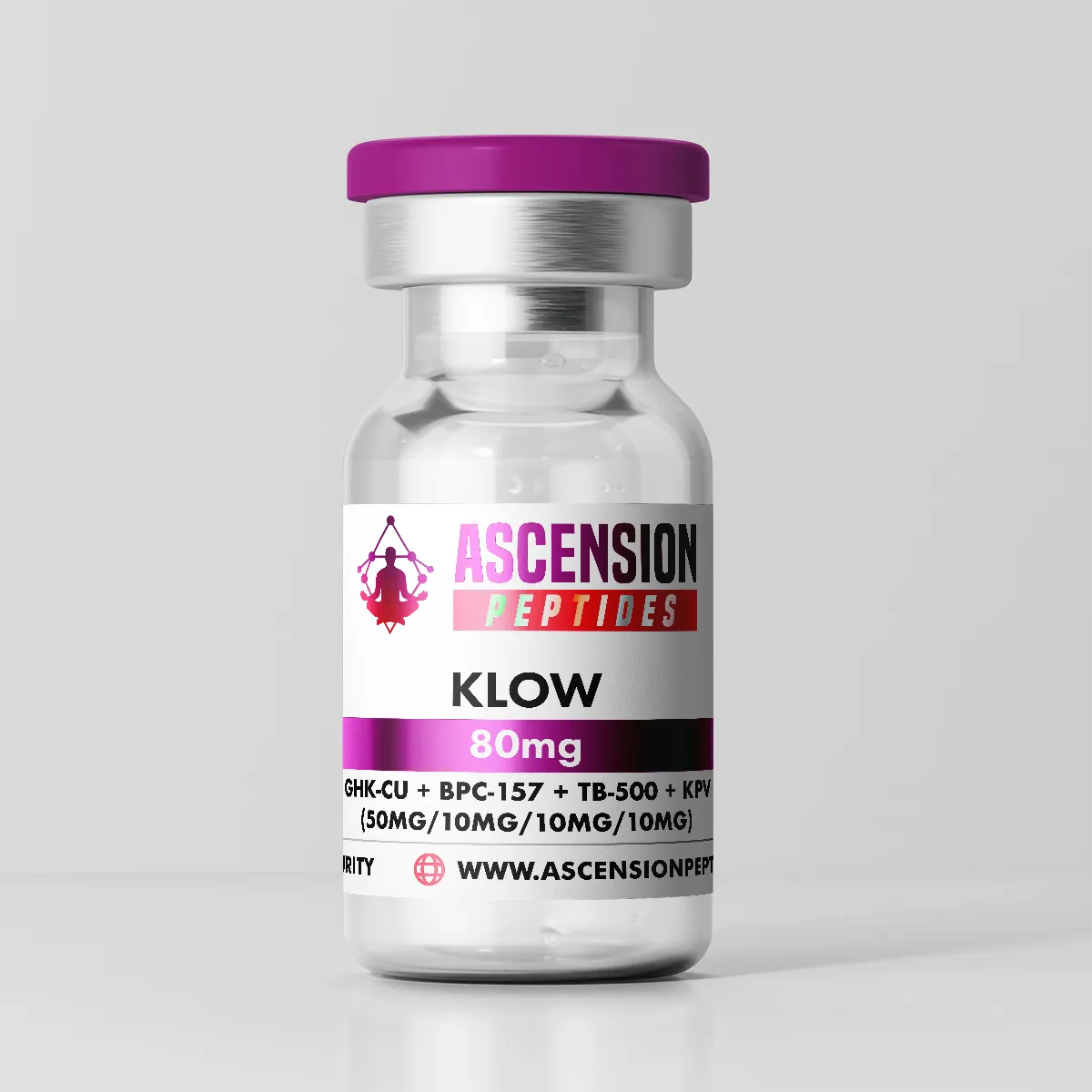
No peptide has been shown to calm Hashimoto's. A question on X sums up the hope: "Anyone found effective peptides for Hashimoto's? I'm guessing KLOW is a good place to start." We checked PubMed for every peptide sold online and found no human trial of any of them in Hashimoto's or hypothyroidism. If you are searching for peptides for thyroid problems, the one class with real thyroid data in people is GLP-1 drugs, and that data is about your levothyroxine dose, not your antibodies.
🔑 Key Takeaways
- Why the blend everyone suggests first has no thyroid data of any kind
- The peptide drug class that changes how much levothyroxine reaches your blood
- What happened to thyroid levels when 84 adults started growth hormone
- Why an "immune-balancing" peptide made thyroiditis worse in one group of mice
- The only Graves' peptide ever tested in people, and why you cannot buy it
If you have Hashimoto's, you already know the routine. A pill every morning, a blood test every few months, and tiredness that a "normal" TSH does not always explain. It makes sense to want something that works on the cause, the immune attack, instead of only replacing hormone. Here is what the evidence supports, one peptide at a time.
Peptides for Thyroid Problems: What Actually Exists
Start with what doctors can prescribe. No peptide drug is approved for Hashimoto's, hypothyroidism or Graves' disease. Hashimoto's is managed with levothyroxine, a man-made copy of the T4 hormone; Graves' with antithyroid tablets, radioactive iodine or surgery.
Peptides enter the thyroid story in three ways, and only one of them is the way social media suggests:
- As a hoped-for immune fix (KLOW, BPC-157, KPV, thymosin alpha-1). Human thyroid data: none.
- As drugs that change your thyroid pill (semaglutide, tirzepatide). Human data: yes.
- As drugs that expose a hidden thyroid problem (growth hormone peptides). Human data: yes, for GH itself.
Peptides for Hashimoto's: The Evidence Table
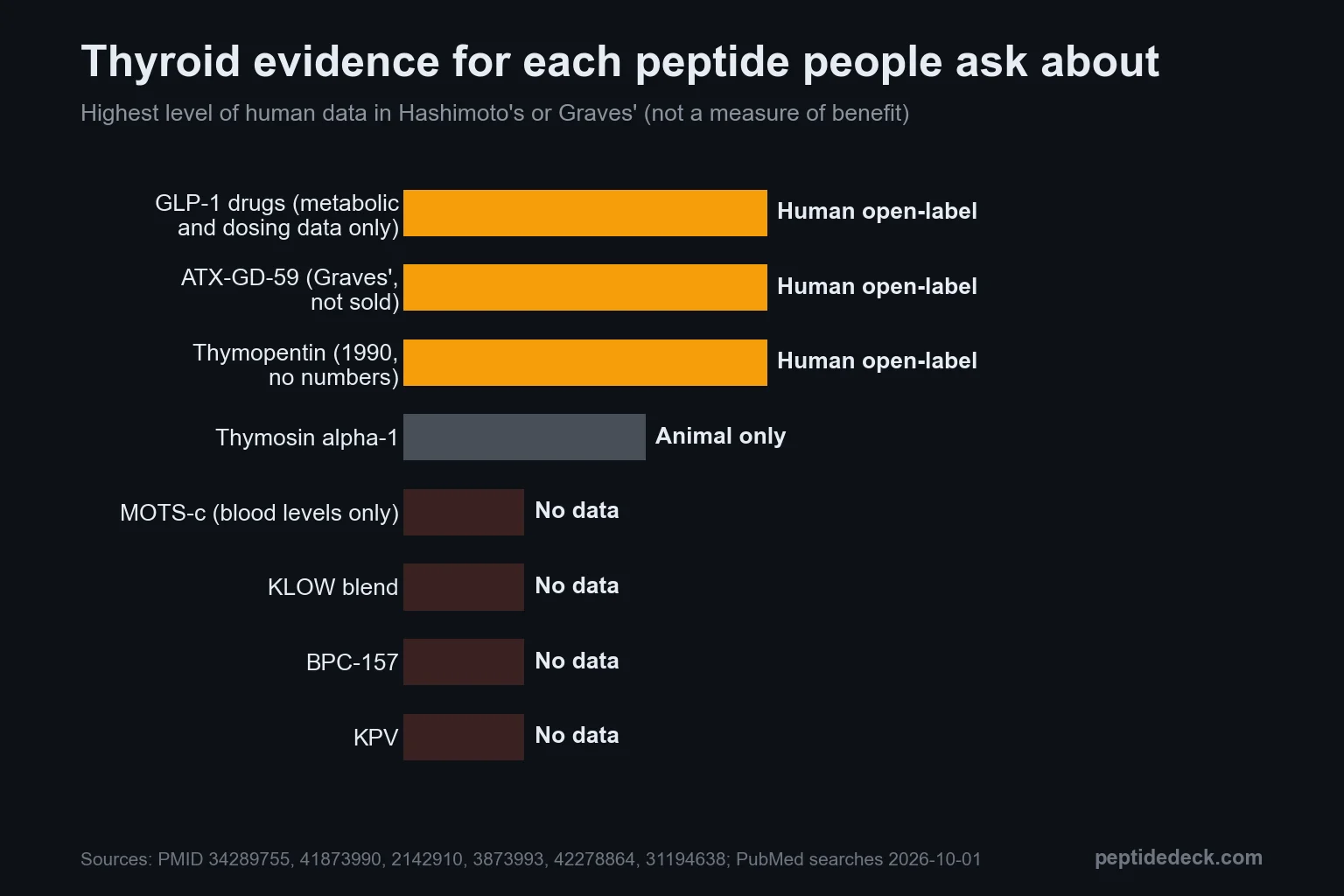
Every peptide with a thyroid record is here. Rows run from most to least human data.
Two cautions about the strongest rows. The levothyroxine trial was run by Novo Nordisk, semaglutide's maker, in healthy volunteers given one 600 µg dose, several times a normal daily amount (PMID 34289755). The 210-patient study measured cholesterol and weight, not antibodies (PMID 41873990).
Blood-level studies are not treatment studies. MOTS-c was lower in 90 people with Hashimoto's than in 90 controls (PMID 42278864), and kisspeptin higher in 45 women with Hashimoto's than in 45 controls (PMID 39056111). Neither has been tested as a treatment.
Does KLOW Help Hashimoto's?
There is no data either way. KLOW is a blend of BPC-157, TB-500, KPV and GHK-Cu. No human or animal study has tested any of the four, or the blend, in thyroid disease. Even a 2026 review by a wellness-clinic medical director concluded that their relevance to thyroid care "remains to be established" (PMID 42222211).
The case for it is a chain of ideas: a "leaky gut" drives thyroid autoimmunity, so gut-lining peptides such as BPC-157, KPV or larazotide should lower TPO antibodies. No link in that chain has been tested in Hashimoto's. Larazotide's human data are in celiac disease only, and BPC-157's human reports come from one clinic group (Altern Ther Health Med) with no control arm, none in thyroid disease.
If a friend says their antibodies dropped on KLOW, remember that TPO antibodies drift on their own with diet, stress and time. One before-and-after cannot separate the blend from everything else. If gut symptoms are your real problem, our guide to gut health peptides covers what has been tested for the gut itself.
One more point for immune-sensitive readers. Injectable peptides like these can activate mast cells directly through a receptor called MRGPRX2 (PMID 25517090), which matters if hives, flushing or injection reactions are already part of your life.
GLP-1 Drugs and Levothyroxine: The Real Interaction
This is where peptides genuinely touch your thyroid. Semaglutide and tirzepatide are peptide drugs, and three findings matter.
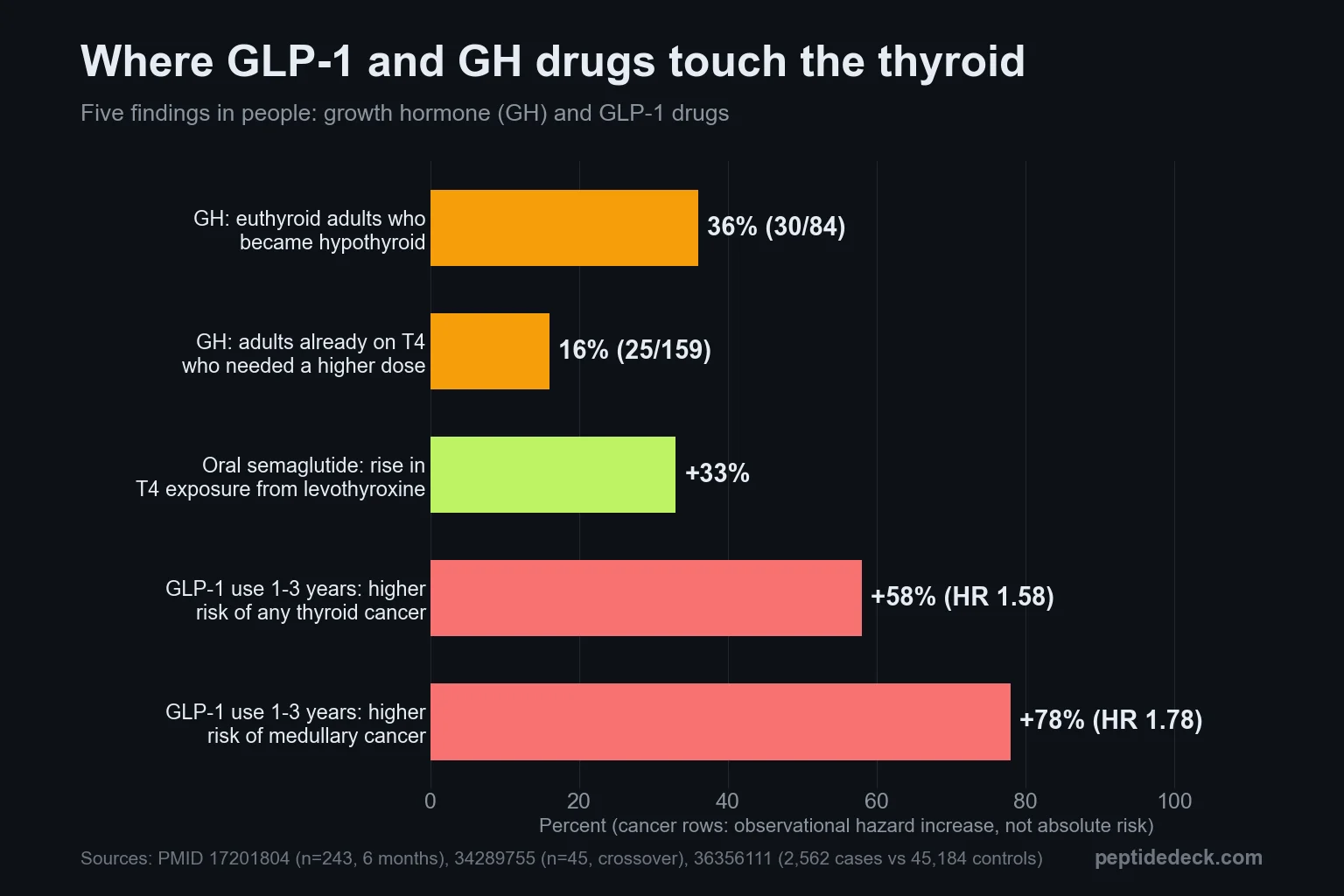
1. More hormone gets in. In a 45-person crossover trial, taking levothyroxine together with oral semaglutide 14 mg raised total T4 exposure by 33% compared with levothyroxine alone, while the peak level stayed the same (PMID 34289755). The authors advised thyroid monitoring; injectable semaglutide was not tested.
2. You need less as weight falls. Levothyroxine is often estimated at about 1.6 µg per kg of body weight (PMID 40638337). On that rough rule, losing 20 kg would lower the estimated need by about 32 µg a day, more than the smallest 25 µg tablet. Doctors do not dose by weight alone, but the direction is clear. A 52-year-old woman with no thyroid left after surgery lost 48 pounds over six months on tirzepatide and developed a racing heart and confusion from too much levothyroxine, needing an urgent dose cut (PMID 42109981).
3. The re-check often comes late. In Medicare data on 5,370 adults aged 65 or older on a stable levothyroxine dose, about 83% had a TSH test within a year of starting a GLP-1 drug, at a mean of about 130 days, exactly the same as people starting an SGLT2 diabetes drug (PMID 41902399). In practice, you may need to ask for the re-check yourself.
There is an upside too. In 210 patients followed for 6 months, those with diabetes and hypothyroidism on both drugs saw LDL fall 12.7% and BMI fall 4.9%, while the levothyroxine-only group's LDL rose 11.0% (PMID 41873990). It was observational.
The thyroid cancer warning. Semaglutide and tirzepatide labels carry a boxed warning about medullary thyroid carcinoma, based on C-cell tumors in lab animals, and rule out anyone with a personal or family history of it or MEN 2. In people, a French study of 2,562 thyroid cancer cases and 45,184 controls linked 1-3 years of GLP-1 use to a hazard ratio of 1.58 for any thyroid cancer and 1.78 for medullary cancer (PMID 36356111). It cannot rule out that users simply get more neck scans. Still, if you have nodules being watched, say so before you start. See our semaglutide side effects guide for the rest.
Growth Hormone Peptides Can Unmask Hypothyroidism
This one surprises most people. CJC-1295, ipamorelin, sermorelin and tesamorelin all work by raising your own growth hormone (GH). In a study of 243 adults with severe GH deficiency who started GH replacement, 30 of 84 people with normal thyroid tests (36%) became hypothyroid and needed T4 within six months (PMID 17201804). Of 159 already on T4, 25 (16%) needed a higher dose.
The key detail is that T4 fell but TSH did not rise, so a TSH-only check could miss it. Ask for free T4. The limitation: these were people with pituitary disease given GH itself, so the size of the effect from peptides is unknown. Our growth hormone peptides ranking compares the options themselves.
Thymosin Alpha-1 and Immune Stimulants: Untested, Can Flare
Immune boosting sounds helpful until you have autoimmunity. Thymosin alpha-1 is often sold as an immune "rebalancer" for Hashimoto's. Its only thyroid study dates from 1985, in two strains of mice with induced thyroiditis (PMID 3873993). It eased thyroiditis in the susceptible strain and made it worse in the resistant one, with effects that changed with dose and timing.
That two-way result is the problem. Nobody can predict which way a person with Hashimoto's would go, because there is no human data. Immune-activating drugs such as interferon-alpha are a known trigger of thyroiditis. That has not been shown for thymosin alpha-1, but it is a reason for caution with the whole class.
The closest human record is thymopentin, a different thymic peptide, in a 1990 Italian series reporting only "a possible therapeutic effect" with no numbers or controls (PMID 2142910). Our inflammation peptides guide covers what has been tested more broadly.
Peptides for Graves' Disease
Graves' has exactly one real peptide trial. ATX-GD-59 is a pair of TSH-receptor peptides meant to retrain the immune cells behind Graves'. In a phase I study, 12 people with untreated mild to moderate Graves' received 10 skin injections over 18 weeks (PMID 31194638). Of the 10 who finished, 5 had a normal free T3 by week 18, 7 improved overall, and 3 got worse. Falling TSH-receptor antibodies tracked the improvement (r = 0.85). The developer, Apitope, funded it, there was no placebo group, and the product is not sold.
Semaglutide shows up here too. In a 5-year database study of 46,558 people with thyrotoxicosis and type 2 diabetes, semaglutide users had fewer thyroid eye disease diagnoses (2.16% vs 2.82%, RR 0.76) and less orbital radiation (RR 0.57) (PMID 41620207). That is an association, not a reason to start the drug.
The other direction exists too. A 59-year-old developed Graves' in one thyroid lobe on tirzepatide, though cause was not proven (PMID 42676928), and a 34-year-old developed antibody-negative hyperthyroidism three weeks into liraglutide (PMID 40949169). No PubMed record links Graves' with BPC-157, TB-500, thymosin alpha-1 or KPV. VIP levels run low in Graves' (PMID 32747757), but VIP has never been tested as a treatment.

Safety: What Can Go Wrong
Most of the risk here is indirect. It comes from what peptides do to your thyroid treatment.
- Too much levothyroxine on a GLP-1. More absorption plus weight loss can cause over-replacement and palpitations (PMID 42109981, PMID 40638337).
- Hidden hypothyroidism on GH peptides. Free T4 can fall without TSH rising (PMID 17201804).
- Immune flares. Immune stimulants are untested in thyroid autoimmunity (PMID 3873993).
- Untreated Graves' plus weight-loss drugs. Two causes of weight loss and a fast heart rate stack up; peptides do not replace antithyroid tablets, radioactive iodine or surgery.
- Product quality. Gray-market vials have no pharmacy oversight, so the dose and purity are whatever the label says.
If you decide to buy a peptide anyway, check who publishes third-party lab tests before you look at price; our list of the best peptide vendors compares testing and cost per vial (Ascension pays us a commission at no extra cost to you). Whatever you try, do not stop or change levothyroxine or antithyroid medication on your own.
What to ask your doctor
- I am starting semaglutide or tirzepatide. When should we re-check TSH and free T4, and after how much weight loss?
- How should I time levothyroxine around oral semaglutide?
- Do my thyroid nodules or my family history rule out a GLP-1 drug?
- If I start a growth hormone peptide, can we check free T4, not only TSH?
- Is there anything with real human data that lowers my TPO antibodies?
Do not stop prescribed medication while you wait for the answers.
Frequently Asked Questions
Sources
- Hauge C, et al. Oral semaglutide and thyroxine pharmacokinetics. Expert Opin Drug Metab Toxicol. 2021;17(9):1139-1148. PMID 34289755
- Tilici DM, et al. Oral semaglutide and levothyroxine in type 2 diabetes and hypothyroidism. Epidemiologia. 2026;7(2):41. PMID 41873990
- Chen Y, et al. TSH testing after GLP-1 RA initiation on levothyroxine. J Clin Endocrinol Metab. 2026;111(9):2536-2547. PMID 41902399
- Bezin J, et al. GLP-1 receptor agonists and the risk of thyroid cancer. Diabetes Care. 2023;46(2):384-390. PMID 36356111
- Agha A, et al. Unmasking of central hypothyroidism after GH replacement. Clin Endocrinol (Oxf). 2007;66(1):72-7. PMID 17201804
- Adams EW, et al. Thyroid dysfunction after tirzepatide on levothyroxine. Cureus. 2026;18(4):e106680. PMID 42109981
- Barnett MJL, et al. Semaglutide therapy and iatrogenic thyrotoxicosis. Endocrinol Diabetes Metab Case Rep. 2025;2025(3):e250065. PMID 40638337
- Aiello A, et al. Hashimoto's thyroiditis during thymopentin therapy. Clin Ter. 1990;133(4):227-31. PMID 2142910
- Tomazic VJ, et al. Thymosin alpha 1 in mice with experimental autoimmune thyroiditis. Cell Immunol. 1985;93(2):340-9. PMID 3873993
- Sonay HO, et al. MOTS-c levels in Hashimoto's thyroiditis. J Clin Med. 2026;15(11):4002. PMID 42278864
- Can U, et al. Kisspeptin, spexin and galanin in Hashimoto's thyroiditis. Endocr Res. 2025;50(1):36-42. PMID 39056111
- Pearce SHS, et al. TSH receptor peptide immunotherapy in Graves': phase I. Thyroid. 2019;29(7):1003-1011. PMID 31194638
- Shlomov T, et al. Semaglutide and thyroid eye disease outcomes. Can J Ophthalmol. 2026;61(3):665-669. PMID 41620207
- Deto Y, et al. Unilateral Graves' disease during tirzepatide. Case Rep Endocrinol. 2026:9628050. PMID 42676928
- Md Sabudin SNS, et al. Suspected liraglutide-induced hyperthyroidism. Malays Fam Physician. 2025;20:58. PMID 40949169
- Mazza AD. Peptide therapies in thyroid health. Integr Med (Encinitas). 2026;25(2):29-37. PMID 42222211
- Carrion M, et al. VIP axis in Graves' disease. Sci Rep. 2020;10(1):13018. PMID 32747757
- FDA prescribing information for Ozempic (semaglutide) and Mounjaro (tirzepatide): boxed warning on thyroid C-cell tumors.
Medical Disclaimer: This article is for education only and is not medical advice. Thyroid disease needs diagnosis and monitoring by a qualified clinician. Do not start, stop or change any medication, including levothyroxine, without talking to your doctor.