Twenty-eight amino acids. Your thymus gland is where your T-cells grow up. Thymosin Alpha 1 is a signaling peptide that thymus releases to keep immune function tuned. And it has been approved as a prescription medication in over 35 countries.
🔑 Key Takeaways
- Thymosin Alpha 1 (brand Zadaxin, generic thymalfasin) is a 28-amino-acid peptide originally isolated from the thymus gland by Dr. Allan Goldstein in the 1970s. It is the best-studied of the thymosin family
- It acts primarily through toll-like receptor 2 and toll-like receptor 9 on dendritic and myeloid antigen-presenting cells, which activates T-cell and cell-mediated immune responses
- Prescription-approved in more than 35 countries for hepatitis B, hepatitis C, as a cancer chemotherapy adjunct, and for a range of immune-suppressed states. Not FDA-approved in the United States
- Community uses focus on immune support, post-viral recovery (including post-COVID), autoimmune modulation, and cancer treatment adjunct
- Standard clinical dose is 1.6 mg subcutaneous injection twice weekly for 3 to 6 months. Community protocols sometimes use 1 to 1.5 mg daily for shorter courses
- Side effect profile is unusually clean across decades of international clinical use: mild injection-site reactions and occasional transient mild fatigue
- Main contraindications are active immunosuppressive therapy (transplant patients), pregnancy and breastfeeding (insufficient data), and active autoimmune flare without physician supervision
- Evidence for COVID-19 adjunct treatment is mixed: a 2023 meta-analysis found mortality reduction in some populations but no length-of-stay improvement
This page covers Thymosin Alpha 1 peptide comprehensively in 2026: chemistry, discovery, the TLR-based immune mechanism, every approved and off-label use, community dosing, side effects, contraindications, comparison to related immune peptides, and the research status across its 35+ country approval base.
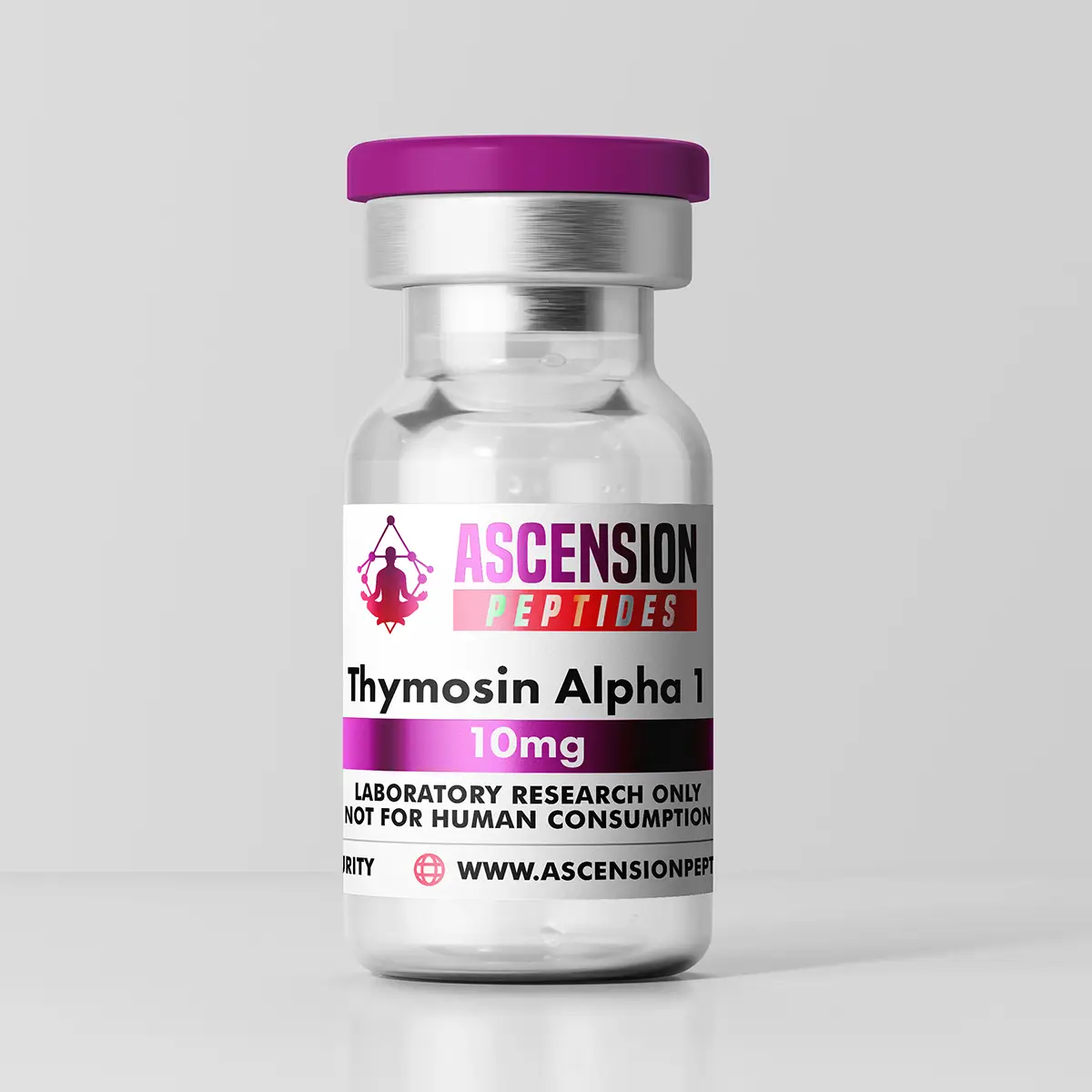
Zadaxin is unavailable in the US, but thymosin alpha-1 is sold as a research peptide — Ascension carries a 10mg vial with a third-party COA per batch.
What Is Thymosin Alpha 1?
A 28-amino-acid peptide with decades of clinical use.
Thymosin Alpha 1 (TA-1) is a short peptide cleaved from a larger precursor protein called prothymosin alpha (113 amino acids total). It was first isolated from the thymus gland in the early 1970s by Dr. Allan Goldstein and colleagues at the Albert Einstein College of Medicine, as part of a research program to identify active molecules in Thymosin Fraction 5, a crude thymus extract that had shown immune-modulating properties. TA-1 was the first thymosin peptide to be completely sequenced and synthesized.
Thymosin Alpha 1 at a Glance
- Chemical name: Thymosin Alpha 1 (TA-1)
- Generic drug name: Thymalfasin
- Brand name: Zadaxin
- Sequence: Ac-SDAAVDTSSEITTKDLKEKKEVEEEAEN (28 amino acids, N-terminal acetylated)
- Molecular formula: C129H215N33O55
- Molecular weight: 3,108.3 g/mol
- Parent protein: Prothymosin alpha (113-aa precursor)
- Discoverer: Dr. Allan Goldstein (1970s)
- Regulatory status: Prescription-approved in 35+ countries. Not FDA-approved in the US
- Administration: Subcutaneous injection
Zadaxin has been on the market internationally since the 1990s. It is manufactured by SciClone Pharmaceuticals and is one of the few peptide medications with a clinical track record measured in decades rather than years. In the US, TA-1 is available through compounding pharmacies with a physician prescription, but it does not carry FDA approval for any specific indication.
How Thymosin Alpha 1 Works
The mechanism is immune activation via toll-like receptors.
Thymosin Alpha 1 works primarily by activating toll-like receptors (TLRs) on innate immune cells:
- TLR2 activation: TA-1 binds TLR2 on dendritic cells and macrophages. This triggers downstream NF-κB signaling that upregulates immune activation genes.
- TLR9 activation: TA-1 also activates TLR9, an intracellular receptor that normally recognizes bacterial and viral DNA patterns. Activating it signals the immune system that a pathogen is present.
- Dendritic cell maturation: TA-1 promotes maturation of antigen-presenting dendritic cells, which is the bridge between innate and adaptive immunity. Better dendritic cell function means better T-cell priming.
- T-cell differentiation: Downstream of dendritic cell activation, T-cell differentiation from CD4+ and CD8+ precursors is enhanced. This strengthens cell-mediated immunity, the arm of the immune system that handles viral and intracellular infections.
- Th1 shift: TA-1 pushes the Th1/Th2 balance toward Th1 (cellular immunity). This is particularly relevant for chronic viral infections and cancer surveillance.
Unlike broadly immunosuppressive or immunosuppressive drugs, TA-1 does not simply push the immune system up or down. It modulates. In immune-overactive states (some autoimmune conditions), clinical data suggests TA-1 can normalize rather than amplify. In immune-underactive states (chronic viral infection, post-chemotherapy), it boosts. This modulation pattern is why TA-1 has such a broad clinical indication list despite its single molecular structure.
Thymosin Alpha 1 Benefits
Chronic hepatitis B and C treatment
The most-studied indication and one of the original FDA submissions (not approved in the US, but approved internationally). Multiple trials have shown TA-1 as a standalone or combined with interferon or antivirals improves viral load reduction and seroconversion rates in chronic hepatitis B and C. In many countries, Zadaxin is a standard-of-care option in combination regimens.
Cancer chemotherapy adjunct
TA-1 is commonly used alongside chemotherapy to reduce immunosuppression-related infections, maintain T-cell counts during treatment, and support post-chemotherapy immune recovery. Studies have explored it in hepatocellular carcinoma, non-small-cell lung cancer, melanoma, and several other malignancies. The mechanism (immune support) matches the clinical problem (chemotherapy-induced immune suppression).
Chronic viral infections beyond HBV/HCV
Trials and off-label use have covered cytomegalovirus (CMV), HIV, tuberculosis, and SARS. The theme is the same: infections where cell-mediated immunity is the deciding factor.
Critical care and severe infection
TA-1 has been studied in septic shock, acute respiratory distress syndrome (ARDS), peritonitis, pancreatitis, and lung infections in critically ill patients. The clinical logic is immune restoration in states where the immune system is exhausted or dysregulated.
Cystic fibrosis
Research has explored TA-1 for reducing chronic pulmonary infections in cystic fibrosis patients, where Pseudomonas and other chronic lung colonizers are a persistent clinical problem.
Post-viral recovery and long COVID
The most recent research wave. A 2023 meta-analysis of COVID-19 trials found that TA-1 was associated with mortality reduction in some patient subgroups, though length-of-hospital-stay improvement was less clear. The interest in post-COVID / long COVID recovery has extended TA-1 use in community settings beyond the strict clinical indications.
Immune support and general anti-aging
Community use is dominated by immune support in otherwise healthy adults, particularly during seasonal illness cycles or after stress-related immune suppression. Thymus function declines with age (a process called thymic involution), so replacing one of the key thymic signaling peptides is a mechanistically coherent anti-aging application, though human clinical trials for this specific use are limited.
Thymosin Alpha 1 Dosage
Standard Clinical Protocol (Zadaxin indications)
- Dose: 1.6 mg subcutaneously
- Frequency: Twice weekly
- Duration: 3 to 6 months (standard for hepatitis indications)
- Route: Subcutaneous into abdomen, thigh, or upper arm. Rotate sites.
Community Protocols
- Immune support loading: 1 to 1.5 mg daily for 10 to 30 days
- Maintenance: 450 mcg to 900 mcg daily for several weeks, or 1.6 mg twice weekly
- Post-illness recovery: 1 mg daily for 2 to 4 weeks
- Cycling: Some protocols run 4 to 8 weeks on, 4 weeks off
Reconstitution
TA-1 is sold as a lyophilized powder in vials typically of 5 mg, 10 mg, or 20 mg. A 10 mg vial reconstituted with 2 mL bacteriostatic water gives 5 mg/mL (5,000 mcg/mL). A 1 mg dose is 20 units on a standard U-100 insulin syringe. Use our peptide dosage calculator for other vial sizes.
Storage
- Lyophilized vial: Refrigerate at 2 to 8°C for long-term storage. Short-term room temperature storage is acceptable
- Reconstituted: Refrigerate. Use within 4 to 6 weeks
- Protect from light. Do not freeze
Thymosin Alpha 1 Side Effects
Exceptionally clean across decades of clinical use.
No serious adverse events have been reported at standard doses across decades of international clinical use. Long-term continuous use in humans is not fully characterized but the pattern from clinical trials is benign.
Who Should Not Use Thymosin Alpha 1
Do NOT Use Thymosin Alpha 1 If You:
- Are on immunosuppressive therapy (transplant recipients, some autoimmune treatment regimens) unless specifically directed by your physician
- Have an active autoimmune flare without physician supervision, since immune activation could worsen the condition
- Are pregnant or active breastfeeding (insufficient safety data)
- Are under 18 (limited pediatric data)
- Have known hypersensitivity to TA-1 or any component of the formulation
Thymosin Alpha 1 vs Other Immune Peptides
Thymosin Alpha 1 Stacks
- TA-1 + BPC-157: Combined immune and tissue-repair stack. Often used post-surgery or post-infection.
- TA-1 + LL-37: Antimicrobial plus immune coordination. Typically short course for infection context.
- TA-1 + Selank: Immune plus anxiolytic. Selank has documented immune-modulating effects of its own.
- TA-1 + vitamin D (4,000 to 5,000 IU) + zinc (15 to 30 mg): Standard supplemental backbone for immune protocols.
Avoid combining TA-1 with systemic immunosuppressive medications without physician coordination.
Where to Buy Thymosin Alpha 1
In the US, Zadaxin is not available since it lacks FDA approval. TA-1 is accessible through licensed compounding pharmacies with a physician prescription, or as a lab-use peptide for laboratory contexts.
Quality markers:
- ≥98% purity verified by HPLC and mass spectrometry
- Third-party Certificate of Analysis per batch
- Lyophilized vial format (5, 10, or 20 mg)
- US-based manufacturing with cold-chain handling
- Clear batch numbers and lot documentation
For a broader vendor vetting walkthrough, see our best legit peptide vendors guide.
How Long Does It Take Thymosin Alpha 1 to Work?
The honest answer is that Thymosin Alpha 1 works on two timescales at once. The early effect (energy and infection resistance) often shows up in the first 2 weeks. The structural immune effect (T-cell repertoire restoration, CD4 and CD8 normalization, vaccine responsiveness) takes the full 3 to 6 month protocol to show on labs.
Weeks 1 to 2: Energy and acute infection resistance
Many users report a subtle but real increase in energy and stamina within 7 to 14 days, and a noticeable drop in the frequency of minor respiratory infections. This early window matches the rapid activation of dendritic cells through TLR2 and TLR9. There is no laboratory marker change yet at this stage.
Weeks 2 to 8: Measurable immune markers move
By week 4 to 6, CD4 and CD8 T-cell counts begin to climb in patients who started with depressed values. CD4/CD8 ratios that were inverted often normalize. Natural killer cell activity, measured in cytotoxicity assays, is typically restored. Patients with chronic viral infections (hepatitis B, C, CMV) frequently see viral load shifts in this window.
Months 2 to 6: Full immune restoration
The 1.6 mg twice-weekly clinical protocol runs 3 to 6 months for a reason. Full T-cell repertoire restoration, durable cytokine balance, and the kind of immune resilience that persists after stopping the peptide all require this longer course. For specific timing variations by condition, see our writeup on how long to take Thymosin Alpha 1.
Conditions With the Strongest Clinical Evidence
Thymosin Alpha 1 has been studied in over 70 published trials. The strongest evidence by indication, as of 2026:
- Chronic hepatitis B: TA-1 monotherapy or combination with interferon-alpha produces sustained virologic response in 25 to 40% of treated patients, comparable to first-line therapy in some populations.
- Chronic hepatitis C: Older trials showed benefit; largely superseded by direct-acting antivirals, but still used adjunctively where access is limited.
- Sepsis and severe pneumonia: Multiple ICU trials including a large Chinese severe sepsis study show mortality reduction in selected patient subgroups.
- Cancer chemotherapy adjunct: Used to maintain CD4 counts and reduce infection risk during cytotoxic chemo, particularly in hepatocellular carcinoma and melanoma protocols.
- COVID-19: A 2023 meta-analysis pooled trial data showed mortality reduction in hospitalized severe COVID patients. Less clear benefit for mild disease.
- Vaccine response in elderly: Small trials show improved influenza vaccine antibody response in patients over 65 when TA-1 is given as an adjuvant.
Community use beyond approved indications focuses on chronic Lyme, post-viral fatigue, autoimmune modulation, and general immune support during high-stress periods. For comparison with other immune peptides, see where to buy Thymosin Alpha 1.