Thymosin Alpha 1: How Long to Take for Research Applications
Understanding thymosin alpha 1 how long to take depends entirely on the research objective at hand. This immunomodulatory peptide—first isolated from thymic tissue in the 1970s—has accumulated decades of clinical data across viral infections, oncology, and immune deficiency research. Duration protocols range from brief five-day courses to extended 12-month regimens, and selecting the appropriate timeline proves critical for achieving meaningful experimental outcomes.
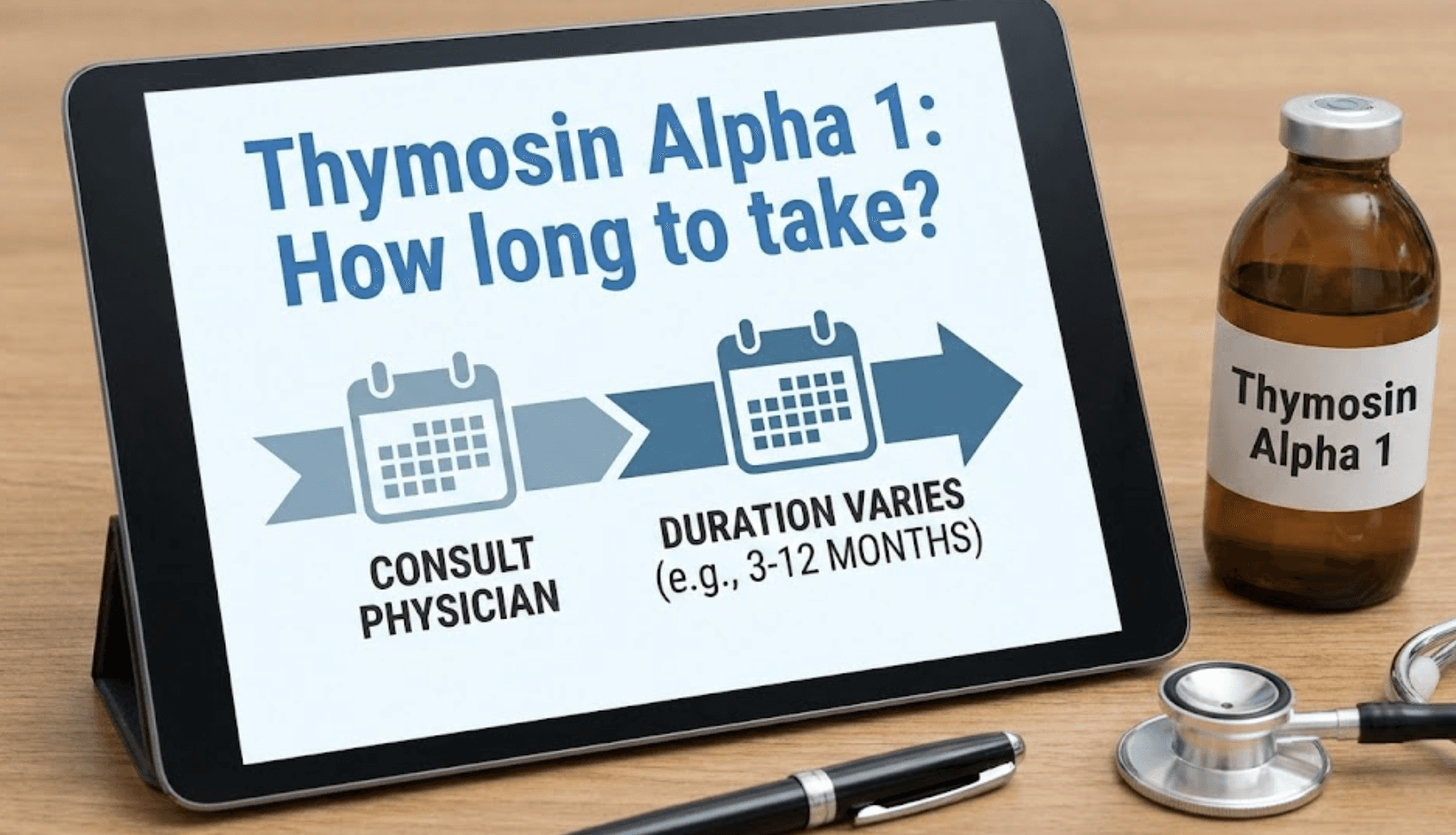
So how long should thymosin alpha 1 administration continue? Short answer: acute protocols span 5-10 days, general immune research runs 4-8 weeks, and chronic disease investigations extend 6-12 months. The sections below break down these timelines with supporting clinical evidence.
How Long to Take Thymosin Alpha 1: Quick Reference Guide
Before diving into detailed protocols, here's what published research establishes:
| Research Application | How Long to Take Thymosin Alpha 1 |
|---|---|
| Acute immune support | 5-10 days |
| General immune modulation | 4-8 weeks |
| Vaccine adjuvant | Single dose or 1-3 days |
| HIV/immune reconstitution | 12 weeks to 12 months |
| Chronic hepatitis B/C | 6-12 months |
| Cancer adjuvant therapy | 6-12 months |
| Loading dose protocols | 7 days before primary treatment |
These durations reflect published clinical trial data. Individual research protocols may vary based on specific objectives and subject characteristics.
Thymosin Alpha 1 Pharmacokinetics: Why Duration Matters
The question of thymosin alpha 1 how long to take cannot be answered without understanding its pharmacokinetic profile. Tα1 absorbs rapidly following subcutaneous injection, reaching peak serum concentrations within approximately two hours. The serum half-life also sits at roughly two hours—blood levels return to baseline by 24 hours post-administration.
This rapid clearance explains why consistent dosing schedules matter so much. No accumulation occurs with repeated doses. Irregular administration undermines the steady immunomodulatory signaling needed for therapeutic effects in research models.
The standard dosing benchmark involves 1.6 mg administered subcutaneously twice weekly. Some protocols favor daily administration at lower doses (around 500 mcg), yielding approximately 3.5 mg weekly—consistent with the twice-weekly paradigm. Safety data from FDA reviews indicate doses up to 16 mg for 12 months produced no significant toxicity.
How Long to Take Thymosin Alpha 1 for Chronic Viral Infections
The most extensive duration data comes from hepatitis research. For chronic hepatitis B and C, clinical trials establish clear answers about thymosin alpha 1 how long to take.
Hepatitis B protocols specify twice-weekly injections of 1.6 mg continuing for six to twelve months. A pooled analysis of randomized controlled trials administered Tα1 twice weekly for six months, with follow-up assessments at 12 months post-treatment. One Japanese study employed an intensive initial phase—six injections weekly for two weeks, then twice-weekly for an additional 22 weeks, totaling 24 weeks of treatment.
Hepatitis C combination therapy (Tα1 plus interferon) maintained treatment for 6 to 12 months. Interferon was administered up to three times weekly alongside twice-weekly Tα1. A delayed therapeutic response pattern emerged, manifesting 12 months or longer after therapy completion.
The sustained duration reflects what's needed for chronic viral clearance. Brief administration cannot shift the immune balance sufficiently to eliminate persistent infections.
Thymosin Alpha 1 Duration for Cancer Research
Oncology applications provide additional clarity on thymosin alpha 1 how long to take in adjuvant settings. Standard protocols specify 1.6 mg (900 μg/m²) administered subcutaneously for six months, or given between chemotherapy cycles throughout treatment duration.
A large-scale multicenter trial investigating hepatocellular carcinoma recurrence employed thymalfasin at 1.6 mg twice weekly for 12 months, measuring effects on two-year recurrence-free survival.
Loading-dose protocols differ substantially. Advanced solid tumor research used 3.2 mg daily for seven days before initiating immunotherapy—a short intensive phase aimed at restoring peripheral lymphocyte counts prior to checkpoint inhibitor treatment. This answers the question of how long to take thymosin alpha 1 when the goal is preparatory rather than sustained modulation.
How Long to Take Thymosin Alpha 1 for Immune Support
General immune modulation research—outside specific disease contexts—typically employs shorter cycles. The question of thymosin alpha 1 how long to take here depends on whether the objective is acute support or ongoing immune optimization.
Short-term protocols run 4-8 weeks with twice-weekly dosing, followed by reassessment. Treatment durations of 8-16 weeks appear commonly in non-disease-specific immune modulation literature.
Daily low-dose approaches often begin with 300 mcg during an initial tolerance assessment week, increasing to 500 mcg daily for the remaining protocol. An 8-week framework accommodates this gradual titration while allowing sufficient time to observe immunological changes.
Acute immune challenges call for 5-10 days of daily administration. This brief window suffices when the goal is temporary immune priming rather than lasting reconstitution.
HIV and Immune Deficiency: Extended Thymosin Alpha 1 Protocols
Research in immunocompromised populations offers important data on thymosin alpha 1 how long to take when baseline immune function is severely depleted.
A phase II HIV trial administered 3.2 mg twice weekly (6.4 mg total weekly) for 12 weeks in patients with CD4 counts below 200 cells/μL despite viral suppression on antiretroviral therapy. Researchers noted that effects might become more apparent with longer treatment—one previous trial showed the greatest impact after 12 months of administration.
Chinese guidelines for COVID-19 patients with lymphocytopenia recommended daily injections for seven days when CD8 cells fell below 400/μL. Retrospective studies used 10 mg daily for at least seven consecutive days in severely ill patients.
The pattern is clear: profound immune deficiency may require extended protocols, while acute lymphocyte depletion responds to intensive short-course treatment.
Factors That Influence How Long to Take Thymosin Alpha 1
Several variables affect optimal duration in research settings:
Baseline immune status sets the starting point. Severely immunocompromised subjects may need extended protocols. Research in advanced HIV suggested individuals with profound CD4 depletion respond differently than those with less severe deficiency.
Concurrent therapies alter the calculus. Combination with interferon, chemotherapy, or antiretroviral agents modifies duration requirements. Tα1 plus interferon protocols for hepatitis C extended longer than Tα1 monotherapy studies.
Age and thymic function matter considerably. Thymic involution accelerates with age, reducing endogenous Tα1 production. Elderly populations may need prolonged supplementation to achieve comparable effects.
Treatment objectives shape timelines directly. Viral clearance demands sustained pressure. Vaccine adjuvant applications require only single-day administration—one dose on vaccination day sufficed in hemodialysis patient studies.
Thymosin Alpha 1 Safety Across Different Durations
Regardless of how long you take thymosin alpha 1, safety data remains favorable. More than 11,000 subjects have participated in over 30 clinical trials spanning short and extended protocols.
The most frequently reported adverse event—mild injection site irritation—resolves without intervention. Long-term administration (6-12 months at standard doses) has not revealed cumulative toxicity. The peptide's rapid clearance and lack of tissue accumulation likely contribute to this profile.
Combination therapy with interferon-alpha 2b occasionally produced fever, fatigue, and muscle aches at rates exceeding interferon alone. These effects stemmed from interferon rather than Tα1.
Contraindications remain limited to hypersensitivity and deliberate immunosuppression scenarios (organ transplant recipients require careful consideration).
Practical Protocol Recommendations
When determining thymosin alpha 1 how long to take, match duration to objectives:
5-10 days: Acute immune challenge models, pre-immunotherapy loading doses, acute infection support
4-8 weeks: Short-term immune modulation studies, seasonal immune support research, initial assessment protocols
8-16 weeks: Intermediate investigations, immune reconstitution pilots, general wellness research
6-12 months: Chronic viral infection research, oncology adjuvant studies, long-term immune restoration
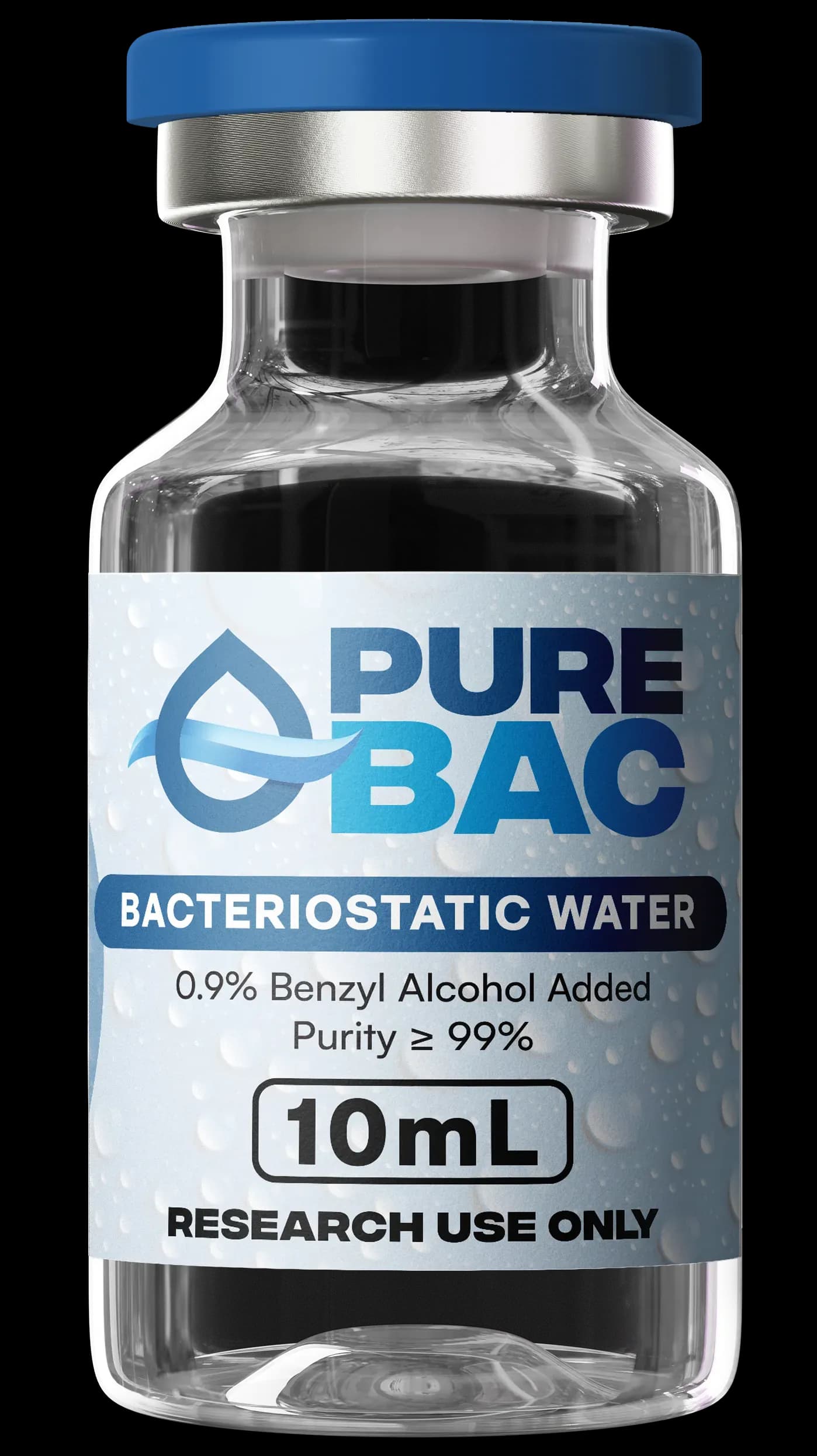
Reconstituted peptide stability affects planning. Bacteriostatic water reconstitution with proper refrigeration (2-8°C) maintains potency for approximately 30 days. Consistent injection timing—same days each week—improves data quality by establishing regular immunomodulatory signaling patterns.
Mechanism of Action: Why Longer Isn't Always Better
Understanding how Tα1 works clarifies why the question of thymosin alpha 1 how long to take doesn't have a one-size-fits-all answer.
The peptide acts through Toll-like receptors (TLR2 and TLR9) in dendritic cells, triggering NF-κB and IRF3 signaling pathways. This promotes T-cell maturation, enhances dendritic cell function, and stimulates interferon-α and interleukin-2 production.
Chronic conditions require months of administration because sustained signaling allows gradual restoration of depleted T-cell populations. Brief protocols cannot achieve this remodeling. But for acute applications—boosting lymphocytes before immunotherapy, for instance—extended treatment offers no additional benefit over a focused short course.
Current Research and Regulatory Status
Thymosin alpha 1 (thymalfasin/Zadaxin) holds approval in over 35 countries for chronic hepatitis B. The FDA has granted orphan drug designation for malignant melanoma, chronic active hepatitis B, DiGeorge anomaly, and hepatocellular carcinoma.
In the United States, Tα1 remains classified as a research peptide without FDA approval for therapeutic use. All applications outside approved jurisdictions are investigational.
COVID-19 pandemic research renewed interest in Tα1's potential to restore lymphocyte counts and mitigate cytokine storm. Cancer immunotherapy combinations represent an active frontier, with researchers exploring synergies between Tα1 and checkpoint inhibitors.
Research Disclaimer
This article is for educational and research purposes only. Thymosin alpha 1 is classified as a research compound in many jurisdictions and should only be used in properly designed laboratory investigations or under qualified healthcare supervision where approved.
This content does not constitute medical advice, diagnosis, or treatment recommendations. Researchers must verify regulatory status in their jurisdiction before initiating protocols. Proper handling, storage, and administration should follow established institutional guidelines.
Summary: Thymosin Alpha 1 How Long to Take
The duration question ultimately depends on what you're investigating. Clinical evidence supports these general frameworks:
- Acute applications: 5-10 days
- General immune research: 4-8 weeks
- Extended protocols: 8-16 weeks
- Chronic disease models: 6-12 months
The 1.6 mg twice-weekly regimen serves as the established benchmark, though daily low-dose alternatives exist. Safety remains favorable across all durations studied. Understanding the two-hour half-life explains why consistent scheduling matters more than any single dose.
Whether designing a brief loading protocol or a year-long chronic infection study, matching thymosin alpha 1 duration to specific research objectives—rather than defaulting to arbitrary timelines—produces the most meaningful results.
Last updated: December 2024
Content synthesizes findings from peer-reviewed publications including World Journal of Virology, Molecules (MDPI), Expert Opinion on Biological Therapy, PMC comprehensive reviews, and clinical trial registrations.