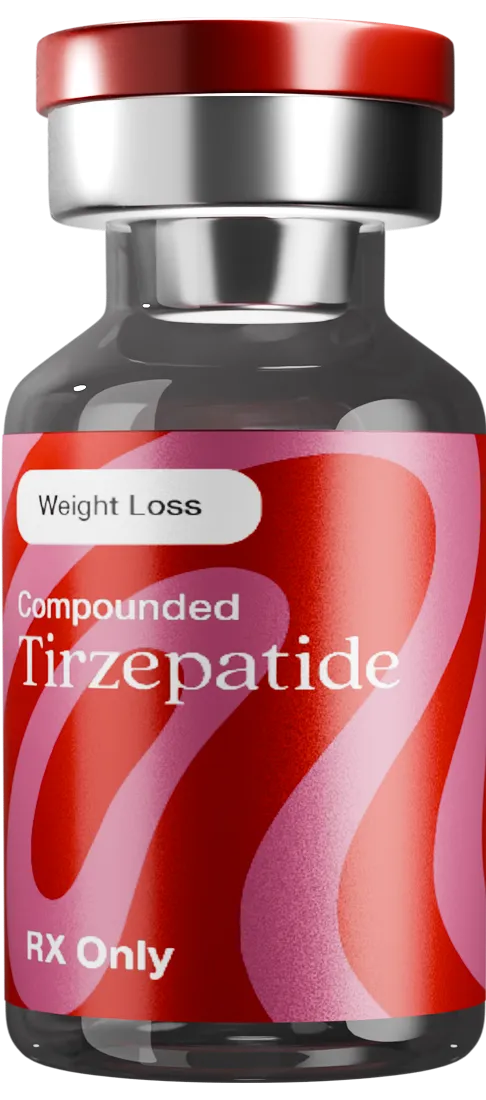
Compounded tirzepatide arrives as a dry lyophilized powder — and before you can use it, you need to reconstitute it. That means adding the right amount of bacteriostatic water (BAC water) to turn the powder into a stable injectable solution. Get this step wrong and you'll either damage the peptide, dose inaccurately, or both.
This guide walks you through every step — from the supplies you need to the exact volumes to draw — and pairs with our free tirzepatide reconstitution calculator so you always get the math right.
What Is Reconstitution and Why Does It Matter?
Lyophilization (freeze-drying) is how peptide manufacturers preserve tirzepatide for long-term stability. The powder form is shelf-stable, but it must be dissolved in a sterile liquid before injection. Bacteriostatic water — sterile water containing 0.9% benzyl alcohol — is the standard reconstitution solvent because benzyl alcohol inhibits microbial growth, extending the usable life of your solution to 28–60 days when refrigerated.
The volume of BAC water you add determines the concentration of your final solution. Concentration directly controls how many units you draw in an insulin syringe for each dose. If you miscalculate, you'll either under-dose (wasting expensive peptide) or over-dose (a safety risk). This is why precision matters — and why using a dedicated reconstitution calculator is strongly recommended.
Supplies You'll Need
Gather everything before you start. Stopping mid-process to find something breaks sterile technique.
Required
- Tirzepatide vial — lyophilized powder (10mg, 20mg, or 30mg are most common)
- Bacteriostatic water (BAC water) — 30mL multi-use vial; not plain sterile water
- Insulin syringes — 0.3mL or 1mL, U-100 (100 units/mL markings), with 29–31 gauge needle
- Reconstitution syringe — 3–5mL syringe with 18–23 gauge needle for drawing BAC water
- Alcohol swabs — at least 4 per reconstitution session
- Clean flat surface — wiped down with alcohol
Strongly Recommended
- Sharps container — for safe needle disposal
- Vial labels / sticker tape — write concentration, date mixed, and discard date
- Marker — to write on labels
- Nitrile gloves — optional but good sterile practice
Concentration Reference Tables
Before mixing, decide what concentration you want. Higher concentration = fewer units per dose (easier to measure on an insulin syringe). Use the tables below or plug your numbers into the reconstitution calculator for instant unit math.
10mg Vial — BAC Water Volume & Resulting Concentration
20mg Vial — BAC Water Volume & Resulting Concentration
30mg Vial — BAC Water Volume & Resulting Concentration
⭐ = Recommended concentration for easy insulin-syringe math. For any other vial size, use the online calculator to generate a custom table.
How to Reconstitute Tirzepatide: Step-by-Step
This process takes about 5 minutes. Follow each step in order. Skipping steps or rushing the injection of BAC water is the #1 cause of degraded peptide.
-
Wash your hands thoroughly
Scrub with soap and water for at least 20 seconds. Dry with a clean towel. This is non-negotiable — contamination is the enemy of any injectable solution. -
Prepare your work surface
Wipe a clean, flat surface with an alcohol swab. Lay out all supplies: tirzepatide vial, BAC water vial, syringes, alcohol swabs, and labels. -
Swab both vial tops
Use a fresh alcohol swab on the rubber septum of the tirzepatide vial and a second swab on the BAC water vial. Let both air-dry for 15–20 seconds. Do not blow on them or wave them to speed drying. -
Draw the correct BAC water volume
Using your reconstitution syringe, insert the needle into the BAC water vial and draw the volume from your concentration table (e.g., 3mL for a 30mg vial at 10mg/mL). Hold the BAC water vial inverted while drawing. Tap out and expel any air bubbles. -
Inject BAC water SLOWLY along the vial wall — not directly onto the powder
Insert the needle through the tirzepatide vial's rubber septum at an angle so the needle tip touches the inside glass wall. Depress the plunger very slowly — it should take 20–30 seconds for a 3mL injection. Let the liquid run down the glass, not splash into the powder. This gentle technique protects the peptide from mechanical degradation. -
Gently swirl — never shake
Once all the BAC water is in, remove the needle and cap it. Hold the vial between your palms and roll it gently, or swirl it in slow circles. The powder should dissolve within 1–3 minutes. The solution should become clear and colorless. If you see slight cloudiness, give it another few minutes of gentle rolling.
If the solution remains cloudy, has visible particles, or has a yellow/amber tint after 10 minutes — do not use it. Contact your supplier. -
Label the vial immediately
Write on your label: the concentration (e.g., "10mg/mL"), the date mixed, and a discard date 28–60 days out. Stick it on the vial before you put it down. You will forget the details if you wait. -
Refrigerate right away
Place the reconstituted vial in your refrigerator at 36–46°F (2–8°C). Do not leave it at room temperature for extended periods.

How to Draw Your Dose from the Reconstituted Vial
After reconstitution, every subsequent use follows the same short protocol:
- Remove the vial from the refrigerator and let it sit at room temperature for 5–10 minutes. Cold solution can sting on injection.
- Inspect the solution — it should be clear and colorless. Discard if cloudy, discolored, or if particles are visible.
- Swab the vial's rubber top with a fresh alcohol swab. Let dry.
- Using your insulin syringe, insert the needle and draw the number of units you calculated (see tables above or use the calculator).
- Remove any air bubbles by tapping the syringe and gently pushing them out.
- Inject subcutaneously into the abdomen, outer thigh, or upper arm. Rotate injection sites weekly.
For detailed guidance on dosing schedules and titration, see our tirzepatide dosing guide.
Storage Guide: Keeping Your Tirzepatide Potent
Tirzepatide is a large peptide molecule — it degrades faster than small-molecule drugs when exposed to heat, light, or agitation. Proper storage is the difference between a full-potency vial and a degraded one.
Unreconstituted (Dry Powder)
- Store in a cool, dark place (room temperature is fine short-term)
- Refrigeration preferred for long-term storage
- Do NOT freeze unless the manufacturer specifies it is stable frozen
- Shelf life: typically 12–24 months dry, check your vial's expiration date
Reconstituted (Liquid Solution)
- Refrigerate at 36–46°F (2–8°C) — consistent temperature is key; avoid the door where temps fluctuate
- Keep away from light — store in the original box or a small dark bag
- Use within 28–60 days — most compounders recommend 28 days; some formulations with higher benzyl alcohol are stable to 60 days
- Never freeze reconstituted tirzepatide — ice crystals destroy peptide structure
- Never leave at room temperature for more than 1–2 hours at a time
Common Reconstitution Mistakes to Avoid
These are the errors we see most often — each one can compromise your results or your safety.
1. Injecting BAC Water Too Fast
Shooting 3mL into a vial in 2 seconds creates shear forces that denature the peptide. The result is a solution that looks fine but has reduced biological activity. Always inject slowly — 20 to 30 seconds for 3mL.
2. Shaking the Vial
Shaking introduces air bubbles and mechanical stress that can break peptide bonds. Swirl gently; roll between your palms. The solution may take a few extra minutes to clear — that's fine.
3. Using the Wrong Diluent
Plain sterile water works for a one-time single-dose use but has zero antimicrobial protection. After a few days, bacterial growth becomes a real risk. Saline can destabilize some peptide formulations. Use bacteriostatic water every time.
4. Miscalculating BAC Water Volume
Adding 2mL to a 30mg vial gives you 15mg/mL, not 10mg/mL. Dosing from the wrong concentration means every injection is off by 50%. Always double-check your math with the reconstitution calculator before mixing.
5. Not Labeling the Vial
It seems trivial until you have two vials in the fridge and can't remember which one is 5mg/mL and which is 10mg/mL. Label immediately after mixing — include concentration, mix date, and discard date.
6. Freezing the Reconstituted Solution
Freezing reconstituted tirzepatide causes ice crystal formation that physically damages the peptide. Once reconstituted, it stays in the fridge — not the freezer.
7. Reusing Needles
Even reusing a needle once dulls the tip, increasing injection pain, and introduces contamination risk. Use a fresh insulin syringe for every injection.
Frequently Asked Questions
How much BAC water should I add to a 10mg vial of tirzepatide?
For a 5mg/mL concentration (easiest for dose math), add 2mL of BAC water. Each 5mg dose will then be 100 insulin units (1mL on a standard U-100 syringe). For a more concentrated 10mg/mL solution, add 1mL — each 5mg dose becomes 50 IU. See the full table above or use the calculator for any vial size.
Can I use sterile water instead of bacteriostatic water?
Technically yes, but only if you plan to use the entire vial in a single session. Sterile water contains no preservative, so a multi-use vial reconstituted with sterile water becomes a contamination risk within 24 hours. Bacteriostatic water is the correct choice for any vial you'll use over multiple weeks.
How long does reconstituted tirzepatide last?
When stored properly in the refrigerator at 36–46°F (2–8°C), reconstituted tirzepatide reconstituted with bacteriostatic water is generally stable for 28 days. Some sources and compounders cite up to 60 days. Follow your compounder's specific guidance, and always inspect for clarity before each use.
What if my tirzepatide solution is cloudy after mixing?
Allow 5–10 more minutes of gentle swirling. Some powders take longer to dissolve fully. If cloudiness persists beyond 15 minutes, or if you see floating particles or discoloration, do not inject it. Contact your supplier — the vial may have been damaged during shipping or improperly stored.
How do I convert mg to insulin units?
The formula is: Units = (Dose in mg ÷ Concentration in mg/mL) × 100. Example: 5mg dose at 10mg/mL = (5 ÷ 10) × 100 = 50 IU. The reconstitution calculator does this automatically for any combination.
Can I mix tirzepatide with anything other than BAC water?
Some protocols use sterile saline or acetic acid solutions, but bacteriostatic water is the standard for compounded tirzepatide used subcutaneously. Do not mix tirzepatide with other peptides in the same syringe unless specifically directed by a medical professional.
Do I need to warm the BAC water before injecting it into the vial?
No. Room-temperature or refrigerator-temperature BAC water is fine. Heating it adds no benefit and could theoretically begin degrading the peptide before you even mix it.
What syringe gauge should I use for reconstitution vs. injection?
For drawing BAC water and injecting it into the tirzepatide vial, a 18–23 gauge, 1-inch needle on a 3–5mL syringe works well. For subcutaneous injection, use an insulin syringe with a 29–31 gauge, 5/16-inch (8mm) needle — the smaller gauge means less discomfort at the injection site.
Ready to Calculate Your Dose?
Reconstitution is straightforward once you've done it a couple of times. The most important things: go slow when adding BAC water, never shake, label immediately, and always verify your dose math before injecting.
Use the PeptideDeck Reconstitution Calculator to generate a custom concentration table for any vial size and get exact insulin-unit doses for your titration schedule.
For guidance on what dose to start at, how to titrate, and what to expect week by week, read our full tirzepatide dosing guide. And for a complete overview of the compound itself — mechanism, research, and what it's being used for — visit the tirzepatide peptide page.
This content is for informational and educational purposes only. Peptides discussed on this page are research compounds not approved by the FDA for human use. Always consult a licensed medical professional before using any peptide or supplement.
This content is for informational and educational purposes only. Peptides discussed on this page are research compounds not approved by the FDA for human use. Always consult a licensed medical professional before using any peptide or supplement.