KPV peptide is tiny but specific.
It is only three amino acids long, but that small sequence is why people look at KPV peptide for gut inflammation, skin flare-ups, wound support, oral dosing, and anti-inflammatory stacks with BPC-157. It does not tan your skin, change appetite, or act like Melanotan 2. Its main story is inflammation control.
🔑 Key Takeaways
- KPV peptide is a tripeptide (Lysine-Proline-Valine) cut from the C-terminus of alpha-MSH, the body's natural anti-inflammatory hormone
- Mechanism is well-mapped: KPV enters cells through the PepT1 transporter and inhibits NF-kB, the master inflammation switch
- Strongest evidence is in inflammatory bowel disease models, where KPV cuts inflammatory markers roughly in half and protects intestinal tissue
- Oral KPV peptide is the gut-focused route because PepT1 sits in the intestinal transport pathway; subcutaneous use is usually discussed for systemic goals
- Typical KPV peptide dosage discussions cluster around 200-500 mcg daily, but no completed human dose-finding trial defines an official dose
- KPV also appears in skin inflammation, contact dermatitis, eczema, psoriasis, wound-healing, and antimicrobial discussions
- Antimicrobial against Staphylococcus aureus (including MRSA) and Candida albicans
- Side effect profile is unusually clean: no tanning, no appetite change, no libido shift, no immune suppression
- FDA removed KPV from Category 2 on April 22, 2026 because the nomination was withdrawn, but that does not create a US-approved KPV drug
Inflammation is your body's fire alarm. When something goes wrong, the alarm should fire, then shut off. For people living with chronic gut issues, food reactions, inflammatory skin problems, or slow recovery, the alarm can feel like it never stops. This guide breaks down what KPV peptide is, how it works, what the evidence shows for gut and skin health, how dosing is usually discussed, how reconstitution math works, and what side effects to watch.
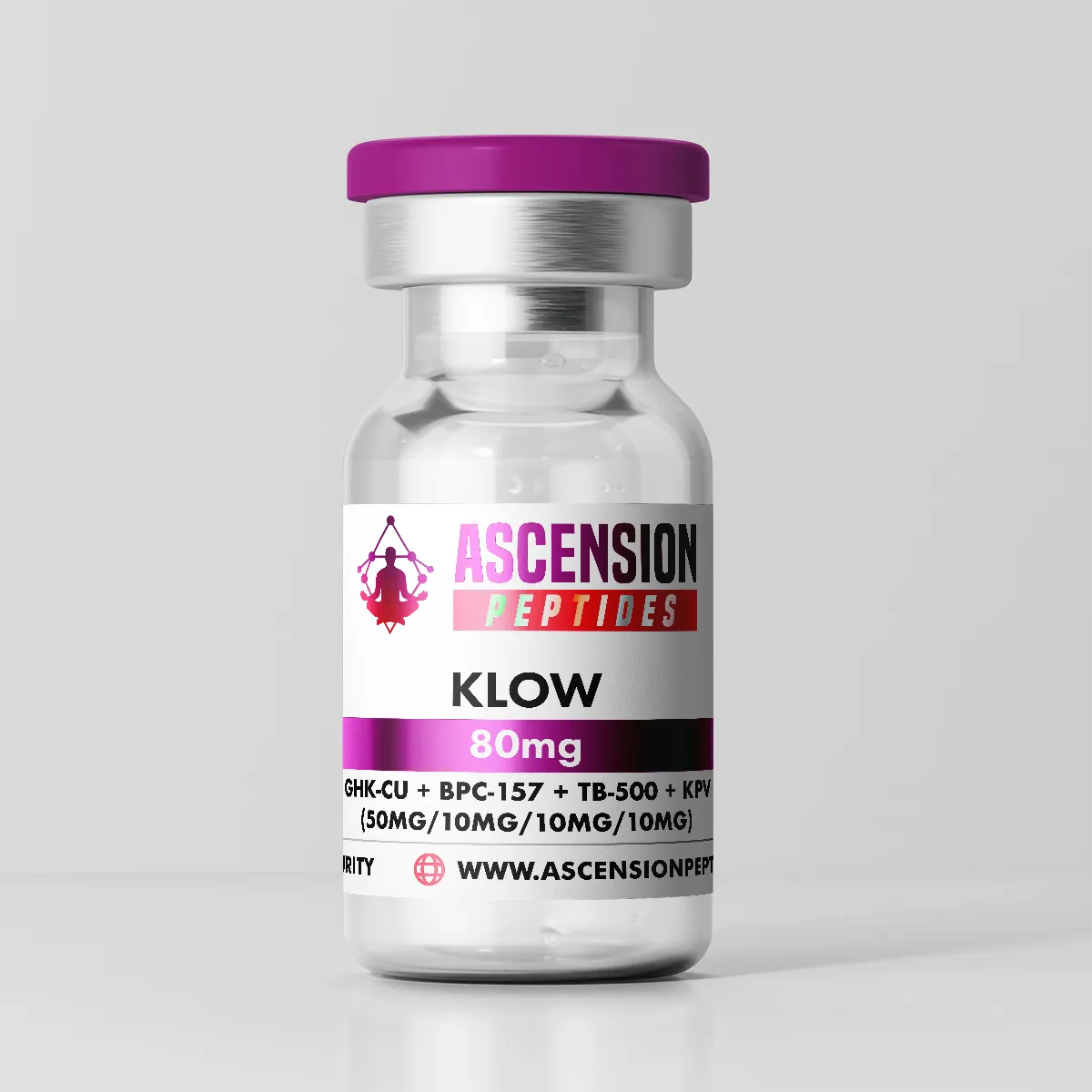
KPV is most often run alongside repair peptides rather than alone, which is why Ascension's KLOW blend pairs it with BPC-157, TB-500 and GHK-Cu in a single vial.
What Is KPV Peptide?
KPV is a three-amino-acid peptide. Lysine, Proline, Valine. Lys-Pro-Val. K-P-V. That is the entire molecule, which is why the exact keyword "KPV peptide" usually points to the same simple tripeptide.
It comes from the tail end of alpha-melanocyte-stimulating hormone (alpha-MSH), a 13-amino-acid hormone made in the pituitary gland. Alpha-MSH does a lot of jobs in the body: skin pigmentation, appetite regulation, immune signaling, sexual function. Most of those jobs run through melanocortin receptors. KPV comes from the opposite end of the molecule and skips the receptors entirely.
That is the whole story of why KPV is interesting. Researchers found that the anti-inflammatory power of alpha-MSH lives in this tiny three-amino-acid tail. A 1989 Lipton study showed that KPV alone reduced inflammation in mice at levels comparable to corticosteroids. That paper is the starting line for the modern KPV literature, and the work has only built since.
Two structural details make KPV unusual among peptides:
- Proline and valine are protective. These two amino acids resist the gut enzymes that normally chew up oral peptides. KPV survives the digestive tract intact.
- It is small enough to use a transporter. KPV is absorbed through PepT1, a peptide transporter normally found in the small intestine. Most peptides do not get this advantage.
So you have a peptide that is naturally anti-inflammatory, orally bioavailable, and stripped of the hormonal side effects that come with the rest of the alpha-MSH molecule. That combination is rare.
How KPV Peptide Works
The mechanism is unusually well mapped.
That is part of why KPV peptide gets taken seriously despite the lack of completed human outcome trials. The strongest story is not a vague "anti-inflammatory" claim. It is PepT1 uptake, NF-kB inhibition, MAP kinase suppression, and a clear separation from melanocortin receptor effects.
PepT1 Transport (Especially in Inflamed Tissue)
KPV enters cells through the PepT1 transporter, with a binding affinity (Km approximately 160 micromolar) that lets it get absorbed efficiently even at low doses. The unusual part: PepT1 is normally only present in the small intestine, but during inflammatory bowel disease the colon ramps up PepT1 expression dramatically. Confirmed in human biopsies, this means inflamed gut tissue actively pulls KPV into itself harder than healthy tissue does. The drug self-targets to the exact spot where you need it.
NF-kB Inhibition
Once inside the cell, KPV blocks NF-kB, the transcription factor that flips on most of the genes responsible for inflammation. KPV stabilizes the inhibitor protein that holds NF-kB in check, and it physically blocks NF-kB from moving into the nucleus. The net result: less production of TNF-alpha, IL-1beta, and IL-6, the same cytokines that drive IBD, arthritis, and a long list of autoimmune conditions.
MAP Kinase Suppression
KPV also dampens the MAP kinase pathway, a parallel inflammation-amplifying signaling cascade. This adds a second brake on the inflammatory response, which is part of why KPV looks more potent in some models than alpha-MSH itself, despite being a fragment.
What KPV Does Not Do
KPV does not bind melanocortin receptors. A 2008 study tested KPV in mice with completely nonfunctional melanocortin receptors during severe colitis. KPV still rescued 100 percent of those mice. If the receptors mattered, the mice would have died. They did not. This is why KPV does not cause tanning, appetite change, libido shift, or any of the other melanocortin effects associated with peptides like Melanotan 2.
KPV Peptide Benefits: Gut, Skin, Wounds
Five buckets of evidence, in rough order of strength.
1. Gut Health and Inflammatory Bowel Disease
This is where KPV has the most data. The landmark 2008 Dalmasso Gastroenterology study dosed mice with DSS-induced colitis using oral KPV in their drinking water. The treated mice lost less weight, showed roughly 50 percent reduction in gut inflammation markers, and saw drops across all major inflammatory cytokines. A separate German team replicated the effect in three different colitis models and reported 100 percent survival rescue in mice with non-functional melanocortin receptors.
The conditions where KPV is most often discussed:
- Ulcerative colitis (UC)
- Crohn's disease
- Irritable bowel syndrome (IBS) with inflammatory features
- Leaky gut and intestinal permeability issues
- Post-antibiotic gut inflammation
What still does not exist: human clinical trials in IBD patients. Every result above comes from lab and mouse-model work. The mechanism is well-supported, the data across labs is consistent, and the safety profile looks favorable, but the translation step has not been formally published yet.
2. Skin Inflammation and Conditions
KPV calms inflammatory skin conditions through the same NF-kB pathway, applied either topically or systemically.
- Psoriasis: Imiquimod-induced psoriasis mouse models show clear reductions in inflammatory plaques. Most of alpha-MSH's anti-psoriatic activity tracks back to its KPV fragment, and unlike topical steroids, KPV does not thin the skin with extended use.
- Eczema and atopic dermatitis: KPV reduces the inflammatory cytokines that drive flares, supports skin-barrier repair, and helps control the Staphylococcus aureus overgrowth that piggybacks on eczema.
- Contact dermatitis: Reduced redness, swelling, and itch in mouse models.
- Acne: The combined anti-inflammatory and antimicrobial activity targets both pillars of acne pathology.
3. Wound Healing
KPV accelerates wound closure across multiple lab models. The mechanism is two-pronged: less local inflammation, plus better collagen organization in the healing tissue. A rabbit corneal epithelial wound model showed clear improvement with topical KPV. In dermal wound models, KPV pairs naturally with peptides like BPC-157 and TB-500, which is why it appears in healing-focused stacks.
4. Antimicrobial Activity
This is the under-discussed angle. KPV directly kills certain pathogens at very low concentrations, which is unusual for an anti-inflammatory:
- Staphylococcus aureus, including MRSA: Effective at the same concentrations that produce anti-inflammatory action.
- Candida albicans: Antifungal activity in vitro.
- Other gram-positive bacteria: Variable activity depending on the strain.
The clinical implication: in skin or gut conditions where bacterial overgrowth is part of the pathology, KPV is hitting two problems at once.
5. Systemic Inflammation and Brain Effects
KPV has shown anti-inflammatory effects in lab models of brain injury, sepsis, and broader autoimmune flares. The data is thinner than the gut and skin work, but the consistency of the NF-kB and cytokine reductions across tissue types makes the systemic angle plausible. Several practitioners use KPV in chronic-inflammation contexts where a clean anti-inflammatory tool is preferable to long-term NSAIDs or corticosteroids.
KPV vs BPC-157 vs Alpha-MSH
KPV and BPC-157 are complementary rather than redundant. BPC-157 drives tissue rebuilding. KPV calms inflammation and clears bacterial overgrowth. The two together cover both halves of a healing problem, which is why they show up paired in many gut-healing and recovery protocols. For full stacking detail, see the BPC-157 + TB-500 + KPV + GHK-Cu stack guide.
KPV Peptide Dosage: Oral, Subcutaneous, Topical
Dosing claims are messy online.
That is the biggest gap in many KPV peptide articles. Some pages quote very high experimental amounts, while most peptide clinics and community protocols discuss much smaller daily ranges. There is no official KPV peptide dosage because no completed human dose-finding trial has established one.
The practical range that appears most often is 200-500 mcg daily, adjusted by route and goal. Treat the table below as a reference for how KPV is commonly discussed, not as a personal instruction.
For gut-focused KPV peptide use, oral dosing gets the most attention because PepT1 sits in the intestinal transport pathway. For broader systemic goals, subcutaneous KPV is often discussed because it bypasses the digestive tract and gives more predictable exposure.
Route selection shortcut
If the target is gut comfort, oral KPV is the route people usually compare first. If the target is a full-body inflammatory pattern or a stack with BPC-157, TB-500, and GHK-Cu, subcutaneous use is the route people usually compare first.
KPV Peptide Reconstitution and Units
The unit math matters fast.
KPV peptide is often sold as a small lyophilized vial. Once bacteriostatic water is added, the syringe units depend entirely on vial size and water volume. A 10mg vial mixed with 2mL gives a different concentration than a 5mg vial mixed with 2mL.
Those units assume a U-100 insulin syringe, where 100 units equals 1mL. If you use a different syringe, the draw volume may not match. For a step-by-step refresher, use our peptide reconstitution guide.
Reconstitution basics are the same as other small peptides: wipe vial tops, add bacteriostatic water slowly down the vial wall, swirl gently, never shake, label the vial with date and concentration, refrigerate after mixing, and avoid repeated freeze-thaw cycles.
How Long KPV Peptide Takes to Work
Timelines depend on the target.
No human clinical timeline is settled, so claims should stay conservative. Gut-focused users often judge oral KPV peptide over 4-8 weeks because intestinal inflammation and food reactivity are not overnight problems. Skin irritation may shift faster, sometimes within days to a couple of weeks, but deeper inflammatory skin patterns take longer.
KPV Side Effects and Safety
The safety picture has two sides.
On one side, KPV peptide looks unusually clean in the available non-human evidence and in anecdotal user reports. On the other side, FDA has explicitly said it lacks human exposure data for drug products containing KPV administered by any route. That evidence gap should keep expectations grounded.
Reported Side Effects
- Mild injection site irritation when used subcutaneously. Redness or a small welt that resolves in a few hours.
- Occasional mild headache in the first week, particularly when starting at the higher end of typical protocols.
- Mild GI upset at higher oral doses. Usually mild nausea or loose stool. Resolves at lower doses.
- Transient fatigue in a small minority of users in the first few days.
What KPV Does Not Cause
- No tanning or pigmentation change. KPV does not bind melanocortin receptors. This is the clearest separation from Melanotan 2 and alpha-MSH itself.
- No appetite suppression or stimulation. Unlike most melanocortin peptides.
- No libido or sexual function effects.
- No broad immune suppression. KPV dials down specific inflammatory pathways rather than blanketing the immune system the way corticosteroids do. In lab studies, KPV-treated mice did not show increased susceptibility to infection.
- No reported skin thinning with topical use, which is the chronic problem with long-term corticosteroid creams.
Where the Caution Is
The honest limitation: there are no completed long-term human trials. Mouse-model data and clinical-practice experience both point to a clean profile, but the multi-year safety data that exists for a licensed prescription drug does not exist for KPV. That gap matters.
People who should avoid KPV or get clinician supervision before using it:
- Pregnant or breastfeeding women
- People with active cancer or a history of melanoma (limited data on melanocortin-derived peptides in this context)
- Anyone on immunosuppressive medication
- Active acute infection
- Children and adolescents
Quality matters more than dose
The biggest practical safety risk with KPV is not the peptide itself, it is product quality. Vendors vary on purity, sequence accuracy, salt form, endotoxin screening, and stability. Ask for a third-party Certificate of Analysis on every batch you buy and store the vial refrigerated and away from light to preserve potency.
Where KPV Peptide Source Quality Matters
Small peptides are easy to misread.
KPV peptide is only three amino acids long, which means a label can look simple while the actual quality question is not. The most useful checks are identity, purity, residual solvents, salt form, endotoxin, and whether the batch number on the COA matches the vial in your hand.
The current PeptideDeck CTA for this page points to KLOW because that blend includes KPV with BPC-157, TB-500, and GHK-Cu. That matches the most common practical use case: KPV for inflammation plus repair-focused peptides for tissue support.

KPV in Stacks
KPV is rarely run alone in practice. It pairs naturally with several peptides:
- KPV + BPC-157: The gut healing combination. KPV calms the inflammation, BPC-157 rebuilds the gut lining. Available as the KLOW blend alongside TB-500 and GHK-Cu.
- KPV + GHK-Cu: Anti-inflammatory plus skin-regeneration stack for psoriasis, eczema, and topical dermatology applications.
- KPV + TB-500: Systemic inflammation plus broader tissue repair for stubborn injuries.
For full dosing breakdowns, see the KLOW dosage guide and the complete healing protocol stack guide.
KPV Peptide Regulatory Status in 2026
The April update matters here.
KPV does not currently have a licensed prescription product on the US market. The important 2026 change is that FDA's updated April 22, 2026 503A bulk-substance list says KPV was removed from Category 2 because the nomination was withdrawn. FDA also says it intends to consult the Pharmacy Compounding Advisory Committee on July 23, 2026 about KPV-related bulk drug substances, including KPV acetate and KPV free base.
That is not the same thing as a drug approval. It means the compounding-status conversation is moving, and access rules may keep changing. Any page that still says the formal update had not been published is now behind the current FDA document.
KPV is one of eight compounds routinely grouped under gut health, and the group varies enormously in how much human evidence sits behind it. Our overview of how KPV compares with the other gut health peptides sorts all of them into evidence tiers, from approved drugs down to one that failed Phase 3.
Frequently Asked Questions
Sources
- Dalmasso et al., PepT1-mediated tripeptide KPV uptake reduces intestinal inflammation, Gastroenterology, 2008
- Viennois et al., PepT1 and KPV in colitis-associated cancer models, 2016
- Xiao et al., orally targeted KPV delivery for ulcerative colitis models, Molecular Therapy, 2017
- FDA 503A bulk drug substances list, updated April 22, 2026
- FDA safety-risk page for certain nominated bulk drug substances, current as of April 22, 2026
The information in this article is for educational purposes only and does not constitute medical advice. KPV does not currently have a licensed prescription product in the US, and most evidence comes from lab and mouse-model studies rather than completed human clinical trials. Always consult a qualified healthcare professional before starting any peptide protocol, especially if you have an existing medical condition, are pregnant or breastfeeding, or are taking other medications.