Most peptide lists rank the wrong thing. They rank hype. The best peptides in 2026 are the ones with human results you can point to, and that list looks different from the one trending on your feed.
🔑 Key Takeaways
- The single peptide with the strongest human results is not the one most people start with
- Two of the most talked-about healing peptides have almost no human trial data, and one FDA review found none at all
- A popular growth hormone peptide already had its own placebo-controlled trial, and the result surprised people
- Three "peptides" on most top-10 lists are not peptides at all
- What the July 2026 FDA vote changed for you, and what it did not
You want a straight answer. Which peptides are worth your money, and which ones are riding on a good story? Below is our top 10, graded by the human evidence behind each one, with the honest catch for every pick.
How We Ranked the Best Peptides
We used one question. What happened when real people took it?
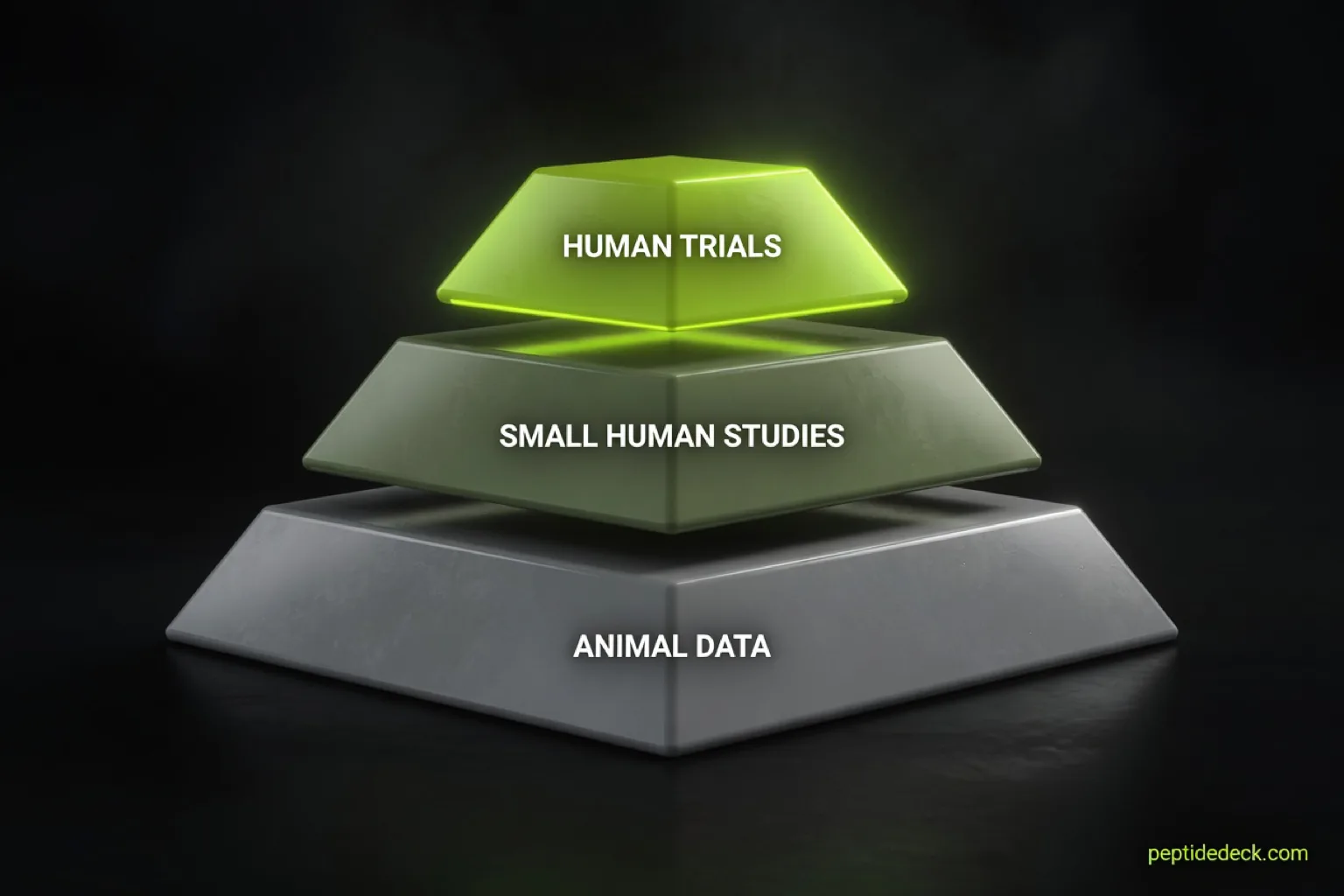
A peptide earned a high grade when large randomized trials in humans showed a clear result against placebo. It dropped a grade when the human data was small, short or uncontrolled. It dropped again when nearly everything came from studies in animals or cells. Popularity, influencer buzz and vendor sales counted for nothing.
- Grade A: large placebo-controlled trials in people, usually an approved drug.
- Grade B: real human data, but small, short, or measuring a lab marker rather than an outcome you would feel.
- Grade C: strong results in animals, very little in people.
This grading is harsh on some fan favorites. That is the point. If you are going to inject something, you deserve to know which bucket it sits in before you start. For plain definitions of the terms used here, our guide to what peptides are covers the basics.
The Top 10 Peptides in 2026, Ranked
Here is the whole list first. The detail follows.
Notice the split. The top five all have an approved drug behind them or positive phase 3 results. The bottom four are the names you hear most in gyms and podcasts. That gap is the story of peptides in 2026.
1. Tirzepatide: the best peptide overall
Nothing else comes close on human data. In the SURMOUNT-1 trial, 2,539 adults with obesity or overweight took weekly tirzepatide for 72 weeks. At 15 mg they lost 20.9% of their body weight on average, against 3.1% on placebo. More than half of that group (57%) lost at least a fifth of their weight.
If you have spent years watching the scale refuse to move, that is what those numbers mean in real life: a change in clothing size, not a few stubborn pounds. It is sold as Zepbound for weight and Mounjaro for type 2 diabetes, both prescription-only.
The catch: nausea and other stomach side effects are common while the dose climbs, and 6.2% of people on the top dose quit because of side effects (2.6% on placebo). Stop taking it and much of the weight tends to come back.
2. Semaglutide: the proven runner-up
Semaglutide started the GLP-1 wave. In STEP 1, weekly 2.4 mg produced 14.9% average weight loss at 68 weeks versus 2.4% on placebo. It comes as Wegovy (now as a shot or a daily tablet) and Ozempic, both prescription-only.
The catch: it trails tirzepatide by about six percentage points in those separate trials, with the same stomach side effects. Still, if your insurance covers one and not the other, semaglutide is a very good second choice.
3. Retatrutide: the strongest, but not approved yet
Retatrutide hits three hormone targets, not two. It adds glucagon on top of the GIP and GLP-1 signals tirzepatide uses. In its phase 2 trial, the 12 mg dose produced 24.2% average weight loss at 48 weeks, against 2.1% on placebo. The first phase 3 results in May 2026 went further, as our breakdown of the TRIUMPH-1 results explains.
The catch: there is no prescription version yet, so the only way to get it today is a vendor vial with no pharmacy oversight. The trial also saw dose-dependent rises in heart rate. That is why it ranks third and not first.
4. Tesamorelin: the belly-fat peptide with a label
Tesamorelin works on stubborn deep belly fat. It tells your pituitary to release more of your own growth hormone. In a 26-week NEJM trial of 412 people with HIV, it cut deep abdominal (visceral) fat by 15.2%, while the placebo group gained 5.0%. It is approved as Egrifta for that exact use.
The catch: the trials were in people with HIV-related fat gain. Using it for ordinary belly fat is off-label, and the brand version is expensive.
5. PT-141 (bremelanotide): the libido peptide that passed phase 3
Most libido supplements have nothing behind them. PT-141 has two phase 3 trials. In the RECONNECT studies of 1,267 premenopausal women with low sexual desire, it raised desire scores and lowered distress versus placebo. It is approved as Vyleesi, taken as needed before sex.
The catch: the improvement was modest, and nausea, flushing and headache each hit 10% or more of users. Men use it off-label; the approval covers women only.
6. GHK-Cu: the best-supported skin peptide
GHK-Cu is a copper-binding peptide your body already makes. Applied to skin, it has one of the longest human track records of any cosmetic peptide. In a 12-week study of 71 women, a GHK-Cu face cream increased skin density and thickness and reduced fine lines, according to a 2018 review of the data.
The catch: those human studies are small and several were only presented at conferences, never fully published. The injectable form sits on the FDA's list of compounding substances with possible safety risks. Creams are the safer bet.
7. CJC-1295 + ipamorelin: the popular GH stack
This pair is the most common growth hormone combination. The CJC-1295 half has real human data: a single shot raised growth hormone 2 to 10 times and IGF-1 1.5 to 3 times for up to 11 days in healthy adults, per a 2006 study.
The catch: raising a hormone on a blood test is not the same as building muscle or losing fat, and no trial has shown the stack does either. Ipamorelin did get a proper phase 2 trial in 117 bowel-surgery patients. It was well tolerated, but it did no better than placebo on its target.
8. BPC-157: the most popular peptide
BPC-157 is the name everyone knows. If you have a tendon or gut problem that will not settle, you have heard it recommended. The results in animals are striking across tendons, muscle and the gut lining. The human side is thin. A 2025 review counted just three small human pilot studies, covering knee pain, bladder pain and IV safety.
The best known of those is a 16-patient knee series, where 11 of 12 people who got only BPC-157 reported less pain. There was no placebo group.
The catch: that is not proof. It is a promising signal many people find worth trying, and the FDA's advisers voted in July 2026 to let pharmacies compound it (details below).
9. TB-500: BPC-157's usual partner
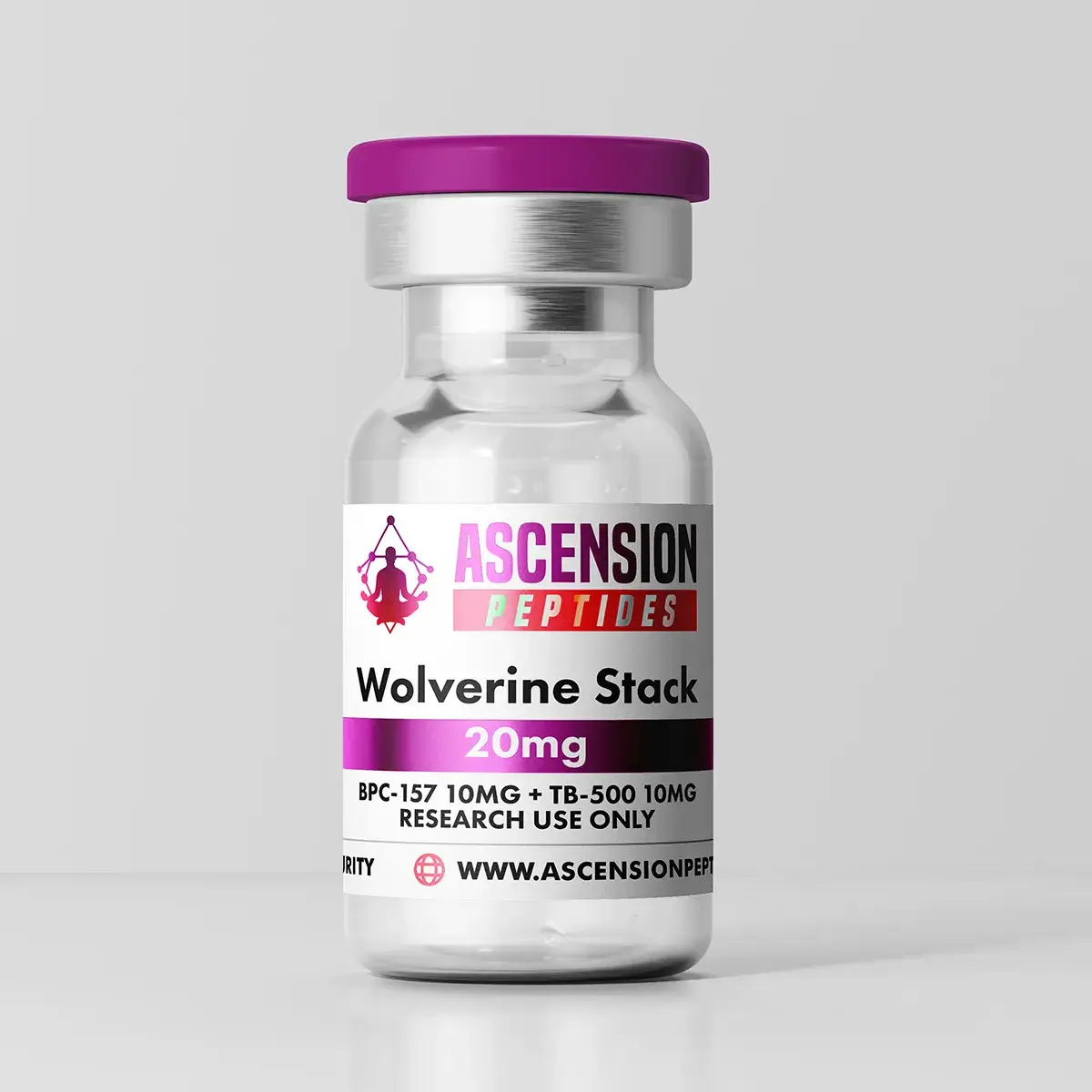
TB-500 is a short fragment of thymosin beta-4, a repair protein. It is almost always paired with BPC-157 as the "Wolverine" stack for injuries. The honest problem: when the FDA reviewed it, the agency said it had found no human exposure data for the fragment at all.
The catch: the human studies people cite were done on the full-length protein, not the TB-500 fragment in the vial.
10. MOTS-c: the biohacker's energy peptide
MOTS-c is made inside your mitochondria. In animals, it improves how muscle handles sugar during exercise. That makes it a biohacking favorite for energy and metabolic health.
The catch: the FDA's review found no human exposure data for MOTS-c by any route. It makes the list because so many people use it, and because the advisers still voted in its favor in July.
Do Peptides Actually Work?
Some do, spectacularly. Some probably do. Some nobody knows.
Insulin is a peptide. So are semaglutide and tirzepatide, the drugs that changed obesity medicine. When a peptide goes through large human trials, the results can be the most dramatic in modern medicine. So "do peptides work" is the wrong question. The useful one is: has this particular peptide been tested in people like me?
Three real results, three different answers
- Worked, clearly: tirzepatide 15 mg, 20.9% weight loss vs 3.1% on placebo in 2,539 adults.
- Did not beat placebo: ipamorelin in 117 surgery patients, 25.3 vs 32.6 hours to a first solid meal, not a significant difference.
- Unknown in people: BPC-157, three small pilot studies and no placebo-controlled trial.
What about all the glowing reviews online? Some are real. Injuries heal on their own, sleep improves when you start paying attention to it, and people who spend money expect a result. Without a placebo group, nobody can separate those effects from the peptide. That is why it pays to set a clear date, before you start, for judging whether something helped.
Best Peptides by Goal
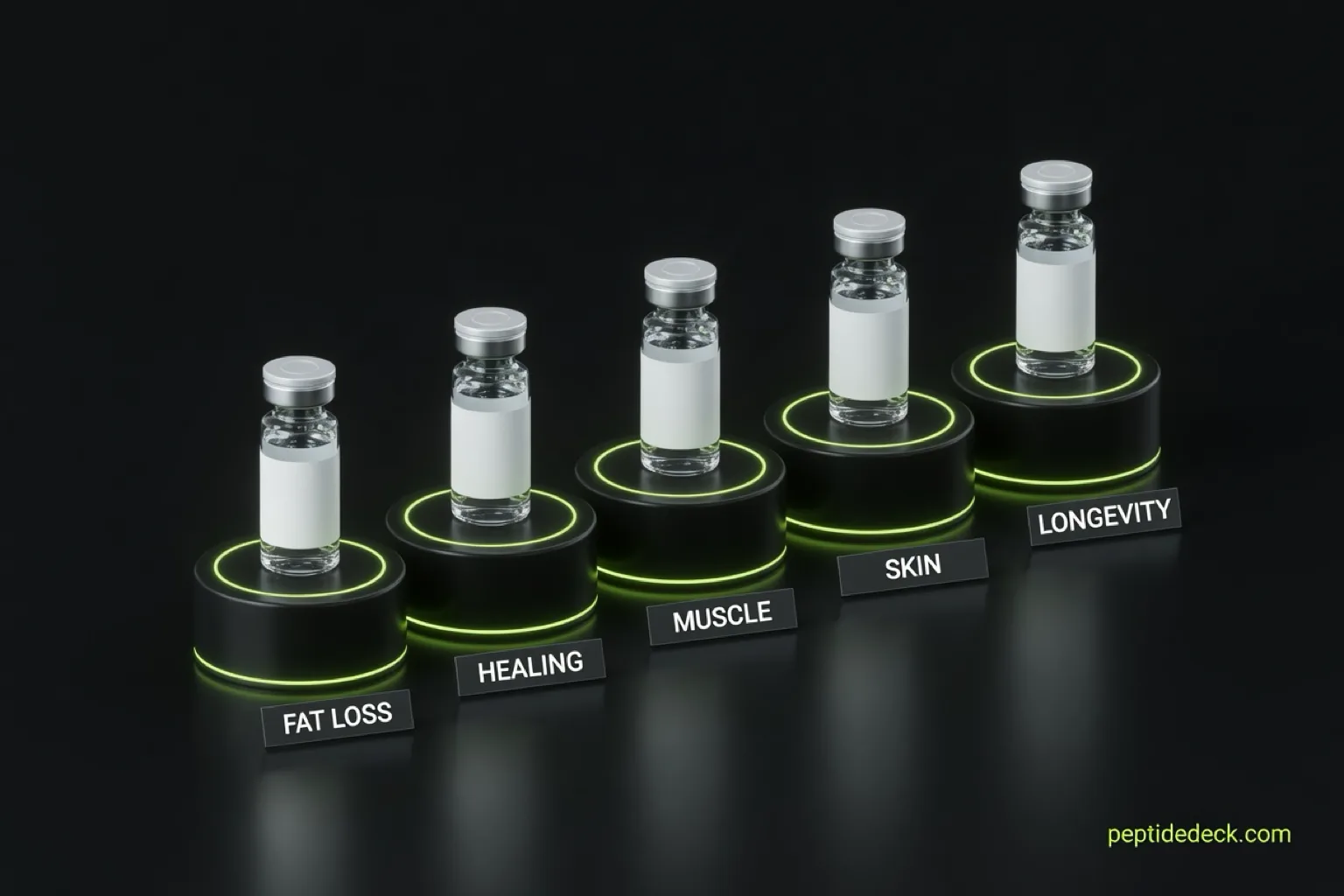
Your goal picks the peptide. Here is the short version for each, with a link to the full ranking.
Fat loss
Tirzepatide first, semaglutide second, retatrutide as the strongest option that is not yet approved. If you also want to hold on to muscle while the weight comes off, the full best peptides for weight loss ranking compares all seven options, including cheaper ones.
Healing and injuries
BPC-157, alone or with TB-500. Grade C evidence, but nothing else on the market targets tendons and ligaments this directly. Our best healing peptides guide ranks the options by injury type.
Muscle and growth hormone
Tesamorelin has the best trial, CJC-1295 with ipamorelin is the most used, and sermorelin is the older option doctors still prescribe. See our best growth hormone peptides comparison before you pick one.
Skin
GHK-Cu as a cream or serum. It is the one skin peptide with controlled human data. The best peptides for skin list covers the other six worth knowing.
Longevity and energy
MOTS-c, Epitalon and SS-31 lead this group on interest, not on proof. If you are drawn to them, read the evidence grades in our best anti-aging peptides ranking first.
Focus and mood
Semax and Selank, both developed and used in Russia, with few Western trials. The best nootropic peptides guide explains how people use them.
Libido
PT-141 is the only one with phase 3 data. The best peptides for sexual health guide compares it with kisspeptin and Melanotan II.
Most Popular Peptides vs the Ones That Work
These are two different lists. They overlap less than you might think.
Popularity comes from podcasts, gym talk and vendor marketing. Evidence comes from trials. The table below puts the most popular peptides next to their grade, so you can see where the talk runs ahead of the data.
Three "peptides" that are not peptides: MK-677 (ibutamoren) is a small molecule taken by mouth. NAD+ is a coenzyme. 5-Amino-1MQ is a small molecule too. All three sit on peptide vendor shelves and on most "top peptides" lists, but none is a chain of amino acids. That does not make them useless. It does mean peptide rules (injection, reconstitution, fridge storage) do not always apply.
Want the full catalog of names and uses beyond this top 10? Our list of peptides and their uses covers more than 100.
What Is the Strongest Peptide?
For measurable effect in humans, retatrutide.
No other peptide has produced 24% average weight loss in under a year. But "strongest" works both ways. Stronger effects usually come with stronger side effects, and the most powerful options are the ones that most need a doctor watching your heart rate, blood sugar and dose steps.
For healing, "strongest" is a marketing word. Nobody has run a head-to-head trial of BPC-157 against TB-500 in people, so any ranking of their strength comes from studies in animals or personal stories.
How to Get These Peptides in 2026
You have three routes. Which one fits depends on the peptide.
Prescription: the approved drugs
Tirzepatide, semaglutide, tesamorelin and PT-141 are prescription drugs in the US. A doctor or a telehealth service can prescribe the brand version, and some also offer compounded versions at a lower monthly price. This is the route with pharmacy-grade quality control.
Compounding pharmacy: what the July 2026 vote means
On July 23 and 24, 2026, the FDA's Pharmacy Compounding Advisory Committee reviewed seven peptides. It voted in favor of six (BPC-157, TB-500, KPV, MOTS-c, Epitalon and Semax) and against DSIP. The votes are advice, not law. Until the FDA acts, pharmacies cannot legally compound them just because of the vote. Our full write-up of the FDA peptide vote tracks each tally and what happens next.
Online vendors: the route most people use
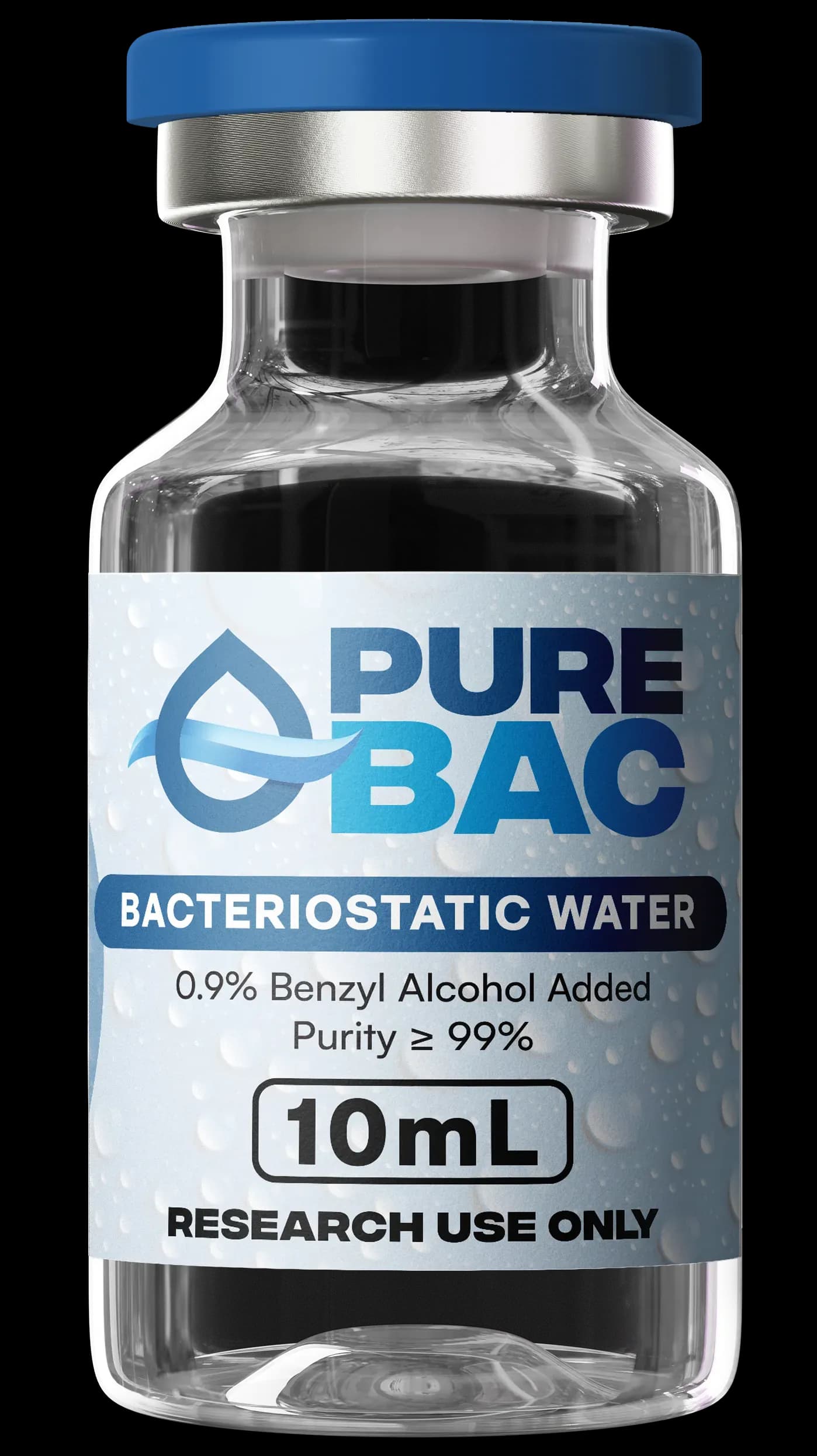
For BPC-157, TB-500, CJC-1295, retatrutide and most others, the realistic route today is an online vendor vial. Quality varies a lot between sellers. Before you pay, check that the vendor posts a batch-specific certificate of analysis (COA) from an independent lab, that the purity is 98% or higher, and that the batch number on the COA matches your vial.
Price is part of the decision too. If you are comparing peptides for sale across stores, a 20 mg BPC-157 and TB-500 blend listed at $149.99 at Ascension in September 2026 and was on sale for $90. That is the kind of number worth checking against two or three other shops. Our list of the best peptide vendors shows which sellers pass the COA test.
One rule has no exceptions: a vendor vial has no pharmacy check between the lab and you. Start at a low dose, use a proper peptide calculator to work out your syringe units, and tell your doctor what you are taking.
Which Peptide Should You Start With?
Start with your biggest problem, not the trendiest name.
- Weight is the problem: talk to a doctor about tirzepatide or semaglutide. The evidence gap between these and everything else is enormous.
- An injury will not heal: BPC-157, possibly with TB-500, is the common choice. Go in knowing the human data is thin, and set a clear date to judge whether it helped.
- Your skin is the goal: a GHK-Cu cream costs little, needs no needle and has the best skin data.
- You want better sleep, recovery and body composition: CJC-1295 with ipamorelin is popular, but understand that it raises hormone levels without proven outcome benefits.
One peptide at a time is the smart way in. If you start three at once and feel better, you will never know which one did it. When you are ready to combine, our guide to the best peptide stacks shows which pairings make sense.
Frequently Asked Questions
Medical Disclaimer: This article is for informational purposes only and does not constitute medical advice. Several peptides discussed here are prescription drugs, and others have not been approved for any use in humans. Doses, side effects and suitability vary from person to person. Talk to your doctor before starting, stopping or combining any peptide or medication.