
Sexual dysfunction affects millions worldwide—from low libido to erectile dysfunction to arousal disorders. While traditional treatments target blood flow or hormones, a newer class of compounds works through the brain's desire pathways. Melanocortin peptides represent this paradigm shift, working centrally on the nervous system rather than peripherally on genitalia.
This guide examines the science behind peptides researched for sexual health, including the only FDA-approved option and compounds still in research. We'll cover mechanisms, evidence, and what the research actually shows.
🔑 Key Takeaways
- PT-141 (bremelanotide) is FDA-approved for hypoactive sexual desire disorder in premenopausal women
- Melanocortin peptides work through brain pathways (MC3R/MC4R receptors), not blood flow
- Effects are psychological arousal, not mechanical—different from PDE5 inhibitors
- Melanotan II has sexual side effects but isn't approved for this use
- Research continues on newer, more targeted melanocortin compounds
How Melanocortin Peptides Affect Sexual Function
Unlike Viagra and similar drugs that increase blood flow to genitalia, melanocortin peptides work through the central nervous system. They activate melanocortin receptors (specifically MC3R and MC4R) in brain regions involved in sexual arousal and desire—including the hypothalamus and limbic system.
This represents a fundamentally different approach: rather than facilitating the physical mechanics of sex, these peptides affect the wanting of sex. For people whose sexual dysfunction stems from low desire rather than physical limitations, this mechanism may be more relevant.
Key Mechanisms
- Central activation: Crosses into CNS and activates hypothalamic pathways
- Dopamine interaction: Enhances dopaminergic signaling in reward circuits
- Oxytocin release: May increase oxytocin in sexually relevant brain areas
- Peripheral effects: Some genital blood flow effects, though secondary to CNS action
PT-141 (Bremelanotide) – The FDA-Approved Option
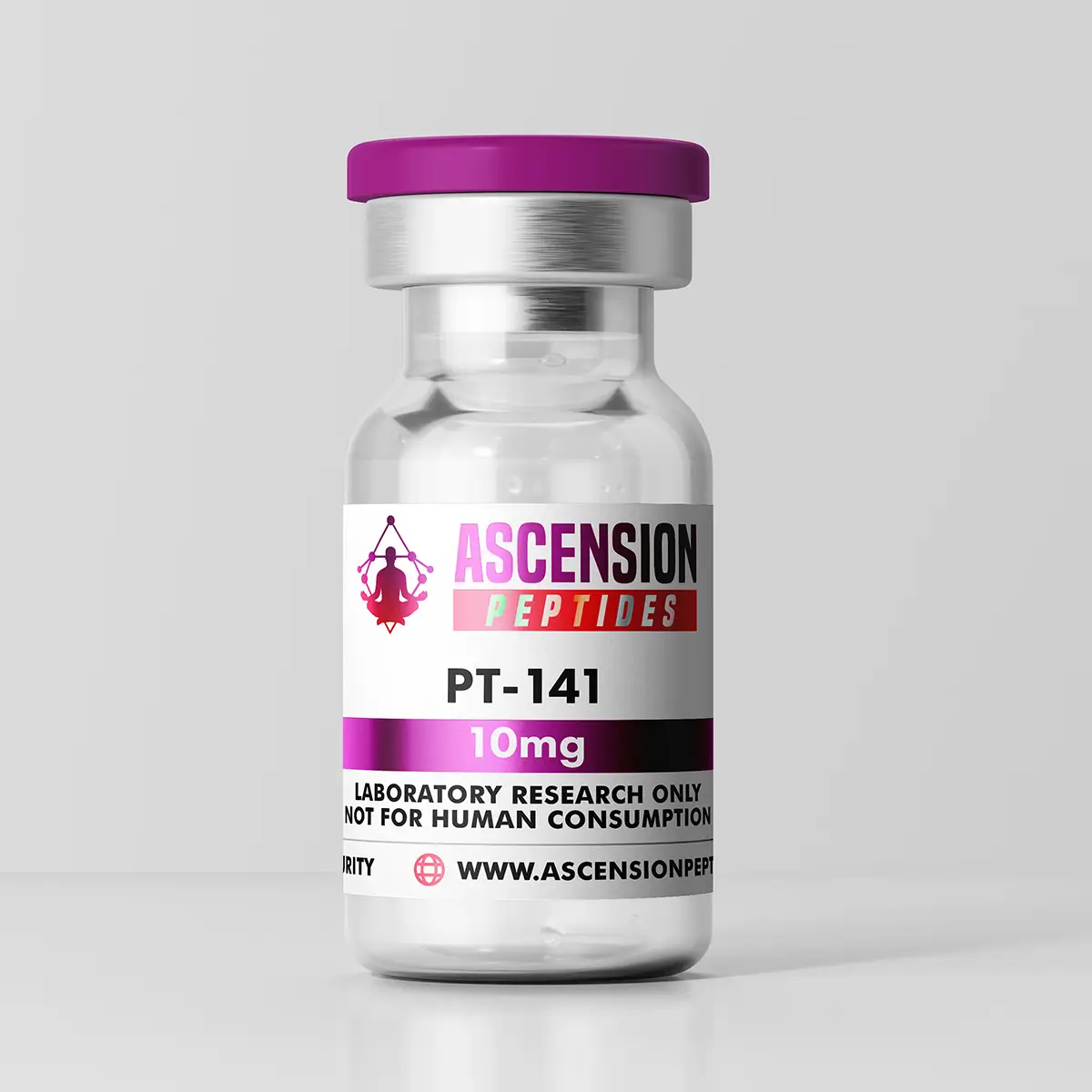
PT-141 (bremelanotide) is a synthetic melanocortin peptide and the only compound in this class with FDA approval for sexual dysfunction. Sold under the brand name Vyleesi, it was approved in 2019 for hypoactive sexual desire disorder (HSDD) in premenopausal women.
How PT-141 Works
PT-141 is a cyclic heptapeptide that activates melanocortin-4 receptors (MC4R) and to a lesser extent MC3R in the central nervous system. Unlike its predecessor Melanotan II, PT-141 was specifically designed to maximize sexual effects while minimizing tanning and other side effects.
The peptide works by:
- Activating MC4R receptors in the hypothalamus and limbic system
- Enhancing dopaminergic neurotransmission in brain reward circuits
- Potentially increasing oxytocin release in sexually relevant areas
- Creating central arousal that then manifests as genital response
Clinical Evidence
PT-141's approval was based on two Phase 3 trials (RECONNECT studies) involving over 1,200 premenopausal women with HSDD:
Side Effects
The most common side effect is nausea, affecting approximately 40% of users in trials. Other reported effects include:
- Flushing (20%)
- Injection site reactions (13%)
- Headache (11%)
- Transient blood pressure increase
- Skin hyperpigmentation with repeated use
Melanotan II – The Controversial Predecessor
Melanotan II (MT-II) is the precursor compound from which PT-141 was derived. Originally developed for sunless tanning, researchers noticed significant pro-sexual effects during trials. It remains unapproved but widely circulated in the research and bodybuilding communities.
How Melanotan II Differs from PT-141
While both are melanocortin agonists, Melanotan II is less selective:
Research Findings
Early clinical studies on Melanotan II showed significant erectile responses in men with psychogenic erectile dysfunction. In a double-blind study, MT-II induced erections in 17 of 20 men versus 3 of 20 on placebo. However, the compound was never developed for approval due to its broad receptor activity and unpredictable effects.
Kisspeptin – The Upstream Regulator
Kisspeptin (also called metastin) takes a different approach. Rather than directly activating melanocortin receptors, it works upstream on the hypothalamic-pituitary-gonadal axis—the hormonal cascade controlling reproduction and sexual function.
Mechanism of Action
Kisspeptin activates the KISS1R receptor (GPR54) on GnRH neurons in the hypothalamus. This triggers gonadotropin-releasing hormone (GnRH) release, which subsequently stimulates LH and FSH from the pituitary. The result is increased testosterone and estrogen production.
Beyond hormonal effects, research shows kisspeptin directly affects brain circuits involved in:
- Sexual arousal processing
- Attraction and bonding behaviors
- Emotional processing of sexual stimuli
- Mood regulation
Research Status
Kisspeptin research for sexual dysfunction is earlier stage than PT-141. Key findings include:
- Kisspeptin-54 infusion increased limbic brain activity in response to sexual images in men (Comninos et al., 2017)
- Enhanced attraction-related brain activity in healthy men
- Potential applications in hypogonadotropic hypogonadism
- Being studied for desire disorders in both sexes
Other Peptides With Sexual Health Implications
Oxytocin
Oxytocin, while not primarily a sexual health peptide, plays important roles in bonding, arousal, and orgasm. Research has explored intranasal oxytocin for sexual dysfunction, particularly in the context of relationship intimacy. Results have been mixed, suggesting oxytocin may be more relevant for emotional/intimacy aspects of sexuality than physical arousal.
GnRH Analogs
Gonadotropin-releasing hormone analogs like gonadorelin stimulate the pituitary to release LH and FSH, potentially raising testosterone. These are more relevant for hormone-based sexual dysfunction (low testosterone) than desire disorders.
Growth Hormone Secretagogues
Peptides like ipamorelin and CJC-1295 that increase growth hormone may indirectly support sexual health by improving overall vitality, body composition, and wellbeing. However, they don't directly target sexual pathways.
Comparing Sexual Health Peptides
Who Might Benefit?
Based on the mechanisms and evidence, melanocortin peptides like PT-141 may be most relevant for:
Desire-Based Dysfunction
Low libido not explained by hormones, relationship issues, or medications
PDE5 Non-Responders
When blood flow isn't the issue—the problem is wanting, not performing
HSDD Diagnosis
PT-141 is specifically indicated for hypoactive sexual desire disorder
Related comparisons: PT-141 vs Melanotan 2 and kisspeptin vs PT-141.
Frequently Asked Questions
The Future of Sexual Health Peptides
Research continues on more selective and effective melanocortin compounds. Areas of active development include:
- Oral formulations: PT-141 currently requires subcutaneous injection; oral versions would improve convenience
- More selective MC4R agonists: To maximize sexual effects while minimizing cardiovascular and pigmentation concerns
- Combination approaches: Melanocortin peptides combined with PDE5 inhibitors for comprehensive dysfunction
- Kisspeptin development: For desire disorders with hormonal components
The Bigger Picture
Sexual dysfunction is rarely purely physical or purely psychological—it typically involves both. Melanocortin peptides represent an important advance because they target the psychological/desire component that traditional medications miss. However, they're not magic bullets. Comprehensive treatment often requires addressing relationship factors, mental health, hormones, and physical health alongside any pharmacological intervention.
Conclusion
Peptides offer a genuinely novel approach to sexual health by targeting brain pathways rather than peripheral blood flow. PT-141 stands alone as the FDA-approved option, specifically for hypoactive sexual desire disorder in premenopausal women. Melanotan II remains unapproved due to safety concerns, while kisspeptin represents a promising but early-stage alternative.
For those considering peptide options for sexual health, the key distinction is whether the dysfunction involves desire (potentially melanocortin-responsive) or physical function (better addressed with PDE5 inhibitors or other treatments). As always, proper medical evaluation and supervised treatment are essential—these are powerful compounds affecting complex neurological systems.
For general information on peptide use, see our guides on what are peptides, peptide reconstitution, and peptide side effects.