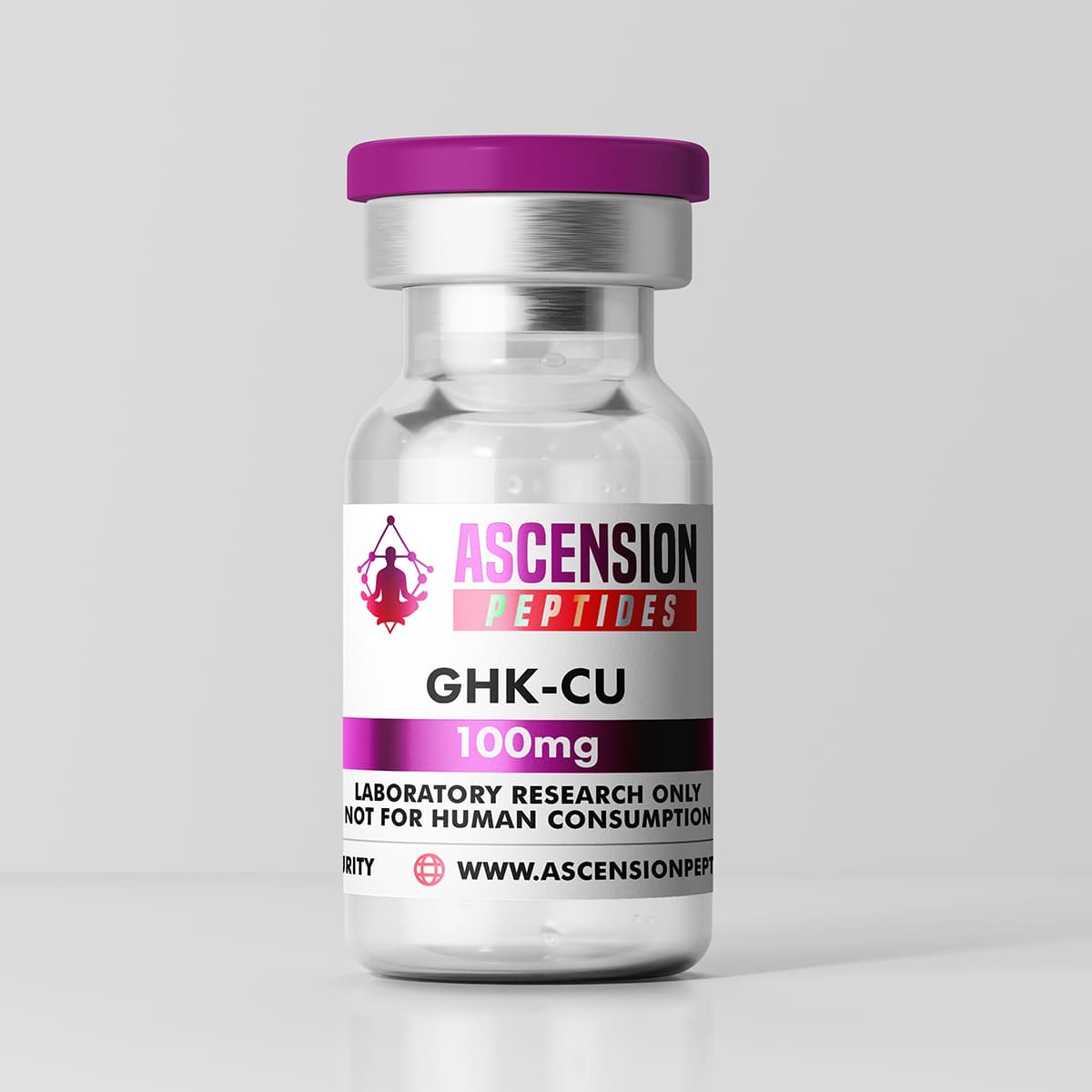
The short version: GHK-Cu is #1 — 40+ years of human data, collagen production, anti-inflammatory, wound healing. If you only ever try one skin peptide, that's the one. Everything else on this list targets a different angle of the same problem.
Skin aging isn't one thing. It's collagen breakdown, chronic inflammation, cellular senescence, barrier dysfunction, and cortisol damage all happening at once. So the best peptide depends on your specific issue — acne vs. wrinkles vs. scars vs. dullness. This guide lays out all seven, what they actually do, and how to pick.
🔑 At a Glance
- GHK-Cu — collagen, elastin, inflammation, wound healing. The flagship.
- BPC-157 — gut-skin axis, chronic acne/rosacea, systemic inflammation
- TB-500 — scar tissue reduction, structural repair
- GLOW blend — GHK-Cu + BPC-157 + TB-500 in one vial. Easiest starting point.
- Epithalon — telomere-level anti-aging, cell renewal, better sleep → better skin
- Selank — cortisol reduction → less stress-driven aging and acne
- AHK-Cu — GHK-Cu's sibling, strong anecdotal evidence for scalp and barrier
#1 GHK-Cu — The Flagship Skin Peptide
GHK-Cu (glycyl-L-histidyl-L-lysine copper) was first isolated from human plasma in the early 1970s by Loren Pickart, who noticed it had an unusual ability to stimulate liver regeneration. Decades of follow-up research revealed it's one of the most biologically active tripeptides in the body — and its effects on skin are particularly well-documented compared to almost anything else in the peptide space.
The mechanism is multi-pronged. GHK-Cu directly stimulates fibroblast activity, which means more collagen and elastin production. It also upregulates matrix metalloproteinase activity in a way that clears damaged collagen while simultaneously promoting new synthesis — basically, it's a renovation contractor for your extracellular matrix, tearing out the old and building fresh. On top of that, it has documented anti-inflammatory activity (suppresses TGF-β1, downregulates pro-inflammatory genes) and promotes wound healing through enhanced angiogenesis.
Collagen & Elastin Synthesis
Directly activates fibroblasts to produce type I and III collagen. Clinical studies show significant improvement in skin elasticity and firmness within 8–12 weeks.
Anti-Inflammatory Action
Suppresses TGF-β1 and a range of pro-inflammatory cytokines. This is why anecdotal reports of rosacea and acne improvement are common.
Wound Healing & Repair
Accelerates wound closure, promotes angiogenesis, and helps resolve post-inflammatory hyperpigmentation. See the before and after documentation.
Gene Expression Remodeling
GHK-Cu modulates hundreds of genes involved in aging, inflammation, and repair. It's genuinely unusual in the breadth of its biological effects.
GHK-Cu Dosage for Skin
Injectable dosing runs from 300mcg up to 2mg per day, typically subcutaneously. Most people start at 500mcg daily and assess tolerance. Higher doses (1–2mg) are used in more intensive protocols, but the evidence for incremental benefit above 1mg is thinner. Topical GHK-Cu exists but has much lower bioavailability — injectable delivers it systemically, which is why research users prefer it.
See the complete GHK-Cu injection guide for reconstitution, injection sites, and timing details.
#2 BPC-157 — Healing from the Inside Out
BPC-157 is primarily known as a healing peptide — tendons, gut lining, muscle — and that framing undersells what it does for skin. The gut-skin axis is real. Chronic gut inflammation drives systemic inflammation that shows up as acne, rosacea, eczema flares, and accelerated skin aging. BPC-157's well-documented ability to repair gut barrier integrity has indirect but meaningful skin consequences.
Beyond the gut angle, BPC-157 directly promotes wound healing through its effects on growth hormone receptors and nitric oxide synthesis. It accelerates angiogenesis at wound sites, reduces inflammation in damaged tissue, and has shown effects on collagen organization in preclinical studies. The data isn't as deep as GHK-Cu's specifically for cosmetic skin use — but for people dealing with inflammatory skin conditions, it's often the more relevant choice.
Dosing is typically 250–500mcg per day, either subcutaneous or oral (yes, BPC-157 is orally active, which is unusual for a peptide). For skin-specific benefits, injectable is preferred; for gut-skin axis effects, oral works well. Cycle lengths of 4–12 weeks are most commonly reported. Check the full BPC-157 dosage guide for detailed protocols.
#3 Thymosin Beta-4 (TB-500) — Collagen Architecture & Scar Reduction
TB-500 is the synthetic fragment of Thymosin Beta-4, a naturally occurring peptide involved in tissue repair and regeneration. Its skin-relevant effects come primarily from two mechanisms: it promotes collagen synthesis (specifically type I and III, the structural collagens), and it's been shown to reduce scar tissue formation by modulating the TGF-β pathway.
That second part is underappreciated. Scar formation is partly a TGF-β-driven process, and TB-500 appears to shift tissue repair toward regeneration rather than fibrosis. In preclinical models, TB-500-treated wounds healed with less scar tissue and better structural organization. Anecdotally, people using TB-500 report improved healing of skin injuries and reduced appearance of existing scars over multi-month protocols.
TB-500 also promotes stem cell migration and differentiation at wound sites — a mechanism that partly explains its reputation for unusually clean tissue repair. Dosing for skin purposes typically mirrors injury-recovery protocols: a loading phase of 2–2.5mg twice weekly for 4–6 weeks, then 2–2.5mg once weekly for maintenance.
#4 GLOW Blend — The All-in-One Skin Stack
If you'd rather not manage three separate vials, Ascension's GLOW blend puts the three most established skin peptides in a single formulation: GHK-Cu (50mg) + BPC-157 (10mg) + TB-500 (10mg). That's the trifecta of collagen stimulation, anti-inflammatory repair, and scar reduction — all combined.
The practical case for GLOW is strong. Managing multiple peptides means multiple reconstitutions, separate dosing schedules, separate vials to track. GLOW simplifies that to a single injection at a pre-calibrated ratio. The GHK-Cu dose is notably higher than the others, which makes sense — it's the primary driver for cosmetic skin improvement, and the BPC-157/TB-500 are there for support and synergy.
Simplified Protocol
One vial replaces three. Ideal for beginners who want comprehensive skin coverage without managing complex stacks.
Synergistic Mechanisms
GHK-Cu builds new collagen while BPC-157 reduces inflammation and TB-500 minimizes scarring. Each peptide supports the others' effects.
Protocol with GLOW: 0.5–1mg total per injection, 5 days on / 2 days off, or daily low-dose. Most users run 8–12 week cycles. Also worth noting — if you're reading about the best peptides for hair growth, GHK-Cu appears there too. GLOW users often report hair benefits alongside skin improvements, since the scalp is skin.
#5 Epithalon — Cellular Anti-Aging at the Telomere Level
Epithalon (also spelled Epitalon) works differently from everything else on this list. Rather than directly stimulating collagen or reducing inflammation, it acts on telomerase — the enzyme that maintains telomere length. Telomere shortening is one of the hallmarks of cellular aging, and Epithalon has demonstrated the ability to activate telomerase and extend telomere length in human cell cultures and animal models.
For skin, this translates to improved cell renewal rates. As cells age, they divide more slowly and produce fewer structural proteins. Epithalon-treated cells in studies showed extended replicative lifespan — they kept cycling longer before reaching senescence. The clinical data is mostly from Russian research groups (Epithalon was developed at the St. Petersburg Institute of Bioregulation), and while not yet replicated in large Western trials, the mechanistic logic is sound.
Epithalon also regulates melatonin production via the pineal gland, which has downstream anti-aging effects beyond skin — but sleep quality and circadian rhythm normalization are known to affect skin repair (most cellular regeneration happens during sleep). So there's a double mechanism here: direct telomerase activation + improved regeneration-promoting sleep.
Dosing for Epithalon is typically a pulsed protocol: 5–10mg per day for 10–20 consecutive days, then a long break (months). Some researchers use twice-yearly cycles. See the full Epithalon review and protocol guide for cycle design.
#6 Selank — Stress Is Aging Your Skin
This one gets overlooked because its primary categorization is nootropic / anxiolytic — but the cortisol → skin aging pathway is real and clinically documented. Chronic elevated cortisol degrades collagen (cortisol activates matrix metalloproteinases that break down the extracellular matrix), impairs skin barrier function, worsens inflammatory skin conditions like acne and rosacea, and accelerates visible aging.
Selank is a synthetic analog of tuftsin that primarily works by reducing anxiety and modulating the stress response — it blunts cortisol reactivity without sedation. Anecdotal reports from long-term Selank users consistently mention skin improvements they didn't expect: clearer skin, reduced flushing, less reactive skin. These aren't direct effects; they're downstream consequences of lower chronic stress hormone levels.
If you're dealing with stress-driven acne breakouts, cortisol-pattern skin aging (thin skin, poor wound healing, persistent redness), or a skin condition that reliably worsens during high-stress periods — Selank is an interesting addition to a skin-focused stack. Dosing is typically 250–500mcg intranasally, 1–2x per day, used as needed or in 2–4 week cycles.
#7 AHK-Cu — The Underrated Copper Peptide
AHK-Cu (alanine-histidine-lysine copper) is GHK-Cu's structural sibling. Same copper chelation mechanism, different peptide backbone, somewhat different tissue distribution. The research base is much thinner — most of what's known comes from in vitro studies and a handful of small trials — but the anecdotal reports from people who've used both are interesting. AHK-Cu is particularly noted for scalp penetration and hair follicle effects, and users report strong skin-firming effects at lower doses than GHK-Cu typically requires.
The mechanism overlaps with GHK-Cu: copper-peptide complexes activate collagen synthesis, modulate metalloproteinase activity, and have anti-inflammatory properties. AHK-Cu may have better affinity for certain tissue types (particularly dermis and follicular tissue), though the evidence for this specificity is preliminary. It's typically used at 200–500mcg/day, similar to GHK-Cu, often by people who want to rotate between the two copper peptides rather than using GHK-Cu continuously.
Full Comparison: All 7 Skin Peptides
How to Choose the Right Peptide for Your Skin Goal
Not every skin problem calls for the same peptide. Here's a concern-based framework:
A few practical notes on this selector. BPC-157 for acne works best if you have gut issues alongside skin problems — if your skin flares up after eating certain foods or during gut-stress periods, that's a gut-skin axis signal. Purely hormonal or topical acne responds better to GHK-Cu's anti-inflammatory action directly.
Epithalon and Selank don't have to be your primary skin peptides — they layer on top of a foundation of GHK-Cu or GLOW. Think of them as amplifiers or targeted additions, not standalone solutions for structural skin aging.
The Best Skin Peptide Protocol for Beginners
If you're new to peptides for skin, keep it simple. One peptide, clear goals, 8–12 weeks to assess. Here's what that looks like in practice:
Start with GHK-Cu alone (weeks 1–8)
500mcg subcutaneous injection daily, same time each day. Photograph your skin every two weeks in consistent lighting — you'll miss gradual changes without documentation. Most people report noticeable improvements in texture and firmness by week 6–8.
Assess and decide (week 8)
Review your photos. If you're satisfied with GHK-Cu results, you can either continue the current protocol or take a 4-week break before restarting. If you want more — particularly if inflammation or scarring are still issues — consider adding BPC-157 or switching to GLOW.
Layer in secondary peptides (weeks 9+)
Add BPC-157 if gut-skin inflammation is a factor. Add Epithalon as a 10-day pulse for cellular anti-aging. Add Selank if stress is clearly a skin trigger for you. Don't add everything at once — introduce one new peptide per cycle so you can track what's doing what.
Or: skip the complexity and use GLOW
If managing multiple peptides sounds like too much, GLOW blend gives you GHK-Cu + BPC-157 + TB-500 pre-combined at research-validated ratios. Simpler to manage, and covers the three main skin mechanisms in one injection.
💡 Beginner Protocol Summary
Minimal: GHK-Cu 500mcg/day SC × 8–12 weeks → break 4 weeks → reassess
All-in-one: GLOW blend 0.5–1mg/day SC × 8–12 weeks
Long-game add-on: Epithalon 5mg/day × 10 days, twice yearly
Stress component: Selank 250–500mcg intranasal as needed during high-stress periods