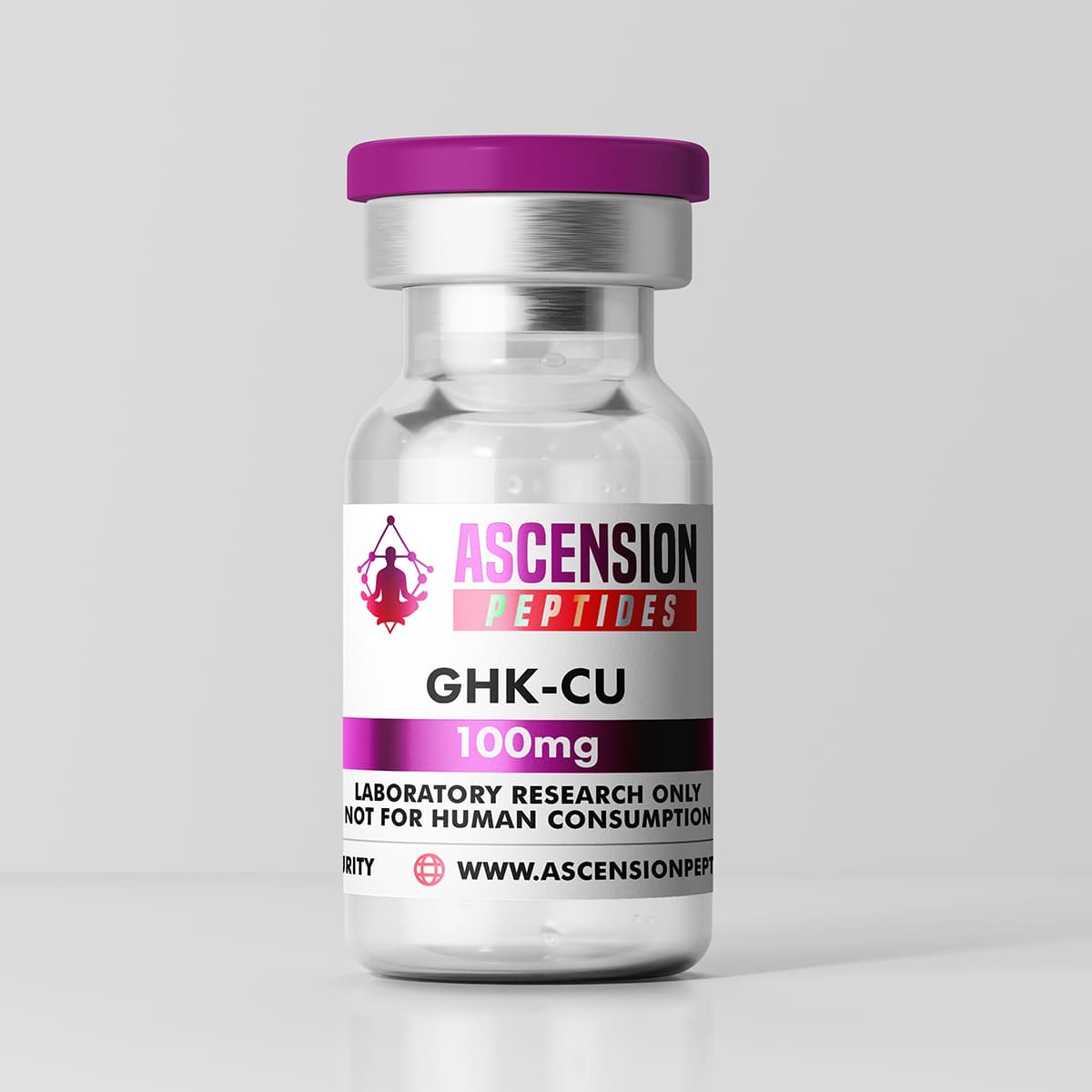
Key Takeaways
- GHK-Cu is always subcutaneous (under the skin) — never intramuscular
- Best injection sites: abdomen, outer thigh, upper arm
- Needle: 29-31 gauge, 0.5 inch insulin syringe
- Reconstitute with 2-3mL BAC water for easy dosing
- Typical dose: 1-2mg per injection, 1-2x daily
- Rotate injection sites every dose
- Store reconstituted vial refrigerated, use within 28 days
- Need help with dosing math? Use the reconstitution calculator
If you've got a vial of GHK-Cu and you're not sure exactly how to use it, this guide walks you through everything — from reconstitution to the actual injection, site selection, dosing protocols, and what to expect in the weeks after you start.
You will need a GHK-Cu vial and bacteriostatic water before starting; Ascension carries both, so they arrive together.
What You Need Before You Inject
Get everything laid out before you start. Having it all ready on a clean surface makes the process straightforward.
- GHK-Cu vial (100mg is the typical size)
- Bacteriostatic water (BAC water) — NOT saline or plain sterile water. BAC water contains 0.9% benzyl alcohol which prevents bacterial growth and lets you use the vial over multiple doses
- U-100 insulin syringes — 29-31 gauge, 0.5 inch needle. These are your injection syringes. Some people also use a slightly larger needle (18-21g) to draw from the vial, then swap to the fine insulin needle to inject
- Alcohol swabs
- Sharps container — never throw used needles in regular trash
- Clean flat surface — a paper towel works fine
How to Reconstitute GHK-Cu
Reconstitution is just mixing the dry powder with BAC water. Go slow and be gentle.
- Let the vial sit at room temperature for about 15 minutes before you start
- Wipe the rubber stopper with an alcohol swab and let it dry for 10 seconds
- Draw 2mL of BAC water into a syringe
- Insert the needle at an angle through the stopper and slowly inject the water down the inside wall of the vial — not directly onto the powder
- Gently swirl the vial to mix. Never shake it. It takes 1-3 minutes to fully dissolve
- The solution should be clear to very pale blue-green — the copper color is completely normal
- Label the vial with today's date, the concentration (if you used 2mL: 100mg/2mL = 50mg/mL), and the 28-day expiry date
- Refrigerate immediately
Use this table to figure out your IU markings based on how much BAC water you used:
Not sure about your numbers? The reconstitution calculator does the math for you.
GHK-Cu Injection Sites
GHK-Cu is always subcutaneous — meaning you're injecting into the fat layer just beneath your skin, not into muscle. The best sites are places where you have a bit of pinchable subcutaneous fat.
- Abdomen: Stay at least 2 inches away from your navel. Pinch 1-2 inches of skin. This is the most popular site — easy to reach, consistent absorption, and plenty of SubQ fat for most people
- Outer thigh: The middle third of your outer thigh. A solid alternative when rotating away from the abdomen
- Upper arm (tricep area): Harder to self-inject, but usable. Good when you need a third rotation site
Rotate every injection — never use the exact same spot twice in a row. Injecting the same area repeatedly causes local irritation and lumpiness over time.
Avoid: Areas with active skin irritation, scar tissue, or visible veins.
Step-by-Step Injection Technique
- Wash your hands thoroughly — 20 seconds with soap and water
- Wipe the vial stopper with a fresh alcohol swab and let it dry
- Draw your dose into a U-100 insulin syringe, checking the IU markings against your concentration
- Clean your injection site with an alcohol swab — let it dry for 10 seconds before injecting
- Pinch 1-2 inches of skin between your thumb and forefinger
- Insert the needle at 45° for leaner areas, or 90° if there's more subcutaneous fat
- Slowly depress the plunger over 5-10 seconds
- Remove the needle and apply light pressure with a cotton swab — don't rub
- Dispose of the needle immediately in your sharps container
GHK-Cu Dosage Protocol
Here are the standard protocols depending on your goal:
- Skin & anti-aging focus: 1-2mg per injection, once daily, 8-12 weeks
- Wound healing / recovery: 2mg per injection, twice daily, 4-8 weeks
- Hair growth protocol: 1mg daily injection + topical GHK-Cu applied directly to the scalp
- Maintenance after a cycle: 1mg 3x per week
Cycle length: 8-12 weeks on, 4 weeks off. After a break, many people drop to maintenance dosing rather than stopping entirely.
What to Expect After Injecting
GHK-Cu works through collagen remodeling — a slow, structural process. Don't expect to wake up looking different after your first injection.
- Immediately after: Mild redness or a small bump at the injection site is normal. It fades within 1-2 hours. Slight warmth at the site is also normal
- First 2-3 weeks: Subtle changes — skin feels more hydrated, small cuts or scrapes seem to heal a bit faster than usual
- Weeks 4-6: Visible skin improvements start. Texture becomes more even, fine lines look softer
- Full results: Most people see the clearest results at 8-12 weeks into a consistent protocol

Storage & Shelf Life
- Reconstituted vial: Refrigerate at 2-8°C. Use within 28 days
- Never freeze reconstituted peptide — ice crystals physically destroy the peptide structure
- Keep the vial away from light
- Dry lyophilized powder (unreconstituted): Refrigerate. Stable for 12-24 months stored properly
Common Mistakes
- ❌ Shaking the vial instead of swirling
- ❌ Injecting the BAC water directly onto the powder instead of down the wall
- ❌ Using saline or plain sterile water instead of BAC water — you'll burn through the vial faster and risk contamination
- ❌ Not rotating injection sites — causes lumpiness and reduces absorption efficiency over time
- ❌ Expecting visible results in the first week
- ❌ Freezing the reconstituted vial
Frequently Asked Questions
The information in this article is for educational purposes only and does not constitute medical advice. Always consult a healthcare professional before starting any new supplement or compound. Results vary by individual.