
Natural HRT is one of the most searched and most confusing phrases in menopause care, because it means two completely different things. For some people it means plant-derived or bioidentical hormones sold as a gentler version of the real thing. For others it means no hormones at all: herbs, foods, lifestyle changes, and non-hormonal medicines. The evidence for those two paths could not be more different, and lumping them together is how a lot of misleading marketing gets its foothold. This guide is honest about all of it. Most supplement evidence is weak, a handful of approaches genuinely help, and a modern non-hormonal prescription now exists that almost no popular article covers. Below we grade every option so you can see what works, what does not, and what to skip.
Natural HRT at a glance:
| Quick fact | What it means |
|---|---|
| Two meanings | "Natural HRT" refers either to bioidentical hormones or to non-hormonal supplements and lifestyle measures [1][7] |
| Insufficient evidence | The Cochrane verdict on black cohosh for menopause symptoms [3] |
| No proven overall benefit | The Cochrane verdict on phytoestrogen supplements for hot flashes [4] |
| First of its kind | Fezolinetant, a non-hormonal prescription for hot flashes, approved in 2023 [2][6] |
🔑 Key Takeaways
- "Natural HRT" usually means one of two things. Either plant-derived or bioidentical hormones, or non-hormonal supplements, foods, and lifestyle changes; the evidence for each is very different [1][7].
- Major menopause societies do not recommend most herbal supplements. The evidence for black cohosh, red clover, and similar products is weak, mixed, or insufficient [2][3][4].
- The strongest non-hormonal evidence is not a herb. Cognitive behavioral therapy, clinical hypnosis, weight management, and one new non-hormonal prescription have the best evidence for hot flashes [2].
- Supplements are not automatically safe. They are loosely regulated, quality varies, and some (like St John's wort) can interfere with prescription medicines [1].
- Regulated HRT is still the most effective option. Nothing else matches it for hot flashes, night sweats, and vaginal symptoms, which is why the "when to switch" conversation matters [1][2].
What Is Natural HRT, Exactly?
Search terms such as natural HRT, hrt natural, and natural HRT therapy all point to the same underlying question: is there a gentler, more "natural" way to handle menopause than standard hormone therapy? The honest answer starts with untangling two meanings, because the word "natural" is doing a lot of hidden work.
The first meaning is hormonal: bioidentical or plant-derived hormones marketed as natural. The second is non-hormonal: herbs, phytoestrogen-rich foods, lifestyle measures, and prescription medicines that are not hormones. Most of this article is about that second group, because that is where the real, everyday questions (and most of the marketing hype) live.
Bioidentical and body-identical hormones
Here is the part that trips people up. Some bioidentical hormones are regulated and evidence-based: these FDA-approved, body-identical products are simply regular HRT that happens to be chemically identical to the hormones your body makes [7]. Custom-compounded "bioidentical" hormones are a different story. These are mixed to order by a pharmacy, are not standardized or regulated the way approved medicines are, and are not recommended by major bodies such as ACOG or the NHS because their dosing, purity, and safety are not well established [1][7][8]. Calling them "natural" does not make them safer or better tested.
We keep this deliberately short here because it is a big topic of its own. For pellets, compounding, saliva testing, and the full safety debate, see our guide to bioidentical HRT.
Non-hormonal natural options
The rest of this guide focuses on non-hormonal natural options: supplements and herbs, phytoestrogen foods, mind-body therapies and lifestyle changes, and non-hormonal prescriptions. These are what most people mean when they ask for a natural route that avoids taking hormones altogether. We grade each one by how strong the evidence actually is, not by how heavily it is marketed.
HRT Alternatives at a Glance: The Comparison Table
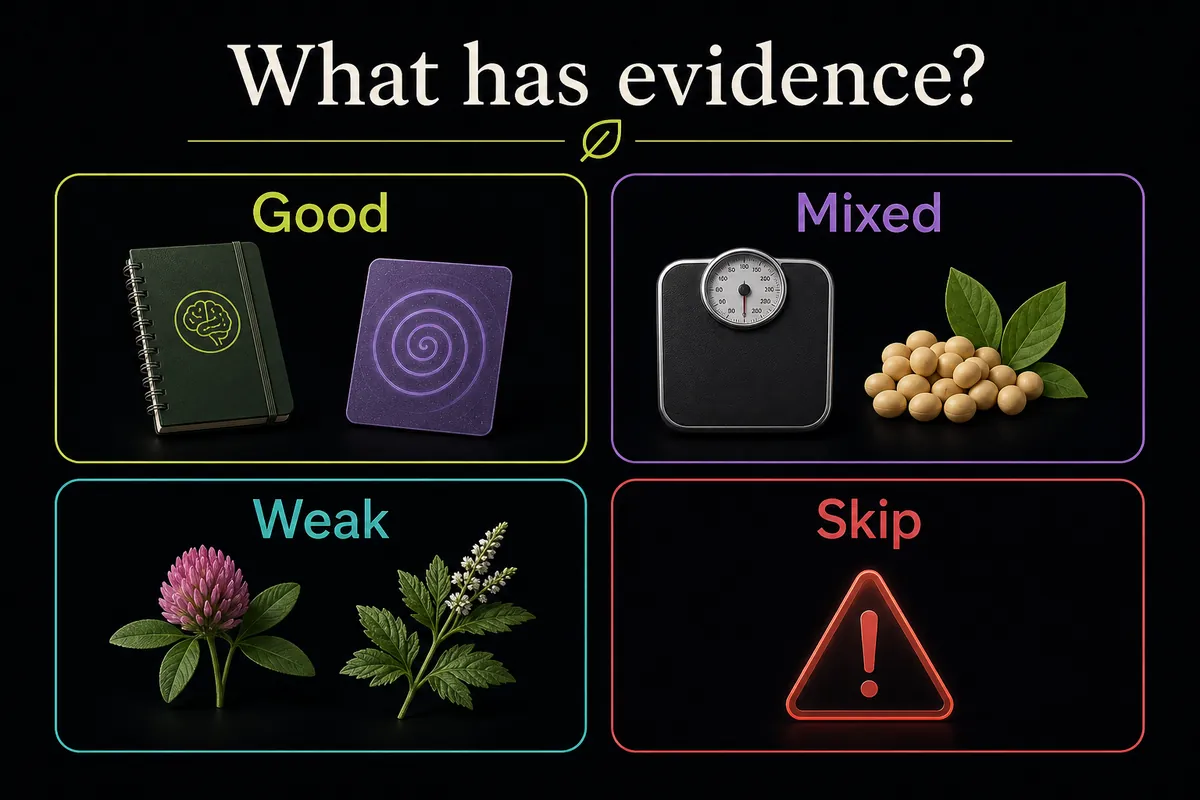
Most articles on this topic list options without ever telling you which ones the evidence actually supports. The table below lays out the main natural HRT options side by side, graded by the strength of the evidence for hot flashes, anchored to systematic reviews and the 2023 nonhormone therapy position statement from The Menopause Society [2][3][4]. Evidence labels are plain: Good, Mixed, Weak, or Insufficient. None of these labels is a promise of results for any individual.
| Option | Type | Evidence for hot flashes | Also may help with | Cautions |
|---|---|---|---|---|
| Soy isoflavones | Supplement (phytoestrogen) | Weak / Mixed | Mild symptoms in some people | Talk to your oncologist first if you have a hormone-sensitive cancer history [4] |
| Red clover | Supplement (phytoestrogen) | Insufficient | Uncertain | Same hormone-sensitive cancer caution [4] |
| Flaxseed | Food or supplement (lignans) | Weak | Fiber, cholesterol | Generally safe as a food |
| Black cohosh | Herbal supplement | Mixed / Insufficient | Possibly short-term hot flashes | Rare liver injury reports; short-term use; avoid with liver disease [3][5] |
| Maca | Herbal supplement | Weak (preliminary) | Mood, energy in small trials | Limited long-term data |
| Ashwagandha | Adaptogen supplement | Weak (not for hot flashes) | Stress, sleep | Not a hormone replacement; caution with thyroid or autoimmune conditions |
| St John's wort | Herbal supplement | Weak (mood only) | Low mood | Serious interactions with many prescription drugs [1] |
| Evening primrose oil | Supplement | Insufficient | None clearly proven | Digestive upset |
| Sage | Herbal supplement | Weak | Sweating, in limited data | Sparse evidence |
| Cognitive behavioral therapy (CBT) | Mind-body therapy | Good | Sleep, mood, distress from symptoms | Access and availability vary [2] |
| Clinical hypnosis | Mind-body therapy | Good | Hot flash frequency and bother | Needs a trained practitioner [2] |
| Weight management | Lifestyle | Good (for those with overweight) | Overall health | Gradual and individualized [2] |
| Exercise | Lifestyle | Weak for hot flashes | Bone density, mood, sleep | Great for health, but not proven to reduce hot flashes [2] |
| Acupuncture | Mind-body therapy | Insufficient / Mixed | Relaxation | Evidence is inconsistent [2] |
| Fezolinetant (Veozah) | Prescription (NK3 antagonist) | Good | Moderate to severe hot flashes | Prescription only; liver monitoring [2][6] |
| SSRIs and SNRIs (e.g. low-dose paroxetine) | Prescription | Good | Mood, hot flashes | Side effects; some interact with tamoxifen [2] |
| Gabapentin | Prescription | Good (especially night sweats) | Sleep | Drowsiness [2] |
| Regulated HRT (estrogen, with or without progestogen) | Prescription hormones | Most effective option | Vaginal symptoms, bone protection | Individual risks vary by age and health history [1][2] |
Sources: NHS [1]; The Menopause Society 2023 nonhormone therapy position statement [2]; Cochrane systematic reviews [3][4]; NCCIH [5]. Evidence labels reflect guideline and systematic-review assessments, not individual guarantees.
Do HRT Supplements Work? The Evidence, Herb by Herb
This is the question most people actually type. Do HRT supplements work? For the honest answer, we have to look at each herb on its own, because "supplements" is not one thing. Most natural HRT supplements fall into a few families: phytoestrogens, single herbs like black cohosh, adaptogens, and mood herbs. Below, each of the most popular herbal HRT options gets a plain-language evidence verdict. The pattern across the research is consistent: the marketing is far ahead of the science.
Black cohosh
Black cohosh is the most studied herb for menopause. Despite that, a Cochrane systematic review concluded there is currently insufficient evidence to support its use for menopausal symptoms [3]. Some newer reviews find a possible short-term signal for hot flashes, but the results are inconsistent [5]. There is also a safety flag: rare reports of liver injury, some serious, have been linked to black cohosh products, though it is uncertain whether the herb itself was responsible and contamination may play a role [5]. If you try it, use a third-party tested product short-term and avoid it if you have liver disease. Verdict: Mixed, short-term only.
Soy isoflavones and red clover (phytoestrogens)
Soy isoflavones and red clover contain phytoestrogens, plant compounds that act weakly like estrogen. A Cochrane review of phytoestrogens found no conclusive evidence that they relieve menopausal vasomotor symptoms overall, although some genistein-rich extracts showed a modest benefit signal in certain analyses [4]. If you have a personal history of breast or another hormone-sensitive cancer, talk to your oncologist before using concentrated phytoestrogen supplements, and see our guide to HRT and breast cancer risk for context on the wider question. Verdict: Weak and mixed.
Maca
Maca is a Peruvian root that shows up constantly in doctor-brand menopause content, often because the author sells a maca product. We sell nothing here, so we can be blunt: the human evidence is preliminary. A few small trials suggest possible effects on mood or well-being, but the studies are small and short, and maca is not a proven treatment for hot flashes. Verdict: Weak, preliminary.
Ashwagandha and adaptogens
Ashwagandha and other adaptogens (rhodiola, schisandra) are popular for menopause, but it is important to be precise about what the evidence is for. The research points toward stress and sleep, not hormone replacement. An adaptogen may help you feel calmer or sleep better, and that can indirectly ease a rough menopause, but it does not replace estrogen or reliably reduce hot flashes. Use caution if you have thyroid or autoimmune conditions. Verdict: Weak (and not for hot flashes).
St John's wort
St John's wort has some evidence for low mood, which can overlap with menopause. The problem is not effectiveness so much as safety: it is one of the most interaction-prone supplements sold.
Safety note on St John's wort: St John's wort can reduce how well many prescription medicines work, including some antidepressants, hormonal contraception, blood thinners, and certain HIV and transplant drugs, and combining it with some antidepressants can be dangerous. Always tell your prescriber and pharmacist before taking it [1]. Verdict: Weak benefit, real interaction risk.
The rest in brief
The remaining herbal HRT options come up often but have thin evidence:
- Evening primrose oil: popular for hot flashes, but the evidence does not show a clear benefit. Insufficient. - Sage: a little data for sweating, mostly small studies. Weak. - Valerian: used for sleep, not a menopause treatment; modest sleep evidence at best. Weak. - Dong quai: traditional use, but studies do not support it for hot flashes and it can interact with blood thinners. Insufficient. - Ginseng: may help mood or well-being in some studies, not reliably hot flashes. Weak. - Vitamin E: occasionally suggested for mild hot flashes, with small and inconsistent effects. Weak.
Natural HRT Foods: Phytoestrogens on Your Plate
If you want to try phytoestrogens, natural HRT foods are a safer starting point than concentrated extracts, because the doses are lower and come packaged with fiber and other nutrients. Soy foods (tofu, tempeh, edamame, soy milk), flaxseed (a source of lignans), legumes, and whole grains all contain plant estrogens [1][4]. A Mediterranean-style eating pattern rich in these foods, vegetables, and healthy fats is good for heart and bone health, which matters more after menopause.
Two honest caveats. First, effect sizes for menopausal symptoms are modest, and food will not match the relief of regulated HRT [4]. Second, food sources are generally safer than high-dose supplements, but if you have a hormone-sensitive cancer history, discuss even dietary changes with your care team. Think of these foods as part of a healthy overall pattern rather than a hot-flash cure.
Natural HRT for Menopause: Lifestyle Measures That Outperform Most Supplements
Here is the part competitors blur, and it is the most useful section on the page. When you look at natural HRT for menopause through the lens of the 2023 nonhormone therapy position statement from The Menopause Society, the best non-drug evidence is not for herbs at all. It is for two mind-body therapies and for weight management [2].
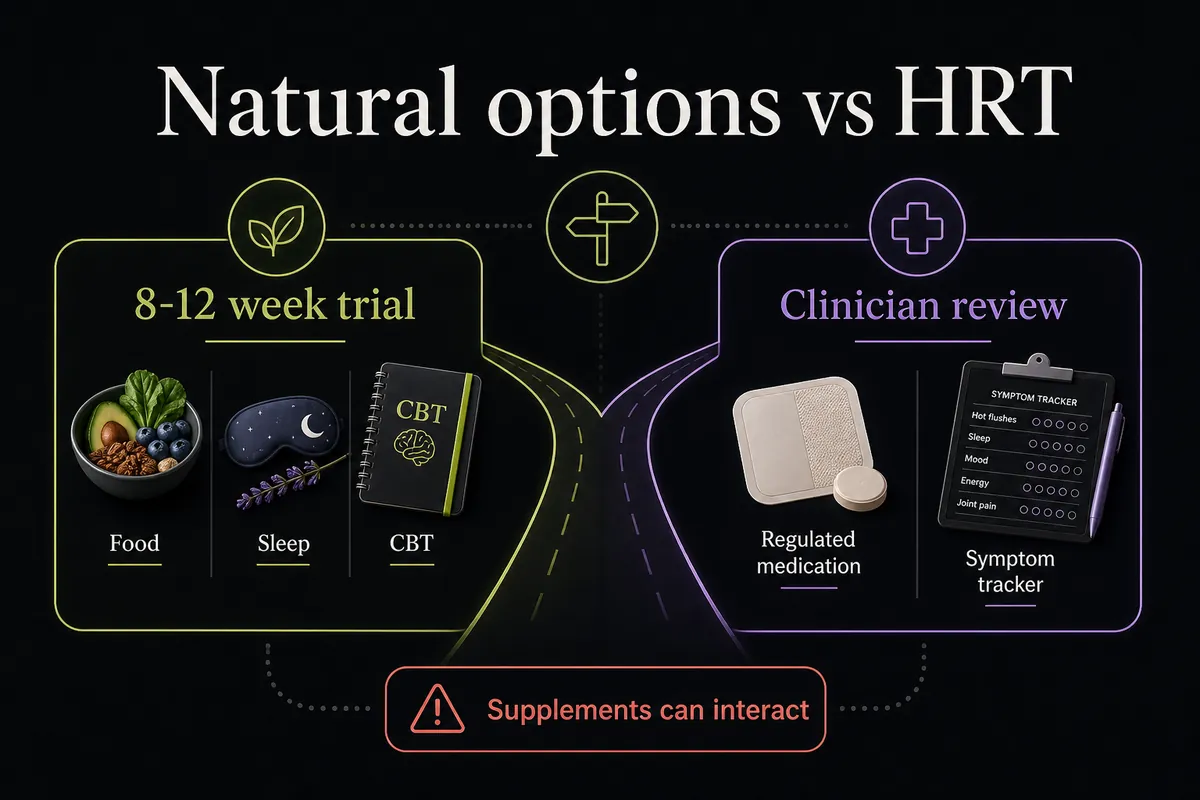
- Cognitive behavioral therapy (CBT) has some of the strongest non-hormonal evidence for reducing the distress and impact of hot flashes, and it also helps sleep and mood [2]. - Clinical hypnosis has good evidence for reducing hot flash frequency and how much they bother you [2]. - Weight management helps reduce hot flashes in people who are carrying extra weight [2].
Now the precise part that most articles get wrong: exercise is genuinely great for bone density, mood, and sleep, but it is not proven to reduce hot flashes [2]. Recommending exercise "for hot flashes" overstates the evidence, even though it belongs in every menopause plan for other reasons. Among the alternatives to HRT for menopause, these are the measures with the most consistent support.
Rounding out the sensible basics: good sleep hygiene, cutting back on alcohol and caffeine (common hot-flash triggers), not smoking, and strength training to protect bone density. For the bone question specifically, see our guide to HRT and osteoporosis, and if you are curious about the research on peptides for menopause, we cover that separately.
Non-Hormonal Prescription Alternatives to HRT
Most "natural" articles stop at herbs and never mention the option that changed this conversation. There are now effective, non-hormonal prescription alternatives to HRT, and for many people the most effective natural alternative to HRT is not a herb at all but a targeted non-hormonal medicine.
- Fezolinetant (Veozah) is the first of a class called neurokinin 3 (NK3) receptor antagonists, approved for moderate to severe hot flashes and shown to reduce their frequency and severity in phase 3 trials [2][6]. It works on the brain pathway that drives hot flashes, without adding hormones. Your clinician will check liver-related bloodwork with it. A newer agent in the same broad family, elinzanetant, has also been developed; ask your clinician about the latest approved options. - SSRIs and SNRIs (for example, low-dose paroxetine, which is approved for hot flashes) can reduce hot flashes and help mood [2]. - Gabapentin can help, particularly with night sweats and sleep, and oxybutynin and clonidine are older options with more side effects [2].
These prescription options are the hrt natural alternatives that many people are really looking for when supplements fall short. They are exactly what clinicians offer patients who cannot take hormones (for example, after some hormone-sensitive cancers) or who simply prefer not to.
Natural Alternatives to HRT vs Real HRT: When to Consider Switching
So how do you decide? Natural alternatives to HRT are worth a genuine try, and for mild symptoms they may be all you need. The honest decision framework is about impact and time. If you have given a reasonable alternative to HRT a fair trial (roughly 8 to 12 weeks of consistent lifestyle changes plus one evidence-backed measure) and hot flashes, broken sleep, or vaginal and urinary symptoms are still wrecking your quality of life, it is reasonable to talk with a clinician about regulated HRT.
Two things worth remembering. First, "natural" does not automatically mean safer: supplements are loosely regulated and can interact with medicines, while regulated HRT is standardized and studied [1]. Second, HRT's risks are real but usually small and quantifiable, and they depend on your age, health history, type, and route. We lay those out in plain numbers in our pros and cons of HRT guide and cover the HRT side effects separately, so you can weigh them for your own situation.
If symptoms persist and you decide to explore hormones, a menopause-trained clinician can walk you through regulated options, the types of HRT, and what starting HRT for menopause actually looks like today. Many people now begin online: you can compare the best online HRT providers and check what HRT costs before booking a consultation. For a broader overview written for women weighing the decision, see HRT for women.
Best Supplements to Take With HRT
A different question comes from people already on hormones: what are the best supplements to take with HRT? The goal here is general health support, not symptom relief, and the list is short. Vitamin D and calcium support bone health alongside HRT, especially if your dietary intake or sun exposure is low. Magnesium is sometimes used for sleep, with modest evidence. What to avoid matters just as much: do not combine St John's wort with HRT or other prescriptions without checking, because of its interaction risk, and clear any estrogen-like supplement with your prescriber first [1]. When in doubt, bring the full bottle list to your pharmacist.
Frequently Asked Questions
References
- NHS. Herbal remedies and complementary medicines for menopause symptoms. NHS, 2023. https://www.nhs.uk/medicines/hormone-replacement-therapy-hrt/alternatives-to-hormone-replacement-therapy-hrt/herbal-remedies-and-complementary-medicines-for-menopause-symptoms/
- The Menopause Society (NAMS). The 2023 nonhormone therapy position statement of The North American Menopause Society. Menopause, 2023;30(6):573-590. https://pubmed.ncbi.nlm.nih.gov/37252752/
- Leach MJ, Moore V. Black cohosh (Cimicifuga spp.) for menopausal symptoms. Cochrane Database of Systematic Reviews, 2012. https://pubmed.ncbi.nlm.nih.gov/22972105/
- Lethaby A, Marjoribanks J, Kronenberg F, et al. Phytoestrogens for menopausal vasomotor symptoms. Cochrane Database of Systematic Reviews, 2013. https://pubmed.ncbi.nlm.nih.gov/24323914/
- National Center for Complementary and Integrative Health. Black Cohosh: Usefulness and Safety. NCCIH. https://www.nccih.nih.gov/health/black-cohosh
- Lederman S, et al. Fezolinetant for treatment of moderate-to-severe vasomotor symptoms associated with menopause (SKYLIGHT 1): a phase 3 randomised controlled study. Lancet, 2023;401(10382):1091-1102. https://pubmed.ncbi.nlm.nih.gov/36924778/
- Mayo Clinic. Bioidentical hormones: Are they safer? Mayo Clinic. https://www.mayoclinic.org/diseases-conditions/menopause/expert-answers/bioidentical-hormones/faq-20058460
- American College of Obstetricians and Gynecologists. Hormone Therapy for Menopause (FAQ). ACOG. https://www.acog.org/womens-health/faqs/hormone-therapy-for-menopause
Disclosure: this article contains affiliate links to Gala Health. If you start care through them, we may earn a commission at no extra cost to you.