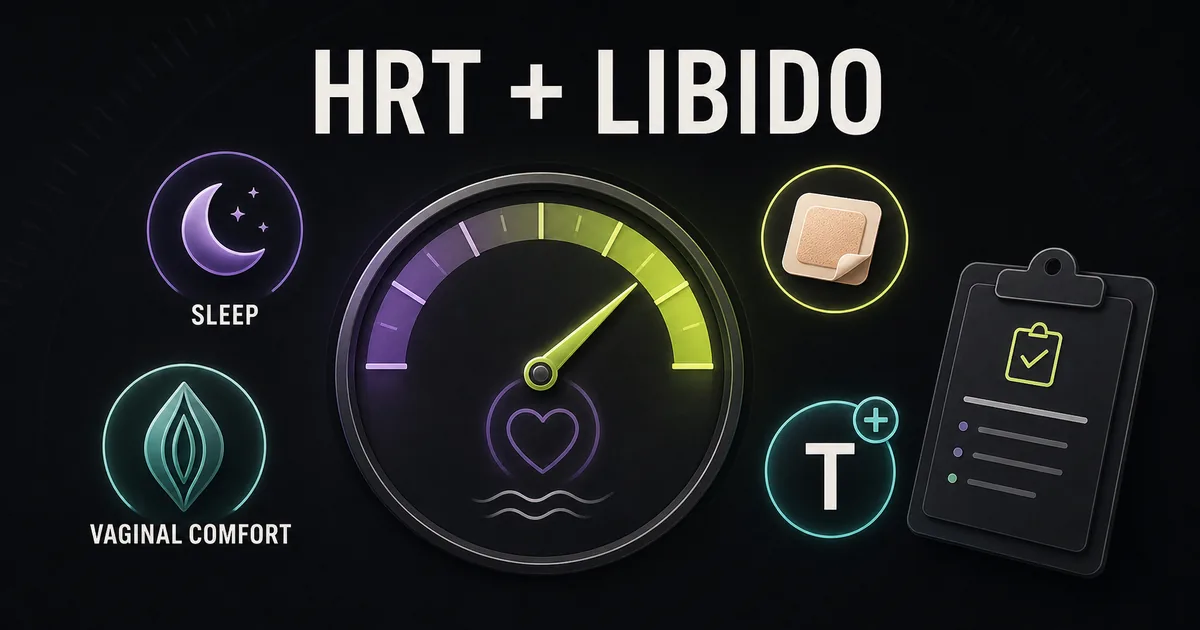

Does HRT help with libido? For many women the answer is yes, but usually not in the way they expect. Hormone replacement therapy most often lifts sex drive indirectly, by clearing the physical, sleep, and mood barriers to desire rather than flipping a switch on desire itself. The related question people search for, does HRT help with sex drive, has the same answer: it depends on which hormones you use, why your libido dropped, and how long you give it. Systemic estrogen restores comfort and arousal physiology, vaginal estrogen ends the pain that makes sex unappealing, and a low-dose testosterone add-on has the strongest evidence for desire specifically. This guide covers what the evidence actually shows, how long each option takes, and what to try when HRT alone does not move the needle.
| Stat | What it means |
|---|---|
| Up to about half of women | report low sexual desire or another sexual problem at some point, making it one of the most common midlife complaints [6] |
| 3 to 6 months | typical time to notice sexual-function gains on systemic HRT [1] |
| About 3 months | how long to trial a testosterone add-on before judging its effect on desire [4] |
| Off-label | US status of testosterone for female libido; it is prescribed and monitored off-label, not FDA approved for women [3] |
🔑 Key Takeaways
- HRT helps libido mostly indirectly by easing vaginal dryness, painful sex, hot flashes, broken sleep, and low mood, all of which suppress desire [1][8].
- Route matters: in a randomized trial, transdermal (patch) estradiol improved sexual function scores while oral estrogen did not separate from placebo [2].
- Testosterone has the strongest evidence for desire itself, but it is off-label for women in the US and needs clinician monitoring [3][4].
- Vaginal estrogen is the single highest-impact step when sex hurts, with minimal systemic absorption [7].
- When HRT does not help, the cause is often medications, thyroid, mood, or relationship factors rather than hormones alone, and those need their own workup [8].
Why Menopause Lowers Sex Drive
Sex drive rarely falls for one reason. Around perimenopause and menopause, estrogen and testosterone both decline, and several linked changes stack up at once. (For the wider picture beyond libido, see our complete guide to HRT for women.)
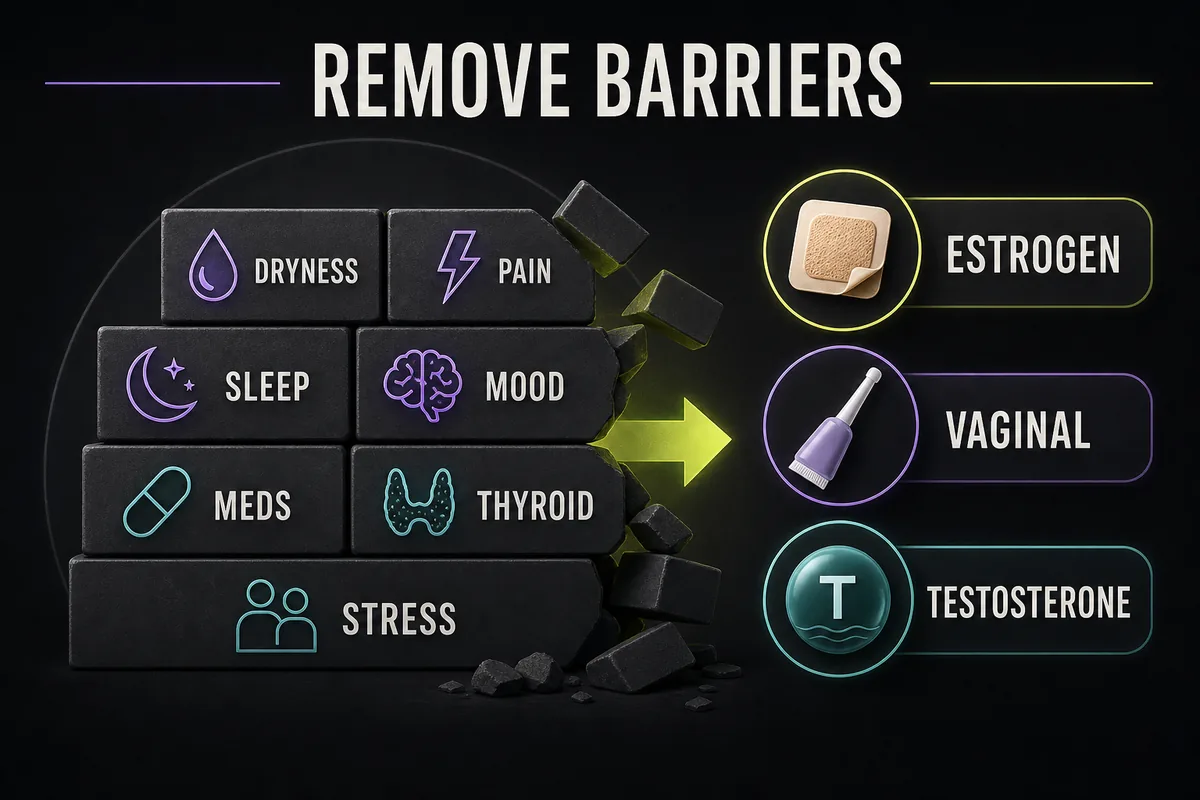
Falling estrogen thins and dries vaginal tissue, a cluster of changes clinicians call the genitourinary syndrome of menopause (GSM). The result can be dryness, burning, and painful intercourse, which understandably makes sex less appealing [7]. Testosterone, which contributes to desire in women as well as men, also drops gradually with age.
On top of the direct hormonal effects come the knock-on symptoms. Hot flashes and night sweats fragment sleep, and chronic fatigue is one of the most reliable ways to flatten desire. Mood shifts, anxiety, and low energy pull in the same direction, and changing body image can add a psychological layer. Low sexual desire is common enough that up to about half of women report it or another sexual concern at some stage of life [6], and it frequently has more than one contributing cause [8]. That matters, because it explains why replacing hormones helps some women a lot, others only partly, and a few not at all.
HRT and Sex Drive: What the Evidence Shows
The honest evidence on HRT and sex drive is more nuanced than most clinic pages admit. Systemic estrogen (a pill, patch, gel, or spray absorbed through the whole body) reliably improves lubrication, genital blood flow, and comfort, and it calms hot flashes and sleep disruption. Each of those changes removes a barrier to desire, which is why many women notice their interest in sex return as they start feeling like themselves again [1]. The direct effect of estrogen on desire, measured on its own, is generally modest.
The clearest signal that route matters comes from a randomized trial of 670 recently menopausal women. Transdermal estradiol (delivered through the skin) improved sexual function scores, while oral estrogen did not separate from placebo on the same measure [2]. That does not mean pills are useless, but it does mean the delivery method is a fair thing to discuss with your clinician if libido is a priority. If a skin-based route appeals to you, our overview of HRT patches explains how transdermal delivery works.
So where does that leave HRT and libido overall? Estrogen-based HRT is a strong tool for the physical and sleep-related drivers of low desire, and for many women that indirect benefit is enough. When it is not, the conversation usually turns to testosterone or to non-hormonal causes, both covered below.
Does HRT Increase Libido Directly?
So does HRT increase sex drive on its own? Sometimes, but it helps to separate three things that get lumped together: desire (wanting sex), arousal (the body responding), and comfort (sex not hurting). Estrogen is very good at the comfort and arousal pieces. It restores lubrication and blood flow, so the physical machinery works again [1][7]. Desire, by contrast, is multifactorial: it draws on hormones, mood, sleep, medications, stress, and relationship context all at once, which is why no single hormone is a guaranteed fix for it.
That distinction is the key to setting realistic expectations. When estrogen restores comfort and arousal but desire still lags, the missing piece is often testosterone or a non-hormonal factor, not a higher estrogen dose.
HRT is not a desire switch. It removes the barriers (pain, dryness, night sweats, low energy). When desire itself stays low even after those barriers are gone, a testosterone add-on or a search for non-hormonal causes is the next conversation, not a bigger estrogen dose.
Testosterone Add-On: The Libido-Specific Option
If one therapy targets desire specifically, it is a low-dose testosterone add-on. Testosterone falls with age in women, and it plays a real role in libido. In postmenopausal women with low desire, systematic-review evidence shows that testosterone can improve desire, arousal, and orgasm compared with placebo [4][5]. The 2019 Global Consensus Position Statement on testosterone therapy for women supports its use for one specific indication: hypoactive sexual desire disorder (HSDD) after menopause, meaning distressing low desire that is not explained by another cause [3].
Two caveats are non-negotiable. First, testosterone is not FDA approved for women in the United States. It is prescribed off-label, typically as a low dose of a product approved for men, and it should be dosed carefully and monitored with blood levels; at excess doses it can cause masculinizing side effects such as acne or unwanted hair growth [3]. Second, the evidence is strongest for a defined group. Women who went through surgical menopause (both ovaries removed) tend to show among the clearest benefits, which fits the sharp drop in testosterone that surgery causes.
Because testosterone is off-label and needs monitoring, it is worth working with a menopause-trained clinician rather than expecting any prescriber to offer it. Many telehealth menopause services now prescribe testosterone off-label alongside estrogen, and you can compare online HRT clinics that treat low libido, including which ones offer a testosterone add-on. Testosterone can be delivered as a cream, gel, or in some settings as hormone pellets; your clinician will help match the route to your situation and monitoring needs.
Local Vaginal Estrogen: When Sex Hurts
When the main problem is that sex hurts, local vaginal estrogen is often the highest-impact step of all. Delivered as a cream, ring, or tablet placed in the vagina, it treats the tissue directly with minimal absorption into the rest of the body [7]. It is highly effective for the symptoms of GSM: dryness, burning, painful intercourse, and recurrent urinary tract infections [7].
Vaginal estrogen does not raise desire directly, and it is not meant to. Its value is that it removes the single biggest physical barrier to wanting sex. For many women, taking pain out of the equation does more for their sex life than any change in hormone-driven desire. Because its systemic exposure is minimal, it can be used on its own or combined with systemic HRT when both whole-body symptoms and local dryness are in play. This is a good example of matching the tool to the problem rather than assuming one hormone fixes everything.
Which HRT Is Best for Libido?
There is no single answer to which HRT is best for libido, because the best choice depends on which barrier is holding desire down. The table below compares the main options on what they help, how they affect desire, how long they take, and their US regulatory status.
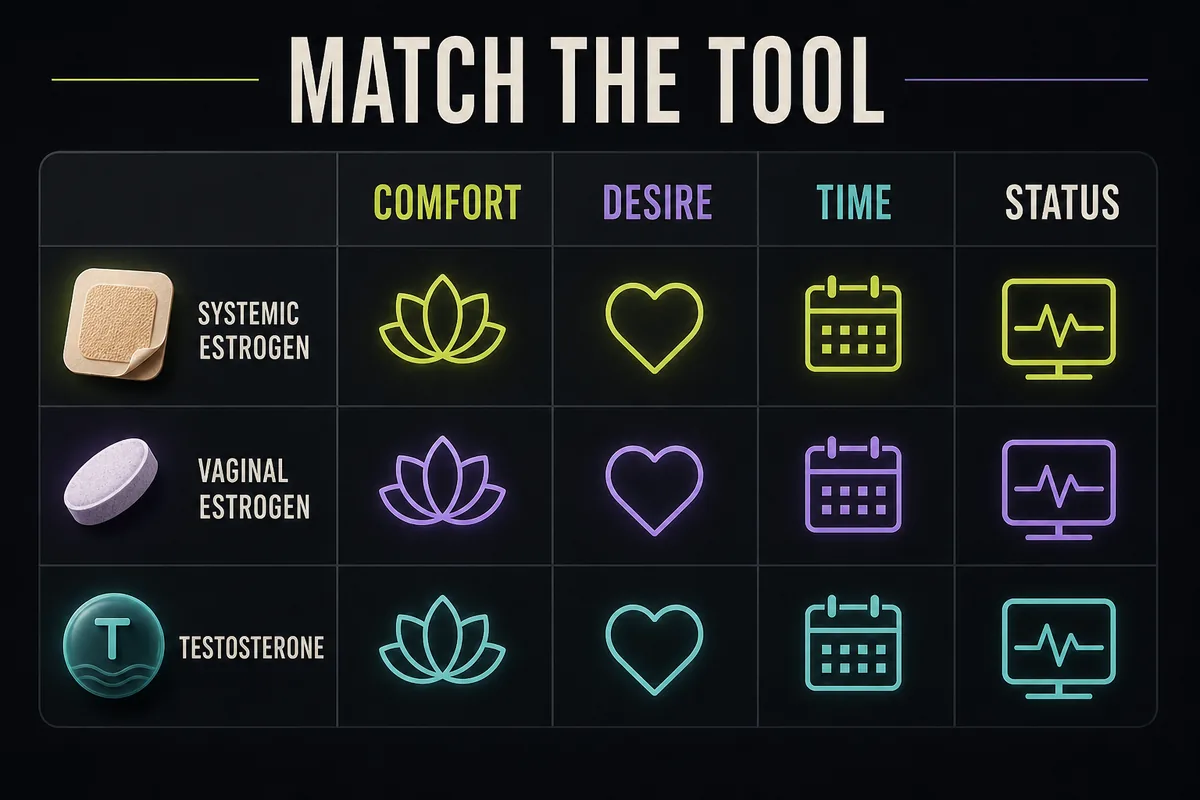
| Option | What it helps | Effect on desire | Time to effect | US status |
|---|---|---|---|---|
| Systemic estrogen (oral) | Hot flashes, sleep, mood, dryness | Indirect | Weeks to 3 to 6 months | FDA approved for menopause symptoms |
| Systemic estrogen (patch, gel, spray) | Same as oral, with better sexual-function evidence | Indirect, best-studied route [2] | Weeks to 3 to 6 months | FDA approved |
| Vaginal (local) estrogen | Dryness, painful sex, GSM, recurrent UTIs | Indirect (removes pain) | A few weeks | FDA approved |
| Testosterone add-on | Desire, arousal, orgasm | Direct, best evidence [4] | About 3 months | Off-label for women |
In practice, a sensible sequence looks like this. Start with systemic estrogen if you have whole-body symptoms like flashes and poor sleep, and know that the transdermal route has the better sexual-function evidence [2]. Add vaginal estrogen if intercourse hurts, since pain relief is often the biggest win. If desire still stays low after 3 to 6 months, that is the point to discuss a testosterone add-on. When people ask about the best HRT for loss of libido, this layered approach, rather than any one product, is the honest answer. For more on delivery methods, see our overview of types of HRT and how HRT patches and hormone pellets differ.
HRT for Low Libido: How Long Does It Take?
Patience is part of the plan. HRT for low libido works on different timelines depending on the therapy and the symptom, so it helps to know what to expect and when.
| Therapy | When to expect change |
|---|---|
| Vaginal (local) estrogen | Dryness and comfort usually improve within a few weeks [7] |
| Systemic estrogen | Sleep and hot flashes often ease in the first weeks; sexual-function gains typically build over 3 to 6 months [1] |
| Testosterone add-on | Give it about 3 months before judging the effect on desire [4] |
The general rule: comfort symptoms respond fastest, while gains in desire and overall sexual function take months to settle. If nothing has shifted after a full trial at an adequate dose, that is useful information rather than a dead end; it usually points toward a dose or route change or a non-hormonal cause. For a broader timeline across all HRT benefits, see how long HRT takes to work.
When HRT Does Not Help Your Libido
Sometimes libido stays low even after estrogen, vaginal estrogen, and a fair trial of time. This is common and does not mean something is wrong with you; it usually means desire has a driver that hormones cannot reach. Almost no competitor page covers this honestly, so here is the real workup.
Look first at medications. Antidepressants, especially SSRIs and SNRIs, are among the most common causes of low desire, and some blood pressure drugs and opioids can do the same [8]. Thyroid problems and depression itself lower libido independent of sex hormones, as do chronic stress, fatigue, and relationship or life factors [8]. When distressing low desire persists without another clear explanation, clinicians may diagnose HSDD, which is exactly the situation the testosterone evidence addresses [3]. Non-drug approaches matter too: pelvic floor physical therapy helps when pain or muscle tension is part of the picture, and sex therapy or mindfulness-based approaches address the psychological and relational side that no hormone can.
What to ask your clinician next: review your dose and route, discuss whether a testosterone trial is appropriate, audit your medication list for desire-suppressing drugs, and check thyroid and mood. Referral to a menopause specialist, pelvic floor therapist, or sex therapist may be the highest-value step.
Some readers also research non-hormonal angles. Our guides to non-hormonal libido research and peptides for menopause symptoms cover options being studied outside the hormone lane, and our overview of tirzepatide's off-label menopause research covers the metabolic side of midlife health, though it is not a libido treatment. Discuss any of these with your clinician before acting on them.
Risks and Safety, in Plain Numbers
Any conversation about HRT and desire has to include a plain-numbers look at risk, without scare framing or false reassurance. According to the Menopause Society, combined estrogen-plus-progestogen HRT is linked to a small increase in breast cancer risk, on the order of fewer than one extra case per 1,000 women per year of use, while estrogen-only therapy carries little or no increase [1]. That risk is real but modest, and it is weighed against symptom relief and quality of life, which is a decision your clinician will help you make.
Clot and stroke risk depends heavily on route. Oral estrogen carries a small increase in the risk of venous blood clots and stroke, whereas transdermal estrogen (patch, gel, or spray) does not appear to raise clot risk meaningfully, which is one more reason the skin-based route is often preferred [1][9]. Local vaginal estrogen has minimal systemic absorption and is not associated with these whole-body risks [7]. For the full breakdown, see our pages on HRT side effects, HRT and breast cancer risk, and the overall pros and cons of HRT.
Frequently Asked Questions
If you are not sure whether HRT fits your symptoms, you can take our short HRT quiz to think through your options, and when you are ready to act, compare online HRT clinics that treat low libido, including which ones offer a testosterone add-on. Bring what you learn here to a menopause-trained clinician who can tailor a plan to your history.
References
- The North American Menopause Society. The 2022 Hormone Therapy Position Statement of The North American Menopause Society. Menopause, 2022. https://menopause.org/wp-content/uploads/professional/nams-2022-hormone-therapy-position-statement.pdf
- Taylor HS, et al. Effects of Oral vs Transdermal Estrogen Therapy on Sexual Function in Early Postmenopause (KEEPS ancillary study). JAMA Internal Medicine, 2017. https://jamanetwork.com/journals/jamainternalmedicine/fullarticle/2652573
- Davis SR, et al. Global Consensus Position Statement on the Use of Testosterone Therapy for Women. Journal of Clinical Endocrinology and Metabolism, 2019. https://academic.oup.com/jcem/article/104/10/4660/5556103
- Islam RM, et al. Safety and efficacy of testosterone for women: a systematic review and meta-analysis of randomised controlled trials. Lancet Diabetes and Endocrinology, 2019. https://www.thelancet.com/journals/landia/article/PIIS2213-8587(19)30189-5/fulltext
- Review of testosterone therapy in women. PubMed Central, U.S. National Library of Medicine. https://pmc.ncbi.nlm.nih.gov/articles/PMC7098532/
- Sexual problems and distress in United States women: prevalence study. JAMA Internal Medicine. https://jamanetwork.com/journals/jamainternalmedicine/fullarticle/414363
- Vaginal estrogen for genitourinary syndrome of menopause. PubMed Central, U.S. National Library of Medicine. https://pmc.ncbi.nlm.nih.gov/articles/PMC11439571/
- Mayo Clinic. Low sex drive in women. Mayo Clinic. https://www.mayoclinic.org/diseases-conditions/low-sex-drive-in-women/symptoms-causes/syc-20374554
- NHS. Hormone replacement therapy (HRT): benefits and risks. NHS. https://www.nhs.uk/medicines/hormone-replacement-therapy-hrt/
Disclosure: this article contains affiliate links to Gala Health. If you start care through them, we may earn a commission at no extra cost to you.